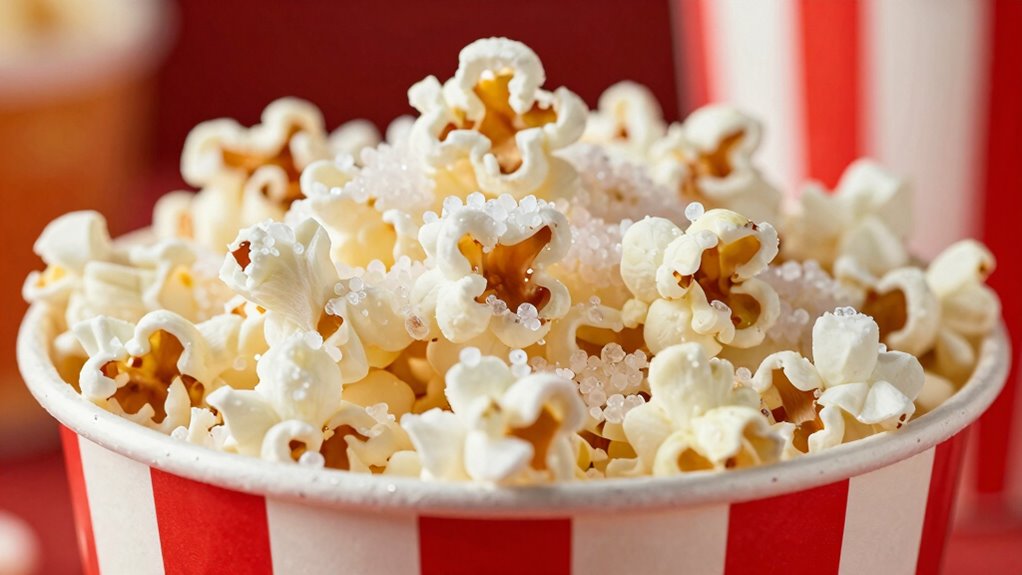

Movie theaters make salt stick better by applying a thin layer of oil or melted butter before seasoning. The oil creates a sticky surface that holds salt firmly, while moisture helps the salt dissolve slightly and adhere evenly. By sprinkling salt gradually and tossing the popcorn gently, they avoid clumps and uneven spots. If you want to master this technique, keep exploring how these methods work for perfectly salted popcorn every time.
Key Takeaways
- Movie theaters lightly spray or toss popcorn with oil or melted butter before applying salt for better adhesion.
- Using fine salt granules or flakes ensures even distribution and quick melting on the popcorn’s surface.
- Applying salt while the popcorn is warm helps it dissolve slightly, increasing sticking efficiency.
- Gentle tossing or shaking during seasoning prevents clumping and promotes uniform salt coverage.
- Incorporating flavoring ingredients like seasoned salt or nutritional yeast enhances adherence and flavor.
How Do Movie Theaters Keep Salt on Their Popcorn?

Movie theaters use a special technique to make sure salt stays on their popcorn rather than falling off or bouncing away. They often apply popcorn flavoring that includes a sticky binder, which helps the salt adhere better. Instead of relying solely on traditional salt, some theaters experiment with salt alternatives that have a slightly different texture or moisture content, making them cling more effectively. This method guarantees each kernel is evenly coated, enhancing flavor without excessive salt scatter. The key is using ingredients that improve adhesion, giving you a consistent salty taste with every bite. By combining popcorn flavoring with innovative salt alternatives, theaters keep their popcorn flavorful and well-seasoned, avoiding the mess and uneven seasoning that often occurs with plain salt. Enhanced adhesion techniques help ensure the seasoning stays put during handling and serving, and understanding food science principles can further improve seasoning methods. Additionally, adhesion properties of seasonings play a crucial role in maintaining that perfect coating, which is why ongoing research into food binders and moisture content continues to refine these processes. For example, the use of moisture-rich flavorings can significantly boost seasoning adherence, leading to more consistently flavorful popcorn.
Why Do Oil and Moisture Help Salt Stick to Popcorn?

Oil and moisture play a key role in helping salt cling to popcorn because they create a sticky surface that holds the salt particles in place. When you add oil or moisture, it forms a thin coating on each popcorn kernel, enhancing popcorn flavoring and guaranteeing the salt sticks evenly. This process not only improves taste but also helps with snack preservation by preventing salt from falling off during handling or shaking. The oil acts as an adhesive, making the salt more resistant to bumps and movement. Moisture, in turn, helps the salt dissolve slightly, bonding more effectively. Additionally, popcorn seasoning techniques can further improve salt adhesion and flavor distribution. Together, oil and moisture assure your popcorn stays flavorful and seasoned throughout your movie, providing a satisfying snack experience with each bite. Utilizing these techniques can also optimize affiliate marketing strategies related to popcorn products.
What Are the Best Techniques and Coatings for Salting Popcorn?

To achieve evenly seasoned popcorn, choosing the right techniques and coatings is essential. Start by lightly spraying or tossing your popcorn with a small amount of oil or melted butter—this helps the popcorn seasoning and salt alternatives adhere better. Instead of sprinkling salt directly, consider using fine popcorn seasoning or salt alternatives like flavored salts, cheese powder, or spice blends. Applying seasoning while the popcorn is still warm ensures better adherence. Some theaters use a shaker with a fine mesh to distribute salt evenly, preventing clumping. For a more uniform coating, you can also use a light mist of water or oil before adding your seasoning, which helps the salt alternatives stick without making the popcorn soggy. Additionally, understanding the color accuracy of your seasoning coatings can enhance the visual appeal of your popcorn. Incorporating proper seasoning techniques can further improve consistency and flavor. Paying attention to seasoning distribution is crucial for achieving an evenly seasoned snack. Using control methods like precise application tools helps maintain consistent salt levels across batches. Implementing seasoning adhesion techniques can also minimize uneven coating and improve overall flavor consistency. These techniques ensure a flavorful, well-seasoned snack every time.
Step-by-Step: How Theaters Salt Popcorn Perfectly
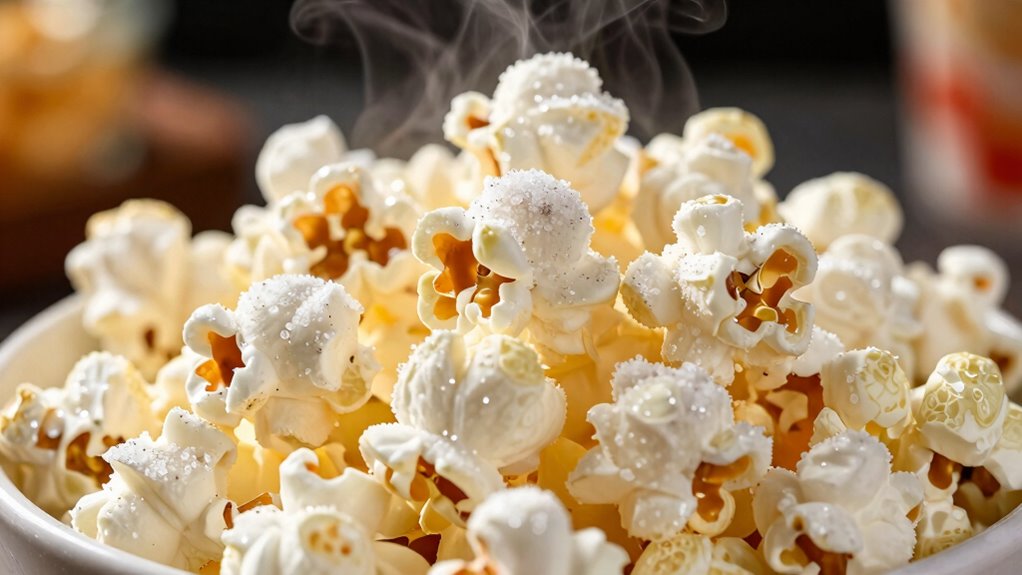
To salt popcorn perfectly, you need to get the timing right—adding salt just as the popcorn comes off the heat helps it stick better. Choosing the right type of salt, like fine or flake salt, guarantees even coverage without clumping. Using proper distribution techniques, such as sprinkling while tossing, ensures every piece gets evenly salted.
Timing of Salt Application
Timing is crucial when applying salt to popcorn, as the goal is to guarantee the salt adheres evenly without becoming clumpy or falling off. The key is to follow a precise popcorn seasoning schedule that ensures the salt is added at the ideal moment. Usually, theaters salt popcorn immediately after popping, while the popcorn is still hot and slightly damp from steam. This allows the salt to melt slightly and stick better. If you wait too long, the popcorn cools, and the salt doesn’t adhere properly. Conversely, applying salt too early can cause clumping. Careful timing ensures that the salt sticks evenly, enhances flavor, and prevents waste. Additionally, understanding the timing of salt application helps maintain consistent flavor and texture across batches. Proper popcorn moisture levels are also essential for optimal salt adherence and flavor. Achieving the right popcorn moisture content can make all the difference in salt adhesion and overall taste quality. Monitoring popcorn moisture throughout the process can help optimize seasoning and improve the final product. Mastering the popcorn seasoning schedule is essential for that perfectly seasoned, film-theater-quality snack.
Type of Salt Used
The type of salt used plays a significant role in achieving that perfectly seasoned popcorn. Movie theaters typically opt for fine salt granule size because it dissolves quickly and evenly coats each kernel. This ensures consistent flavor in every bite. Some theaters also incorporate specialized seasoning blends that enhance the salty taste without overpowering the popcorn’s natural flavor. Using coarse salt can result in uneven distribution, with some bites overly salty while others lack seasoning. Fine salt and carefully formulated seasoning blends work together to create a uniform layer of salt that sticks well to the popcorn. This precise choice of salt type ensures the seasoning adheres properly, giving you that perfect salty crunch every time. Additionally, precise seasoning selection plays a crucial role in achieving the ideal flavor profile for movie theater popcorn. Understanding seasoning techniques can help theaters optimize flavor and customer satisfaction. Moreover, selecting the right salt type can also improve the overall texture and appeal of the popcorn, making each serving more enjoyable. Proper salt application techniques further ensure that every handful delivers the same satisfying taste. For example, employing application methods that evenly distribute salt can significantly enhance the popcorn experience.
Even Distribution Techniques
Achieving perfectly salted popcorn requires a careful, step-by-step approach to guarantee even distribution. First, lightly spray the popcorn with a small amount of oil or use a butter sprayer to help the salt granules adhere better. Next, sprinkle the popcorn evenly with your chosen popcorn seasoning, including salt granules, while gently tossing or shaking the container. This ensures the salt doesn’t clump or settle in one spot. For best results, repeat the process—spraying, seasoning, then tossing—until the desired saltiness is achieved. Using a fine, consistent sprinkle of salt granules helps prevent uneven spots. Consistent movement during seasoning is key to achieving uniform coverage, giving your popcorn an even, flavorful coating every time. Proper technique is essential for ensuring every piece is perfectly seasoned.
Common Mistakes When Salting Popcorn and How to Avoid Them
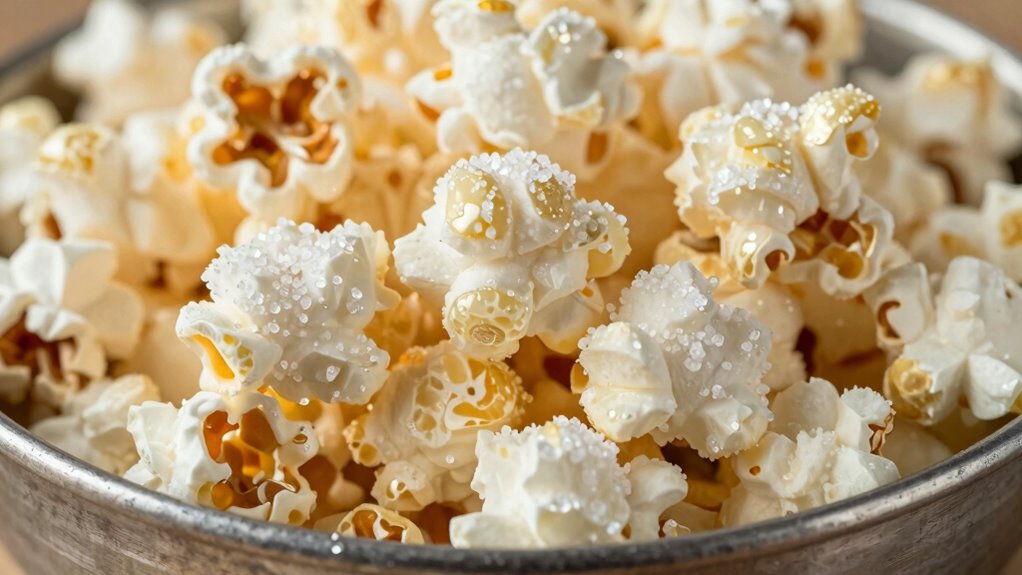
If you salt popcorn carelessly, you might end up with uneven coverage that leaves some bites bland while others are overly salty. Applying too much salt at once can also make your snack too salty to enjoy. To get it right, sprinkle evenly and add salt gradually, tasting as you go.
Uneven Salt Distribution
Uneven salt distribution is a common mistake that can ruin the perfect popcorn experience. When you salt unevenly, salt clumping can occur, creating pockets of overly salty or bland popcorn. This leads to uneven seasoning, where some bites are too salty while others lack flavor. To avoid this, sprinkle salt gradually in a light, even motion, ensuring it’s evenly distributed across the popcorn. Toss the popcorn gently while salting to help the salt stick uniformly. Using a fine salt or a salt shaker with small holes can also promote more consistent coverage. Steady, controlled application prevents salt clumping and guarantees every piece is seasoned perfectly, giving you a balanced flavor in every handful. Proper technique makes all the difference in achieving that ideal, well-seasoned popcorn.
Excessive Salt Application
While sprinkling salt evenly prevents clumping, overdoing it can lead to excessively salty popcorn that overwhelms the flavor. Using too much popcorn seasoning or applying too generously with salt flavoring can spoil the taste. When you load on salt, it masks the natural popcorn flavor and creates an unpleasant eating experience. To avoid this, start with a small amount and taste as you go. Shake the popcorn thoroughly after each addition to distribute the salt evenly. Remember, a light dusting is often enough to enhance the flavor without overpowering it. Using controlled amounts ensures you enjoy a balanced, flavorful snack. Too much salt not only ruins the taste but can also make the popcorn unappealing, so always aim for moderation when applying salt flavoring.
Can You Make Movie Theater-Style Salty Popcorn at Home?
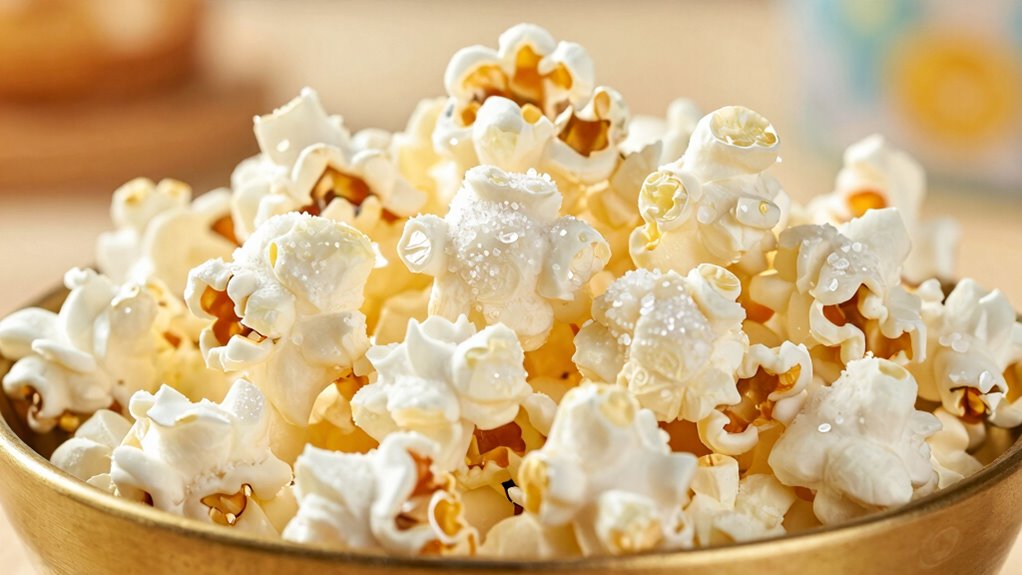
Getting that perfect movie theater salty popcorn at home is completely achievable with a few simple tips. First, focus on popcorn flavoring—using butter or oil helps the salt stick better. Instead of plain salt, try salt alternatives like seasoned salt, garlic salt, or nutritional yeast to add depth without excess sodium. Lightly spray or drizzle your popcorn with a bit of melted butter or oil before adding the salt or flavoring; this helps the salt adhere evenly. Shake the popcorn in a large bowl or paper bag to distribute the salt and flavoring thoroughly. Avoid pouring salt directly over hot popcorn, which can cause uneven coating. With these techniques, you can recreate that authentic movie theater saltiness at home while customizing flavors to suit your taste.
How Salting Techniques Enhance Flavor and Presentation
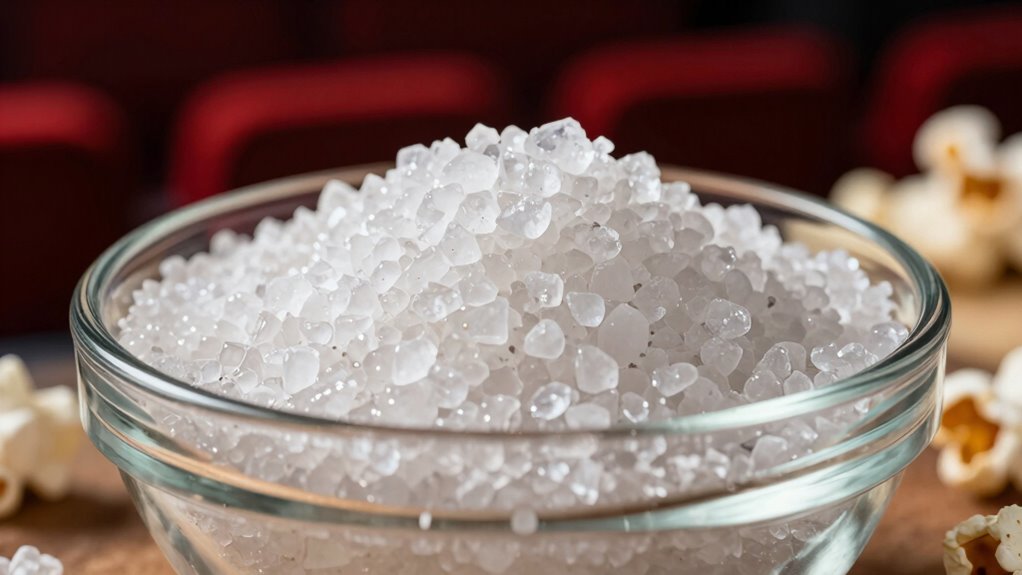
Using proper salting techniques doesn’t just improve the flavor of your popcorn—it also elevates its visual appeal. Salting science shows that evenly distributed salt enhances flavor enhancement, making each bite more satisfying. When you sprinkle salt at the right moment, it adheres better, creating a uniform coating that looks appealing and appetizing. Fine-tuning your salting method ensures the salt sticks better, highlighting the popcorn’s golden hue and crisp texture. Proper salting also brings out subtle flavors, making the snack more complex and enjoyable. By understanding how salting techniques influence both taste and presentation, you can transform ordinary popcorn into a visually enticing and flavorful treat that mimics the quality of movie theater popcorn.
Frequently Asked Questions
Do Different Types of Salt Affect How Well It Sticks?
Yes, different types of salt affect how well it adheres, mainly because of salt grain size. Finer salts distribute more evenly and adhere better to popcorn or other snacks, enhancing seasoning distribution. Coarser salts may not stick as well and can result in uneven flavor. So, choosing the right salt grain size ensures better seasoning coverage, making your snacks tastier and more enjoyable.
How Do Theaters Prevent Salt From Falling off During Movies?
Imagine salt aroma floating through the theater, making every snack irresistible. To prevent salt from falling off during movies, theaters use special salt packaging designed to cling better to popcorn and treats. This packaging acts like a magnet, ensuring the salt stays put even during the most intense scenes. By choosing the right salt type and packaging, theaters keep your snacks perfectly seasoned, so your movie experience remains flavorful and mess-free.
Can Salt Levels Be Customized for Dietary Restrictions?
Yes, you can customize your salt intake for dietary restrictions. Salt customization allows you to choose low-sodium or flavored salts tailored to your dietary salt needs. When shopping or dining, look for options labeled for specific dietary salt restrictions, and ask restaurants if they offer customized salt options. This way, you can enjoy your meals while maintaining control over your salt intake, ensuring it aligns with your health goals.
What Tools Do Theaters Use for Precise Salting?
You’ll find that theaters use specialized tools like salt shakers with fine mesh or adjustable openings for precise salt application methods. They often employ salt adhesion techniques, such as lightly moistening popcorn or using a fine mist, to guarantee salt sticks evenly. These tools and techniques help control salt distribution, making sure every piece is perfectly seasoned without excess. This way, they achieve consistent flavor for every customer.
Does the Popcorn Type Influence Salt Adherence?
Think of popcorn seasoning like tiny magnets—some types stick better than others. When you pick a popcorn with a rough surface, the salt particle size and seasoning type, especially salt particle size, matter a lot. Smaller salt particles cling more effectively, making seasoned popcorn more flavorful. So, yes, the popcorn type influences salt adherence, as rougher popcorn surfaces and finer salt particles create a better, more consistent seasoning experience.
Conclusion
Now that you know the secrets behind movie theater popcorn, you’re equipped to recreate that perfect salty crunch at home. Remember, the right techniques—like using oil or moisture—are your magic wand. With a little practice, you’ll turn your snack into a blockbuster hit. Don’t just settle for ordinary; elevate your popcorn game and make every bite film-worthy. After all, isn’t life too short for bland popcorn?