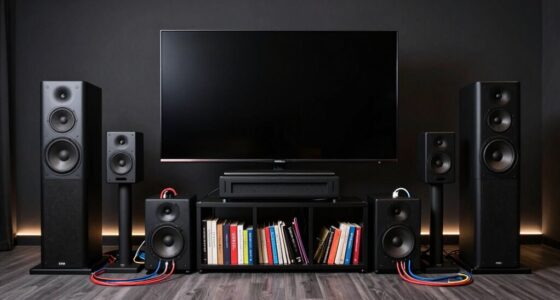

If you’re dealing with echo and reverb, understanding the difference can help you fix the problem. Echo sounds like a clear, delayed repetition, while reverb creates a smooth, lingering space effect. Both are caused by reflective surfaces like glass or bare walls. You can improve your room’s sound by adding soft materials, furniture, or acoustic panels at reflection points. Keep exploring, and you’ll discover simple ways to make your space sound much better.

Get movie nights delivered free — and shop member deals
- Fast, free delivery on millions of items
- Access to Prime Big Deal Days deals on October 6–7
- Prime Video, Amazon Music and more included
Key Takeaways
- Echo is a distinct, delayed repetition of sound, while reverb creates a smooth, lingering sense of space.
- Both are caused by reflective surfaces, but echoes involve longer delays and clear repetitions.
- Adding soft materials like rugs, curtains, and furniture absorbs reflections and reduces both echo and reverb.
- Proper placement of sound-absorbing panels at reflection points can significantly improve room acoustics.
- Persistent or complex sound issues may require professional evaluation and specialized acoustic treatments.
Why Echo and Reverb Are Ruining Your Recordings: and How to Fix Them
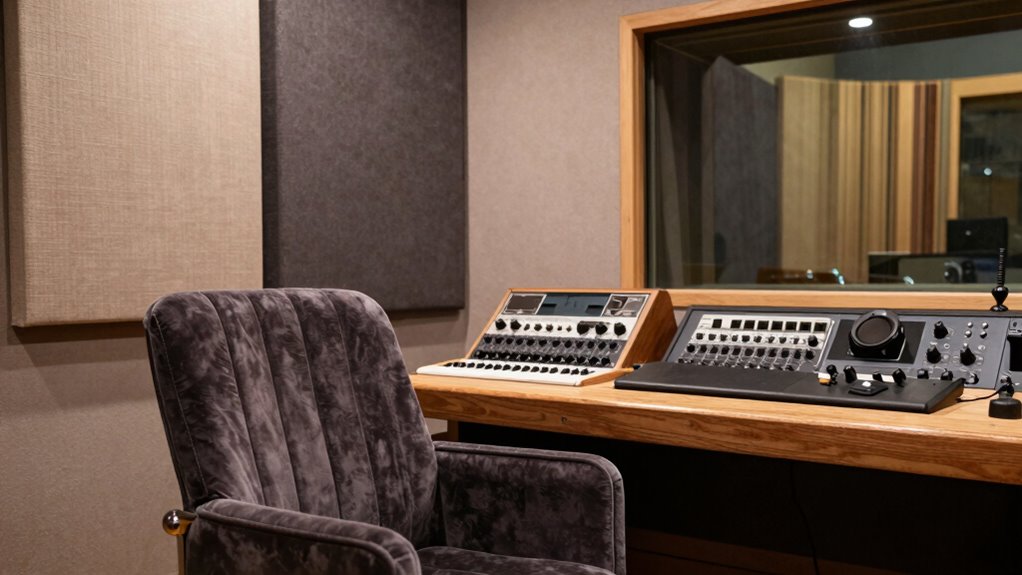
Unwanted echo and reverb can substantially harm your recordings by muddying the sound and reducing clarity. These issues often stem from reflective surfaces and room acoustics that create sound waves bouncing around. To fix this, you should implement soundproofing techniques like adding acoustic panels, rugs, or diffusers to absorb or scatter reflections. Additionally, proper microphone placement plays a vital role—keep your mic close to the source and avoid placing it near reflective surfaces. Using directional microphones can also help minimize captured reverb and echo. Being mindful of room acoustics and how sound interacts within your space is crucial to achieving clear recordings. Incorporating sound therapy principles, such as using specific frequencies and sound vibrations, can further enhance your sound environment. Understanding sound absorption techniques allows you to effectively control sound reflections in your space. Additionally, experimenting with room treatment methods can optimize your space for better sound quality. Properly managing sound reflections is essential for a professional sound, as it directly influences the clarity and fidelity of your recordings. These adjustments make your recordings cleaner and more professional, ensuring your voice or instruments come through clearly. Addressing room acoustics and microphone positioning is essential to preventing echo and reverb from ruining your sound quality.
How to Tell If You’re Hearing Echo or Reverb in Your Room
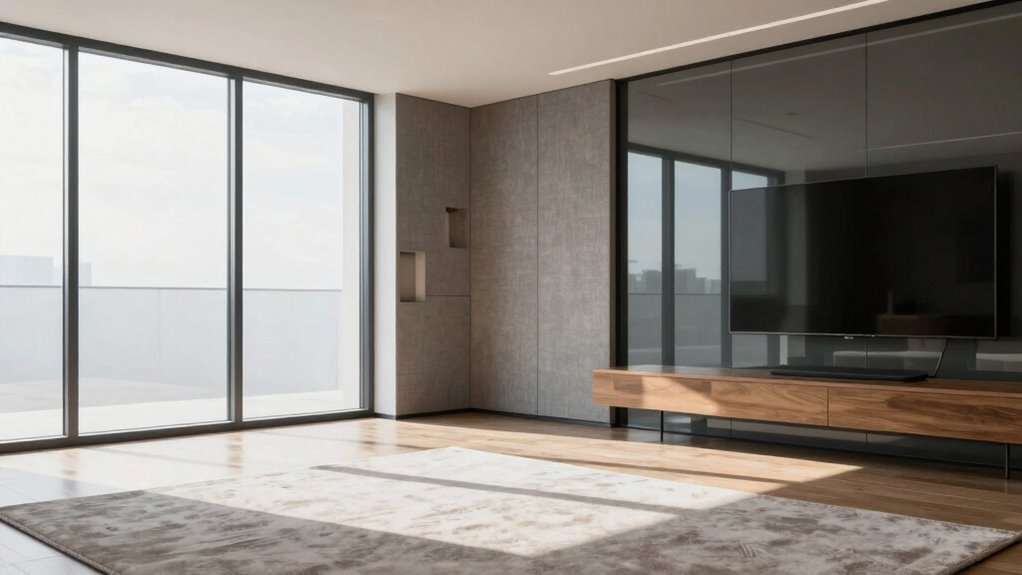
You can usually tell if you’re hearing echo or reverb by listening for specific sound reflection clues in your room. Echoes tend to be distinct, bouncing back with a clear delay, while reverb creates a smooth, lingering sense of space. Pay attention to the room’s acoustics and how the sound behaves to identify which effect is at play. Additionally, understanding room acoustics can help you better distinguish between these two phenomena. Recognizing the sound reflection patterns will enable you to determine whether you need to improve sound absorption or acoustic diffusion in your space. Being aware of reflection time can further clarify whether the sound is an echo or reverb, as echoes have longer delays compared to the more immediate reverb effects. Exploring acoustic treatment options can assist in managing these sound reflections for a clearer listening experience. Understanding these acoustic principles can greatly improve your ability to troubleshoot and optimize your room’s sound environment.
Sound Reflection Indicators
Distinguishing between echo and reverb in your room often comes down to listening carefully to the reflections of sound. Sound reflection indicators help you identify whether you’re experiencing distinct echoes or a lingering reverb. If reflections arrive as separate, delayed sounds, you’re hearing echo, often caused by larger spaces or hard surfaces. Reverb, on the other hand, produces a smooth, continuous sound with no clear separation, resulting from high room resonance.
| Reflection Type | Indicator | Typical Environment |
|---|---|---|
| Echo | Clear delay | Large hall, canyon |
| Reverb | Blended sound | Concert hall, studio |
| Room resonance | Sustained sound | Small, reflective rooms |
| Sound reflections | Persistence | Any enclosed space |
Room Acoustics Clues
Identifying whether you’re hearing echo or reverb in your room relies on paying close attention to specific acoustic clues. If you notice distinct, separate repetitions of sound that arrive seconds apart, you’re likely experiencing echo caused by reflective surfaces like bare walls or hard floors. Echo is often more noticeable with loud, sharp sounds and tends to linger longer. On the other hand, reverb creates a smooth, continuous sound that gradually fades, resulting from sound absorption by soft furnishings, carpets, or curtains that diffuse sound waves. Reverb makes the space feel fuller and more enveloping, while echo feels more like a distinct repetition. Observing how sound behaves when you speak or listen will help you determine whether you need to add sound absorption or reduce reflective surfaces. Additionally, room acoustics clues can help you better understand how your space affects sound quality.
Easy Ways to Reduce or Eliminate Echo and Reverb at Home
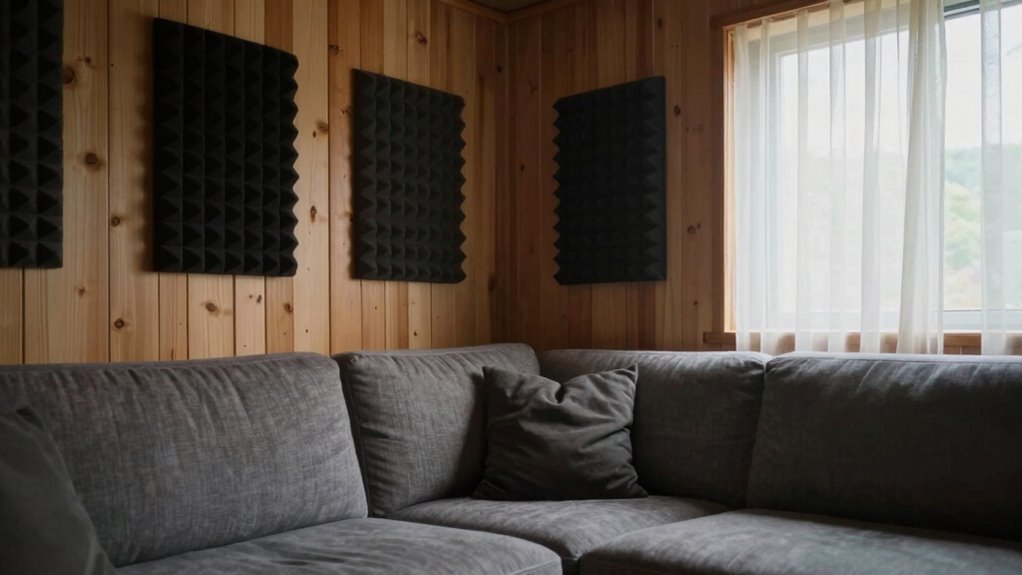
Reducing or eliminating echo and reverb at home can substantially improve sound quality without complicated equipment. Start by considering simple DIY soundproofing techniques, such as adding rugs, curtains, and wall hangings to absorb sound. Proper furniture placement also helps; for example, positioning bookshelves, sofas, and cushions strategically can break up sound waves and reduce reflections. Imagine the following layout:
| Sound Absorbers | Furniture | Open Space |
|---|---|---|
| Thick curtains | Sofa | Empty corner |
| Rugs | Bookshelf | Bare wall |
| Wall hangings | Armchair | Window |
| Acoustic panels | Coffee table | Floor space |
These adjustments make your room less reflective and echo-prone, creating a warmer, clearer sound environment without extensive renovations. Additionally, incorporating room acoustics elements can further enhance sound quality. Creating a cozy environment with soft furnishings not only improves aesthetics but also helps in absorbing sound and reducing echoes, making your space more comfortable and acoustically friendly. Incorporating sound-absorbing materials strategically throughout the room can amplify these benefits and optimize your acoustic setup. Moreover, understanding the principles of sound reflection can guide you in positioning your furnishings more effectively for optimal sound absorption.
DIY Treatments and Equipment Tips to Improve Room Sound
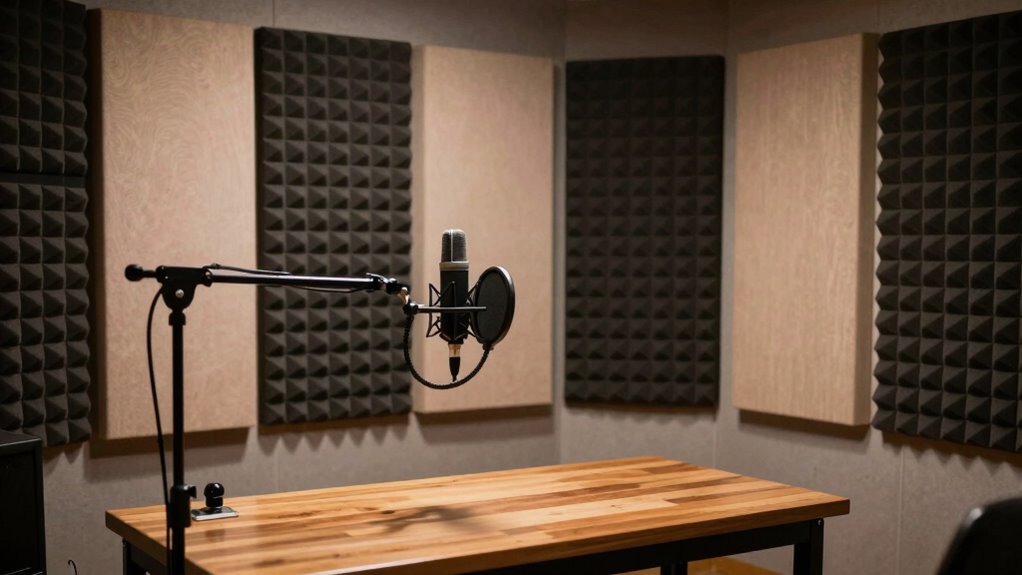
Implementing DIY treatments and using the right equipment can make a noticeable difference in your room’s sound quality. Start by making DIY acoustic panels using affordable materials like foam, fabric, or even recycled items. These panels absorb excess sound waves, reducing echo and reverb. Position your panels strategically on walls where sound reflections are strongest, focusing on first reflection points. Proper equipment placement is equally important; place speakers and microphones to minimize sound bouncing around the room. Avoid clutter and reflective surfaces near your audio setup. Experiment with different arrangements until you find a setup that enhances clarity and warmth. Understanding room acoustics and how sound interacts with different surfaces can help you choose the most effective solutions. Additionally, experimenting with sound absorption techniques allows you to tailor the acoustics to your specific space. With some simple DIY treatments and mindful equipment placement, you can profoundly improve your room sound without costly professional interventions.
Common Mistakes That Make Echo and Reverb Worse: and How to Avoid Them
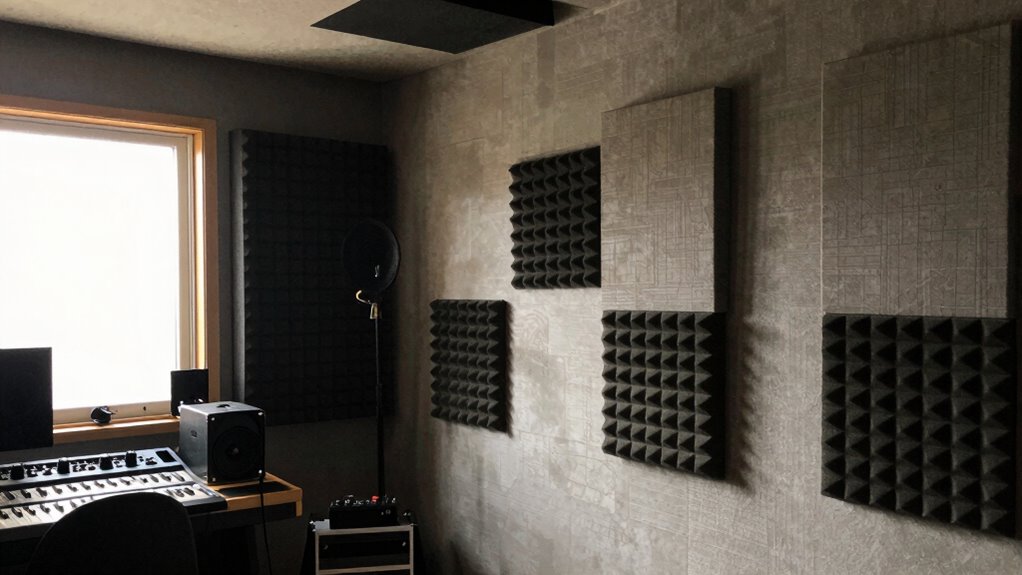
One common mistake that worsens echo and reverb is placing reflective surfaces, like glass or bare walls, too close to your sound sources, which causes sound waves to bounce excessively. This is a typical soundproofing mistake that amplifies unwanted room reflections. Additionally, decor choices like hard furniture or minimal textiles can make the problem worse, as they don’t absorb sound effectively. Instead, avoid overly reflective surfaces near speakers or microphones. Incorporate softer materials, rugs, and curtains to dampen reflections. Be mindful of your room’s layout—cluttered or open spaces increase echo. Using sound-absorbing materials strategically can significantly improve acoustics. For example, adding acoustic panels or foam helps absorb sound energy and reduce reflections. By choosing decor that absorbs sound and positioning surfaces strategically, you can markedly reduce echo and reverb, creating a clearer and more controlled sound environment.
When to Call in a Sound Professional for Room Sound Problems
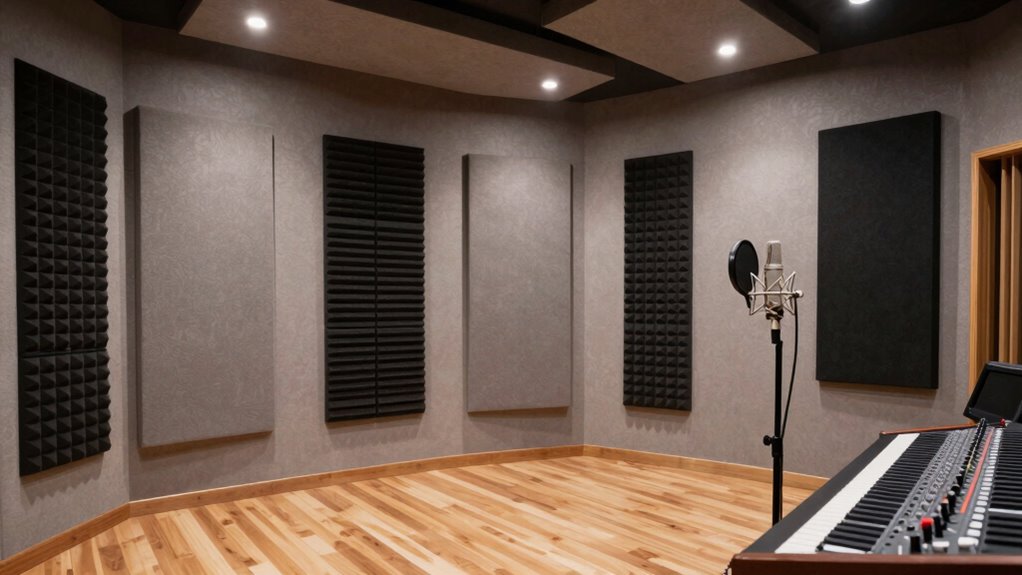
If you notice persistent acoustic issues that you can’t fix with simple adjustments, it’s time to contemplate professional help. Unusual room echoes or complex sound environments often require expert evaluation to identify underlying problems. Don’t hesitate to call in a sound professional when the room’s acoustics continue to disrupt your space. Additionally, understanding acoustic mitigation strategies can help you better communicate the need for specialized assistance. Proper room treatment can sometimes resolve issues without extensive remodeling, but a professional assessment can ensure the most effective solutions.
Persistent Acoustic Issues
Persistent acoustic issues can become frustrating when simple adjustments no longer improve your room’s sound quality. If you’ve tried adding sound absorption materials or rearranging furniture without success, it’s time to consider professional help. Unbalanced room dimensions can create problematic sound reflections and uneven acoustics that are difficult to fix on your own. A sound professional can analyze your space’s unique characteristics and recommend targeted solutions, such as specialized acoustic treatments or structural modifications. They have the expertise to identify underlying issues that cause persistent echo or muddiness, ensuring your room’s sound is clear and balanced. Don’t ignore ongoing problems—consulting an expert can save you time and money while achieving the ideal room acoustics you desire.
Unusual Room Echoes
Unusual room echoes can be tricky to identify and even more challenging to fix on your own. If you notice irregular or persistent echoes that don’t respond to basic sound absorption treatments, it’s time to think about professional help. These echoes often result from poor room symmetry or uneven sound absorption, creating focused reflections that distort sound quality. A sound professional can analyze your space’s acoustics and recommend targeted solutions, such as strategically placed diffusers or specialized panels. They understand how room shape and materials influence echo behavior. Attempting to fix these issues without expertise might worsen the problem. When echoes feel unbalanced or abnormal despite your efforts, calling in an expert ensures you get a customized, effective solution that restores clarity to your room’s sound.
Complex Sound Environments
When sound reflections become unpredictable despite your efforts to improve room acoustics, it’s a clear sign that the environment’s complexity may be beyond simple fixes. In such cases, your room layout and sound absorption strategies might not be enough to control the sound behavior. Complex sound environments often involve irregular surfaces, multiple reflective surfaces, or unusual room dimensions that create confusing echoes and reverb patterns. If you notice persistent issues that don’t respond to basic treatments, it’s time to call in a sound professional. They can analyze your space, optimize the room layout, and recommend specialized sound absorption solutions to tame the environment’s acoustic chaos. Professional intervention guarantees your space sounds clear, balanced, and suited to its intended purpose.
Frequently Asked Questions
Can Certain Furniture Choices Reduce Room Echo Effectively?
Yes, certain furniture choices can reduce room echo effectively. You should focus on strategic furniture placement, like adding sofas, bookshelves, or large upholstered pieces, which absorb sound waves. Incorporate decorative accents such as rugs, curtains, and wall hangings to further dampen echo. By combining these elements thoughtfully, you create a more acoustically pleasant space where sound is absorbed rather than reflected, improving overall room acoustics.
How Does Room Shape Influence Echo and Reverb Issues?
Your room’s shape is like a musical instrument’s body, shaping sound waves that bounce and linger. Narrow, rectangular rooms amplify echo and reverb, while irregular shapes scatter sound, reducing these issues. To tame the acoustics, add soundproof curtains to absorb high frequencies and install acoustic paneling to break up sound reflections. These adjustments transform your space from a cavern into a balanced canvas for clear, pleasant sound.
Are There Specific Materials Best for Absorbing Sound?
You should use materials like soundproof curtains and acoustic foam panels to absorb sound effectively. Soundproof curtains help block noise from outside and reduce echo, while acoustic foam panels absorb sound waves, minimizing reverb. Combining these materials creates a more controlled environment. Install soundproof curtains on windows and acoustic foam panels on walls for the best results, ensuring your space sounds clearer and more comfortable.
What Are the Signs of Severe Echo Affecting Audio Quality?
You’ll notice severe echo through excessive sound reflection, where your voice or audio repeats clearly after the original, disrupting clarity. Acoustic anomalies like uneven sound distribution or muffled sections also indicate problems, making it hard to understand speech or enjoy music. If these issues persist, it’s a sign that your room’s echo is affecting audio quality, and you should consider adding sound-absorbing materials or repositioning equipment to reduce reflections.
How Long Does It Take to See Improvements After Sound Treatment?
You’ll notice improvements within a few days after installing soundproof curtains and acoustic panels. These treatments quickly reduce echo and reverb, making your space sound clearer. For ideal results, give it about a week or two, as the materials absorb more sound over time. Consistent use of soundproof curtains and acoustic panels will continue to enhance your room’s acoustics, providing clearer, more professional audio quality.
Conclusion
By understanding the differences, identifying the issues, and trying simple fixes, you can transform your room into a space that sounds clear, warm, and professional. Whether you’re sealing gaps, adding soft furniture, or using DIY treatments, each step brings you closer to a perfect recording environment. Keep experimenting, stay patient, and don’t hesitate to call in a professional if needed—because a quiet, balanced room is within your reach, and your sound deserves it.
Fall Picks
fall essentials
As an affiliate, we earn on qualifying purchases.