

Boomy bass in some rooms often happens because of poor acoustics, like reflective surfaces, room shape, size, and materials that create resonances and standing waves. These can amplify low frequencies unevenly, causing muddiness and boominess. Placement of speakers and subwoofers also plays a role. Adjusting your setup and adding acoustic treatments can markedly improve clarity. Keep exploring to learn how you can tune your space for balanced, tight bass.
Key Takeaways
- Excessive bass boominess often results from standing waves and room modes caused by room dimensions and reflective surfaces.
- Placement of subwoofers near walls or corners amplifies low frequencies, increasing boominess.
- Lack of acoustic treatments like bass traps and absorbers leads to low-frequency resonance and muddiness.
- Irregular room shapes or low ceilings disrupt even sound distribution, causing uneven bass response.
- Poor calibration and speaker positioning can exacerbate room resonances, making bass sound overly boomy.

Pink Wall Art Trendy Decor Pop Music Vienna Lyrics Poster Canvas Print Slow Down Your Doing Fine Daily Reminder Positive Affirmations Maximalist Aesthetic for Bedroom Dorm 8x12inch Unframed
【Colorful Room Decor】Poster size is 8x12 inches12x18 inches16x24 inches24x36 inches. [Unframed]: If you choose unframed please note that...
As an affiliate, we earn on qualifying purchases.
Why Does My Bass Sound Boomy in Certain Rooms?
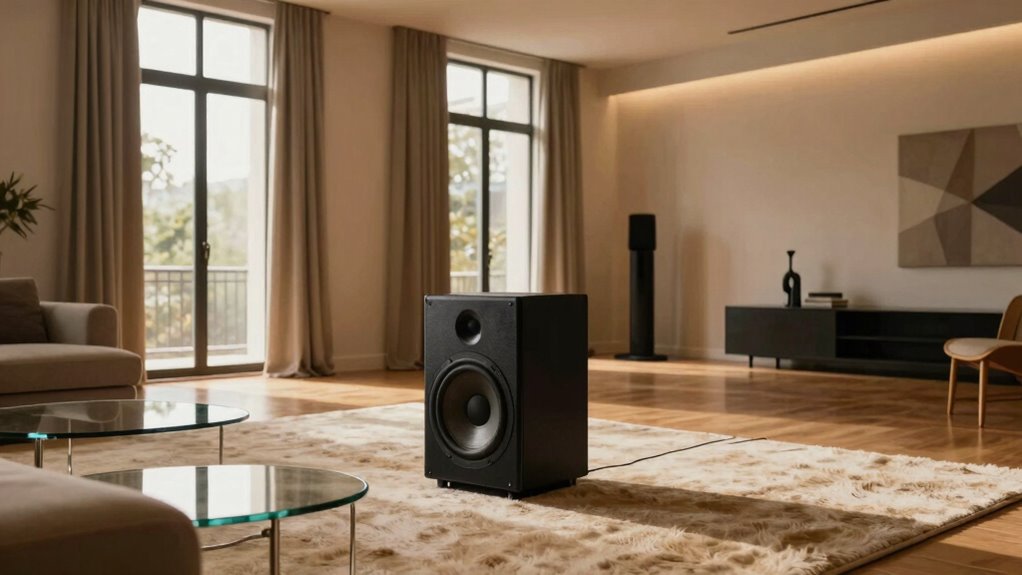
Have you ever noticed that your bass sounds surprisingly loud and boomy in some rooms but not others? That’s often due to how room acoustics influence bass frequency behavior. Certain room shapes and materials can cause low frequencies to build up, creating a muddy, boomy sound. When sound waves reflect off walls, floors, and ceilings, they can reinforce specific bass frequencies, making them more prominent. The buildup results in uneven bass response, where some tones seem exaggerated. The size and shape of the room play a significant role in how these bass frequencies interact with the space. Understanding how room acoustics affect bass can help you identify why your sound feels overly boomy in certain areas and guide you toward effective solutions. Additionally, room acoustics can be influenced by furniture and decorative elements, which can help absorb or diffuse sound waves to improve overall audio quality. Recognizing how sound reflection impacts bass can further assist in troubleshooting and optimizing your listening environment. Properly managing acoustic treatments can significantly reduce bass buildup and improve sound clarity, and being aware of standing waves is essential in addressing specific frequency issues.

AMERICAN LUXURY GIFTS King of Pop 80s Music Wall Art, Album Poster, 8x10
Vintage 80s Vibe for Any Room: Celebrate the King of Pop’s most legendary albums with this striking 80s...
As an affiliate, we earn on qualifying purchases.
How Do Room Size and Shape Cause Boomy Bass?
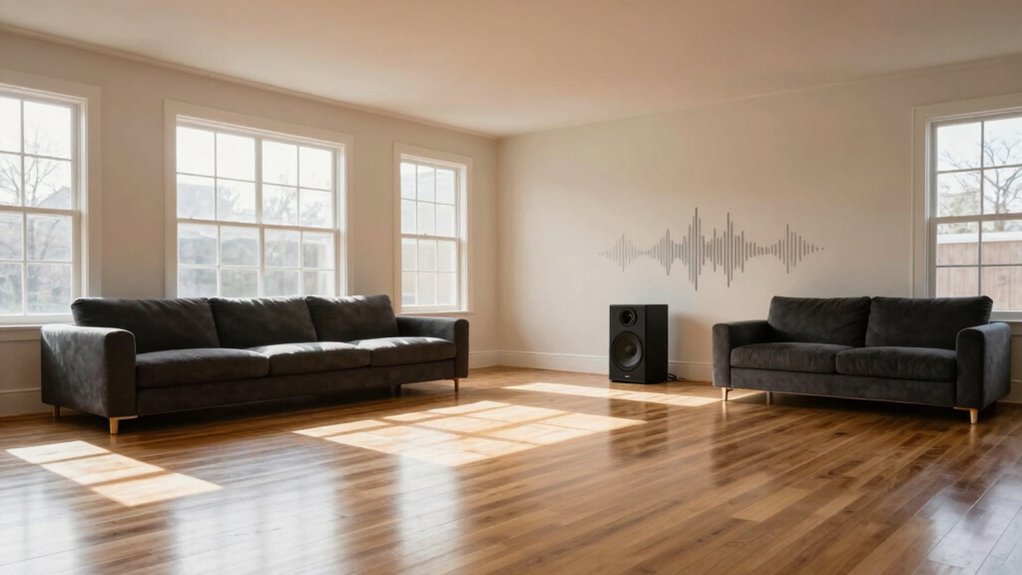
The size and shape of a room directly influence how bass frequencies behave because they determine how sound waves reflect and interact within the space. Large rooms tend to amplify bass, creating boomy sounds, while small rooms can cause excessive resonance. Irregular shapes or low ceilings can disrupt even sound distribution, leading to uneven bass response. You might also face soundproofing issues, with bass leaks or echoes that make the sound worse. Aesthetic considerations often influence room design, but neglecting acoustic treatment can worsen boomy bass. To improve clarity, consider adjusting room dimensions with diffusers or bass traps. Properly addressing room size and shape helps control bass behavior, reducing that unwanted “boominess” and creating a more balanced listening environment. Room acoustics play a crucial role in how sound waves behave within a space, and understanding sound wave reflection can help optimize your setup. Additionally, understanding the room modes that occur in specific spaces can guide targeted acoustic treatments to mitigate problematic resonances. Being aware of standing waves and their placement can help you identify where bass issues are most pronounced and how to address them effectively. Analyzing the frequency response of your room can further aid in pinpointing specific problem areas for targeted solutions.

Trendy Black and White Wall Art Luxury Money Hair Rollers Black Woman Poster Retro Bold Feminine Fashion Hypebeast Print for Bedroom Dressing Living Room Dorm Decor 12x18inch Unframed
Bold Feminine Energy: This glam black and white powerful print captures the essence of glam and confidence with...
As an affiliate, we earn on qualifying purchases.
How Do Materials and Surfaces Affect Bass Clarity?

The materials and surfaces in your room play a big role in how clear the bass sounds. Reflective surfaces bounce bass waves, making them muddy, while absorptive materials reduce unwanted resonance. Material density also matters, as denser surfaces tend to reflect more sound, affecting overall bass clarity. Understanding room acoustics can help you choose the right materials to improve sound quality. Properly considering speaker placement can also influence how bass interacts with your room’s surfaces. Additionally, sound absorption techniques can be tailored to manage specific frequencies and enhance clarity. Using acoustic treatments strategically can further optimize your room for cleaner bass response.
Surface Absorption and Reflection
Materials and surfaces in a room play a crucial role in how bass sounds are perceived. They influence bass resonance and wall reflections, which directly impact clarity. Hard surfaces like concrete or glass reflect low frequencies, causing excessive wall reflections that can make bass sound boomy or muddy. Conversely, soft materials such as carpets, curtains, or acoustic panels absorb sound waves, reducing unwanted reflections and controlling bass resonance. Properly balancing absorption and reflection prevents bass from becoming overwhelming or uneven. When walls reflect bass too strongly, it creates peaks and nulls, muddying the sound. On the other hand, too much absorption can deaden the bass, making it thin. Adjusting surface materials helps you achieve a cleaner, more controlled bass response. Additionally, understanding sound wave behavior enables better manipulation of room acoustics for optimal bass clarity. Recognizing how room dimensions and geometry influence sound distribution can further help in optimizing bass performance.
Material Density and Density
Denser surfaces tend to reflect low frequencies more effectively, which can amplify bass and cause it to sound muddy or boomy if not managed properly. The material composition and wall density play vital roles in how sound behaves in your room. Heavier, denser materials like concrete or brick reflect bass more than lighter materials like drywall or wood. The table below shows how different materials impact bass clarity: | Material Type | Effect on Bass Clarity | |——————-|———————————| | Dense materials | Increase reflection, potential muddiness | | Light materials | Absorb or diffuse bass, clearer sound | | High wall density | Amplifies low frequencies | | Low wall density | Reduces bass buildup | Knowing your room’s material composition helps you manage bass issues effectively. Additionally, understanding room acoustics can help you implement strategies to improve sound quality. Recognizing how sound reflection interacts with room surfaces allows for targeted adjustments to minimize boomy bass. Being aware of material density effects enables you to choose appropriate treatments to optimize bass clarity. Paying attention to sound absorption techniques can further help control excessive bass buildup and improve overall clarity. Incorporating acoustic treatment options such as bass traps or diffusers can significantly enhance sound quality by reducing unwanted reflections.

wall26 Canvas Print Wall Art Banksy Mona Lisa with Rocket Launcher Graffiti & Street Art Pop Culture Illustrations Pop Art Bohemian Multicolor Dark for Living Room, Bedroom, Office - 16"x24"
High quality printed artwork stretched to fit on durable and shrink-resistant canvas.
As an affiliate, we earn on qualifying purchases.
How Should I Place My Speakers and Subwoofer?
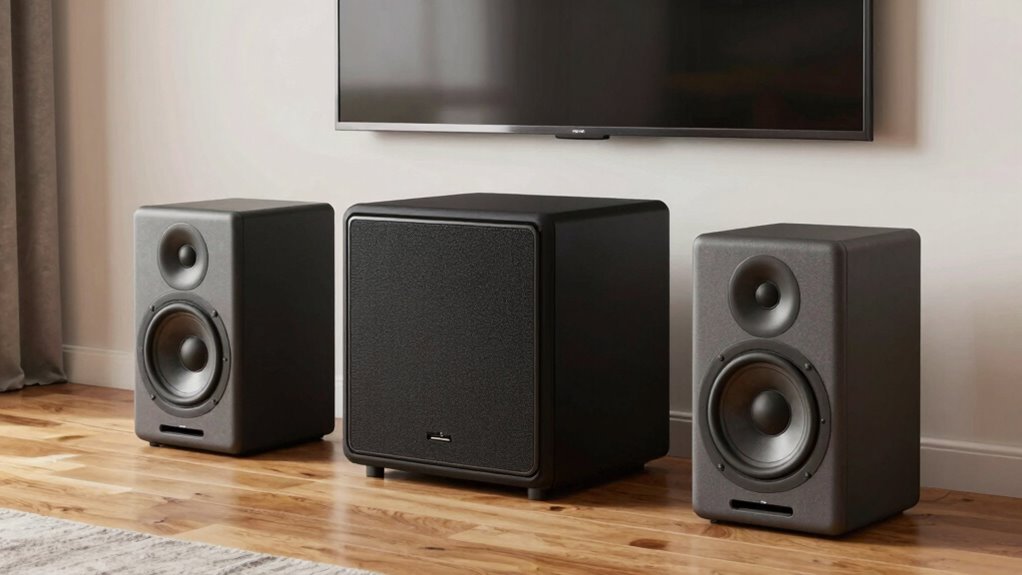
Properly placing your speakers and subwoofer is essential to achieve balanced, clear sound in your room. Correct speaker positioning ensures even sound distribution, while strategic subwoofer placement prevents boomy bass. To optimize your setup, consider these tips:
- Place the subwoofer near a wall or corner for more bass impact, but avoid placing it directly in a corner for too much boominess.
- Position speakers at ear level when seated, facing the listening area.
- Keep speakers a few feet apart to ensure stereo imaging.
- Avoid placing the subwoofer directly against walls or furniture to prevent exaggerated bass.
- Experiment with subwoofer placement by moving it around and listening for the most balanced sound.
- Remember to properly ventilate your audio equipment and keep it in a stable environment to maintain optimal performance.
- Additionally, room acoustics can significantly influence sound quality, so consider adding rugs or curtains to absorb unwanted reflections.
Proper speaker positioning and subwoofer placement make a big difference in sound clarity and bass quality.
What Are Room Modes and Standing Waves?

Room modes and standing waves occur when sound waves reflect off walls, ceiling, and floors, creating areas of reinforcement and cancellation within your space. These patterns cause certain bass frequencies to boost or cancel out, leading to uneven frequency response. When your subwoofer isn’t properly calibrated, these effects become more noticeable, making bass sound boomy or muddy. Standing waves are specific to room dimensions, causing peaks and dips at particular frequencies. To improve sound clarity, you need to identify and address these modes, which often involves adjusting subwoofer placement and calibration. Understanding how room modes influence your frequency response helps you make informed decisions about positioning and settings, reducing boomy bass and achieving a more balanced, accurate sound in your room.
How Can Acoustic Treatments Help Reduce Boomy Bass?
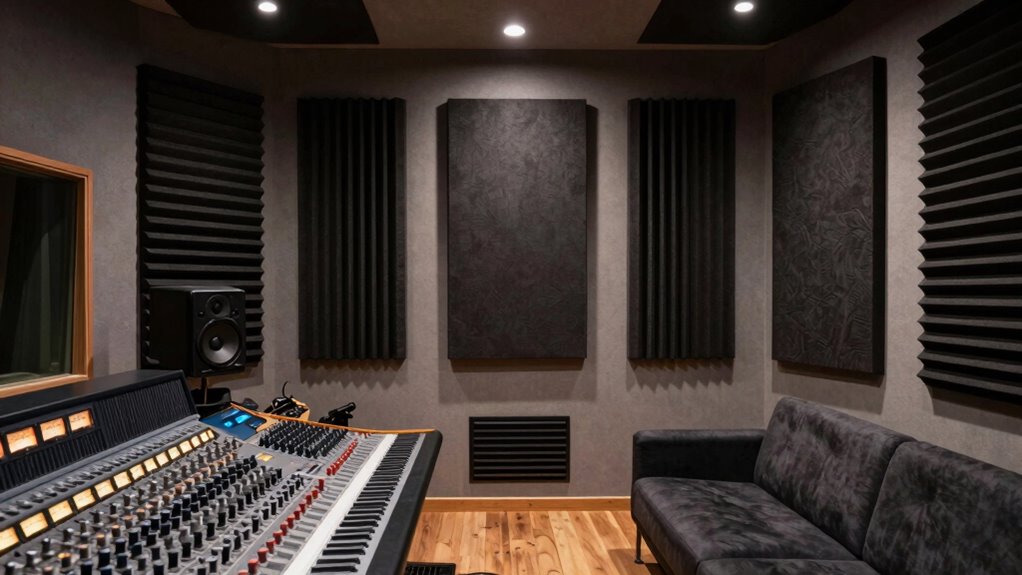
Acoustic treatments can make a big difference in controlling boomy bass by absorbing low frequencies that cause muddiness. They also help redirect sound waves to prevent buildup in certain areas of your room. Together, these strategies create a clearer, more balanced bass response.
Absorbing Low Frequencies
Have you noticed that some rooms make bass sound overly boomy or muddy? This happens because of excessive bass resonance and poor low frequency absorption. Acoustic treatments designed for low frequencies can help tame these issues. Using bass traps in corners and behind speakers reduces low frequency buildup. These traps absorb energy from problematic resonances, smoothing out the sound. Additionally, thicker panels or specialized low-frequency absorbers target bass resonance more effectively. Implementing these solutions minimizes muddiness and creates a clearer, more balanced bass response.
- Place bass traps in room corners
- Use foam or mineral wool panels for low frequencies
- Install broadband absorbers for overall sound control
- Keep reflective surfaces away from bass hotspots
- Combine multiple treatments for best results
Redirecting Sound Waves
To reduce boomy bass, redirect sound waves away from problematic areas by strategically placing acoustic treatments. Sound wave manipulation involves guiding acoustic energy to prevent it from bouncing excessively in certain parts of your room. By using diffusers or strategically angled panels, you can redirect sound waves, dispersing acoustic energy more evenly throughout the space. This prevents bass frequencies from accumulating and creating resonances that cause boomy sounds. Proper placement of these treatments breaks up standing waves and reduces focused reflections, ultimately balancing low-frequency response. Think of acoustic treatments as tools to steer sound waves, rather than just absorb them. When you redirect sound waves effectively, you’ll notice clearer, more controlled bass that eliminates the “boomy” quality and enhances your listening experience.
When Should I Consider Professional Room Tuning?
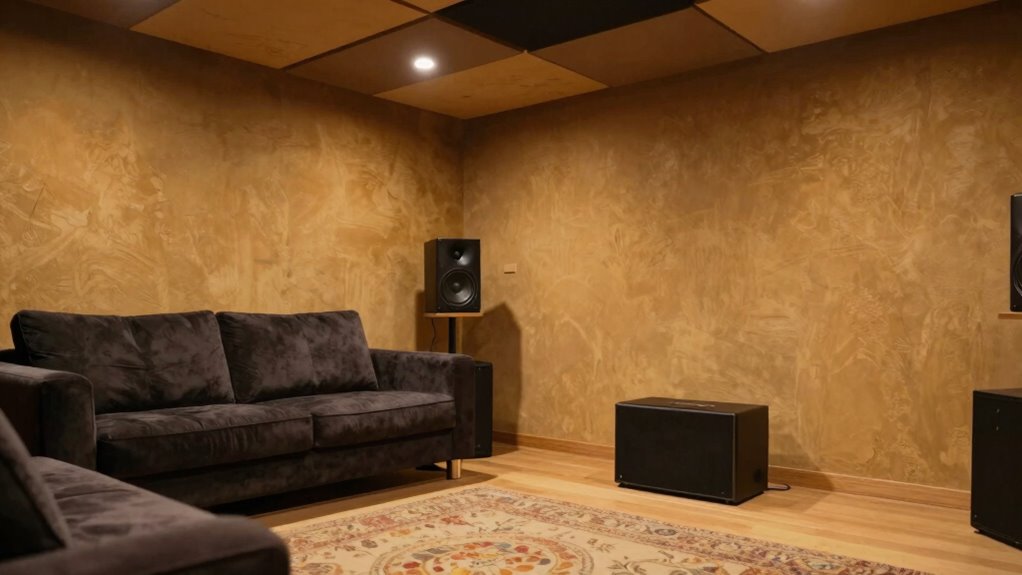
Are you noticing persistent bass issues despite trying various adjustments? If your room still sounds boomy or uneven, it’s time to think about professional room tuning. This is especially true if fine-tuning speaker placement and material selection haven’t improved the sound. Professional tuning can identify underlying problems like uneven bass response or problematic room modes. You should consider expert help if:
- You’ve exhausted DIY adjustments without success
- The bass sounds inconsistent across different listening spots
- You’re unsure about ideal speaker placement
- Room materials are contributing to resonance issues
- You want a precise, balanced sound for critical listening
A professional can evaluate your setup, recommend optimal speaker placement, and suggest materials to minimize bass boominess, ensuring your room sounds its best.
What Are Signs That Your Room Has Excessive Bass Resonance?
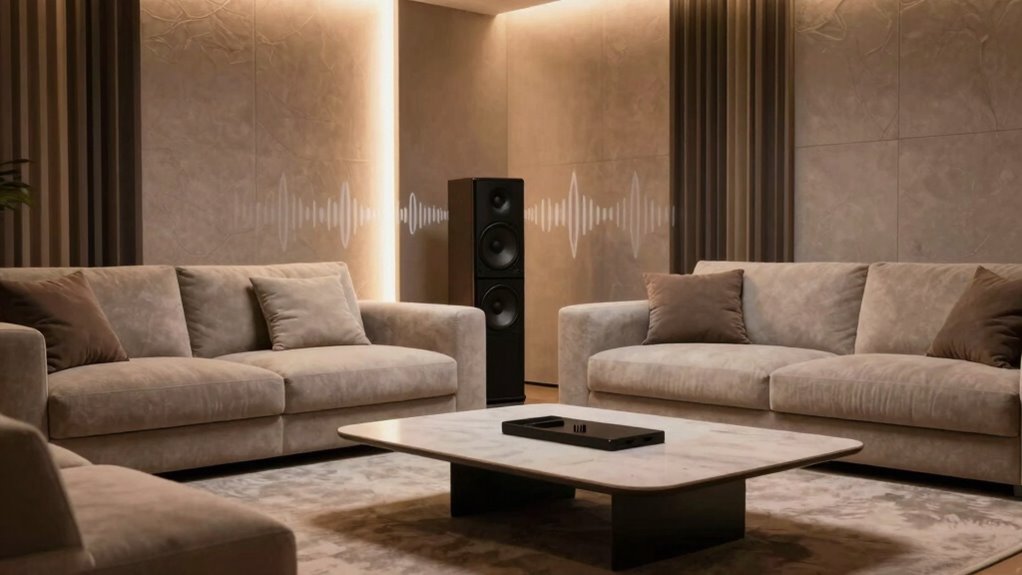
Excessive bass resonance often reveals itself through noticeable unevenness or muddiness in your sound. If your bass feels overly boomy or fluctuates unpredictably, it’s a sign your room might have standing waves or poor subwoofer placement. You might notice certain spots where bass sounds disproportionately loud or quiet. Using bass traps strategically can help absorb excessive resonance, smoothing out the sound. Proper subwoofer placement, avoiding corners or reflective surfaces, also reduces boominess. To understand these signs better, see the table below:
| Symptom | Possible Cause |
|---|---|
| Uneven bass levels | Poor subwoofer placement |
| Muddiness or blurriness | Excessive bass resonance |
| Inconsistent bass response | Lack of bass traps |
| Peaks and nulls in frequency | Standing waves |
| Excessive reverberation | Reflective room surfaces |
Quick Tips to Minimize Boomy Bass Without Major Renovations
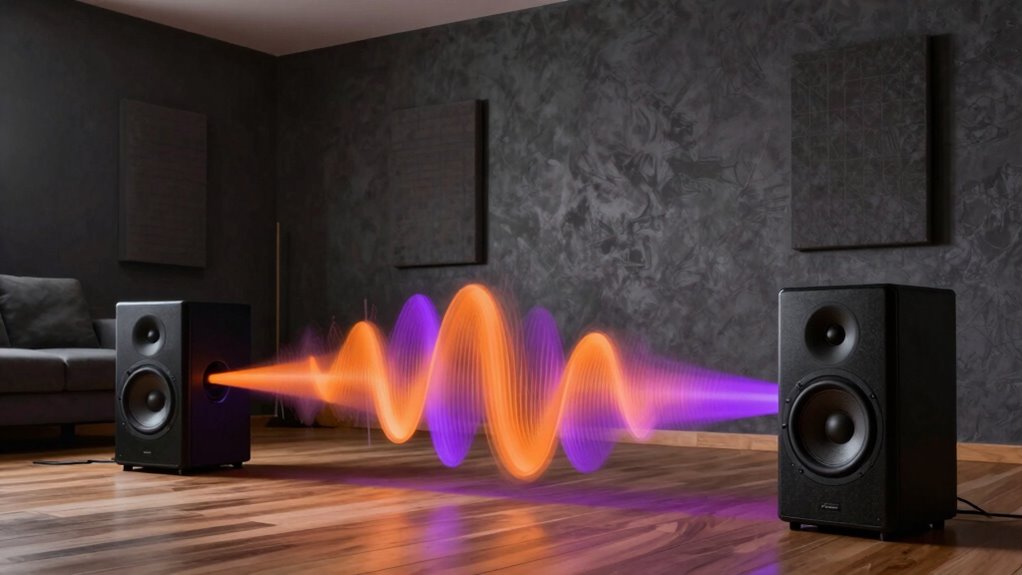
You can improve your bass response quickly by adjusting your room setup and adding absorptive materials. Moving your speakers or listening position can reduce boomy spots, while incorporating soft furnishings helps absorb excess sound. These simple changes make a noticeable difference without the need for major renovations.
Strategic Room Placement
Strategically placing your speakers and listening position can substantially reduce boomy bass without costly renovations. Proper speaker placement influences your room’s frequency response, minimizing bass buildup in certain areas. Start by positioning your speakers away from corners and walls, which often amplify low frequencies. Experiment with angles and distances to find a spot where bass sounds balanced. Keep your listening seat away from reflective surfaces that can create standing waves. Use these quick tips:
- Place speakers at ear level and equidistant from walls
- Avoid placing them directly against corners
- Experiment with speaker angles to improve sound dispersion
- Position your seat to avoid bass nulls and peaks
- Use small furniture or cushions to absorb unwanted reflections
This strategic approach optimizes speaker placement, leading to clearer, less boomy bass and a better overall sound experience.
Use of Absorptive Materials
Wondering how to tame boomy bass without tearing down walls? Using absorptive materials like bass trapping and acoustic panels is an effective strategy. Bass traps, placed in corners, absorb low-frequency energy that causes boomy sounds. Acoustic panels, mounted on walls, reduce reflections and smooth out bass response. Focus on treating the problem areas, especially corners and walls where bass buildup is strongest. These materials don’t just absorb sound; they improve clarity across the spectrum. Installing bass traps and acoustic panels is a quick, non-invasive way to minimize boominess. They’re affordable and versatile, making them perfect for DIY tweaks. By strategically using absorptive materials, you can considerably enhance your room’s bass response without expensive renovations.
How Do I Know When It’s Time for Room Tuning?
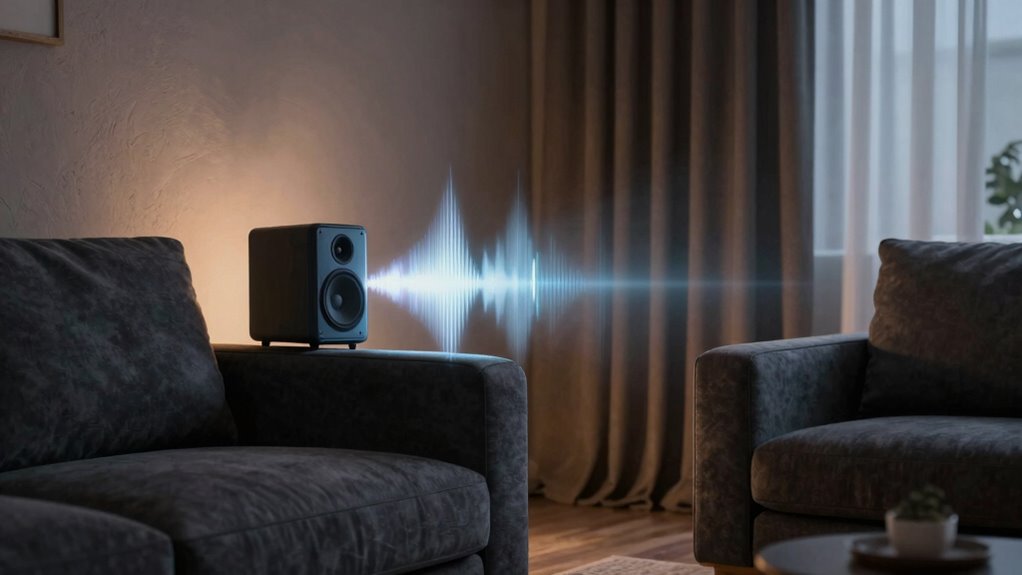
Recognizing the signs that your room needs tuning can save you time and improve your sound quality considerably. If you notice persistent issues with bass frequency or an imbalance in acoustic quality, it’s likely time for adjustments. Common cues include muddy or boomy bass that doesn’t respond well to changes in volume, uneven sound distribution, and difficulty achieving clarity across the spectrum. You might also experience certain areas where sound feels overly resonant or dull. To determine if tuning is needed, look for these indicators:
- Excessive bass boominess
- Inconsistent sound across listening positions
- Difficulty achieving clear acoustic balance
- Resonances or standing waves
- Lack of control in low-frequency response
Frequently Asked Questions
Can Furniture Placement Influence Bass Response in a Room?
Yes, furniture placement can influence bass response in your room. You should focus on room symmetry and strategic speaker positioning to reduce boomy sounds. Arranging furniture to create balanced surfaces helps prevent standing waves, while placing speakers away from walls and corners minimizes bass buildup. Experiment with different arrangements to find the best setup, making your bass sound clearer and more controlled.
Do Electronic Room Correction Tools Effectively Fix Boomy Bass?
Electronic room correction tools can substantially improve boomy bass, but they aren’t a complete fix. While they adjust the sound digitally, adding acoustic treatment and soundproofing techniques makes a real difference. You might think these tools alone solve the problem, but combining them with proper room setup ensures tight, accurate bass. So, use correction tools alongside physical measures for the best results in controlling boomy sound.
How Does the Type of Flooring Affect Bass Clarity?
Your flooring considerably impacts bass clarity. Carpet absorbs low frequencies, reducing boomy sounds and creating a clearer bass. Conversely, tile reflects bass, amplifying it and causing muddiness. If you want better bass definition, opt for carpet or add rugs to absorb sound. Hardwood or tile floors tend to reflect bass waves, so they require strategic placement of soft furnishings or acoustic treatments to improve clarity and prevent that overwhelming, boomy effect.
Are Certain Speaker Brands Better at Minimizing Boomy Bass?
You’ll find that some speaker brands, like KEF, excel at minimizing boomy bass due to their precise driver design. In a case study, KEF speakers paired with high-quality amplifiers maintained tight, controlled bass even in challenging rooms. Your choice of speaker brand preferences and ensuring amplifier compatibility are essential; mismatched equipment can amplify boomy sounds. So, pick brands known for clarity and match them properly to your amplifier to achieve balanced, non-boomy bass.
What Are the Best DIY Solutions for Reducing Bass Resonance?
To reduce bass resonance, you should build DIY bass traps using dense materials like mineral wool or fiberglass, placing them in room corners where bass tends to accumulate. Additionally, installing acoustic panels on walls helps absorb excess sound and smooth out boomy frequencies. These DIY solutions are cost-effective and customizable, making them effective for improving your room’s acoustics and achieving clearer, more balanced bass without the boominess.
Conclusion
So, next time your bass sounds unexpectedly “boomy,” remember it’s not magic—just your room’s quirks. Ironically, the very spaces meant to host your music often betray it, amplifying those deep notes in ways you didn’t plan. But don’t worry; with a few tweaks, you can tame your room’s bass resonance. After all, the real art is turning chaos into clarity—without turning your space upside down.