
For clear dialogue, position your center channel speaker at ear level, ideally between 3-4 feet high. Angle it slightly towards your listening area and place it directly above or below your TV. Avoid common mistakes like improper height and close proximity to walls, which can distort sound. Ensuring good room acoustics is also key. Stick around to discover more tips for fine-tuning your setup for the best cinematic experience!

Get movie nights delivered free — and shop member deals
- Fast, free delivery on millions of items
- Access to Prime Big Deal Days deals on October 6–7
- Prime Video, Amazon Music and more included
Key Takeaways
- Position the center channel speaker at ear level, ideally 3-4 feet off the ground, for optimal dialogue clarity.
- Angle the speaker slightly towards the listening area to enhance directionality and sound focus.
- Place the speaker directly above or below the TV to create a coherent audio-visual experience.
- Avoid placing the speaker too close to walls to minimize unwanted sound reflections and distortion.
- Perform speaker calibration with audio testing to fine-tune positioning and improve dialogue clarity for all viewers.
Why the Center Channel Speaker Matters for Dialogue Clarity
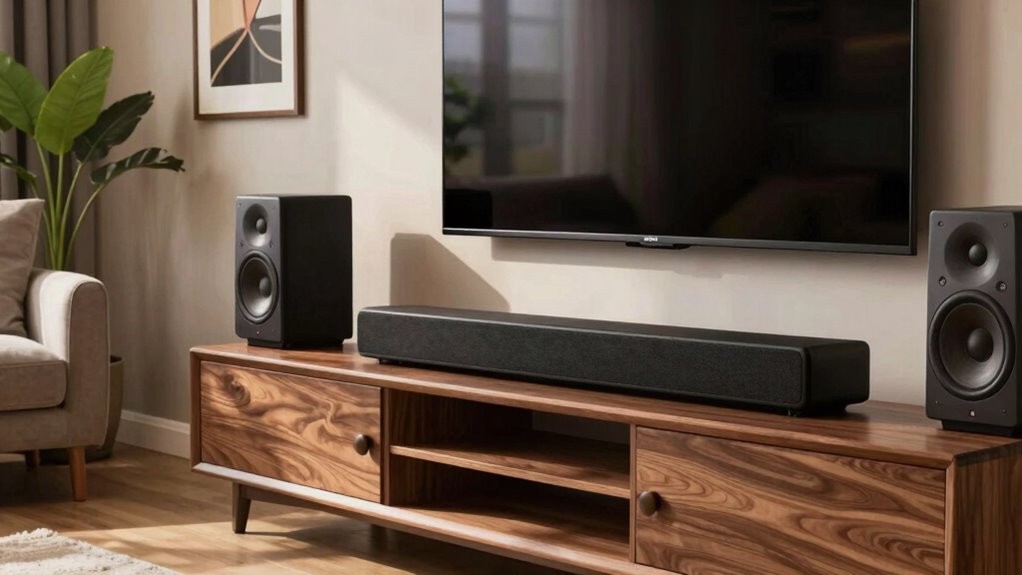
When you’re watching a movie or a show, you might not realize just how essential the center channel speaker is for dialogue clarity. This speaker type is specifically designed to handle the bulk of the dialogue, ensuring you catch every word without straining to understand what’s being said. The dialogue importance can’t be overstated—it’s the heart of storytelling, and poor audio can ruin your viewing experience. By using a dedicated center channel speaker, you enhance clarity and balance, allowing other speaker types to focus on music and sound effects. Investing in a quality center speaker can make a significant difference, immersing you deeper into the narrative and helping you connect with the characters in a more meaningful way.
The Ideal Height for Center Channel Speaker Placement
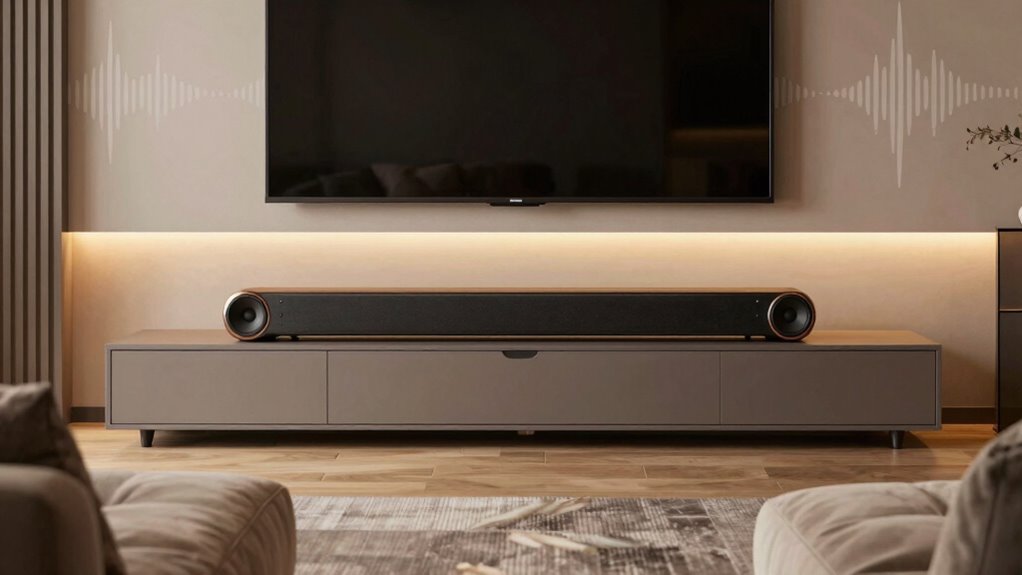
How high should your center channel speaker be placed for ideal dialogue clarity? The right speaker height can greatly enhance your viewing angles and make dialogue clearer. Generally, you want the speaker to be at ear level when you’re seated. Here are some key points to take into account:
For optimal dialogue clarity, position your center channel speaker at ear level when seated.
- Position the speaker 3-4 feet off the ground.
- Align the center of the speaker with your ears for best sound.
- Avoid placing it too high or too low to prevent distortion.
- Verify it’s free from obstructions that could muffle sound.
- Try to angle it slightly toward your seating area for better directionality.
How to Position Your Center Channel Speaker for Optimal Dialogue Clarity
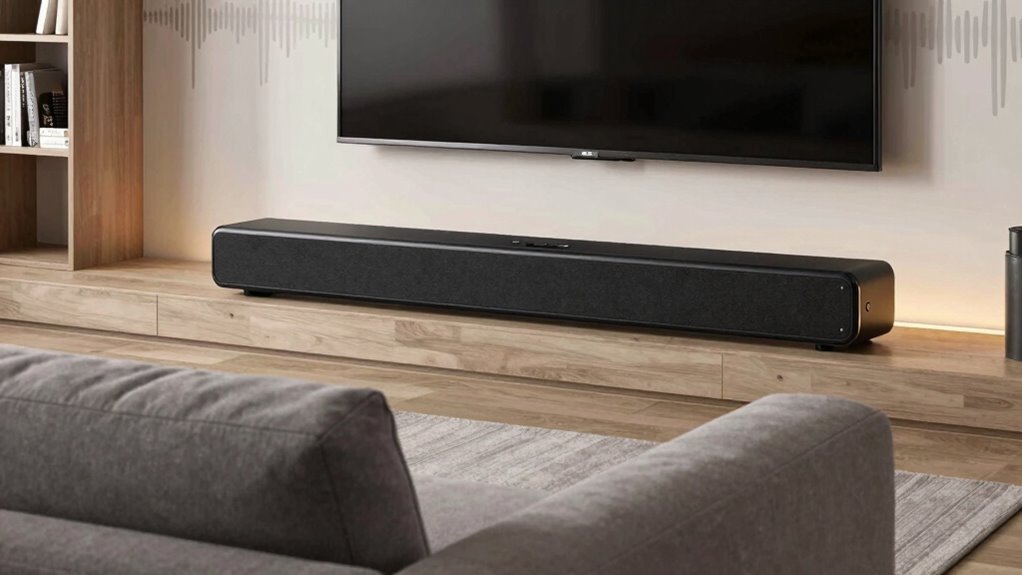
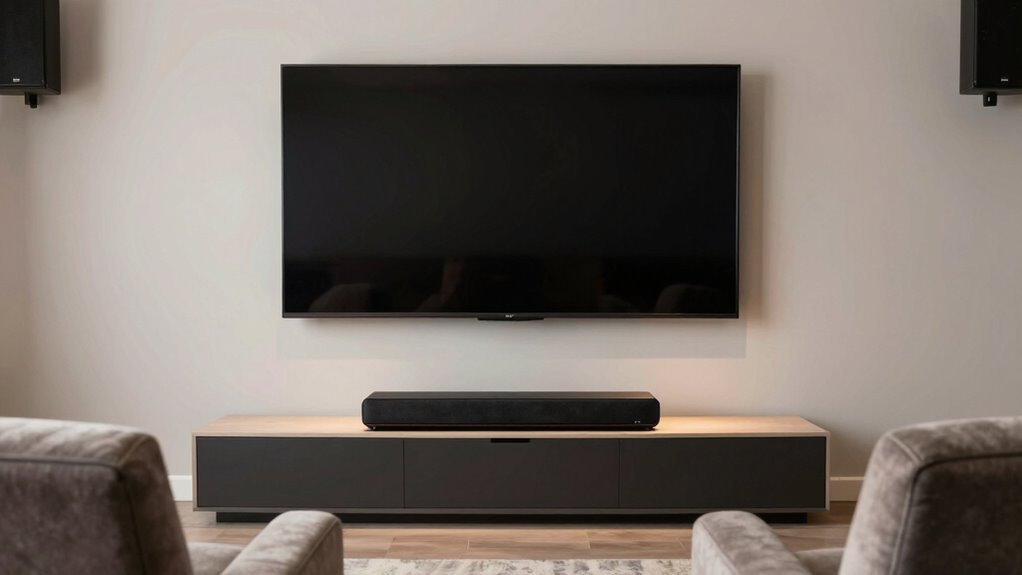
To achieve ideal dialogue clarity, positioning your center channel speaker correctly is essential. Start by placing it directly above or below your TV, ensuring it’s angled toward your listening position. This setup works best for various speaker types, maximizing dialogue enhancement. Additionally, integrating your speaker with smart home devices can create a more immersive audio experience. The use of dual camera doorbells in your smart home setup can also enhance your overall audio-visual experience by providing clear visuals while you enjoy your favorite shows. Proper speaker placement can significantly impact audio quality, as acoustic environment plays a crucial role in how sound is perceived. Furthermore, maintaining good indoor air quality can enhance your overall comfort and enjoyment while watching TV. To further improve your experience, consider using higher-quality audio equipment that can reproduce sound with greater accuracy.
Here’s a quick reference table to help you:
| Positioning Height | Speaker Type | Dialogue Enhancement Effect |
|---|---|---|
| Eye Level | Bookshelf Speaker | High clarity |
| Below TV | Soundbar | Moderate clarity |
| Above TV | In-Ceiling Speaker | Variable clarity |
| Elevated | Floor Standing | Enhanced spatial sound |
| Tilted Forward | Satellite Speaker | Focused dialogue |
Common Speaker Placement Mistakes to Avoid
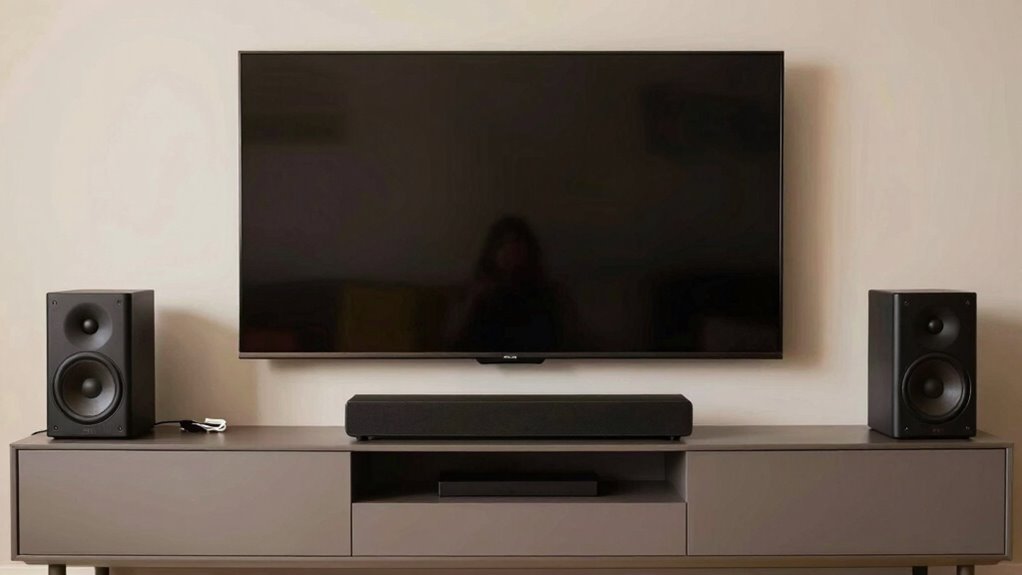
While proper speaker placement is essential for ideal sound quality, many people overlook common mistakes that can hinder their audio experience. Here are some common placement errors to avoid:
Proper speaker placement is crucial for optimal sound quality, yet many neglect key mistakes that can compromise their audio enjoyment.
- Ignoring the center channel’s height: It should be ear level for clear dialogue. Maintaining proper alignment in your audio setup can also significantly enhance clarity. Additionally, ensuring that your setup is integrated with smart home automation can offer convenience in adjusting audio settings. Proper placement of your speakers can greatly enhance overall comfort during long viewing sessions.
- Not angling speakers properly: Improper speaker alignment can lead to poor sound staging.
- Placing speakers too close to walls: This can create unwanted reflections and muddiness. Additionally, using anti-fatigue mats in your setup can improve comfort during long listening sessions.
- Using mismatched speakers: Different models can result in inconsistent sound quality.
- Overlooking distance from the listening area: Speakers too far or too close can distort sound dynamics. Additionally, proper speaker placement can enhance overall sound quality, ensuring a more immersive experience for viewers.
How Room Acoustics Impact Dialogue Clarity
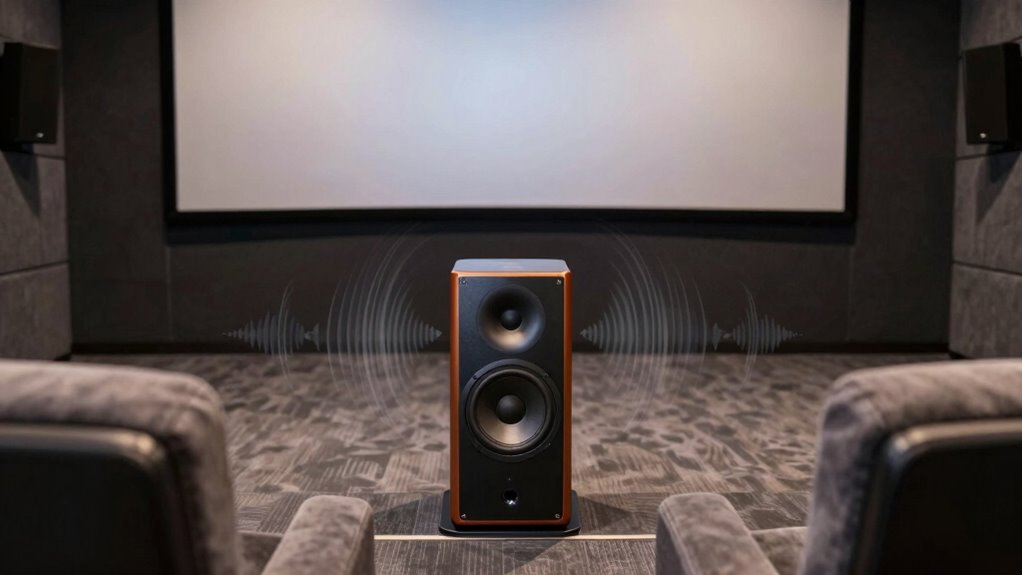
Room acoustics play an essential role in how clearly you hear dialogue. Sound reflections can muddy voices, while the materials in your space might either absorb or amplify those sounds. Plus, the shape of the room can create unexpected challenges that impact your listening experience.
Sound Reflection Dynamics
When you set up your home theater, the acoustics of your space can greatly affect how clearly dialogue comes through. Understanding sound reflection dynamics is key. The way sound waves bounce off walls and furniture creates reflection patterns that can muddy dialogue clarity. Here are some factors to take into account:
- Room shape: Irregular rooms can cause unpredictable reflections. Additionally, symmetrical designs can help create a more balanced sound environment, improving clarity. The use of studio dividers can further optimize your space for better sound distribution.
- Wall materials: Hard surfaces reflect sound waves, while soft materials absorb them. Incorporating sound-absorbing materials can further enhance dialogue clarity by reducing unwanted echoes. Using acoustic panels can also improve sound quality by targeting specific areas of reflection.
- Speaker placement: Positioning your center channel correctly can minimize reflections. Proper alignment can also ensure that sound waves reach your ears with minimal distortion. Ensuring that your speakers are at the appropriate height enhances the overall listening experience.
- Seating arrangement: Your position relative to the speakers impacts how you perceive sound. Ensuring that your seating is centered with the speakers can greatly enhance dialogue intelligibility.
- Ceiling height: Low ceilings can cause echoes, complicating dialogue clarity. Higher ceilings can facilitate better sound dispersion and reduce echo problems.
Additionally, incorporating soft furnishings can help absorb sound and improve overall acoustics in the room.
Absorption Materials Effect
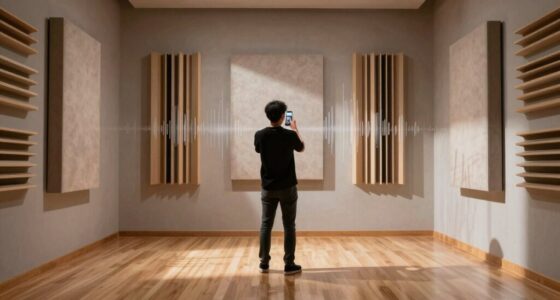
Effective use of absorption materials can greatly enhance dialogue clarity in your home theater. By strategically placing these materials on walls and ceilings, you can minimize sound reflections that often muddle speech. Absorption materials, like acoustic panels and carpets, soak up excess sound energy, allowing dialogue to come through clearer. This is especially important for center channel speakers, which are responsible for delivering spoken content. Additionally, incorporating smart home technology into your audio setup can optimize sound performance and enhance the overall viewing experience.
In addition to absorption, consider sound diffusion techniques to balance your room’s acoustics. While absorption materials reduce echoes, sound diffusion spreads the sound evenly, preventing any one area from becoming too deadened or overly lively. Together, these approaches guarantee that every word spoken in your movies and shows is crisp and easily understood. Moreover, understanding ergonomics in your setup can help you create a more comfortable viewing experience while enjoying clearer audio.
Room Shape Considerations
The shape of your space plays a crucial role in how sound travels, impacting dialogue clarity in your home theater. Consider these room dimensions and speaker alignment factors to enhance your experience:
- Room shape: Rectangular rooms often improve sound distribution better than square ones. Additionally, the layout of your furniture can affect how sound waves interact with surfaces, making smart furniture an excellent choice for optimizing acoustics. Properly arranged furniture can also help direct sound towards the seating area, enhancing the overall experience with effective sound management. Furthermore, understanding sound wave behavior can help you make informed decisions about layout and design.
- Ceiling height: Higher ceilings may cause sound to reflect unevenly, muddling dialogue. Additionally, sound waves can be better absorbed with the use of smart HVAC systems, providing a more comfortable environment for listening. Ensuring that the kitchen ventilation is optimized can also contribute to a more pleasant auditory experience in adjacent areas.
- Speaker placement: Make sure your center channel is at ear level for maximum clarity.
- Seating arrangement: Position seats in a straight line from the speakers to minimize distortion.
- Acoustic treatments: Use panels or rugs to reduce echoes and enhance overall sound quality.
- Off-road gear can also contribute to overall comfort during long viewing sessions, ensuring you’re relaxed while enjoying your favorite films.
How to Adjust Your Setup for Different Viewing Positions?
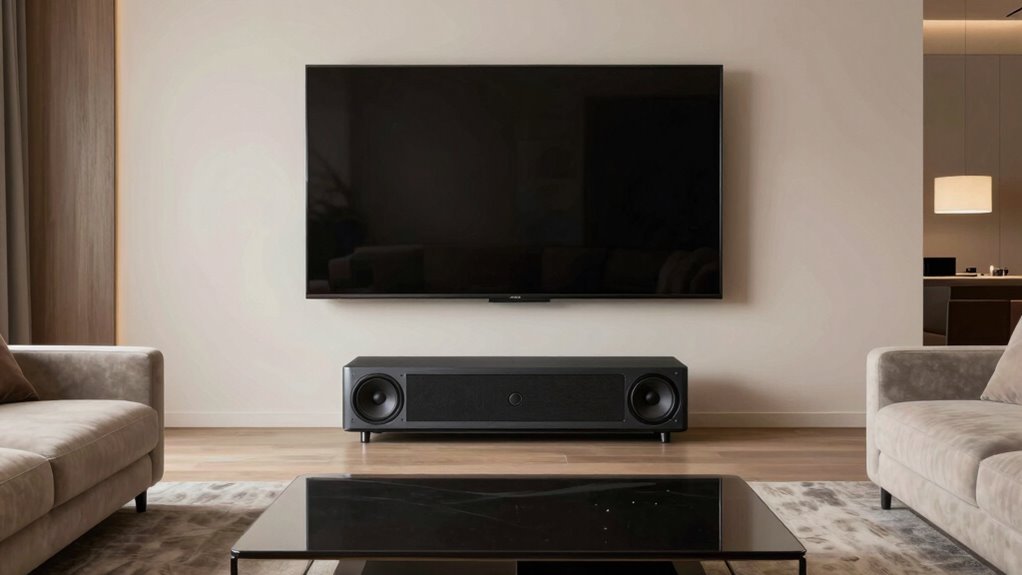
To get the best dialogue clarity, you’ll need to adjust your speaker setup based on where you’re sitting. Consider the ideal height, angle, and distance of your center channel speaker to guarantee sound reaches you clearly. Also, keep room acoustics in mind, as they can affect how sound is perceived from different positions.
Optimal Speaker Height
How can you guarantee your center channel speaker is at the right height for ideal dialogue clarity? It’s essential to make sure your speaker’s position aligns with your ear level when seated. If you’re using speaker stands, height adjustment is key for best sound. Here’s what to take into account:
- Position the speaker at ear level when seated.
- Adjust the height based on your viewing position (e.g., couch, chair).
- Make sure it’s angled slightly towards your ears for better clarity.
- Avoid placing it too high or low, which can muddy dialogue.
- Test different heights to find what works best for you.
- Proper speaker placement enhances overall sound quality, making your listening experience more immersive.
Angle and Distance
Positioning your center channel speaker isn’t just about height; angle and distance also play a significant role in achieving ideal dialogue clarity. You should start by making angle adjustments to guarantee the speaker faces you directly. Ideally, the speaker should be tilted slightly upward if it’s below ear level, or downward if it’s above. Next, consider distance measurements. The center channel should be placed close enough to the screen to maintain clear sound without losing coherence. Ideally, you want it within a few feet of the primary seating position. By carefully tweaking both the angle and distance, you’ll enhance the dialogue experience, making it easier to understand every word, no matter where you’re seated.
Room Acoustics Considerations
While you might have your center channel speaker perfectly positioned for your main viewing spot, room acoustics can dramatically change the sound experience for others in the room. To guarantee everyone enjoys clear dialogue, consider these adjustments based on your room dimensions and speaker materials:
- Experiment with positioning: Move your speaker closer to walls or corners to enhance sound reflection.
- Use absorption materials: Place rugs or curtains to minimize sound distortion.
- Adjust angles: Slightly tilt your speaker to direct sound towards different seating areas.
- Test different volumes: Find the right level for your speaker depending on the distance from the listener.
- Consider furniture placement: Rearranging furniture can help reduce sound obstacles.
Additionally, understanding room acoustics principles can significantly enhance your audio setup. These tweaks can greatly improve clarity for all viewers!
Tips for Fine-Tuning Your Center Channel Speaker Setup
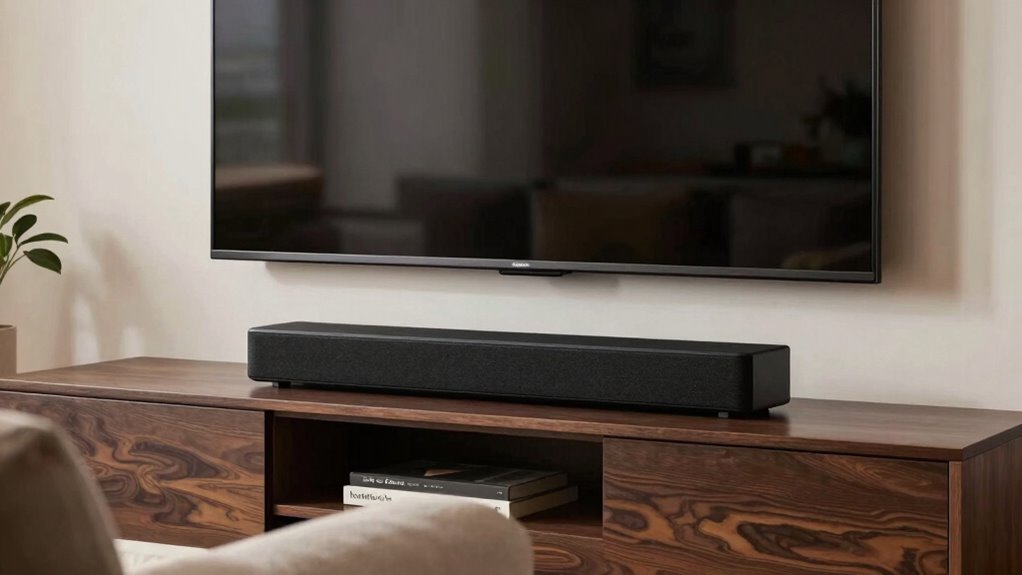
To achieve the best dialogue clarity from your center channel speaker, consider these essential tips for fine-tuning its setup. First, verify it’s positioned at ear level for peak sound projection. Next, perform speaker calibration to match your room acoustics. This helps balance the sound for a more immersive experience. Don’t forget to utilize sound testing with various audio clips to identify any adjustments needed.
| Tip | Action |
|---|---|
| Positioning | Place speaker at ear level |
| Calibration | Use an audio calibration tool |
| Sound Testing | Test with different audio clips |
| Adjust Settings | Fine-tune equalizer settings |
Frequently Asked Questions
Can I Use a Different Speaker Type for the Center Channel?
Yes, you can use a different speaker type for the center channel, but you need to take into account speaker compatibility. Mixing speaker types can affect audio performance, leading to imbalanced sound. Ideally, you should match the center channel with your main speakers for the best results. If you decide to mix, make sure the impedance and sensitivity are compatible to maintain a cohesive listening experience. Always test the setup to verify it meets your audio expectations.
How Do I Know if My Center Channel Speaker Is Faulty?
To know if your center channel speaker’s faulty, start with speaker testing. Play a variety of audio tracks and listen for any distortion or uneven sound quality. If voices sound muffled or you hear buzzing, it’s a sign something’s wrong. You can also swap cables or connect the speaker to another device to rule out issues with your receiver. If problems persist, it might be time to contemplate a replacement.
What Is the Best Brand for Center Channel Speakers?
When it comes to center speaker brands, you can’t go wrong with giants like Klipsch, Bose, or Polk Audio. These brands offer speaker quality that’ll make your heart race and your neighbors jealous! Klipsch’s crisp highs and Polk’s rich lows create a symphony of sound that’ll have you questioning reality. So, if you want clear dialogue and booming bass, explore these brands and elevate your home theater experience to legendary status!
Does a Soundbar Replace the Need for a Center Channel Speaker?
A soundbar can replace a center channel speaker, but it comes with both advantages and limitations. You’ll enjoy a more streamlined setup and better audio quality than your TV’s built-in speakers, which is a definite perk. However, soundbars often struggle with delivering clear dialogue compared to dedicated center channel speakers. So, while a soundbar simplifies things, you might miss out on that crisp, focused sound you’d get from a proper center channel.
How Do I Clean My Center Channel Speaker Properly?
To clean your center channel speaker properly, start with soft, simple supplies. Use a microfiber cloth for dusting, and avoid harsh chemicals. For deeper cleaning, mild soap mixed with water works wonders. Gently wipe the speaker’s surface, ensuring no moisture seeps inside. Remember, speaker maintenance tips include regular checks to keep it sounding superb. Finish by checking connections for dust. You’ll enjoy crystal-clear audio when your speaker stays spick and span!
Conclusion
In the world of home theater, your center channel speaker is the lighthouse guiding you through the fog of dialogue. By positioning it at the right height and avoiding common placement mistakes, you’ll guarantee every word is crystal clear. Remember to take into account your room’s acoustics and adjust for different viewing spots, making fine-tuning an ongoing adventure. Embrace these tips, and you’ll transform your audio experience, letting the dialogue shine like a beacon in the night.
Fall Picks
fall essentials
As an affiliate, we earn on qualifying purchases.