
Bass disappears in some seats due to the phenomenon of destructive interference caused by sound waves colliding. This interaction can create dead zones where low frequencies cancel each other out. Even a slight shift in your seating position can lead to noticeably different bass experiences. Room acoustics, speaker placement, and the dimensions of your space also play essential roles. Understanding these factors can enhance your listening experience, and there’s more to explore about optimizing your setup.

Get movie nights delivered free with Prime
- Fast, free delivery on millions of items
- Prime Video, Amazon Music and more included
- Member-only deals all year
Key Takeaways
- Bass perception varies by listener position due to sound wave interaction, leading to potential drop-offs in certain areas of a room.
- Frequency cancellation occurs when sound waves collide destructively, causing bass to vanish in specific seats.
- Room acoustics, including dimensions and materials, significantly influence how bass frequencies behave and are perceived at different locations.
- Speaker placement and orientation affect bass reinforcement; moving speakers can help distribute bass more evenly throughout the room.
- Acoustic treatments, like bass traps and sound-absorbing materials, can mitigate bass loss and enhance listening experience in problem areas.
Why Does Bass Seem to Disappear?

When you’re in a room filled with speakers, you might notice that the bass seems to vanish in certain spots. This phenomenon has to do with bass perception and how sound waves interact with your environment. Low frequencies, like bass, can be tricky because they wrap around objects and can create areas where sound cancels out. This cancellation often occurs due to the way sound localization works. When you’re sitting in a specific seat, the sound waves may collide, leading to destructive interference that diminishes the bass you hear. So, if you’re looking for that rich, deep sound, try moving around the room. You’ll likely find a spot where the bass feels fuller and more immersive.
Understanding Bass Frequencies and Their Behavior
To really grasp why bass frequencies behave the way they do, you need to contemplate room acoustics and how they interact with sound waves. Certain seats may experience frequency cancellation, making the bass seem to vanish. By understanding these principles, you can better appreciate the dynamics of sound in any space.
Room Acoustics Impact
Although you might not notice it at first, room acoustics play an essential role in how bass frequencies behave within a space. The way sound waves interact with walls, ceilings, and furniture can notably affect your bass response. Good acoustic isolation can prevent unwanted reflections and absorption, ensuring that low frequencies reach your ears rather than being trapped or dampened. For instance, if you’re seated near a wall, you might experience a different bass response than if you’re in the middle of the room. It’s vital to take into account your surroundings and make adjustments, like adding sound-absorbing materials, to optimize your listening experience. Understanding room acoustics principles can help you identify and improve problem areas for better sound quality. Additionally, implementing soundproofing techniques can significantly reduce external noise interference and improve overall bass clarity. Being aware of sound wave behavior can guide you in arranging your space more effectively. For example, understanding how standing waves form can help you position your speakers to minimize bass nulls and peaks. By understanding these acoustic principles, you can enjoy a fuller, richer bass sound in every seat.
Frequency Cancellation Effects
As you explore the world of bass frequencies, it’s crucial to understand how frequency cancellation can affect what you hear. This phenomenon occurs when sound waves interact, leading to frequency interference that can greatly alter your listening experience. When bass waves from different sources collide, they can either amplify each other or cancel out, depending on their phase alignment. This is all about sound wave behavior; if you’re sitting in a spot where these waves destructively interfere, you might notice a considerable drop in bass response. To get the best sound, consider your position in the room and how it relates to the speakers. Making small adjustments can help you avoid those dreaded dead zones where bass disappears completely. Understanding sound wave behavior can help you optimize your listening environment and improve overall audio quality.
How Speaker Placement Affects Bass Response
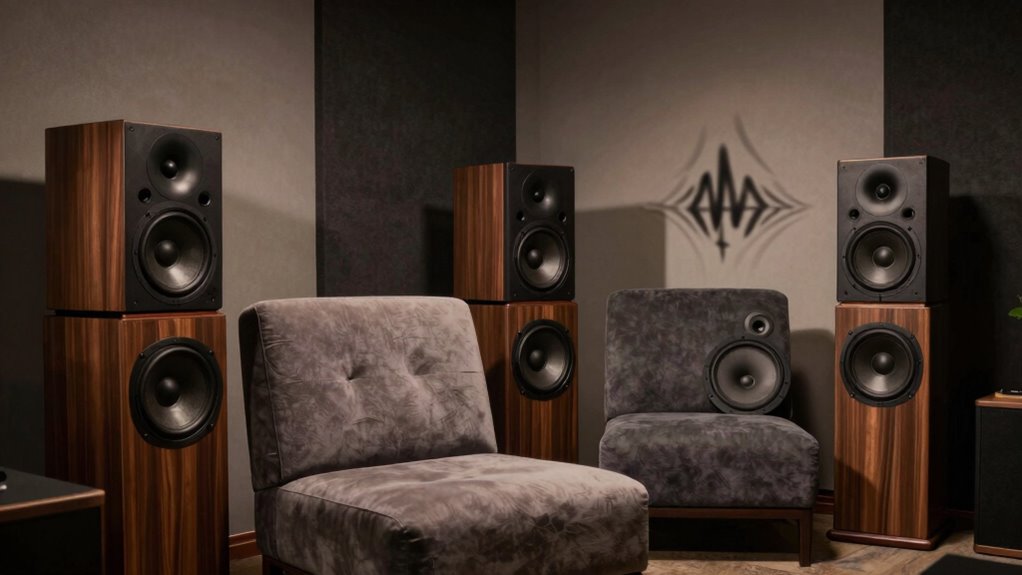
When setting up your speakers, remember that room dimensions play a vital role in how bass sounds. The way your speakers are directed can also greatly impact the bass response you experience. By adjusting both factors, you can enhance your listening experience and minimize bass loss in certain spots. Additionally, proper speaker placement can help optimize sound quality and ensure even bass distribution throughout the room. Ensuring that your room acoustics are suitable for your speaker setup is also essential for achieving consistent bass performance.
Room Dimensions Matter
Since room dimensions play a crucial role in how bass frequencies are perceived, speaker placement becomes essential in optimizing sound quality. The shape of your room can greatly affect how sound waves interact. In rectangular rooms, bass can build up in corners, while in square spaces, you might face uneven bass response. Ceiling height also matters; higher ceilings can create a more expansive sound stage, allowing bass frequencies to travel more freely. To achieve balanced sound, experiment with your speakers’ position, moving them away from walls or corners if necessary. By carefully considering your room’s dimensions and adjusting speaker placement, you can enhance your listening experience and make sure that bass isn’t disappearing in certain seats.
Speaker Directionality Impact
While you might not realize it, the direction your speakers face considerably influences bass response in your listening area. Proper speaker orientation can enhance your listening experience, but poor placement might leave you missing those deep, rich bass tones. It’s essential to take into account both your speaker placement and listener positioning. Additionally, integrating smart home gym technology can help optimize your acoustic environment for better sound quality. Here are three key factors to keep in mind:
- Speaker Direction: Aim your speakers toward your listening position for ideal sound.
- Wall Proximity: Speakers placed too close to walls can create bass build-up or cancellation.
- Room Acoustics: The room’s shape and materials can affect how bass waves travel, impacting what you hear.
Adjust your setup, and you might just find the bass returns to your favorite seats.
How Your Seat Affects What You Hear?

Where you sit can dramatically influence your listening experience, especially when it comes to bass frequencies. Seat positioning in a room affects how sound waves interact with the walls, ceiling, and floor. If you’re too close to a wall or corner, the bass might overpower your sound perception, leading to a muddy listening experience. Conversely, sitting too far from the speakers can cause you to miss those low frequencies altogether. Ideally, you want to find a sweet spot where bass is balanced and clear. Experimenting with different locations can reveal how minor adjustments affect your overall audio experience. By understanding the impact of your seat on sound perception, you’ll enhance your enjoyment of music and movies.
Key Acoustic Problems Leading to Bass Loss
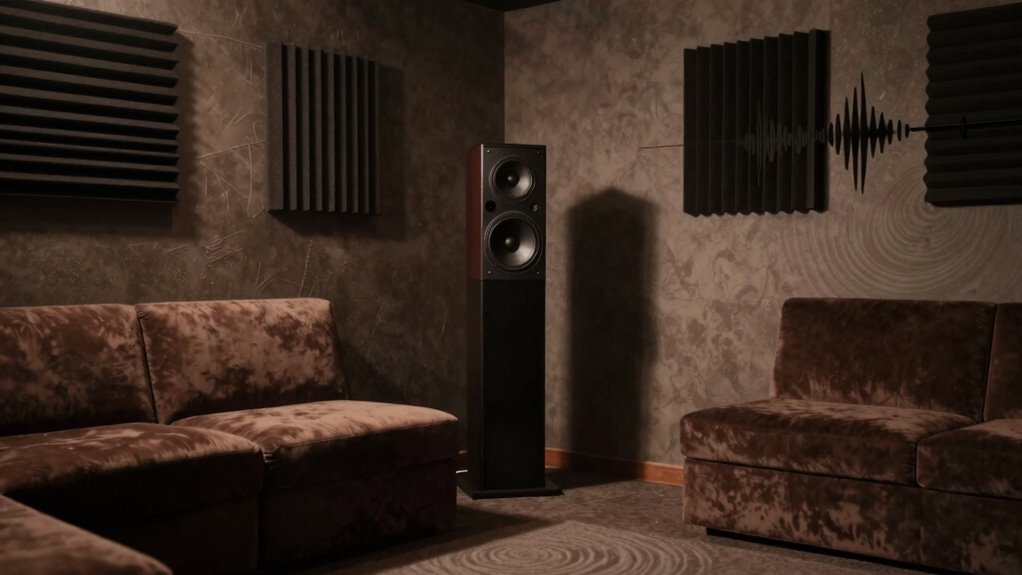
When it comes to bass loss, the dimensions of your room play an essential role in how sound behaves. You’ll also find that speaker placement can greatly affect what you hear, sometimes leaving you with a hollow experience. Finally, considering acoustic treatments can help mitigate these issues and enhance your listening environment. Additionally, understanding room acoustics can help you identify and address these problems more effectively.
Room Dimensions Impact Bass
The dimensions of a room play a crucial role in how bass frequencies are perceived, especially in certain seating positions. When you’re in a space with specific dimensions, bass wave propagation can be greatly affected, leading to uneven sound pressure. Here are key factors that influence this phenomenon:
- Room Size: Larger rooms may distribute bass better, while smaller ones can create resonances that dampen bass.
- Ceiling Height: Low ceilings can trap bass waves, making them less audible in certain spots.
- Shape of the Room: Irregular shapes can cause sound waves to bounce unpredictably, leading to bass loss in specific areas.
- Acoustic Treatments: Proper soundproofing techniques can help manage how bass frequencies behave within the room.
Understanding these elements can help you identify why you might be missing that powerful bass experience in certain seats.
Speaker Placement Matters
While many might focus solely on room dimensions, speaker placement plays a critical role in how bass is experienced throughout the space. The right speaker orientation can enhance bass reinforcement, while poor placement can lead to uneven sound distribution. To illustrate this, consider the following table:
| Placement Type | Bass Impact | Recommendation |
|---|---|---|
| Corner Placement | High reinforcement | Use for small rooms |
| Wall Placement | Moderate bass | Best for balanced sound |
| Free-Standing | Low reinforcement | Avoid for bass-heavy music |
| Elevated | Variable | Test for ideal sound |
| Diagonal | Uneven bass | Experiment with angles |
Additionally, experimenting with speaker position can help optimize bass response tailored to your specific room acoustics.
Acoustic Treatment Solutions
Improper acoustic treatment can severely impact bass response in any listening environment. To guarantee you’re getting the most out of your bass, consider addressing these key issues:
- Placement of acoustic panels: Position them at first reflection points to minimize sound wave interference.
- Utilizing bass traps: These are essential for controlling low-frequency energy, especially in corners where bass tends to build up.
- Room symmetry: An unevenly treated room can lead to unpredictable bass responses; symmetry helps maintain balance.
- Monitoring indoor air quality: Excess dust and pollutants, such as microplastics in dust, can settle on equipment and acoustic treatments, potentially affecting their performance and longevity. Indoor air quality can influence the effectiveness of your acoustic setup, as air filtration helps reduce airborne contaminants that may settle on surfaces. Additionally, maintaining optimal humidity levels can prevent issues like mold growth on acoustic materials and ensure the longevity of your equipment. Proper ventilation and regular cleaning prevent dust buildup, and using air purifiers can further improve indoor air conditions, safeguarding your acoustic environment.
How Materials Affect Bass Reflection and Absorption
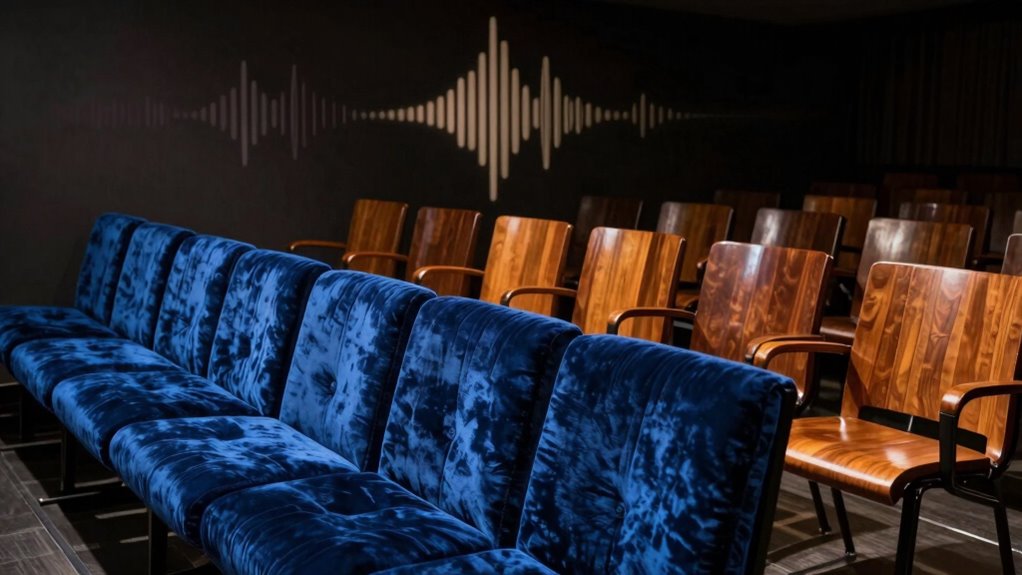
When choosing materials for seating in a listening environment, you may not realize how greatly they impact bass reflection and absorption. The material properties of your furniture play an essential role in how sound behaves in the space. Hard surfaces tend to enhance sound reflection, which can lead to overly boomy bass, while soft acoustic materials absorb sound, reducing reverberation and creating a clearer audio experience. Understanding the absorption characteristics of different materials helps you select seating that complements your room’s acoustics. For instance, upholstered chairs can minimize unwanted reflections, while leather or wood may exacerbate bass issues. Knowing the acoustic properties of materials allows you to make informed choices that optimize sound quality. Additionally, considering material density and thickness can further influence how sound waves are absorbed or reflected within your environment. Recognizing how material composition affects sound absorption can help you tailor your space for better acoustic clarity. Being aware of material reflectivity enables you to better control sound reflections and prevent bass from disappearing or becoming muddled. By thoughtfully considering these factors, you can notably improve your listening experience, ensuring that bass frequencies are well-balanced and present.
Understanding Bass Nodes and Antinodes
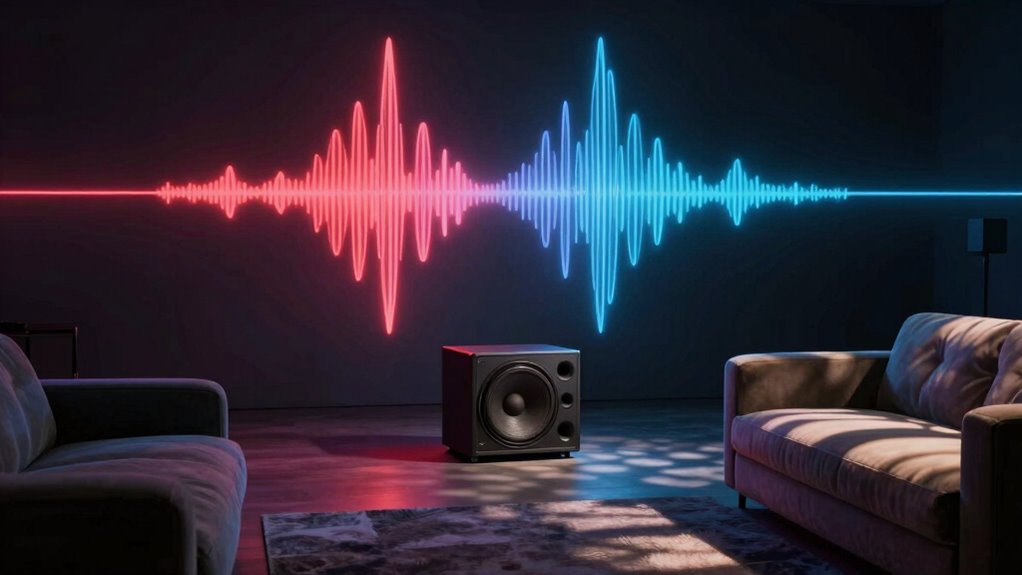
The way bass sounds in your space is also influenced by the placement of furniture and the arrangement of the room. Understanding bass nodes and antinodes helps you grasp how sound wave interactions affect your bass perception. Nodes are points where sound waves cancel each other out, leading to diminished bass, while antinodes are spots where waves amplify, creating a fuller sound.
Bass perception in your space is shaped by furniture placement, room shape, and sound wave interactions.
Consider these factors:
- Positioning: Avoid placing large furniture directly in front of speakers.
- Room Shape: Rectangular rooms often create more pronounced nodes and antinodes.
- Surface Materials: Hard surfaces can reflect sound waves, altering bass effects.
Tips for Optimizing Your Listening Environment
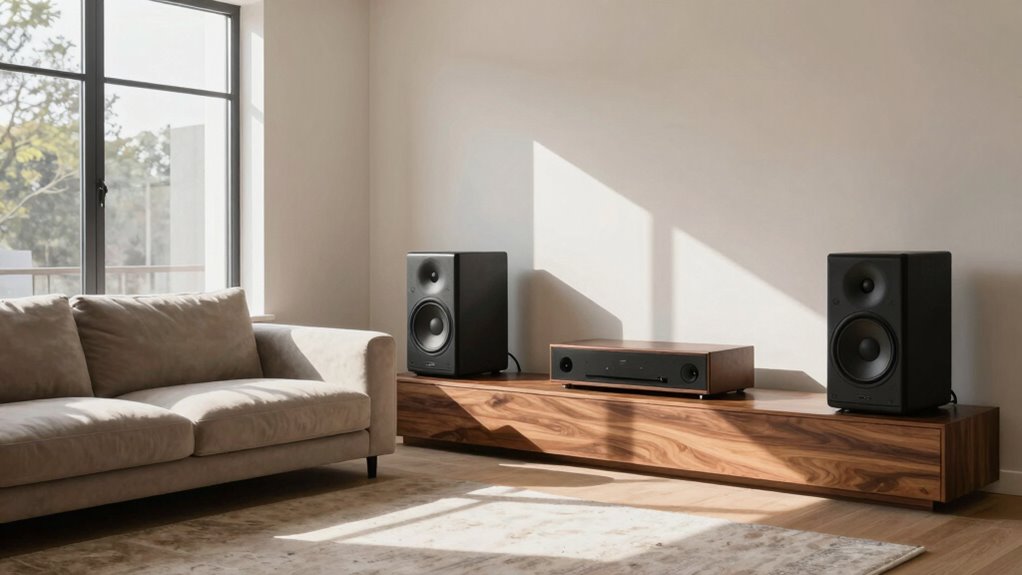
To enhance your listening experience, start by evaluating your room’s layout and speaker placement. Your listening position should be adjusted to guarantee the best bass perception. Experiment with different seating arrangements and speaker angles. Here’s a simple guide to help you visualize:
| Listening Position | Speaker Placement | Bass Perception |
|---|---|---|
| Center of Room | Angled Towards You | Ideal |
| Near Wall | Facing Away | Reduced |
| Off-Center | Parallel to Wall | Variable |
Adjust your setup based on this chart. Remember to avoid placing speakers too close to walls, as it can create unwanted bass boosts or cancellations. Proper speaker positioning is essential for achieving balanced sound, so take your time experimenting with different setups. Using an anti-fatigue mat beneath your listening area can also improve comfort during long sessions. Additionally, understanding how room acoustics influence bass response can help you fine-tune your environment for better sound. Incorporating soundproofing techniques can further minimize unwanted reflections and enhance overall audio quality. With these tips, you’ll create a more enjoyable and immersive listening environment.
Measuring Your Room’s Acoustics
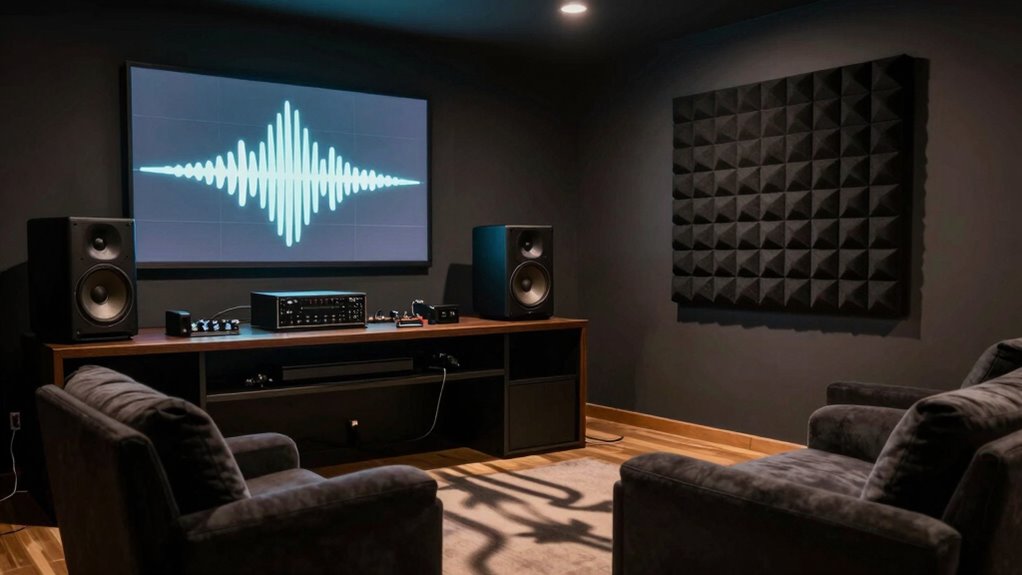
Optimizing your listening environment isn’t complete without measuring your room’s acoustics. Accurate room measurement is essential for understanding how sound behaves in your space. By conducting acoustic testing, you can identify problem areas and improve your overall sound experience. Here are three key steps to get started:
- Use a sound level meter to capture frequency responses.
- Conduct tests at different locations to find inconsistencies in bass response.
- Analyze the data to pinpoint where adjustments are necessary.
With these insights, you’ll be better equipped to tackle issues like bass disappearance in certain seats. Remember, knowing your room’s unique acoustic characteristics is the first step toward creating an immersive listening experience.
Practical Solutions to Enhance Your Listening Experience
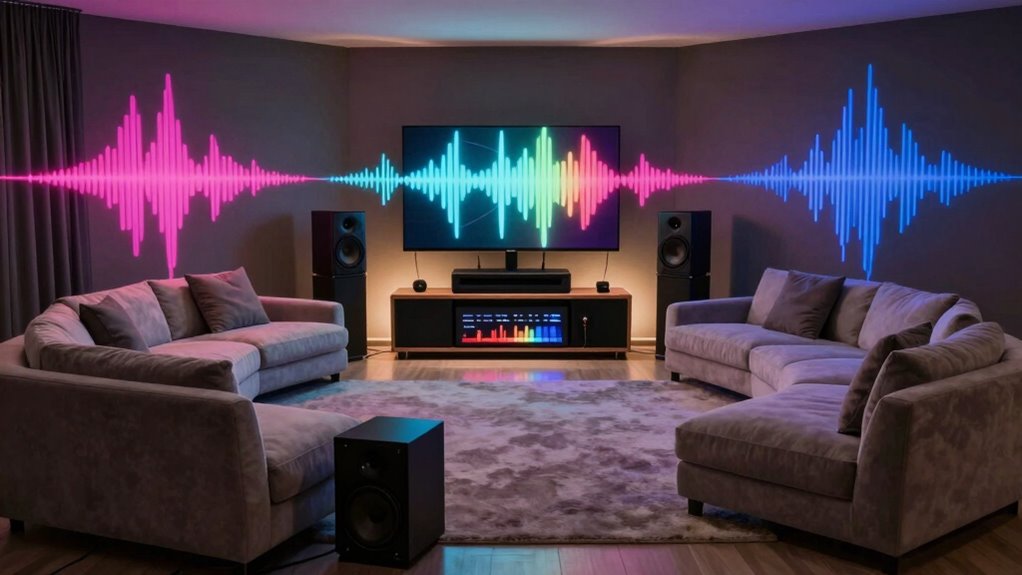
While you may have measured your room’s acoustics, enhancing your listening experience involves more than just data. To optimize your bass psychoacoustics, consider experimenting with speaker placement. Small adjustments can greatly impact how bass frequencies resonate in your space. Additionally, try using acoustic panels to absorb excess sound and minimize unwanted echoes.
You should also pay attention to your listening preferences; what sounds good to you may differ from others. Testing different genres can help you determine how various frequencies affect your enjoyment. Finally, consider investing in a subwoofer, as it can provide that depth of bass you crave. With these practical solutions, you can transform your listening environment and fully appreciate every note.
Frequently Asked Questions
Can Room Shape Influence Bass Response in My Seating Area?
Absolutely, room shape can greatly influence bass response in your seating area. Irregular room acoustics often create uneven sound distribution, leading to bass peaks and dips depending on your seating arrangement. When you place your seating in specific spots, you might find certain areas receive more bass than others. Experimenting with furniture layout can help optimize your listening experience, ensuring you enjoy a fuller, more balanced sound throughout the space.
Does Furniture Placement Affect Bass Perception in a Room?
Yes, furniture placement definitely affects bass perception in a room. When you arrange your seating, consider how furniture acoustics influence sound waves. Heavy furniture can absorb bass frequencies, while reflective surfaces can enhance them. If your seating arrangement places you near walls or large objects, it might dampen the bass response. Experiment with different layouts to find the best position for enjoying rich, full bass in your listening space.
How Do Different Speaker Types Impact Bass Output?
Different speaker types greatly impact bass output. If you choose speakers with high sensitivity, you’ll notice they produce louder sounds with less power, enhancing the bass experience. However, bass extension varies; some speakers excel in deep bass while others might fall short. When setting up your system, consider how these factors interact in your room. You’ll want to test various configurations to find the best balance between sensitivity and bass extension for your listening space.
What Role Do Wall Materials Play in Bass Retention?
Wall materials greatly impact bass retention by influencing wall density and acoustic treatment. Thicker, denser walls absorb less low-frequency sound, allowing bass to resonate more effectively within your space. Conversely, lightweight materials can lead to bass absorption, diminishing your sound experience. By incorporating acoustic treatment like bass traps, you can enhance bass retention, ensuring that you enjoy a fuller, richer sound throughout your room, no matter where you sit.
Can I Use Subwoofers to Improve Bass in My Seat?
Yes, you can use subwoofers to improve bass in your seat. Proper subwoofer placement is essential; try placing them near walls or corners to enhance bass frequency. Experimenting with different locations can help you find the sweet spot, maximizing the impact of the bass. Don’t forget to adjust settings on your subwoofer to match your room’s acoustics, ensuring you get the most from your audio setup while enjoying those deep, powerful sounds.
Conclusion
To summarize, bass can seem to vanish in certain seats like a magician’s rabbit disappearing into thin air. By understanding how bass frequencies behave and how speaker placement affects your listening experience, you can optimize your environment for deeper, richer sound. Keep an eye on acoustic problems, and don’t hesitate to measure your room’s acoustics. With a few adjustments, you’ll guarantee the bass is present wherever you sit, transforming your audio experience into something truly immersive.
Columbus Day / Indigenous Peoples' Day Picks
long weekend sales
As an affiliate, we earn on qualifying purchases.