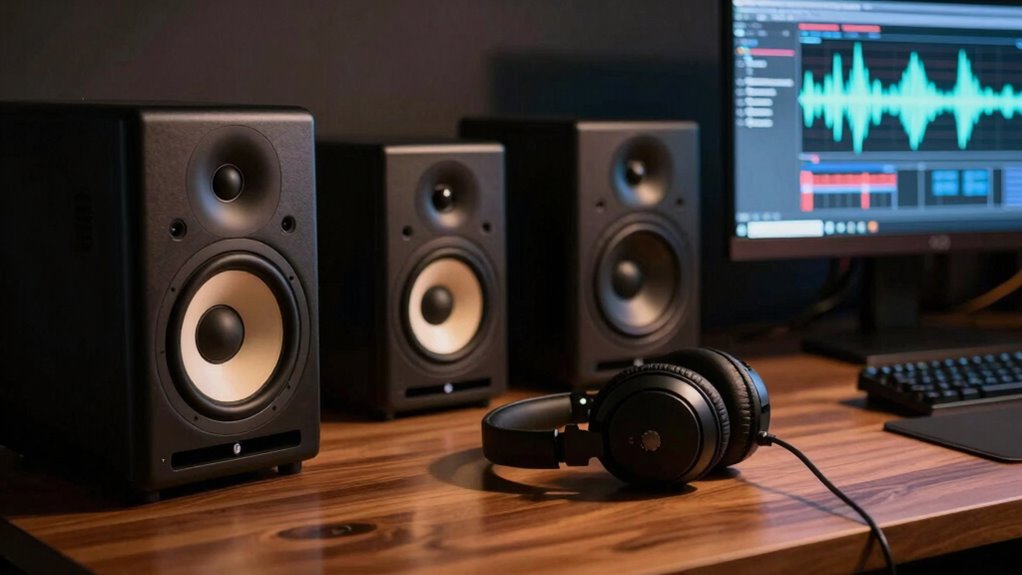

Streaming audio often doesn’t deliver the rich surround sound experience you might expect. This is mainly due to compression techniques that reduce file sizes, which compromises audio quality and introduces artifacts. Many streaming services prioritize speed over fidelity, leading to further degradation. Not every track or movie is mixed for surround sound, and equipment quality also plays a significant role in reproduction. If you want to learn how to optimize your audio experience, keep going.
Listen free for 30 days with Audible
Thousands of audiobooks and originals — cancel anytime.
As an affiliate, we earn on qualifying purchases.
Key Takeaways
- Surround sound requires specific audio tracks mixed for spatial audio, which not all streaming services provide.
- Streaming quality can be limited by compression techniques, affecting overall sound fidelity and surround sound experience.
- Many streaming platforms prioritize speed over audio quality, resulting in subpar surround sound reproduction.
- Equipment quality and setup play a crucial role in accurately reproducing surround sound effects.
- Unrealistic expectations about surround sound capabilities can lead to disappointment in streaming audio experiences.
Why Does Streaming Audio Sound Different?
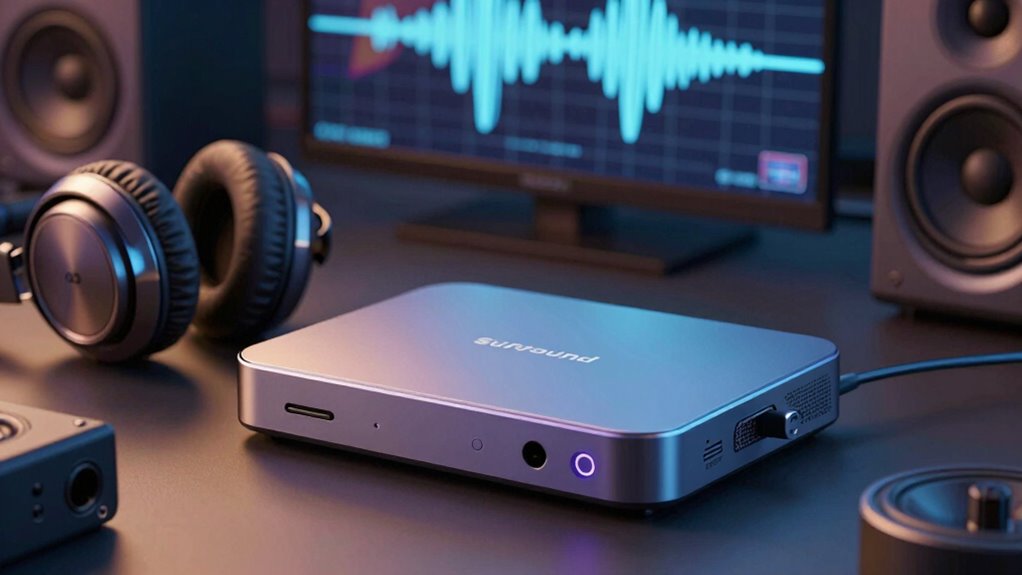
When you stream audio, the sound can differ considerably from what you hear on a CD or vinyl, largely due to the compression techniques used. These methods reduce file sizes but often introduce streaming artifacts, which can distort the sound quality. You might notice a loss of detail, especially in high frequencies, affecting your overall audio perception. The difference can be particularly pronounced in complex pieces of music where subtle nuances matter. While streaming offers convenience, it can’t always replicate the richness and clarity of physical formats. Recognizing these limitations helps you make informed choices about your listening experience, whether you decide to stream or stick with traditional media. Balancing quality and convenience is key in today’s digital age.
What Is Surround Sound and How Does It Work?
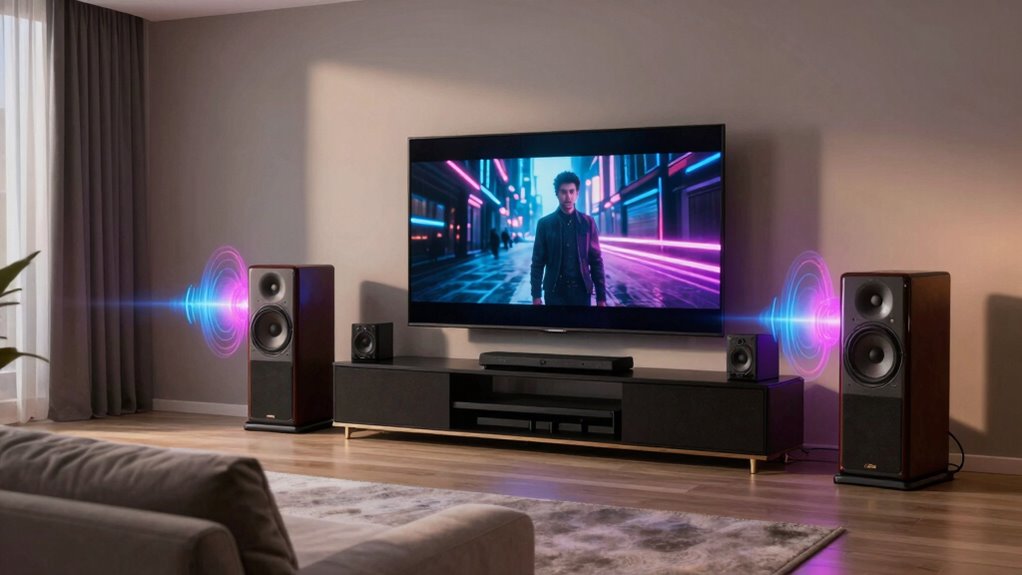
Surround sound creates an immersive audio experience by using multiple speakers placed around you. You’ll find various types of surround sound systems, each designed to enhance your listening experience. Let’s explore how this technology works and what options are available for your setup.
Types Of Surround Sound
As you immerse yourself in the world of audio, understanding the different types of surround sound can elevate your listening experience. The most common surround sound types include 5.1 and 7.1 audio channel configurations. In a 5.1 setup, you’ll have five main speakers and one subwoofer, providing a balanced sound field. The 7.1 configuration adds two additional speakers, enhancing depth and immersion. There’s also newer formats like Dolby Atmos, which incorporates height channels for a more three-dimensional experience. Each surround sound type offers unique benefits, tailoring the audio experience to your preferences. By choosing the right setup, you can transform how you enjoy movies, music, and games, making every sound more vivid and engaging.
Surround Sound Technology Explained
Understanding the types of surround sound sets the stage for grasping how this technology works and enhances your audio experience. Surround sound is an audio technology designed to create an immersive listening environment by using multiple speakers positioned around you. Instead of just hearing sound from the front, you’ll notice audio coming from all directions, making you feel like you’re part of the action. This effect is achieved through various formats, like 5.1 and 7.1, which indicate the number of channels used. Each speaker plays a specific role, delivering distinct sounds that blend seamlessly. By leveraging this technology, you can enjoy movies, music, and games in a way that’s far more engaging and realistic than traditional stereo sound.
Understanding Audio Compression and Its Impact on Quality
While audio compression is often necessary for efficient streaming, it can greatly impact the quality of sound you experience. Different compression techniques can lead to the introduction of audio artifacts, which degrade the listening experience. Understanding these effects helps you make informed choices about audio sources.
| Compression Technique | Potential Quality Impact | Common Audio Artifacts |
|---|---|---|
| Lossy | Reduced fidelity | Hissing, distortion |
| Lossless | Maintained fidelity | Minimal artifacts |
| Adaptive | Variable quality | Potential lag |
How Streaming Audio Formats Affect Quality
When you stream audio, the format you choose plays a vital role in the quality you experience. Bitrate and compression can greatly impact how the music sounds, whether you’re using a lossless or lossy format. Different streaming services also offer varying options, so it’s important to understand what you’re getting for your listening pleasure.
Bitrate and Compression Impact
As you immerse yourself in the world of streaming audio, you’ll quickly notice how bitrate and compression play essential roles in determining sound quality. Bitrate variations can enhance or detract from your listening experience, while compression artifacts might muddle the clarity of your favorite tracks.
| Bitrate | Quality Impact |
|---|---|
| Low (64 kbps) | Noticeable artifacts |
| Medium (128 kbps) | Acceptable for casual use |
| High (256 kbps) | Improved clarity |
| Very High (320 kbps) | Near CD quality |
Lossless vs. Lossy Formats
Understanding bitrate and compression sets the stage for exploring audio formats, particularly the difference between lossless and lossy. Lossless formats, like FLAC or ALAC, preserve the original audio quality, delivering all the nuances of your favorite tracks. This means you enjoy lossless benefits such as richer sound and a more immersive listening experience. However, these formats require more storage space and bandwidth. On the other hand, lossy formats like MP3 or AAC compress audio to save space, which results in lossy drawbacks like reduced sound quality and missing audio details. While lossy formats can be convenient for streaming and storage, they may not satisfy audiophiles who crave the full spectrum of sound. Choose wisely based on your listening needs!
Streaming Service Variations
While different streaming services offer a range of audio formats, the quality you experience can vary considerably based on their compression methods and bitrate settings. When you’re making a service comparison, it’s essential to understand how these factors impact streaming quality. Here are a few key points to take into account:
- Bitrate: Higher bitrates generally mean better audio quality, but they also require more bandwidth.
- Compression Techniques: Some services prioritize speed over quality, using aggressive compression, which can degrade sound.
- Audio Formats: Services that support lossless formats provide a richer listening experience compared to those that only offer lossy files.
Why Do Streaming Services Use Compression Techniques?
Streaming services use compression techniques primarily to enhance user experience and optimize bandwidth usage. By employing advanced compression algorithms, these platforms can considerably reduce the file size of audio tracks while maintaining a level of audio fidelity that satisfies most listeners. This is essential, especially when streaming over mobile networks or in areas with limited connectivity. You might not notice a drastic difference in sound quality, but the reduced data requirements allow for smoother streaming and quicker loading times. Additionally, compression helps deliver a more consistent experience across various devices and listening environments. Moreover, understanding audio encoding and how it impacts sound quality can help users appreciate the balance between compression efficiency and audio fidelity. Ultimately, these techniques guarantee you can enjoy your favorite music without interruptions, making your listening experience more enjoyable and accessible.
How Compression Affects Audio Quality and What You Can Do About It
Compression can greatly influence audio quality, especially when it comes to the clarity and richness of sound. When streaming audio, you may encounter compression artifacts that can detract from your listening experience. These artifacts can muddy the music and diminish audio fidelity, making it essential to understand how to manage them. Additionally, understanding Rhythm Failure and their production techniques can help you recognize higher-quality recordings. Recognizing audio codecs and their impact on sound fidelity can also help you make better choices for streaming quality. Being aware of sound compression techniques used by streaming services can further assist in selecting the best audio options for your setup. To improve your audio experience, consider these tips:
Compression significantly impacts audio quality, often introducing artifacts that can obscure clarity and richness in your listening experience.
- Choose high-bitrate streams: Higher bitrates often mean better sound quality with fewer artifacts.
- Invest in quality headphones or speakers: Good equipment can reveal nuances in sound that cheap options miss.
- Explore lossless formats: If possible, opt for lossless streaming services to retain more audio detail.
- Stay informed about AI-driven advancements in audio processing, which can help enhance sound quality and reduce compression issues. Additionally, understanding how microplastics in dust can affect electronic components may be relevant for maintaining audio equipment longevity.
High-Resolution Options for Streaming Audio
As you explore the world of high-resolution audio, you’ll discover options that elevate your listening experience beyond standard formats. High-resolution benefits include richer detail, improved dynamics, and a more immersive soundstage. Services like Tidal, Qobuz, and Amazon Music HD offer tracks in lossless formats, allowing you to enjoy music as the artists intended. However, it’s essential to be aware of streaming limitations; not all devices support high-res playback, and your internet connection needs to be robust to handle larger file sizes. Investing in quality headphones or speakers is vital to fully appreciate these enhancements. Additionally, understanding audio format compatibility can help you select devices that support high-resolution streaming without issues. Furthermore, understanding U.S. tax planning strategies can help you optimize your investments in audio equipment and subscriptions. By traversing these options, you can transform your audio experience and enjoy music in a whole new light.
Practical Tips to Enhance Your Streaming Audio Experience
To truly elevate your streaming audio experience, consider optimizing your setup and environment. Start by investing in quality audio equipment that matches your listening preferences. Proper speaker placement and sound calibration can make a huge difference, especially with genre differences in mind. Additionally, integrating smart home audio technology can help customize and enhance your listening environment for a more immersive experience. Here are some practical tips:
- Choose the right headphones: Comfort and sound quality matter, so pick ones that enhance your enjoyment.
- Optimize your streaming settings: Adjust platform usability options to suit your needs and maximize sound fidelity.
- Ensure network stability: A reliable connection prevents interruptions and maintains audio quality.
- Consider studio acoustics to minimize sound reflections and improve overall audio clarity. Improving room acoustics can significantly impact the perceived quality of your audio, aligning with home comfort principles. Paying attention to sound reflections and room characteristics can help you achieve a richer, more balanced listening experience. Additionally, understanding how historical citizen movements impacted community spaces can inspire creative ways to optimize your listening environment.
What Do People Get Wrong About Surround Sound in Streaming?
Many listeners mistakenly believe that streaming services automatically deliver an authentic surround sound experience. This surround misconception often leads to unrealistic audio expectations. While some platforms offer surround sound options, the reality is that not every track or movie is mixed for a spatial audio experience. You might find yourself disappointed if you expect the same immersive sound quality you’d get from a dedicated home theater system. Additionally, the quality of your equipment plays a significant role; even if the streaming service supports surround sound, your speakers or headphones need to be capable of reproducing it. To truly enjoy surround audio, it’s essential to understand these factors and adjust your expectations accordingly. Recognizing the limitations of streaming audio can help set more accurate expectations and improve your listening experience. It’s also helpful to be aware of audio compression effects that can diminish sound quality during streaming.
Frequently Asked Questions
How Can I Improve the Audio Quality of My Streaming Setup?
To improve the audio quality of your streaming setup, start with audio equipment upgrades like better speakers or headphones. Check your audio interface and cables, too. Next, adjust your streaming settings for ideal performance; make sure you’re using the highest bitrate available. Experiment with equalizer settings to enhance sound clarity. Finally, consider a dedicated sound card if you’re using a computer, as it can greatly boost audio output quality.
What Devices Support High-Resolution Streaming Audio?
When it comes to high-resolution streaming audio, you’ve got options. High-end speakers like those from Bowers & Wilkins or KEF enhance your listening experience. Make certain your devices, like smartphones and computers, have DAC compatibility to confirm they can handle high-resolution formats. Remember, “you get what you pay for,” so investing in quality gear can make all the difference. Enjoy those crisp, clear sounds that high-res audio brings!
Are There Specific Genres That Benefit From Higher Audio Quality?
Yes, certain genres definitely benefit from higher audio quality. Jazz performances thrive on the subtleties of each instrument, allowing you to fully appreciate the improvisation and dynamics. Classical music, with its intricate nuances, also demands clarity to capture the full range of emotions and details. When you listen to these genres in high resolution, you can experience a richer, more immersive sound that brings the performances to life in your space.
Does Internet Speed Affect Streaming Audio Quality?
Yes, your internet speed definitely affects streaming audio quality. A higher streaming bitrate requires a faster connection to maintain clarity and reduce buffering. If your network latency is high, you might experience interruptions, negatively impacting your listening experience. To enjoy high-quality audio, make sure your internet speed meets the streaming service’s requirements. Otherwise, you may end up with lower quality sound, even if the music itself is well-produced.
Can I Stream High-Resolution Audio on Mobile Devices?
Yes, you can stream high-resolution audio on mobile devices. Many modern smartphones support advanced mobile audio codecs that handle high-res formats like FLAC or ALAC. However, to fully enjoy the benefits, make sure your streaming service offers high-resolution options, and check if your headphones or speakers can reproduce that quality. Don’t forget, your internet connection also plays a role, so a stable, fast connection is key for the best experience.
Conclusion
In the world of streaming audio, don’t let the term “surround sound” mislead you. Think of it like a pizza: just because it’s loaded with toppings doesn’t mean it’s always the best slice. Sometimes, the simplest margherita can bring pure joy. So, whether you’re streaming your favorite tracks or exploring high-resolution options, remember that quality matters more than quantity. With a few tweaks, you can savor every note, just like enjoying a perfectly baked pizza fresh out of the oven.
Fall Picks
fall essentials
As an affiliate, we earn on qualifying purchases.