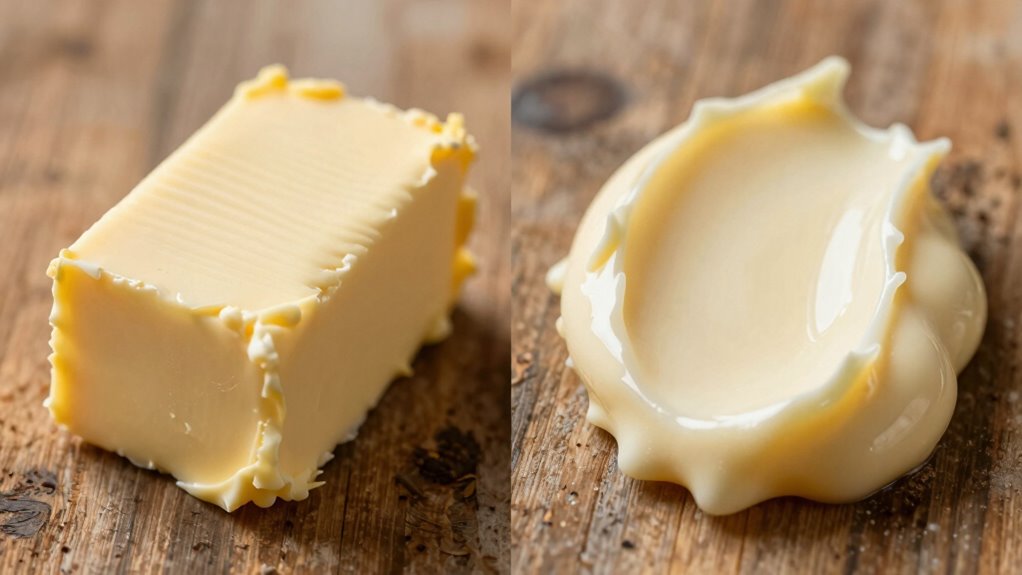

Butter is a natural dairy product made by churning cream, offering rich flavor, natural fats, and a comforting mouthfeel. Butter flavor, on the other hand, is created with artificial or natural compounds that mimic butter’s taste, often lacking the natural fats and complexity. While butter provides authentic flavor and nutrition, butter flavor is used for consistency, cost-saving, or dairy-free options. Keep exploring to uncover more about their differences and how to choose the right one.
Key Takeaways
- Real butter is a dairy product made from churning cream, offering natural fats, nutrients, and authentic flavor.
- Butter flavor is a synthetic or natural extract designed to mimic butter’s taste, often used in processed foods.
- Taste and mouthfeel differ: butter is creamy and rich, while butter flavor may be artificial and less nuanced.
- Nutritionally, butter contains natural fats and vitamins, whereas butter flavor may include additives and artificial ingredients.
- Butter is sourced from dairy farming, impacting the environment, while butter flavor production generally has a lower ecological footprint.

VEVOR Commercial Popcorn Machine, 8 Oz Kettle, 850 W Countertop Popcorn Maker for 48 Cups per Batch, Theater Style Popper with 3-Switch Control Steel Frame Tempered Glass Doors 2 Scoops 2 Spoons, Red
Powerful Heating, High Yield: This commercial popcorn machine boasts 850W of power and an 8 oz kettle, popping...
As an affiliate, we earn on qualifying purchases.
What Is Real Butter and How Is It Made?
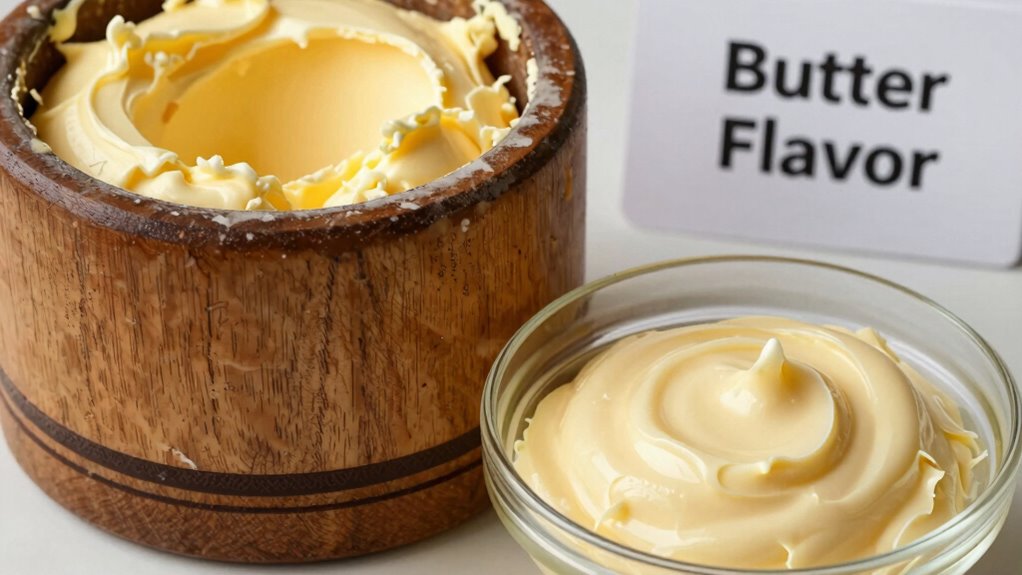
Real butter is made by churning cream until the fat separates from the liquid. This process begins on dairy farms, where cows are milked daily to produce fresh cream. The cream is then cooled and churned, causing the fat molecules to clump together and form butter. Once separated, the butter is washed and sometimes salted to enhance flavor. In flavor manufacturing, pure butter retains its natural qualities, making it different from processed alternatives. This traditional method guarantees you get a product rich in flavor and natural fats. Dairy farming plays a vital role in providing the high-quality cream needed for authentic butter. The production process ensures that the butter maintains its natural nutrients and flavor profile. Additionally, the careful handling during butter processing preserves the integrity of the fats and nutrients, making it a superior choice. Understanding this process helps you appreciate the natural origins of real butter and how it differs from artificial butter flavorings. Genuine butter also contains natural nutrients, unlike many artificial flavorings.
Nostalgia Popcorn Maker Machine - Professional Cart With 8 Oz Kettle Makes Up to 32 Cups - Vintage Popcorn Machine Movie Theater Style - Red
POPCORN CAPACITY: Whether movie time or snack time, this vintage popcorn machine stand pops up to 32 cups...
As an affiliate, we earn on qualifying purchases.
What’s Inside Butter Flavor and How Is It Made?
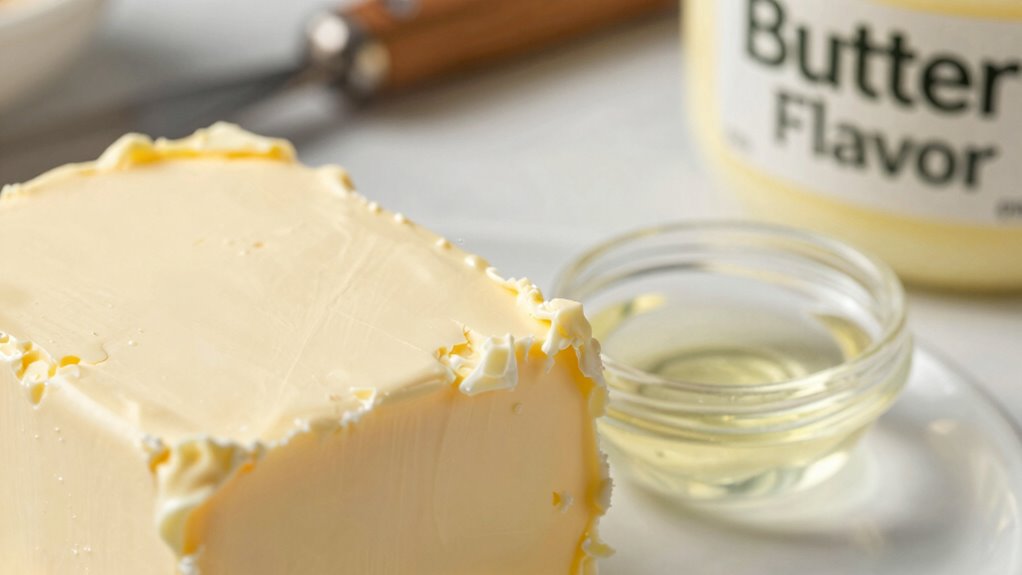
Have you ever wondered what makes butter flavor so convincing? It’s created through a mix of natural and artificial ingredients, each with different manufacturing methods. Understanding these components helps you see how “butter flavor” is made and what’s really inside. The Pinball Spot offers insights into various topics, including how complex processes like flavor creation involve multiple steps and ingredients. One key aspect is the flavor manufacturing process, which combines various chemical compounds to mimic the rich taste of real butter. This process often involves chemical synthesis techniques that replicate the complex aroma and taste profiles found in genuine butter. Additionally, the ingredient sourcing process ensures that both natural and synthetic components meet safety standards before being used in flavor production. The regulatory standards for food ingredients help ensure that these components are safe for consumer use.
Composition of Butter Flavor
Butter flavor is typically created through a combination of natural and artificial ingredients designed to mimic the rich, creamy taste of real butter. These formulations often include flavor chemistry techniques to replicate butter’s complex aroma and taste profile. In many cases, manufacturers use dairy alternatives to achieve a similar mouthfeel without actual dairy, catering to those with dietary restrictions. The core components usually consist of esters, aldehydes, and other aroma compounds that evoke the familiar buttery scent. Artificial butter flavors may include synthetic analogs that closely resemble natural compounds, ensuring consistency and shelf stability. Overall, the composition of butter flavor is a carefully balanced blend of natural extracts and chemical compounds, crafted to deliver a convincing butter taste without the need for dairy. Flavor chemistry techniques are essential in developing these complex flavor profiles.
Manufacturing Processes Explained
Manufacturing butter flavor involves a precise process of blending natural extracts and chemical compounds to create a consistent, authentic taste. During flavor manufacturing, experts replicate the dairy production process by carefully combining ingredients that mimic butter’s aroma and flavor profile. This process often uses isolated dairy components or synthesized compounds to achieve the desired result. The following table summarizes key steps involved:
| Step | Method | Purpose |
|---|---|---|
| Extraction | Using solvents to isolate flavors | Capture natural essence |
| Chemical Synthesis | Creating flavor compounds artificially | Ensure consistency and stability |
| Blending | Mixing extracts and compounds | Achieve authentic taste |
| Quality Control | Testing for flavor accuracy | Maintain standards |
| Packaging | Sealing for freshness | Preserve flavor integrity |
Natural vs Artificial Sources
When it comes to creating butter flavor, manufacturers choose between natural and artificial sources to achieve the desired taste profile. Natural options often come from dairy origins, using real butter or cream to extract authentic flavor compounds. These natural flavor additives preserve the genuine buttery taste that many consumers prefer. On the other hand, artificial sources rely on synthetic ingredients that mimic the dairy origins’ flavor profile. These flavor additives are created through chemical processes, allowing for consistent, cost-effective production. Artificial butter flavors can replicate the creamy, rich taste without using dairy products, making them suitable for vegan or dairy-free products. The choice between natural and artificial sources depends on factors like cost, dietary requirements, and the desired authenticity of the butter flavor.

Movie Theater Style 12-Count Popcorn Packs - Pre-Measured 8-Ounce All-in-One Kernel, Salt, Oil Packets for Popping Machines by Great Northern Popcorn
12 PACKS FOR POPCORN MACHINES - Make popping gourmet popcorn quick and hassle-free with these popcorn machine popcorn...
As an affiliate, we earn on qualifying purchases.
How Do Butter and Butter Flavor Taste and Feel?
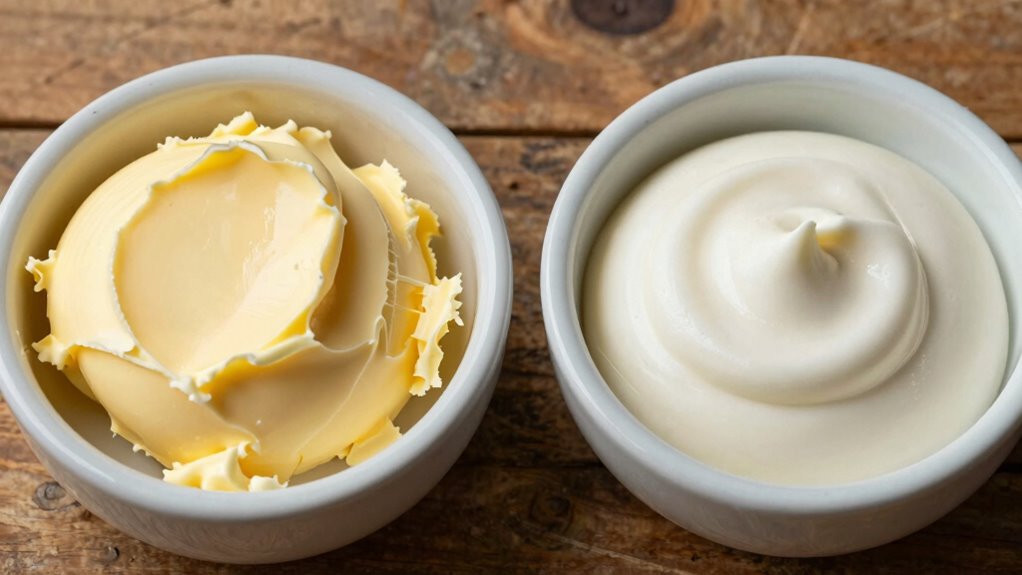
While butter and butter flavor share similar characteristics, they differ noticeably in taste and mouthfeel. During a taste comparison, butter offers a rich, creamy, slightly sweet flavor with a hint of nuttiness, which can enhance baked goods and dishes. Butter flavor, however, tends to have a more uniform, sometimes artificial, taste that lacks the depth of real butter. Texture differences are also evident: butter provides a smooth, melting sensation on the tongue, contributing to a satisfying mouthfeel. Butter flavor, depending on its formulation, might feel slightly less creamy or more processed, sometimes leaving a thinner or more artificial aftertaste. Additionally, the composition of butter includes natural fats and water that influence its mouthfeel, whereas butter flavor often relies on artificial or concentrated ingredients to mimic that experience. When choosing between the two, understanding their flavor profiles can help optimize the taste and texture of your recipes. The natural ingredients in butter can also contribute to baking performance, affecting how baked goods rise and develop texture. Moreover, the processing methods used to create butter flavor can impact its overall quality and how closely it replicates real butter. Overall, these sensory distinctions influence how each is experienced in various recipes, affecting both flavor profile and mouthfeel.

VEVOR Commercial Popcorn Machine, 12 Oz Kettle, 1440 W Countertop Popcorn Maker for 80 Cups per Batch, Theater Style Popper with 3-Switch Control Steel Frame Tempered Glass Doors 1 Scoop 2 Spoons, Red
Powerful Heating, High Yield: This commercial popcorn machine boasts 1440W of power and an 12 oz kettle, popping...
As an affiliate, we earn on qualifying purchases.
Butter vs. Butter Flavor: Nutritional Differences

Although butter and butter flavor may seem similar on the surface, their nutritional profiles differ markedly. Butter is a natural dairy product with a rich nutritional content, including saturated fats, vitamin A, and small amounts of calcium. In contrast, butter flavor often contains artificial ingredients and additives, which can impact its nutritional value. When comparing calories, butter tends to be higher due to its fat content, providing about 100 calories per tablespoon. Butter flavor, depending on its formulation, may contain fewer calories or may include added sugars or artificial fats that alter its calorie count. Understanding these differences helps you make informed choices based on your dietary goals and nutritional needs. Understanding nutritional profiles can help consumers choose healthier options aligned with their dietary needs. Additionally, the presence of artificial additives in butter flavor can influence overall health, especially for those with sensitivities or specific dietary restrictions. Being aware of ingredient lists can help consumers identify potential allergens or unwanted substances in processed food products. Moreover, considering the use in recipes can guide whether to opt for natural butter or flavoring for optimal culinary results. Knowing the manufacturing process of these products can also shed light on their quality and health implications.
Common Uses in Cooking and Baking: When to Choose Which
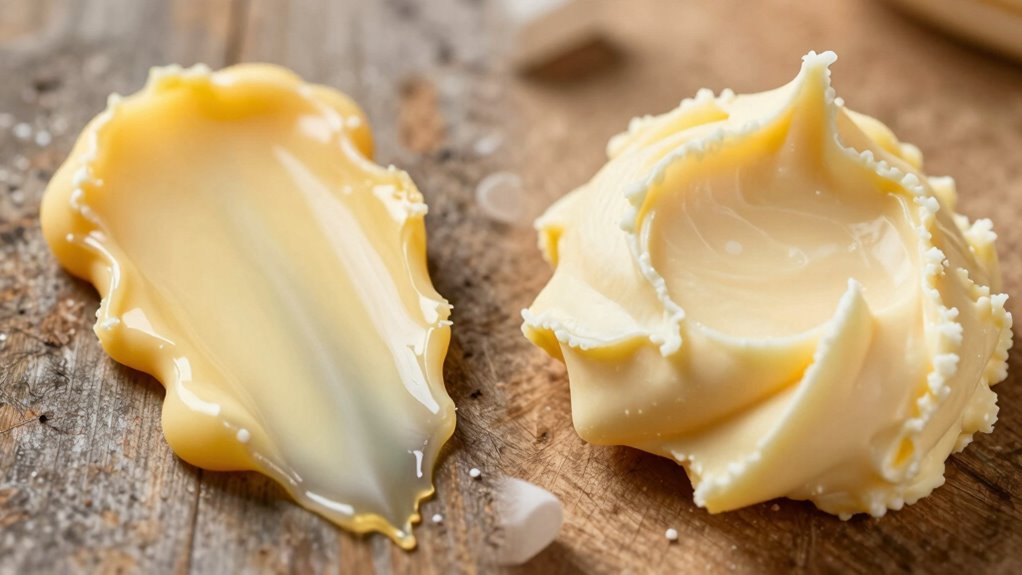
Choosing between butter and butter flavor depends on your culinary needs and the desired outcome of your dish. Butter provides natural richness, ideal for baking, sautéing, and finishing dishes with authentic dairy flavor. Butter flavor, as a flavor enhancer, is often used in recipes where dairy substitutes are needed or when a consistent taste is preferred without the added fat. Use butter in recipes that benefit from its natural creamy texture and aroma. Opt for butter flavor when you want to mimic butter’s taste without the calories or dairy. Consider these points:
- Use butter for traditional baked goods and sauces
- Use butter flavor for processed foods and flavoring dairy substitutes
- Choose butter for natural, rich flavor
- Choose butter flavor for cost-effective, consistent taste
Understanding flavor profiles and ingredient functions can help you make better choices in your cooking and baking. This way, you match the ingredient to your cooking or baking goal effectively. For example, selecting the right ingredient can significantly impact the overall culinary quality of your dishes.
Is Butter Flavor Safe? Health Risks to Know
Butter flavor products are widely used in processed foods and flavoring dairy substitutes, making it important to understand their safety. While many people consider them safe, some health concerns exist, especially for sensitive individuals. Artificial butter flavors often contain chemicals and additives that may cause allergic reactions or gastrointestinal discomfort in allergy risks. If you have sensitivities to certain ingredients, it’s best to check labels carefully. Although regulatory agencies approve most butter flavorings for food use, ongoing research suggests potential links to adverse health effects with excessive consumption. Be cautious if you’re prone to allergies or have pre-existing health conditions. Staying informed about the ingredients and potential risks helps you make safer choices when incorporating butter flavor into your diet.
How to Spot Real Butter and Butter Flavor on Labels
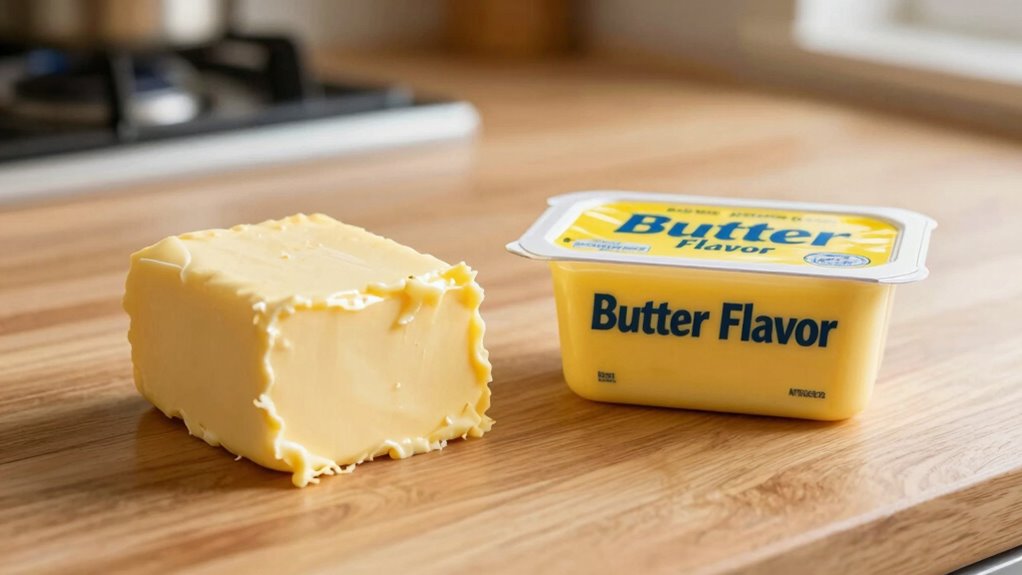
When checking labels, pay close attention to the ingredient list to tell apart real butter from butter flavor. Look for key terms like “cream” or “butter” to confirm natural ingredients, while artificial flavors might be listed as “butter flavor” or “artificial butter.” Recognizing these terms helps you make informed choices and avoid confusing butter flavor with real butter.
Label Ingredient Lists
Reading ingredient lists carefully is the key to distinguishing between real butter and butter flavor. By checking for ingredient transparency and label accuracy, you can make informed choices. Look for simple, recognizable ingredients like cream or milk—these indicate real butter. In contrast, butter flavor labels often list additives such as “artificial flavor” or “emulsifiers,” which signal synthetic components. Pay attention to these clues:
- Clear, minimal ingredients for genuine butter
- Complex or vague ingredients for butter flavor
- Presence of “artificial flavor” or “natural flavor” additives
- Absence of dairy-derived ingredients
Understanding these details helps you verify product authenticity and avoid misleading labels. Accurate ingredient lists empower you to select products aligned with your preferences and dietary needs.
Recognizing Key Terms
To identify whether a product contains real butter or butter flavor, pay close attention to the specific terms used on the label. Clear labeling is essential for ingredient transparency, so look for words like “butter,” “cream,” or “milk” that indicate natural ingredients. If you see “butter flavor,” “artificial butter,” or “butter aroma,” it’s likely synthetic or flavoring additives rather than real butter. Manufacturers should clearly specify if a product contains artificial or natural flavorings, helping you make informed choices. Recognizing these key terms guarantees you understand what’s in your food. Remember, the absence of vague or generic descriptions usually signals a more transparent label, making it easier to distinguish between genuine butter and imitation flavors.
Should You Use Real Butter or Butter Flavor in Your Recipes?
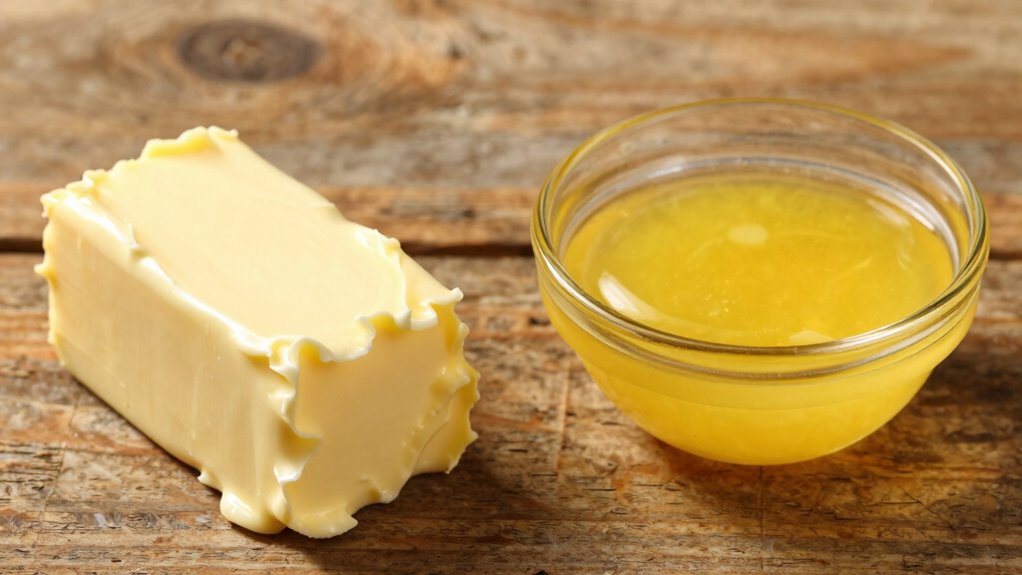
Deciding whether to use real butter or butter flavor depends on your priorities in the kitchen. If you value natural ingredients and rich flavor, real butter is your best choice. However, if you want consistency, longer shelf life, or cost savings, butter flavor can be appealing. Consider these points:
Choosing between real butter and butter flavor depends on your priorities—natural taste or convenience.
- Flavoring agents in butter flavor may lack the depth of real butter’s natural taste
- Cooking techniques can influence how well each option performs in baked goods or sautés
- Real butter often enhances the texture and aroma of your dishes
- Butter flavor can be convenient for quick recipes or when avoiding dairy
Ultimately, your decision hinges on balancing authenticity, convenience, and the specific needs of your recipes.
Environmental Impact and Ethical Concerns of Butter and Flavoring
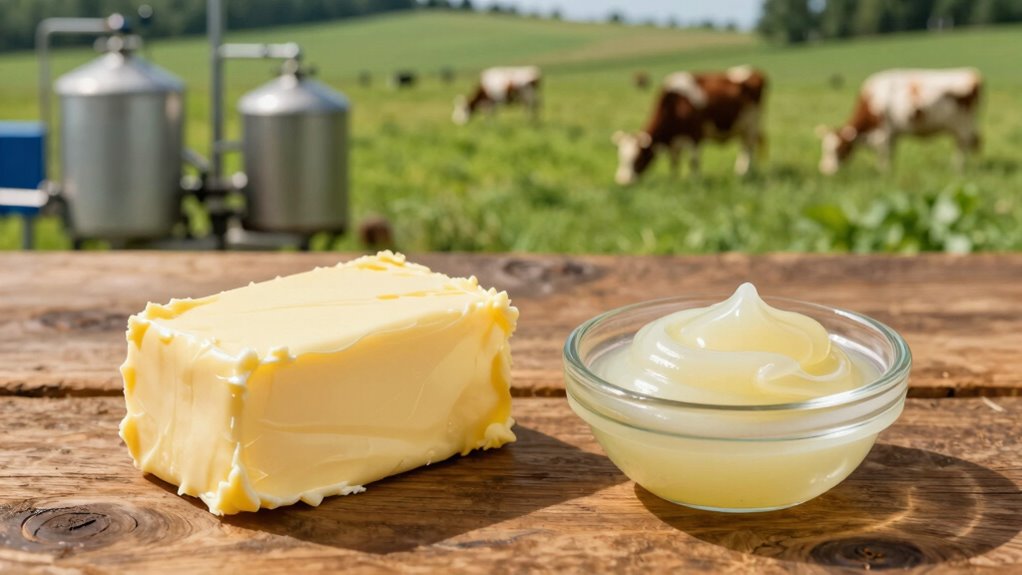
You should consider how butter and butter flavoring impact the environment and ethical standards. Producing butter has a significant ecological footprint and raises animal welfare concerns, while flavoring often involves synthetic processes that can be less sustainable. Evaluating their environmental and ethical implications helps you make more conscious choices.
Environmental Footprint Comparison
While butter is derived directly from dairy farming, its environmental footprint involves significant land use, water consumption, and greenhouse gas emissions. Producing butter impacts the environment through resource-intensive practices that challenge sustainable sourcing. In contrast, butter flavorings generally have a lower environmental impact since they are often synthesized or produced with fewer natural resources.
Consider these points:
- Butter’s production demands large-scale grazing and feed crops, increasing land degradation.
- Water usage for dairy farms is substantial, straining local water supplies.
- Greenhouse gases like methane are released during dairy farming, contributing to climate change.
- Butter flavorings typically involve less resource consumption, reducing overall environmental impacts.
This comparison highlights how choosing between butter and flavoring can reflect your priorities around sustainability and environmental responsibility.
Animal Welfare Implications
The ethical concerns surrounding animal welfare are significant when comparing butter and butter flavorings. If animal treatment is a priority, you’ll find butter often involves ethical sourcing practices, ensuring cows are treated humanely. In contrast, butter flavorings—especially synthetic ones—avoid animal exploitation but raise questions about transparency and industrial processes. To help you understand, consider this table:
| Aspect | Butter | Butter Flavoring |
|---|---|---|
| Animal treatment | Requires ethical sourcing | No animal involvement |
| Ethical sourcing | Possible with humane farms | Typically synthetic, no animals |
| Ethical concerns | Focus on farm practices | Less concern but less transparent |
Choosing ethically sourced butter supports better animal treatment, while flavorings may lack transparency but avoid animal exploitation altogether.
Sustainability of Production
Choosing between butter and butter flavorings involves considering their environmental impacts and ethical production practices. Butter’s sustainability depends on sustainable sourcing, eco friendly packaging, and responsible farming practices that minimize carbon footprint. In contrast, flavorings often require extensive processing and synthetic ingredients, which can increase environmental strain. When evaluating options, keep in mind:
- The sourcing methods for raw ingredients
- The type of packaging used and its recyclability
- The energy consumption during production
- The overall lifecycle impact of each product
Opting for products with transparent supply chains and eco-friendly packaging helps reduce environmental harm. While butter may have a higher ecological cost due to farming, flavorings can also pose sustainability concerns if heavily processed or synthetically produced. Your choices influence the planet’s health and ethical standards.
Tips for Choosing the Best Ingredient for Your Kitchen
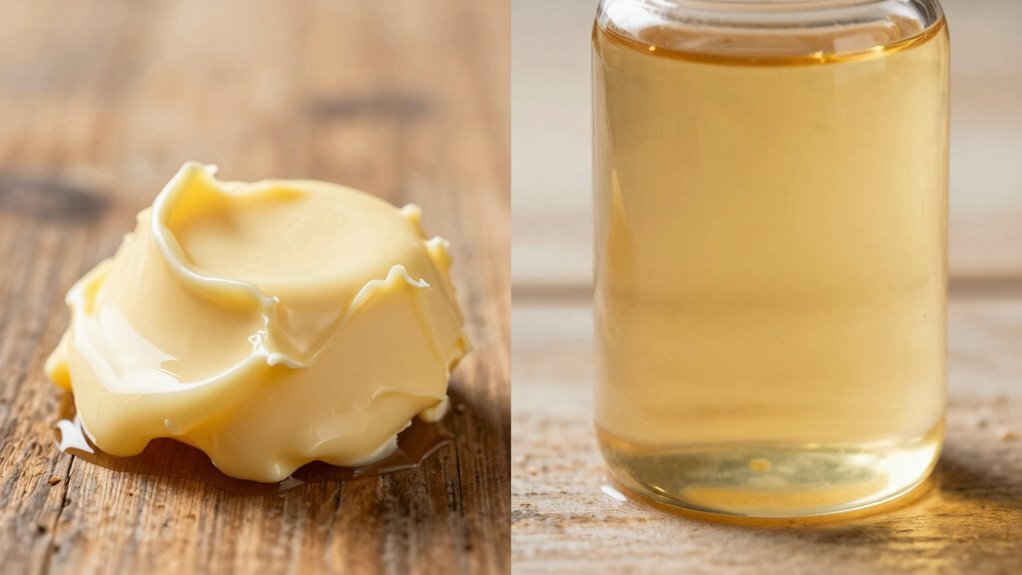
Selecting the right ingredient for your kitchen depends on understanding how each option performs in your recipes. Consider their molecular composition and flavor profiles to match your needs. For example, butter offers natural richness and a complex flavor, while butter flavor adds a consistent, controlled taste. Use this table to compare:
| Ingredient | Molecular Composition | Flavor Profiles |
|---|---|---|
| Butter | Milk fats, water, proteins | Rich, nutty, slightly sweet |
| Butter Flavor | Artificial compounds, oils | Mild, uniform, less complex |
| Margarine | Vegetable oils, emulsifiers | Varies, often neutral or buttery |
Choose based on whether you prioritize natural ingredients or consistent flavor in your dishes.
Frequently Asked Questions
Can Butter Flavor Be Made Vegan?
Yes, butter flavor can be made vegan using plant-based substitutes. You can find vegan butter or flavorings that mimic the rich, creamy profile of traditional butter. These alternatives use ingredients like coconut oil, margarine, or specialized flavorings to replicate the flavor profile without animal products. By choosing vegan substitutes, you get the desired buttery taste while adhering to a plant-based diet, making it perfect for vegans and those with dairy allergies.
How Long Does Butter Flavor Last on Shelf Life?
You might find it surprising, but butter flavor typically lasts about one to two years on the shelf if stored properly. Its shelf stability depends on storage conditions—keep it in a cool, dry place away from sunlight, and it’ll stay fresh longer. Always check the expiration date on the packaging, and if it develops an off smell or flavor, it’s time to replace it. Proper storage keeps your flavor vibrant!
Are There Any Allergens in Butter Flavor?
Yes, butter flavor can contain allergens like dairy and nuts, so if you have dairy allergies or nut sensitivities, check the label carefully. Some butter flavorings include dairy derivatives or nut extracts, which could trigger reactions. Always read ingredient lists thoroughly and opt for allergen-free options if needed. If you’re unsure about the ingredients, consult with your healthcare provider to stay safe while enjoying your favorite dishes.
Does Butter Flavor Contain Dairy Ingredients?
Butter flavor generally doesn’t contain dairy ingredients, but you should check labels because some products include dairy-based flavor additives. If you’re sensitive or allergic to dairy, look for options labeled dairy-free to avoid any issues. Many butter flavorings are made with plant-based or synthetic flavor additives that mimic butter’s taste without dairy content, making them suitable for vegans or those with dairy allergies. Always read ingredient lists carefully to be sure.
Can Butter Flavor Be Used in Baking at High Temperatures?
Using butter flavor in baking is like adding a splash of sunshine—you get that rich, buttery aroma without the dairy. You can use it at high temperatures because it’s a flavor enhancer, not real butter, so it won’t burn or break down like butter does. Think of it as a cooking substitution that boosts flavor without changing the texture, making it perfect for baked goods that need a buttery touch.
Conclusion
Ultimately, choosing between butter and butter flavor is like selecting the perfect brushstroke for your culinary masterpiece. Real butter offers a rich, natural hue and wholesome essence, while butter flavor adds a subtle shimmer without the weight. Trust your instincts and the story you want your dish to tell. Whether you prefer the genuine glow or a hint of crafted illusion, your kitchen is your canvas—paint it with what feels right for your taste and values.