
More wattage doesn’t automatically equal better sound outdoors. It’s all about speaker efficiency, design, and placement. Higher power may mean louder volume, but clear and rich sound comes from the right speaker design and materials. Factors like environmental acoustics and surface materials also play a big role in your listening experience. Knowing how to position your speakers can make a significant difference. Discovering more about how to optimize your outdoor setup can really enhance your enjoyment.
Key Takeaways
- Higher wattage indicates power, not sound quality; efficiency and speaker design are more crucial for clear sound.
- Acoustic design, including driver size and enclosure type, significantly affects sound clarity and reach outdoors.
- Quality materials enhance durability and reduce distortion, directly impacting overall sound fidelity and experience.
- Environmental factors like terrain and vegetation can interfere with sound distribution, making placement more important than wattage.
- Proper speaker positioning and angling are essential to optimize sound dispersion and enhance outdoor listening experiences.

1 by ONE High Fidelity Belt Drive Turntable with Built-in Speakers, Vinyl Record Player with Magnetic Cartridge, Wireless Playback and Aux-in Functionality, Auto Off
Exquisite Appearance, Built from wood and metal materials with a unique sense of layering, The streamlined corner design...
As an affiliate, we earn on qualifying purchases.
What Wattage Really Means for Your Sound

When it comes to outdoor sound systems, many people assume that higher wattage directly translates to better sound quality. This wattage misconception can mislead you when choosing the right speakers. While wattage indicates power, it doesn’t necessarily reflect sound clarity or quality. Instead, focus on speaker efficiency, which measures how effectively a speaker converts power into sound. A more efficient speaker can produce the same volume at lower wattage compared to less efficient models. This means you might achieve better sound quality with a lower wattage speaker if it’s designed well. Keep in mind that the environment, speaker placement, and acoustics also play significant roles in your overall listening experience. Prioritize efficiency to enhance your outdoor sound enjoyment. Additionally, consider incorporating smart controls to optimize your system’s performance and energy usage.

Bluetooth Turntable HiFi System with 36 Watt Bookshelf Speakers, Patend Designed Vinyl Record Player with Magnetic Cartridge, Bluetooth Playback and Auto Off
[Bluetooth Record Player] This Bluetooth record player supports wireless playback from iPhones, Android smartphones, and tablets, letting you...
As an affiliate, we earn on qualifying purchases.
The Role of Speaker Design in Outdoor Sound Systems
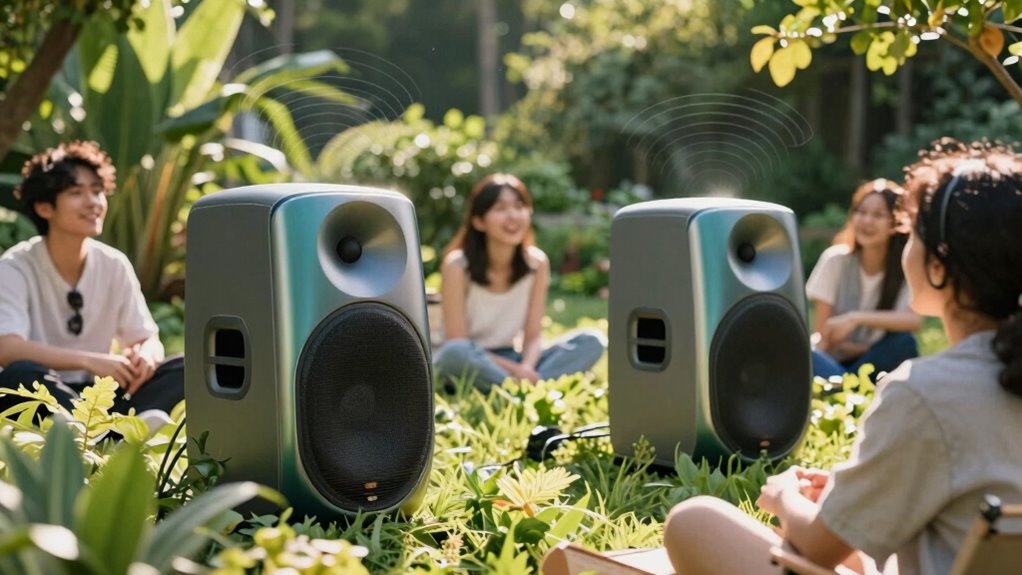
When you’re setting up an outdoor sound system, the design of your speakers plays an essential role in overall performance. Acoustic design principles, like how sound waves interact, can greatly influence clarity and reach. Additionally, the quality of materials used can make a significant difference in durability and sound fidelity. Understanding speaker design principles is crucial for achieving optimal sound quality in outdoor environments. Investing in high-quality speakers can enhance your outdoor listening experience, providing deeper bass and clearer treble.
Acoustic Design Principles
Although many people believe that higher wattage leads to better sound, the truth lies in effective speaker design tailored for outdoor environments. To achieve quality outdoor sound, focus on acoustic balance and sound dispersion. A well-designed speaker system guarantees that sound reaches all areas evenly, minimizing dead spots and overpowering areas. Additionally, considering smart home design principles can further enhance the overall listening experience by seamlessly integrating sound systems into your outdoor space. Implementing adaptive lighting can also complement the outdoor audio experience by creating the right ambiance for gatherings or relaxation.
| Design Element | Importance | Impact on Sound |
|---|---|---|
| Driver Size | Affects bass response | Enhances low frequencies |
| Enclosure Type | Influences resonance | Improves clarity |
| Speaker Placement | Determines coverage area | Maximizes sound reach |
| Frequency Range | Shapes overall sound | guarantees full spectrum |
| Power Handling | Prevents distortion | Maintains sound quality |
Material Quality Impact
While some might overlook it, the quality of materials used in outdoor speaker design greatly influences sound performance. When you’re outdoors, your speakers face the elements, so material durability is essential. High-quality materials resist weather damage, ensuring your system lasts longer and maintains performance.
Moreover, the choice of materials directly impacts sound clarity. For instance, a well-designed enclosure made from sturdy, resonant materials can enhance audio fidelity, allowing for crisp highs and rich lows. You’ll notice that speakers constructed with premium components reduce distortion and improve overall sound quality, making your outdoor listening experience much more enjoyable. So, when selecting outdoor speakers, prioritize material quality to achieve the best sound performance possible.

WOCKODER Vinyl Record Players Vintage Turntable with Speakers Belt-Driven Turn Tables Support 3-Speed, Bluetooth Wireless Playback, Headphone, AUX-in, RCA Line LP Phonograph Auto Stop Retro Black
VINTAGE LOOKING RECORD PLAYER - As a music player combined age and modern sense, A vintage and fashion...
As an affiliate, we earn on qualifying purchases.
How Acoustics Affect Outdoor Sound Quality

Acoustics play an essential role in determining how sound quality is experienced outdoors, since the environment can significantly alter what you hear. Factors like terrain, vegetation, and nearby structures influence sound reflection, causing certain frequencies to bounce back while others dissipate. This can lead to uneven frequency distribution, making some sounds overly pronounced while others fade into the background. You might notice that music sounds richer in one area but muddled just a few feet away. To enhance your outdoor sound experience, consider the layout of your space and how sound interacts with its surroundings. Understanding these acoustic principles can help you position speakers effectively for the best overall sound quality, regardless of wattage. Additionally, safe operating procedures for outdoor equipment can ensure that your sound setup is both effective and secure. Remember that sound reflection in outdoor environments can also be influenced by the materials used in nearby structures, which affects how the sound travels and mixes in the air. For instance, using materials with sound absorption properties can reduce unwanted echoes and enhance clarity in your outdoor audio experience. The choice of filtration techniques in your outdoor setup can also contribute to minimizing unwanted noise and improving overall sound fidelity. Moreover, incorporating mobility & recovery practices into your outdoor setup can help you maintain your equipment and ensure consistent performance over time.

Victrola Century 6-in-1 Vinyl Record Player & Music Center – 3-Speed Turntable, CD & Cassette Player, VINYLSTREAM, Bluetooth & 3.5mm Aux, Record Player with Speakers, Mid Century Design (Walnut)
6-IN-1 MUSIC CENTER – The Victrola Century pairs mid-century modern design with a 3-speed turntable, Bluetooth, VINYLSTREAM output,...
As an affiliate, we earn on qualifying purchases.
How Your Space Impacts Sound
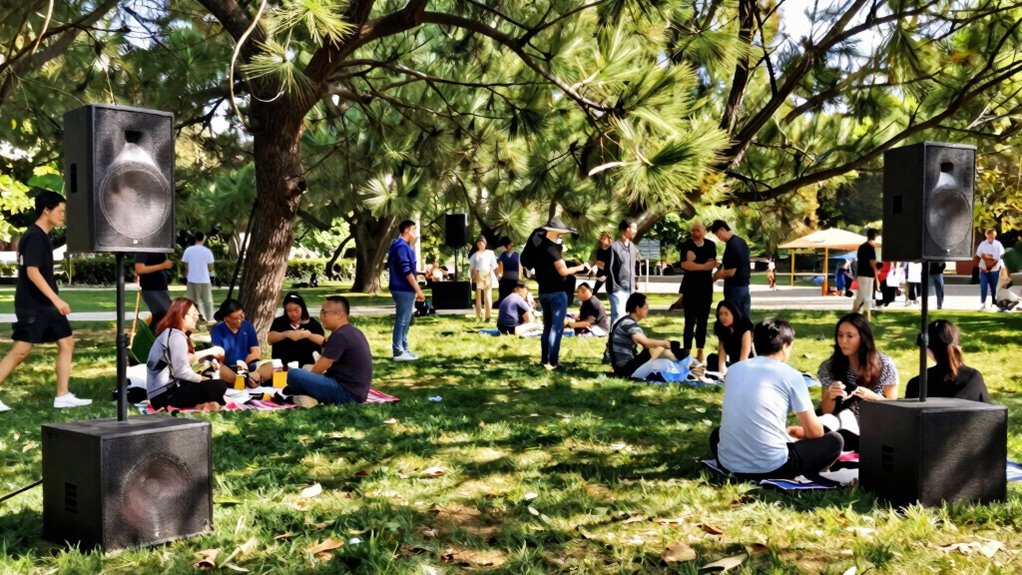
Your outdoor space plays an essential role in how sound travels and resonates. The size of your area and the materials around you can either enhance or muddle the audio experience. Understanding these factors helps you create a more enjoyable sound environment.
Environmental Acoustics Considerations
When planning an outdoor sound system, it’s essential to contemplate how the environment shapes sound waves. Factors like trees, buildings, and terrain can greatly influence sound propagation. For instance, dense foliage can absorb certain frequencies, while hard surfaces may reflect sound, creating echoes or unwanted environmental noise. You might not realize that the direction and intensity of your speakers can interact with these elements, affecting how well your audience hears your music or announcements. Additionally, consider how wind can carry sound away or distort it. By understanding these environmental acoustics, you can strategically position your system to enhance clarity and minimize interference, ensuring your outdoor events are more enjoyable for everyone involved. Furthermore, consider how water damage can affect the sound quality of your equipment and surroundings, as moisture can impact both electronics and materials involved in sound production. Utilizing proper marine GPS technology can aid in determining optimal placement for sound equipment in relation to environmental features. Additionally, incorporating recycled materials in your sound system setup can contribute to a more sustainable approach to outdoor events. Also, using acoustic drum shields can help control the sound dispersion in outdoor settings. Moreover, maintaining indoor air quality is crucial, as poor air conditions can affect the overall experience of your audience during outdoor events.
Space Size Effects
While you might think that more power from your sound system guarantees better audio quality, the size of your space plays an essential role in how sound behaves. In smaller areas, sound dispersion can be more limited, causing audio to feel cluttered or overwhelming. Larger spaces, on the other hand, allow sound to travel further, creating a more balanced experience. However, if the space acoustics aren’t ideal, even a powerful system can sound muddy or flat. You’ll want to take into account the dimensions and layout of your area, as well as how sound waves interact with walls and furniture. Ultimately, understanding your space helps you achieve the best possible audio experience, regardless of your system’s wattage. Additionally, implementing effective soundproofing techniques can greatly enhance the overall sound quality in your home environment.
Surface Material Impact
Sound quality isn’t just influenced by space size; the materials that make up your environment play a significant role too. The surface texture of your surroundings can dramatically affect how sound behaves. For instance, hard surfaces like concrete or glass reflect sound, creating echoes and potentially muddying clarity. Conversely, softer materials, such as carpets or acoustic panels, enhance sound absorption, reducing reverberation and enhancing overall audio fidelity. If you want to improve your outdoor sound experience, consider the textures around you. By choosing materials that absorb rather than reflect sound, you’ll create a more pleasant auditory environment. So, pay attention to your surroundings—what you hear is as much about what’s around you as it is about your sound system. Additionally, understanding how sound absorption materials can enhance your listening experience can help you make better choices for outdoor setups. Incorporating ergonomic design principles in your outdoor arrangements can further enhance comfort and well-being while enjoying the sound.
Essential Features for Quality Outdoor Speakers
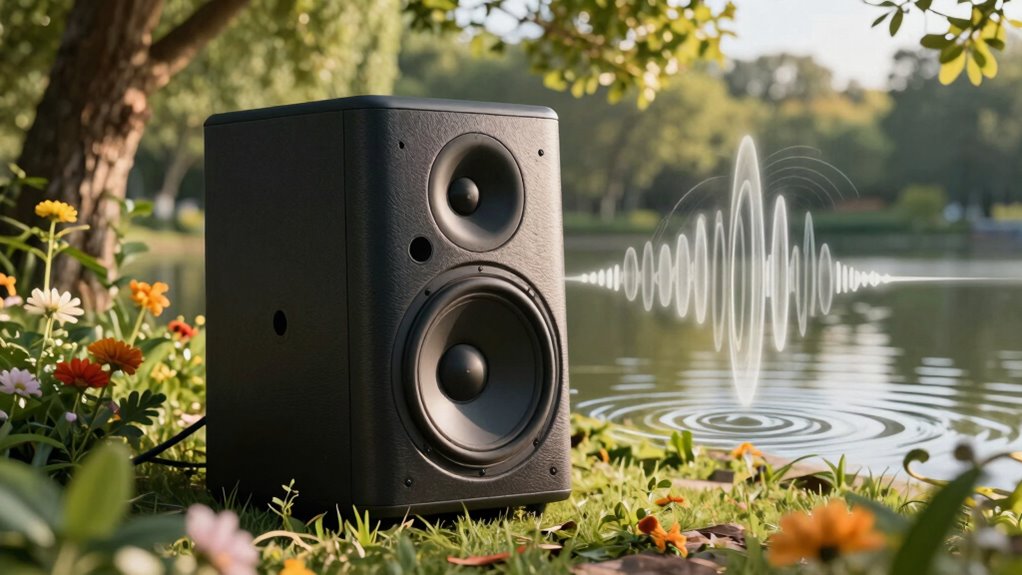
To truly enjoy your outdoor space, you need quality speakers that deliver clear, rich audio. Look for models that provide excellent sound dispersion, ensuring the music fills the area evenly without dead spots. Proper speaker placement is vital; consider mounting them at ear level or on sturdy surfaces to enhance sound clarity. Weather resistance is another essential feature, as outdoor speakers must withstand the elements while maintaining performance. Additionally, opt for models with a wide frequency response to capture the full spectrum of sound, from deep bass to crisp highs. Finally, wireless capabilities can offer flexibility in placement, allowing you to position your speakers where they sound best while keeping your setup neat and tidy.
Real-World Misconceptions About Outdoor Sound Systems

What misconceptions do you have about outdoor sound systems? You might think that higher wattage equals better sound quality, but that’s misleading wattage. In reality, sound clarity depends on various factors beyond just power. Many believe that big speakers are always superior, but it’s more about how well they’re designed for outdoor environments. You could have a powerful system that still sounds muddy if the components aren’t balanced or suited for open spaces. Additionally, pool acoustics can significantly impact the way sound travels and interacts in outdoor settings. Understanding the role of sound dispersion is essential for achieving optimal audio performance in these environments. Also, remember that placement matters; even the best speakers can underperform if they’re not positioned correctly. To enhance clarity, consider using dialogue clarity technology that can improve the intelligibility of sound in challenging environments. Furthermore, utilizing smart fitness technology can help you monitor sound performance over time, ensuring that your outdoor setup remains optimal. So, before investing in outdoor audio gear, consider these aspects to guarantee you achieve the sound clarity you’re after, rather than getting caught up in wattage hype. Additionally, color accuracy plays a crucial role in the overall audio-visual experience when integrating sound with visual elements outdoors.
Tips for Optimizing Your Outdoor Sound Setup

While you might feel tempted to just set up your speakers and hit play, optimizing your outdoor sound setup requires a bit more thought. Start by considering your speaker placement. Position your speakers at ear level and angle them towards the listening area for better sound dispersion. You can also use barriers like walls or trees to help direct sound. Additionally, just like with robot mowers that can optimize yard care efficiency, careful planning in your sound setup can significantly enhance your outdoor experience. Incorporating outdoor-kitchen essentials can also create a more immersive atmosphere for your gatherings.
Here’s a quick reference table for your setup:
| Tip | Description | Benefit |
|---|---|---|
| Speaker Height | Keep speakers at ear level | Enhances clarity |
| Angle Adjustment | Tilt speakers towards listeners | Improves sound directionality |
| Surrounding Obstacles | Utilize walls/trees for support | Increases volume and focus |
With these tips, you’ll create an outdoor sound experience that’s truly enjoyable!
Choosing the Right Outdoor Sound System for Your Needs
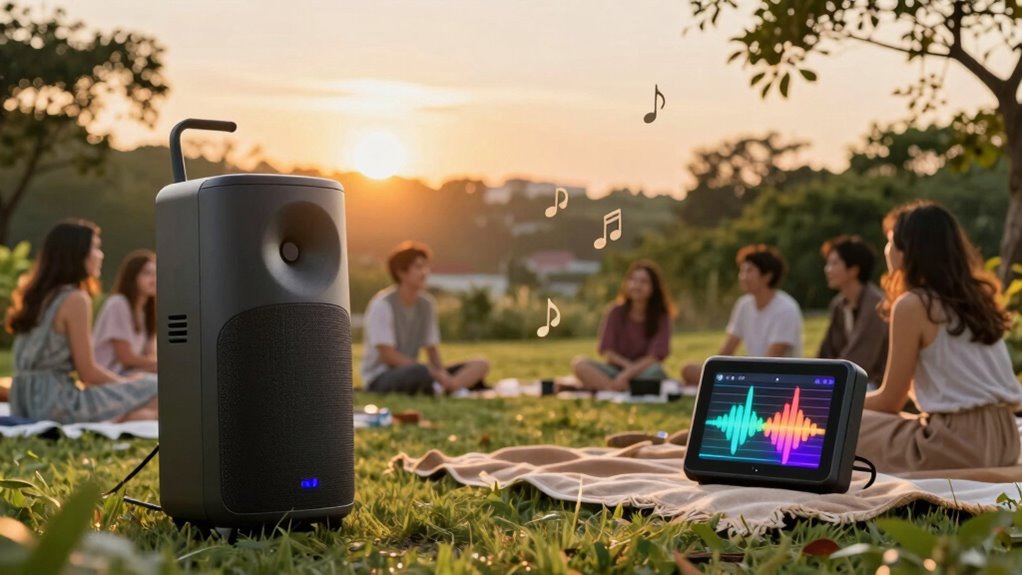
Optimizing your outdoor sound setup sets the stage for selecting the right sound system to meet your needs. Start by considering your space—how large is it, and what activities will you host? For effective sound dispersion, choose speakers that can cover the entire area without dead zones. Pay attention to speaker placement; positioning them at ear level and angling them toward listening areas will enhance audio quality. If you have a larger space, you might need multiple speakers to guarantee even sound distribution. Don’t forget to think about weather resistance if your system will be outdoors year-round. Finally, assess your budget and prioritize features that align with your specific needs for the best outdoor sound experience.
Frequently Asked Questions
Can I Use Indoor Speakers Outdoors?
You can use indoor speakers outdoors, but it’s not ideal. Indoor speaker limitations often include lack of weatherproofing and lower durability, which can affect outdoor sound quality. If you expose them to moisture or extreme temperatures, you risk damaging them. For the best experience, consider outdoor speakers designed for the elements. They’ll provide better sound quality and longevity, ensuring you enjoy your music without worrying about damaging your equipment.
What Is the Best Speaker Placement for Outdoor Events?
For outdoor events, you’ll want to balance speaker height and sound dispersion. If you place speakers too low, they’ll struggle to project sound over crowds; yet, if they’re too high, some guests might miss the experience. Aim for about ear level for ideal sound coverage. Position them in a way that allows sound to spread evenly, avoiding corners or barriers that could muffle the audio. You’ll create an immersive atmosphere that everyone enjoys.
Do Outdoor Speakers Need Special Weatherproofing?
Yes, outdoor speakers need special weatherproofing to guarantee speaker durability. You should look for models made with weatherproof materials that can withstand rain, humidity, and temperature fluctuations. This protection helps maintain sound quality and extends the lifespan of your speakers. When you choose weatherproof speakers, you’re investing in a system that performs well in various outdoor conditions, so you can enjoy great sound without worrying about the elements.
How Do I Connect My Outdoor Speakers to a Device?
To connect your outdoor speakers, you have two options: Bluetooth connection or a wired setup. For Bluetooth, make certain your speakers are powered on and in pairing mode, then go to your device’s Bluetooth settings and select your speakers. If you prefer a wired setup, run speaker wires from your amplifier or receiver directly to the speakers, making sure proper connections. Both methods will let you enjoy great sound outdoors!
Can I Use a Subwoofer in an Outdoor Setup?
Absolutely, you can use a subwoofer in your outdoor setup! In fact, studies show that adding a subwoofer can enhance outdoor acoustics by up to 50%. When choosing a subwoofer, consider the types available—powered or passive—and how they complement your speakers. A powered subwoofer often works best for outdoor use since it has its own amplifier, ensuring you get that deep bass without sacrificing sound quality in open spaces.
Conclusion
To sum up, while it might seem tempting to chase higher wattage for better outdoor sound, remember that quality matters more than quantity. It’s easy to assume that more power equals superior performance, but the truth lies in speaker design and acoustics. By focusing on essential features and optimizing your setup for your specific space, you can achieve exceptional sound without breaking the bank. So, trust your ears and choose wisely—your outdoor listening experience will thank you!