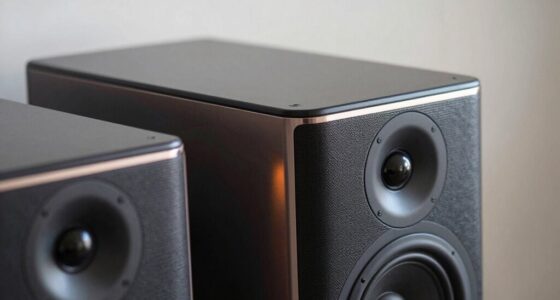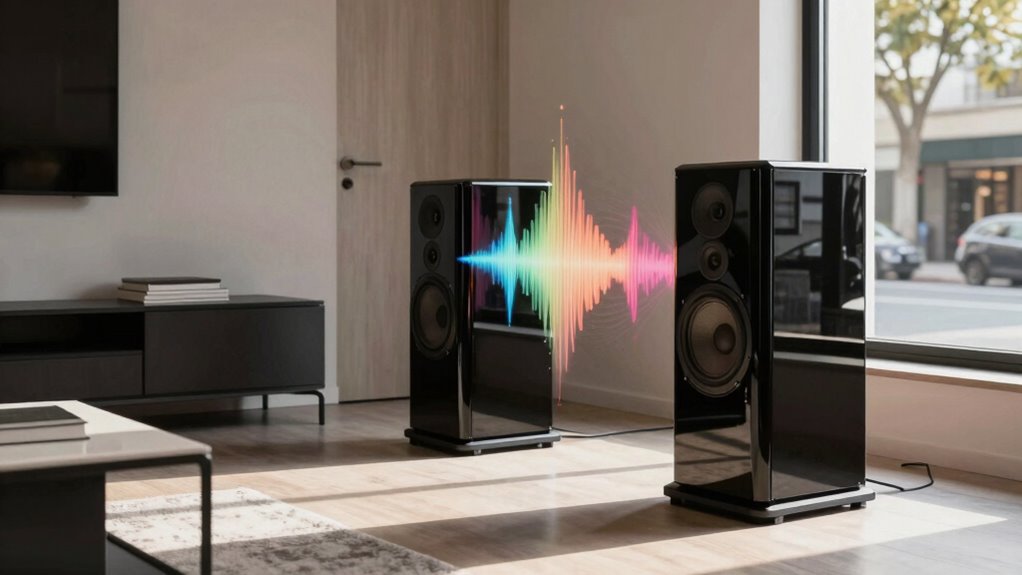

Some speakers sound harsh at home due to poor placement, low-quality components, and difficult room acoustics. If your speakers aren’t at ear level or too close to walls, you might hear piercing highs that lead to discomfort. Plus, hard surfaces can amplify certain frequencies, making the sound fatiguing. By adjusting your setup and considering upgrades, you can improve your listening experience. There are more strategies to explore for a balanced sound environment.

Get movie nights delivered free with Prime
- Fast, free delivery on millions of items
- Prime Video, Amazon Music and more included
- Member-only deals all year
Key Takeaways
- Harsh sound can stem from tweeter distortion, leading to piercing high frequencies that are fatiguing to listen to.
- Poor speaker placement and height can create uneven sound distribution and exacerbate harshness in audio output.
- Room acoustics, such as hard surfaces and furniture placement, can amplify certain frequencies and contribute to a harsh listening experience.
- Low-quality cables may introduce signal interference, resulting in distorted sound that can be perceived as harsh.
- Simple fixes like adjusting equalization settings or incorporating acoustic treatments can significantly improve sound quality and reduce harshness.
How to Identify Harsh Speaker Sound
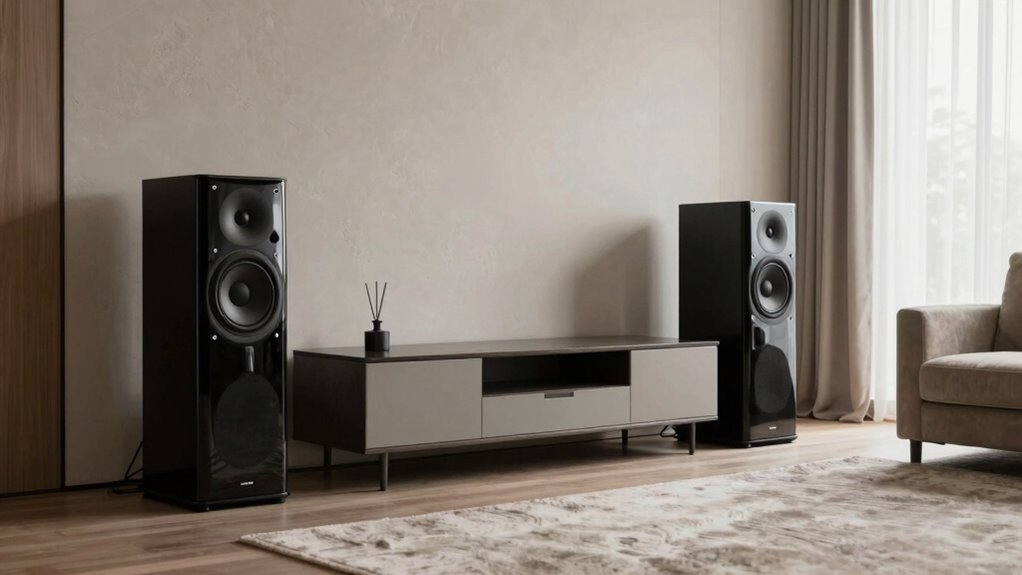
How can you tell if your speakers sound harsh? One clear sign is tweeter distortion. If you hear a piercing or shrill quality in the high frequencies, that’s a red flag. Pay attention to how the sound makes you feel; if it’s uncomfortable or fatiguing, your speakers likely need some adjustments. Another indicator is amplifier clipping. When your amplifier struggles to deliver power, it can cause the sound to break up, leading to a harsh listening experience. Listen for any crackling or buzzing noises, especially at higher volumes. If you notice these symptoms, it’s worth investigating your setup to enhance your sound quality and enjoy a more pleasant listening experience.
Common Equipment Issues Causing Harshness
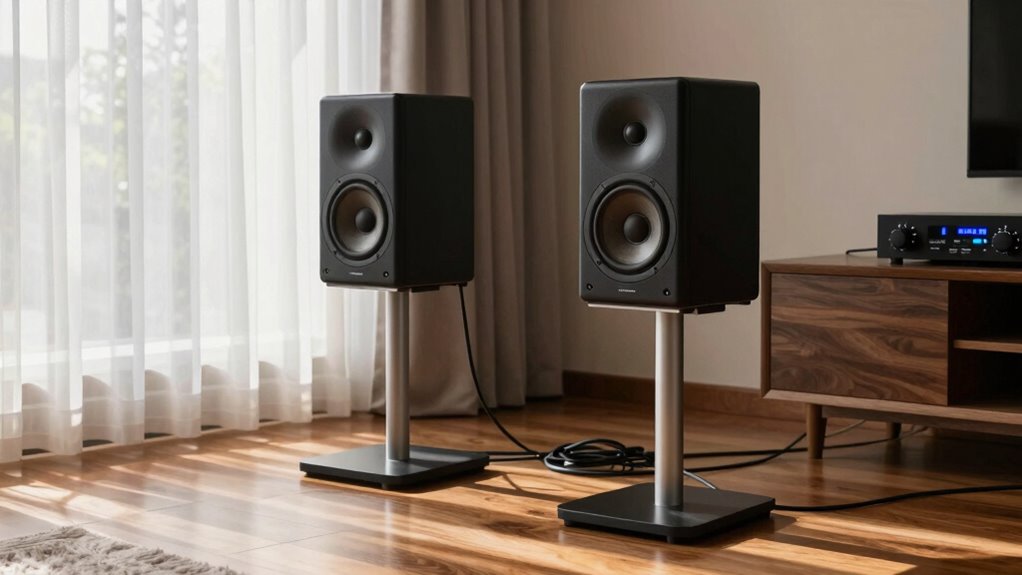
If your speakers sound harsh, you might want to check your setup. Issues like poor speaker placement, problematic room acoustics, and low-quality cables can all contribute to that unpleasant sound. Let’s explore how each of these factors can affect your audio experience.
Speaker Placement Issues
While you might not realize it, the placement of your speakers plays a crucial role in sound quality, often leading to harshness if not positioned correctly. First, consider the speaker height; ideally, your speakers should be at ear level when you’re seated. If they’re too high or low, you may experience uneven sound distribution, resulting in harsh tones. Next, pay attention to listening distance; placing speakers too close or too far can cause sound reflections that amplify harshness. Aim to position them at least a few feet away from walls and furniture to minimize interference. Additionally, proper speaker placement can help optimize sound clarity and reduce harshness. Experimenting with these factors can drastically improve your listening experience and help eliminate that unwanted harshness in your sound.
Room Acoustics Impact
Even though you might have high-quality speakers, poor room acoustics can still lead to harsh sound quality. The way sound waves interact with your room affects the overall listening experience. Sound reflections from hard surfaces can create an uneven frequency response, emphasizing certain frequencies while diminishing others. This room interaction can be complex, and understanding it is key to improving sound quality. Properly managing sound reflection is essential to prevent overly bright or harsh audio, and it can be achieved through strategic placement of furnishings. Additionally, room dimensions play a significant role in how sound behaves, influencing echo and resonance patterns. This imbalance often results in a harsh or overly bright sound that can be unpleasant to listen to. Incorporating proper ventilation and managing airflow can also influence how sound travels and is perceived in a space. To improve clarity, consider adding soft furnishings, rugs, or acoustic panels to your space. These materials can absorb excess reflections, creating a more balanced sound environment. Understanding room acoustics is crucial, as it can help you identify and mitigate issues that cause harshness. Remember, even the best equipment can’t compensate for poor acoustics, so addressing this issue is essential for achieving that warm, rich sound you desire.
Poor Quality Cables
Room acoustics play a crucial role in sound quality, but the equipment you use can also contribute to a harsh listening experience. One often-overlooked factor is the quality of your cables. Poor quality cables can introduce signal interference, distorting the sound and making it harsh. Here’s what to take into account:
- Material: Cheaper cables often use inferior materials that degrade signal quality.
- Shielding: Lack of proper shielding can lead to unwanted noise and interference.
- Connections: Loose or poorly made connections can disrupt the signal flow.
- Length: Longer cables can amplify interference, impacting sound clarity.
Investing in high-quality cables can greatly enhance your listening experience, making the sound warmer and more enjoyable.
How to Optimize Speaker Placement
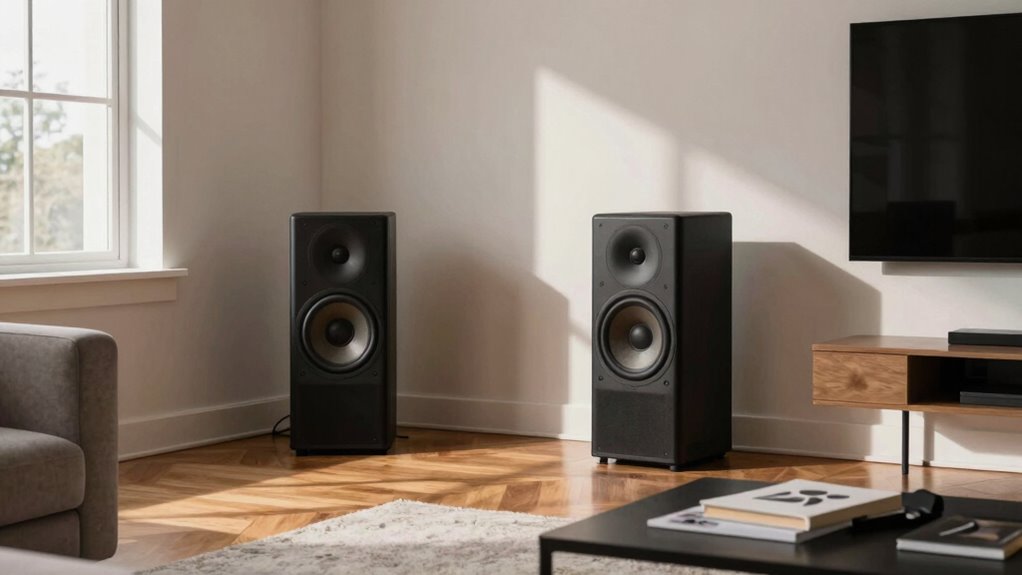
To achieve the best sound quality from your speakers, it is essential to evaluate their placement within your space. Start by determining the ideal speaker distance from your listening position. Ideally, your speakers should form an equilateral triangle with your seating area.
Here’s a simple guide to help:
| Speaker Placement | Distance from Listening Position |
|---|---|
| Near Wall | 3-5 feet |
| Mid-Room | 5-8 feet |
| Corner | 2-4 feet |
Experiment with these distances to find what works best for you. Remember, small adjustments can make a significant difference in sound clarity and richness. Proper placement guarantees you enjoy a balanced audio experience without that harsh sound.
How Room Acoustics Contribute to Harsh Speaker Sound
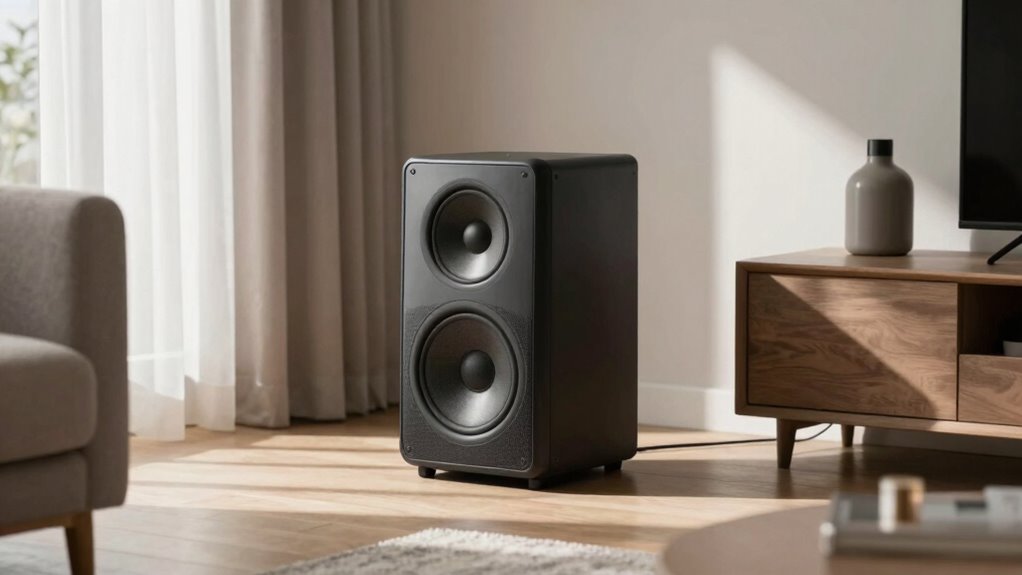
When you set up your speakers, the acoustics of your room can greatly affect sound quality, often leading to that unpleasant harshness. Factors like room shape and sound reflections play a significant role in how you experience audio. Consider these elements:
- Room Shape: Irregular shapes can create uneven sound distribution.
- Sound Reflections: Hard surfaces amplify certain frequencies, causing distortion.
- Furniture Placement: Sofas and curtains can absorb or scatter sound waves.
- Ceiling Height: Low ceilings may trap sound, resulting in muddiness.
Quick Fixes for Harsh Sound
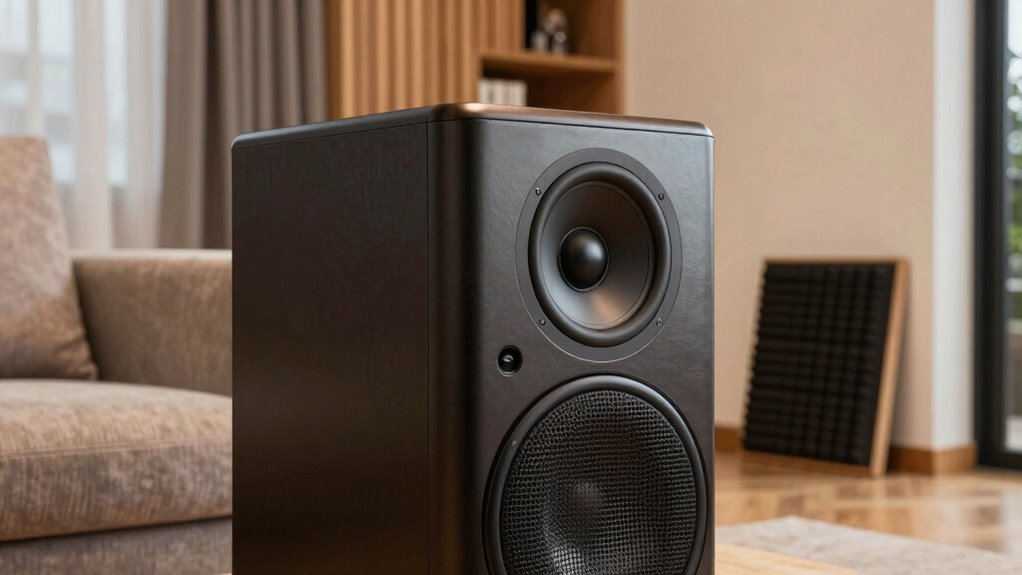
If you’ve noticed your speakers sound harsh, you can implement some quick fixes to enhance your listening experience. Start with speaker tuning; adjusting the equalization settings can help smooth out those irritating frequencies. Experiment with reducing treble and boosting midrange to achieve a more balanced sound. Additionally, proper ergonomic speaker placement can reduce sound reflections and improve listening comfort. Using room acoustic treatments**, such as diffusers and absorbers, can further diminish harshness by controlling sound reflections within your space. Next, consider acoustic treatments for your room. Adding soft furnishings like rugs, curtains, or wall panels can absorb excess sound reflections, minimizing harshness. Place bookshelves or other furniture strategically to diffuse sound waves. Lastly, verify your speakers are positioned correctly**, away from corners and reflective surfaces. These simple adjustments can make a significant difference in the quality of sound, providing you with a more enjoyable listening environment.
When Upgrading Gear Can Solve Harshness

If you’re still experiencing harshness in your sound, it might be time to contemplate upgrading your gear. Speaker placement, the quality of your components, and room acoustics all play significant roles in your audio experience. Sometimes, investing in better equipment can make all the difference in achieving that smooth, enjoyable sound you crave. Additionally, room acoustics can be optimized with simple adjustments or acoustic treatments, further enhancing your listening environment.
Speaker Placement Matters
Although upgrading your speakers can improve sound quality, proper placement is just as crucial in eliminating that harshness you might experience at home. You need to take into account speaker orientation and listening distance to achieve the best sound. Here are some quick tips for ideal placement:
- Angle your speakers towards your listening position for better clarity.
- Maintain an adequate distance from walls to reduce unwanted reflections.
- Adjust your listening height by positioning speakers at ear level.
- Create space between speakers for a wider soundstage.
- Incorporate speaker calibration tools or settings to optimize your system’s sound profile and further reduce harshness.
Quality of Components
When you’re dealing with harsh sound at home, upgrading the quality of your audio components can make a significant difference. The materials used in your speakers play an essential role in how they produce sound. High-quality component materials often lead to clearer, more balanced audio. For instance, a speaker’s sensitivity can affect how efficiently it converts power into sound. If your speakers have low sensitivity, they may struggle to deliver a full range of frequencies, resulting in a harsh listening experience. By investing in better components, you can enhance the overall sound quality and reduce harshness. Additionally, choosing components with appropriate material quality can help optimize sound clarity and durability, as well as improve component longevity. Ensuring proper amplifier matching can further reduce distortion and harshness in your audio system. Moreover, selecting components with better internal construction can minimize resonance and unwanted vibrations that contribute to harshness.
Room Acoustics Impact
Upgrading your audio components can greatly enhance sound quality, but the acoustics of your room also play a key role in how your speakers perform. Poor room acoustics can lead to harshness, primarily due to sound reflections that disrupt the frequency response. Consider these factors when evaluating your space:
- Wall materials: Hard surfaces reflect sound, amplifying harsh tones.
- Furniture placement: Bulkier items can absorb sound, affecting clarity.
- Room shape: Odd angles may cause sound waves to bounce unpredictably.
- Acoustic treatments: Adding rugs, curtains, or panels can soften reflections. Additionally, using smart acoustic solutions can help optimize your room’s sound environment. Incorporating recycled materials in acoustic panels offers an eco-friendly way to improve sound quality and room aesthetics, especially since sound absorption can vary significantly depending on materials used. Properly managing room acoustics can make a substantial difference in reducing harshness and achieving balanced sound, and understanding how room dimensions influence sound behavior is also crucial for optimal setup.
Frequently Asked Questions
Can Harsh Sound Be Caused by Speaker Brand or Model?
Yes, harsh sound can definitely be caused by speaker brand or model. Different speaker characteristics and their unique sound profiles can affect how audio is reproduced. Some brands emphasize treble frequencies, which might lead to a harsh listening experience, especially in untreated rooms. If you find your speakers sound harsh, it might be worth exploring different models or brands that offer a more balanced sound profile to suit your preferences.
How Does Speaker Wire Quality Affect Sound Harshness?
Speaker wire quality greatly affects sound harshness. If you use a lower wire gauge, it can restrict the flow of power, leading to distortion. Insulation quality also plays an essential role; poor insulation can introduce interference and degrade sound clarity. To guarantee a smooth audio experience, choose a wire with a proper gauge and high-quality insulation. Doing so can help minimize harshness and enhance the overall sound quality you enjoy at home.
Do Different Music Genres Impact Perceived Harshness?
Yes, different music genres do impact perceived harshness. Each genre has distinct characteristics that can emphasize certain frequencies, like the sharpness of electric guitars in rock or the clarity of vocals in pop. Your listener preferences also play an essential role; if you enjoy a particular genre, you might not notice harshness as much. Experimenting with various genres can help you discover which sounds best on your setup, enhancing your overall listening experience.
Can Harshness Occur at Low Volume Levels?
Yes, harshness can occur at low volume levels. When you’re listening quietly, distortion sources like poorly recorded tracks or speaker imperfections can become more noticeable. Your listening environment plays a vital role too; reflective surfaces might amplify harsh frequencies, making them stand out even when the volume’s low. So, even at softer volumes, you might still perceive that annoying harshness if the setup isn’t optimized for your space.
How Can EQ Settings Reduce Harsh Sound?
Think of your sound system as a garden; each EQ adjustment nurtures the soil. You can reduce harsh sound by finding the right frequency balance through careful EQ settings. Adjusting frequencies helps smooth out sharp tones, while considering room acoustics guarantees that sound waves flourish. Don’t forget speaker placement—positioning them correctly can minimize reflections that contribute to harshness. Tending to these elements will help cultivate a more pleasant listening experience.
Conclusion
Just like a garden flourishes with the right balance of sunlight and water, your sound system needs careful attention to thrive. By tuning into speaker placement, addressing equipment quirks, and understanding your room’s acoustics, you can cultivate a rich, harmonious sound. Quick fixes and thoughtful upgrades can be your gardening tools, helping you prune away harshness and nurture the lush audio experience you deserve. So, dig in and let your sound bloom beautifully at home!
Columbus Day / Indigenous Peoples' Day Picks
long weekend sales
As an affiliate, we earn on qualifying purchases.