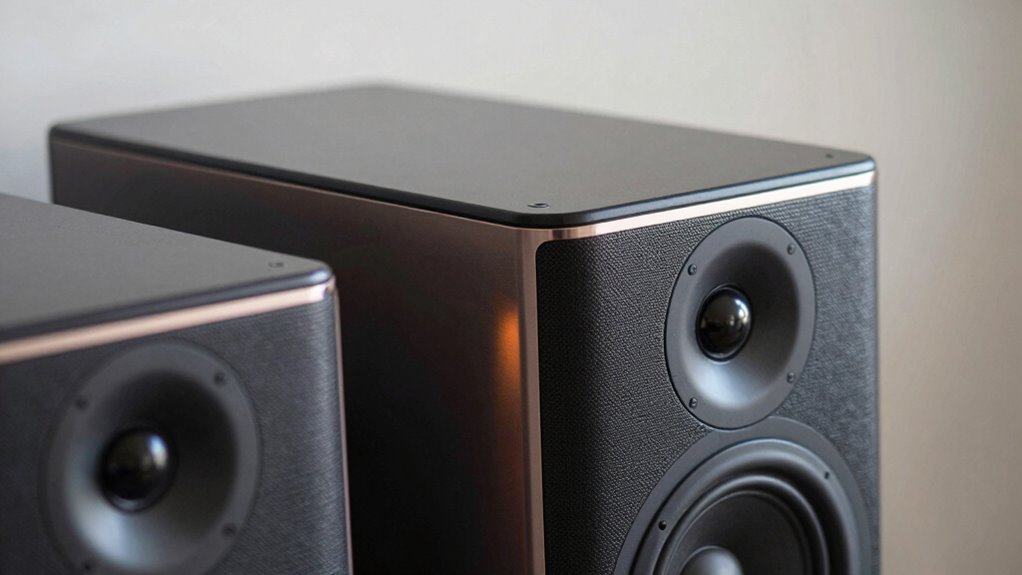

The speaker toe-in angle is the practice of angling your speakers inward toward your listening position. This adjustment enhances soundstage, clarity, and overall audio experience by improving vocal clarity and instrument separation. By starting with a 15-degree angle and fine-tuning from there, you can discover the best setup for your space. However, be cautious of overdoing it, as extreme angles might lead to unwanted distortions. There’s plenty more you can explore about optimizing your sound.

Get movie nights delivered free — and shop member deals
- Fast, free delivery on millions of items
- Access to Prime Big Deal Days deals on October 6–7
- Prime Video, Amazon Music and more included
Key Takeaways
- Speaker toe-in involves angling speakers inward, enhancing soundstage and clarity for an immersive listening experience.
- Proper toe-in minimizes sound reflections, reducing distortion and improving audio clarity and instrument separation.
- Start with a 15-degree angle for toe-in adjustments, gradually increasing to 30 degrees for optimal sound quality.
- Avoid overly aggressive toe-in to prevent a narrow sweet spot and imbalances in sound frequencies.
- Position speakers 2-3 feet from walls and create an equilateral triangle with the listening position for best results.
What Is Speaker Toe-In and How Does It Work?
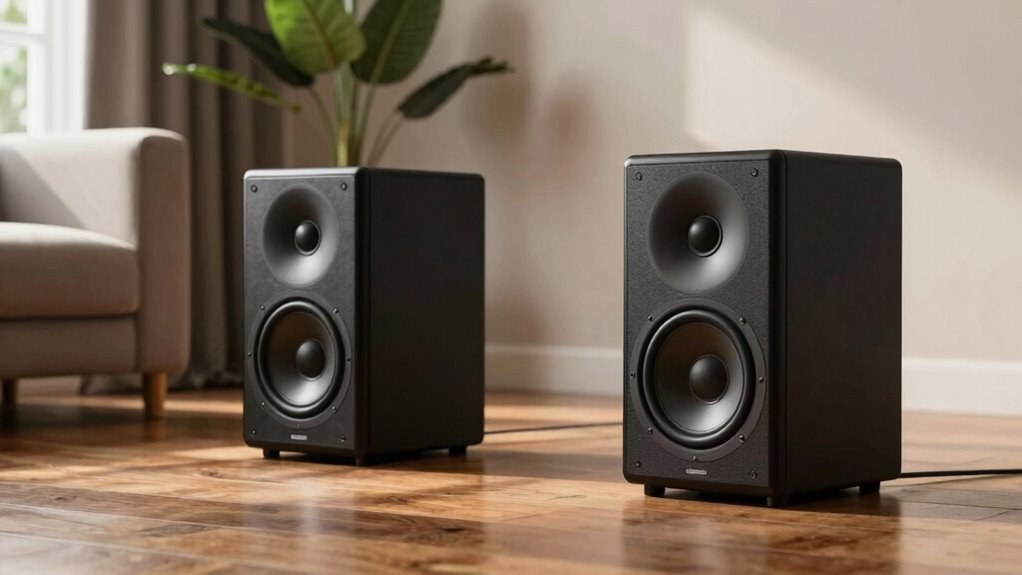
When you adjust your speakers by angling them inward, you’re engaging in what’s known as speaker toe-in. This technique stems from careful speaker design aimed at enhancing your listening experience. By directing the speakers toward your primary listening position, you can improve soundstage and clarity. The angle you choose can greatly impact how audio waves interact in your space.
Proper audio calibration, including toe-in adjustments, helps to minimize sound reflections from walls and furniture, providing a more accurate representation of your music or movies. Experimenting with different angles allows you to find the sweet spot that delivers the best balance of highs, mids, and lows. Ultimately, speaker toe-in can elevate your audio experience, making it more immersive and enjoyable.
Why Toe-In Is Essential for Your Sound Experience
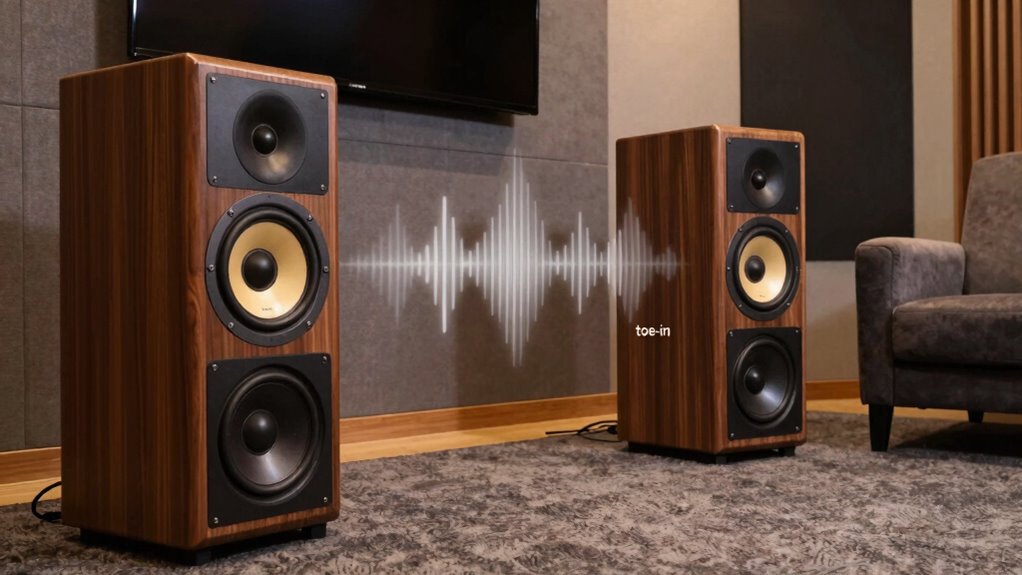
Toe-in is vital for your sound experience because it directly influences how sound waves interact with your environment. Proper speaker alignment achieved through toe-in helps to optimize sound staging, ensuring that you enjoy a more immersive listening experience. When your speakers are angled correctly, you’ll notice clearer vocals and better instrument separation, enhancing the overall quality of the sound.
| Benefits of Toe-In | Impact on Sound Experience |
|---|---|
| Improved stereo imaging | Clearer soundstage |
| Enhanced frequency response | Balanced audio output |
| Reduced room reflections | Minimized distortion |
| Better listener engagement | More dynamic sound |
Ultimately, toe-in plays a significant role in sound optimization, allowing you to get the most out of your audio setup.
Finding the Ideal Angle for Your Speaker Toe-In
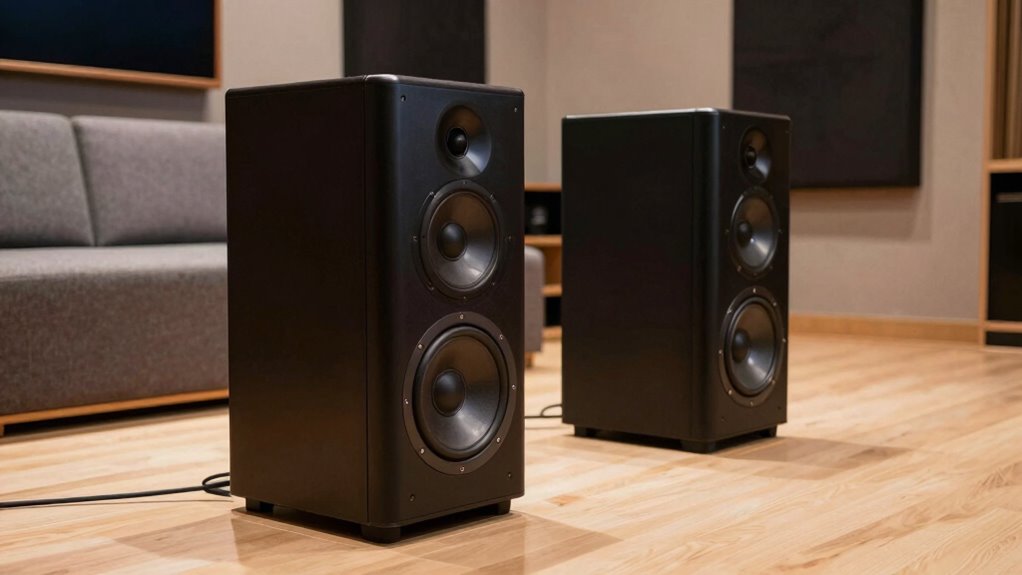
How can you determine the perfect angle for your speaker toe-in? Finding the ideal orientation is essential for enhancing sound clarity. Here’s how to fine-tune that angle:
Discovering the perfect speaker toe-in angle is key to achieving optimal sound clarity and an immersive listening experience.
- Start with a 15-degree angle: Begin with a slight toe-in to see how it affects your overall sound.
- Listen for changes: Pay attention to the clarity of vocals and instruments as you adjust.
- Gradually increase the angle: Move to 30 degrees if needed, ensuring that the sound remains balanced.
- Find your sweet spot: Experiment until you notice the best soundstage and clarity where the music feels immersive.
How Toe-In Affects Your Soundstage and Imaging
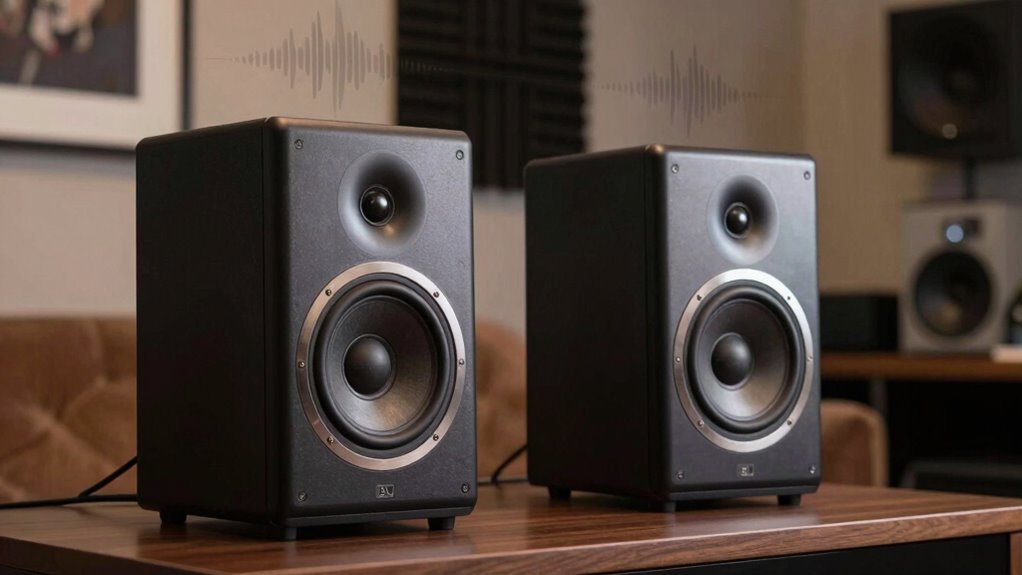
Achieving the right toe-in angle can greatly enhance your soundstage and imaging, as it influences how sound waves interact with your listening environment. By adjusting the toe-in, you can create a more immersive soundstage depth, allowing the music to envelop you. When your speakers are angled correctly, you’ll notice that instruments and vocals gain imaging clarity, making it easier to pinpoint their exact locations within the soundstage. Too much toe-in may compress the soundstage, while too little can lead to a lack of focus. Experimenting with small adjustments helps you find the sweet spot where both soundstage depth and imaging clarity are optimized. Enjoy the process, and let your ears guide you to the perfect angle!
Common Mistakes to Avoid With Toe-In Adjustments
When adjusting your speaker toe-in, there are a few common mistakes you should watch out for. Overly aggressive toe-in can lead to a narrow sweet spot, and ignoring room acoustics might throw off your sound entirely. Don’t forget to take into account your listener positioning, as it plays an essential role in achieving the best audio experience.
Overly Aggressive Toe-In
While many audiophiles aim for an ideal listening experience by adjusting toe-in angles, overly aggressive adjustments can lead to unintended consequences. If you find yourself excessively rotating your speakers, consider these common pitfalls:
- Narrowed Sweet Spot: Your listening area shrinks, making it hard to find the perfect listening position.
- Imbalance in Frequencies: High frequencies may overpower mids and lows, causing an unnatural sound.
- Phase Issues: Overly aggressive toe-in can create phase cancellation, leading to a hollow sound.
- Reduced Soundstage: Your speakers may lose their ability to create a broad, immersive soundstage.
To achieve ideal speaker placement, subtle adjustments are key. Aim for balance rather than extremes for the best auditory experience.
Ignoring Room Acoustics
Many enthusiasts overlook room acoustics when adjusting toe-in angles, which can considerably impact sound quality. Understanding your room dimensions is essential; every space interacts differently with sound waves. Hard surfaces, like hardwood floors or concrete walls, can create reflections that affect your listening experience. If your speakers are made from materials that emphasize certain frequencies, you may find that improper toe-in exacerbates these issues. Instead of focusing solely on the angle, consider how your room’s layout and speaker materials influence the overall sound. By taking these factors into account, you’ll create a more balanced sound that enhances your listening experience. Avoiding this common mistake will help you achieve ideal performance from your audio setup.
Neglecting Listener Positioning
If you ignore your listener position when adjusting toe-in angles, you risk missing out on the full potential of your audio setup. To maximize listener engagement, consider these common mistakes:
- Not measuring the distance between the speakers and the primary listening spot.
- Failing to account for the height of the listeners, which affects sound perception.
- Overlooking the arrangement of furniture that can absorb or reflect sound, altering the experience.
- Neglecting to adjust for multiple listeners, which can dilute audience awareness.
Fine-Tuning Your Speaker Setup for the Best Listening Experience
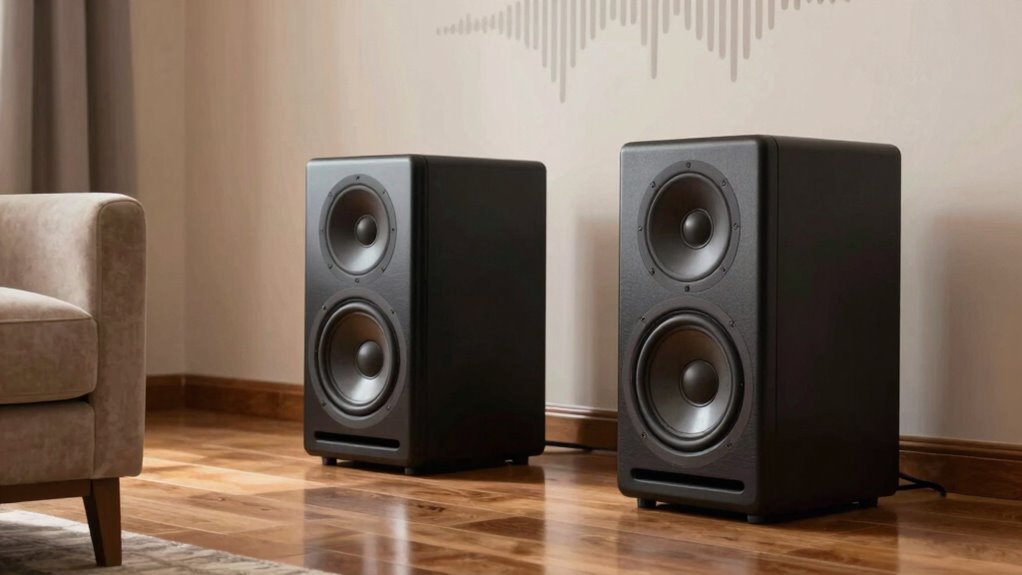
To get the best listening experience, you need to focus on ideal speaker placement and your listening position. Adjusting the angle of your speakers can make a huge difference in sound quality. Let’s explore some effective techniques to fine-tune your setup.
Optimal Speaker Placement
While achieving the perfect sound can feel challenging, ideal speaker placement greatly enhances your listening experience. To optimize your setup, consider these key factors:
- Speaker Distance: Position your speakers at least 2-3 feet away from walls to reduce unwanted reflections.
- Room Dimensions: Measure your room; larger spaces may require wider speaker placement for balanced sound.
- Listening Triangle: Create an equilateral triangle with your speakers and your listening position for the best stereo effect.
- Toe-In Angle: Slightly angle your speakers towards your listening spot to improve clarity and focus.
- Speaker Calibration: Using audio calibration tools, you can further fine-tune your setup for optimal sound quality.
- Room Acoustics: Managing room acoustics with treatments like rugs or paneling can significantly improve sound clarity and reduce echo. Additionally, understanding sound reflections helps in making effective adjustments for better audio performance. Paying attention to speaker placement and room layout can further refine your listening environment for the best results.
Listening Position Importance
The listening position plays a significant role in your overall audio experience. Where you sit can drastically affect sound quality. Ideally, you should find a spot that aligns with the sweet spot of your speakers, where the sound waves converge for the best clarity and balance. If you’re too far off to one side, you’ll lose depth and detail, making your music or movies feel flat. Experiment with different distances and angles to see how they impact your listening position. Remember, your ears should be at the same height as the tweeters for maximum performance. By fine-tuning your position, you’ll reveal the full potential of your audio setup and enjoy a richer, more immersive experience.
Angle Adjustment Techniques
Experimenting with different angles can dramatically enhance your listening experience. To fine-tune your setup, try these angle adjustment techniques using simple adjustment tools:
- Start Wide: Position your speakers at a wider angle to fill the room with sound.
- Narrow the Focus: Gradually toe-in the speakers to direct sound toward your listening position.
- Elevate the Height: Adjust the height of the speakers to ear level for clearer audio.
- Test and Tweak: Listen and make incremental angle variations until the sound feels just right.
- Consider Speaker Placement: Proper placement and angle adjustments can significantly improve overall sound quality, especially when considering room acoustics and how sound interacts within your space.
Real-Life Examples of Successful Toe-In Adjustments
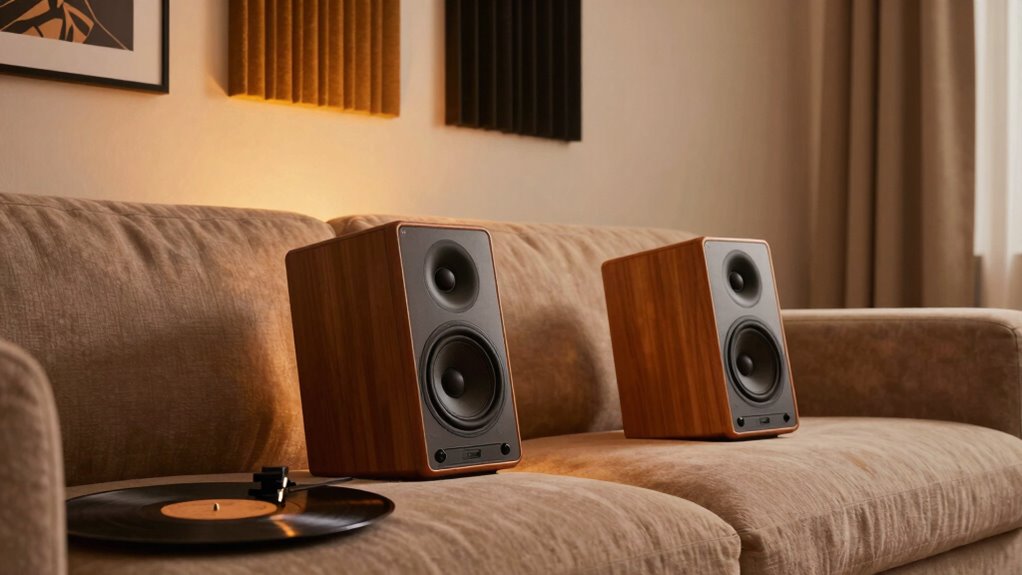
Success stories abound when it comes to toe-in adjustments for speakers, showcasing how a slight tweak can greatly enhance audio experience. In real-world applications, many audiophiles have found that angling their speakers inward creates a more immersive soundstage. For instance, you might have noticed that a simple 5-degree toe-in can clarify vocals and instrument separation in your favorite tracks. One user reported that adjusting their speakers allowed them to hear details they’d previously missed. Other practical adjustments include experimenting with the distance between the speakers and your listening position, which can further refine the audio. By applying these techniques, you can reveal the full potential of your sound system, making every listening session a delight.
Frequently Asked Questions
Can Toe-In Improve Sound Quality in Small Rooms?
Yes, toe-in can improve sound quality in small rooms. By angling your speakers inward, you enhance sound staging and create a more focused listening experience. This adjustment can help your room acoustics by reducing reflections from side walls, making the audio clearer and more immersive. You’ll likely notice better imaging and a fuller sound. So, if you’re looking to elevate your audio experience, consider tweaking that speaker angle!
How Does Toe-In Affect Speaker Wear and Tear?
Toe-in can actually influence speaker longevity by affecting sound dispersion. When you angle your speakers toward you, it often improves clarity, reducing the need for higher volume levels. This means less strain on components, which helps prevent wear and tear. Conversely, if speakers face the wrong way, they might struggle to project sound effectively, leading to distortion and potential damage over time. So, the right angle can balance performance and durability.
Is Toe-In Necessary for All Speaker Types?
Toe-in isn’t necessary for all speaker types, but it can enhance sound quality for many. It mainly depends on cone design and your specific speaker placement. For speakers with a broader dispersion, toe-in might not be as essential. However, if you’re using speakers that benefit from focused sound, slight toe-in can improve imaging and clarity. Experiment with angles to find what works best for your setup and personal listening preferences.
Can Toe-In Adjustments Help With Bass Response?
Yes, toe-in adjustments can enhance bass alignment in your speakers. By angling them slightly towards your listening position, you can improve soundstage depth and create a more immersive experience. This positioning helps to focus the bass, making it tighter and more defined. Experimenting with different angles can reveal richer low frequencies, ultimately elevating your overall sound quality. So, don’t hesitate to try it out and see what works best for your setup!
What Tools Are Needed for Precise Toe-In Measurements?
To achieve precise toe-in measurements, you’ll need a few essential tools. A laser alignment tool is invaluable, as it helps you visualize the angle accurately. You should also have a measuring tape to determine the distance from your speakers to the listening position. Additionally, a protractor can help you gauge the angle more precisely. With these measurement tools, you can easily adjust your speakers for the best sound experience.
Conclusion
Incorporating toe-in adjustments can transform your listening experience in ways you might not expect. Just like stumbling upon an old song that instantly brings back cherished memories, finding the perfect angle for your speakers can evoke powerful emotions and create a richer soundstage. So, don’t hesitate to experiment with your setup—your favorite tracks deserve the best possible backdrop. With a bit of fine-tuning, you’ll rediscover the joy of music in your own space, just like you did years ago.
Fall Picks
fall essentials
As an affiliate, we earn on qualifying purchases.