
Some popcorn kernels never pop due to low moisture levels, structural defects, or inadequate heat. Ideally, kernels should have 13-14% moisture for best popping. Improper storage can cause moisture loss, while defects like cracks in the hull hinder pressure buildup. To reduce those pesky “old maids,” store your kernels in airtight containers, avoid humidity, and choose varieties known for better popping results. Stick around, and you’ll discover more tips for perfect popcorn every time!
Open a free Amazon Business account
Business pricing, bulk buying and tax-exempt orders.
As an affiliate, we earn on qualifying purchases.
Key Takeaways
- Unpopped kernels, or “old maids,” often result from insufficient moisture, ideally between 13-14% for effective popping.
- Proper storage in airtight containers prevents moisture loss and maintains optimal popping conditions for kernels.
- Avoid refrigeration or freezing, as these methods can introduce humidity that negatively affects kernel moisture balance.
- Certain kernel defects, such as cracks or weak hulls, can hinder popping and contribute to the presence of unpopped kernels.
- Experiment with different popping techniques, like air poppers or stovetops, to ensure even heat distribution and improve popping success.
The Science of Popcorn: How It Works
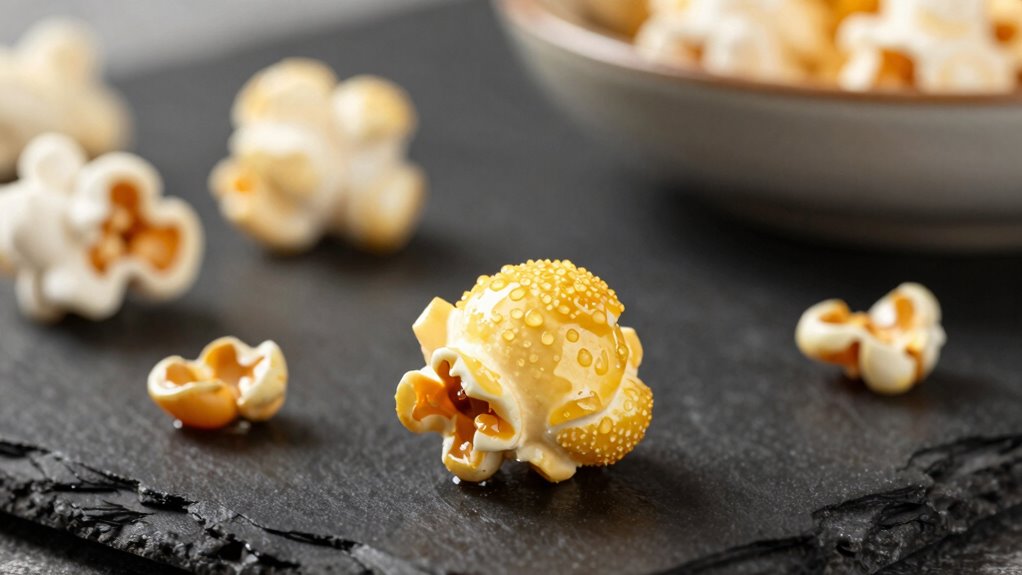
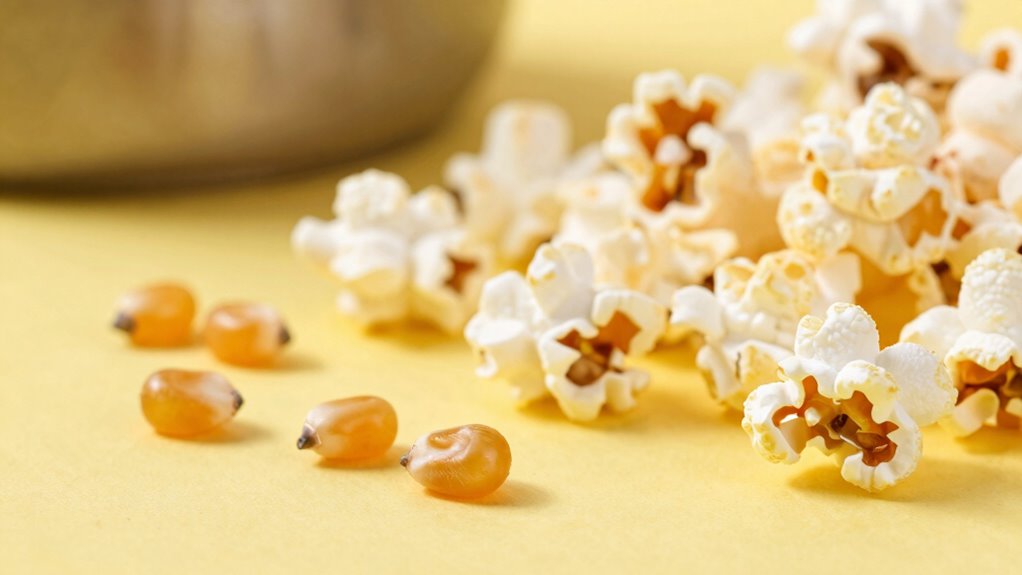
When you heat popcorn kernels, the magic happens as moisture inside them turns into steam. This steam builds pressure within the hard outer shell until it eventually bursts, transforming the kernel into the fluffy snack you love. Popcorn has a rich history, dating back to ancient civilizations that discovered its unique popping properties. Over time, various popcorn varieties emerged, each with distinct flavors and textures. There are butterfly, mushroom, and snowflake types, to name a few. Each variety has its own ideal popping characteristics, which you can experiment with to find your favorite. Understanding popcorn’s science not only enhances your appreciation of this tasty treat but also improves your popping results and minimizes those pesky unpopped kernels.
What Causes Kernels to Fail to Pop?
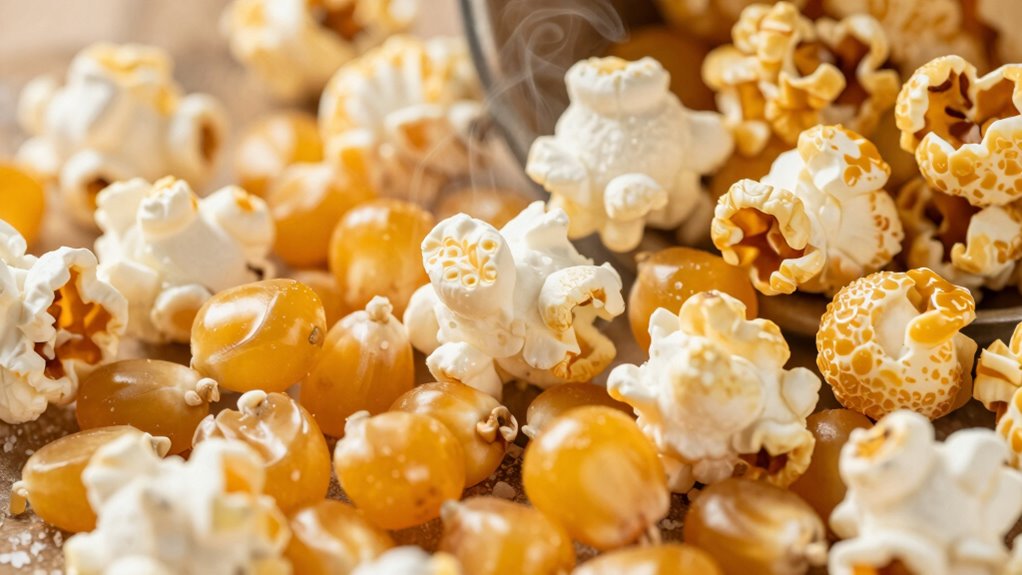
Have you ever wondered why some popcorn kernels just won’t pop? It often comes down to moisture content issues or defects in the kernel structure. Understanding these factors can help you get the most out of your popcorn experience.
Moisture Content Issues
A surprising number of popcorn kernels fail to pop due to moisture content issues. If the moisture levels inside the kernel are too low, it won’t generate the necessary steam pressure for popping. Ideal moisture levels hover around 13-14%. When kernels are stored improperly or for extended periods, they can lose moisture through kernel absorption, leading to dry kernels that refuse to pop. You might notice these “old maids” when you pop a fresh batch. To reduce this problem, store your popcorn in an airtight container in a cool, dark place. This helps maintain suitable moisture levels, ensuring more kernels pop and fewer remain unpopped. Keeping an eye on moisture can make a big difference in your popcorn experience!
Kernel Structure Defects
Though moisture content plays a vital role, kernel structure defects can also cause popcorn to fail to pop. These defects in kernel anatomy can compromise the structural integrity of the kernel, leading to disappointing results. Here are some common issues to watch for:
- Cracks: Pre-existing cracks in the hull can let steam escape, preventing pressure build-up.
- Thin Hulls: A hull that’s too thin may not withstand the necessary pressure to pop.
- Irregular Shapes: Misshapen kernels can lead to uneven heating, causing some areas to pop while others do not.
- Inconsistent Starch: Variations in starch composition can affect how well the kernel expands.
How Moisture Affects Popping
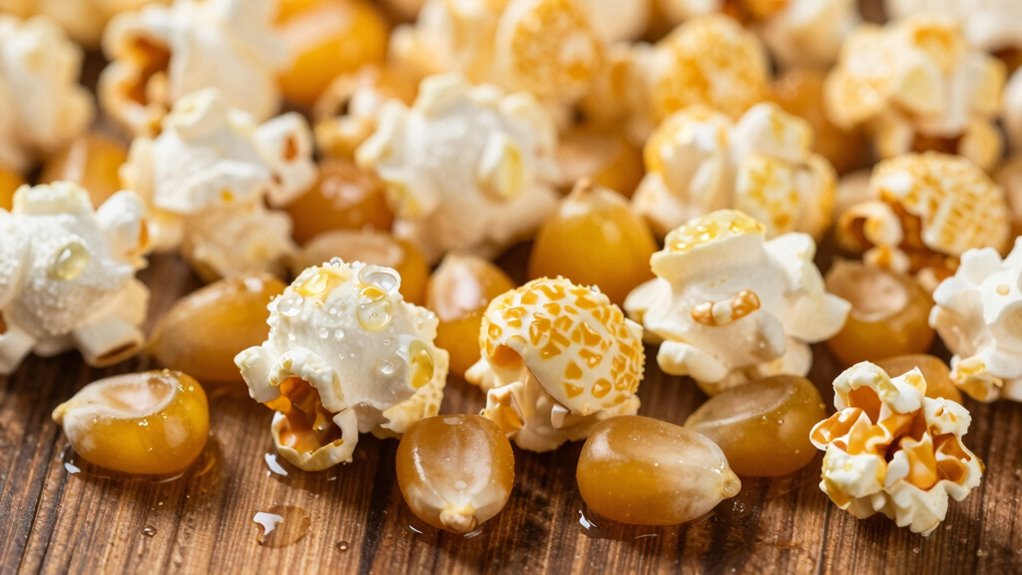
When it comes to popcorn, moisture content is key for a successful pop. If kernels don’t have the ideal moisture level, they simply won’t burst as they should. Low moisture can lead to disappointing results, leaving you with unpopped kernels in your bowl.
Ideal Moisture Content
The secret to perfectly popping popcorn lies in its moisture content. To achieve the ideal moisture level, you need to understand how moisture absorption works. Here are four key points to keep in mind:
- Ideal Range: Aim for a moisture content of 13-14% for the best popping results.
- Freshness Matters: Fresh kernels tend to retain moisture better than older ones.
- Storage Conditions: Store your popcorn in an airtight container to prevent moisture loss.
- Testing Kernels: If you’re unsure, test a few kernels; if they pop well, you’re in the right moisture zone.
Effects Of Low Moisture
Low moisture levels can lead to disappointing popcorn results, leaving you with unpopped kernels. When the moisture balance in each kernel isn’t right, you won’t achieve that satisfying pop. Ideally, popcorn should contain around 13-14% moisture for peak popping. If kernels dry out too much, their hydration decreases, preventing steam buildup needed for the explosion. Without sufficient pressure, those kernels remain stubbornly unpopped, also known as “old maids.” To avoid this, store your popcorn in an airtight container to maintain proper moisture levels. If you notice your popcorn’s moisture is low, placing it in a sealed container with a slice of bread can help restore hydration. Keep your kernels happy, and you’ll enjoy a full bowl of fluffy popcorn! Proper storage and monitoring are essential to prevent unwanted unpopped kernels and ensure maximum popping efficiency.
Why Some Popcorn Kernels Are Tough to Pop
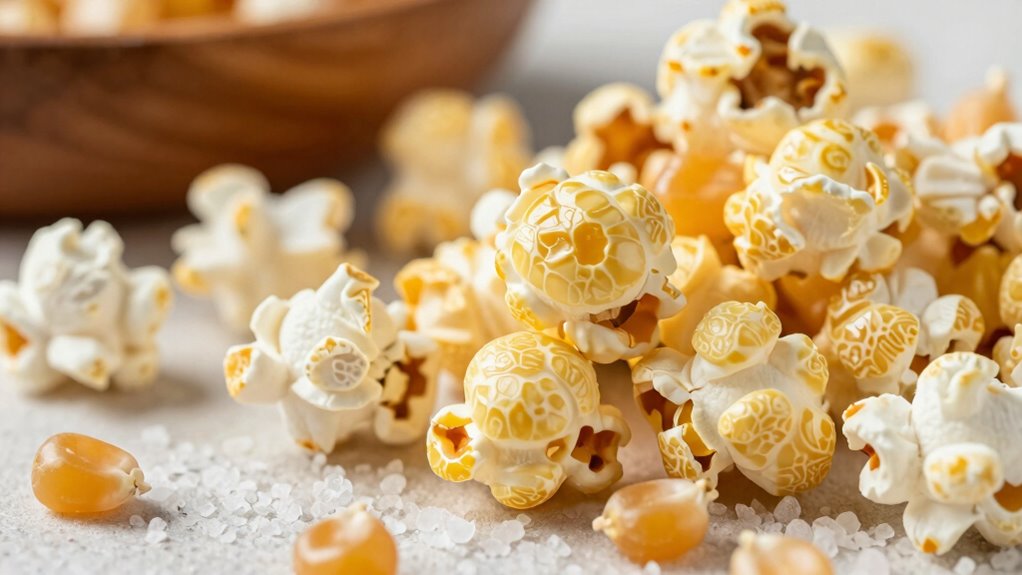
Although you might expect every popcorn kernel to pop, some just won’t cooperate. This can be frustrating, especially when you’re craving that perfect snack. Several factors contribute to why some kernels remain tough. Here are a few reasons:
- Kernel Varieties: Different varieties have varying moisture levels and hull strengths, affecting their ability to pop.
- Improper Storage: Storing kernels in a humid environment can lead to moisture loss, making them less likely to pop.
- Popping Techniques: Using the wrong heat source or method might not provide enough heat for certain kernels to burst effectively.
- Age of Kernels: Older kernels tend to dry out, losing the moisture needed for popping.
Understanding these factors can help you choose the best kernels for popping success.
The Impact of Heat on Popcorn Kernels
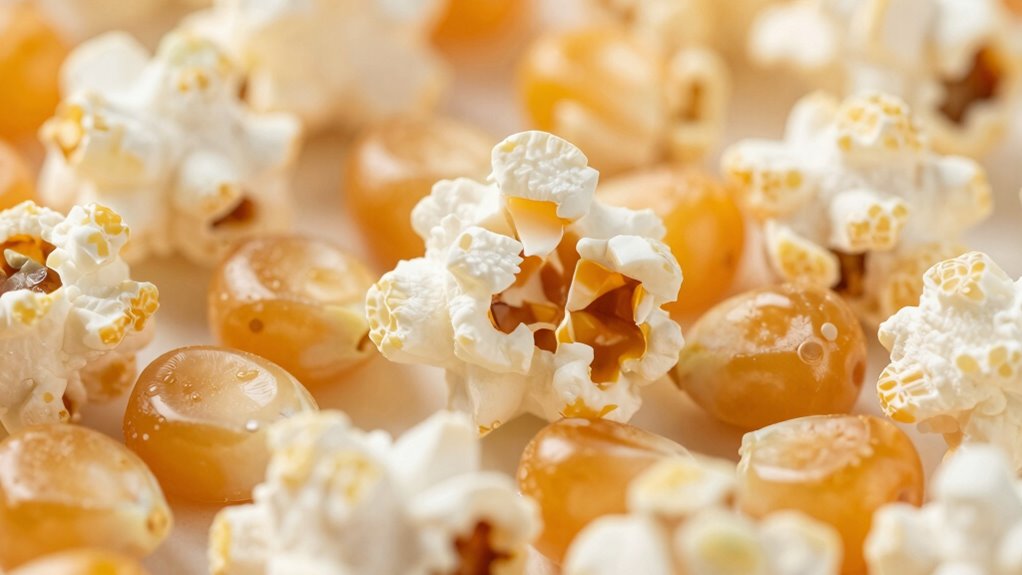
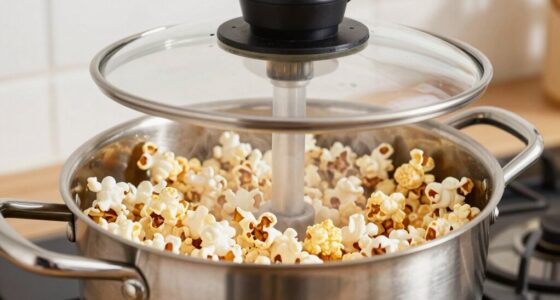
When you heat popcorn kernels, the temperature inside them rises rapidly, creating pressure that can lead to a satisfying pop. Effective heat distribution is essential; if the kernels don’t heat evenly, some may not reach the necessary temperature. This uneven heating can be due to poor thermal conductivity of the cooking vessel or the kernels themselves. To prevent “old maids,” you should aim for consistent, even heat. Using a quality pot or popcorn maker with good thermal conductivity helps guarantee that all kernels receive adequate heat. Adjusting your cooking method can make a significant difference in how many kernels pop. By understanding the impact of heat, you can enjoy a more satisfying popcorn experience with fewer unpopped kernels. Proper heat transfer is key to achieving evenly popped popcorn and minimizing leftover kernels.
Choosing the Right Popcorn for Better Results
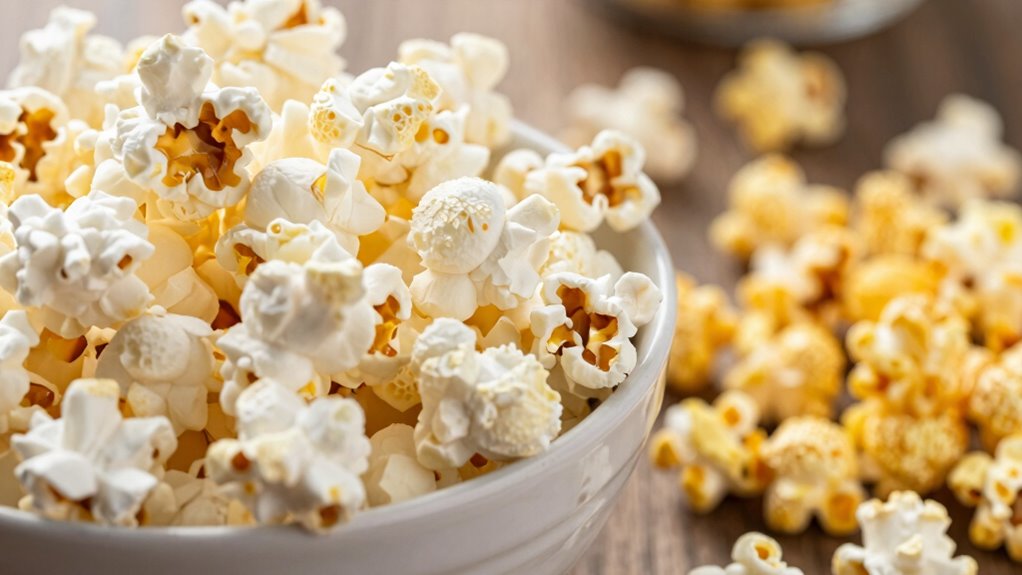
Choosing the right popcorn can greatly enhance your popping experience, as not all kernels are created equal. Different popcorn varieties offer unique textures and flavors, so you’ll want to pick wisely. Here are four key factors to evaluate:
- Kernel Shapes: Look for either butterfly or mushroom shapes. Butterfly pops light and fluffy, while mushroom kernels are denser and sturdier.
- Freshness: Always check the expiration date. Fresher kernels tend to pop better.
- Size: Larger kernels often yield bigger pops, providing a satisfying crunch.
- Brand Quality: Experiment with reputable brands known for their high-quality kernels.
Storing Your Popcorn Kernels
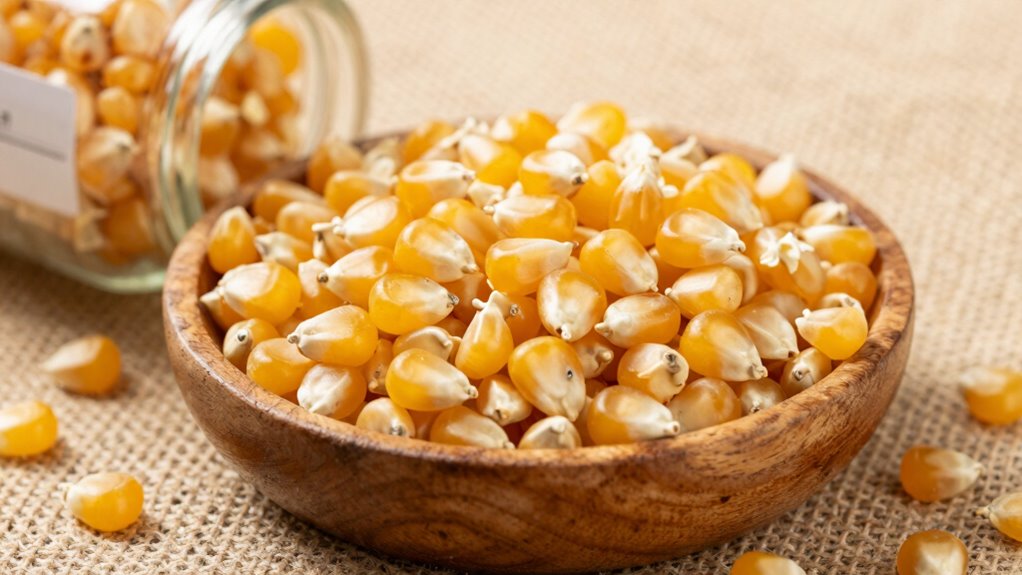
Once you’ve picked the perfect popcorn kernels, proper storage is key to maintaining their popping potential. To guarantee kernel longevity, keep your popcorn in a cool, dry place. Air-tight containers are your best bet, as they prevent moisture from seeping in. Moisture is the enemy of popcorn; too much can lead to unpopped kernels. Avoid storing your popcorn in the fridge or freezer, as this can introduce unwanted humidity. Instead, opt for a pantry or cupboard, away from direct sunlight. Regularly check your kernels for any signs of aging or damage, and rotate your stock to use older kernels first. Following these tips will help you enjoy the freshest popcorn every time you pop!
Tips to Reduce Old Maids in Your Popcorn
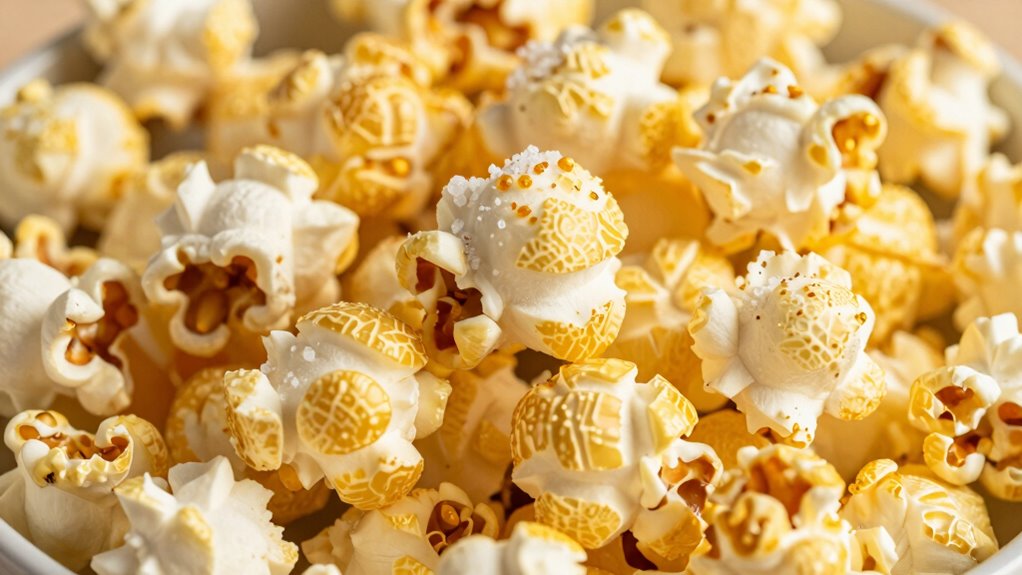
To minimize the number of old maids in your popcorn, start by selecting high-quality kernels with the right moisture content. Different popcorn varieties can also make a difference, so choose wisely. Here are some tips to help you reduce those pesky unpopped kernels:
- Store Properly: Keep your kernels in an airtight container to maintain moisture.
- Use the Right Popping Techniques: Experiment with air poppers, stovetops, or microwaves to find what works best for you.
- Heat Evenly: Guarantee your popping surface is heated uniformly to avoid cold spots.
- Don’t Overcrowd: Pop smaller batches to allow each kernel enough space to expand.
Follow these steps, and you’ll enjoy more fluffy popcorn with fewer old maids!
What to Do With Unpopped Kernels?
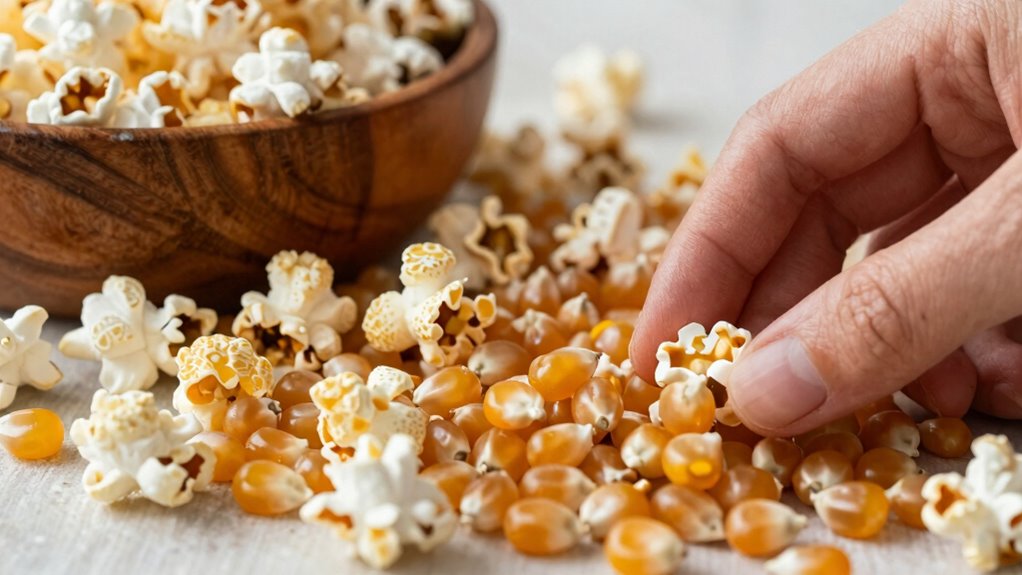
Even if you find some kernels that didn’t pop, there are still plenty of creative ways to put them to good use. You can turn them into delicious kernel snacks or incorporate them into unique popcorn recipes. Here’s a simple guide to help you decide how to use those stubborn kernels:
| Option | Description | Ideas |
|---|---|---|
| Roast Them | Heat in a pan until toasted | Use as a crunchy topping |
| Grind Into Flour | Blend them into a fine powder | Use in baking or pancakes |
| Make Kernel Candy | Coat with caramel or chocolate | Great for sweet treats |
| Add to Trail Mix | Mix with nuts and dried fruit | Perfect for snacking |
| Craft Projects | Use in DIY crafts | Create decorations or art |
These ideas will guarantee your unpopped kernels don’t go to waste!
Frequently Asked Questions
Can I Pop Old Popcorn Kernels in the Microwave?
Sure, you can pop old popcorn kernels in the microwave, but don’t expect a magical transformation! While it’s a delightful experiment, the popping efficiency might leave you with more “old maids” than fluff. To enhance your chances, give those kernels a little time in the microwave, but be ready for a few disappointments. Embrace the adventure and enjoy the popcorn that does pop, even if it’s not as plentiful as you hoped!
Is It Safe to Eat Unpopped Popcorn Kernels?
It’s not safe to eat unpopped popcorn kernels. They pose risks like choking or damaging your teeth. While the kernels themselves might not be harmful, their hard texture makes them a safety hazard. If you’ve got leftover unpopped kernels, it’s best to toss them out rather than risk kernel safety. Enjoy the popped ones instead, and make sure to properly store your popcorn to minimize unpopped risks in the future!
How Can I Tell if Popcorn Is Fresh?
To tell if popcorn is fresh, check the packaging date and look for signs of moisture. Fresh popcorn kernels should feel firm and have a slight moisture content. If they’re hard and dry, they might be stale. Proper popcorn storage is essential; keep it in an airtight container in a cool, dark place to maintain kernel moisture. If your popcorn pops up fluffy and evenly, you’ve got a fresh batch ready to enjoy!
Does Oil Type Affect Popcorn Popping?
Yes, the type of oil you use can affect popcorn popping. Different oils have varying smoke points, which influences oil temperature during popping. If the oil gets too hot, it can burn, while cooler oils may not heat evenly, impacting kernel moisture. For the best results, choose an oil with a high smoke point, like coconut or canola, ensuring even heat distribution and helping to maximize your popping success while minimizing unpopped kernels.
Can I Reuse Unpopped Kernels for Future Popping?
Yes, you can reuse unpopped kernels for future popping! In fact, studies show that about 5-10% of kernels often remain unpopped. To maximize your chances, store those kernels in a cool, dry place to maintain their moisture content. When you pop them again, consider using different popping techniques, like air popping or stovetop methods, to enhance their chances. Just remember, not all kernels will pop, but it’s worth a try!
Conclusion
In the grand theater of popcorn, each kernel plays its part, but not every actor takes the stage. To guarantee your popcorn performance is a hit, treat your kernels like stars—store them well, keep the moisture just right, and apply the perfect heat. With a little care, you’ll see fewer “old maids” and more popping brilliance. So next time you hear the sizzle, remember: every kernel deserves a chance to shine in the spotlight!
Flea & tick season Picks
flea and tick prevention
As an affiliate, we earn on qualifying purchases.