
The best home theater amplifier for most buyers in this roundup is the Denon AVR-X1700H, which combines 7.2-channel amplification with built-in HEOS streaming and a broad home theater feature set. For a dedicated power amp, the Marantz MM7055 is the premium five-channel choice, while the Denon AVR-S770H suits buyers who want modern video support and a 7.2-channel receiver. The main tradeoff is whether you need an all-in-one receiver with HDMI switching and processing or a power amplifier that needs a separate processor. Channel count, speaker compatibility, room size, and connection needs matter more than headline wattage alone. Read on for how these 11 options compare and which type of system each one fits.

Get movie nights delivered free with Prime
- Fast, free delivery on millions of items
- Prime Video, Amazon Music and more included
- Member-only deals all year
Key Takeaways
- AV receivers are the most complete starting point: the Denon AVR-X1700H, AVR-S770H, Yamaha RX300A, and other receivers combine amplification with surround processing and HDMI connections, unlike the OSD and Marantz power amps.
- The Marantz MM7055 fills a different role from the receivers: it supplies five channels of amplification but requires a compatible processor or receiver with pre-outs to control a theater system.
- Channel count changes the upgrade path: 5.2-channel models fit straightforward surround setups, while 7.2-channel receivers offer more room for speaker layouts and expansion.
- The WiiM Amp Ultra and Donner receiver are not full multichannel theater substitutes: they make more sense for stereo or simpler setups than for buyers seeking discrete surround playback.
- Model names and duplicate listings need careful checking: the two MM7055 entries describe the same named amplifier, so buyers should verify the exact model and included accessories rather than treat them as different performance tiers.
| OSD Audio Nero HTA4200 Multi-Channel Home Theater Amplifier, 4x200W/Ch, Bridgeable 300W/Ch |  | Best for High-Power Four-Channel Systems | Channels: 4 | Power output: 200W per channel at 4 ohms; 140W per channel at 8 ohms | Bridged output: 300W at 8 ohms | VIEW ON AMAZON | See Our Full Breakdown |
| OSD Audio Nero HTA5200 5-Channel Home Theater Amplifier |  | Best High-Power Five-Channel Pick | Amplifier class: Class AB | Channels: 5 | Power output: 210W per channel at 4 ohms; 145W per channel at 8 ohms | VIEW ON AMAZON | See Our Full Breakdown |
| Marantz MM7055 Power Amplifier, 5-Channel Amp for Home Theater, Black |  | Best for a Refined Five-Channel System | Channels: 5 | Power output: 140W per channel into 8 ohms | Test bandwidth: 20Hz–20kHz | VIEW ON AMAZON | See Our Full Breakdown |
| Marantz MM7055 Power Amplifier – 5-Channel Home Theater & Audio Amplifier |  | Best for Flexible Rack Integration | Channels: 5 | Power output: 140W per channel into 8 ohms | Inputs: Balanced XLR and unbalanced RCA | VIEW ON AMAZON | See Our Full Breakdown |
| WiiM Amp Ultra Stereo Streaming Amplifier with HDMI ARC and RoomFit, Space Gray |  | Best Compact Streaming Amplifier | Power output: 100W per channel at 8 ohms | Speaker capacity: Up to four speakers | Maximum audio resolution: 24-bit/192kHz | VIEW ON AMAZON | See Our Full Breakdown |
| Donner 4-Channel Stereo Receiver with Bluetooth 5.3 |  | Best for Multiroom Stereo and Karaoke | Channels: 4 | RMS power: 25W × 4 | Speaker impedance: 4–16 ohms | VIEW ON AMAZON | See Our Full Breakdown |
| Yamaha RX300A 5.2-Channel Home Theater AV Receiver with Dolby Atmos, 4K/120, 8K/60 HDMI, and Bluetooth Multipoint |  | Best for Compact Immersive Theater Setups | Channels: 5.2 | Output power: 70 watts | Speaker layout support: Up to 3.1.2 channels | VIEW ON AMAZON | See Our Full Breakdown |
| Denon AVR-S770H 7.2-Channel 8K AV Receiver, 75W per Channel |  | Best for Flexible 7.2-Channel Streaming | Channels: 7.2 | Output power: 75 watts per channel | Total output wattage: 525 watts | VIEW ON AMAZON | See Our Full Breakdown |
| Denon AVR-S570BT 5.2-Channel 8K AV Receiver with Bluetooth |  | Best for Straightforward 8K Home Theater | Channels: 5.2 | Output power: 70 watts per channel | HDMI ports: 5 total: 4 inputs and 1 output | VIEW ON AMAZON | See Our Full Breakdown |
| Denon AVR-X1700H 7.2-Channel 8K AV Receiver with HEOS Built-In |  | Best for a Feature-Rich 7.2-Channel Upgrade | Channels: 7.2 | Output power: 80 watts per channel | HDMI inputs: 6 | VIEW ON AMAZON | See Our Full Breakdown |
| Sony STRDH590 5.2 Channel Surround Sound Home Theater Receiver |  | Best for Straightforward 5.2 Setups | Channels: 5.2 | Power: 725 W | Impedance: 6 ohm | VIEW ON AMAZON | See Our Full Breakdown |
More Details on Our Top Picks
OSD Audio Nero HTA4200 Multi-Channel Home Theater Amplifier, 4x200W/Ch, Bridgeable 300W/Ch
The OSD Audio Nero HTA4200 is the strongest fit here for a system that needs four channels with substantial headroom, rather than an all-in-one receiver. It delivers 200W per channel at 4 ohms, and bridging lets you direct up to 300W at 8 ohms to two speakers when they need extra drive. Balanced XLR and RCA inputs make it easier to pair with different preamps, while the 12V trigger can coordinate power with compatible equipment. Compared with the five-channel Nero HTA5200, it gives up a channel but is rated slightly lower per channel at 4 ohms; compared with the Marantz MM7055, it offers more power at 4 ohms but occupies a similarly substantial footprint. I’d skip it for a compact setup or anyone seeking built-in processing, streaming, or surround decoding.
Pros:- Four channels deliver 200W each into 4-ohm loads.
- Bridge mode provides 300W at 8 ohms for selected speakers.
- Balanced XLR and RCA inputs support varied preamp connections.
- A 12V trigger and five-year warranty support system integration and long-term ownership.
Cons:- At 52 pounds and over 16 inches deep, it needs substantial rack or shelf space.
- It is a power amplifier, not a receiver with streaming, surround processing, or speaker setup features.
- Four channels may not suit buyers who need five amplified channels from one unit.
Best for: Home theater owners with a separate processor or receiver pre-outs who need four high-output channels, including the option to bridge two channels for demanding speakers.
Not ideal for: Buyers building a complete surround system in one box, or anyone with limited rack space who cannot accommodate a 52-pound amplifier.
- Channels:4
- Power output:200W per channel at 4 ohms; 140W per channel at 8 ohms
- Bridged output:300W at 8 ohms
- Inputs:Balanced XLR and RCA
- Signal-to-noise ratio:110 dB
- Trigger:12V
- Dimensions:17.1 x 16.57 x 6.3 inches
- Weight:52 pounds
- Warranty:5 years
Our verdict“Choose the HTA4200 if your separate processor needs four powerful channels and you can spare the space for a heavy amplifier.”
OSD Audio Nero HTA5200 5-Channel Home Theater Amplifier
For a system that needs five amplified channels and has a separate processor, the OSD Audio Nero HTA5200 combines broad channel coverage with robust output: 210W per channel at 4 ohms, or 145W at 8 ohms, with all five channels driven. That makes it a more direct match for a five-speaker front-and-surround setup than the four-channel Nero HTA4200, which can’t power the same layout on its own. Balanced XLR and RCA inputs ease integration, and individual status LEDs help identify standby or protection states without guessing. The tradeoff is its 63-pound weight and large chassis, plus the need for separate processing and source components. Unlike the WiiM Amp Ultra, it offers no listed wireless streaming or HDMI ARC; this is an amplifier for system builders, not a compact all-in-one solution.
Pros:- Five channels provide 210W each into 4-ohm loads with all channels driven.
- XLR and RCA inputs support balanced and unbalanced system connections.
- Per-channel LEDs show on, standby, and protection status.
- A 12V trigger and five-year warranty suit a dedicated component system.
Cons:- The 63-pound chassis is heavy and requires substantial installation space.
- It needs a separate processor or receiver with suitable outputs to handle sources and surround decoding.
- No wireless connectivity or streaming capability is listed.
Best for: Home theater owners with a separate AV processor who want five high-output channels for demanding speakers and value per-channel status indicators.
Not ideal for: Buyers who want an all-in-one AV receiver, wireless music playback, or a lightweight amplifier that is easy to move and install.
- Amplifier class:Class AB
- Channels:5
- Power output:210W per channel at 4 ohms; 145W per channel at 8 ohms
- Signal-to-noise ratio:110 dB at full power; 105 dB at 1W
- Inputs:Balanced XLR and RCA
- Status indicators:Per-channel ON, Standby, and Protection LEDs
- Trigger:12V
- Dimensions and weight:17.1 x 16.57 x 6.3 inches; 63 pounds
- Warranty:5 years
Our verdict“Pick the HTA5200 when five demanding speakers need strong amplification and your system already has a separate processor.”
Marantz MM7055 Power Amplifier, 5-Channel Amp for Home Theater, Black
The Marantz MM7055 suits buyers who want a dedicated five-channel power amplifier from a familiar home theater component line, without chasing the higher 4-ohm output figures listed for the OSD Nero HTA5200. Its rated 140W per channel into 8 ohms across five channels makes it a clear match for a conventional surround setup where steady, specified 8-ohm power matters more than maximum output. XLR and RCA inputs give it flexibility with a compatible preamp, while Marantz’s current feedback and HDAM circuitry are part of its amplifier design. The listing does not provide the extensive integration details found for the OSD models, and this unit does not replace an AV receiver: source switching and surround processing must come from elsewhere. I’d favor the WiiM Amp Ultra for streaming convenience, but not for five-channel theater amplification.
Pros:- Five channels are rated at 140W each into 8 ohms.
- XLR and RCA inputs allow connection to different preamps.
- Current feedback and HDAM circuitry are part of the amplifier design.
- A dedicated power-amplifier format fits component-based theater systems.
Cons:- It requires a separate preamp or processor for source selection and surround decoding.
- The supplied product data does not specify a trigger, dimensions, weight, or warranty.
- Its 140W-per-channel rating is lower than the OSD Nero HTA5200’s listed 4-ohm output.
Best for: Home theater owners with a separate AV processor who want five channels of rated 8-ohm amplification and both XLR and RCA connection options.
Not ideal for: Anyone who needs a standalone receiver, built-in streaming, or more rated power per channel than the listed 140W.
- Channels:5
- Power output:140W per channel into 8 ohms
- Test bandwidth:20Hz–20kHz
- Inputs:XLR and RCA
- Amplifier technologies:Current feedback and HDAM circuitry
- Color:Black
Our verdict“Choose the MM7055 if you need a five-channel power amp for a separate processor and its 140W-per-channel 8-ohm rating fits your speakers.”
Marantz MM7055 Power Amplifier – 5-Channel Home Theater & Audio Amplifier
This Marantz MM7055 listing makes the strongest case for buyers who care about connection hardware and thermal design as much as five-channel output. It is rated at 140W per channel into 8 ohms, with balanced XLR and unbalanced RCA inputs, gold-plated four-way binding posts, and a dedicated cooling unit using a thermal tunnel. Those details help plan a secure, ventilated installation, though the cooling arrangement may add setup considerations. Compared with the OSD Nero HTA5200, the Marantz has a lower stated output figure but provides specific details about its speaker terminals and cooling system; both still require a separate processor. The listing describes the same MM7055 model as the previous Marantz entry, so I would treat it as a variant listing rather than a distinct amplifier choice. It is not an all-in-one receiver and has no stated preamp or processing features.
Pros:- Five channels are rated at 140W each into 8 ohms.
- Balanced XLR and unbalanced RCA inputs accommodate different preamp outputs.
- Gold-plated four-way binding posts provide flexible speaker connections.
- Dedicated cooling unit and thermal tunnel are specified for heat management.
Cons:- The cooling unit may add installation complexity.
- It has no listed preamp or surround-processing functions and requires separate system components.
- This listing describes the same MM7055 model as the other Marantz entry, with no distinct performance advantage specified.
Best for: Component-system owners who want a five-channel amp with specified XLR/RCA inputs, binding posts, and a described cooling design for installation planning.
Not ideal for: Buyers seeking a compact setup, built-in surround processing, or a clearly differentiated alternative to the other MM7055 listing.
- Channels:5
- Power output:140W per channel into 8 ohms
- Inputs:Balanced XLR and unbalanced RCA
- Speaker terminals:Gold-plated four-way binding posts
- Cooling:Dedicated cooling unit with thermal tunnel
Our verdict“Select this MM7055 listing if its specified terminals and cooling details suit your installation, while recognizing it is not a separate model from the other MM7055 entry.”
WiiM Amp Ultra Stereo Streaming Amplifier with HDMI ARC and RoomFit, Space Gray
The WiiM Amp Ultra is the outlier in this group: a compact stereo streaming amplifier, not a five-channel power amp like either Marantz MM7055 listing or the OSD Nero HTA5200. Its 100W-per-channel output at 8 ohms is aimed at passive-speaker stereo listening, while HDMI ARC makes it easy to route TV audio through the same system. Wi-Fi 6, Bluetooth 5.3, multi-room support, and streaming up to 24-bit/192kHz reduce the need for separate music sources; RoomFit can tailor playback to the room. At just 5.4 pounds, it is far easier to place than the 63-pound OSD amp. The tradeoff is channel count: it does not provide the listed five-channel surround amplification, and it cannot receive AirPlay.
Pros:- Compact 5.4-pound design is easier to place than the large OSD and Marantz power amplifiers.
- HDMI ARC connects TV audio to a passive-speaker stereo system.
- Wi-Fi 6, Bluetooth 5.3, and multi-room support provide broad listening options.
- RoomFit correction and playback up to 24-bit/192kHz add room adjustment and high-resolution audio support.
Cons:- Stereo amplification does not replace the five-channel amps for a conventional surround system.
- AirPlay is not supported.
- Passive speakers are required, and the amplifier is not a standalone speaker system.
Best for: Listeners who want a compact two-channel system for passive speakers, TV sound over HDMI ARC, and Wi-Fi or Bluetooth music streaming.
Not ideal for: Home theater builders who need five or more amplified surround channels, AirPlay reception, or an amplifier that works without passive speakers.
- Power output:100W per channel at 8 ohms
- Speaker capacity:Up to four speakers
- Maximum audio resolution:24-bit/192kHz
- Connectivity:Wi-Fi 6, Bluetooth 5.3 with LE Audio, HDMI ARC
- Room correction:RoomFit
- DAC and amplifiers:ESS SABRE DAC; dual TI TPA3255 amplifiers
- Display:3.5-inch glass-covered touchscreen
- Dimensions and weight:7.87 x 8.3 x 3 inches; 5.4 pounds
- AirPlay:Not supported
Our verdict“Choose the WiiM Amp Ultra for compact, streaming-focused stereo and TV playback, not for powering a full multichannel theater.”
Donner 4-Channel Stereo Receiver with Bluetooth 5.3
The Donner stands apart from the Denon and Yamaha AV receivers because it prioritizes four-channel stereo playback and microphone use over HDMI-based surround sound. Its 25W RMS per channel can suit background music across several speaker zones, while optical, coaxial, RCA, AUX, USB, FM, and Bluetooth inputs cover a broad mix of sources. Dual microphone inputs with echo and Talk Over also make it the clearest fit here for karaoke or announcements. The tradeoff is substantial for a home theater setup: there is no HDMI input, so it cannot serve as the central hub for a modern TV-and-console system. Its 1000W peak figure also shouldn’t be confused with its stated 25W-per-channel RMS output. Choose it for flexible stereo distribution, not cinematic surround.
Pros:- Four independently controlled channels support multiple speaker groups
- Optical, coaxial, RCA, AUX, USB, FM, and Bluetooth inputs offer varied source options
- Two microphone inputs include echo and Talk Over functions
- Remote provides treble, midrange, and bass adjustments
Cons:- No HDMI input for connecting a TV and video sources as a theater system
- Rated at 25W RMS per channel despite the much larger peak-power claim
- Remote control batteries are not included
Best for: Buyers who want to power several stereo speaker groups for music, karaoke, or announcements and do not need an HDMI home theater hub.
Not ideal for: TV and gaming-focused buyers who need HDMI switching, surround formats, or higher continuous power for a demanding theater speaker setup.
- Channels:4
- RMS power:25W × 4
- Speaker impedance:4–16 ohms
- Bluetooth:5.3
- Inputs:USB (up to 64GB), 2 pairs RCA, AUX, optical, coaxial, FM radio
- Microphone inputs:2 × 1/4-inch
- Audio formats:WAV, WMA
- Warranty:1 year
Our verdict“Choose the Donner for multi-speaker stereo, karaoke, and speech features; pick a Denon or Yamaha instead for HDMI-based home theater.”
Yamaha RX300A 5.2-Channel Home Theater AV Receiver with Dolby Atmos, 4K/120, 8K/60 HDMI, and Bluetooth Multipoint
The Yamaha RX300A is a fit for buyers who want Atmos-capable sound and current video features without moving to a seven-channel receiver. It supports layouts up to 3.1.2, so a compact system can add height effects while keeping the speaker plan relatively simple. Its 4K/120 and 8K/60 support, VRR, and ALLM also make it more gaming-ready than the Donner, which lacks HDMI altogether. Compared with the Denon AVR-S770H and AVR-X1700H, however, the Yamaha is limited to 5.2 channels; it cannot grow into the same broader speaker configuration. Automatic calibration and Scene buttons simplify routine setup and use, while Bluetooth Multipoint lets two source devices connect. This is a focused choice for modest rooms, not a receiver for buyers planning a larger surround system.
Pros:- Supports Dolby Atmos and DTS Virtual:X, including layouts up to 3.1.2
- 4K/120 and 8K/60 video support with VRR and ALLM
- Automatic calibration uses an included setup microphone
- Bluetooth Multipoint and Scene buttons simplify everyday source selection
Cons:- 5.2-channel limit leaves less room to expand than the Denon AVR-S770H or AVR-X1700H
- The supplied details do not list Wi-Fi, AirPlay, or a built-in music streaming platform
Best for: Buyers building a small-room theater with a 3.1.2 Atmos layout who also need 4K/120 gaming support and straightforward setup.
Not ideal for: Home theater owners planning a 7.2-channel system or wanting the broader streaming features listed for the Denon AVR-X1700H.
- Channels:5.2
- Output power:70 watts
- Speaker layout support:Up to 3.1.2 channels
- HDMI ports:5 total: 4 inputs and 1 output
- Video support:4K/120 and 8K/60
- Audio formats:Dolby Atmos, DTS Virtual:X
- HDR formats:Dolby Vision, HDR10+
- Wireless features:Bluetooth Multipoint for two source devices
- Room correction:Automatic calibration with included setup microphone
Our verdict“Pick the Yamaha for a compact Atmos and gaming system; choose one of Denon’s 7.2-channel receivers if you expect to add more speakers.”
Denon AVR-S770H 7.2-Channel 8K AV Receiver, 75W per Channel
The AVR-S770H earns its place for buyers who want seven-channel flexibility and built-in streaming in one receiver. Its 7.2-channel design gives it more room to grow than the Yamaha RX300A or Denon AVR-S570BT, both of which are limited to 5.2-channel configurations. It also combines Dolby Atmos and DTS:X support with 8K/60 and 4K/120 passthrough, making it a capable hub for mixed movie and gaming setups. Wi-Fi, HEOS, AirPlay 2, Bluetooth, and voice control reduce reliance on an external music streamer. Against the AVR-X1700H, the S770H lists a slightly lower per-channel output and fewer HDMI ports, while both offer 7.2 channels and immersive audio. Buyers should plan for extra height speakers if they want dedicated 5.2.2 Atmos playback.
Pros:- 7.2-channel configuration supports broader speaker setups than the Yamaha RX300A or AVR-S570BT
- 8K/60 and 4K/120 passthrough with VRR, ALLM, and QFT
- Dolby Atmos and DTS:X support
- HEOS, Wi-Fi, AirPlay 2, Bluetooth, and voice control enable flexible streaming
Cons:- Dedicated 5.2.2 Atmos playback requires additional height speakers
- Its listed 75 watts per channel is below the AVR-X1700H’s 80 watts per channel
- The supplied product details do not specify software update support duration
Best for: Buyers who want a 7.2-channel receiver for movies, gaming, and wireless music streaming, with space to add height speakers.
Not ideal for: Listeners who need a simpler 5.2 setup or want the AVR-X1700H’s listed 80-watt-per-channel output and six HDMI inputs.
- Channels:7.2
- Output power:75 watts per channel
- Total output wattage:525 watts
- HDMI ports:8
- Video passthrough:8K/60Hz and 4K/120Hz
- Surround sound formats:Dolby Atmos, Dolby TrueHD, DTS:X, DTS Neural:X
- Connectivity:HDMI, Wi-Fi, Bluetooth, AirPlay 2, HEOS
- Voice control:Amazon Alexa, Siri
Our verdict“Choose the AVR-S770H if you want seven-channel expansion and built-in streaming; compare it with the AVR-X1700H if output and HDMI inputs matter more.”
Denon AVR-S570BT 5.2-Channel 8K AV Receiver with Bluetooth
The AVR-S570BT is the more straightforward Denon for buyers who want a 5.2-channel HDMI receiver and don’t need the broader streaming platform of the AVR-S770H. Four HDMI inputs, eARC, 8K support, and modern HDR formats make it a practical connection point for a TV, console, and other video sources. VRR, QFT, and ALLM also address gaming needs that the Donner’s stereo-focused design cannot handle. Its Dolby TrueHD and DTS-HD Master Audio support covers lossless surround formats, but it does not list Atmos or DTS:X, unlike the AVR-S770H and AVR-X1700H. Bluetooth adds a simple wireless music route, though the supplied connectivity details do not specify Wi-Fi. Choose this Denon for core TV and gaming duties; skip it if integrated network streaming or height-channel surround is a priority.
Pros:- Four HDMI inputs and eARC support common TV and source-device setups
- 8K video support and multiple HDR formats, including Dolby Vision and HDR10+
- VRR, QFT, and ALLM support gaming-focused video features
- Bluetooth, app control, remote, and an on-screen setup assistant
Cons:- 5.2-channel design lacks the expansion options of the AVR-S770H and AVR-X1700H
- Dolby Atmos and DTS:X are not listed among its supported audio formats
- Wi-Fi connectivity is not specified in the supplied product details
Best for: Buyers who need a 5.2-channel receiver for a TV, game console, and a few HDMI sources, with 8K and HDR passthrough.
Not ideal for: Buyers seeking Dolby Atmos or DTS:X, built-in Wi-Fi streaming, or a 7.2-channel upgrade path like the AVR-S770H offers.
- Channels:5.2
- Output power:70 watts per channel
- HDMI ports:5 total: 4 inputs and 1 output
- Video support:8K, HDR, HLG, Dolby Vision, HDR10+, Dynamic HDR
- Audio support:Dolby TrueHD, DTS-HD Master Audio
- Gaming features:VRR, QFT, ALLM
- Connectivity:Bluetooth, HDMI, eARC
- Control:Remote, iOS app, Android app
Our verdict“Pick the AVR-S570BT for a no-frills 5.2-channel TV and gaming system; choose the AVR-S770H for network streaming and Atmos or DTS:X.”
Denon AVR-X1700H 7.2-Channel 8K AV Receiver with HEOS Built-In
The AVR-X1700H is the strongest fit here for buyers who want 7.2-channel surround with broad format and streaming support. It lists 80 watts per channel, Dolby Atmos and DTS:X, and six HDMI inputs, giving it a more expansive connection and audio feature set than the 5.2-channel Yamaha RX300A and Denon AVR-S570BT. HEOS, AirPlay 2, Wi-Fi, and several voice-assistant options also make it suited to a room that serves as both a theater and a music system. The AVR-S770H is the closest alternative: it also offers 7.2 channels and streaming, while listing eight HDMI ports and 75 watts per channel. The X1700H’s tradeoffs are one HDMI output and a warranty duration that is not specified in the supplied details.
Pros:- 7.2 channels and Dolby Atmos or DTS:X support for an immersive speaker setup
- 80 watts per channel, the highest listed output among these five receivers
- HEOS, AirPlay 2, Wi-Fi, Bluetooth, and Ethernet support varied listening sources
- Compatible with Amazon Alexa, Google Assistant, Apple Siri, and Josh.ai
Cons:- Only one HDMI output
- Warranty duration is not specified in the supplied product details
- Offers select 4K/120Hz passthrough rather than specifying it for every HDMI input
Best for: Buyers building a 7.2-channel theater who want Dolby Atmos or DTS:X, network music streaming, and multiple voice-assistant options.
Not ideal for: Buyers who need two HDMI outputs or prefer the AVR-S770H’s listed eight HDMI ports over the X1700H’s six inputs.
- Channels:7.2
- Output power:80 watts per channel
- HDMI inputs:6
- HDMI outputs:1
- Video support:8K/60Hz, select 4K/120Hz passthrough, HDR10, HDR10+, Dolby Vision, HLG
- Audio formats:Dolby Atmos, Dolby Atmos Height Virtualization, DTS:X, DTS Virtual:X
- Connectivity:Bluetooth, Ethernet, HDMI, USB, Wi-Fi
- Streaming:HEOS Built-in, AirPlay 2
- Voice assistants:Amazon Alexa, Google Assistant, Apple Siri, Josh.ai
Our verdict“Choose the AVR-X1700H for a well-connected 7.2-channel system with immersive audio and streaming; favor the AVR-S770H if its eight listed HDMI ports better suit your sources.”
Sony STRDH590 5.2 Channel Surround Sound Home Theater Receiver
The Sony STRDH590 is a practical fit for a basic 5.2-channel home theater: it combines surround processing, a subwoofer-ready layout, and 4K HDR pass-through in one receiver. Four HDMI inputs give several source devices a place to connect, while Bluetooth adds a simple route for playing audio from a phone. Compared with the Denon AVR-S770H, it has a simpler channel and feature set, so it suits listeners who do not need a 7.2-channel platform or the newer video capabilities listed for that model. Its tradeoffs are limited upgrade room, no built-in Wi-Fi, and a stated 6-ohm speaker impedance that narrows speaker matching. The setup may also feel less approachable for buyers new to receiver wiring and configuration.
Pros:- 5.2-channel layout supports a conventional surround system with two subwoofer connections
- 4K HDR pass-through accommodates compatible video sources and displays
- Four HDMI inputs provide connections for multiple source devices
- Bluetooth enables wireless audio playback from compatible devices
Cons:- No built-in Wi-Fi for network-based streaming
- The 5.2-channel configuration offers less expansion than the Denon AVR-S770H
- Listed 6-ohm impedance limits speaker-matching flexibility, and setup may challenge first-time receiver owners
Best for: Buyers building a modest living-room system with up to 5.2 channels, several HDMI sources, and Bluetooth audio, without needing built-in Wi-Fi or advanced expansion.
Not ideal for: Home theater enthusiasts planning a 7.2-channel or newer high-bandwidth video setup, and buyers whose speakers are not suited to the listed 6-ohm impedance.
- Channels:5.2
- Power:725 W
- Impedance:6 ohm
- Frequency:1 kHz
- THD:0.9%
- HDMI inputs:4
- HDMI outputs:1
- Supported video:4K HDR pass-through
- Connectivity and power:Bluetooth; AC 120 V 60 Hz / AC 230 V 50 Hz
Our verdict“Choose the STRDH590 for a straightforward 5.2-channel system with multiple HDMI sources, but pick a more expandable receiver if you expect your setup to grow.”
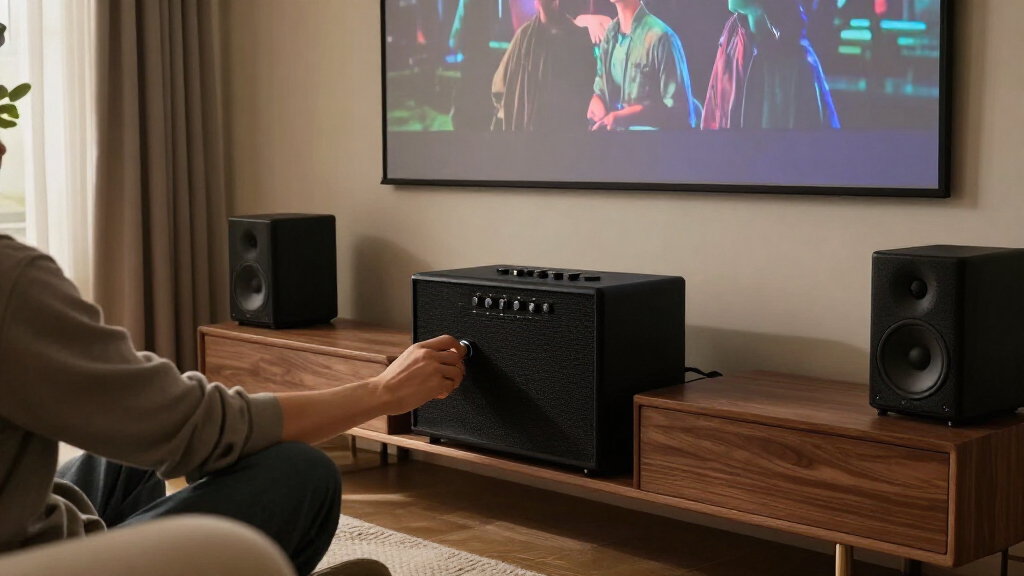
How We Picked
I compared these products by the job they can actually do in a home theater: whether they are complete AV receivers or standalone power amplifiers, how many channels they support, and what connections and formats they offer. I also weighed practical setup needs, such as whether a buyer must add a separate processor, whether the unit can connect modern video sources, and whether its feature set suits a growing system. Headline wattage was treated as only one part of the picture; speaker demands, room size, and the number of driven channels affect real-world suitability.
The ranking favors products that combine useful theater capabilities with flexible connections and a clear path for typical buyers. That puts the Denon AVR-X1700H first as a capable all-in-one option, while specialized power amps rank higher for buyers who already own compatible processing equipment. Simpler stereo and basic receivers remain useful for narrower needs, but rank below more versatile theater-focused choices. The two MM7055 listings are treated as the same model, not as separate levels of performance.
Factors to Consider When Choosing Home Theater Amplifiers
Before choosing a home theater amplifier, decide whether you need amplification alone or a complete system hub. The right answer depends on your speakers, room, sources, and plans for future upgrades—not just the largest wattage figure on a product page.
Choose Between a Power Amp and an AV Receiver
A power amplifier adds speaker-driving capacity, but it does not usually handle HDMI switching, surround decoding, or source selection. That makes a model such as the Marantz MM7055 a better fit for a system that already has a processor or receiver with suitable pre-outs. An AV receiver combines those control functions with amplification, which is simpler for a first theater or a system built around several HDMI sources. A common buying mistake is choosing a power amp because its channel rating looks appealing, then discovering the rest of the system cannot feed it properly. Check the outputs on your existing processor before buying a standalone amp. If you want one box to manage sources and speakers, start with an AV receiver instead.
Match Channels to the System You Plan to Build
Count the speakers you intend to power now, then decide whether you expect that layout to grow. A 5.2-channel receiver can serve a conventional five-speaker surround setup with two subwoofer outputs, while a 7.2-channel model gives more options for additional surround or height speakers, subject to the receiver’s supported layouts. Channel labels do not automatically mean every speaker can play every format at once, so check the manual’s supported configurations. Buying more channels than you need can leave capacity unused; buying too few can force an early replacement. Also distinguish powered speaker channels from subwoofer outputs, which generally connect to active subwoofers rather than passive speakers. Plan around your room and speaker placement, not a channel number alone.
Treat Wattage as One Part of Speaker Matching
Amplifier wattage can help compare products, but figures only make sense when the measurement conditions are comparable. Output can vary with the number of channels driven, speaker impedance, and distortion limits, so a single per-channel figure may not describe demanding movie playback across a full system. Speaker sensitivity and listening distance also affect how much power a room needs. Avoid assuming that a bigger wattage figure automatically means better sound or that it will safely drive any speaker. Check the speaker’s impedance range and the amplifier’s supported load, then think about room size and listening habits. If the system has unusually demanding speakers or a large room, a separate power amp may be a more relevant upgrade than replacing a receiver with a similar model.
Check HDMI and Video Needs Before You Buy
Your amplifier or receiver may sit at the center of a system that includes a TV, game console, streaming device, and disc player, so confirm that its HDMI features fit those sources. Features such as 4K/120 or 8K support matter most when the connected display and source can use them; they add little if your setup does not. ARC or eARC behavior also affects how audio returns from a TV, so verify compatibility across both devices rather than relying on one product’s label. A frequent mistake is focusing on resolution support while overlooking the number of HDMI inputs or the formats passed through them. Check which sources need direct connections and whether you want the receiver to switch between them. Leave room for future devices if replacing the receiver would be difficult.
Decide Whether Streaming and Room Setup Features Matter
Built-in streaming and wireless features can reduce the number of boxes and apps in a system, but their value depends on how you listen. A receiver with a network audio platform may suit a household that wants music in addition to movie playback, while a simpler Bluetooth model can be enough for occasional audio from a phone. Room correction and speaker setup tools can help adapt sound to placement and room acoustics, though they do not fix poor speaker positioning or unsuitable equipment. Check which streaming services and control methods you actually use before paying for extras. Also consider whether you prefer a single app, a remote, or TV-based control. Prioritize the features you will use regularly over a long list of capabilities that do not match your habits.
Budget for the Whole System, Not Just the Amplifier
The amplifier is only one part of a theater setup, and its connections determine what else you may need to buy. A standalone amp can require a separate processor, cables, and additional rack space, while an AV receiver consolidates more functions in one chassis. Leave budget and room for speakers, a subwoofer, mounting, ventilation, and any needed HDMI cables. Larger or heavier equipment also needs a stable shelf with space for airflow; heat buildup can shorten component life or trigger protection circuits. Do not pay for unused channels or video features at the expense of the speakers that will shape the system’s sound. Compare the cost and complexity of the complete setup, not a single component in isolation.
Frequently Asked Questions
Can I connect the Marantz MM7055 directly to a TV?
Not as a complete home theater system on its own. The MM7055 is a power amplifier, so it needs a source and compatible processor or receiver with preamp outputs to provide signal selection, volume control, and surround processing. A TV’s HDMI connection cannot replace those functions unless another component in the system handles them. If you want to connect several sources and control surround sound in one unit, an AV receiver is the simpler choice. Before buying the Marantz, confirm that your existing equipment has the right outputs and supports the speaker layout you want.
Is a 7.2-channel receiver worth choosing over a 5.2-channel model?
It is worth it when you plan to use the extra channels for a supported speaker layout or want more room to expand later. If your system will stay at five main speakers and one or two subwoofers, a 5.2-channel receiver may cover your needs without paying for unused capacity. The number of channels alone does not guarantee better sound, and supported layouts vary by model. Check the manual for which combinations are available and whether any channels are reassigned for other functions. Choose based on actual speaker plans, not the assumption that a larger number is always a meaningful upgrade.
Do I need 4K/120 or 8K HDMI support for a home theater receiver?
You need those features only if your sources and display can use them and you want the receiver to pass their video through. A console or compatible PC paired with a high-refresh-rate television may benefit from 4K/120 support, while 8K support is relevant to a smaller set of systems. If your sources and TV use lower video formats, other factors—such as channel layout, HDMI input count, and audio support—may matter more. Verify the specifications for the exact input and video format you plan to use, since support can vary by port. The display, source, and receiver must all be compatible for the feature to work.
Can a stereo streaming amplifier replace a multichannel AV receiver?
It can replace a receiver in a stereo-focused setup, but it is not a like-for-like substitute for a multichannel theater system. A stereo amplifier is suited to two-channel playback and may offer convenient TV audio or streaming features, yet it does not automatically provide the discrete surround channels and processing expected from an AV receiver. If movies are a priority, confirm the number of powered speaker channels and supported audio formats before choosing. A stereo unit may still be a good fit for a living room where music and simple TV sound take priority. For a surround speaker layout, select a receiver designed for that channel configuration.
What should I check before replacing an older receiver with a separate power amplifier?
Start by checking whether the older receiver has preamp outputs for the channels you want to amplify; speaker outputs cannot generally connect directly to a separate power amp. Confirm that the processor can handle your sources, audio formats, and desired speaker layout, since adding power does not add newer HDMI or decoding features. Match the amplifier’s supported speaker impedance and output to your speakers, and check whether its channel count covers the system. Plan for extra cables, space, and ventilation as well. If the receiver lacks the needed pre-outs or modern connections, replacing it with a newer AV receiver may be a cleaner solution than adding a power amp.
Conclusion
For the broadest mix of theater capability and everyday flexibility, I recommend the Denon AVR-X1700H as best overall. Buyers seeking a more affordable route into a straightforward system should compare the Denon AVR-S570BT as a value-oriented receiver, while beginners who want a simple surround receiver can look at the Sony STRDH590 or the Denon, depending on their connection needs. For a premium system that already has the right processing equipment, the Marantz MM7055 is my dedicated-amplifier pick; it is not the simplest choice for a first setup. The Denon AVR-S770H suits buyers focused on modern video support, and the WiiM Amp Ultra or Donner is better reserved for stereo and simpler listening arrangements. Choose the receiver if you need an all-in-one theater hub, and choose a separate power amp only when your system can already control and process the signal.
Halloween Picks

Pumpkin Halloween Fog Machine with 12-Color LED Lights, Bluetooth Speaker, and Remote

12-Foot Inflatable Pumpkin Halloween Archway with LED Lights

Kalolary 11 ft Halloween Inflatable Archway Ghost House Tunnel
As an affiliate, we earn on qualifying purchases.