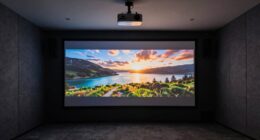
For serious movie watching on an 85-inch screen, the Sony BRAVIA 5 stands out as the best overall choice due to its superior Mini LED backlighting and accurate color processing. While it commands a premium, budget-conscious buyers should look at the TCL QM64L, which delivers impressive local dimming and HDR impact at a far lower cost. The primary challenge in this category is balancing screen size with panel quality; a large 85-inch panel with poor contrast will reveal every flaw in dark scenes, whereas a well-calibrated mid-range model can often outperform a poorly tuned flagship. This roundup breaks down which models handle dark rooms, motion clarity, and HDR highlights best, helping you avoid the common pitfall of buying size over quality.

Get movie nights delivered free with Prime
- Fast, free delivery on millions of items
- Prime Video, Amazon Music and more included
- Member-only deals all year
Key Takeaways
- Mini LED technology is no longer reserved for flagships; mid-range models like the TCL QM64L now offer local dimming zones sufficient for dark-room movie watching.
- Sony‘s processing engine maintains a clear advantage in motion handling and color accuracy compared to Samsung and TCL, which is critical for high-bitrate film content.
- 85-inch screens amplify blooming effects; models with fewer local dimming zones (like the Hisense E6 or TCL T7) show more haloing around bright objects in dark scenes than their smaller counterparts.
- Google TV and Fire OS offer better app ecosystems for movie streaming than Tizen or Roku, though the latter two provide a more streamlined, ad-free interface for basic users.
- Refresh rate (120Hz vs 144Hz) matters less for movies than for gaming; prioritize contrast ratio and peak brightness over high refresh rates for cinematic content.
| Samsung 85-Inch Neo QLED QN70F 4K Smart TV (2025) |  | Best for Bright Movie Rooms | Screen size: 85 inches | Display technology: QLED with Mini LED lighting | Resolution: 4K | VIEW ON AMAZON | See Our Full Breakdown |
| TCL T7 Series 85-Inch 4K 144Hz QLED Smart Google TV |  | Best for Dolby Vision Value | Screen size: 85 inches | Display technology: 4K UHD QLED with direct LED backlight | Resolution: 4K | VIEW ON AMAZON | See Our Full Breakdown |
| Samsung 85-Inch QN70H Neo QLED 4K Smart TV (2026) |  | Best for Samsung Mini LED Buyers | Screen size: 85 inches | Display technology: QLED with Mini LED | Resolution: 4K | VIEW ON AMAZON | See Our Full Breakdown |
| TCL F8D Series 85-Inch 4K QLED Smart Fire TV, 144Hz (85F8D, 2026) |  | Best Fire TV for Movie Streaming | Screen size: 85 inches | Display technology: QLED | Resolution: 4K UHD | VIEW ON AMAZON | See Our Full Breakdown |
| TCL QM64L 85-Inch QD-Mini LED 4K Smart Fire TV |  | Best for Built-In Movie Audio | Screen size: 85 inches | Display technology: QD-Mini LED with QLED color | Resolution: 4K | VIEW ON AMAZON | See Our Full Breakdown |
| Hisense E7 Cinema Series 85-Inch Hi-QLED Mini-LED 4K UHD Smart Fire TV |  | Best for HDR Movie Variety | Screen size: 85 inches | Resolution: 4K UHD | Display and backlight: Hi-QLED, quantum dot, Mini-LED LCD with full-array local dimming | VIEW ON AMAZON | See Our Full Breakdown |
| Samsung M70H Series 85-Inch 4K Mini LED Smart TV (2026) |  | Best for Bright-Room Movie Viewing | Screen size: 85 inches | Resolution: 4K | Display technology: Mini LED | VIEW ON AMAZON | See Our Full Breakdown |
| Sony BRAVIA 3 II 85-Inch 4K HDR LED Smart Google TV (K-85XR30M2) |  | Best for Google TV and Feature-Rich Entertainment | Screen size: 85 inches | Resolution: 4K | Display technology: LED | VIEW ON AMAZON | See Our Full Breakdown |
| Sony BRAVIA 3 85-Inch 4K HDR LED Smart TV (K-85S30) |  | Best Straightforward Sony Movie Screen | Screen size: 85 inches | Resolution: 4K Ultra HD | Display technology: LED | VIEW ON AMAZON | See Our Full Breakdown |
| TCL 85-Inch QM6K QLED Mini-LED 4K HDR Smart Google TV, 144Hz |  | Best for Fast Action and Built-In Audio | Screen size: 85 inches | Resolution: 4K UHD | Display and backlight: QLED Mini-LED with full-array local dimming | VIEW ON AMAZON | See Our Full Breakdown |
| Roku Select Series 85-Inch 4K QLED Smart TV |  | Best Budget Entry | Screen Size: 85 inches | Display Technology: 4K UHD, QLED, LED | Resolution: 4K | VIEW ON AMAZON | See Our Full Breakdown |
| TCL 85-Inch R7D Series QLED 4K UHD HDR Roku Smart TV (85R7D, 2026) |  | Best Balanced Value | Screen size: 85 inches | Display technology: QLED | Resolution: 4K UHD (3840 x 2160) | VIEW ON AMAZON | See Our Full Breakdown |
| Sony BRAVIA 5 85-Inch Mini LED 4K HDR Smart TV (K-85XR50) |  | Best Picture Quality | Screen size: 85 inches | Display technology: Mini LED | Resolution: 4K | VIEW ON AMAZON | See Our Full Breakdown |
| Hisense E6 Cinema Series 85-Inch 4K UHD QLED Smart Fire TV |  | Best for Alexa Ecosystem | Screen size: 85 inches | Resolution: 4K UHD | Display technology: LCD, LED, QLED | VIEW ON AMAZON | See Our Full Breakdown |
| inch tv for movie | Screen size | Resolution | Refresh rate | Display technology |
|---|---|---|---|---|
| Samsung 85-Inch Neo QLED QN70F | 85 inches | 4K | 120 Hz; Motion Xcelerator up to 144Hz | QLED with Mini LED lighting |
| TCL T7 Series 85-Inch 4K 144Hz | 85 inches | 4K | 144 Hz | 4K UHD QLED with direct LED backlight |
| Samsung 85-Inch QN70H Neo QLED | 85 inches | 4K | 120 Hz | QLED with Mini LED |
| TCL F8D Series 85-Inch 4K QLED | 85 inches | 4K UHD | 144 Hz | QLED |
| TCL QM64L 85-Inch QD-Mini LED | 85 inches | 4K | Native 144 Hz | QD-Mini LED with QLED color |
| Hisense E7 Cinema Series 85-In | 85 inches | 4K UHD | 144 Hz | — |
| Samsung M70H Series 85-Inch 4K | 85 inches | 4K | 60 Hz; DLG motion enhancement up to 120 Hz | Mini LED |
| Sony BRAVIA 3 II 85-Inch 4K HD | 85 inches | 4K | 120 Hz | LED |
| Sony BRAVIA 3 85-Inch 4K HDR L | 85 inches | 4K Ultra HD | 60 Hz | LED |
| TCL 85-Inch QM6K QLED Mini-LED | 85 inches | 4K UHD | — | — |
| Roku Select Series 85-Inch 4K | 85 inches | 4K | 60 Hz | 4K UHD, QLED, LED |
| TCL 85-Inch R7D Series QLED 4K | 85 inches | 4K UHD (3840 x 2160) | 60 Hz | QLED |
| Sony BRAVIA 5 85-Inch Mini LED | 85 inches | 4K | 120 Hz | Mini LED |
| Hisense E6 Cinema Series 85-In | 85 inches | 4K UHD | 60 Hz | LCD, LED, QLED |
More Details on Our Top Picks
Samsung 85-Inch Neo QLED QN70F 4K Smart TV (2025)
I’d put the QN70F near the top for movie watchers who need a large screen to hold up in a bright living room. Its Mini LED backlight and listed 2000-nit maximum brightness give HDR highlights more headroom than the QN70H’s listed 1200 nits, while Samsung’s processor can upscale lower-resolution video for a cleaner-looking picture on this expansive screen. It supports HDR10+, but not Dolby Vision, so viewers whose movie library or streaming services prioritize Dolby Vision may prefer the TCL T7 or F8D. The 120Hz panel is suited to film and fast action, with up to 144Hz gaming available from compatible PC hardware. Compared with those TCL models, this Samsung trades broader stated HDR-format support for Mini LED lighting and a particularly bright listed peak. Streaming features require internet and a Samsung Account.
Pros:- Mini LED backlighting paired with a listed maximum brightness of 2000 nits
- NQ4 AI Gen2 processor upscales lower-resolution content to 4K
- HDR10+ support for compatible movie and streaming content
- Motion Xcelerator supports up to 144Hz gaming with compatible PC hardware
Cons:- Does not list Dolby Vision support, unlike the TCL T7 and F8D
- 144Hz gaming depends on compatible PC hardware and a graphics card
- Smart services and streaming apps require internet and a Samsung Account
Best for: Movie fans with a bright, spacious living room who want an 85-inch Mini LED screen and often watch mixed-resolution content.
Not ideal for: Dolby Vision-focused viewers, or buyers who want 144Hz without a compatible gaming PC.
- Screen size:85 inches
- Display technology:QLED with Mini LED lighting
- Resolution:4K
- Refresh rate:120 Hz; Motion Xcelerator up to 144Hz
- HDR format:HDR10+
- Processor:NQ4 AI Gen2
- Maximum display brightness:2000 nits
- Dimensions:14.4 x 74.9 x 45 inches (D x W x H)
Our verdict“Choose the QN70F if bright-room HDR and Mini LED matter more to you than Dolby Vision support.”
TCL T7 Series 85-Inch 4K 144Hz QLED Smart Google TV
The TCL T7 is the straightforward movie pick for viewers who want a broad HDR menu without moving to the listed Mini LED models. Dolby Vision, HDR10, HDR10+ and HLG cover more formats than the Samsung QN70F’s HDR10+ support, giving compatible films a format match across more services and discs. Its 144Hz refresh rate is also useful for fast action and gaming, though the QN70F’s Mini LED backlight and higher listed peak brightness make it the more compelling choice for a particularly bright room. The T7 uses direct LED, not Mini LED, so buyers should not assume it offers the same backlight precision as the Samsung or TCL QM64L. Four HDMI ports, Google TV and Dolby Atmos support round out a versatile setup. The tradeoff is a large installation footprint and no supplied brightness figure for judging HDR punch.
Pros:- Supports Dolby Vision, HDR10, HDR10+ and HLG
- 144Hz refresh rate suits fast motion and compatible gaming
- Four HDMI ports, including one with eARC
- Google TV, Dolby Atmos and DTS audio format support
Cons:- Direct LED backlight does not offer the Mini LED lighting listed for the Samsung QN70F and TCL QM64L
- No maximum brightness figure is provided in the product data
- The 85-inch screen needs substantial room and wall space
Best for: Movie streamers who want Dolby Vision and several HDR formats on an 85-inch screen, plus flexible HDMI connections.
Not ideal for: Viewers prioritizing Mini LED backlight control or a documented high-brightness screen for daytime HDR viewing.
- Screen size:85 inches
- Display technology:4K UHD QLED with direct LED backlight
- Resolution:4K
- Refresh rate:144 Hz
- HDR formats:Dolby Vision, HDR10, HDR10+, HLG
- Audio formats:Dolby Atmos, DTS:X, DTS Virtual:X
- HDMI ports:4
- Dimensions:2.5 x 74.4 x 42.8 inches
Our verdict“Pick the T7 if Dolby Vision and broad HDR compatibility matter more than Mini LED backlighting.”
Samsung 85-Inch QN70H Neo QLED 4K Smart TV (2026)
The QN70H suits movie watchers who want Samsung’s Quantum Mini LED backlighting and Quantum Dot color in a current 85-inch 4K set. Its listed 1200-nit maximum brightness and AI upscaling make it a stronger fit for HDR and lower-resolution sources than a basic LED option, though the QN70F lists a higher 2000-nit maximum. Both are Mini LED Samsung models with HDR10+, so the QN70H’s appeal is less about a clear jump over its sibling and more about choosing this model’s specified connectivity and newer model year. Like the QN70F, it does not list Dolby Vision; the TCL T7 and F8D are better matches for viewers who want that format. Three HDMI ports and one USB port also make this less flexible for crowded setups. At over 91 pounds, installation needs planning.
Pros:- Quantum Mini LED backlighting supports bright highlights and contrast
- Quantum Dot technology provides a wide range of colors
- AI processing upscales lower-resolution content and optimizes picture and sound
- Bluetooth 5.3, Wi-Fi and Ethernet connectivity are listed
Cons:- Listed 1200-nit maximum brightness is lower than the QN70F’s 2000-nit figure
- HDR support is listed as HDR10+ rather than Dolby Vision
- Only three HDMI ports and one USB port are listed
Best for: Samsung-focused movie viewers who want an 85-inch Mini LED display for HDR films and upscaled older content.
Not ideal for: Buyers seeking Dolby Vision, more than three HDMI inputs, or the higher listed peak brightness of the QN70F.
- Screen size:85 inches
- Display technology:QLED with Mini LED
- Resolution:4K
- Refresh rate:120 Hz
- HDR format:HDR10+
- Maximum display brightness:1200 nits
- HDMI ports:3
- Weight:91.3 pounds
Our verdict“Choose the QN70H for Samsung Mini LED and AI upscaling, but favor the QN70F if its higher listed brightness matters more.”
TCL F8D Series 85-Inch 4K QLED Smart Fire TV, 144Hz (85F8D, 2026)
The F8D makes the most sense for viewers who want their streaming interface and voice control built into the movie setup. Fire TV and Alexa+ provide direct access to streaming and smart-home controls, while Dolby Vision support gives it an HDR-format advantage over both Samsung QN70 models, which list HDR10+ instead. Its 144Hz refresh rate and VRR also make it more adaptable to gaming than a film-only screen. The picture hardware is QLED, but the product data does not specify Mini LED or a peak brightness figure; that makes the TCL QM64L, with up to 500 local dimming zones, the clearer choice for buyers focused on backlight control and HDR contrast. Four HDMI ports and two USB ports help with connected devices. Built-in Dolby Atmos and DTS Virtual:X are useful, though a separate sound system may still be preferable for films.
Pros:- Dolby Vision, HDR10, HDR10+ and HLG support
- Fire TV and Alexa+ are built in
- 144Hz refresh rate with VRR and gaming features
- Four HDMI ports and two USB ports are listed
Cons:- Product data does not specify Mini LED backlighting or local-dimming zones
- Wi-Fi is limited to Wi-Fi 5
- Built-in speakers may not provide the impact of a separate sound system
Best for: Fire TV households who want Dolby Vision movies, Alexa+ controls and a 144Hz screen for both films and gaming.
Not ideal for: Movie purists focused on local-dimming detail, or buyers who want Wi-Fi newer than Wi-Fi 5.
- Screen size:85 inches
- Display technology:QLED
- Resolution:4K UHD
- Refresh rate:144 Hz
- HDR formats:Dolby Vision, HDR10, HDR10+, HLG
- Smart TV platform:Fire TV with Alexa+
- HDMI ports:4
- Wireless connectivity:Wi-Fi 5, Bluetooth 5.4
Our verdict“Choose the F8D for Fire TV convenience and Dolby Vision, but choose the QM64L if specified local dimming and fuller built-in audio are higher priorities.”
TCL QM64L 85-Inch QD-Mini LED 4K Smart Fire TV
For a movie room where adding speakers is not part of the plan, the QM64L has the strongest built-in audio case in this group: its Onkyo 2.1 system includes a 20W subwoofer. That gives it a more substantial stated audio setup than the TCL T7’s listed Dolby Atmos support alone, though specifications do not establish which sounds better in practice. Picture features are also well suited to films: QD-Mini LED with up to 500 local dimming zones is a more specific contrast-focused proposition than the QLED backlight details provided for the F8D. Dolby Vision, HDR10+, HDR10 and HLG cover a broad range of HDR content. Native 144Hz, VRR and ALLM add flexibility for gaming, but the product data omits connectivity and dimensions, making equipment planning harder than with the other TCL picks.
Pros:- QD-Mini LED backlight with up to 500 local dimming zones
- Dolby Vision, HDR10+, HDR10 and HLG support
- Onkyo 2.1 audio includes a built-in 20W subwoofer
- Native 144Hz, VRR and ALLM support
Cons:- Connectivity details and dimensions are not provided in the product data
- The 85-inch screen requires substantial room and installation space
- The product data does not specify a maximum brightness figure
Best for: Movie watchers who want a specified Mini LED local-dimming system and fuller built-in audio without immediately adding a soundbar.
Not ideal for: Buyers who need confirmed port counts, installation dimensions, or a lighter setup before planning their room.
- Screen size:85 inches
- Display technology:QD-Mini LED with QLED color
- Resolution:4K
- Local dimming zones:Up to 500
- Refresh rate:Native 144 Hz
- HDR formats:Dolby Vision, HDR10+, HDR10, HLG
- Audio:Onkyo 2.1 with built-in 20W subwoofer
- Smart TV platform:Fire TV with Alexa+
Our verdict“Choose the QM64L if local dimming and built-in bass matter more than having complete connectivity and dimension details up front.”
Hisense E7 Cinema Series 85-Inch Hi-QLED Mini-LED 4K UHD Smart Fire TV
The Hisense E7 is a strong fit for movie libraries that span different HDR formats. Its Mini-LED backlight and full-array local dimming give it more tools for managing bright highlights and dark scenes than the standard LED Sony BRAVIA 3, while Dolby Vision IQ and HDR10+ cover a broad range of movie releases. The 144 Hz panel and MEMC motion processing can also help fast movement look smoother, though some viewers prefer films without extra motion smoothing. Fire TV keeps streaming close at hand, but buyers who favor Google TV may prefer the TCL QM6K or either Sony. The E7’s appeal is its mix of contrast hardware and format support; its drawback is that the supplied specifications do not state peak brightness, so they offer less guidance for very bright rooms.
Pros:- Mini-LED backlighting with full-array local dimming for more controlled contrast than the Sony BRAVIA 3
- Supports Dolby Vision IQ, Dolby Vision, HDR10+, HDR10, and HLG
- 144 Hz refresh rate with MEMC and black-frame insertion options
- Fire TV platform with Bluetooth, Ethernet, Wi-Fi 5, and four HDMI ports
Cons:- At 85 inches, it needs a wide viewing area and careful placement
- No peak-brightness figure is provided in the specifications
- MEMC can make film motion look less natural if enabled too aggressively
Best for: Movie viewers who want Mini-LED local dimming, broad HDR format support, and Fire TV built into a large screen.
Not ideal for: Buyers committed to Google TV or those who want published brightness figures to compare performance in a bright room.
- Screen size:85 inches
- Resolution:4K UHD
- Display and backlight:Hi-QLED, quantum dot, Mini-LED LCD with full-array local dimming
- Refresh rate:144 Hz
- HDR formats:Dolby Vision, Dolby Vision IQ, HDR10, HDR10+, HDR10+ Adaptive, HLG
- Audio:Dolby Atmos
- Smart TV platform:Fire TV
- HDMI ports:4
Our verdict“Choose the E7 if broad HDR support and local-dimming contrast matter more to your movie setup than a Google TV interface.”
Samsung M70H Series 85-Inch 4K Mini LED Smart TV (2026)
The Samsung M70H makes the most sense for a large room where ambient light can wash out a picture. Its stated 1,000-nit maximum brightness and Mini-LED display give HDR highlights room to stand out, while HDR10+ support suits compatible films. Compared with the Hisense E7 and TCL QM6K, however, its listed HDR format coverage is narrower: Dolby Vision is not specified. That matters for viewers whose streaming and disc libraries lean heavily on Dolby Vision titles. The DLG motion mode can reach 120 Hz, but the source notes that this mode may reduce sharpness, and the listed base refresh rate is 60 Hz. I’d choose it for bright-room viewing and Samsung’s built-in streaming options, not for buyers who want native high-refresh movie or gaming performance.
Pros:- Mini-LED display with a stated maximum brightness of 1,000 nits
- HDR10+ support for compatible HDR movies
- DLG motion enhancement offers a mode up to 120 Hz
- Includes built-in streaming options and Samsung TV Plus channels
Cons:- Dolby Vision support is not listed, unlike on the Hisense E7 and TCL QM6K
- The listed refresh rate is 60 Hz; DLG mode can reduce image sharpness
- Large dimensions call for a broad stand or wall area
Best for: Viewers placing an 85-inch TV in a brighter family room who value high stated brightness and HDR10+ playback.
Not ideal for: Dolby Vision movie fans or viewers seeking a native 120 Hz panel; the listed refresh rate is 60 Hz and DLG can soften detail.
- Screen size:85 inches
- Resolution:4K
- Display technology:Mini LED
- Refresh rate:60 Hz; DLG motion enhancement up to 120 Hz
- Maximum brightness:1,000 nits
- HDR format:HDR10+
- Connectivity:HDMI, USB, Bluetooth, Wi-Fi
- Model year:2026
Our verdict“Pick the M70H for a bright room and HDR10+ viewing, but choose the E7 or QM6K if Dolby Vision is a priority.”
Sony BRAVIA 3 II 85-Inch 4K HDR LED Smart Google TV (K-85XR30M2)
The BRAVIA 3 II is the Sony choice here for buyers who want a current-feeling streaming and connection setup alongside a big movie screen. Google TV with Gemini, AirPlay 2, and Google Cast make it easy to bring together apps and personal media, while Dolby Vision and Dolby Atmos add familiar cinema formats. Its 120 Hz refresh rate and HDMI 2.1 features also give it a broader motion and gaming feature set than the 60 Hz Sony BRAVIA 3. Movie contrast is the less certain part of the pitch: this is an LED display, not the Mini-LED, local-dimming design found in the Hisense E7 or TCL QM6K. The feature list is extensive, but at 78.8 pounds it also calls for more care during mounting and installation.
Pros:- Google TV with Gemini plus AirPlay 2 and Google Cast
- Dolby Vision and Dolby Atmos support for compatible movie content
- 120 Hz refresh rate with HDMI 2.1, 4K/120, VRR, and ALLM features
- Four HDMI ports and two USB ports
Cons:- LED display lacks the Mini-LED backlighting listed for the Hisense E7 and TCL QM6K
- At 78.8 pounds, installation may require additional help
- HDR format list does not include HDR10+
Best for: Households that want Google TV, casting options, Dolby Vision, and a 120 Hz screen for both films and connected gaming.
Not ideal for: Movie-first buyers prioritizing Mini-LED local dimming for dark-room contrast, or anyone who needs a lighter set for installation.
- Screen size:85 inches
- Resolution:4K
- Display technology:LED
- Refresh rate:120 Hz
- HDR formats:Dolby Vision, HDR10, HLG
- HDMI and USB ports:4 HDMI, 2 USB
- Smart platform and casting:Google TV with Gemini, AirPlay 2, Google Cast
- Weight:78.8 pounds
Our verdict“Choose the BRAVIA 3 II if streaming flexibility and 120 Hz connectivity outweigh the contrast advantages of a Mini-LED alternative.”
Sony BRAVIA 3 85-Inch 4K HDR LED Smart TV (K-85S30)
The BRAVIA 3 is the simpler Sony option for viewers whose priorities are a large 4K picture, familiar streaming apps, and Dolby Vision playback. Google TV, voice control, AirPlay 2, and Chromecast make it flexible for a shared household, and Triluminos Pro color processing supports a broad color presentation. Compared with the BRAVIA 3 II, though, this model is limited to a 60 Hz refresh rate and does not list the newer 120 Hz gaming features. Against the Mini-LED Hisense E7 and TCL QM6K, it also gives up their specified Mini-LED backlighting and local dimming. That makes it less compelling for fast action or dark-room contrast, but its familiar smart platform may suit a streaming-focused household. Its 99.6-pound listed weight is another practical hurdle.
Pros:- Dolby Vision, HDR10, and HLG support
- Google TV with voice control, AirPlay 2, and Chromecast
- Triluminos Pro color processing
- PlayStation 5 features include Auto HDR Tone Mapping and Auto Genre Picture Mode
Cons:- 60 Hz refresh rate is below the BRAVIA 3 II, Hisense E7, and TCL QM6K specifications
- Standard LED display lacks the stated Mini-LED local dimming of the Hisense and TCL
- Listed weight of 99.6 pounds makes placement and mounting more demanding
Best for: Sony fans and streaming-focused households who want an 85-inch Google TV with Dolby Vision and simple casting options.
Not ideal for: Viewers who prioritize high-refresh motion or Mini-LED local dimming for movie scenes with deep shadows.
- Screen size:85 inches
- Resolution:4K Ultra HD
- Display technology:LED
- Refresh rate:60 Hz
- HDR formats:Dolby Vision, HDR10, HLG
- Smart platform:Google TV
- Audio:Dolby Atmos, Dolby TrueHD; 20-watt speaker output
- Weight:99.6 pounds
Our verdict“Choose this BRAVIA 3 for Sony’s Google TV and casting features, but step up to the BRAVIA 3 II or a Mini-LED model for smoother motion or stronger specified contrast hardware.”
TCL 85-Inch QM6K QLED Mini-LED 4K HDR Smart Google TV, 144Hz
The TCL QM6K brings together the most movie-relevant hardware in this group for viewers who also watch sports or play games: Mini-LED with full-array local dimming, a native 144 Hz refresh rate, and support for Dolby Vision and HDR10+. Compared with the Sony BRAVIA 3, that gives the TCL a clearer spec advantage in backlighting and motion capability; compared with the Hisense E7, it adds a stated 1,000-nit maximum brightness and an ONKYO 2.1 speaker system with a built-in subwoofer. The tradeoff is installation weight at 73.4 pounds, plus the 85-inch footprint. Google TV keeps streaming familiar, but the built-in audio should be seen as a useful starting point rather than a reason to skip a dedicated sound system for a theater-style setup.
Pros:- Mini-LED QLED display with full-array local dimming
- Native 144 Hz refresh rate and Motion Rate 480
- Supports Dolby Vision, HDR10+, HDR10, and HLG
- ONKYO 2.1 audio system includes a built-in subwoofer
Cons:- At 73.4 pounds, mounting and placement may take extra help
- An 85-inch screen needs substantial wall or furniture space
- Built-in speakers may not replace a separate sound system for a dedicated movie room
Best for: Movie-and-sports households wanting Mini-LED local dimming, high refresh capability, Google TV, and stronger built-in bass than a basic TV speaker setup.
Not ideal for: Buyers with limited installation help or those seeking a lighter 85-inch set; the listed weight is 73.4 pounds.
- Screen size:85 inches
- Resolution:4K UHD
- Display and backlight:QLED Mini-LED with full-array local dimming
- Native refresh rate:144 Hz
- Maximum display brightness:1,000 nits
- HDR formats:Dolby Vision, HDR10+, HDR10, HLG
- Smart TV platform:Google TV
- Audio:ONKYO 2.1 speaker system with built-in subwoofer
Our verdict“Choose the QM6K if you want a high-motion Mini-LED screen with broad HDR support and more capable built-in bass than the Sony BRAVIA 3.”
Roku Select Series 85-Inch 4K QLED Smart TV
This model is better suited to viewers who prioritize screen real estate over high-end panel performance. The QLED technology delivers vibrant colors that surpass standard LED panels found in cheaper models, making it a solid step up for casual movie nights. However, the 330-nit brightness is a significant limitation for dark-room viewing; blacks may appear grayish compared to the deeper contrast of the Sony BRAVIA 5. The Roku interface remains one of the most intuitive on the market, offering a hassle-free setup that avoids the bloatware common in other smart platforms. While the 60Hz refresh rate limits fast-motion clarity, it is adequate for standard cinematic content.Pros:- Intuitive Roku OS simplifies navigation across hundreds of streaming apps
- QLED panel provides wider color gamut than standard LED competitors
- Lightweight design makes wall mounting easier than heavier Mini LED alternatives
Cons:- Low peak brightness results in washed-out HDR highlights
- 60Hz refresh rate cannot support high-frame-rate gaming or ultra-smooth panning
Best for: Budget-conscious buyers who want the largest possible screen for casual streaming without paying for premium motion handling.
Not ideal for: Home theater enthusiasts who view content in dark rooms and demand deep blacks and high peak brightness.
- Screen Size:85 inches
- Display Technology:4K UHD, QLED, LED
- Resolution:4K
- Refresh Rate:60 Hz
- HDR Formats:HDR10, HDR10+, HLG
- Maximum Brightness:330 nits
- Weight:60.4 pounds
Our verdict“A straightforward choice for those who want a massive, colorful screen on a tight budget, provided they accept average contrast.”
TCL 85-Inch R7D Series QLED 4K UHD HDR Roku Smart TV (85R7D, 2026)
This TV stands out by balancing gaming features with movie capabilities at a mid-range price point. Unlike the Roku Select Series, the R7D includes Game Accelerator 120 and MEMC motion enhancement, which smooth out judder in fast-paced action films and sports. The inclusion of eARC connectivity is a practical advantage for users with soundbars, offering a cleaner setup than models relying solely on optical audio. However, like many entry-level QLEDs, it lacks local dimming zones, meaning contrast will never match the Mini LED performance of the Sony BRAVIA 5. It is a versatile machine that handles mixed usage well but sacrifices pure cinematic depth.Pros:- MEMC motion smoothing reduces blur in fast-moving scenes
- eARC support simplifies high-quality audio connections for soundbars
- Broad smart-home integration works with Alexa, Google, and Apple
Cons:- Standard backlighting causes light bleed in dark scenes
- Plastic build quality feels less premium than Sony or Samsung counterparts
Best for: Hybrid viewers who split time between 4K movies and gaming, needing better motion handling than basic QLEDs.
Not ideal for: Purists who demand perfect black levels and are willing to sacrifice gaming features for superior contrast.
- Screen size:85 inches
- Display technology:QLED
- Resolution:4K UHD (3840 x 2160)
- Refresh rate:60 Hz
- HDR formats:Open HDR, HDR10, HDR10+, HLG
- Audio:2 x 15 W speakers; Dolby Digital+ passthrough
- Connectivity:3 HDMI inputs (including ARC/eARC)
Our verdict“The smartest pick for mixed media users who need motion smoothing and gaming readiness without jumping to premium pricing.”
Sony BRAVIA 5 85-Inch Mini LED 4K HDR Smart TV (K-85XR50)
This option stands out for its superior image processing and contrast control. The Mini LED panel with local dimming delivers significantly deeper blacks and brighter highlights than the TCL R7D or Roku Select, making it far better for dark-room movie immersion. Sony’s XR processor handles upscaling and motion with a naturalism that many competitors struggle to replicate, preserving the director’s intended look. The 120Hz native refresh rate ensures buttery-smooth pans and compatibility with high-end gaming consoles. The tradeoff is physical bulk; at 102 pounds, it is nearly double the weight of the Roku Select, demanding a sturdy mount and careful handling during installation.Pros:- Mini LED local dimming provides near-OLED contrast levels
- XR Processor delivers industry-leading upscaling and motion handling
- Native 120Hz panel supports smooth gaming and high-frame-rate content
Cons:- Extremely heavy at 102 pounds, complicating setup and mounting
- Google TV interface can feel cluttered compared to Roku’s simplicity
Best for: Movie enthusiasts who prioritize contrast, color accuracy, and motion clarity above all else.
Not ideal for: Renters or those with weak wall studs who cannot support a 102-pound television safely.
- Screen size:85 inches
- Display technology:Mini LED
- Resolution:4K
- Refresh rate:120 Hz
- HDR formats:Dolby Vision, HDR10, HLG
- Audio formats:Dolby Atmos, DTS:X, IMAX Enhanced
- Weight:102 pounds
Our verdict“The definitive choice for serious home theater fans who want the best possible picture quality for movies.”
Hisense E6 Cinema Series 85-Inch 4K UHD QLED Smart Fire TV
This TV is tailored for households already invested in Amazon’s ecosystem. The integrated Fire TV platform offers deep Alexa voice control, allowing you to find movies using natural language commands more effectively than the Roku or Google TV interfaces. Dolby Atmos support through built-in speakers provides a wider soundstage than the basic stereo setups on the TCL R7D, though external audio is still recommended for true immersion. The AI 4K upscaling helps sharpen lower-resolution streaming content, though it lacks the sophisticated processing of Sony’s XR chip. With a 60Hz panel, it shares the motion limitations of the Roku Select, making it less ideal for fast-action gaming.Pros:- Deep Alexa integration simplifies hands-free searching and smart home control
- Dolby Atmos support enhances built-in audio performance
- Wi-Fi 6 connectivity ensures stable wireless streaming in crowded networks
Cons:- 60Hz refresh rate limits smoothness in fast-paced scenes
- Heavy chassis at 80.2 pounds requires robust mounting hardware
Best for: Alexa-centric households who want seamless voice control and decent built-in audio without buying a separate streaming stick.
Not ideal for: Gamers or sports fans who require high refresh rates to eliminate motion blur.
- Screen size:85 inches
- Resolution:4K UHD
- Display technology:LCD, LED, QLED
- Refresh rate:60 Hz
- HDR formats:Dolby Vision, HDR10, HDR10+, HDR10+ Adaptive, HLG
- Audio:Built-in speakers with Dolby Atmos
- Weight:80.2 pounds
Our verdict“An excellent fit for Amazon Prime subscribers who value voice convenience and integrated audio over raw panel performance.”
How We Picked
I evaluated these 14 televisions by focusing specifically on their ability to reproduce cinematic content accurately and immersively. The primary criteria included contrast ratio and black levels, as dark-room viewing is the standard for movie watching. I also weighed HDR peak brightness to determine which sets could make highlights pop without clipping detail, and motion handling capabilities to assess how well they smoothed out judder in 24fps film content. Finally, I considered build quality and input lag as secondary factors, acknowledging that while some models excel in gaming, their processing engines may not prioritize filmic color accuracy.
Factors to Consider When Choosing 85 Inch Tv For Movies
Choosing an 85-inch TV is a significant investment in both money and space. Beyond the sheer size, several technical factors dictate whether the viewing experience feels like a theater or a distorted mirror.Contrast and Local Dimming Zones
At 85 inches, any weakness in contrast becomes glaringly obvious. Local dimming zones are critical here; they allow the TV to darken specific areas of the screen while keeping others bright. A model with only 100 zones will struggle with starfields or city lights at night, showing grayish blacks or ‘blooming’ halos. For movies, you want a panel with high zone counts or OLED technology (though OLED is rare at 85 inches in this price tier). Mini LED implementations with thousands of zones, like those found in the Sony BRAVIA 5 or TCL QM series, provide the necessary precision for dark scenes.
HDR Brightness and Peak Lumens
HDR content relies on high peak brightness to simulate sunlight and explosions. However, at 85 inches, the screen area is massive, meaning the light output is spread thinner. A TV that claims 1,000 nits in a 65-inch model might only achieve 600-700 nits at 85 inches. Higher peak brightness ensures that HDR highlights remain vibrant and distinct from the background. If a TV lacks sufficient brightness, HDR movies can look washed out or flat compared to SDR content. Look for models with dedicated HDR boost modes or higher native brightness ratings.
Motion Processing and Judder Reduction
Films are typically shot at 24 frames per second. When displayed on a 60Hz or even 120Hz TV, this can cause ‘judder’—a stuttering effect during slow pans. Motion processing algorithms vary wildly between brands. Sony and Samsung tend to offer more refined, natural-looking motion interpolation that preserves the ‘film look’ without introducing the ‘soap opera effect.’ Cheaper models often lack sophisticated motion controls, resulting in either persistent judder or overly smoothed, artificial motion. Adjustable motion controls are a valuable feature for movie enthusiasts who want to tailor the smoothness to their taste.
Sound Quality vs. Audio Investment
It is a physical reality that 85-inch TVs cannot produce theater-grade sound from their built-in speakers alone. The thin chassis required for modern aesthetics limits speaker size and bass response. Many buyers make the mistake of assuming a premium TV includes premium audio. In this category, most models offer average dialogue clarity but lack immersive bass or height channels. Budgeting for a soundbar or home theater system is not just an option but a necessity for a true movie experience. Prioritize video quality in the TV purchase, as you can always upgrade audio later, but you cannot upgrade the panel.
Smart Platform and User Interface
The operating system dictates how quickly you can access Netflix, Disney+, or Plex. Google TV and Fire OS offer robust app ecosystems and personalized recommendations, which is helpful if you subscribe to multiple services. However, they can be ad-heavy and slow over time. Roku TV and Tizen are generally faster and more streamlined, with fewer ads, but may lack some niche apps. For movie watchers who use external streaming devices (like Apple TV or NVIDIA Shield), the built-in OS matters less. If you rely solely on the TV’s interface, choose a platform that feels intuitive and responsive to remote commands.
Frequently Asked Questions
Is an 85-inch TV too big for a standard living room?
An 85-inch screen is best suited for viewing distances of 10 to 13 feet. If your seating is closer than 8 feet, you may notice pixel structure or feel overwhelmed by the scale, leading to eye strain during long movies. Measure your room carefully before purchasing; this size is designed for dedicated home theaters or large open-plan living areas. For smaller rooms, a 75-inch model often provides a more comfortable and immersive balance without dominating the space.
Do I need a 144Hz TV for watching movies?
No, a 144Hz refresh rate offers no tangible benefit for movie watching. Films are mastered at 24fps, and even high-frame-rate content rarely exceeds 60fps. A 60Hz or 120Hz panel is entirely sufficient for cinematic content. The 144Hz specification is primarily a marketing feature for PC gamers who require low input lag and high frame rates for fast-paced interactive media. Prioritize contrast and color accuracy over refresh rate if your primary use case is film.
Will an 85-inch Mini LED TV suffer from blooming?
All LCD-based TVs, including Mini LED models, can exhibit blooming (halos around bright objects in dark scenes), but the severity depends on the number of local dimming zones. High-end Mini LED TVs with thousands of zones, like the Sony BRAVIA 5 or Samsung Neo QLED, minimize this effect significantly. Budget Mini LED or standard LED models with fewer zones will show more noticeable blooming, especially in dark rooms. If you watch many dark-themed movies, opt for a model with higher zone counts or consider OLED if available in that size.
Is it worth paying more for Sony’s processing over TCL’s hardware?
Sony commands a price premium not just for the panel, but for its proprietary processing engine. This engine excels at upscaling lower-resolution content, refining motion, and maintaining color accuracy across different viewing angles. TCL and Hisense often provide superior raw hardware specs (like higher nits or more zones) for a lower price. If you watch a mix of streaming content, Blu-rays, and broadcast TV, Sony’s processing provides a more consistent and natural image. If you mostly watch native 4K HDR content, the raw hardware advantage of TCL may offer better value.
Can I mount an 85-inch TV on a standard drywall wall?
No, an 85-inch TV is too heavy and large for standard drywall anchors. It requires a mount secured directly into wall studs or a specialized heavy-duty mount designed for masonry or reinforced wood framing. The weight typically exceeds 70-80 pounds, which can rip out of drywall even with toggle bolts. Always check the VESA mount pattern and weight limit of your chosen mount. Professional installation is highly recommended to prevent damage to your home and ensure the TV is level and secure.
Conclusion
For the best overall movie experience, the Sony BRAVIA 5 remains the benchmark due to its unmatched processing and balanced contrast. If you seek the best value without sacrificing dark-room performance, the TCL QM64L delivers Mini LED advantages at a mid-range price point. Those with a premium budget should consider the Sony BRAVIA 3 II for its refined color science, while beginners or those on a tight budget might find the Roku Select Series sufficient for casual viewing, provided they add a soundbar. For gamers who also watch movies, the TCL T7 Series offers the necessary high refresh rates and low lag without compromising too much on image quality.
Halloween Picks

Pumpkin Halloween Fog Machine with 12-Color LED Lights, Bluetooth Speaker, and Remote

HOPOCO Halloween Pumpkin Fog Machine with 12 LED Colors & Remote Control

11.2-Foot Halloween Inflatable Pumpkin with LED Lights
As an affiliate, we earn on qualifying purchases.