
Streaming bitrate determines how much data is sent each second during video or audio playback, directly impacting your experience. Higher bitrates lead to better quality, with crisper visuals and clearer audio, while lower bitrates can cause pixelation and choppy playback. Understanding the difference between constant and variable bitrates helps you choose the right settings for your needs. By optimizing your streaming bitrate, you can enhance your viewing experience considerably, and there’s more to learn on how to achieve that.
Key Takeaways
- Streaming bitrate determines the amount of data transmitted per second, significantly affecting video and audio quality during playback.
- Higher bitrates improve video resolution and audio clarity, while insufficient bitrates can lead to pixelation and buffering.
- Constant bitrate (CBR) ensures consistent quality, whereas variable bitrate (VBR) optimizes data usage based on content complexity.
- Selecting the right bitrate based on internet connection speed is essential to prevent lag and enhance streaming quality.
- Troubleshooting bitrate problems involves checking connection speeds and ensuring codec compatibility for smooth playback experiences.

1 by ONE High Fidelity Belt Drive Turntable with Built-in Speakers, Vinyl Record Player with Magnetic Cartridge, Wireless Playback and Aux-in Functionality, Auto Off
Exquisite Appearance, Built from wood and metal materials with a unique sense of layering, The streamlined corner design...
As an affiliate, we earn on qualifying purchases.
What Is Streaming Bitrate and Why It Matters
Streaming bitrate refers to the amount of data transmitted per second during a video or audio stream, and it plays a crucial role in your viewing experience. Different streaming platforms utilize various bitrate standards to deliver content efficiently. A higher bitrate usually means better quality, but it requires more bandwidth. If your internet connection can’t handle it, you’ll notice buffering or reduced quality. On the other hand, lower bitrates can result in choppy playback and pixelation. Understanding these standards helps you choose the right streaming service based on your bandwidth and preferences. By knowing what bitrate works best for you, you can enhance your enjoyment of movies, shows, and music without the frustration of technical issues.

Bluetooth Turntable HiFi System with 36 Watt Bookshelf Speakers, Patend Designed Vinyl Record Player with Magnetic Cartridge, Bluetooth Playback and Auto Off
[Bluetooth Record Player] This Bluetooth record player supports wireless playback from iPhones, Android smartphones, and tablets, letting you...
As an affiliate, we earn on qualifying purchases.
How Bitrate Affects Video and Audio Quality
When you stream video or audio, bitrate plays a vital role in the quality you experience. Higher bitrates generally lead to better video resolution and clearer audio, enhancing your overall enjoyment. If you want the best viewing and listening experience, understanding how bitrate affects these elements is essential.
Video Resolution Impact
Understanding how bitrate influences video and audio quality is essential for anyone seeking an ideal viewing experience. The resolution impact of your video is greatly affected by the bitrate. Higher bitrates allow for more data transfer, which enhances the details and clarity of your streams. If you’re watching content in a higher resolution, like 4K, you’ll need a sufficient bitrate to avoid pixelation and buffering. Video scaling techniques can help optimize your viewing, but if the bitrate isn’t up to par, you may still see a drop in quality. Lower bitrates can lead to blurry images, especially during fast-moving scenes. So, for the best experience, always verify your streaming bitrate matches your desired resolution.
Audio Clarity Importance
While video resolution plays a significant role in your viewing experience, audio clarity shouldn’t be overlooked. The bitrate directly affects sound fidelity, so it’s essential to choose wisely. Higher bitrates often mean better audio quality, as they minimize the impact of audio compression techniques. Understanding audio compression techniques can help you make more informed choices about your streaming settings, as these techniques directly impact the audio quality you experience. Selecting an appropriate bitrate is also crucial for maintaining consistent streaming performance, especially on varying network conditions.

WOCKODER Vinyl Record Players Vintage Turntable with Speakers Belt-Driven Turn Tables Support 3-Speed, Bluetooth Wireless Playback, Headphone, AUX-in, RCA Line LP Phonograph Auto Stop Retro Black
VINTAGE LOOKING RECORD PLAYER - As a music player combined age and modern sense, A vintage and fashion...
As an affiliate, we earn on qualifying purchases.
Constant vs. Variable Bitrates: What’s the Difference?

Bitrate plays an essential role in streaming quality, and choosing between constant and variable bitrates can greatly impact your viewing experience. With a constant bitrate (CBR), the same amount of data is transmitted throughout the stream, ensuring consistent quality but potentially wasting bandwidth during simple scenes. On the other hand, variable bitrate (VBR) adjusts the data rate based on the complexity of the content. This means it can allocate more data to action-packed scenes and less to simpler ones, optimizing quality and efficiency. While CBR is straightforward and reliable, VBR often provides better overall quality, especially for dynamic content. Understanding these differences will help you make informed decisions about your streaming settings.

Victrola Century 6-in-1 Vinyl Record Player & Music Center – 3-Speed Turntable, CD & Cassette Player, VINYLSTREAM, Bluetooth & 3.5mm Aux, Record Player with Speakers, Mid Century Design (Walnut)
6-IN-1 MUSIC CENTER – The Victrola Century pairs mid-century modern design with a 3-speed turntable, Bluetooth, VINYLSTREAM output,...
As an affiliate, we earn on qualifying purchases.
How to Choose the Right Bitrate for Streaming Services
Choosing the right bitrate for streaming services can markedly enhance your viewing experience. First, consider your streaming platform selection; different services have varying recommendations for ideal bitrates. For instance, platforms like Netflix or YouTube often suggest specific settings based on their content and delivery methods.
Next, think about audience bandwidth considerations. If your viewers have limited internet speed, opting for a lower bitrate can prevent buffering and guarantee smoother playback. Conversely, if your audience enjoys high-definition content and has robust bandwidth, a higher bitrate will deliver better visual quality.
Ultimately, balancing these factors will help you select the most suitable bitrate, guaranteeing a seamless and enjoyable streaming experience for everyone involved.
Identifying and Fixing Common Streaming Bitrate Problems
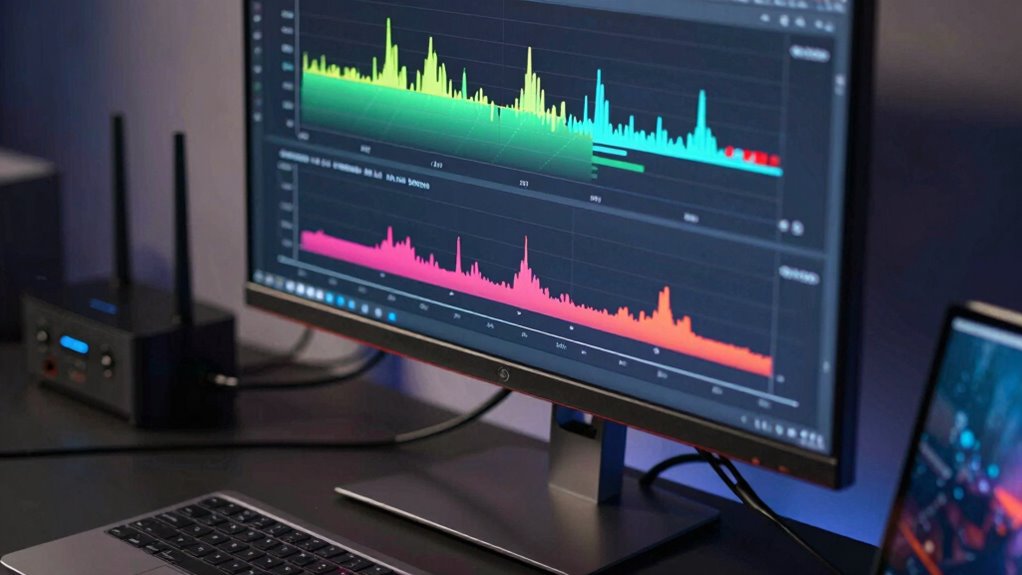
When you’re streaming, you might notice issues like buffering or poor video quality. These common bitrate problems can be frustrating, but they’re usually fixable with a few troubleshooting steps. By optimizing your bitrate settings, you can enhance your streaming experience considerably.
Common Bitrate Issues
As you plunge into streaming, you might encounter various bitrate issues that can disrupt your viewing experience. One common problem is buffering issues, which often arise when your internet connection can’t keep up with the streaming bitrate. This leads to frustrating interruptions and a less enjoyable watch. Additionally, codec compatibility can also affect your stream’s quality. If your device doesn’t support the codec used by the streaming service, you might experience poor video quality or even playback failures. To fix these problems, guarantee your internet speed meets the recommended bitrate for your resolution and verify that your device supports the required codecs. Being proactive can help you enjoy a smoother streaming experience without interruptions.
Troubleshooting Streaming Quality
To guarantee a seamless streaming experience, it’s essential to identify and fix common bitrate problems that can affect quality. If you’re facing buffering issues, the first step is to check your connection speed. A slow connection can lead to inadequate data transfer, causing interruptions. Use a speed test to determine your current bandwidth; ideally, you want at least 5 Mbps for HD streaming.
If your speed is sufficient, consider closing other applications that might be using your bandwidth. Additionally, check for any network congestion—streaming during peak hours can result in slower speeds. If problems persist, try restarting your router or connecting directly via Ethernet instead of Wi-Fi. These steps can help enhance your streaming quality considerably. Also, ensuring your network hardware is up-to-date and capable of supporting high data transfer rates can make a significant difference. Regularly updating your firmware can help prevent performance issues and optimize data flow.
Optimizing Bitrate Settings
While optimizing your streaming bitrate settings might seem challenging, it can greatly enhance your viewing experience. Start by evaluating your internet connection; a stable, high-speed connection is essential for effective bitrate balancing. If you notice buffering or pixelation, consider lowering your bitrate slightly to improve streaming efficiency. Experiment with different settings to find the sweet spot that maintains quality without overloading your connection. Don’t forget to monitor your stream on various devices, as performance can vary. If you’re using a platform that automatically adjusts bitrate, make sure it’s set to adapt based on your current bandwidth. Understanding content delivery optimization can help you make more informed adjustments for smoother streaming. Additionally, staying informed about holistic SEO strategies can improve your overall content quality and user engagement. Recognizing market patterns such as sudden shifts in viewer preferences can also help you fine-tune your streaming setup. With a bit of tweaking, you can enjoy seamless streaming and a visually appealing experience tailored to your setup.
Optimize Your Streaming Bitrate for Better Quality
Maximizing your streaming bitrate is crucial for achieving better video quality, especially when you want to guarantee a smooth viewing experience. Start by checking your streaming platform’s recommended bitrate settings; each platform may have different requirements based on resolution and frame rate. If you’re streaming in 1080p, aim for a bitrate between 4,500 to 6,000 kbps for ideal clarity. Don’t forget to adjust your settings based on your internet connection speed—higher bitrates need more bandwidth. Test your stream before going live to confirm everything runs smoothly. Finally, consider using variable bitrate settings if your platform supports them, as they can adapt to changes in your connection while still maintaining quality.
Frequently Asked Questions
Does Bitrate Affect Buffering During Streaming?
Yes, bitrate does affect buffering during streaming. When you’re streaming content, a higher bitrate usually means better stream quality, as it allows more data to flow smoothly. However, if your internet connection can’t handle the high bitrate, you’ll likely encounter buffering issues. To enjoy uninterrupted viewing, make sure your connection speed aligns with the bitrate of the stream. Balancing these factors helps you avoid frustrating pauses and improves your overall experience.
Can Bitrate Impact Mobile Data Usage?
Yes, bitrate can definitely impact your mobile data usage. When you stream at a higher bitrate, you consume more data, which can be a problem if you have mobile limitations. By optimizing your bitrate settings, you can enjoy better quality without exceeding your data cap. Lowering the bitrate reduces data usage, making streaming more manageable on your mobile plan. So, keep an eye on your settings to balance quality and data consumption!
How Does Resolution Relate to Bitrate?
When you’re streaming, resolution and bitrate go hand in hand, like peanut butter and jelly. Higher resolutions demand greater bitrates to maintain quality, while lower resolutions require less. If you’re looking for the best experience, think about bitrate optimization; it helps balance quality and data usage. So, when you crank up the resolution, remember that you’re also increasing the bitrate needed to keep things looking sharp and clear.
Is There a Standard Bitrate for Live Streaming?
There isn’t a strict standard bitrate for live streaming, but average streaming bitrates typically range from 1,500 to 6,000 kbps, depending on your resolution. For 720p, around 2,500 kbps is often recommended, while 1080p usually benefits from 4,500 kbps to 6,000 kbps. It’s essential to take into account your audience’s internet speeds and device capabilities when choosing the right bitrate, ensuring a smooth viewing experience without buffering.
What Tools Can Measure Streaming Bitrate?
You can measure streaming bitrate using various streaming tools like OBS Studio, Streamlabs, or XSplit, which often include built-in bitrate analysis features. Additionally, external tools like Bitrate Viewer or FFmpeg can provide detailed insights into your stream’s performance. By monitoring these metrics, you’ll better understand your stream quality and make necessary adjustments to enhance viewer experience. Regular checks on bitrate help guarantee smooth streaming and ideal video clarity.
Conclusion
In summary, understanding streaming bitrate is like tuning a musical instrument; it’s essential for achieving the best audio and video quality. By choosing the right bitrate and knowing how to troubleshoot common issues, you can enhance your streaming experience greatly. Whether you’re watching a movie or hosting a live stream, optimizing your bitrate will guarantee you enjoy clearer visuals and crisp sound. So, take the time to find that sweet spot, and let your content shine!