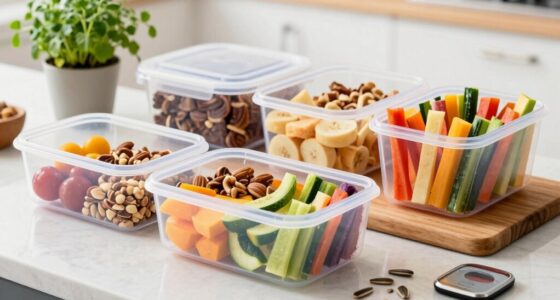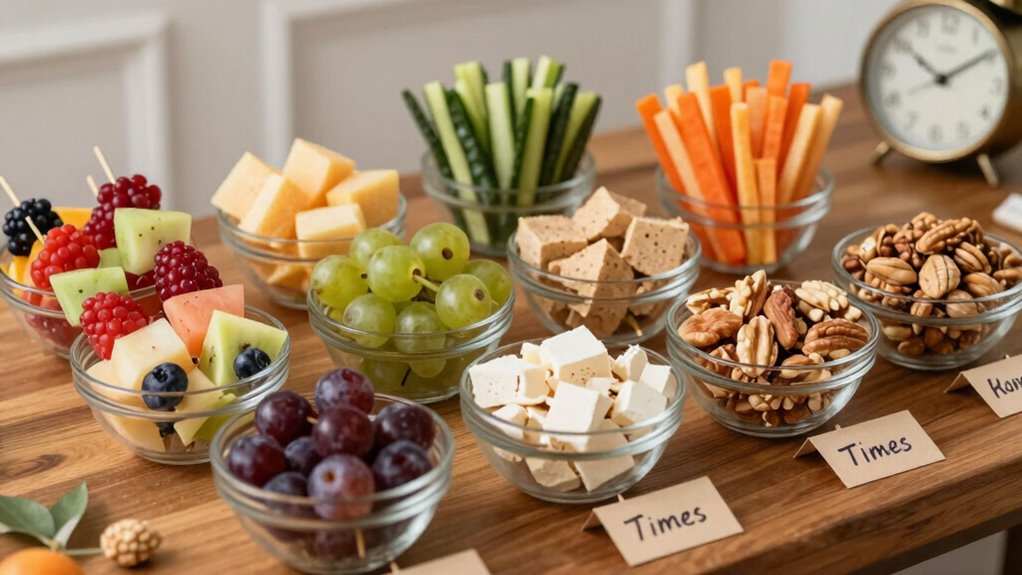

A Snack Timing Plan helps you break the cycle of constant crunching by scheduling your snacks around natural energy dips, like mid-morning and mid-afternoon. By recognizing your snack triggers, you can choose healthier options that satisfy without leading to mindless munching. Pre-portioned snacks help with portion control, while mindful eating techniques guarantee you savor each bite. This structured approach keeps your energy levels stable, and if you stick around, you’ll discover more tips on creating your perfect snack routine.
Listen free for 30 days with Audible
Thousands of audiobooks and originals — cancel anytime.
As an affiliate, we earn on qualifying purchases.
Key Takeaways
- Schedule 2-3 specific snack times during natural energy dips to prevent constant munching throughout the day.
- Pre-portion snacks to control serving sizes and reduce the temptation for mindless eating.
- Choose nutrient-dense options like nuts or yogurt to provide lasting energy and stave off cravings.
- Engage in mindful snacking by eliminating distractions and savoring each bite to enhance satisfaction.
- Maintain a snack journal to identify triggers and patterns, helping you adjust your snacking habits effectively.
What Is a Snack Timing Plan?
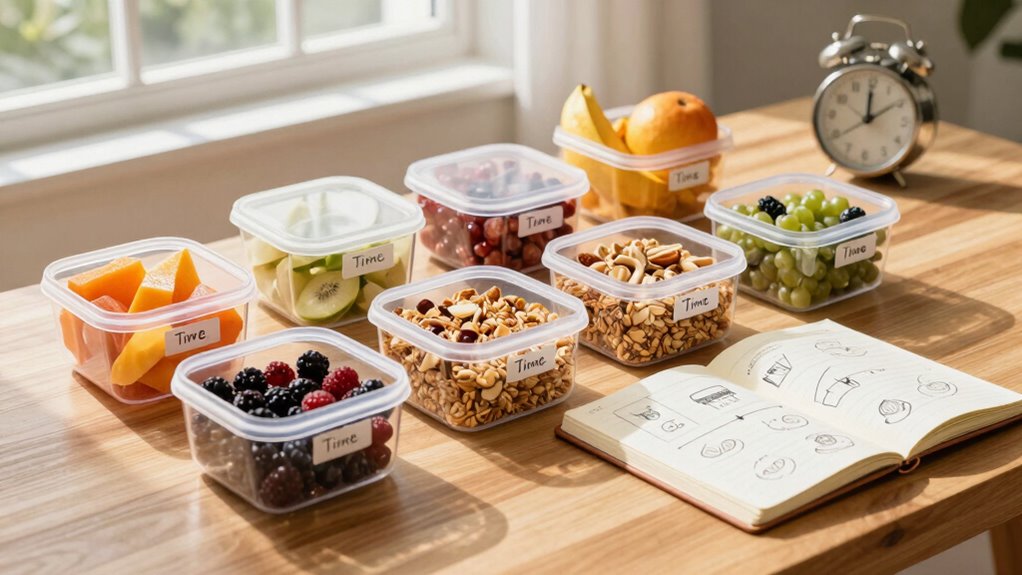
A snack timing plan is a strategic approach to when and how you incorporate snacks into your daily routine. By scheduling your snacks, you can guarantee you enjoy a snack variety that satisfies your cravings without going overboard. Think about the times you’re most likely to feel hungry, and plan to have healthy options ready to go. Portion control plays an essential role here; by pre-portioning your snacks, you’ll keep your intake in check while still enjoying diverse flavors. This planning also helps prevent mindless munching, which can lead to overeating. Incorporating consistent routines into snack times can further support children’s developing self-regulation skills. Ultimately, a well-structured snack timing plan helps you maintain energy levels and supports your overall wellness goals. Get started today and see the difference!
Why Timing Matters: The Science of Snacking
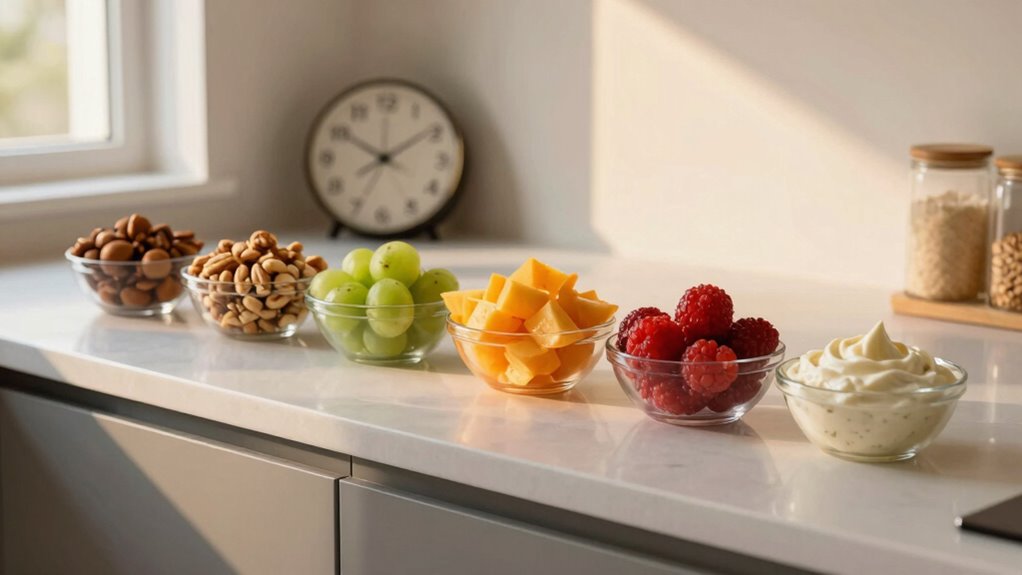
Understanding when to snack can greatly impact your energy levels and overall health. Snack psychology shows that timing influences how you respond to hunger cues. To make the most of your snacking, consider these tips:
Timing your snacks wisely can enhance your energy and maintain your health.
- Snack During Energy Dips: Pay attention to your body’s natural energy lows, usually mid-morning and mid-afternoon, to fuel up effectively.
- Choose Nutrient-Dense Options: Select snacks that provide lasting energy, like nuts or yogurt, instead of sugary treats that lead to crashes.
- Listen to Your Body: Tune in to your hunger cues. Snacking mindfully helps you avoid unnecessary munching and keeps your energy stable. Incorporating energy regulation techniques can also help you better understand your body’s needs.
- Incorporate wellness technology to monitor your energy patterns and optimize your snack timing for better health. Using energy tracking tools can further refine your approach and promote balanced eating habits. Additionally, understanding your unique metabolic rhythms can enhance your ability to plan effective snack times.
Identify Your Snack Triggers and Patterns
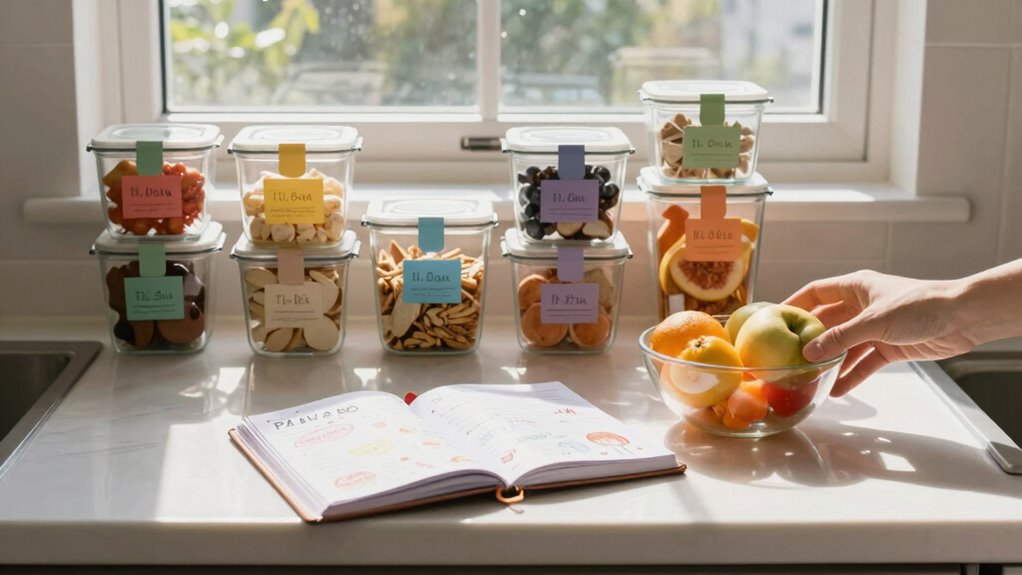
To manage your snacking effectively, it’s essential to pinpoint what triggers your cravings. Think about the times you reach for snacks throughout the day and the emotions or situations that prompt you to do so. By recognizing these patterns, you can take control of your snacking habits and make healthier choices. Incorporating mindful eating practices can also help you become more aware of your hunger cues and prevent unnecessary snacking. Additionally, understanding the role of hormonal signals in hunger regulation can support better control over your eating habits and reduce impulsive snacking. Recognizing how essential oils like peppermint or lavender can influence mood and stress levels may also be beneficial in managing emotional eating triggers. Moreover, understanding how NEAT (non-exercise activity thermogenesis) impacts your overall energy expenditure can motivate you to stay active throughout the day, reducing the likelihood of mindless snacking. Paying attention to metabolic responses can help you better tailor your snack timing and choices to your body’s needs.
Common Snack Triggers
Have you ever noticed how certain situations or emotions trigger your snacking habits? Identifying these common snack triggers can help you take control. Here are three you might recognize:
- Emotional Eating: You might reach for snacks when you’re feeling sad or anxious, using food as comfort. Being aware of mindful eating techniques can help you recognize emotional cues and respond more intentionally.
- Boredom Snacking: When you’re not busy, you might find yourself mindlessly munching out of sheer boredom.
- Social Influences: Being around friends or family can lead to unhealthy snacking, often fueled by environmental cues, like a bowl of chips on the table. Understanding the importance of focus can help you navigate social situations more consciously.
Daily Snacking Patterns
While you may not realize it, your daily routine greatly influences your snacking patterns. By identifying your snack triggers, you can better manage your daily cravings and make healthier choices. Take a look at your typical day and note when you reach for snacks. Being aware of routine habits can help you develop sustainable strategies to prevent unnecessary snacking. Recognizing the importance of emotional skills in managing habits can empower you to make more mindful decisions. Additionally, understanding caregiving stress, which often impacts emotional well-being, can be a key step in creating effective self-care routines. Developing an understanding of attachment styles can also provide insight into your emotional responses and how they influence your snacking behaviors. Being mindful of emotional responses can further enhance your ability to recognize triggers before they lead to mindless eating.
Create Your Personalized Snack Schedule
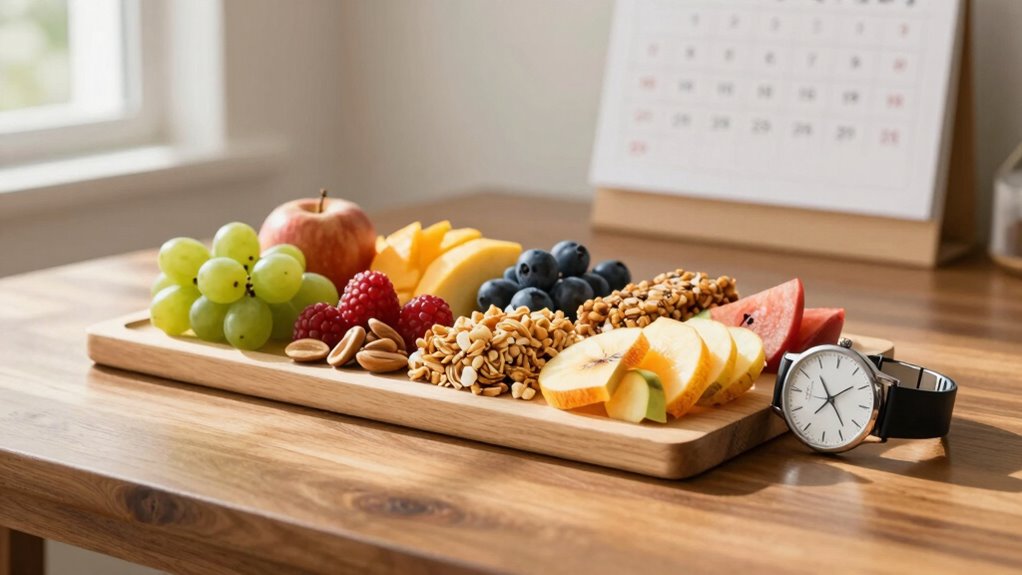
Creating a personalized snack schedule can help you stay energized and focused throughout the day. By aligning your snack preferences with a structured plan, you can maintain portion control and avoid mindless munching. Here’s how to craft your schedule:
- Identify Your Snack Times: Choose 2-3 specific times during the day for snacking, like mid-morning, afternoon, and evening.
- Choose Your Snacks: Select healthy options that fit your tastes and provide sustained energy, such as fruits, nuts, or yogurt.
- Portion Control: Pre-portion your snacks to prevent overeating and keep you on track.
- Incorporate Timing Strategies: Using timing strategies can optimize your energy levels and prevent cravings throughout the day.
Healthy Snacks to Include in Your Plan
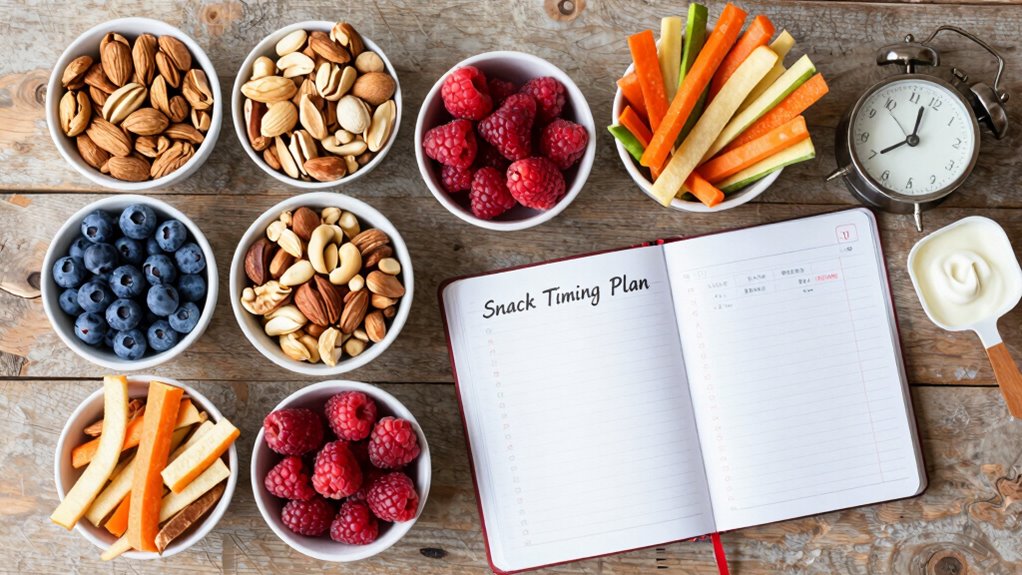
When it comes to choosing healthy snacks for your plan, focusing on nutrient-dense options can make all the difference in keeping your energy levels stable. Incorporate a variety of flavorful combinations to keep things interesting. Here are some ideas:
| Snack | Nutrient-Dense Option | Flavorful Combination |
|---|---|---|
| Greek Yogurt | High in protein | Add honey and berries |
| Hummus | Rich in fiber | Pair with carrot sticks |
| Mixed Nuts | Healthy fats | Include dark chocolate |
Additionally, incorporating nutritional information into your health routine can help you stay informed about breast cancer screening options, especially if you have personal risk factors or are in a recommended age group. Understanding sleep hygiene practices can further enhance your overall wellness and energy management. Engaging in mindful eating habits can also support your long-term health goals and prevent unnecessary snacking.
Mindful Snacking Techniques to Savor Each Bite
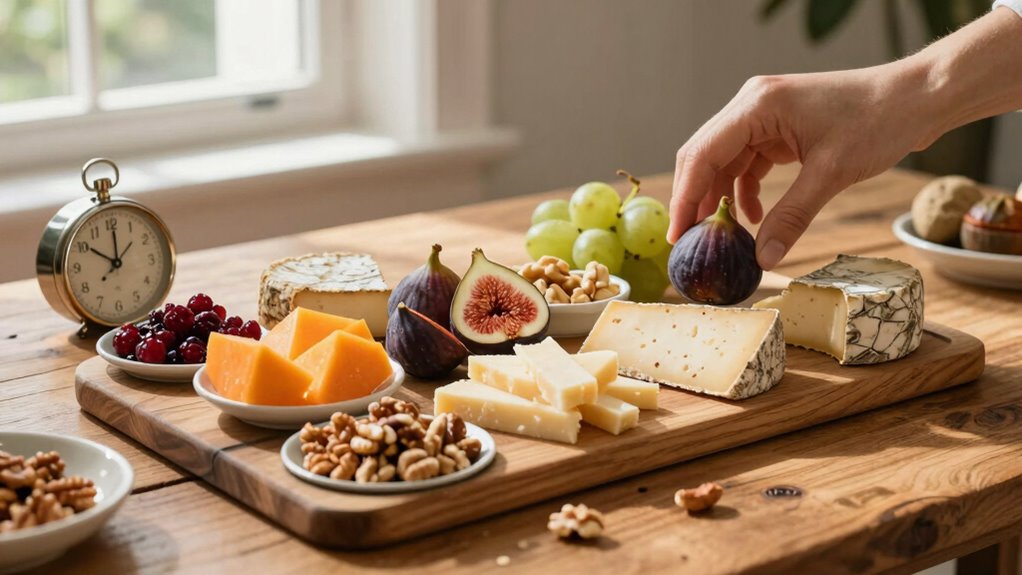
Mindful snacking is more than just choosing healthy options; it’s about fully engaging with your food to enhance your eating experience. By practicing mindful eating, you can truly enjoy each bite and savoring flavors becomes a delightful ritual. Here are three techniques to elevate your snacking:
Mindful snacking enhances your experience by engaging fully with your food, turning each bite into a delightful ritual.
- Slow Down: Take your time with each bite. Chew slowly and notice the textures and flavors.
- Eliminate Distractions: Put away your phone and turn off the TV. Focus entirely on your snack for a more fulfilling experience.
- Use Your Senses: Pay attention to the colors, aromas, and sounds of your food. This will deepen your connection and enjoyment.
Embrace these techniques to transform your snacking into a moment of pleasure!
Avoid Common Snacking Pitfalls
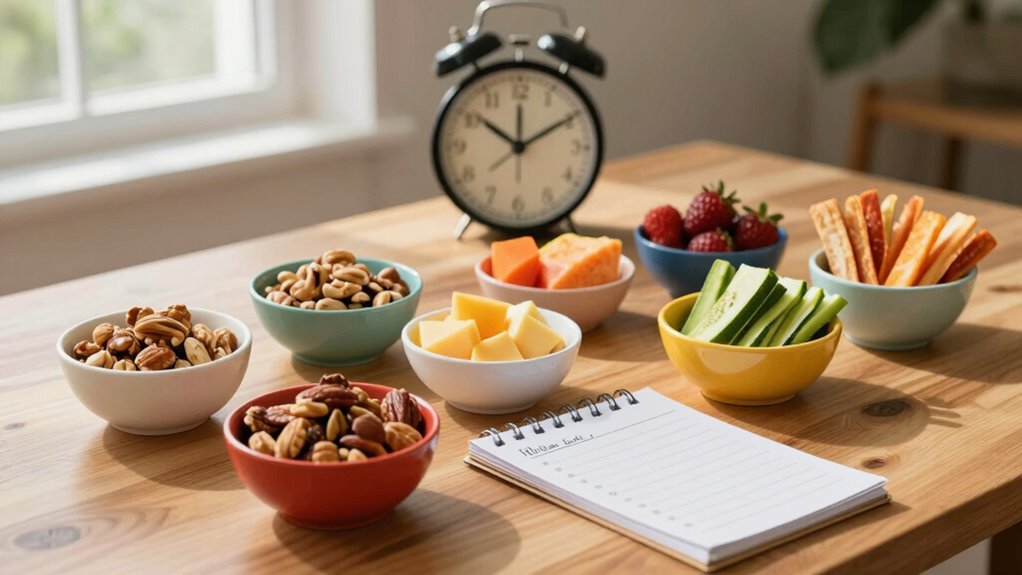
Even with mindful snacking techniques in place, it’s easy to fall into common pitfalls that can derail your healthy habits. One major trap is reaching for unhealthy snack alternatives that are high in sugar or salt. Instead, opt for nutrient-dense options like fruits, nuts, or yogurt. Portion control is essential, too; it’s tempting to munch straight from the bag. Instead, measure out your snacks in advance to avoid overeating. You might also find yourself snacking out of boredom or stress, which can lead to mindless eating. To combat this, try to keep a set schedule for your snacks and guarantee you’re genuinely hungry before indulging. By being aware of these pitfalls, you can maintain your healthy snacking goals.
How to Track Your Snack Timing Success?
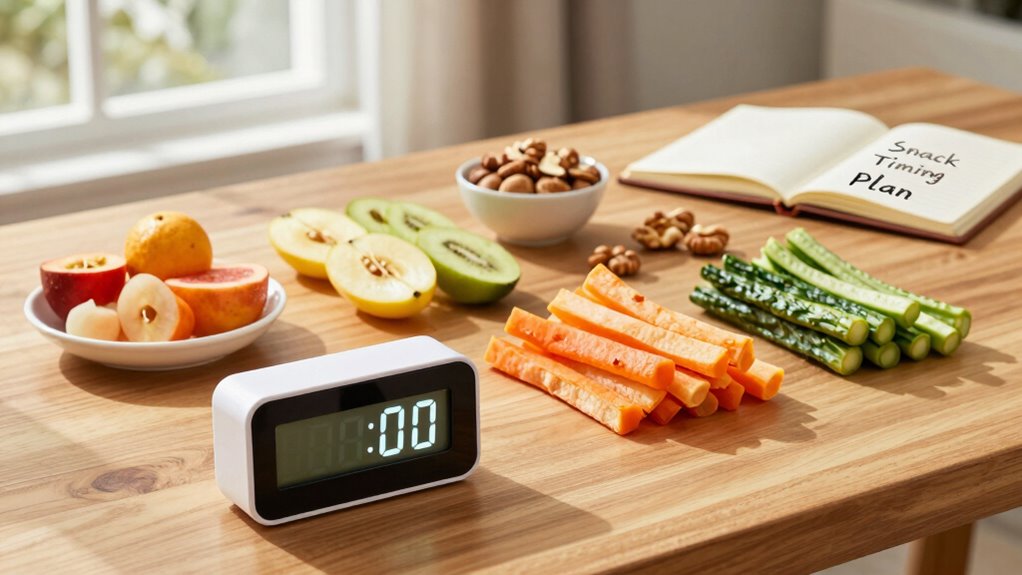
How can you effectively track your snack timing success? To see real progress, you’ll want to implement a few simple strategies. Start with snack journaling; writing down what you eat and when helps identify patterns and triggers. Next, focus on progress tracking by setting specific goals, like reducing the number of snacks per day or adjusting your snack times. Finally, review your journal weekly to reflect on your habits and celebrate your achievements. This reflection not only keeps you accountable but also motivates you to stick to your plan.
Here’s a quick list to help you:
- Keep a detailed snack journal.
- Set clear, achievable snack timing goals.
- Review and reflect on your progress weekly.
Frequently Asked Questions
Can I Snack Outside My Personalized Schedule Occasionally?
Yes, you can snack outside your personalized schedule occasionally! Embracing flexibility is important for maintaining a balanced relationship with food. When you indulge, practice mindful indulgence by savoring each bite and paying attention to your hunger cues. This way, you’ll enjoy your snack without guilt and stay connected to your body’s needs. Just remember to return to your schedule afterward to keep your overall goals in check. Enjoy those little treats!
What if I Don’T Feel Hungry at Snack Times?
If you don’t feel hungry at snack times, it’s okay to listen to your body. Think of your hunger cues like a vintage car’s engine light; it signals when you need fuel. Practice mindful eating by checking in with how you feel. If you’re not hungry, wait until you are, but aim for a balance. Eventually, you’ll find a rhythm that works for you without the constant crunching.
How Do I Handle Cravings for Unhealthy Snacks?
When you feel cravings for unhealthy snacks, identify your craving triggers. Are you stressed, bored, or simply passing by your favorite snack? Instead of giving in, reach for healthy alternatives like fruits, nuts, or yogurt. Keep these options handy to satisfy your cravings without derailing your nutrition goals. You can also hydrate or take a quick walk to distract yourself. Remember, it’s all about making smarter choices when those cravings hit!
Are There Specific Snacks to Avoid Completely?
Yes, there are specific snack types you should avoid completely. Steer clear of snacks high in added sugars, unhealthy fats, and artificial ingredients. When you check nutrition labels, look for options with minimal ingredients and a good balance of protein, fiber, and healthy fats. Processed snacks like chips, sugary granola bars, and candy often contain empty calories. Choosing whole foods like fruits, nuts, or yogurt can satisfy cravings without the guilt.
Will This Plan Help With Weight Loss?
Absolutely, this plan can help with weight loss! By promoting mindful eating, you’ll naturally create a caloric deficit without feeling deprived. Instead of mindlessly munching, you’ll focus on portion control and savoring your snacks. It’s like hitting two birds with one stone: you enjoy your food while managing your weight. Stick to the plan, and you’ll find it easier to shed those extra pounds and maintain a healthier lifestyle.
Conclusion
Incorporating a snack timing plan can transform your relationship with food. You’ll go from mindless munching to mindful enjoyment, savoring each bite rather than rushing through snacks. By understanding your triggers and creating a personalized schedule, you’ll find balance instead of chaos. Embrace healthy choices while avoiding common pitfalls, and you’ll notice more energy and satisfaction. With commitment and awareness, your snacking can shift from a constant need to a delightful treat—one that nourishes both body and mind.
Flea & tick season Picks
flea and tick prevention
As an affiliate, we earn on qualifying purchases.