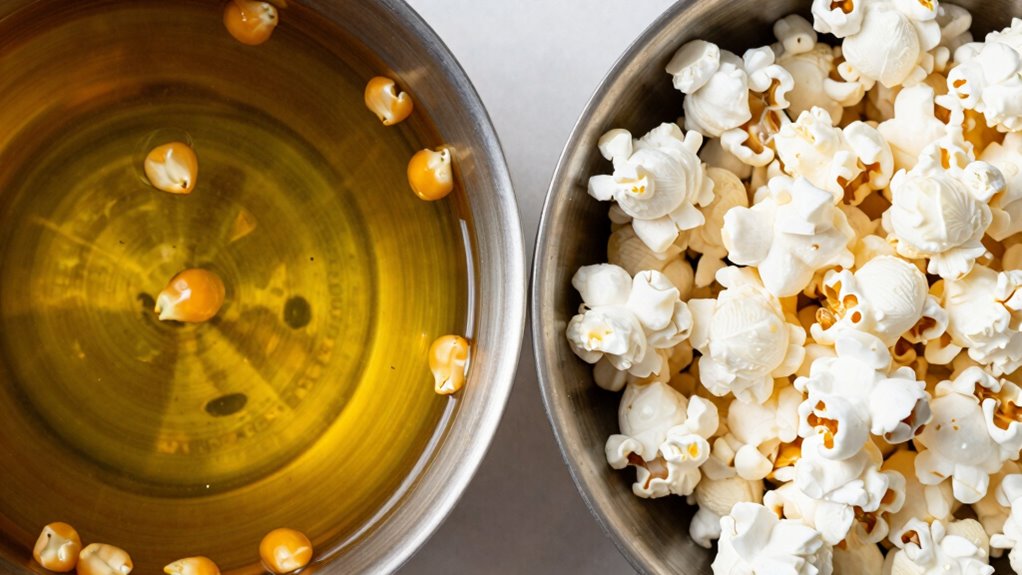

When you choose oil-popping, you get popcorn that’s richer, denser, and has a tender, crispy bite because of direct heat transfer and oil coating. Air-popping creates lighter, fluffier, and crisper popcorn, thanks to rapid hot air circulation that dries out moisture and results in a delicate texture. Each method influences flavor and crunch, and if you want to understand how these differences impact your snack, there’s more to explore.
Key Takeaways
- Oil-popping creates denser, tender popcorn with a crispy, slightly chewy texture due to direct heat contact and oil coating.
- Air-popping yields lighter, crisper, more airy popcorn with a delicate crunch, thanks to rapid hot air circulation.
- Oil enhances flavor absorption and results in a richer, more substantial snack, while air-popping produces a cleaner, less greasy product.
- Moisture control is crucial; oil-popped popcorn tends to retain more moisture, making it tender, whereas air-popped popcorn stays drier and crisper.
- The heating method influences expansion uniformity, with oil providing consistent kernel expansion and air circulation sometimes causing uneven popping.

Permanent Vinyl - 20Pack Adhesive Vinyl Sheets Assorted Colors, Permanent Bundle, 12" x 11.8" Waterproof Outdoor Perfect for Home Decor Car Decal Sticker
Clear PET Backing - Much Easier Weed: Stop using cheap paper backing. Make sure no longer need to...
As an affiliate, we earn on qualifying purchases.
How Do Oil-Popping and Air-Popping Popcorn Work?
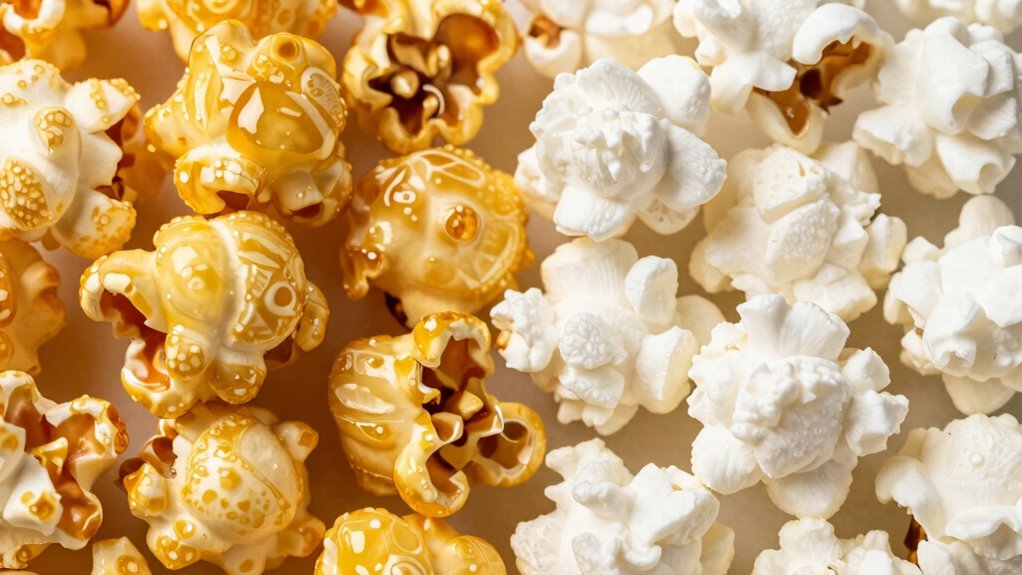
Oil-popping and air-popping popcorn work through different heating methods that cause the kernels to burst open. When you pop popcorn in oil, the heat transfers directly to the kernel’s surface, creating a rich popcorn flavor and a warm, inviting popcorn aroma. The oil conducts heat evenly, ensuring that each kernel heats uniformly until it explodes. In contrast, air-popping uses hot air circulated rapidly around the kernels, which heats them from all sides without added fat. This method produces a lighter, less oily popcorn with a subtler flavor and aroma. The difference in heating techniques influences not just texture but also how you perceive the popcorn’s flavor and aroma, giving each popping method its unique sensory profile. The heating method directly impacts the popcorn’s final texture and flavor profile, making each technique suitable for different preferences. Additionally, oil quality can influence the overall taste and consistency of the popcorn, and the nutritional content also varies significantly between the two methods. The cooking temperature plays a crucial role in determining the popcorn’s final texture and flavor outcome, emphasizing the importance of proper heat control. Moreover, popcorn expansion depends heavily on the heating process, affecting the size and fluffiness of the finished product.
Lya Vinyl 65 Pack Permanent Vinyl, Self Adhesive Vinyl Sheets for Cutting Machine, Permanent Outdoor Sheets for Party Decoration, Sticker, DIY Mug, Car Decal
🎁【Size】The product contains 65 sheets of permanent adhesive vinyl sheets, which covers 40 primary colors. The size of...
As an affiliate, we earn on qualifying purchases.
What Are the Main Differences in Popcorn Texture and Flavor?
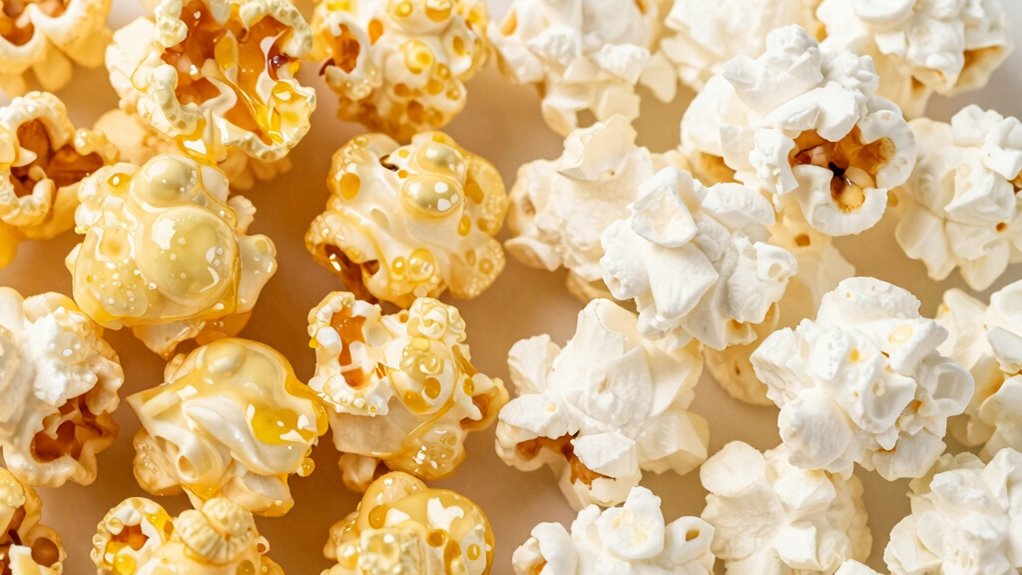
Because of the different heating methods, oil-popped and air-popped popcorn have distinct textures and flavors. Oil-popped popcorn tends to be richer and more tender, with a slightly chewy bite thanks to the oil coating. This method enhances the popcorn flavor, making it more savory and buttery, and creates a warm, inviting popcorn aroma. The oil coating can also help the popcorn stay fresh longer and retain moisture. In contrast, air-popped popcorn has a lighter, crisper texture, with a drier mouthfeel. Its flavor is more neutral, letting toppings or seasonings shine without interference. The popcorn aroma from air-popping is often more subtle, emphasizing the freshness of the popcorn itself. These differences influence your eating experience, whether you prefer the hearty richness of oil-popped or the clean crunch of air-popped popcorn. Additionally, understanding the popcorn texture can help you choose the best popping method for your taste preferences.

HTVRONT Permanent Vinyl - 57 Pack 12" x 12" Permanent Adhensive Vinyl Bundle Compatible with Cricut Cutting Machine, 52 Adhensive Sheets and 5 Transfer Tape Sets for Party Decoration, Stiker
Variety of Choices: Package includes 27 glossy permanent vinyl sheets, 20 matte permanent vinyl sheets, 5 special permanent...
As an affiliate, we earn on qualifying purchases.
What Ingredients and Equipment Do You Need for Each Method?
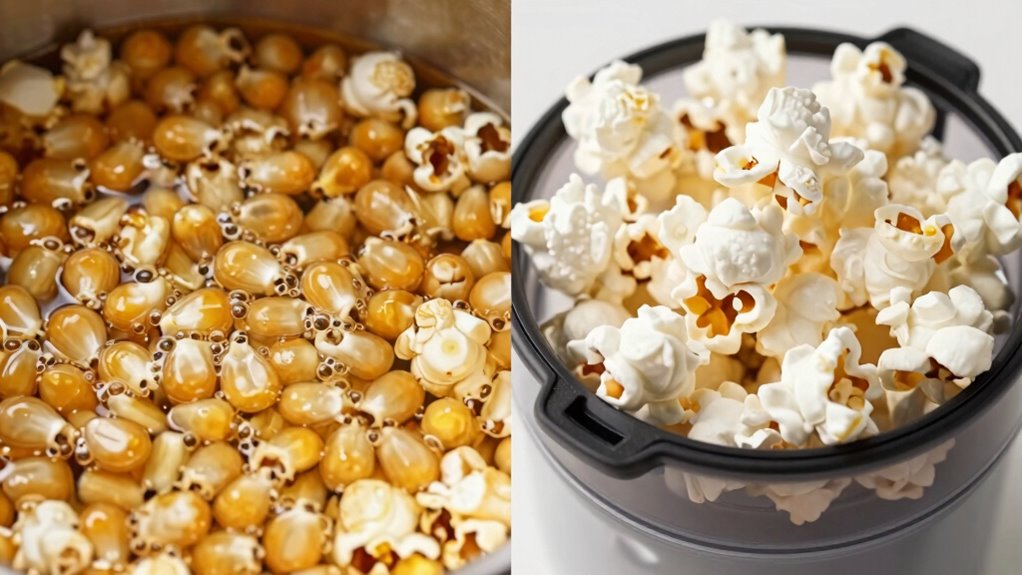
To prepare popcorn using either method, you’ll need specific ingredients and equipment. For air-popping, you’ll require a popcorn machine or a hot air popper, which uses hot air to pop the kernels efficiently. No oil is necessary, making it a healthier option. For oil-popping, you’ll need a heavy-bottomed pot or a popcorn popper designed for oil, along with a cooking oil like vegetable or coconut oil. The oil helps achieve a richer popcorn flavor and contributes to the cooking duration, which tends to be quicker than air-popping. Both methods require popcorn kernels, of course. The choice of equipment and ingredients directly influences the popcorn’s texture and flavor, with oil adding richness and moisture, while air-popping results in a lighter snack. Incorporating AI-driven personalized recommendations can help you select the best popping method based on your taste preferences and dietary needs. Additionally, understanding popcorn moisture content can further improve your popping results and texture. Moreover, popping technique can also impact the final texture and flavor of your popcorn, making it important to choose the right method for your desired outcome. Being aware of popcorn storage can also help maintain its freshness and optimal popping quality over time.
IModeur Permanent Adhesive Vinyl Bundle - 86 Pack Vinyl Sheets (12”x12”, Glossy, Matte, Metallic) for Most Cutting Machines and Party Decoration, Sticker, Craft Cutter, Car Decal
Package-12” X 12” vinyl sheets in 80 glossy, matte, and metallic colors.with grid paper backing, it is nice...
As an affiliate, we earn on qualifying purchases.
How Does Oil-Popping Affect the Texture and Taste of Popcorn?
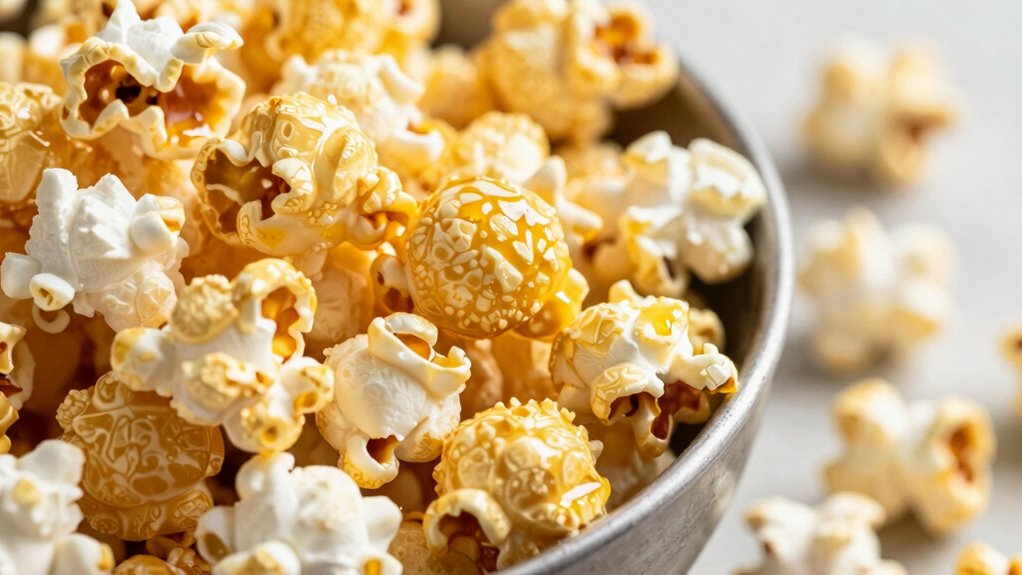
When you use oil to pop your popcorn, the oil coats each kernel, resulting in a richer, more flavorful snack. This coating enhances the taste, making popcorn more receptive to your favorite popcorn seasoning, whether it’s butter, cheese, or spices. The oil also influences the texture, producing a slightly denser and more tender crunch compared to air-popped popcorn. Because of the added fat, you need to contemplate storage techniques carefully, as oil-based popcorn can become stale faster if not stored properly in airtight containers. The oil helps create a glossy appearance and can improve flavor absorption, making each bite more satisfying. Additionally, exploring an independent platform allows for sharing innovative methods and research on popcorn preparation and flavoring techniques. Overall, oil-popping offers a more indulgent experience, especially when complemented with carefully chosen seasonings and proper storage.
How Does Air-Popping Influence the Final Crunch and Lightness?
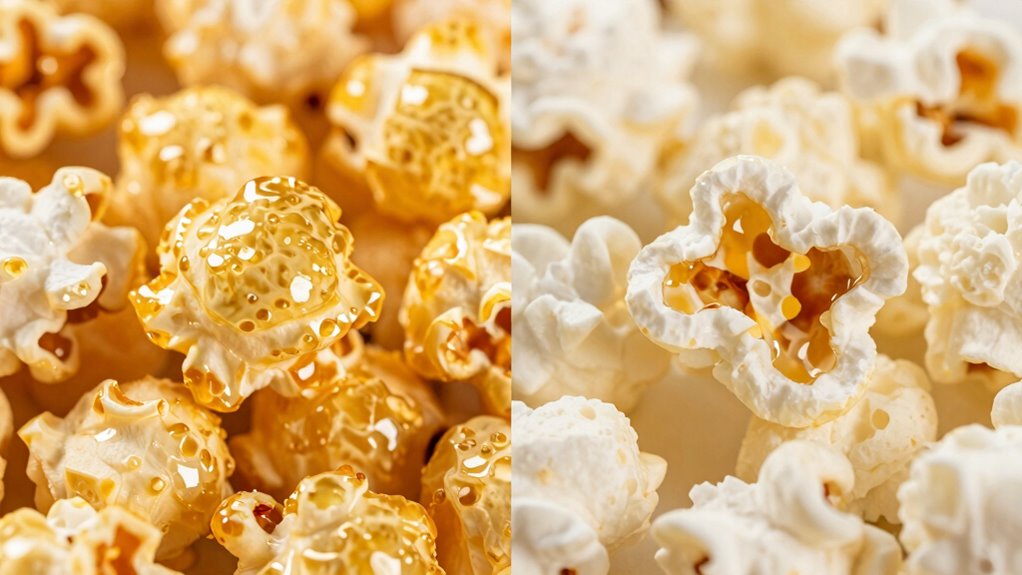
When you air-pop popcorn, you’ll notice it tends to be lighter and less greasy than oil-popped varieties. This method creates a crisp texture that’s often more delicate and airy. Understanding how air-popping affects crunch and lightness helps you choose the perfect snack for your preferences. Additionally, air-popping eliminates the need for additional storage of oils or greasy residues, making it a more hygienic and eco-friendly option. Since it also reduces the risk of overcooking or burning, you can enjoy a healthier snack with less cleanup. Embracing this method allows you to enjoy your popcorn with greater clarity and peace of mind. Furthermore, the texture of air-popped popcorn makes it an ideal base for a variety of toppings and flavorings, enhancing your snacking experience. Using air-popping also preserves more of the natural nutrients found in popcorn kernels, making it a smarter choice for health-conscious consumers.
Air-Popping’s Impact on Texture
Air-popping substantially affects the texture of popcorn, making it lighter and crisper than traditional oil-popped varieties. Because air-popped popcorn contains less oil, it has a drier surface that enhances its crunchiness. This lightness allows seasoning techniques to stick better without becoming soggy, so your popcorn stays crispy longer. Proper storage methods also play a role; keeping air-popped popcorn in an airtight container prevents moisture from softening its texture. Unlike oil-popped popcorn, which can become chewy or greasy over time, air-popped options maintain their delicate crunch. The absence of oil means fewer residues that can trap moisture, helping you enjoy consistently light, crisp popcorn with every batch. This texture difference is key to a healthier, more satisfying snack.
Achieving Light and Crunchy Popcorn
Achieving a light and crunchy popcorn texture largely depends on how air-popping transforms the kernels during the popping process. Air-popped popcorn naturally tends to be lighter because it lacks added fats that can weigh it down. To enhance crunch, avoid over-seasoning with greasy popcorn seasoning, which can make popcorn soggy over time. Instead, add flavorings lightly and just before serving. Proper storage techniques are essential to maintain that crispness; keep popcorn in an airtight container to prevent moisture absorption, which can soften the texture. By controlling moisture and seasoning carefully, air-popped popcorn stays light and crunchy longer. This method highlights the popcorn’s natural texture, making each bite satisfyingly crisp without the heaviness that oil-based popping can introduce.
Which Method Produces More Uniform Kernel Expansion?
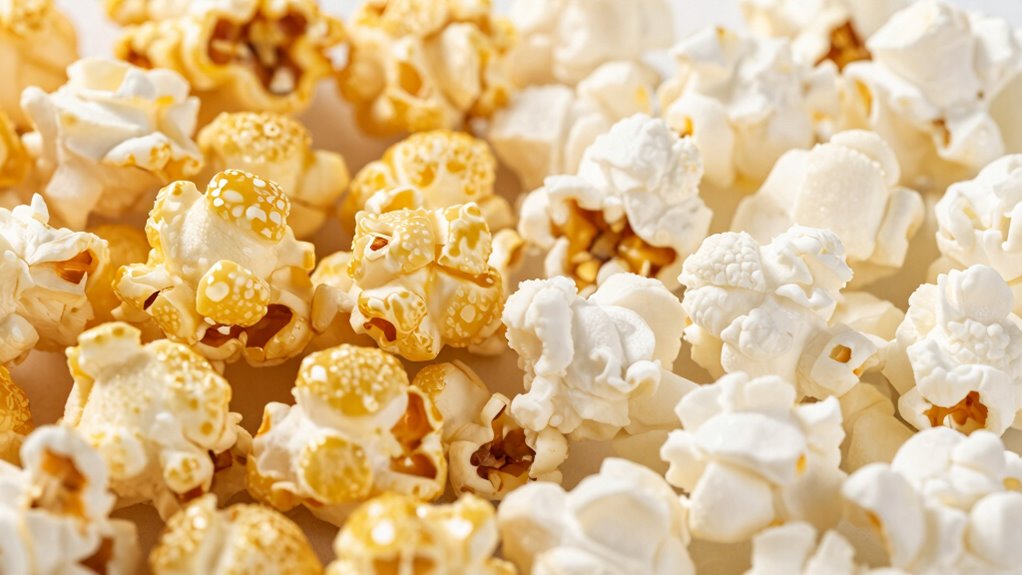
You’ll notice that uniform kernel expansion depends heavily on how evenly heat is distributed during popping. Factors like kernel moisture content and how well the kernels contact the popping surface also play essential roles. By examining these points, you can better understand which method consistently produces more evenly expanded popcorn.
Consistency of Heat Distribution
When it comes to producing evenly popped kernels, the consistency of heat distribution plays a crucial role. Air-popping tends to offer more uniform heat distribution because hot air circulates evenly around each kernel, promoting consistent kernel expansion. This even heat transfer helps prevent cold spots that can cause uneven popping or unpopped kernels. In contrast, oil-popping often relies on localized heat transfer, which can create hot spots and uneven heat distribution. This variability can lead to inconsistent kernel expansion, with some kernels over-expanding and others under-expanding. As a result, air-popping generally produces more uniform kernel expansion due to its superior heat distribution. If evenness is your goal, air-popping’s consistent heat flow makes it the better choice.
Kernel Moisture Content
Kernel moisture content markedly influences how evenly popcorn pops, regardless of the heating method. When kernels have the right moisture level, they expand uniformly, creating consistent popcorn. Too little moisture, and kernels may not pop fully; too much, and they might burst unevenly.
Here’s a visual representation:
| Kernel Moisture Level | Popping Result | Appearance |
|---|---|---|
| Low (<12%) | Partial pop, dense | Uneven, small pieces |
| Ideal (13-14%) | Fully popped, fluffy | Even, consistent texture |
| High (>15%) | Overexpanded, burst | Irregular, rough |
Achieving suitable kernel moisture ensures a more uniform expansion, whether you’re air-popping or oil-popping. Proper moisture control is key to perfect popcorn.
Popping Surface Contact
The surface contact during popping considerably impacts how uniformly kernels expand. When kernels have direct contact with the heat source or each other, it can lead to uneven heat transfer, affecting kernel expansion. In oil-popping, the kernel surface is coated and in constant contact with hot oil, ensuring more consistent heat distribution. This promotes more uniform kernel expansion, with each kernel popping at a similar rate. Conversely, air-popping relies on hot air circulating around the kernels, which may cause uneven surface contact. As a result, some kernels might heat faster or slower, leading to less uniform expansion. So, if you want the most consistent expansion and a more uniform texture, oil-popping’s better surface contact provides a clear advantage over air-popping.
How Do Health and Calorie Counts Compare Between Oil and Air-Popped Popcorn?
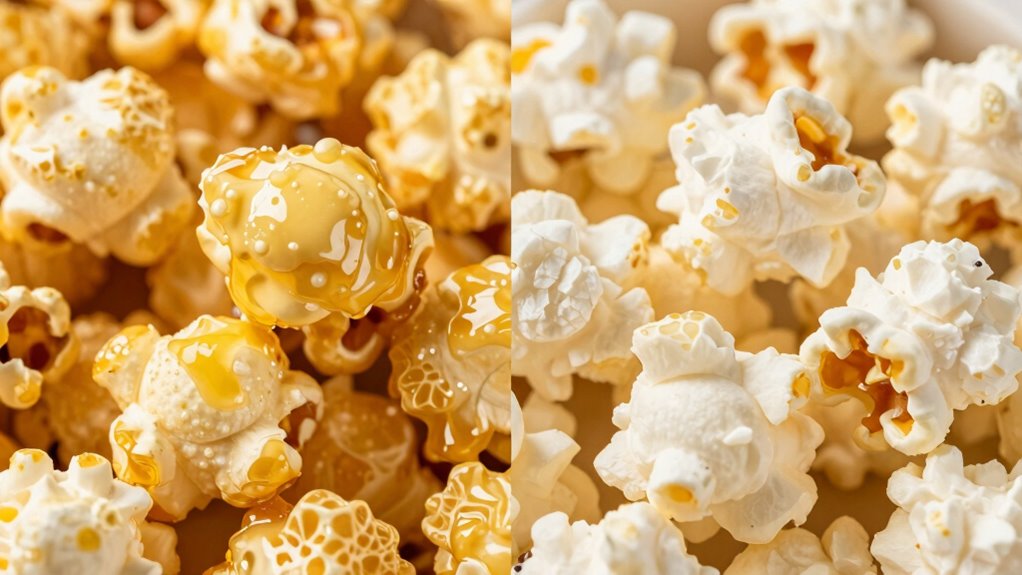
Oil-popped popcorn generally contains more calories and fat than air-popped varieties because it absorbs oil during cooking, impacting both health and calorie counts. The popcorn flavor of oil-popped popcorn is richer due to the cooking oil, but this also adds extra calories. When you opt for air-popping, you avoid the added fat and calories, making it a lower-calorie snack. If you’re watching your intake, air-popped popcorn offers a healthier choice without sacrificing crunch. Keep in mind that adding butter or oil afterward can increase calories regardless of the popping method. Overall, air-popped popcorn provides fewer calories and less fat, making it a better option for calorie-conscious snackers who want to enjoy popcorn without compromising health. Additionally, choosing sustainable and eco-friendly popcorn options aligns with modern health and environmental values. Since excessive ear wax can lead to a stronger smell, maintaining ear hygiene can also contribute to overall health and comfort.
Can You Achieve Similar Textures Using Both Methods?
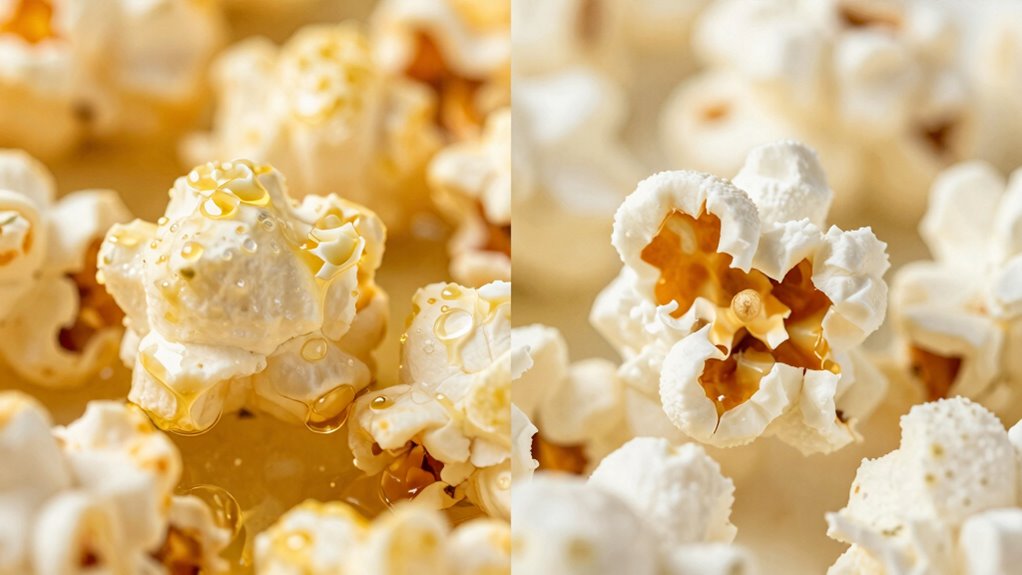
While air-popping minimizes added fats and calories, many wonder if it can match the texture of oil-popped popcorn. Achieving a similar popcorn flavor with air-popping is possible, but the popping speed differs. Oil helps kernels pop quickly and evenly, creating a richer, more consistent texture. In contrast, air-popping tends to be slower, which can result in slightly less uniform popping and a lighter, fluffier feel. Additionally, popping methods influence the final texture and flavor profile of the popcorn, making each method unique. While you can get close to the traditional texture using both methods, oil-popped popcorn often feels more substantial and crispy. To improve air-popped popcorn’s texture, some add flavorings or moisture afterward. However, the fundamental difference in popping speed and the presence of oil make it challenging to replicate the exact same texture with air alone. Understanding different popcorn methods can help you choose the best technique for your preferred texture. Moreover, popcorn expansion varies based on the method used, impacting the final texture and mouthfeel.
What Common Mistakes Affect the Texture of Oil and Air-Popped Popcorn?
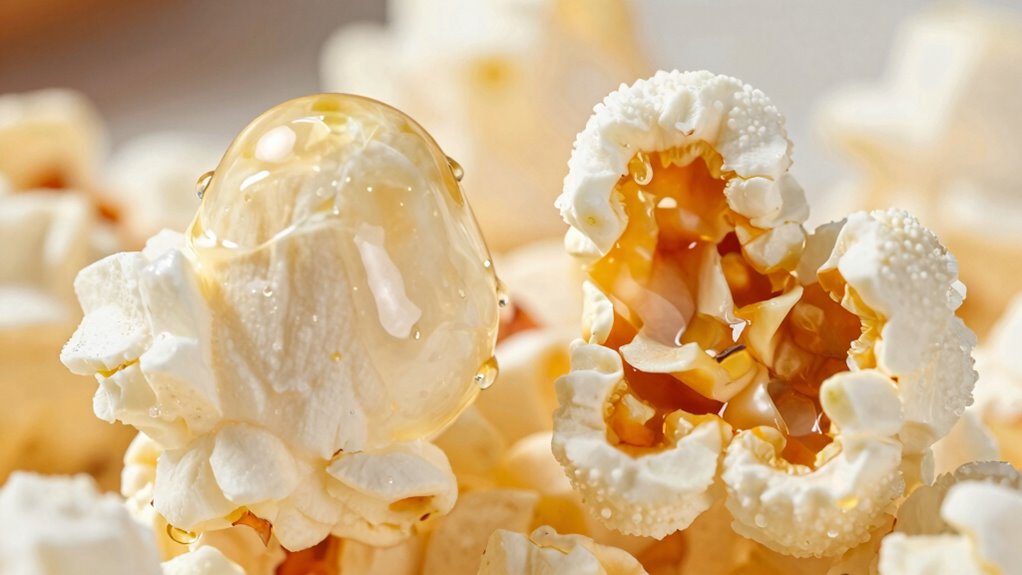
Mistakes in the popping process can substantially impact the final texture of both oil and air-popped popcorn. One common error is applying seasoning variations too early or unevenly, which can cause moisture retention or uneven heating, resulting in chewy or soggy popcorn. Additionally, poor storage techniques, like sealing popcorn while still warm or storing in humid environments, can introduce moisture that softens the crunch. Overcrowding the popper or using insufficient heat can lead to underpopped kernels, affecting texture and consistency. Conversely, overcooking can make popcorn tough and brittle. To maintain ideal texture, focus on even seasoning application, proper storage in airtight containers, and precise cooking times. Avoiding these mistakes ensures your popcorn stays crispy and enjoyable.
Frequently Asked Questions
Does Microwave Popcorn Differ in Texture From Stovetop Oil or Air-Popped Varieties?
Yes, microwave popcorn differs in texture from stovetop oil or air-popped varieties. You might notice microwave popcorn often has a softer, more uniform chewiness due to the added oils and flavorings, which affect texture consistency. Stovetop popping with oil tends to produce a richer, crunchier texture, while air-popped popcorn is lighter and crisper. Your preferred chewiness and texture depend on the method, but each offers a distinct popcorn experience.
How Does Popcorn Age Impact Texture and Flavor in Both Methods?
Did you know popcorn loses up to 20% of its flavor within a month? As popcorn ages, its texture becomes less crispy and more chewy, regardless of the popping method. Flavor degradation occurs because the oils and moisture inside break down over time, affecting both oil-popped and air-popped varieties. So, to enjoy the best taste and texture, consume your popcorn sooner rather than later, preferably within a few weeks of popping.
Can Seasoning Techniques Alter the Texture of Oil or Air-Popped Popcorn?
Seasoning techniques can definitely alter the texture of both oil and air-popped popcorn. When you apply seasoning through coating techniques like spraying or tossing with melted butter, it can make the popcorn feel more moist or sticky. Conversely, dry seasoning powders might add a crunch or a slight coating. Your choice of seasoning application directly influences whether the popcorn stays crisp or becomes softer, enhancing the overall eating experience.
Is There a Difference in Popcorn Kernel Quality Preferred for Each Method?
You’ll find that choosing the right popcorn kernel quality can make all the difference in your popping experience. For air-popping, opt for kernels with consistent size and moisture content to guarantee even popping and a fluffy texture. Oil-popping benefits from high-quality kernels that withstand heat and produce reliable popping consistency. By selecting better kernels, you enhance your snack’s texture and flavor, turning simple popping into a truly satisfying treat.
How Do Storage Methods Affect the Crispness of Oil and Air-Popped Popcorn?
Storing your popcorn properly keeps it crisp longer. If you want to maintain freshness, store both oil and air-popped popcorn in an airtight container away from moisture and heat. The container impact is vital—using a sealed, opaque container prevents air and humidity from softening the popcorn. Avoid storing for too long, as stale popcorn loses its crunch regardless of the method, so consume it soon after popping for the best crispness.
Conclusion
Whether you prefer the richer flavor of oil-popped popcorn or the lighter crunch of air-popped, both methods can deliver great results. Don’t worry about achieving perfect texture—practice makes perfect, and small tweaks can make a big difference. So, try both techniques to find what suits your taste and health goals best. With a little experimentation, you’ll enjoy delicious, fluffy popcorn every time, no matter which method you choose.