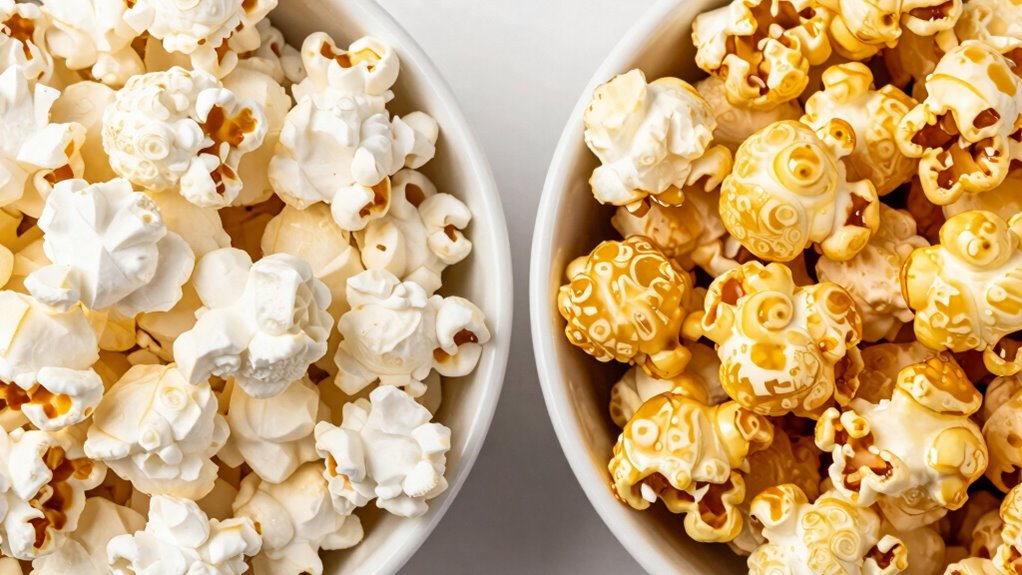

Air-popped popcorn has far fewer calories because it requires no added oil or butter, usually around 30 calories per cup. In contrast, oil-popped popcorn adds calories depending on how much oil you use, with about 120 calories per tablespoon. Adding butter or flavorful toppings can triple the calorie content quickly. If you want a lower-calorie snack, choosing air-popped and controlling toppings helps you stay healthy—discover more about making smarter popcorn choices.
Key Takeaways
- Air-popped popcorn contains approximately 30 calories per cup, while oil-popped can range from 120 calories per tablespoon of oil.
- Using no oil results in significantly lower calories, whereas oil adds about 120 calories per tablespoon used.
- The type and amount of oil influence the total calorie content in oil-popped popcorn.
- Pre-packaged microwave popcorn often contains added flavorings and oils, increasing calorie levels.
- Proper portion control and minimal toppings help manage calorie differences between methods.
Which Popcorn Popping Method Is Healthiest for Calories?
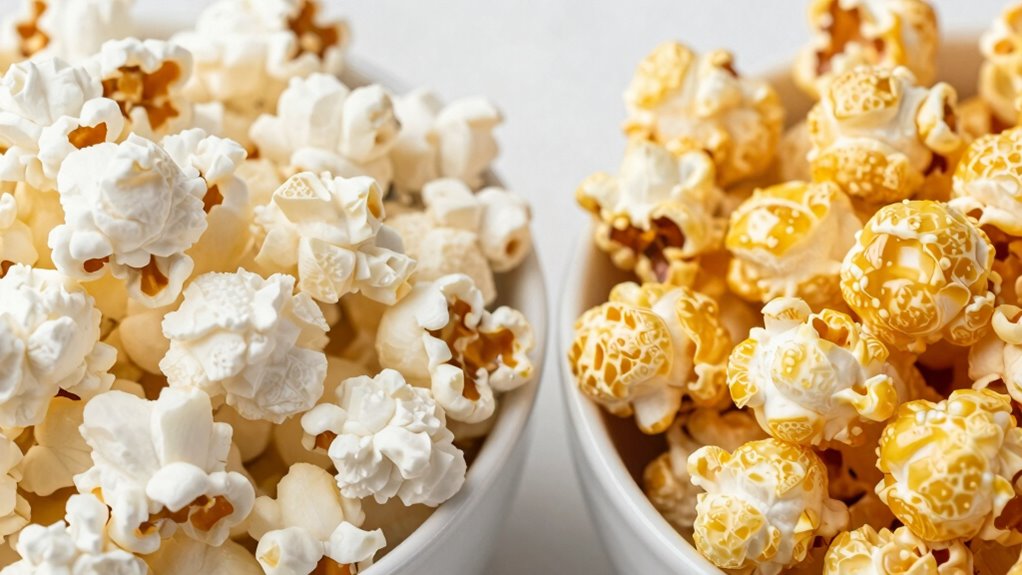
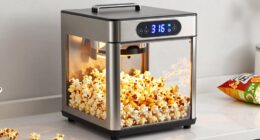
When it comes to calories, air-popped popcorn is generally the healthiest option. It’s made using popping equipment types like hot air poppers that don’t require added fats, keeping calorie counts low. Plus, you can customize flavorings without adding extra calories—try herbs, spices, or a light sprinkle of salt. In contrast, oil-popped popcorn often involves oils or butter, which markedly increase calorie content. The popping equipment used for oil popping can vary—from stovetop pans to specialized popcorn makers—each adding different amounts of fat depending on the method. While flavorings can elevate the taste, they can also add hidden calories, so choose your toppings wisely. Overall, air-popped popcorn offers the best calorie control and flexibility for healthy snacking.
How Do Air-Popped and Oil-Popped Popcorn Compare in Calories?
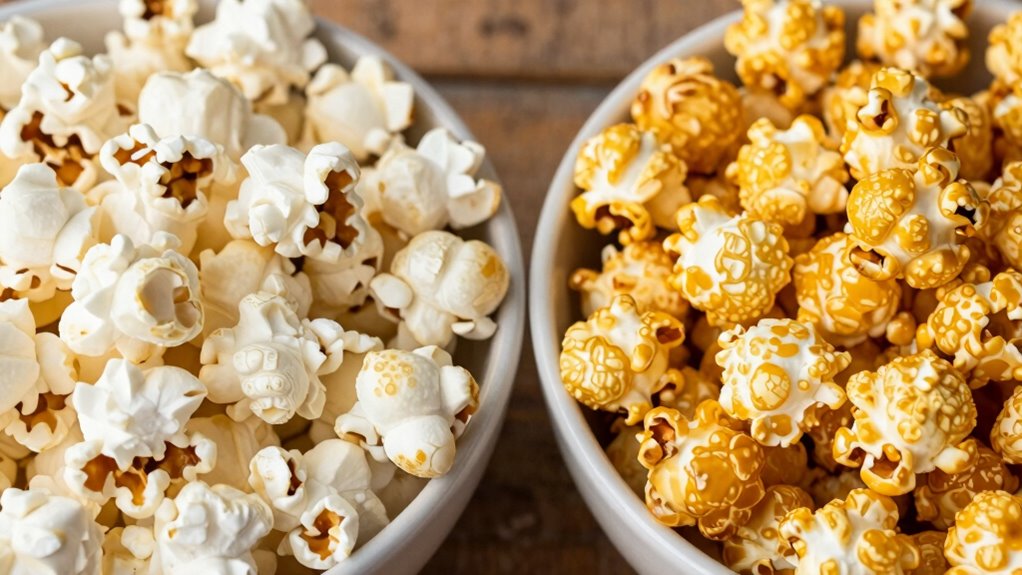
Air-popped popcorn typically contains around 30 calories per cup, making it a low-calorie snack option. Its light, airy texture makes it a popular choice for those watching their calorie intake. When comparing it to oil-popped popcorn, you’ll notice a significant difference in calorie content. Oil adds extra fat and calories, increasing the overall count per serving. The popcorn’s texture also changes with oil; it becomes richer and more tender, which can enhance flavor but at a calorie cost. If you prefer flavor enhancement without adding calories, air-popped popcorn is ideal. It allows you to enjoy the natural, subtle taste of the popcorn itself, while keeping your snack light and satisfying. Additionally, choosing the right popping method can influence the popcorn’s texture and nutritional profile. In fact, the type of oil used can also impact the calorie content and healthfulness of oil-popped popcorn. This comparison highlights how popping methods directly influence calorie content and popcorn texture, as well as the nutritional differences between various popping techniques. Moreover, understanding how water content affects the popping process can help you select healthier options. Properly managing piercing care and hygiene can also ensure a safer snacking experience when preparing popcorn at home.
How Much Oil Actually Adds to Your Popcorn’s Calorie Count?
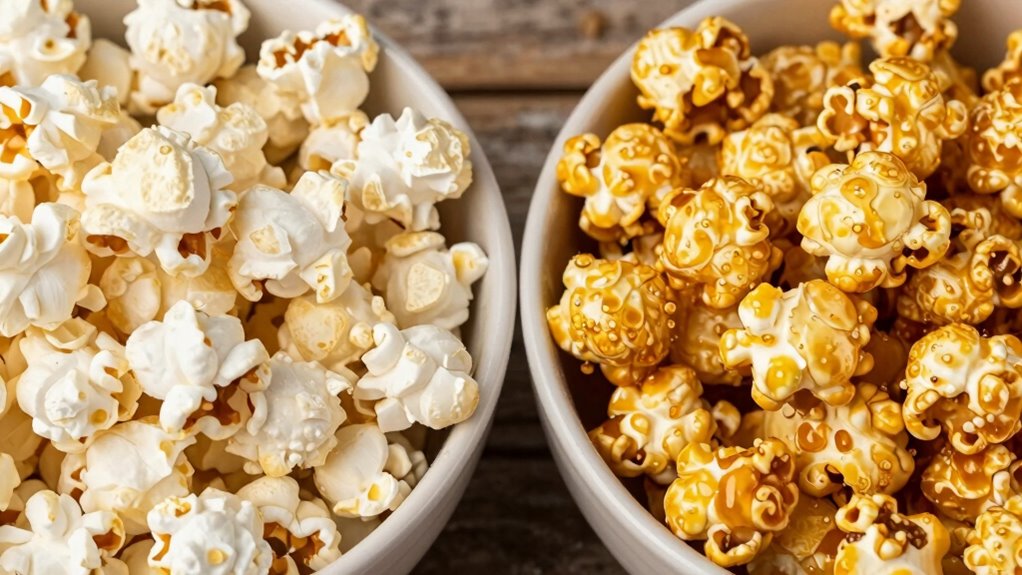
The amount of oil you add considerably impacts your popcorn’s calorie count, since oil is calorie-dense—about 120 calories per tablespoon. To control your calories, consider these points:
- Use a measuring spoon to add precise oil amounts, reducing excess.
- Store leftover oil properly to keep it fresh and prevent waste.
- Be mindful of popcorn packaging; some pre-packaged popcorn already contains oil, affecting calorie counts.
- When popcorn storage, opt for air-tight containers to preserve flavor without extra oil or calories.
- Incorporating sound healing science techniques, such as listening to calming frequencies during popcorn prep, can promote relaxation and mindful eating.
- Understanding calorie density helps you better manage your snack intake and make healthier choices.
- Being aware of mammography guidelines and individual risk factors can help you make informed decisions about breast health. Additionally, learning about popcorn preparation methods can further help in managing calorie intake effectively.
- Being aware of portion control techniques is essential for maintaining a balanced diet while enjoying your favorite snacks.
Does Adding Butter or Flavorings Increase the Calorie Content?
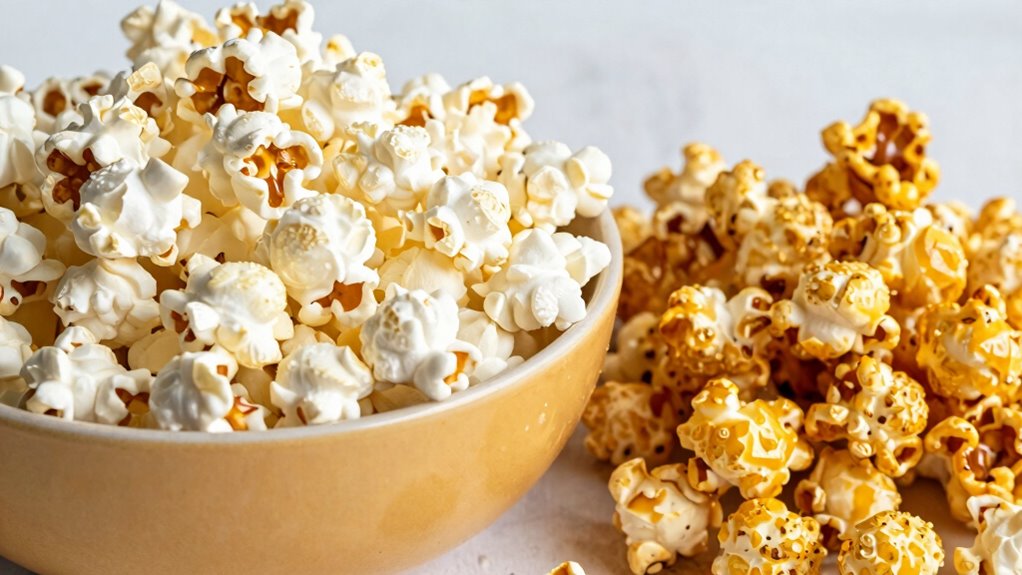
Adding butter or flavorings can greatly boost your popcorn’s calorie count. These extras not only add calories but can also alter the nutritional profile, like increasing fat or sodium. Understanding their impact helps you make smarter snack choices. For example, using nutritional information for investment can also influence your overall calorie intake if you indulge in additional snacks or treats while enjoying your backyard setup. Additionally, being aware of accessibility features can help ensure that all family members enjoy snacks comfortably and safely. Incorporating smart pool automation features such as lighting and heating can enhance your relaxation and make your snack time more enjoyable.
Additional Calories From Butter
Adding butter or flavorings to popcorn considerably increases its calorie content. Butter calories are dense, so even a small amount adds significant calories. The flavoring impact depends on the type and amount used, often doubling or tripling the original popcorn’s calories. Creative and gaming gear can influence how you experience this snack, especially if you’re indulging during long gaming sessions or creative work. Here are four points to *contemplate*:
- Just one tablespoon of butter adds about 100 calories.
- Using flavored butter or toppings can increase calories even further.
- The butter’s fat content contributes heavily to calorie increase.
- Excessive flavorings may overshadow popcorn’s health benefits.
Impact of Flavorings
Have you ever wondered how much flavorings like butter or toppings really boost your popcorn’s calorie count? Popcorn flavorings, such as butter, caramel, or cheese powders, profoundly impact your snack’s calorie content. The seasoning impact varies depending on the amount and type of flavoring you add. For example, a tablespoon of butter can add around 100 calories, while a sprinkle of flavored seasoning might only add a few. These additions can turn a light, low-calorie snack into a more calorie-dense treat. Even small amounts of flavorings can cumulatively increase your popcorn’s overall calorie load. So, if you’re watching your intake, consider how much and what type of flavorings you choose, as they play a vital role in the final calorie count.
Nutritional Changes Overview
When you incorporate butter or flavorings into your popcorn, you directly increase its calorie content because these ingredients are calorie-dense. This nutritional change affects both air-popped and oil-popped varieties. Adding butter or flavored oils boosts calories notably, especially if you use large amounts. Proper popcorn storage and packaging help keep your popcorn fresh and prevent moisture from altering its texture and calorie density. Here are some key points to contemplate:
- Flavorings add calories depending on quantity and type.
- Butter and oil contribute the most to calorie increases.
- Seasonings like caramel or cheese powder can also raise calorie counts.
- Packaging methods influence freshness and calorie preservation.
- Using bulk packaging techniques can help control portion sizes and calorie intake.
- Understanding calorie density helps in making healthier popcorn choices.
Knowing these factors helps you control nutritional changes when customizing your popcorn.
What Are the Best Ways to Make Low-Calorie Popcorn Snacks?
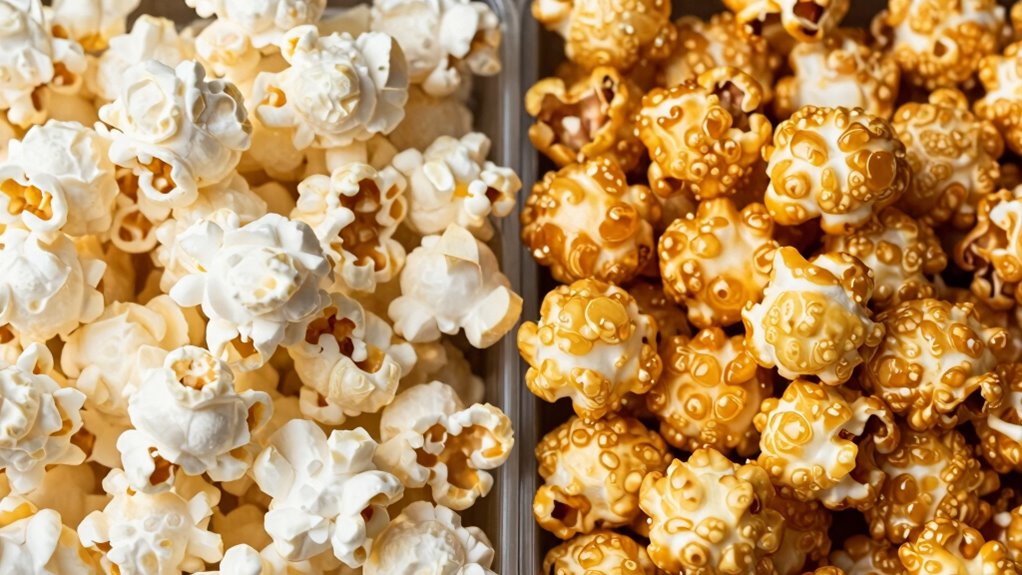
To make low-calorie popcorn snacks, focus on preparing your popcorn without using excessive oil or butter. Air-popping is your best option, as it keeps calorie counts low while maintaining flavor. When adding popcorn flavorings, choose light options like herbs, spices, or a sprinkle of nutritional yeast instead of high-calorie butter or cheese powders. You can also experiment with flavored extracts or vinegar for taste without adding calories. Proper popcorn storage is essential to keep your snacks fresh and prevent them from becoming stale, especially if you prepare larger batches. Store popcorn in airtight containers away from moisture and heat. This way, you can enjoy tasty, low-calorie popcorn anytime without sacrificing flavor or freshness. Additionally, controlling indoor humidity levels can help prevent popcorn from becoming damp or moldy during storage. Maintaining optimal storage conditions can extend shelf life and preserve the popcorn’s crispness and flavor. Incorporating proper storage techniques can further help maintain quality and prevent spoilage over time. Being mindful of moisture control is crucial for keeping popcorn crisp and avoiding spoilage.
What Factors Influence the Calorie Content of Your Popcorn?
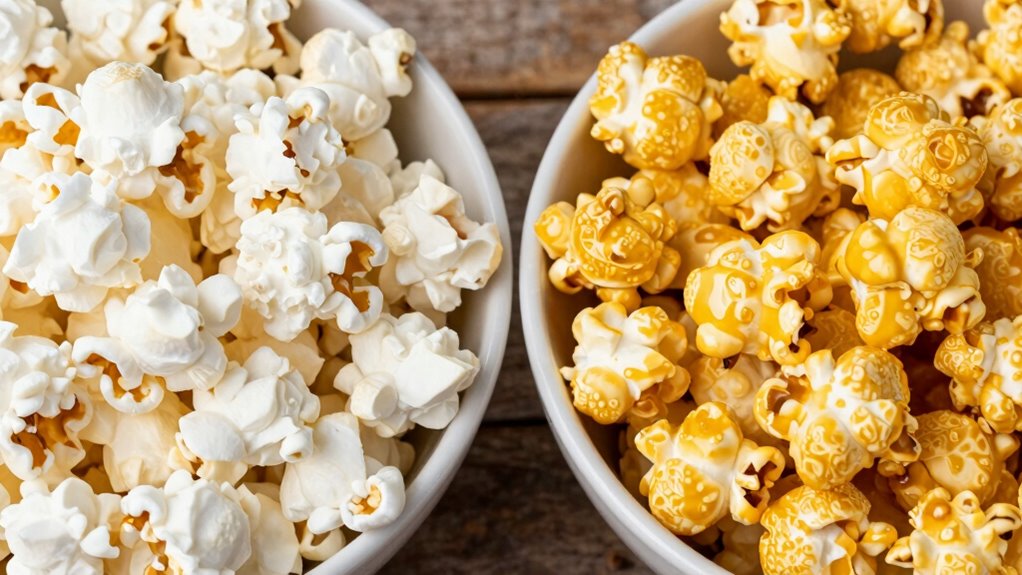
The way you pop your popcorn considerably affects its calorie content, whether you use an air popper or oil. Adding ingredients like butter or sugar also boosts calories quickly, even in small amounts. Plus, your serving size plays a big role in how many calories you’re actually consuming.
Type of Popping Method
The method you choose to pop your popcorn directly affects its calorie content. Different popping techniques can change the amount of added fats and oils, impacting overall calories. For example:
- Air-popping uses no oil, making it the lowest-calorie option.
- Oil-popping adds calories depending on the type and amount of oil used.
- Microwave popping often involves pre-packaged bags with added flavoring, which can increase calorie count.
- Proper popcorn storage helps maintain freshness and prevents flavoring from becoming stale or overly salty, which might lead you to add more flavoring or butter.
Choosing your popping method carefully allows you to control calorie intake while maintaining your favorite popcorn flavoring. This way, you enjoy a healthier snack without sacrificing taste.
Added Ingredients Impact
Adding ingredients like butter, oil, sugar, or flavorings can substantially increase your popcorn’s calorie content. Popcorn flavorings, such as caramel or cheese powders, often pack in extra calories and sugar, boosting the overall energy. When you add these, it’s important to take into account how you store your popcorn; improper popcorn storage can lead to moisture absorption, affecting texture and flavor, especially if you’ve added high-calorie toppings. Be mindful that even small amounts of flavorings and toppings can greatly change the calorie count. If you’re watching your intake, opt for lighter flavorings or use minimal amounts. Proper popcorn storage ensures your popcorn stays fresh and crispy, maintaining the intended calorie profile and taste.
Serving Size Variations
Variations in serving size can substantially influence the calorie content of your popcorn, especially when toppings and flavorings are involved. Larger portions naturally increase calorie intake, but the popcorn’s texture also plays a role in how much you eat. Crunchy, airy popcorn may feel more satisfying at smaller sizes, while denser textures can lead to larger servings. Additionally, portion size determines how much flavor enhancement you add, which can considerably raise calories. To manage your intake:
- Measure your servings to control calories.
- Be mindful of toppings—more toppings mean more calories.
- Choose popcorn textures that satisfy without excessive servings.
- Adjust flavorings carefully to avoid hidden calories.
Understanding these factors helps you enjoy popcorn without unintended calorie overload.
Which Popping Method Helps You Control Calories Best?
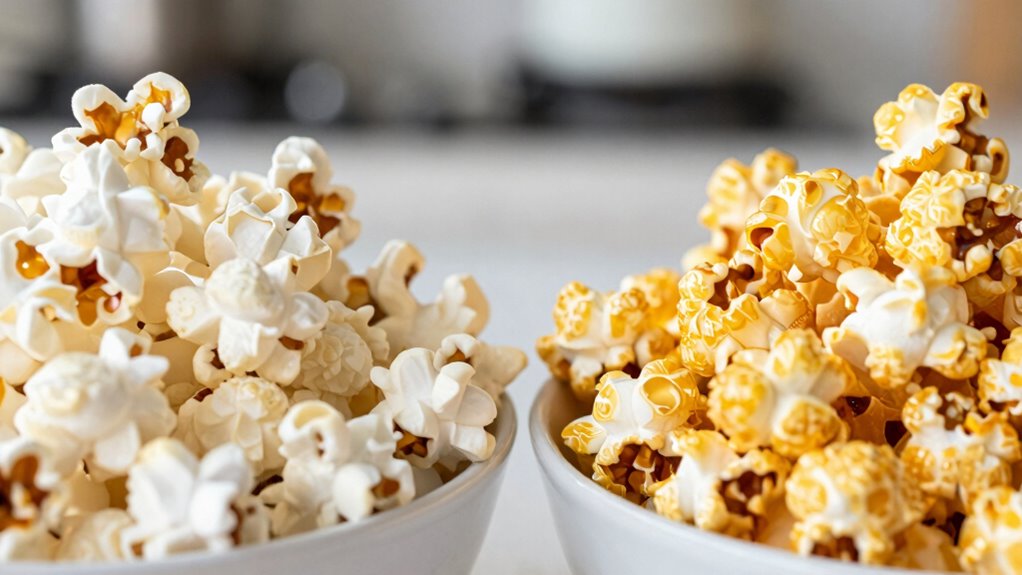
When it comes to controlling calorie intake, choosing the right popcorn popping method makes a significant difference. Air-popped popcorn is your best option because it requires no oil, keeping calories low. Plus, you can enjoy popcorn flavorings without adding extra fat or calories. Oil-popped popcorn, on the other hand, tends to absorb more oil, increasing its calorie content. To maintain freshness and prevent flavor loss, proper popcorn storage is essential, especially if you add flavorings later. By sticking to air-popping and mindful flavoring choices, you control calories more effectively. This method allows you to enjoy a satisfying snack without overdoing it on calories, making it easier to stick to your health goals.
Frequently Asked Questions
Can You Customize Popcorn Toppings to Reduce Overall Calories?
Yes, you can customize popcorn toppings to reduce overall calories by choosing healthy snack options. Opt for lighter options like a sprinkle of nutritional yeast, cinnamon, or a dash of herbs instead of butter or sugary coatings. Get creative with topping ideas that add flavor without extra calories, making your snack both tasty and nutritious. This way, you enjoy delicious popcorn while keeping it healthy and satisfying.
Does Microwave Popcorn Differ in Calorie Content From Stovetop Options?
You might think microwave popcorn differs much in calorie content from stovetop, but it often depends on flavoring and storage. Microwave popcorn typically has added fats or flavorings that increase calories, while stovetop options allow you to control ingredients. If you store popcorn properly and choose healthier flavorings, both can be comparable. Always check labels and consider how you add toppings to keep calories in check, whether microwave or stovetop.
How Does Serving Size Impact Total Calorie Intake?
Serving size plays a vital role in your total calorie intake. By practicing portion control, you guarantee you’re not overeating, even if the snack itself is low in calories. When you accurately count calories, larger portions can quickly add up, leading to excess consumption. To stay on track, measure your servings and be mindful of how much you’re eating, helping you manage your calorie intake effectively.
Are There Health Benefits to Choosing Air-Popped Over Oil-Popped Popcorn?
Choosing air-popped popcorn offers health benefits like more popcorn antioxidants and fiber benefits, which can support your overall well-being. Since air-popped popcorn contains little to no added fats or oils, you reduce your intake of unhealthy fats and calories. This snack is lighter and better for digestion, helping you maintain a healthier diet. So, if you want a nutritious snack, opt for air-popped popcorn to maximize these health advantages.
What Are the Calorie Differences in Flavored Versus Plain Popcorn?
Your popcorn experience can feel like a flavor explosion, but beware—flavored popcorn can pack a calorie punch! The calorie variations depend heavily on the type of popcorn flavoring you choose. While plain popcorn is low in calories, flavored options—like caramel or cheese—add extra fats and sugars, skyrocketing the calorie count. So, if you’re watching your intake, opt for plain or light-seasoned popcorn to keep it guilt-free and delicious!
Conclusion
So, which popping method truly keeps your calories in check? The choice isn’t just about the popcorn itself—it’s about what you add and how you prepare it. But there’s one secret topping that might surprise you, potentially changing everything. Ready to discover the ultimate low-calorie popcorn hack? Stay tuned—you might just find your perfect snack solution, and it’s closer than you think. The best part? It’s easier than you’ve imagined.