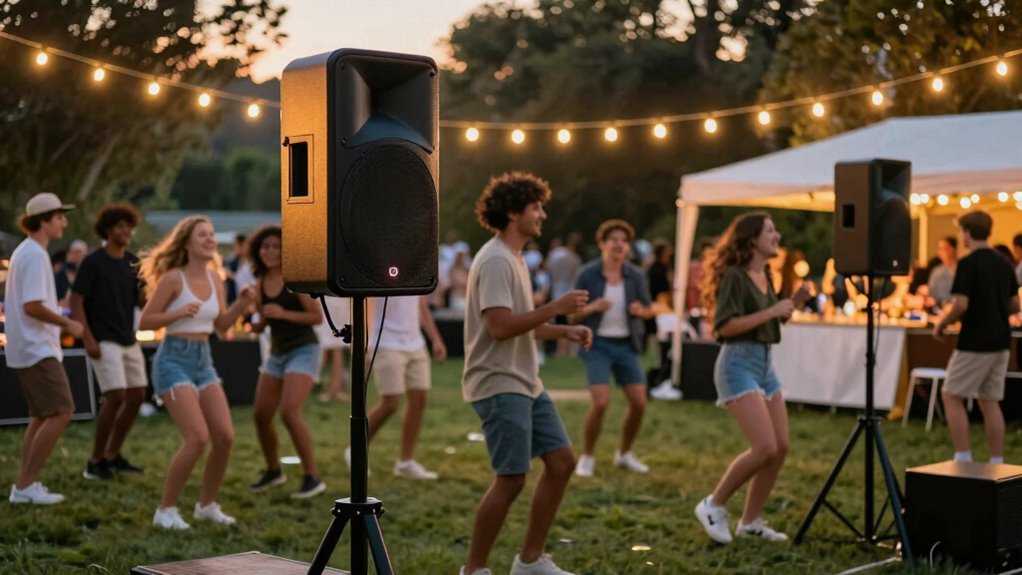

To avoid boomy bass outdoors, position your speakers at ear level and angle them toward the audience. Stay away from walls and corners to reduce reflections that can muddy the sound. Adjust your equalization settings to enhance mids and highs while rolling off some bass. Choose weather-resistant speakers for better sound clarity and consider smart subwoofers for adaptive bass control. Interested in more tips to perfect your outdoor sound experience? There’s plenty more to explore!

Get movie nights delivered free — and shop member deals
- Fast, free delivery on millions of items
- Access to Prime Big Deal Days deals on October 6–7
- Prime Video, Amazon Music and more included
Key Takeaways
- Position speakers away from walls and corners to minimize bass reflection and prevent boomy sound.
- Use equalizer settings to enhance mids and highs, reducing the impact of low frequencies.
- Experiment with speaker placement and angle them towards the audience for optimal sound distribution.
- Incorporate acoustic materials like foam panels or natural barriers to absorb unwanted echoes and improve clarity.
- Test your setup with various music genres to balance bass and treble for a clearer audio experience.
How to Identify and Fix Boomy Bass Outdoors?
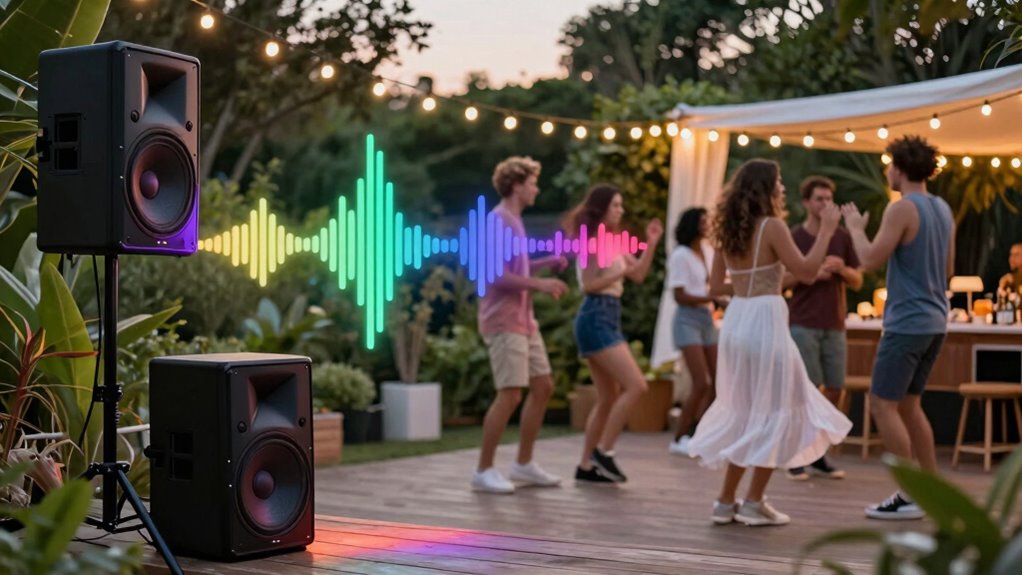
How can you tell if your outdoor sound setup is causing boomy bass? First, pay attention to the clarity of the sound. If the bass overwhelms the mids and highs, you might be experiencing bass overcompensation. You’ll notice this effect especially when playing bass-heavy tracks. Check for outdoor sound reflection, as surrounding surfaces can amplify certain frequencies. Position your speakers away from walls or hard surfaces to minimize this issue. If you hear an echo or muddy sound, that’s a sign of reflection causing problems. To fix this, consider implementing bass overcompensation solutions like adjusting the equalizer settings or introducing bass traps in your setup. Additionally, understanding how sound reflection affects audio quality can help you make more informed adjustments. Proper speaker placement is crucial in achieving a balanced sound, as it can significantly reduce unwanted resonance and enhance overall audio clarity. Addressing these factors will help you achieve a more balanced outdoor sound experience.
Best Outdoor Speaker Placement for Balanced Sound
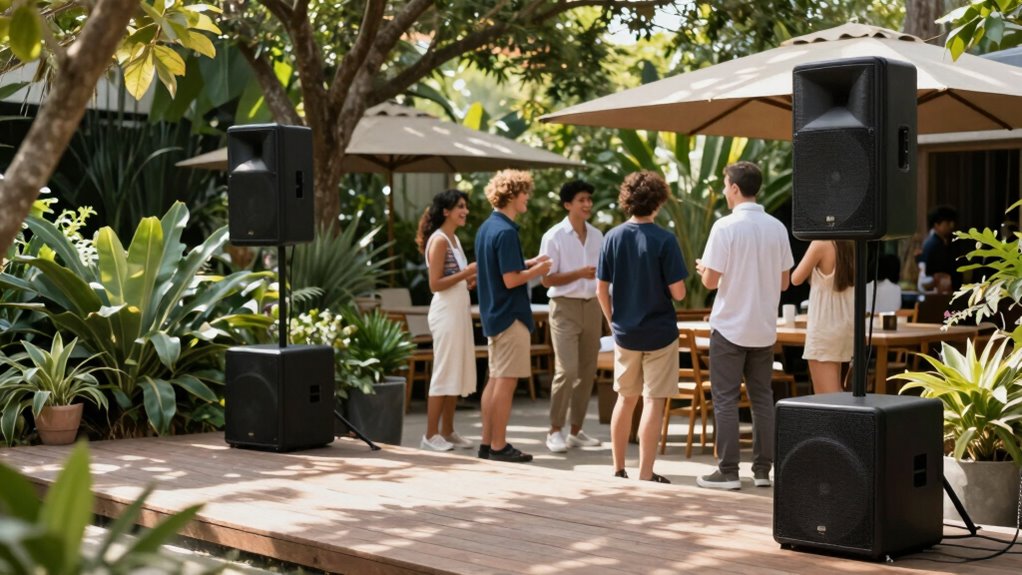
To achieve balanced sound outdoors, it’s vital to carefully consider your speaker placement. Start by determining the ideal speaker arrangement, positioning them at ear level and facing your audience. Place speakers away from walls and corners to minimize reflections that can cause boomy bass. Outdoor acoustics considerations are important; trees, furniture, and other obstacles can affect sound distribution. Aim for a triangular setup, with speakers spaced evenly and angled towards the listening area. If you’re using multiple speakers, make sure they’re evenly distributed to create a cohesive sound experience. Experiment with different placements, as even slight adjustments can greatly enhance audio clarity and balance, making certain everyone enjoys the music without overwhelming bass.
Adjusting Equalization Settings for Optimal Sound
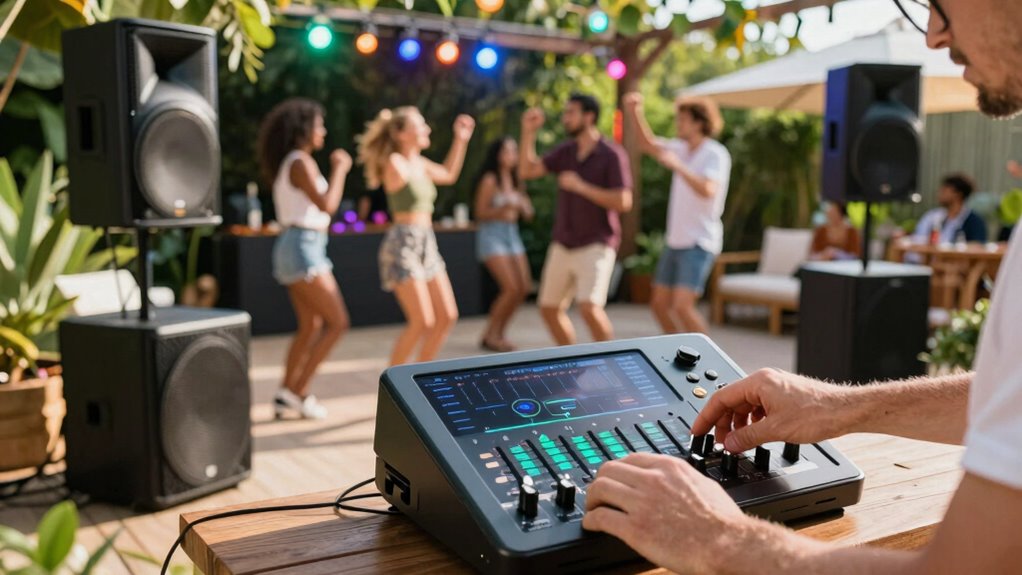
To achieve ideal sound outdoors, you need to understand the frequency ranges of your speakers. By adjusting the equalization settings and utilizing DSP features, you can tailor the sound to fit your environment. Let’s explore how these adjustments can eliminate that unwanted “boomy” bass and enhance the overall audio experience.
Understand Frequency Ranges
When you’re setting up speakers for an outdoor party, understanding frequency ranges is crucial for achieving balanced sound. Different speakers have varying frequency responses, which affect how sound waves are produced. Low frequencies create that “boomy” bass, while mid and high frequencies deliver clarity and detail. To avoid overwhelming bass, adjust your equalization settings by cutting down on the low-end frequencies. This helps balance the sound and makes it more enjoyable for everyone. Pay attention to how your speakers interact with the environment; outdoor spaces can amplify bass, leading to muddiness. By fine-tuning your equalization based on frequency ranges, you can guarantee a crisp, clear, and engaging audio experience that keeps your guests dancing all night long.
Utilize DSP Features
Fine-tuning your sound system goes beyond just understanding frequency ranges; utilizing DSP (Digital Signal Processing) features can greatly enhance your audio experience outdoors. By adjusting your DSP settings, you can tailor sound calibration to suit your environment. Start with the equalization settings—reduce low frequencies to minimize that boomy bass, and boost mids and highs for clearer vocals and instruments. Additionally, understanding how AI technology can impact sound processing can provide insights into optimizing your setup. Experiment with presets designed for outdoor use, as they often account for ambient noise and distance. Take advantage of features like compression and limiting to guarantee balanced sound levels, preventing peaks that can distort your audio. Additionally, using anti-fatigue mats can help create a more comfortable standing position while you manage your sound system, allowing you to focus on achieving the best audio quality. Regularly revisit your DSP settings as conditions change, making sure you maintain peak sound quality for every outdoor gathering. Additionally, understanding color accuracy can help in selecting the right speakers that complement your audio setup, ensuring a well-rounded sound experience. Moreover, consider integrating smart home technology to automate sound adjustments based on your outdoor environment and preferences. For instance, cleaning and organization of your outdoor space can improve sound reflection and absorption, further enhancing your listening experience.
Choosing Speakers Designed for Outdoor Use
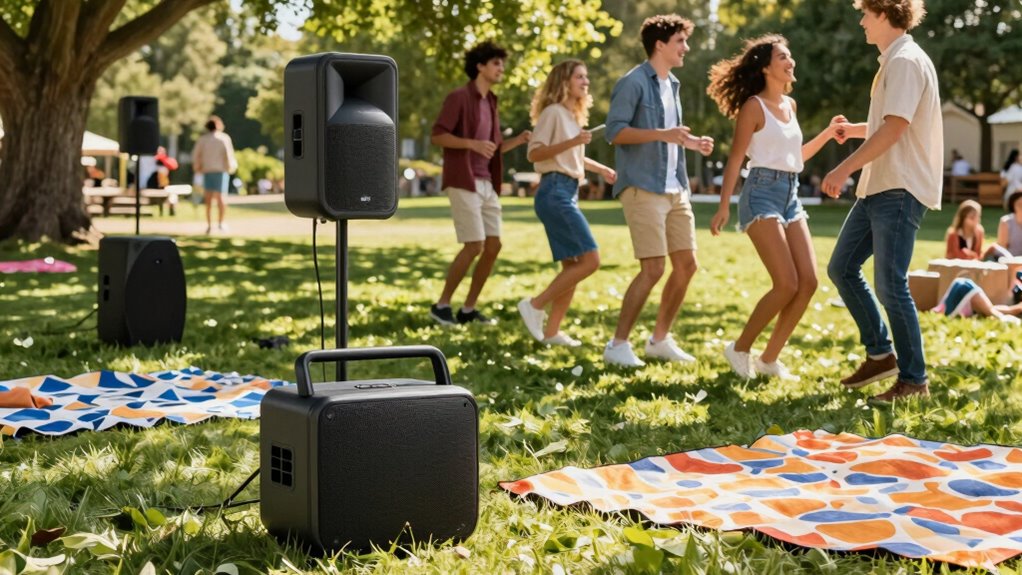
Choosing the right speakers for outdoor use can make a significant difference in your sound experience. Look for speakers engineered with outdoor durability in mind. These speakers often feature weather-resistant materials that can withstand rain, sunlight, and temperature fluctuations, ensuring they last longer in outdoor settings. High-quality speaker materials, like polycarbonate and treated fabrics, enhance sound clarity and prevent distortion, even in open spaces. Also, consider the design—horn-loaded models can project sound further without losing quality. By investing in outdoor-specific speakers, you’ll create a more enjoyable atmosphere without the unwanted “boomy” bass that typically plagues outdoor events. Make your choice wisely, and you’ll keep the party going all night long!
Smart Subwoofer Use: Pros & Cons
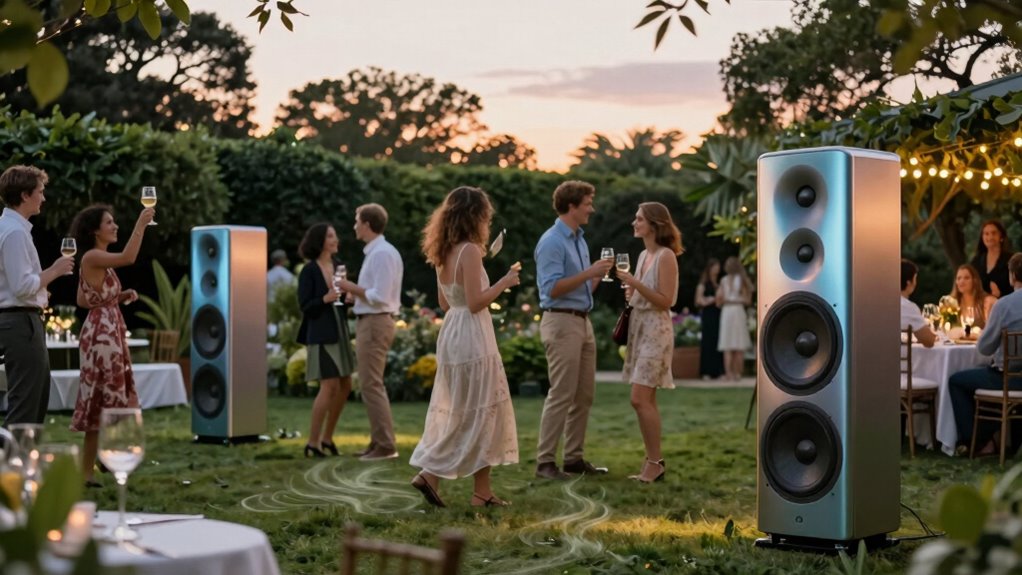
How can you enhance your outdoor sound experience without overwhelming your guests with excessive bass? Smart subwoofer design can be a game-changer. These subwoofers often feature adaptive technologies that adjust bass levels based on the environment, helping you maintain a balanced sound. Proper subwoofer placement is vital, too; positioning it away from walls and corners can mitigate boominess and create a more pleasant audio experience. Additionally, ensuring your off-road gear is comfortable can help you enjoy your outdoor setup for longer periods. Incorporating scent balance techniques, like utilizing aroma diffusers, can also enhance the overall atmosphere of your gathering. However, relying solely on smart features can sometimes lead to unwanted surprises, especially in unpredictable outdoor settings. You’ll want to combine smart design with thoughtful placement for the best results. Connected equipment can also play a role in optimizing your sound setup. Interestingly, utilizing multi-mower setups in your yard can help reduce noise distractions, allowing for a more immersive listening experience. Weigh the pros and cons carefully, and you can achieve a rich, enjoyable sound that everyone will appreciate.
Acoustic Tips for Outdoor Sound Quality
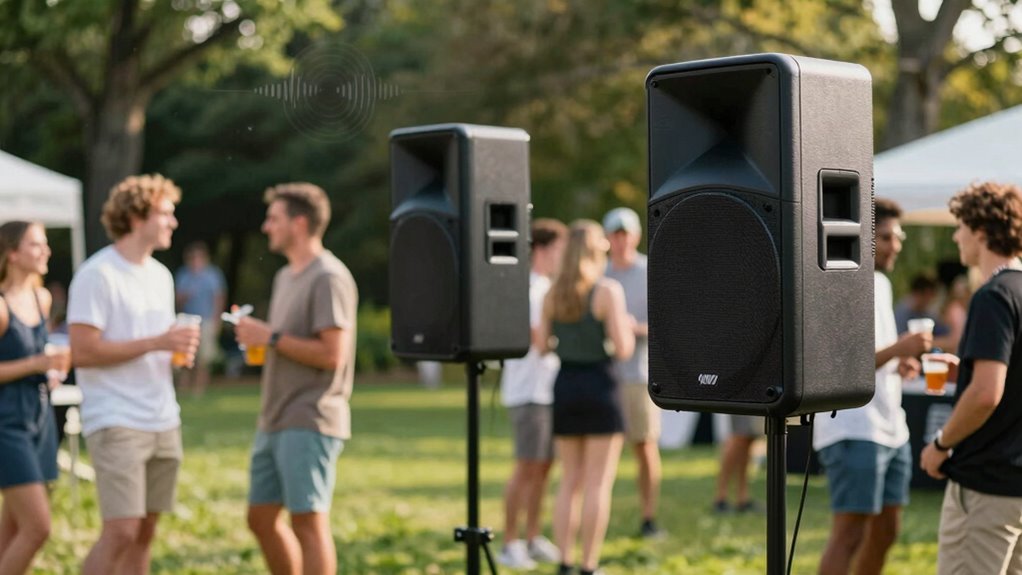
To enhance outdoor sound quality, you’ll want to contemplate your speaker placement carefully. Adjusting your equalizer settings can also make a significant difference in clarity and balance. Additionally, utilizing acoustic barriers can help minimize unwanted echoes and boost your overall sound experience. Consider incorporating strategic layout planning to optimize your outdoor sound setup. Furthermore, ergonomic sound design can improve listener comfort, allowing for a more enjoyable experience during your outdoor gatherings.
Speaker Placement Strategies
When setting up speakers for outdoor events, placing them strategically can make all the difference in sound quality. Start by adjusting the speaker height; aim to position them at ear level for ideal listening. This helps improve sound dispersion, ensuring that everyone in attendance hears the music clearly. Avoid placing the speakers too close to walls or large objects, as this can cause sound to bounce and create unwanted echoes. Instead, angle the speakers slightly towards the audience to maximize coverage. Don’t forget about the space between the speakers; a wider placement often enhances stereo effect and balance. Additionally, consider using charging setups to power your equipment efficiently outdoors. Incorporating smart furniture solutions can also provide flexible storage for your audio gear, keeping everything organized and accessible. Moreover, understanding sound wave behavior can help you make informed decisions about speaker placement. For optimal sound quality, it’s beneficial to consider acoustic principles that govern how sound travels in open environments. By following these strategies, you’ll create an enjoyable outdoor sound experience without the “boomy” bass that can ruin the vibe. Additionally, understanding practical lifestyle upgrades can help you choose the right equipment for your needs.
Adjusting Equalizer Settings
After positioning your speakers for ideal sound dispersion, adjusting the equalizer settings is key to achieving balanced audio outdoors. Start by selecting an equalizer preset that suits your music genre; this can be a great foundation. Then, focus on the bass frequencies. To avoid that “boomy” sound, implement a bass roll off to reduce low-end frequencies that can muddy your audio. Typically, a roll-off around 80-100 Hz works well in outdoor settings. Test your adjustments by playing different tracks and fine-tuning as necessary. You might need to tweak the mid and high frequencies too, ensuring clarity and presence. Remember, every environment is unique, so trust your ears and make adjustments until the sound feels just right. Additionally, consider using smart controls for your speakers, as they can help optimize the audio performance based on the surrounding environment.
Utilizing Acoustic Barriers
While adjusting your equalizer settings is essential for outdoor sound quality, utilizing acoustic barriers can make a significant difference in how your music is perceived. By incorporating sound barriers made from acoustic materials, you can effectively reduce unwanted echoes and reflections. Position these barriers strategically around your party area, like using thick curtains, foam panels, or even natural elements like hedges and trees. These materials absorb sound waves, minimizing the “boomy” bass effect and creating a more balanced audio experience. Don’t forget to take into account the layout of your space; placing barriers between your speakers and open areas can help maintain sound clarity. Additionally, ensuring proper sound wave absorption can enhance your party’s atmosphere and make the music more enjoyable for your guests. Implementing effective filtration techniques for sound can also contribute to clearer audio. Ultimately, this simple step can elevate your outdoor gatherings, ensuring everyone enjoys the beats.
Tips for Testing and Tuning Your Setup Before the Party
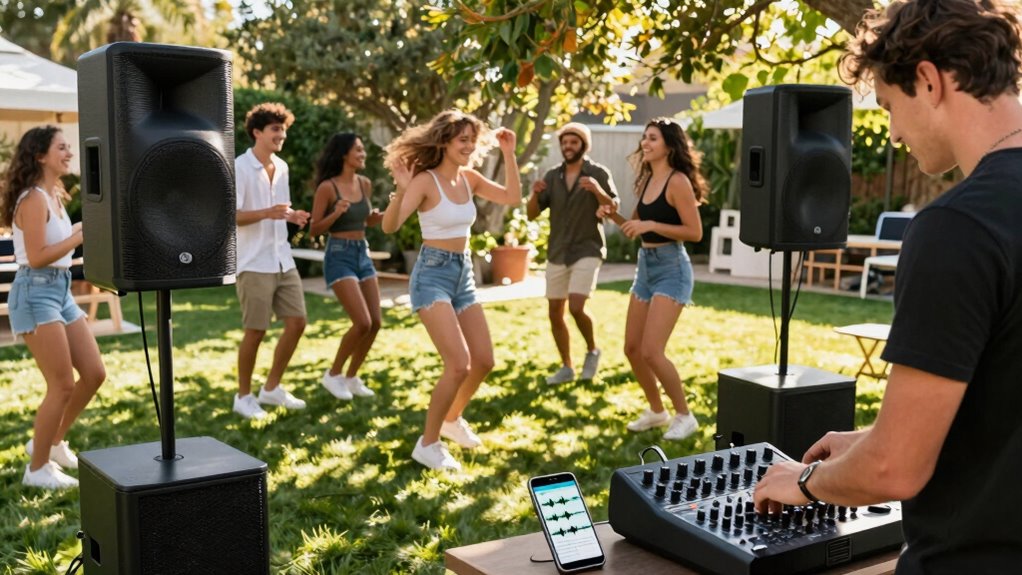
Before your guests arrive, it’s important to test and tune your audio setup to guarantee an enjoyable experience. Start with a sound check by playing a variety of music genres to see how your speakers respond. Walk around the area to identify any spots where the sound feels off. Next, focus on frequency testing to find the sweet spot for bass and treble. Adjust the EQ settings on your mixer or amplifier to eliminate any boomy sounds that might disrupt the atmosphere. Don’t forget to check the volume levels; they should be loud enough to fill the space but not so overwhelming that they drown out conversation. Finally, make any necessary tweaks until you achieve a balanced sound that everyone can enjoy.
Frequently Asked Questions
Can Weather Affect Outdoor Speaker Performance?
Yes, weather can definitely affect outdoor speaker performance. Humidity effects can cause sound to travel differently, often leading to muddiness in audio clarity. Temperature fluctuations can also impact the speaker components, altering how they respond to sound frequencies. When it’s too hot or cold, you might notice distortion or reduced bass quality. To guarantee peak performance, always consider the weather conditions before setting up your speakers for an outdoor event.
What Types of Music Are Best for Outdoor Parties?
For outdoor parties, you’ll want to choose music that fits upbeat outdoor genres like reggae, pop, and dance. These styles keep the energy high and get everyone moving. Pay attention to the music tempo too; faster beats encourage dancing and create a lively atmosphere. Mixing in some chill acoustic tracks can balance the vibe during breaks. Keep your playlist diverse, and your guests will stay entertained and engaged throughout the event!
How Do I Protect My Speakers From Outdoor Elements?
To protect your speakers from outdoor elements, invest in high-quality speaker enclosures that shield them from moisture and dust. You should also use protective covers when your speakers aren’t in use; these can prevent UV damage and keep them safe from rain. Make sure to set up your speakers in a sheltered area if possible. By taking these steps, you’ll extend their lifespan and maintain great sound quality for your outdoor gatherings.
Is Wireless Connectivity Reliable for Outdoor Speakers?
Imagine you’re at a party, the sun setting, and your favorite song starts playing. Wireless connectivity for outdoor speakers can be reliable, but it depends on a few factors. If you’re too far from the source, the Bluetooth range can drop, leaving you with silence. Plus, signal interference from trees or walls can disrupt the music. So, keep your speaker close to the source, and enjoy the beats without interruption!
How Far Can I Place Speakers From the Party Area?
You should place your speakers within 15 to 30 feet of the party area for ideal sound. This distance helps achieve balanced outdoor acoustics, ensuring everyone enjoys the music without it becoming overwhelming. Keep in mind that speaker placement can affect how the sound travels, so avoid corners or enclosed spaces that might amplify bass too much. Experiment with different positions to find what works best for your gathering.
Conclusion
By following these tips, you can transform your outdoor party experience and avoid that annoying boomy bass. Remember, placing your speakers at the right angles and adjusting the EQ settings can make a world of difference. Picture your guests enjoying clear, balanced sound while dancing under the stars, rather than straining to hear over muddled bass. With the right approach, you’ll create an inviting atmosphere that keeps everyone engaged and entertained throughout the night!
Fall Picks
fall essentials
As an affiliate, we earn on qualifying purchases.