
You might remember a quiet afternoon that felt larger than it was — this movie reaches that exact hush. It is a 2007 American coming-of-age psychological drama set in Portland, Oregon, written, directed, and edited by gus van sant.
The title and description promise a slow-burn story, and the runtime is short: about 84 minutes. Cinematography from Christopher Doyle and Rain Kathy Li gives each frame a lived-in mood.
You’ll get a clear, spoiler-aware overview so you can decide if this art-house style suits your taste. Expect a nonlinear structure, an R rating, and a tone that many reviewers placed high among 2000s indie films.
It premiered at Cannes on May 21, 2007, then arrived in the U.S. on March 7, 2008, with limited release in New York and other markets. If you want a compact, thoughtful watch, this title might be the one you keep thinking about.
Key Takeaways
- Short, 84-minute runtime makes it easy to sample the movie.
- Gus Van Sant’s direction leans toward experimental teen storytelling.
- Nonlinear pacing and mood-heavy visuals shape the viewing experience.
- Cannes premiere gave the title festival prestige before its U.S. release.
- Expect thoughtful, divisive reviews rather than crowd-pleasing thrills.
Storyline and themes in Paranoid Park (film)
A clandestine freight-train ride becomes the hinge on which the story turns. You watch a small choice expand into something larger and quieter, and that growing tension is the film’s heart.
A teen skater, a freight train, and a security guard’s brutal death
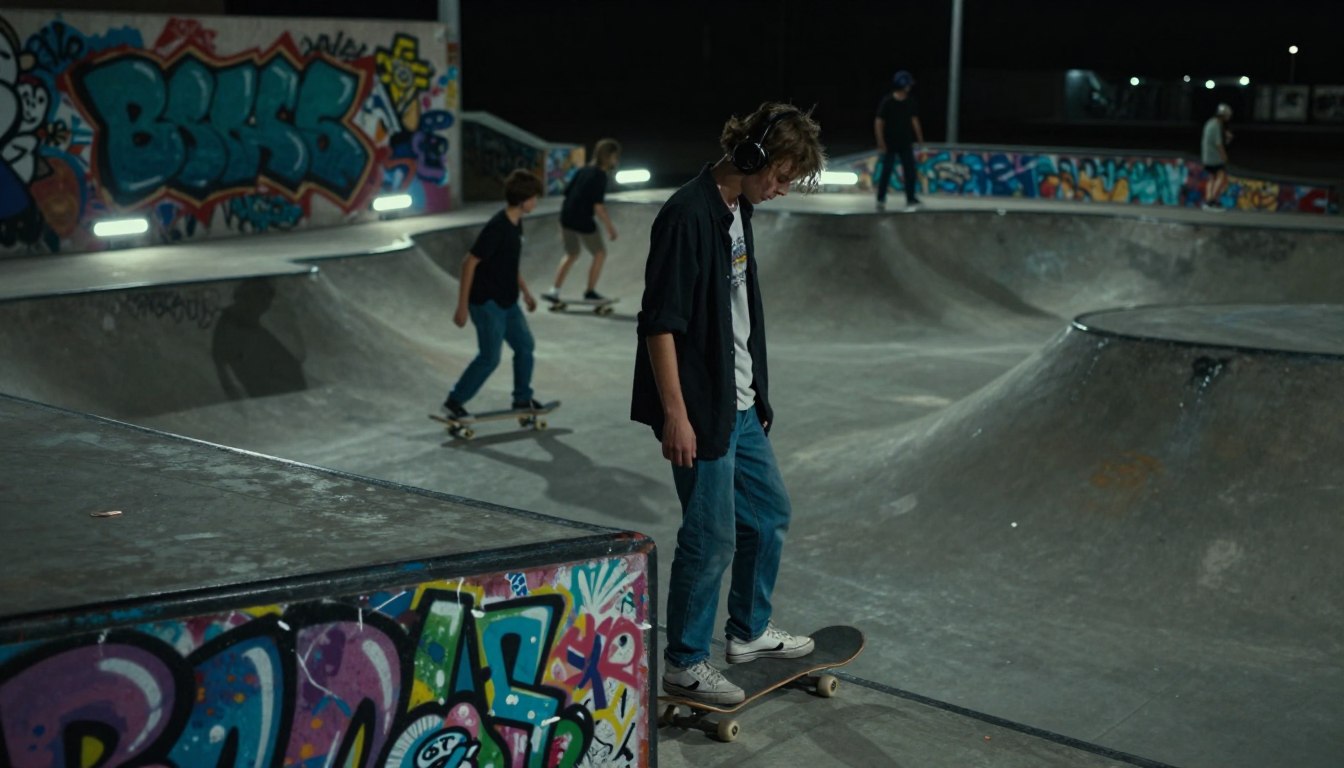
Late at night, a teenager and a friend hop a freight train after leaving the Eastside skate spot. A confrontation with a security guard spirals out of control.
In one moment the guard falls onto a second track and is struck by an oncoming train. That death becomes the central shock that every scene returns to.
How the nonlinear narrative shapes what you know—and when you know it
Van Sant breaks scenes apart so you rarely get full answers at once. You feel the boy’s panic before you see how events unfolded.
Repeated scenes give details slowly. The investigation thread with Detective Richard Lu raises the stakes without turning the story into a procedural.
Guilt, anxiety, and coming-of-age pressure in Portland’s skate scene
Alex’s attempts to erase evidence—dumping a skateboard, changing clothes, burning notes—feed his conscience more than they solve anything.
The setting—the industrial edges of the park, the lonely tracks—frames adolescent isolation. The movie treats teen life as texture: friends, school, and silent codes among kids.
| Element | What to notice | Why it matters |
|---|---|---|
| Central incident | Skater confrontation on tracks | Drives guilt and the plot’s emotional weight |
| Narrative style | Nonlinear repeats and gaps | Controls when you understand facts |
| Investigation | Detective questioning, recovered skateboard | Heightens pressure without overt thriller beats |
| Themes | Guilt, dissociation, adolescent silence | Turns a violent event into ongoing psychological tension |
Alkkign Cinema Neon Sign Arrow Neon Light for Wall Decor Movie Theater Led Neon Signs Movie Led Neon Lights for Home Theater Film Room Commercial Theater Store Decoration
Safe&Durable: Cinema arrow neon sign is made of high-quality acrylic and LED light strips. The cinema neon light...
As an affiliate, we earn on qualifying purchases.
Characters and performances you’ll remember
Small gestures do the heavy lifting in the cast’s approach to this quiet coming-of-age story.
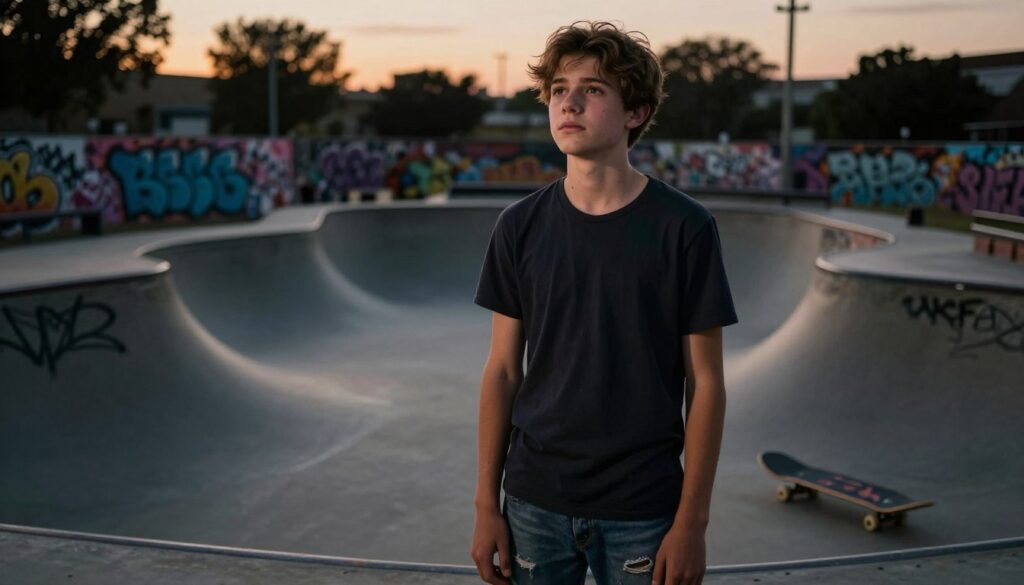
Alex (Gabe Nevins) is the story’s still center. Gabe Nevins gives a first-time performance built on restraint. His flat affect and tiny reactions ask you to fill in the gaps.
You’ll see why some reviews call the work wooden while others call it brutally honest. The portrayal reads like a frightened teenager shutting down rather than acting a part.
How Macy and Jennifer shape Alex
Macy (Lauren McKinney) functions as moral pressure. Lauren McKinney notices what Alex won’t say and nudges him toward confession through small acts.
Jennifer (Taylor Momsen) reveals how guilt interrupts everyday intimacy. Their dating scenes make Alex’s detachment feel concrete.
- Scratch and the guard appear briefly but change Alex’s self-image.
- Friendship scenes with skate kids show a boy who feels unreachable.
- Open MySpace casting and non-professional actors give the title a lived-in texture.
The upshot: you remember small moments. The film’s tight description of relationships forces Alex to face his own conscience, even when he resists.

Movie Vintage Inspired Double-Sided Marquee LED Sign Retro Wall Decor for the Home, Game Room, Bar, Man Cave, Garage, or Bedroom (25" x 8" x 3")
DOUBLE-SIDED SIGN – Double-Sided Off The Wall Sign With A Marquee Design. Both Sides Are A Mirror Image...
As an affiliate, we earn on qualifying purchases.
Gus Van Sant’s direction, cinematography, and critical response
Van Sant’s control over writing, directing, and editing gives the movie a focused, inward pulse. You notice the single mind at work in the pacing, the ellipses, and the way memory repeats itself.
Gus van’s triple role: intimate and subjective
Gus van sant wrote, directed, and edited the piece, which tightens perspective. You spend most of the runtime inside one boy’s head, so choices feel personal and sometimes disorienting.
Van Sant uses repetition and withheld details to mimic anxious recall. That method creates intimacy, but it also asks patience from you.
Christopher Doyle and Rain Kathy Li: wide-angle energy meets art-house mood
Christopher Doyle and Rain Kathy Li mixed wide-angle skating shots with quiet, static frames. The result reads like a skate tape blended with an art movie.
The camera often turns ordinary rooms and bridges into tense spaces, so setting becomes emotional pressure.
Formats, locations, soundtrack, and reception in brief
Skate sequences use Super 8 while dialogue scenes run on 35mm, and that texture fuels the dreamlike tone. Locations include Burnside Skatepark and Portland bridges, grounding the title in a real city geography.
- Soundtrack: Elliott Smith, Nino Rota, Beethoven; soundscapes by Ethan Rose.
- Release: Cannes May 21, 2007; US limited March 7, 2008; 84 minutes; R rating.
- Reception: Rotten Tomatoes ~76%, Metacritic ~84; Cannes special prize and several critics’ awards.
What critics said: many praised the visual craft and mood. Some viewers found the pacing slow or overly stylized. That split explains why the title continues to spark debate, especially in New York critic circles.
Custom Movie Theater LED Marquee Sign, Personalized Name Bottle Service Sign for Home Theater, Customized Family Name Light Up Marquee for Cinema, Movie Night, Entrance Decor (Home Theater #2)
Personalized Home Theater Marquee Sign: Design a distinctive focal point for your home theater using your family name...
As an affiliate, we earn on qualifying purchases.
Conclusion
What lingers here is mood and moral weight, not a conventional mystery. The description and title promise a quiet, compressed runtime, and the film delivers a mood-forward portrait of teen guilt after a sudden death, not a plot-heavy chase.
The central security guard incident becomes an unbearable secret that warps everyday life. You’ll feel that tension in small gestures and in the edits that fold memory into present moments.
Gabe Nevins’ quiet work is the point; relationships press on his conscience. The director’s use of Super 8 and 35mm textures and skating imagery makes scenes feel like memory rather than spectacle.
Quick facts: 84 minutes, R rating, Portland setting, Cannes-to-limited release. If you like art-house pacing and ambiguity, watch it; if you want tidy answers, skip it. This review note: strong aggregator scores and awards make the title worth sampling.

Rebran Custom Movie Theater LED Marquee Sign, Personalized Name Bottle Service Sign for Home Theater, Customized Family Name Light Up Marquee for Cinema, Movie Night, Entrance Decor
Personalized Home Theater Marquee Sign: Design a distinctive focal point for your home theater using your family name...
As an affiliate, we earn on qualifying purchases.
FAQ
What is Paranoid Park (film) about?
You follow a teenage skater in Portland who becomes entangled in a fatal incident with a freight train and a security guard. The story focuses on his internal conflict, guilt, and how he navigates friendships and the local skate scene as the consequences unfold.
Who stars in the movie and which performances stand out?
Gabe Nevins plays the lead, Alex, delivering a restrained, haunting turn as a teen hiding a secret. Lauren McKinney and Taylor Momsen appear in supporting roles that highlight Alex’s relationships and the pressure building around him.
How does the film use a nonlinear narrative?
The director cuts between present, past, and memory to reveal events in fragments. This approach makes you piece together what happened while feeling the protagonist’s confusion and guilt, rather than receiving a straightforward timeline.
What themes does the story explore?
The movie examines guilt, anxiety, coming-of-age strains, and the moral ambiguity facing young people in a subculture. It also reflects on how silence and secrecy affect conscience and relationships.
What role does Gus Van Sant play in the production?
Gus Van Sant wrote, directed, and edited the picture, shaping its intimate, subjective tone. His choices in pacing and structure aim to mirror the protagonist’s inner life and the skate community’s rhythm.
How do the cinematography and camera choices contribute to the mood?
Christopher Doyle and Rain Kathy Li combine wide-angle, kinetic skate sequences with quieter 35mm scenes to create a dreamlike contrast. Super 8-style footage adds texture and a raw, youthful immediacy to skating shots.
Where was the movie shot and what real locations influenced it?
Much of the picture was filmed in Portland. Burnside Skatepark and local streets provide an authentic backdrop that grounds the narrative in a real skateboarding culture.
What can you expect from the soundtrack and sound design?
The score and selections, including touches from Elliott Smith and classic composers like Nino Rota, build an uneasy, melancholic atmosphere that complements the visuals and emotional tension.
When did the movie premiere and how was it released?
The movie premiered at major festivals and later had a limited U.S. release. Runtime and rating details varied by territory, but it found early attention on the festival circuit before wider exposure.
How did critics and audiences respond?
Critics praised the film’s mood, visual artistry, and lead performance while some viewers found the pace slow or the style overly stylized. Aggregators showed mixed-to-positive scores, with festival awards underscoring its artistic recognition.
Is the movie suitable if you’re not familiar with skate culture?
Yes. Even if you haven’t been part of the scene, the story centers on universal themes—guilt, adolescence, and moral choice—so you can connect with the protagonist’s emotional journey.
What should you pay attention to on a second viewing?
Look for subtle visual motifs, changes in camera texture between Super 8 and 35mm passages, and how editing reveals or withholds information. These choices deepen the emotional and thematic layers on repeat watches.