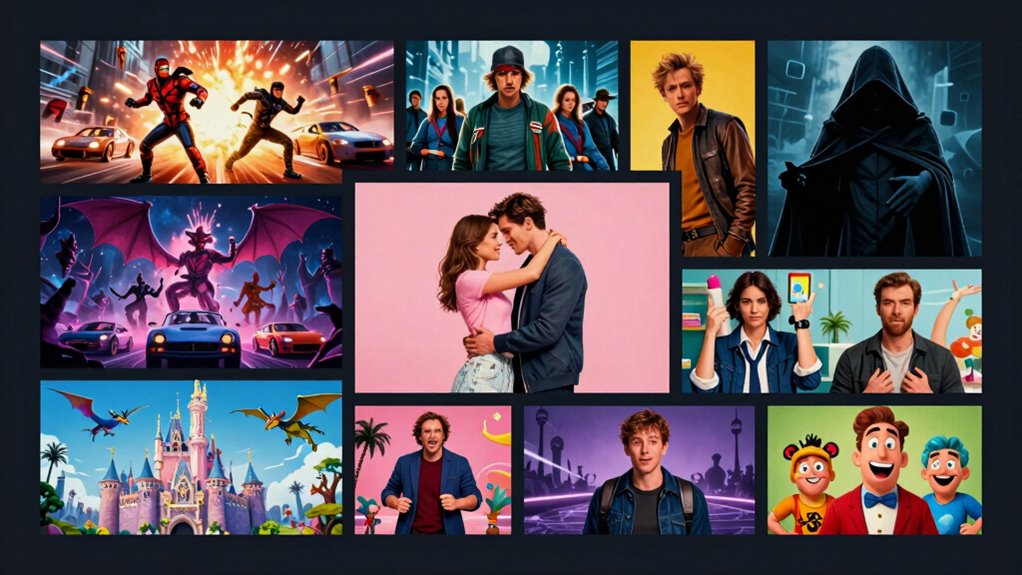

Movie genres guide your viewing choices by highlighting what to expect, from thrilling action scenes to heartfelt romances. Action films deliver high-energy sequences and special effects, while comedies make you laugh with humor and clever timing. Dramas evoke deep emotions through complex characters, and horror movies keep you tense with suspense and scares. Sci-fi and fantasy explore new worlds, while adventure and thrillers build excitement. Explore further to discover how each genre shapes your movie experience.
Key Takeaways
- Action movies feature high-energy sequences, special effects, and choreography to excite audiences.
- Comedy genres utilize humor styles like slapstick and satire to entertain and evoke laughter.
- Dramas and melodramas focus on emotional storytelling, character development, and moral dilemmas.
- Horror films build suspense through sound effects, visual symbolism, and pacing to scare viewers.
- Sci-Fi and fantasy transport audiences to imaginative worlds with futuristic technology and storytelling.
What Are the Main Movie Genres and Why Do They Matter?
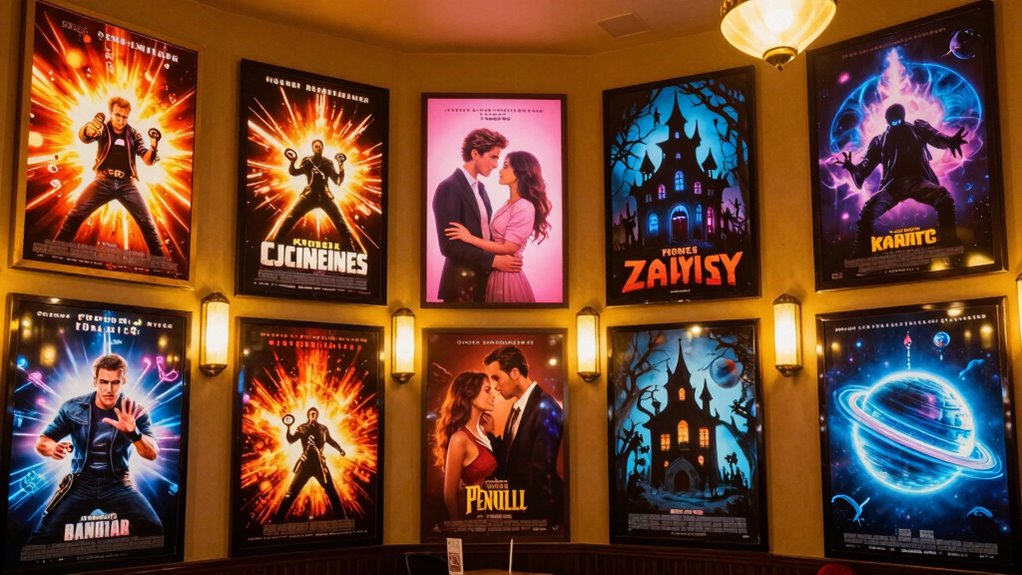
Have you ever wondered why movies are categorized into different genres? It’s because genres help filmmakers target specific audiences and influence a film’s film rating, which can affect its box office success. Knowing the main genres like action, comedy, drama, and horror helps you understand what to expect from a movie and decide whether it fits your preferences. Genres also guide marketing strategies, making it easier for theaters and streaming platforms to promote films effectively. When a movie aligns with its genre, it’s more likely to attract viewers who enjoy that style, boosting its box office earnings. Additionally, understanding film classification genres can help viewers discover new types of movies they might not have considered before. Recognizing how industry standards shape genre definitions allows for a better appreciation of the diversity and evolution of film styles. Fundamentally, understanding genres helps both audiences and industry insiders make smarter choices, ensuring movies reach the right viewers and perform well financially. Furthermore, a solid grasp of genre conventions enables viewers to better appreciate the storytelling techniques used in different film styles.
Moreover, knowledge of audience expectations can enhance the viewing experience by aligning personal preferences with movie selections.
How Genre Knowledge Helps You Pick the Perfect Movie
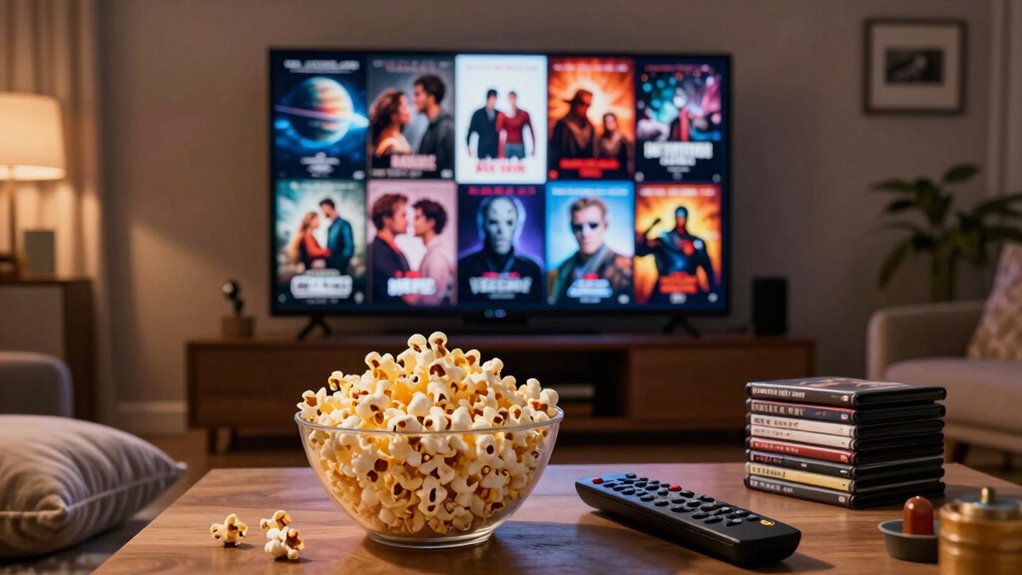
Knowing the different movie genres can make choosing the right film much easier because it helps you quickly narrow down options that match your preferences. When you understand genre blending, you can appreciate how films mix elements, like comedy with horror, expanding your options. Casting diversity also influences your choice, as different genres often feature varied casts that appeal to different tastes. For example:
| Genre | Typical Cast Focus | Mood/Theme |
|---|---|---|
| Action | Heroes and villains | Excitement, adrenaline |
| Romantic Comedy | Couples, quirky characters | Humor, love |
| Sci-Fi | Diverse, futuristic casts | Imagination, innovation |
This awareness guides you to films aligned with your mood and interests, making your movie nights more satisfying. Additionally, understanding auditory processing can help you better recognize sound design and auditory cues that influence genre experiences, enriching your viewing choices. Recognizing how sound design shapes a film’s atmosphere allows viewers to more fully appreciate genre-specific storytelling techniques. Being aware of auditory cues can also help you anticipate plot developments and emotional shifts within a genre. Moreover, awareness of sound cues can enhance your overall engagement with the film, making the experience more immersive.
Action Movies: Features and Exciting Examples

Action movies are designed to keep you on the edge of your seat with high-energy sequences, intense stunts, and adrenaline-pumping scenes. They rely heavily on special effects to create jaw-dropping visuals, from explosive explosions to daring chase sequences. While the focus is on thrilling action, good films also incorporate character development, giving you a reason to root for the heroes and feel invested in their journeys. Think of movies like *Die Hard* or *Mad Max: Fury Road*, which combine spectacular visuals with compelling characters and storylines. These elements work together to create a mesmerizing experience that immerses you in a world of danger, heroism, and excitement. Action movies keep you engaged through adrenaline rushes and a strong emotional connection to the characters. Additionally, incorporating optimized visual effects and flow can enhance the overall impact of action scenes, making them more immersive and believable. Well-crafted choreography and timing further amplify the excitement, ensuring each stunt feels authentic and thrilling. Understanding the importance of special effects technology helps explain how modern action films achieve their breathtaking visuals and seamless action sequences. Incorporating advanced filming techniques can also elevate the intensity and realism of these sequences, drawing viewers even deeper into the story. Moreover, continuous advancements in digital filmmaking enable filmmakers to push the boundaries of what’s possible on screen, creating increasingly spectacular scenes.
Comedy Films: Making You Laugh and Why They Work

Comedy films use various humor styles and techniques to make you laugh, from witty wordplay to slapstick gags. They often reflect cultural relevance, connecting with audiences through shared jokes and societal themes. Additionally, the use of humor styles in comedy films can enhance their appeal and effectiveness. Incorporating timeless humor allows comedy to resonate across different eras and audiences, making it a versatile genre. Understanding audience engagement strategies helps comedians and filmmakers craft content that resonates universally. Employing cultural relevance in comedy films can also deepen audience connection and boost relatability. Ultimately, laughter creates an emotional bond, making comedy a powerful way to entertain and bring people together.
Humor Styles and Techniques
Humor in films relies on a variety of styles and techniques that work together to make you laugh. Slapstick humor uses physical comedy, exaggerated movements, and visual gags to create instant laughs. It’s often silly and over-the-top, catching you off guard with unexpected falls or pratfalls. Satire techniques, on the other hand, use wit and irony to criticize societal flaws or politics, making you think while making you chuckle. These techniques often include parody and clever wordplay, adding layers of humor that appeal to different audiences. Combining slapstick and satire allows filmmakers to craft diverse comedic experiences—some purely physical, others sharp and thought-provoking. Both styles rely on timing and delivery to hit the right comedic notes and keep you entertained. Comedic timing is essential in ensuring that jokes land effectively and maximize the audience’s laughter. Additionally, understanding audience preferences can help filmmakers tailor humor styles to resonate more effectively.
Cultural Relevance in Comedy
When humor reflects the world around us, it becomes more relatable and impactful. Comedy often uses cultural stereotypes and societal commentary to highlight issues and spark conversations. By doing so, it resonates deeply with audiences and stays relevant. Here are three ways comedy achieves this:
- Exposing stereotypes – Comedians and filmmakers use stereotypes to create humor while encouraging viewers to question their assumptions.
- Commenting on society – Comedy films tackle social issues, making serious topics more accessible and prompting reflection.
- Connecting with audiences – When humor mirrors real-world experiences, it fosters a sense of shared understanding and engagement. Additionally, the use of instant torque in electric bikes demonstrates how immediate responses can enhance user experience and performance.
- Furthermore, comedy often incorporates cultural relevance to stay current and meaningful, ensuring it remains a powerful tool for social commentary and entertainment.
This cultural relevance keeps comedy fresh and meaningful, making you laugh while also making you think.
Emotional Connection Through Laughter
Laughter has a powerful ability to create an emotional bond between audiences and characters, making stories more memorable and impactful. Comedic timing is essential here; when a joke lands at just the right moment, it amplifies the humor and deepens your connection to the scene. Punchline delivery is equally important, as it can turn a simple setup into a genuine laugh that resonates emotionally. When you experience this well-executed timing and punchline, you feel closer to the characters, sharing their joy or embarrassment. This shared laughter fosters empathy, making the story stick with you long after the credits roll. Ultimately, comedy’s success hinges on its ability to make you feel something—joy, relief, or even catharsis—through expertly timed humor.
Dramas and Melodramas: Movies That Tug at Your Heart
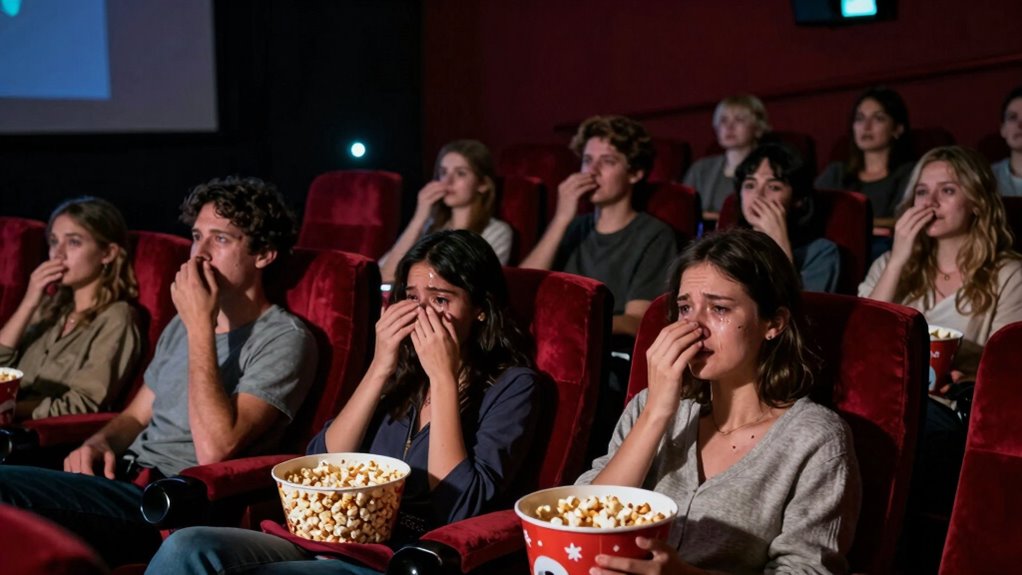
Dramas and melodramas are genres designed to evoke deep emotional responses by exploring intense personal struggles, heartfelt relationships, and human vulnerabilities. When you watch these films, you’ll experience emotional storytelling that can make you laugh, cry, or reflect. The power of heartfelt performances pulls you into the characters’ lives, making their joys and pains feel personal. Here are three key aspects:
- They often feature complex characters facing moral dilemmas or personal loss.
- The stories emphasize emotional growth and resilience.
- They use music, cinematography, and dialogue to heighten feelings and create an immersive experience.
If you love movies that tug at your heartstrings, dramas and melodramas deliver unforgettable moments full of raw emotion and genuine human connection.
Horror Films: Scary Elements That Keep You on Edge
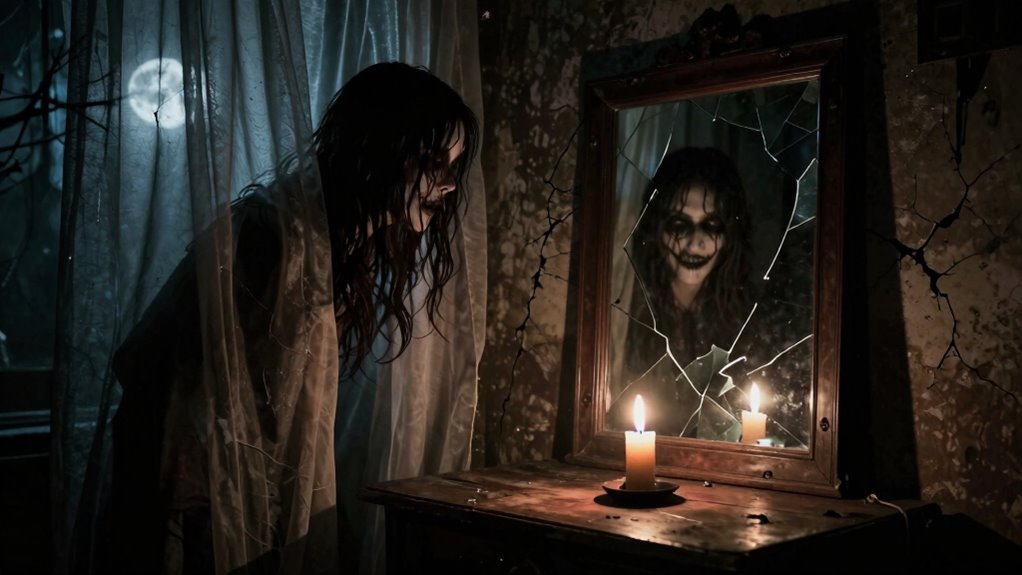
Horror films keep you on edge by using tension-building techniques that make every moment feel intense. You’ll notice frightening sound effects that heighten your fear and make scenes more immersive. Unpredictable plot twists keep you guessing, ensuring you stay engaged and alert from start to finish.
Tension Building Techniques
Ever wondered how horror films keep you on edge long before the jump scares? It’s all about tension building techniques that subtly manipulate your emotions. First, visual symbolism creates unease; shadows, distorted reflections, or isolated settings hint at danger without revealing it outright. Second, pacing techniques control the rhythm—slowing scenes down to heighten anticipation or quickening them unexpectedly to jolt you. Third, strategic editing keeps you guessing, with lingering shots that stretch your discomfort or sudden cuts that surprise. These methods work together to craft an atmosphere of constant suspense, ensuring you’re always on edge, even without loud noises or immediate threats. Mastering visual symbolism and pacing techniques, horror filmmakers keep your nerves fraying long before the scares hit.
Frightening Sound Effects
Frightening sound effects amplify the tension built through visual cues, making horror scenes even more unsettling. Sound design is vital in creating auditory cues that trigger fear and anticipation. These sounds, like creaking floors, distant screams, or eerie whispers, keep you on edge by suggesting unseen threats. Well-crafted sound effects heighten emotional responses and deepen immersion. Here’s how different elements contribute:
| Element | Purpose | Effect |
|---|---|---|
| Sudden loud noises | Startle the audience | Increase shock and fear |
| Dissonant tones | Create unease | Heighten discomfort |
| Whispering voices | Suggest unseen presence | Build suspense |
Unpredictable Plot Twists
Unpredictable plot twists are the backbone of keeping viewers on the edge of their seats in horror films. They use clever plot devices and storytelling techniques to subvert expectations and surprise you. These twists create shock value and deepen the mystery, making the experience more intense. Here are three key elements:
- Reversing character roles – a trusted ally may turn into an enemy, shifting the story’s direction unexpectedly.
- Revealing hidden motives – uncovering secrets about characters or the antagonist alters your understanding of the plot.
- Concealing essential information – withholding critical details until the last moment keeps you guessing.
Using these techniques, horror movies stay unpredictable, ensuring you remain on edge and emotionally invested until the very end.
Sci-Fi and Fantasy: Imagining Future Worlds and New Realms
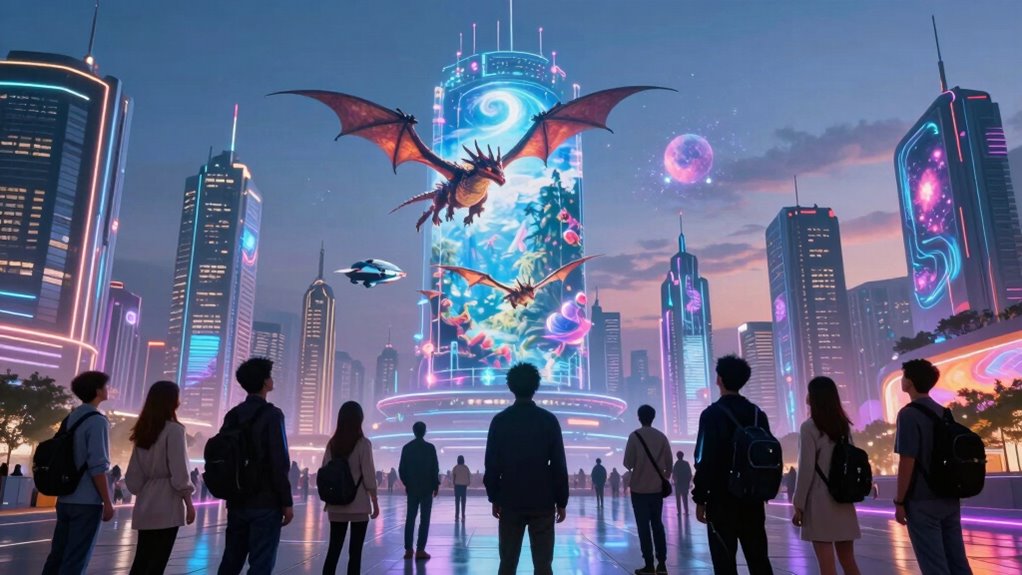
Science fiction and fantasy transport you to worlds beyond the ordinary, fueling imagination with visions of the future and domains that defy reality. You might explore alien worlds, where unfamiliar landscapes and creatures challenge your perception of life. These genres often showcase futuristic technology, like advanced AI or space travel, that pushes the boundaries of what’s possible today. By imagining these new realms, you escape mundane routines and plunge into adventures that expand your understanding of what’s conceivable. Whether battling interstellar threats or discovering magical realms, sci-fi and fantasy inspire curiosity and wonder. They invite you to think about not just what the future holds, but also how human ingenuity can shape extraordinary worlds beyond your wildest dreams.
Romantic Movies: Love Stories That Captivate Audiences

Just as sci-fi and fantasy open doors to extraordinary worlds, romantic movies explore the depths of human connection and emotion. You’ll find familiar romantic movie tropes and love story archetypes that resonate deeply. These films often follow classic patterns, such as:
- The “star-crossed lovers” who face obstacles but find each other
- The “meet-cute” that sparks a heartfelt connection
- The “second chance” story where love is rekindled
Adventure and Thriller Films: Building Suspense and Excitement
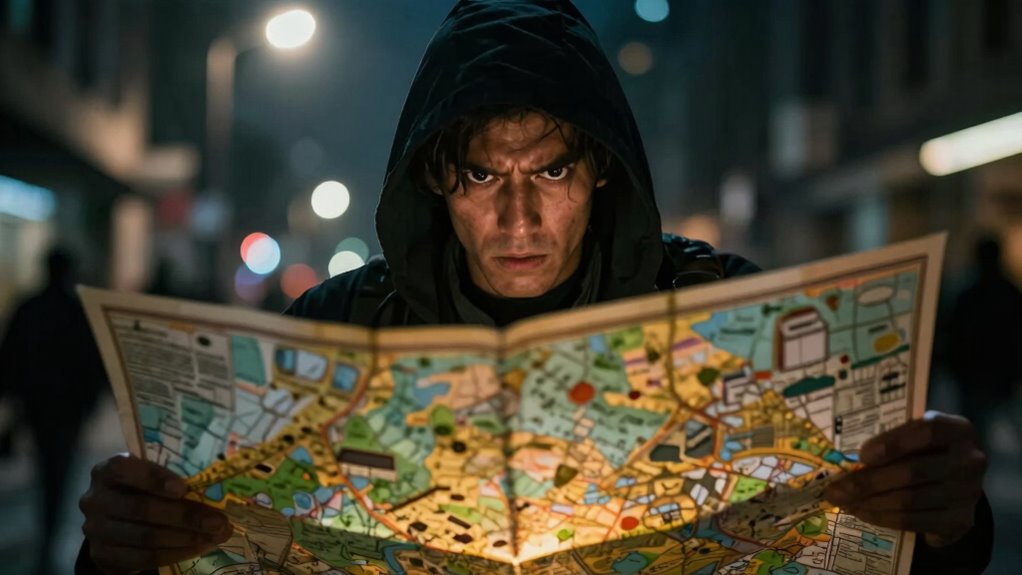
Adventure and thriller films keep you on the edge of your seat by creating intense suspense and excitement. You become deeply engaged as characters face high-stakes situations, with strong character development revealing their motives and vulnerabilities, which heightens the tension. The soundtrack plays a vital role, intensifying emotion and emphasizing key moments, making you feel the urgency and danger firsthand. These films often build suspense through clever pacing, unexpected twists, and visual cues that keep you guessing. Your adrenaline rises as you root for the protagonist, feeling every pulse-pounding moment. Whether it’s a daring escape or a race against time, adventure and thriller movies craft an immersive experience, making sure you stay captivated from start to finish.
Frequently Asked Questions
How Do Subgenres Influence the Overall Movie Experience?
Subgenres shape your overall movie experience by blending genres, which keeps you engaged and surprised. They meet audience expectations while adding fresh twists, making the story more complex and exciting. When a film combines elements like comedy and horror, it creates a unique vibe that appeals to diverse tastes. This genre blending makes movies more dynamic, ensuring you stay interested and emotionally invested throughout.
Can Movies Belong to Multiple Genres Simultaneously?
Like a painter blending colors, movies often belong to multiple genres simultaneously through genre blending and hybridity. You’ll find films that mix comedy and horror or sci-fi and romance, creating richer experiences. This genre hybridity allows filmmakers to explore diverse themes and moods, giving you a more layered story. So yes, movies can definitely cross genre boundaries, making your viewing experience more dynamic and unpredictable.
What Are the Most Underrated Genres in Cinema History?
You might overlook genres like film noir, fantasy, or foreign cinema, which often get overshadowed by mainstream hits. These underrated genres benefit from genre blending, creating unique experiences that break genre stereotypes. By exploring these films, you’ll discover fresh storytelling styles and richer narratives. Don’t dismiss lesser-known genres; they often push boundaries and offer more diverse, compelling movies that challenge conventional expectations and deepen your cinematic appreciation.
How Do Genre Conventions Evolve Over Time?
Genre conventions evolve like a river carving new paths, constantly shifting with time. You see, genre blending reshapes expectations, making films fresher and more unpredictable. Audiences drive this change, pushing filmmakers to adapt and redefine genres. As society changes, so do themes and storytelling styles, ensuring genres stay relevant. This ongoing evolution keeps cinema vibrant, reflecting the diverse tastes and cultural shifts that influence what you watch today.
What Role Do Cultural Differences Play in Genre Popularity?
Cultural differences substantially influence genre popularity because they shape audience preferences and expectations. You’ll notice that certain genres resonate more in specific regions due to cultural impact, history, and social values. As a viewer, you might prefer action movies in one country and romantic comedies in another, reflecting local tastes. These cultural nuances create diverse genre trends worldwide, making the global film landscape rich and varied.
Conclusion
Understanding movie genres helps you choose what to watch, turning decisions into adventures. Whether you’re craving the adrenaline of action or the tenderness of romance, genres guide your journey. They connect you to worlds of excitement and emotion, contrasting fear with laughter, reality with fantasy. So next time you pick a film, remember—genres are your map, leading you from the edge of your seat to the depths of your heart.