

PG-13 movies contain intense themes like action, some suggestive content, and limited strong language or violence, targeted for viewers age 13 and up with parental guidance. R-rated films allow for more mature themes, including stronger language, graphic violence, and sexual scenes, suitable for viewers over 17. The MPAA determines ratings by reviewing content carefully and considering context. To understand how these ratings impact your family movie choices, explore the details further.

Get movie nights delivered free — and shop member deals
- Fast, free delivery on millions of items
- Access to Prime Big Deal Days deals on October 6–7
- Prime Video, Amazon Music and more included
Key Takeaways
- PG-13 limits content to mild language, suggestive themes, and limited violence, while R allows stronger language, graphic violence, and sexual content.
- PG-13 is suitable for viewers 13 and older with parental guidance; R is restricted to viewers 17+ with strict age verification.
- The MPAA assesses scenes for context, tone, and overall content to assign ratings based on specific guidelines and cultural considerations.
- Filmmakers follow rating criteria to ensure their movies meet content standards, helping audiences understand suitability.
- Ratings can be misleading; reviewing detailed content descriptions and parental guides ensures appropriate viewing choices.
What Do PG-13 and R Ratings Mean for Movie Content?

Understanding what PG-13 and R ratings mean for movie content helps you decide what’s appropriate to watch. PG-13 movies often feature intense cinematic themes, such as action or suspense, but they limit explicit language, violence, and sexual content to stay within audience restrictions for younger viewers. R-rated films, however, allow more mature themes, including stronger language, graphic violence, and sexual situations, which are deemed unsuitable for children. This distinction helps you gauge whether a movie aligns with your comfort level or family viewing standards. The ratings serve as a guide, ensuring you’re aware of the level of mature content involved. Understanding the ratings system is important for selecting movies that suit your preferences and viewing context. Knowing these differences helps you make informed choices about what to watch, based on the cinematic themes and the audience restrictions associated with each rating. Additionally, content guidelines help viewers understand what specific elements are permitted within each rating, making it easier to choose appropriate films. A clear understanding of content restrictions allows viewers to better assess whether a film meets their personal or family standards. Being familiar with rating criteria can further assist in making responsible viewing decisions. Moreover, content moderation plays a role in how these ratings are applied, ensuring that movies meet established standards for each classification.
How Does the MPAA Decide Movie Ratings? (Rules and Criteria)
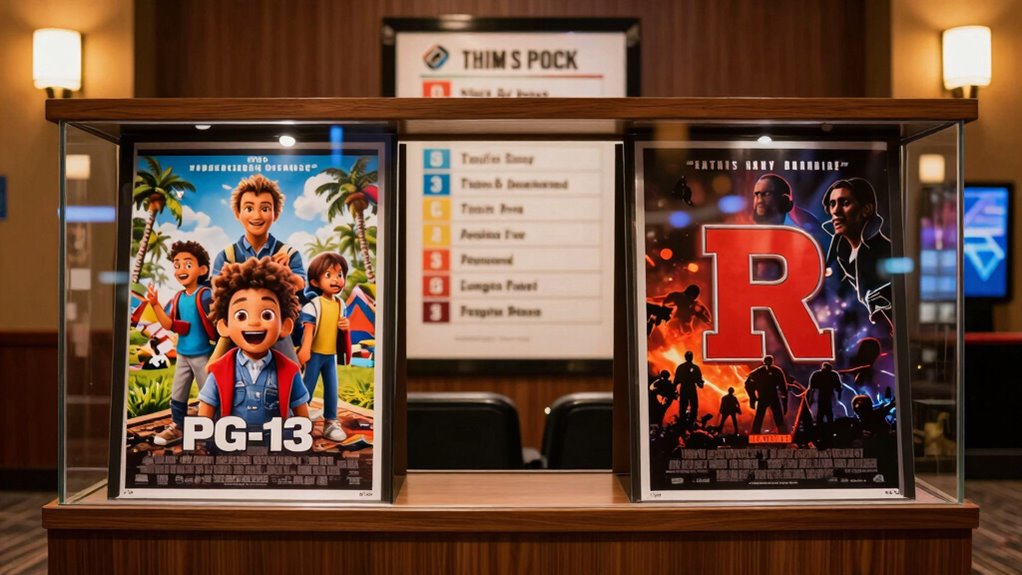
The MPAA (Motion Picture Association of America) uses specific rules and criteria to determine a movie’s rating, aiming to balance artistic expression with audience suitability. The rating criteria focus on factors like violence, language, sexual content, and drug use. During the decision process, a review board watches the film and discusses these elements, considering how they appear and their context. The goal is to assign a rating that accurately reflects the film’s content while giving viewers a clear idea of its suitability. The process involves analyzing scenes carefully, with an emphasis on content analysis and consistency across films. Ultimately, the MPAA’s goal is to provide guidance to audiences without overly restricting filmmakers’ creative choices. Additionally, the content guidelines help ensure ratings are applied fairly across different types of movies. The review process also considers the overall tone and message of the film to ensure ratings reflect its intended impact. Factors like cultural context and audience expectations are also taken into account to maintain fairness and relevance in rating decisions. A thorough understanding of rating criteria is essential for filmmakers aiming to meet audience expectations while adhering to industry standards.
Key Differences Between PG-13 and R Movies: Content, Language, and Suitability

While both PG-13 and R ratings indicate that a movie may not be suitable for all audiences, they differ considerably in the intensity and nature of the content they allow. PG-13 movies typically have age restrictions of 13 and above, but they still require parental guidance for younger viewers. These films often include mild language, some suggestive content, and limited violence, but they avoid explicit scenes. R-rated movies, on the other hand, are intended for viewers 17 and older, with strict age restrictions. They frequently feature stronger language, more graphic violence, and explicit sexual content. This makes R films less suitable for children and teens, emphasizing the importance of parental guidance to determine if the content aligns with your standards for appropriate viewing. Additionally, cultural context can influence how certain themes are portrayed and rated in different regions. Understanding the content guidelines helps viewers and parents make informed decisions about appropriate viewing choices. Recognizing the rating criteria set by the Motion Picture Association ensures a clearer understanding of what each classification entails.
How to Choose the Right Movie Rating for Your Family
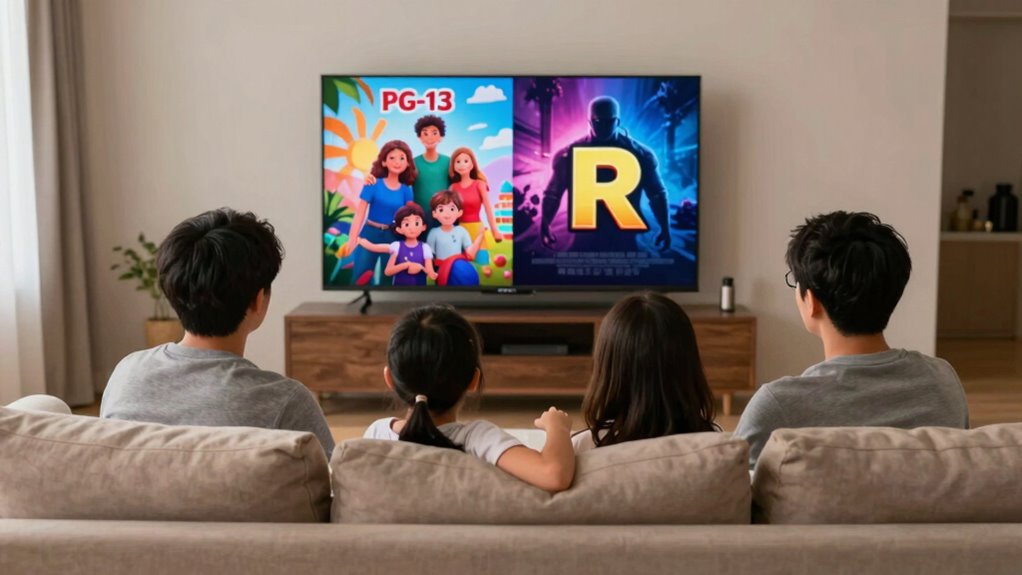
Choosing the right movie rating for your family starts with evaluating what content is appropriate for each member. Consider each child’s age and maturity level, and use parental guidance to assess if the film’s themes, language, and scenes fit their development. Age appropriateness varies from child to child, so don’t rely solely on the rating label. Watch trailers or read reviews to get a sense of the content. If you’re unsure, opt for a more conservative rating like G or PG, which generally suit younger viewers. Remember, your judgment is key in protecting your family from material that might be too intense or inappropriate. Additionally, understanding content quality and topical authority can help you determine whether a film’s themes are suitable and valuable for your children. Being aware of content ratings can also help you make informed choices that align with your family’s values. Consider how content guidelines are established by rating boards to better understand what each rating signifies. Familiarizing yourself with rating criteria can further guide your decision-making process. Recognizing the importance of filtering and screening tools can also aid in selecting appropriate movies for your family. Ultimately, selecting a movie that aligns with your values and your kids’ comfort levels ensures an enjoyable, stress-free viewing experience.
Common Myths About PG-13 and R Ratings: What You Should Know

Many parents believe that PG-13 movies are just slightly milder versions of R-rated films, but this isn’t always true. Rating misconceptions can lead you to underestimate content or overestimate safety. PG-13 films often include intense themes, language, or violence that might not be suitable for younger viewers. R-rated movies, meanwhile, may contain more explicit material. Relying solely on ratings for parental guidance can be misleading. Additionally, the content within films can vary greatly, making it important to consider individual movies rather than just their ratings. For example, some PG-13 movies may contain hive health themes or scenes that are surprisingly intense for children. Understanding the rating system can help parents make more informed decisions about what their children watch. It is also helpful to review detailed content descriptions and parental guides for a clearer understanding of specific film material.
Frequently Asked Questions
Can a Movie’s Rating Change After Its Initial Release?
Yes, a movie’s rating can change after its initial release. If filmmakers or distributors submit rating appeals or make content adjustments, the MPAA may re-evaluate and revise the rating. This process allows for changes based on updated content or new edits, ensuring the rating accurately reflects the film’s material. So, if a film is re-rated, it can impact how audiences perceive or access the movie.
Are There Regional Differences in Movie Ratings?
Yes, there are regional variations in movie ratings. Different countries follow international standards or have their own classification systems, which can lead to differing age restrictions and content ratings. You might find a film rated PG-13 in one country but rated R or equivalent elsewhere, depending on local cultural norms and regulations. Always check regional classifications to understand what’s appropriate for your audience across different countries.
How Do Ratings Impact a Movie’s Box Office Success?
Did you know R-rated movies earn about 35% less at the box office than PG-13 films? Ratings substantially impact audience perceptions, shaping who’s willing to see a movie. As a result, studios tailor marketing strategies based on ratings to target the right demographic. A higher rating can limit potential viewers, while a lower rating broadens appeal—directly influencing a film’s financial success.
Do Unrated Movies Follow the Same Content Guidelines?
Unrated films don’t follow standard rating criteria, so they often contain content that exceeds typical guidelines for PG‑13 or R movies. When a movie is unrated, it’s usually because the filmmakers chose not to submit it for official classification, which can make audiences cautious. This lack of rating can impact a movie’s distribution and box office success, as theaters and platforms may hesitate to carry unrated films due to content concerns.
Can Filmmakers Appeal or Request a Different Rating?
Can filmmakers appeal or request a different rating? Absolutely. They can submit rating appeals to the MPAA, hoping for a rating revision. Think of it as a dance—sometimes, the studio and the rating board need to find the right rhythm through dialogue and evidence. By presenting compelling reasons, filmmakers aim to turn a restrictive rating into a more viewer-friendly one, balancing creative vision with audience expectations.
Conclusion
Just like Pandora’s box, movie ratings reveal what’s inside—guiding you and your family safely through entertainment. By understanding the differences between PG-13 and R, you can make smarter choices and avoid surprises. Remember, the power is in your hands to select appropriate films, ensuring your viewing experience remains enjoyable and appropriate. So, stay informed, and let your movie nights be as legendary as Hercules’ adventures—well-suited to your family’s taste and comfort.
Fall Picks
fall essentials
As an affiliate, we earn on qualifying purchases.