
You often remember movie quotes wrong due to the Mandela Effect, where collective memory distorts personal recollections. This happens because memory isn’t a perfect record; it’s reconstructed and influenced by social interactions and cultural context. Misquotes gain traction as people repeat them, leading to confusion and correction bias. These factors can trick you into believing inaccurate memories. Curious about how these elements work together to create such phenomena? There’s so much more to uncover about this fascinating topic!

Get movie nights delivered free — and shop member deals
- Fast, free delivery on millions of items
- Access to Prime Big Deal Days deals on October 6–7
- Prime Video, Amazon Music and more included
Key Takeaways
- The Mandela Effect reveals how collective memory can distort individual recollections, leading to shared inaccuracies in movie quotes.
- Memory reconstruction often results in false memories, influenced by cognitive biases and emotional connections to iconic lines.
- Social pressure and group dynamics can cause individuals to conform to popular misquotes, altering their personal memories.
- Misleading information and context effects can fill gaps in memory, leading to inaccuracies in recalling precise dialogue.
- Awareness of memory distortion techniques and cognitive biases can enhance accuracy in remembering movie quotes.
Understanding the Mandela Effect: What Is It and How Does It Work?
When you hear the term “Mandela Effect,” you might wonder what it really means and how it affects your perception of reality. This phenomenon occurs when a group of people remembers an event or detail differently from how it actually happened. It highlights the power of collective memory, where your recollections align with others, creating a shared but distorted view of reality. Cognitive dissonance plays a role here, as you might struggle to reconcile differing memories, leading to confusion and disbelief. You may find yourself questioning your recollections when confronted with evidence that contradicts your beliefs. Ultimately, the Mandela Effect reveals how easily our minds can be influenced, challenging the reliability of memory and the nature of truth itself.
Why Our Memories Can Be Unreliable: The Psychology Behind Memory Distortion
Memory isn’t as reliable as we often think. You create false memories through memory reconstruction, influenced by cognitive biases and context effects. When you recall an event, your mind fills in gaps, which can lead to retrieval failure. The misinformation effect can distort your memories when you encounter new, misleading information. Emotional influence also plays a role; intense feelings can amplify or alter what you remember. Additionally, memory conformity occurs when you adjust your recollection to align with others’, further clouding the truth. As you navigate your memories, it’s essential to recognize these factors, understanding that your recollections may not reflect reality. Embracing this uncertainty can help you appreciate the complexity of human memory.
Famous Movie Quotes and the Mandela Effect: What We Remember Wrong
You probably remember some famous movie quotes differently than they actually are. These misremembered lines often reflect how cultural influences shape our memories. Let’s explore how these iconic quotes became distorted in our minds.
Iconic Quotes Misremembered
Although it’s easy to quote beloved films from memory, many iconic lines often come out differently than we recall. This phenomenon, known as the Mandela Effect, leads to a plethora of iconic misquotes that can leave you scratching your head. For instance, you might remember Darth Vader saying, “Luke, I am your father,” when the actual line is, “No, I am your father.” These misremembered quotes stem from our cinematic nostalgia, where the emotional weight of a scene overshadows the precise words spoken. As you reminisce about your favorite movies, be aware that your memory might play tricks on you, turning classic lines into slightly altered versions that feel just as familiar. Additionally, color accuracy in film dialogue and visuals can influence how we perceive and remember scenes, sometimes leading to inaccuracies in our recollections.
Cultural Influences on Memory
How do cultural influences shape our recollection of famous movie quotes? The way you remember these quotes often stems from cultural memory and the collective consciousness surrounding them. When a quote becomes iconic, it gets shared, quoted, and referenced in various contexts, leading to alterations in how you and others recall it. These shared references create collective memory] that can be shaped by societal narratives and repeated exposure. Popular memes and parodies can twist original phrases. Conversations and social media posts reinforce certain interpretations. Shared experiences create a community-driven memory that may diverge from reality. The pervasive nature of media further amplifies these distortions and contributes to the Mandela Effect. These factors contribute to the Mandela Effect, where you might confidently misquote a line, believing it’s accurate due to its prevalence in your social environment. Recognizing these influences can help you appreciate the fluid nature of memory.
How Social Pressure Can Mess With Your Movie Quotes
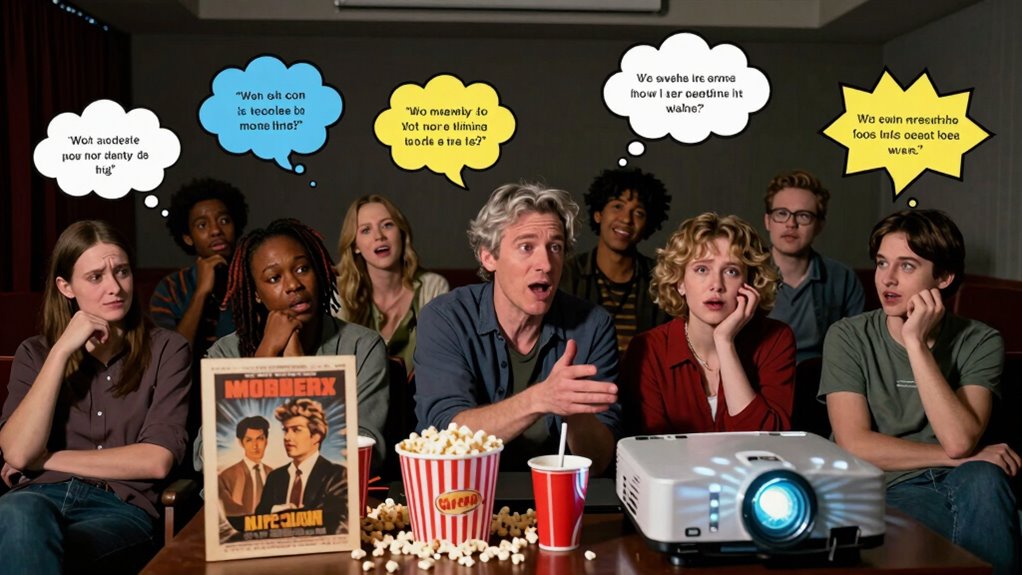
Have you ever found yourself quoting a movie line only to be corrected by friends? That’s the power of group dynamics and popular culture shaping our memories. Social pressure can lead you to adopt a version of a quote that might not even be accurate, just because it’s what everyone around you believes.
Influence of Group Dynamics
While you might confidently quote a beloved movie line, social pressure can easily twist your memory. This is where the groupthink phenomenon kicks in, as you may unknowingly conform to the collective memory of those around you. When friends quote a movie differently, you might start doubting your own recollection.
- You hear a friend misquote a line, and it sticks with you.
- In group settings, you hesitate to voice your version, fearing judgment.
- Over time, your memory shifts to align with the group.
These dynamics can lead to altered perceptions of iconic quotes, making you unsure of what you originally saw or heard. Remember, your memories aren’t just yours; they’re influenced by the people you share them with.
Popular Culture Impact
As you navigate the landscape of popular culture, you’ll find that social pressure can subtly distort your movie quotes. When you’re surrounded by friends or online communities, you might unconsciously adopt the collective memory of the group, leading to misremembered lines. This phenomenon happens because you want to fit in, and your brain adjusts to what others say, regardless of the original quote. Interestingly, AI-powered content analysis can help identify these common misquotes and understand how collective memory influences our perception of pop culture. In fact, understanding memory conformity sheds light on why these inaccuracies persist over time. This process is closely linked to social reinforcement, which strengthens shared false memories within groups. Here’s a quick look at some common misquotes in pop culture:
| Misquoted Line | Correct Line |
|---|---|
| “Luke, I am your father.” | “No, I am your father.” |
| “Life is like a box of chocolates.” | “Life was like a box of chocolates.” |
| “Mirror, mirror on the wall.” | “Magic mirror on the wall.” |
The Role of Confirmation Bias in Misremembering Quotes
Although many people are confident in their recollections of famous quotes, confirmation bias often skews their memories. This cognitive phenomenon leads you to seek out information that supports your existing beliefs, reinforcing your faulty recollections. Understanding cognitive biases can help you recognize the underlying reasons for these distortions. You might recall a line from a movie that aligns with your interpretation of the character. Discussions with friends can solidify your misremembered quotes, as they may share similar distortions. Social media can amplify these errors, as viral posts propagate incorrect lines. These influences create a cycle of memory distortion, where your certainty about a quote only strengthens the inaccuracies. Recognizing confirmation bias can help you understand why you misremember and challenge your assumptions about those iconic lines.
Tips for Improving Your Memory and Avoiding Misquoted Lines
Recognizing the impact of confirmation bias is the first step toward improving your memory and avoiding misquoted lines. To enhance your recall, try various memory techniques like visualization and association. For instance, link a quote to a vivid image or a personal experience; it’ll stick better in your mind. Engage in recall exercises regularly, such as writing down your favorite movie quotes from memory and checking them against the originals. This practice not only strengthens your memory but also helps you spot any inaccuracies. Additionally, discuss quotes with friends to reinforce correct versions through social reinforcement. Being aware of cognitive biases can help you understand why misremembering occurs and develop strategies to counteract them. By actively applying these strategies, you’ll find your memory sharpens, reducing the chances of misquoting lines.
The Fascinating Psychology of the Mandela Effect Explained
The Mandela Effect captivates many because it highlights the quirks of human memory and perception. You might find it fascinating how your brain reconstructs memories, often blending them with societal beliefs. This phenomenon taps into our collective consciousness, where shared memories can differ from actual events.
- Memory isn’t a perfect recording; it’s a reconstructive process, filled with gaps.
- Social influences and conversations can shape your recollections, leading to widespread misconceptions.
- The allure of the Mandela Effect lies in its mystery, as people connect over shared false memories.
Understanding this psychology helps explain why you, like others, might confidently misquote a line or remember events differently than they happened. It’s a remarkable aspect of being human.
Frequently Asked Questions
Can the Mandela Effect Affect Memories Beyond Movie Quotes?
Yes, the Mandela Effect can definitely affect memories beyond movie quotes. You might notice how collective memory can create false recollections about historical events, famous figures, or even everyday experiences. When you discuss these memories with others, you might find that many people share the same inaccuracies, reinforcing the mistaken beliefs. It shows how our minds can collectively shape and distort the past, leading to surprising and often confusing results.
Are There Specific Demographics More Prone to the Mandela Effect?
You might feel a chill when realizing how memories can twist and turn. Studies suggest that age group differences play a significant role in susceptibility to the Mandela Effect. Younger individuals often have more fluid memories, while older adults might cling to past experiences. Additionally, education level impacts how people process information, which can lead to varied recall among different demographics. So, you may find yourself remembering things differently based on these factors.
How Does the Internet Influence Our Memory of Movie Quotes?
The internet, especially social media, influences your memory of movie quotes by creating a collective memory that often overshadows the original lines. When you see a popular meme or post quoting a film incorrectly, it reinforces that version in your mind. You might find yourself repeating these altered quotes, believing they’re correct. This shared experience can lead to widespread misremembering, as everyone’s input shapes how you and others recall these iconic lines.
Does the Mandela Effect Occur in Other Cultures or Languages?
Yes, the Mandela Effect occurs in other cultures and languages. You’ll find that cultural variations and linguistic differences can lead to different interpretations of the same quote or event. What you remember might not align with someone else’s recollection due to how language influences thought. For instance, a movie quote translated into another language might change meaning or context, creating unique collective memories that differ from the original.
Are There Famous Examples Outside of Movies That Illustrate the Mandela Effect?
You might think history’s carved in stone, but it’s often more like sand slipping through your fingers. Famous examples of the Mandela Effect pop up in historical events, like the belief that Nelson Mandela died in prison during the 1980s. Many remember it vividly, yet it’s simply not true. Another case is the misremembering of the Berenstain Bears as the Berenstein Bears. These instances show how collective memory can twist reality into something unexpected.
Conclusion
In the end, memories are like grains of sand slipping through your fingers, shaped by the tides of time and influence. The Mandela Effect serves as a reminder that what you think you know can be reshaped by collective belief and social whispers. Embrace the quirks of memory, and don’t let misquoted lines dim the joy of storytelling. After all, every misremembered quote is just another thread in the tapestry of our shared experiences.
Fall Picks
fall essentials
As an affiliate, we earn on qualifying purchases.