The average movie now runs about 2 hours, although it varies by genre—blockbusters can exceed 2.5 hours, while comedies stay closer to 90 minutes. This increase reflects evolving storytelling, technological advances, and audience preferences for more immersive and complex narratives. Longer films often deepen character development, but if they’re too lengthy, viewer fatigue can set in. To discover what influences these trends and how they impact your viewing experience, keep exploring.
Key Takeaways
- The average movie length currently ranges between 1.5 to 2 hours, depending on genre and platform.
- Blockbusters and epic films often exceed 2.5 hours, while comedies stay around 90 minutes.
- Longer movies allow for deeper storytelling, character development, and complex narratives.
- Shorter films are popular on streaming platforms, emphasizing quick engagement and pacing.
- Proper movie length is crucial for maintaining audience interest and enhancing emotional impact.
How Have Movie Lengths Changed Over the Years?
Over the past century, movie lengths have generally increased, reflecting changes in storytelling styles and audience expectations. As films grew longer, filmmakers experimented with film pacing to develop richer narratives and character arcs. Editing styles evolved from simple cuts to more complex techniques like cross-cutting and seamless progressions, allowing for more elaborate storytelling. These shifts enabled directors to extend scenes and deepen emotional engagement, often resulting in longer runtimes. Modern audiences expect immersive experiences, prompting filmmakers to include more plot development and visual effects. Consequently, the evolution of editing techniques and the desire for more detailed storytelling have contributed considerably to the trend of lengthening movies over time, shaping how stories are told and experienced on the big screen.
What’s the Average Movie Duration Today Across Different Genres?
Have you ever wondered how long movies typically run today across different genres? If so, you’ll notice that averages vary based on genre and distribution method. Blockbusters like superhero and action films tend to be around 2 hours long, aligning with box office trends that favor high-energy, engaging content. Dramas and romances often hover between 1.5 to 2 hours, catering to viewers seeking deeper storytelling. Streaming preferences have also influenced these durations; streaming platforms favor shorter or more flexible runtimes, often around 90 minutes, to hold viewers’ attention. Comedies usually stay within the 90-minute mark, while franchises and epic tales can extend beyond 2.5 hours. These trends reflect a balance between audience engagement, genre expectations, and changing consumption habits.
What Factors Are Driving Changes in Movie Length?
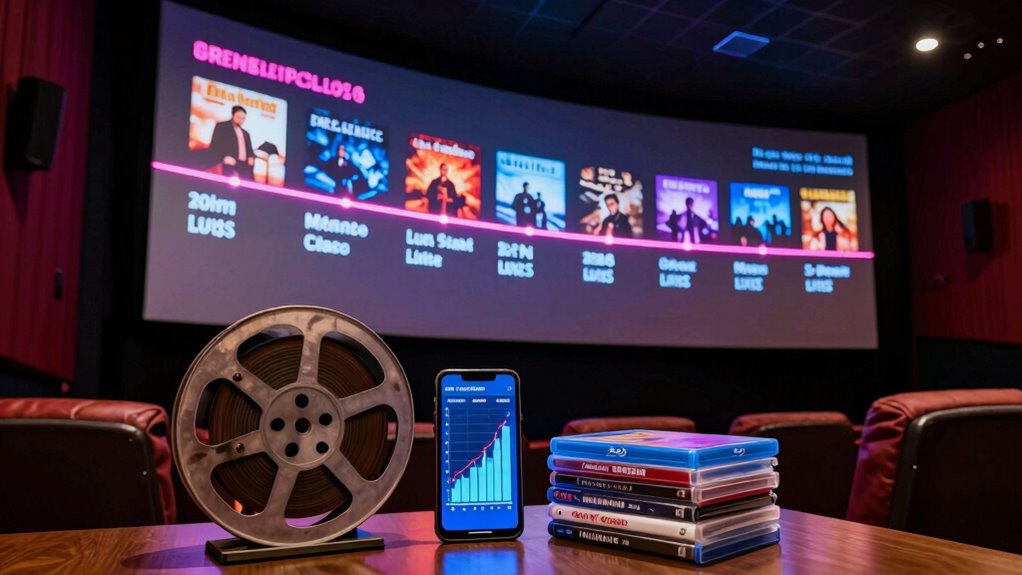
Several factors are shaping the recent changes in movie length, with technological advancements playing a significant role. Increased production budgets allow filmmakers to craft more elaborate stories, often leading to longer movies. Film pacing also influences length; slow-paced narratives tend to run longer, while tighter editing can shorten runtimes. Additionally, the rise of streaming platforms encourages longer films to keep viewers engaged. The desire to create immersive experiences pushes directors to add more scenes, extending overall duration. Smart thermostat technology and other innovations in home entertainment have also influenced viewer expectations and content development strategies.
How Does Movie Length Affect Audience Experience and Engagement?
The length of a movie directly influences how engaged and satisfied you feel during the viewing experience. When a film’s runtime matches its story’s needs, it *guarantees* visual storytelling by maintaining effective pacing dynamics. A well-paced movie keeps you invested, balancing action, dialogue, and visuals without dragging or rushing. Longer films can deepen emotional connections and allow for richer character development, but if they’re too lengthy, you might lose focus or feel overwhelmed. Conversely, shorter movies can be punchy and energetic, keeping your attention sharp. Ultimately, the right length *assures* the story flows naturally, maximizing your engagement. When filmmakers understand how length impacts pacing and storytelling, they craft experiences that resonate more deeply, making you more likely to stay immersed from start to finish. Additionally, contrast ratio plays a critical role in how vivid and immersive the visuals appear, directly affecting your overall enjoyment and perception of quality. A proper pacing balance further enhances viewer satisfaction by ensuring no part of the film feels unnecessarily slow or rushed. Recognizing the impact of film duration helps creators tailor their stories to optimize audience experience and emotional impact.
Why Does Movie Length Matter for Viewers and Filmmakers?
Movie length profoundly influences both your viewing experience and the filmmaker’s storytelling choices. When a film is longer, it allows for more nuanced storytelling depth, giving characters and plots room to develop. Conversely, shorter movies often emphasize tight film pacing, keeping your attention sharp without unnecessary filler. For you, this impacts how emotionally invested or immersed you become. Filmmakers need to balance length carefully: too long, and you risk losing engagement; too short, and they might sacrifice storytelling depth. Consider these aspects:
- Longer films can explore complex themes more thoroughly
- Shorter films often rely on brisk pacing to maintain interest
- Length influences the emotional arc and character development
- Film pacing determines whether a story feels rushed or well-paced
Ultimately, movie length shapes both your experience and how filmmakers craft their stories.
Frequently Asked Questions
How Do International Film Lengths Compare to Hollywood Standards?
International films often have varying lengths compared to Hollywood standards, reflecting cultural differences and storytelling styles. You’ll notice that global cinema tends to have shorter or longer runtimes, depending on the region. For example, Asian films may be longer to develop complex narratives, while European movies sometimes favor shorter, more concise storytelling. These differences highlight diverse cultural preferences, making international film lengths a fascinating reflection of local storytelling traditions.
Are Streaming Movies Generally Longer or Shorter Than Theatrical Releases?
Streaming movies are generally longer than theatrical releases, with some surpassing three hours. This increased film duration caters to viewer attention spans, allowing for more complex storytelling and character development. As a viewer, you might notice that streaming films give you a more immersive experience, but they also demand longer commitment. This trend reflects how streaming platforms prioritize detailed narratives, impacting how you engage with modern movies.
Has the Rise of Binge-Watching Influenced Movie Duration Trends?
Yes, binge-watching has influenced movie duration trends by encouraging faster pacing to keep your audience’s attention. Studies show that streaming viewers prefer shorter films, with many around 90 minutes, to fit their binge sessions. This shift impacts film pacing, making movies more engaging and concise. As a result, filmmakers prioritize maintaining your attention throughout, aligning with the binge-watching culture and changing how movies are structured today.
Do Longer Movies Tend to Perform Better at the Box Office?
Longer movies don’t necessarily perform better at the box office. You’ll find that strong film pacing keeps your audience engaged, preventing attention from waning during extended runtimes. When movies balance pacing with compelling storytelling, viewers stay immersed, boosting box office success. So, it’s not just about length but how well the film maintains your audience’s attention throughout, making pacing the key to a film’s commercial performance.
How Do Critics Influence the Acceptable Length of a Film?
Critics influence the acceptable length of a film by shaping audience expectations through reviews and commentary. They consider factors like film festival preferences and audience attention span, which often favor shorter, tightly paced movies. When critics praise a film’s pacing and relevance, audiences become more willing to accept longer runtimes. Conversely, negative reviews about length or pacing can lead filmmakers to trim scenes, aligning with critical and audience preferences.
Conclusion
Today’s average movie lasts about 1 hour and 42 minutes, a notable increase from the early 20th century’s brief films. This shift reflects industry trends toward more immersive storytelling, especially in genres like fantasy and drama. Understanding these changes helps you appreciate how filmmakers craft experiences for modern audiences. As you watch, remember that longer movies often mean richer narratives—so next time, give yourself enough time to truly immerse in the story.