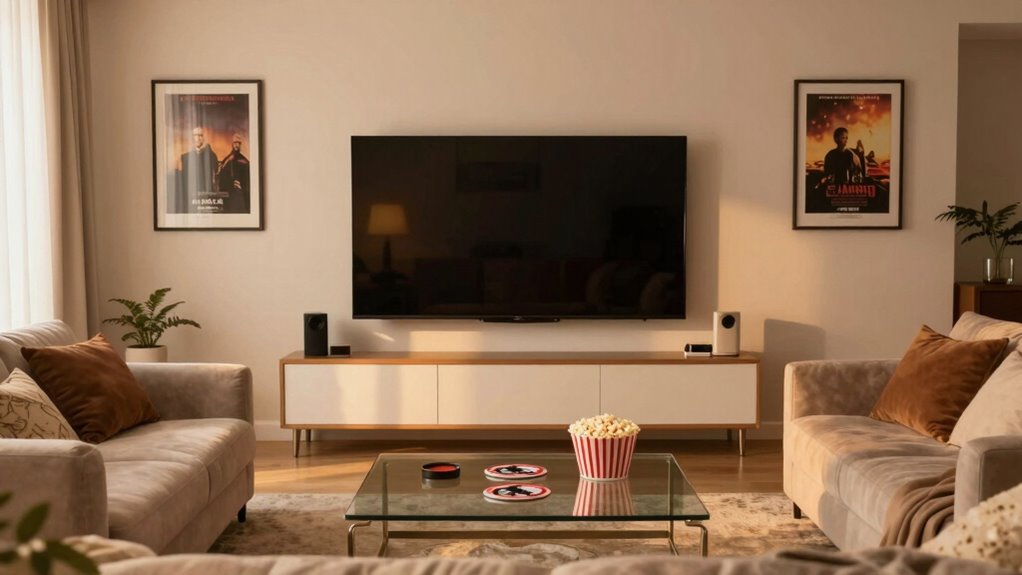
To find your perfect TV size for movies, consider your viewing distance and room layout. Aim for 1.5 to 2.5 times the screen size for maximum comfort. For a square room, 55-65 inches works best, while rectangular spaces benefit from larger sizes (65-75 inches). Remember that resolution matters too—4K UHD works best for screens 55-75 inches, as it gives sharper details. Stick around to discover more tips and tricks for your ideal TV setup!
Key Takeaways
- For a square layout, a 55 to 65-inch TV is ideal to ensure optimal viewing from various angles.
- In rectangular rooms, larger TVs (65 to 75 inches) enhance the viewing experience from distant seating positions.
- Maintain a viewing distance of 1.5 to 2.5 times the screen size for comfort and clarity, adjusting based on resolution type.
- Larger screens provide a more immersive experience, especially in well-lit rooms where picture quality may be affected.
- Assess your viewing habits and budget to choose a TV size that complements your lifestyle and enhances movie enjoyment.
Understanding Screen Size vs. Viewing Distance
When choosing a TV for your living room, understanding the relationship between screen size and viewing distance is vital. The right screen size can enhance your viewing experience, but it’s important to position your TV at an appropriate distance. Generally, you should sit about 1.5 to 2.5 times the diagonal screen size away. For instance, if you have a 55-inch TV, your viewing distance should range from approximately 6.5 to 11.5 feet. This distance helps guarantee you’re not straining your eyes while still enjoying the details of your favorite shows. Additionally, consider the room layout and the height at which you mount or place the TV to create a comfortable viewing angle. Balancing screen size and viewing distance makes all the difference.
Recommended TV Sizes for Different Room Dimensions
Finding the right TV size for your living room goes hand in hand with understanding your room’s dimensions. First, consider the room shape. If you have a square layout, a TV between 55 to 65 inches should fit nicely, allowing for a good viewing experience from multiple angles. In a rectangular room, aim for a slightly larger TV, around 65 to 75 inches, especially if your seating is farther away. Next, think about furniture arrangement. If your couch is directly opposite the TV, you can go bigger, while a side arrangement may require a smaller size to avoid straining your neck. By matching your TV size to your room shape and furniture setup, you’ll create an ideal viewing environment.
How Resolution Affects Optimal TV Size
As you consider the ideal TV size for your living room, resolution plays an essential role in your viewing experience. The resolution impact on your chosen screen can notably affect how enjoyable your movies are. Higher pixel density means clearer images, allowing you to sit closer without sacrificing quality. Here’s what to keep in mind:
- Standard HD (1080p): Suitable for TVs 32-55 inches, providing decent clarity.
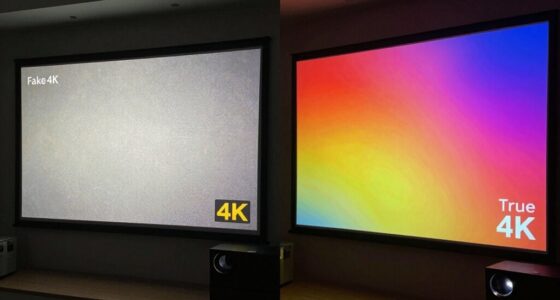
- 4K UHD: Best for 55-75 inches, offering sharper details even from a distance.
- 8K UHD: Ideal for larger screens (75 inches and up), maximizing pixel density for immersive experiences.
- Viewing Distance: Closer distances enhance the benefits of higher resolutions, making your size choice vital.
Calculating Your Ideal TV Size and Optimal Viewing Angle
Determining your ideal TV size involves a simple calculation based on your viewing distance and the size of your room. To maximize your viewing comfort, you should aim for a screen size that offers an immersive experience without straining your eyes. Here’s a handy guide to help you calculate the ideal screen size based on your distance from the TV:
| Viewing Distance (feet) | Ideal Screen Size (inches) | Recommended Viewing Angle |
|---|---|---|
| 6 | 55 | 30° |
| 8 | 65 | 30° |
| 10 | 75 | 30° |
| 12 | 85 | 30° |
How Viewing Angles Affect Your TV Experience
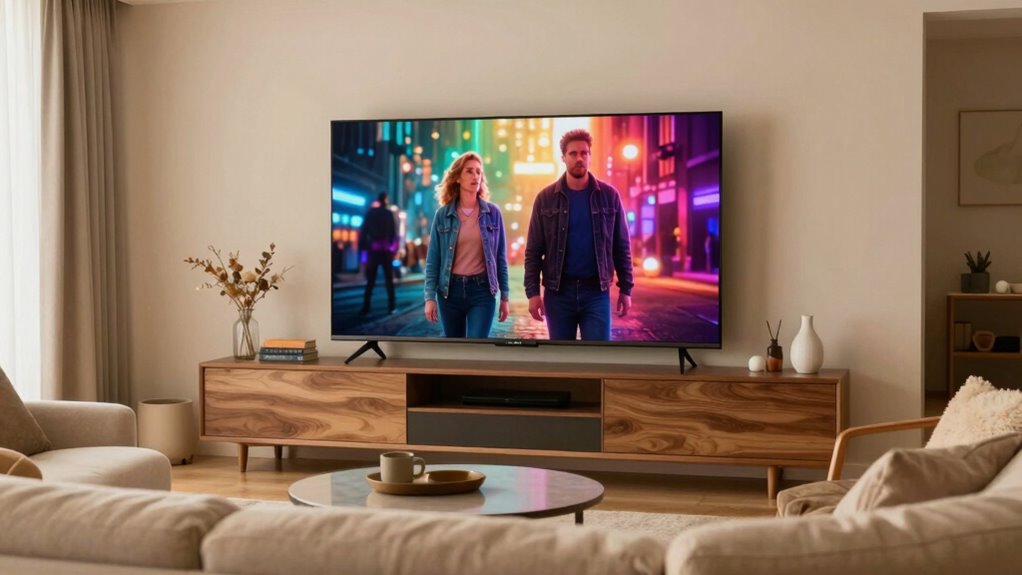
When you choose a TV, consider how viewing angles can impact your experience. The distance from your screen, its size, and the angle at which you watch all play essential roles in picture quality and brightness. Understanding these factors will help you get the most out of your viewing time.
Optimal Viewing Distance
To fully enjoy your TV experience, understanding ideal viewing distance is crucial. The right distance enhances viewing comfort and minimizes strain. Here are four distance factors to take into account:
- Screen Size: Measure your TV diagonally; multiply by 1.5 to 2.5 for best distance.
- Resolution: Higher resolutions, like 4K, allow you to sit closer without losing detail.
- Room Layout: Furniture placement impacts distance; verify your seating aligns with the TV.
- Personal Preference: Everyone has different viewing habits, so adjust based on what feels best for you.
Additionally, consider how smart lighting can enhance the overall viewing experience by reducing eye strain and creating a more immersive atmosphere.
Screen Size Considerations
As you choose a TV size, considering how viewing angles affect your experience is essential for best enjoyment. Different screen types, like OLED or LED, can impact how colors and contrast appear from various angles. If your room layout has seating positioned off to the side, a larger screen might help maintain an immersive experience, but you should also consider the type of screen. For instance, wider viewing angles are better with OLED screens compared to standard LED options. Make sure your seating arrangements allow everyone to enjoy the picture quality, regardless of where they’re sitting. Ultimately, the right balance between screen size and room layout will enhance your viewing experience, making movie nights far more enjoyable.
Angle and Brightness Impact
While you might not think about it, the angle from which you view your TV can profoundly affect your experience, especially regarding brightness and color accuracy. Here are some key factors to take into account for ideal viewing:
- Viewing Distance: Sit at least 1.5 to 2.5 times the diagonal screen size away.
- Angle Adjustments: Aim to watch from eye level or slightly above for better image quality. Proper seating arrangements can help ensure that everyone in the room has a good view of the screen. Additionally, incorporating smart lighting can help create optimal viewing conditions by adapting to the content being watched.
- Brightness Settings: Adjust your TV’s brightness based on ambient light—dimmer for dark rooms, brighter for well-lit spaces. Additionally, maintaining good indoor air quality can enhance your overall comfort during viewing sessions.
- Screen Type: OLED screens maintain color and brightness better at wider angles than LED screens. Additionally, consider how ambient light influences your viewing setup, as it can significantly affect your overall experience.
Understanding Your Viewing Habits
How do you usually unwind after a long day? If you find yourself sinking into the couch with a movie, understanding your viewing habits is key. Consider your movie preferences—do you lean towards comedies, dramas, or action films? This choice not only shapes your viewing experience but can also influence your ideal TV size. Think about your family dynamics, too. Are you watching solo, or does your whole family join in? A larger screen might be perfect for group viewings, ensuring everyone enjoys the action. By identifying what you love to watch and who’s sharing the experience, you can tailor your TV size to fit not just your space, but your lifestyle and enjoyment.
How Room Lighting Affects Your TV Size Decision
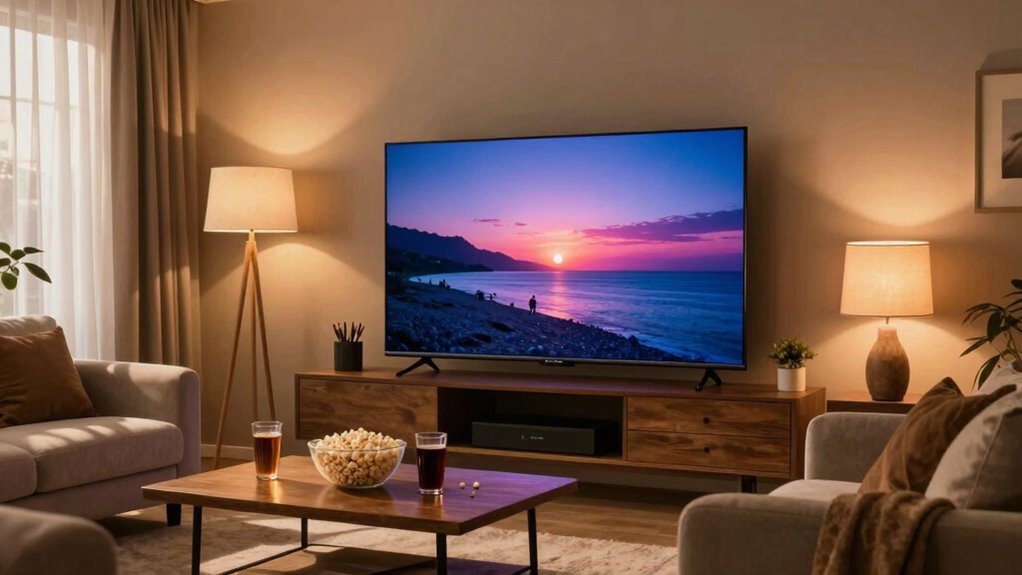
After contemplating your viewing habits, it’s important to factor in the lighting of your room when choosing the right TV size. Ambient lighting can greatly impact your viewing experience, and the size of your TV should complement it. Here are a few things to reflect on:
- Natural Light: If your room has large windows, a larger screen can help combat light reflection.
- Dim Lighting: In a darker room, a bigger TV can enhance the cinematic experience without straining your eyes.
- Overhead Lights: Position your TV to minimize glare from ceiling lights.
- Wall Color: Dark walls can absorb light, allowing for a more immersive experience with a larger screen.
Balancing these factors will help you find your perfect TV size!
Smart Features: Choosing the Right TV Size
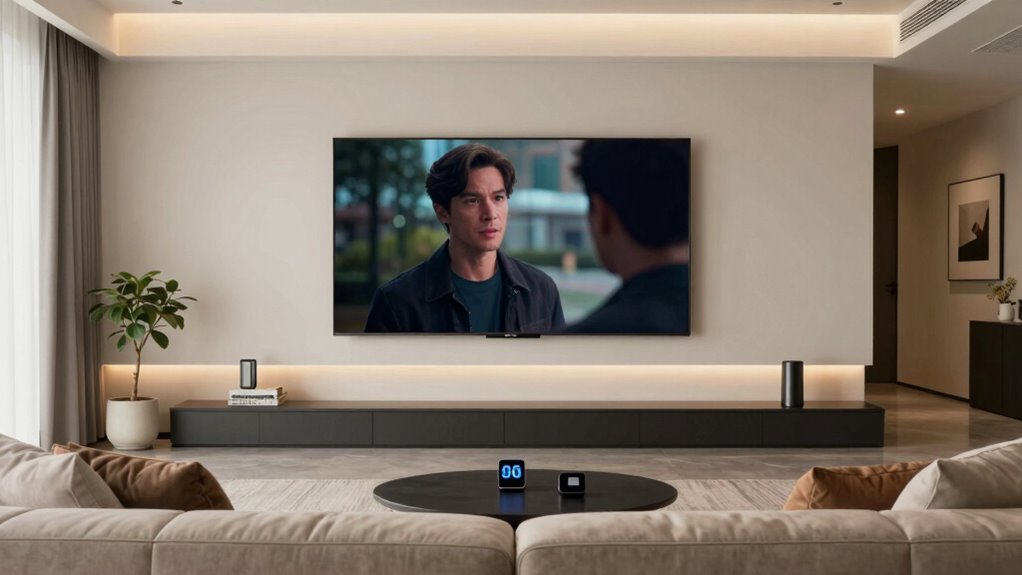
What smart features do you want to enhance your viewing experience? When choosing the right TV size, consider how these features will impact your setup. A larger screen can make smart features like streaming apps and voice control more immersive, but you need to balance size with your room’s layout. Verify the user interface is intuitive; a complicated system can detract from your enjoyment. Don’t forget about screen resolution; higher resolutions shine on larger screens, making your favorite movies look stunning. Additionally, investing in acoustic solutions can further enhance your viewing experience by improving sound quality in your space. Think about how often you’ll use smart features and how they’ll fit into your lifestyle. Ultimately, the right size should complement both your viewing habits and the smart capabilities of your TV, creating a seamless experience. Additionally, consider the resolution standards that best suit your viewing preferences to maximize the quality of your entertainment.
Budgeting for Your Ideal TV Model and Size
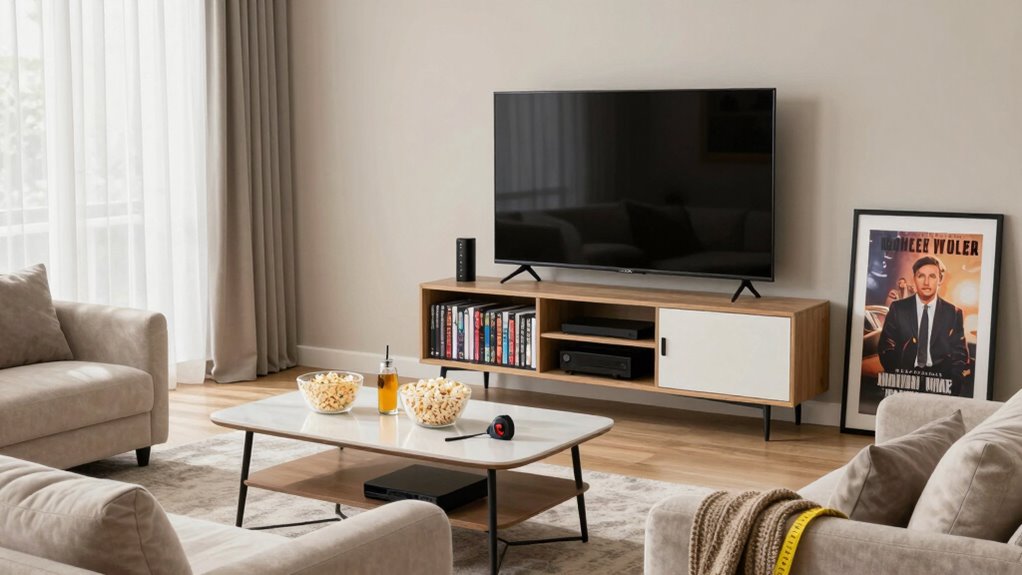
When you’re ready to choose the right TV size, budgeting becomes a key factor in finding the ideal model. To help you stay on track, here are some budgeting tips to contemplate:
Choosing the right TV size involves careful budgeting to ensure you find the perfect model.
- Set a Total Budget: Determine how much you’re willing to spend on the TV.
- Research Models: Look for ideal models within your budget that meet your size and feature preferences. Additionally, consider best value-for-money home security cameras if you want to enhance your home entertainment experience with security in mind. It’s essential to keep in mind that balancing budgeting and tech can lead to more informed purchasing decisions. Also, ensure that you factor in customer support services when comparing different TV models, as they can influence your overall satisfaction with the purchase. In addition, understanding your investment goals can help prioritize your spending on technology and entertainment.
- Consider Additional Costs: Don’t forget to factor in mounting, cables, or subscriptions that might increase your total expense.
- Look for Deals: Keep an eye out for sales or bundles that can help you score a better deal on your chosen TV. Additionally, debt management strategies can help ensure that your purchase aligns with your overall financial goals and doesn’t lead to unnecessary financial strain.
Frequently Asked Questions
What’s the Best TV Size for a Small Apartment?
For a small apartment, a TV size between 32 to 43 inches works best. This size allows you to enjoy your shows without overwhelming your space. Keep your viewing distance in mind; ideally, you should sit about 4 to 6 feet away from the screen. Use small space solutions like wall mounts or corner stands to maximize your living area. With the right setup, you’ll create a cozy and enjoyable viewing experience.
How Do I Measure My Room for TV Placement?
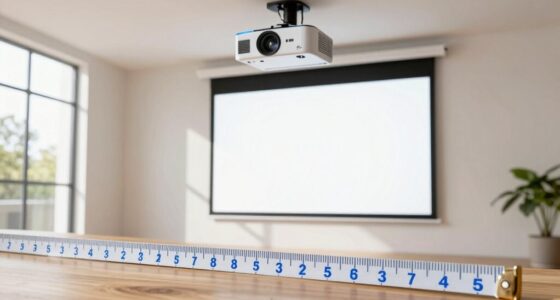
To measure your room for TV placement, start by noting your room dimensions. Measure the distance from where you’ll sit to the wall where the TV will go. Ideally, your viewing distance should be about 1.5 to 2.5 times the diagonal size of the TV for best viewing. Mark these spots on the floor to visualize the space and guarantee the TV fits comfortably while allowing for a great viewing experience.
Are Larger TVS Better for Gaming?
Larger TVs can enhance your gaming experience, especially when you’re into immersive graphics. With a bigger screen, you’ll appreciate the details and vibrant colors more, making gameplay feel more engaging. However, don’t forget about screen resolution; a large TV with low resolution can lead to a blurry picture. Ideally, aim for a higher resolution like 4K to truly enjoy the benefits of a larger display while gaming.
Can I Mount a TV on Any Wall?
You can’t mount a TV on just any wall. First, consider the wall type; drywall, brick, or concrete require different mounting hardware. Verify you locate studs in drywall for secure support, and use the right anchors for masonry. Also, think about mounting considerations like the viewing height and proximity to power outlets. With the right preparation, you’ll enjoy a perfectly mounted TV that enhances your viewing experience.
What Is the Ideal Height for TV Placement?
The ideal height for TV placement is at your eye level when you’re seated. This guarantees a comfortable viewing experience and reduces neck strain. Measure the distance from the floor to your eyes while sitting, and mount the TV accordingly. Also, consider your viewing distance; for best viewing, the TV should be about 1.5 to 2.5 times the diagonal screen size away. This setup enhances your overall enjoyment while watching.
Conclusion
Choosing the right TV size for your living room can transform your movie-watching experience. As they say, “the bigger, the better,” but it’s essential to balance size with viewing distance and room layout. Consider your habits, room lighting, and budget to find that sweet spot. With the right TV, you’ll not only enjoy clearer images but also create an inviting space for friends and family. So, do your homework and make the perfect choice for your home entertainment!