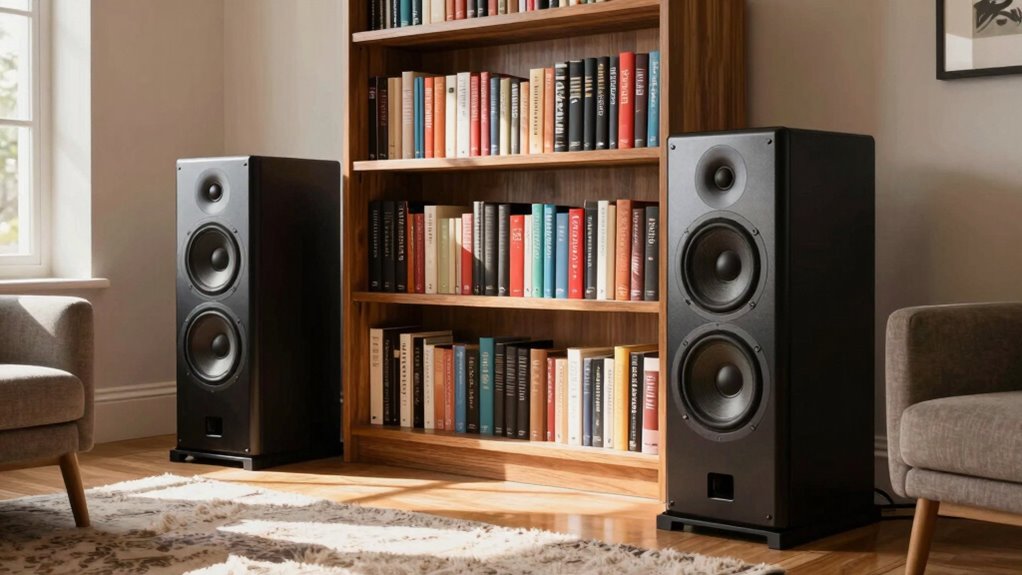

When choosing between bookshelf and tower speakers, the size of your room plays an essential role. Bookshelf speakers fit snugly in smaller spaces, providing clear sound without overwhelming bass. In contrast, tower speakers excel in larger rooms, delivering richer sound and deeper bass. Proper speaker placement is critical for ideal performance and acoustics, affecting clarity and balance. If you want to explore which option best suits your lifestyle and space, there’s more to uncover.

Get movie nights delivered free with Prime
- Fast, free delivery on millions of items
- Prime Video, Amazon Music and more included
- Member-only deals all year
Key Takeaways
- Bookshelf speakers excel in small rooms, providing clear sound without overwhelming bass, ideal for limited space.
- Tower speakers fill larger rooms with richer sound and deeper bass, enhancing the overall listening experience.
- Proper placement is crucial; speakers should be at ear level and distanced from walls for optimal sound quality.
- Room acoustics impact speaker performance; hard surfaces may reflect sound, while soft materials can absorb it, affecting clarity.
- Lifestyle factors, such as space availability and aesthetic preferences, play a significant role in choosing between bookshelf and tower speakers.
Bookshelf vs Tower Speakers: Key Differences
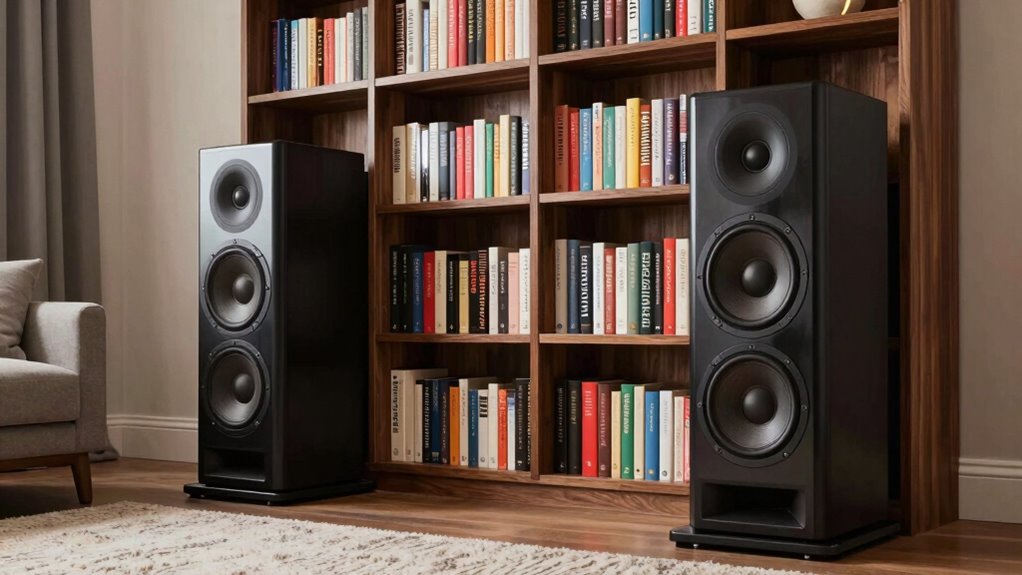
When you’re deciding between bookshelf and tower speakers, understanding their key differences can help you make an informed choice. Bookshelf speakers are compact and perfect for smaller spaces, offering excellent sound quality without taking up too much room. They often boast sleek design aesthetics that can blend seamlessly into your decor. On the other hand, tower speakers, larger and more powerful, deliver richer bass and fuller sound, making them ideal for immersive listening experiences. While they can dominate a room visually, their design aesthetics often appeal to audiophiles who appreciate a bold presence. Ultimately, your choice will depend on your space, sound quality preferences, and how much you value design aesthetics in your setup.
How Room Size Affects Bookshelf and Tower Speaker Performance
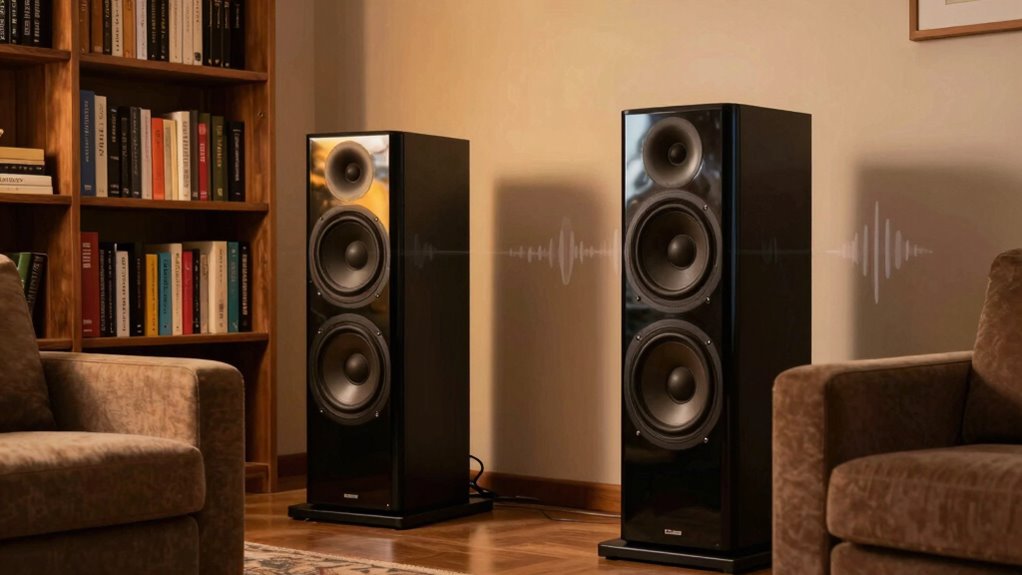
Room size plays an essential role in how bookshelf and tower speakers perform, as each type reacts differently to the acoustics of a given space. In smaller rooms, bookshelf speakers often excel because their compact dimensions minimize overwhelming bass and allow for clearer sound. They fit snugly on shelves or stands, making them ideal for tight quarters. Conversely, tower speakers, with their larger speaker dimensions, can fill a bigger room with richer sound and deeper bass. However, in small spaces, they might create muddled audio due to room acoustics amplifying low frequencies. Understanding your room size helps you choose the right speaker type, ensuring you enjoy superior sound quality tailored to your environment.
Effective Placement for Bookshelf and Tower Speakers
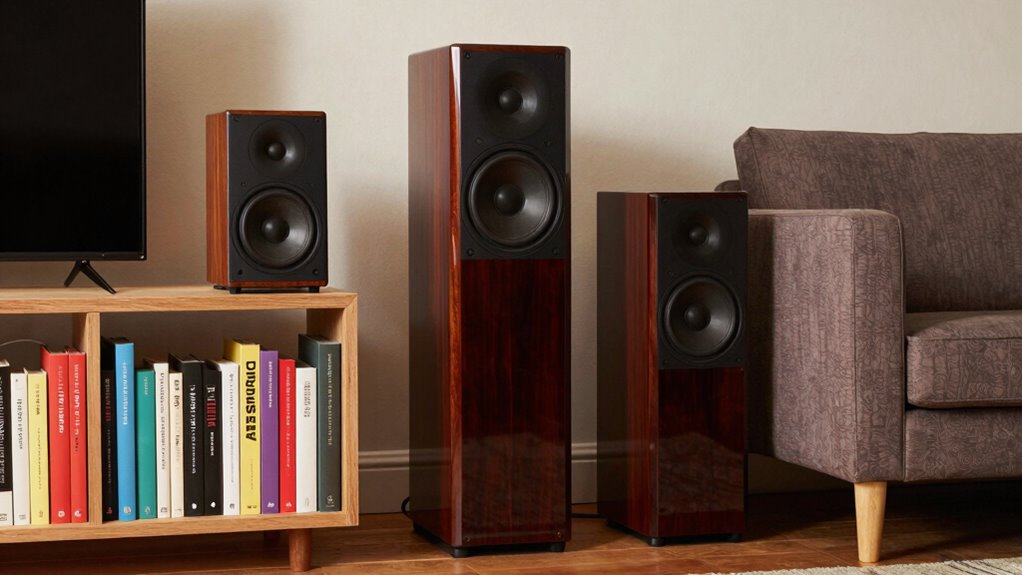
Effective placement of bookshelf and tower speakers can greatly enhance your listening experience, so it’s essential to take into account a few key factors. Here’s what you should consider:
- Speaker Height: Position your speakers at ear level for ideal clarity and balance.
- Distance from Walls: Keep your speakers at least a foot away from walls to improve sound dispersion.
- Angle: Angle your speakers slightly towards your listening position to create a focused soundstage.
- Room Corners: Avoid placing speakers in corners, as this can lead to excessive bass and muddied sound.
Acoustic Considerations for Bookshelf and Tower Speaker Use
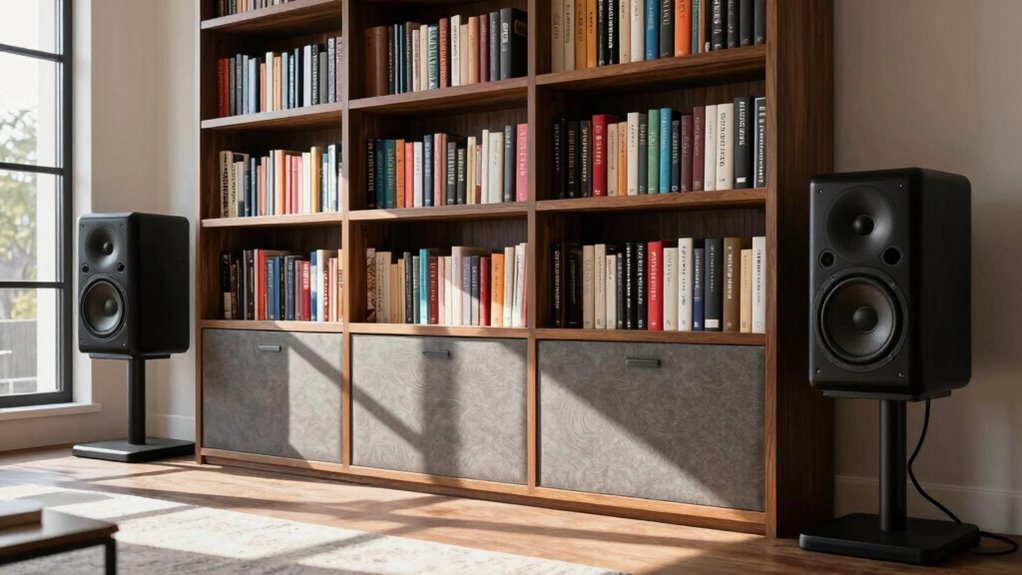
While you might focus on speaker placement, the acoustic characteristics of your space can greatly impact sound quality. Proper sound absorption is key to enhancing your listening experience, regardless of whether you choose bookshelf or tower speakers. Consider the following factors in your setup:
| Factor | Impact on Sound Quality |
|---|---|
| Room Size | Larger rooms may require more sound absorption to minimize echo. |
| Wall Materials | Hard surfaces reflect sound, while soft materials absorb it. |
| Speaker Height | Placement affects how sound waves interact with your room’s acoustics. |
Which Speakers Fit Your Lifestyle Best?
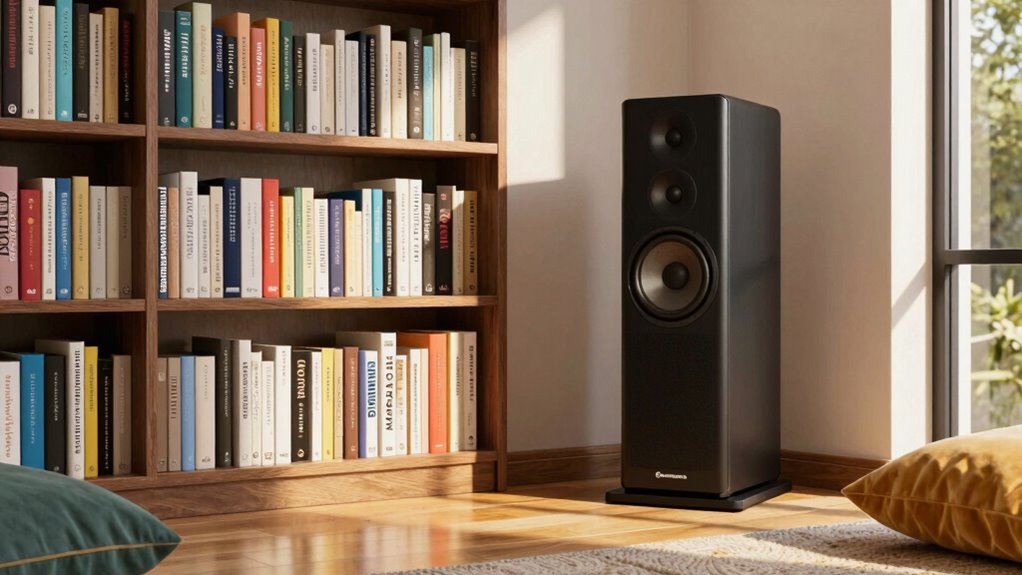
Understanding your acoustic environment is only part of the equation when choosing between bookshelf and tower speakers; your lifestyle plays a significant role too. To guarantee lifestyle alignment and enhance your design aesthetics, consider the following factors:
- Space Availability: Tower speakers require more room, while bookshelf speakers can fit in tighter spaces. Additionally, acoustic treatment can help optimize the sound quality of your speakers in any space. Proper filtration/suction basics can also ensure that the environment is clean, which enhances the overall audio experience. Furthermore, smart HVAC systems can maintain a comfortable temperature in your listening area, ensuring that your audio experience isn’t compromised by environmental factors. Moreover, ensuring proper power protection for your audio equipment can prevent damage from power surges and enhance longevity.
- Listening Habits: If you enjoy immersive sound for movies or music, tower speakers may be ideal.
- Mobility Needs: If you move often, bookshelf speakers are easier to transport.
- Aesthetic Preferences: Think about how each option complements your home decor and personal style.
Additionally, consider that acoustic environment plays a crucial role in how sound is perceived in your space, impacting your overall listening experience.
Frequently Asked Questions
Can Bookshelf Speakers Be Used for Home Theater Setups?
Yes, bookshelf speakers can definitely be used for home theater setups. They provide excellent sound dispersion, making them effective for filling your room with sound, especially in smaller spaces. Just keep in mind that room acoustics play an essential role; you’ll want to position them correctly for ideal performance. By ensuring proper placement and pairing with a good subwoofer, you can achieve an immersive audio experience that enhances your movie nights.
Do Tower Speakers Require More Power Than Bookshelf Speakers?
Yes, tower speakers generally require more power than bookshelf speakers. This difference often comes down to their size and speaker efficiency. Tower speakers typically have larger drivers, which can demand more power to achieve peak performance. However, the actual power requirements can vary based on the specific models you’re comparing. It’s crucial to check the specifications of both types to make sure your amplifier can handle the speaker’s needs effectively.
How Do Speaker Materials Affect Sound Quality?
Speaker materials dramatically shape sound quality, like a master artist painting a masterpiece. When you consider speaker construction, look for materials that enhance sound damping, as they reduce unwanted vibrations. High-quality woofers often use stiff cones, while tweeters benefit from lightweight materials. The combination creates clearer, more accurate audio. So, pay close attention to the materials used; they can transform your listening experience from ordinary to extraordinary!
Can I Mix Bookshelf and Tower Speakers in a System?
Yes, you can mix bookshelf and tower speakers in a system. Just be mindful of speaker placement to guarantee balanced sound staging. Position your bookshelf speakers at ear level and place the tower speakers for best bass response. This combination can enhance your listening experience, providing depth and clarity. Experiment with different placements to find what works best for your space, and don’t hesitate to adjust settings to achieve the perfect audio balance.
What Is the Average Lifespan of Bookshelf and Tower Speakers?
The average lifespan of bookshelf and tower speakers typically ranges from 10 to 20 years, depending on their speaker durability and how well you maintain them. If you keep them in a stable environment and avoid overdriving the sound performance, they can last even longer. Regularly checking connections and cleaning the components can also enhance their longevity. So, treat your speakers well, and they’ll reward you with great audio for years to come.
Conclusion
In summary, whether you choose bookshelf or tower speakers, it really comes down to your space and preferences. Curiously, studies show that 60% of listeners prefer the soundstage of tower speakers in larger rooms, while bookshelf speakers excel in smaller spaces. By considering room size and placement, you can create an ideal listening experience. Ultimately, pick what fits your lifestyle best, and enjoy the music that makes you feel alive!
Fall Picks
fall essentials
As an affiliate, we earn on qualifying purchases.