
When choosing a projector, understanding lumens is essential to avoid buying one that’s too dim for your space. A higher lumen count means brighter images, especially in well-lit rooms. Aim for at least 2,000 lumens for bright environments and consider your room’s lighting conditions for peak performance. Remember, it’s not just about brightness; contrast ratio also matters for image quality. Explore more tips to guarantee your projector delivers the best viewing experience tailored to your needs.

Get movie nights delivered free with Prime
- Fast, free delivery on millions of items
- Prime Video, Amazon Music and more included
- Member-only deals all year
Key Takeaways
- Lumens measure brightness; aim for at least 2,000 lumens in well-lit rooms to ensure clear image visibility.
- Dark environments typically require projectors with 1,500 to 2,000 lumens for optimal viewing experience.
- Room size and light conditions dictate necessary lumen counts; consider larger spaces needing higher lumens.
- Brightness impacts color accuracy; overly bright projectors can wash out details and colors.
- Adjust projector settings and control ambient light to maximize brightness and clarity during use.
Understanding Lumens: What They Mean for Projectors
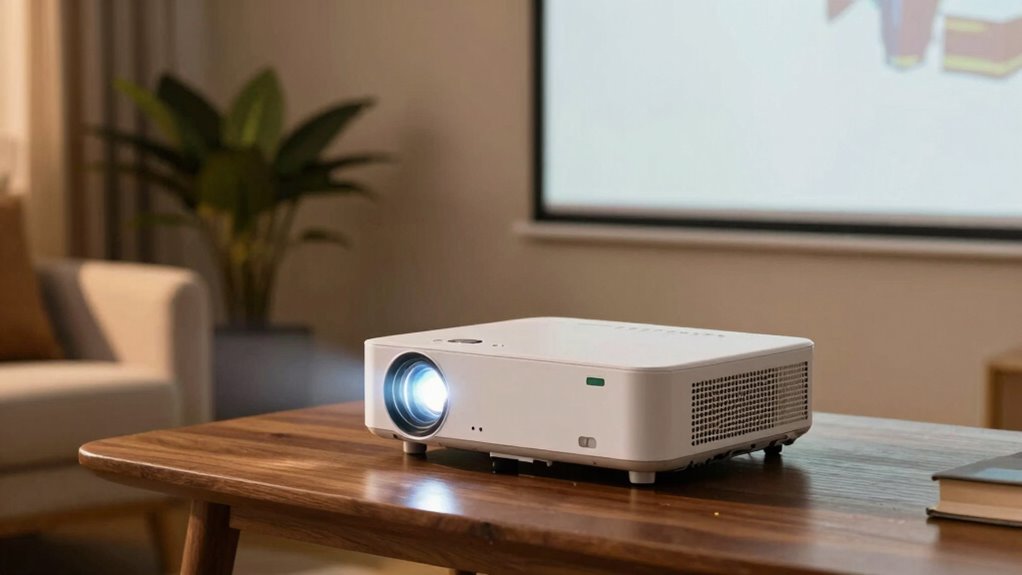
When it comes to projectors, lumens are a key factor that determines how well you’ll see your content. The lumen measurement reflects the brightness a projector can produce, directly influencing your viewing experience. Higher lumens mean brighter images, making them essential for spaces with ambient light. If you’re in a well-lit room, a projector with a higher lumen count will enhance your brightness perception, ensuring that colors pop and details remain visible. Conversely, a lower lumen projector might struggle in the same environment, resulting in a dim display. Understanding lumens helps you choose the right projector for your needs, ensuring you won’t end up with a device that’s too dim for your viewing conditions.
How Lumens Affect Your Viewing Experience
Lumens play a significant role in shaping your overall viewing experience with a projector. The brightness perception in your viewing environment directly impacts how well you can see the details in your content. If your space is well-lit, you’ll need a projector with higher lumens to guarantee a clear picture. Additionally, understanding power distribution for AV racks can help you ensure that your projector receives adequate power for optimal performance. The efficiency of light output in different projector models can also significantly influence how bright the image appears on your screen. Furthermore, knowing the optimal brightness levels for various content types can enhance your experience even more. A projector’s contrast ratio also plays a crucial role in defining the clarity and sharpness of the images displayed. Investing in high-quality acoustic drum shields can further improve your overall audio experience, complementing the visual aspect.
Here’s a quick comparison of lumens and viewing conditions:
| Lumen Count | Viewing Environment |
|---|---|
| 1000-2000 | Dark room |
| 2000-3000 | Dimly lit room |
| 3000+ | Brightly lit room |
Choosing the right lumen count enhances your brightness perception, making your viewing experience more enjoyable. Don’t underestimate the importance of lumens; they can make or break your projector’s performance!
How to Pick the Right Lumen Count for Your Space

Choosing the right lumen count for your space can feel overwhelming, but it doesn’t have to be. Start by measuring your room dimensions. Consider the size of the screen and the distance from the projector. For a brighter image, aim for at least 2,000 lumens in a well-lit room, while darker spaces may require 1,500 to 2,000 lumens. Use lumen calculations to estimate the needed brightness based on your environment. If you have high ceilings or large windows, you might need a projector with a higher lumen count. Always think about how ambient light affects your viewing experience, and don’t hesitate to adjust your choice based on your specific needs. Additionally, consider projector choices that are specifically designed for various lighting conditions; this way, you’ll guarantee an ideal viewing experience.
Debunking Common Myths About Projector Brightness
How much do you really know about projector brightness? It’s time for some myth busting around brightness misconceptions that could lead you to make the wrong choice. Here are four common myths:
- Higher lumens always equal better quality: More lumens don’t guarantee a sharper image.
- All projectors perform the same in bright rooms: Some projectors handle ambient light better than others.
- You need a super high lumen count for home use: Your room’s lighting and size play a significant role.
- Brightness doesn’t affect color accuracy: Overly bright projectors can wash out colors, diminishing the viewing experience.
Understanding these myths will help you make an informed decision when selecting your projector. Don’t fall for brightness misconceptions!
Best Projectors for Varying Lighting Conditions
When you’re looking for a projector that performs well in various lighting conditions, it’s crucial to take into account both the brightness and the technology behind the device. For well-lit rooms, you’ll want a projector with a high lumen count; models like the Epson Home Cinema series excel in bright environments. If you plan on using portable projectors, consider those with LED technology, as they typically offer better brightness-to-size ratios. For outdoor projectors, look for options with at least 3,000 lumens to guarantee your image remains clear, even as daylight fades. Brands like BenQ and ViewSonic provide versatile choices that adapt to both indoor and outdoor settings, making them ideal for any occasion.
Tips to Maximize Brightness and Image Clarity
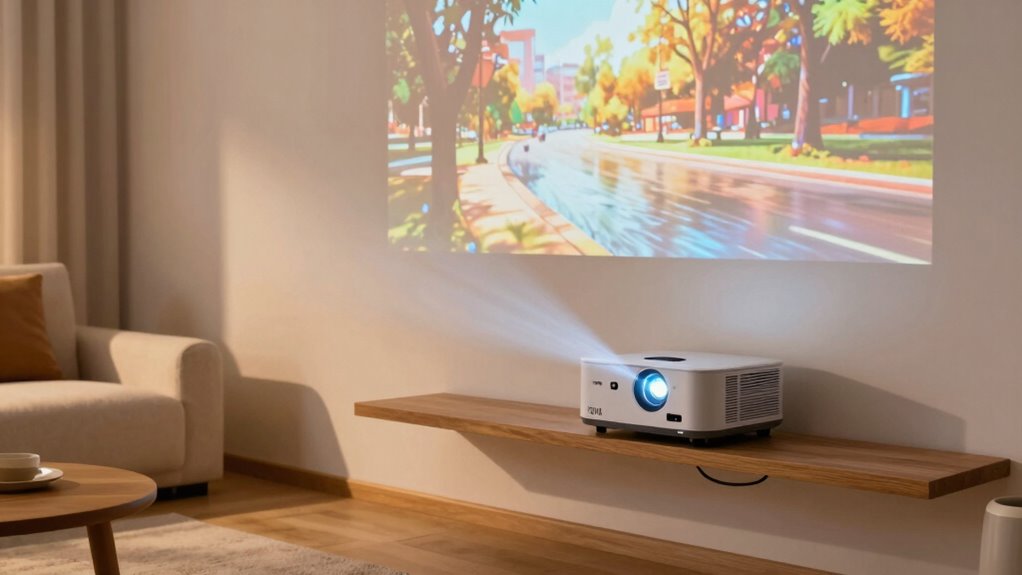
Are you maximizing your projector’s brightness and image clarity? To guarantee you get the best viewing experience, follow these tips:
- Adjust Brightness Settings: Use your projector’s brightness settings to match your room’s lighting. Higher settings can help in well-lit spaces, especially in combination with smart home gear to further enhance the environment. Consider also that projectors with higher lumens ratings are generally more effective in bright rooms. Additionally, ensure the color temperature of your projector is set appropriately, as this can significantly impact the perceived brightness.
- Optimize Contrast Ratios: Tweak the contrast ratio to enhance the difference between light and dark images. This makes colors pop and details clearer, ultimately improving your overall viewing experience.
- Choose the Right Screen: A high-quality screen can greatly improve brightness and clarity, reflecting light better than plain walls. Implementing smart lighting solutions can also assist in creating an optimal viewing environment.
- Control Ambient Light: Minimize external light by closing curtains or blinds, which allows your projector to shine brighter.
Additionally, understanding the science behind kitchen appliances can help you make informed choices about your home technology. Implementing these strategies will elevate your viewing experience. Enjoy the clarity!
What If Your Projector Still Isn’t Bright Enough?
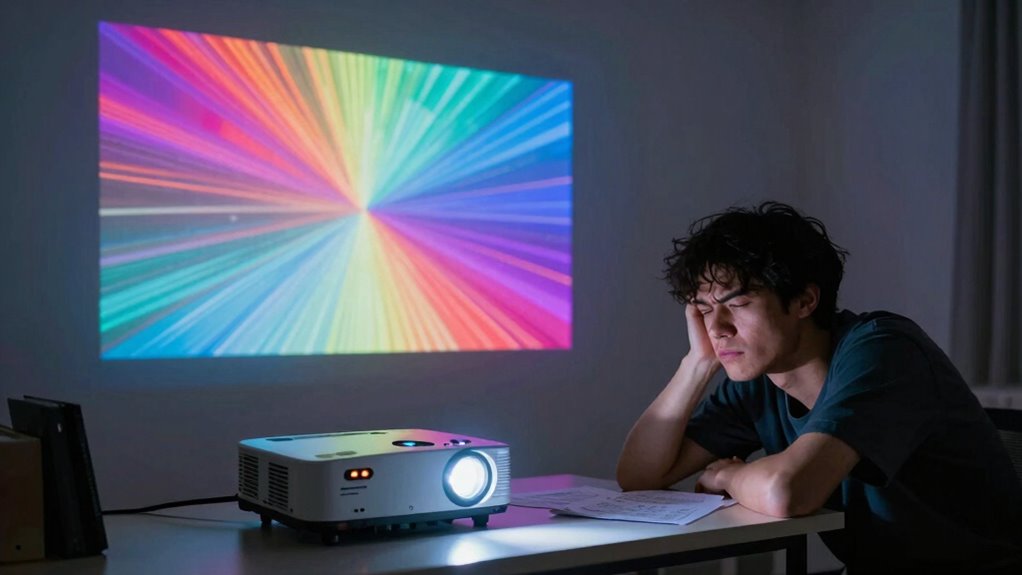
Even after optimizing your projector’s settings, you might find it still lacks brightness. If that’s the case, consider reducing ambient light in your room. Close curtains or blinds to minimize outside light, or switch to darker paint colors on your walls to enhance contrast. You could also try using a higher-gain projector screen, which reflects more light and can make your image appear brighter. Additionally, investing in mount leveling kits can help ensure your projector is optimally positioned for the best image quality.
If you’re still struggling, check if your projector’s lamp needs replacing. A worn-out bulb can greatly impact brightness. Finally, consider upgrading to a projector with a higher lumen output, especially if you regularly use it in bright environments. Regular maintenance routines can also help ensure optimal performance. Sometimes, a little adjustment can make a big difference!
Frequently Asked Questions
How Do Ambient Light and Projector Lumens Interact?
Ambient light greatly impacts projector brightness; studies show that in a brightly lit room, you might need a projector with at least 2,500 lumens to maintain a clear image. When you set up your projector, consider the ambient light levels. If your room’s flooded with natural light or lamp brightness, you’ll need a higher lumens rating to guarantee your content remains vibrant and easy to see, enhancing your viewing experience.
Can I Use a Projector Outdoors During the Day?
Yes, you can use a projector outdoors during the day, but it’s essential to choose outdoor projectors designed for daytime viewing. These projectors typically have higher lumens, allowing them to compete with natural light. Look for models specifically marketed for daylight use, as they’ll provide a clearer image. Keep in mind that even with a bright projector, you might still need to position it in shaded areas for ideal visibility.
What Is the Difference Between ANSI and Perceived Lumens?
ANSI lumens and perceived lumens dance in the world of brightness. While ANSI standards provide a standardized measurement technique, perceived brightness reflects how your eyes interpret light in various environments. ANSI gives you a concrete number, but perceived lumens factor in ambient light and screen characteristics. So, when you’re making lumen comparisons, remember that what you see can be different from what the numbers say—your experience matters just as much!
Are Higher Lumens Always Better for Home Theaters?
Higher lumens aren’t always better for home theaters. While higher brightness can enhance clarity, it might not provide ideal performance in a dark environment. You want a balance; too much brightness can cause eye strain and wash out colors. Consider your room’s lighting and projector placement. For a cinematic experience, aim for projectors with sufficient lumens to deliver vivid images without overwhelming brightness. The right level makes all the difference in your viewing enjoyment.
How Can I Measure Lumens in My Room?
To measure lumens in your room, you don’t need a magic wand—just some simple measuring techniques! Grab your smartphone and use a light meter app, or get a handheld light meter for more accuracy. Shine it around to assess the room brightness in different spots. Remember, it’s not about turning your space into a sunroom but finding the right balance between comfort and visibility. Your eyes (and your projector) will thank you!
Conclusion
In the world of projectors, lumens are your guiding star, illuminating the path to an outstanding viewing experience. By understanding how brightness impacts your space, you can avoid the frustration of a dim display that leaves you squinting in the dark. Whether you’re binge-watching in a cozy den or presenting in a bright conference room, choosing the right lumen count makes all the difference. So, light up your life and enjoy every moment with crystal-clear images.
Halloween Picks
halloween
As an affiliate, we earn on qualifying purchases.