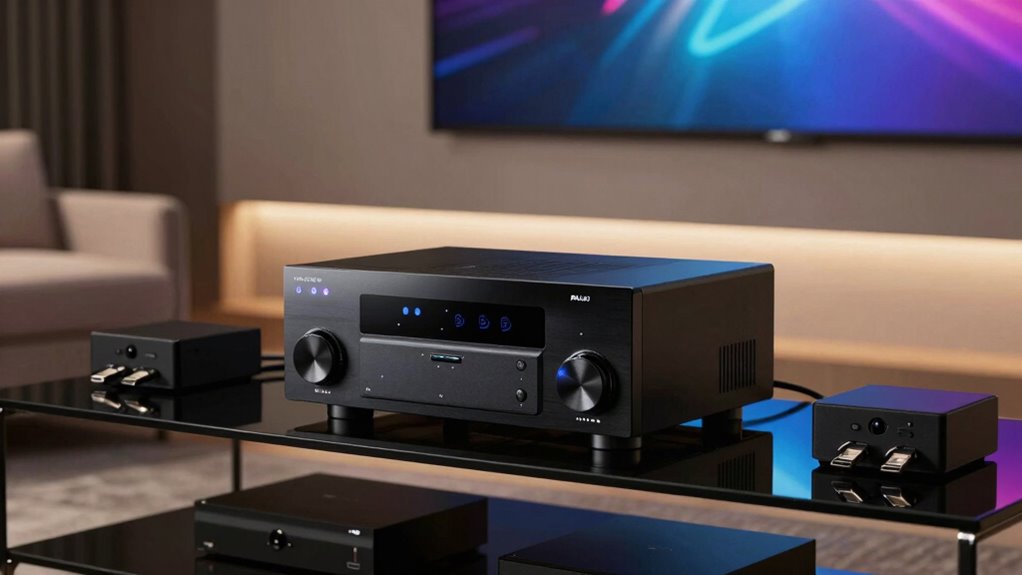

Searching for the best HDMI 2.1 AV receivers in 2026? The Onkyo TX-NR7100 stands out as the overall top pick thanks to its powerful 9.2-channel support and advanced features. The Sony STR-AN1000 offers excellent 8K compatibility and immersive Dolby Atmos, making it a strong contender. Meanwhile, the Pyle 9.1 Channel AV Receiver provides impressive HDMI 2.1 support at a more accessible price. Buyers face tradeoffs between power, connectivity, ease of use, and cost, so understanding these differences is key. Continue reading for a comprehensive breakdown of these options and what to consider before making your choice.

Get movie nights delivered free — and shop member deals
- Fast, free delivery on millions of items
- Access to Prime Big Deal Days deals on October 6–7
- Prime Video, Amazon Music and more included
Key Takeaways
- The top picks balance HDMI 2.1 features with overall audio quality and usability.
- Powerful multi-channel support varies significantly, affecting home theater scalability.
- Price differences mainly hinge on connectivity options and build quality.
- Ease of setup and user interface are crucial for beginners or casual users.
- Future-proofing with 8K and high refresh rate support is essential for longevity.
| Onkyo TX-NR7100 9.2-Channel AV Receiver |  | Best Overall for Versatile Home Theater Enthusiasts | Channels: 9.2 | Power per Channel: 100 Watts | HDMI: 3 HDMI-out, HDMI 2.1 with 8K support | VIEW ON AMAZON | See Our Full Breakdown |
| Sony STR-AN1000 7.2ch 8K A/V Receiver with Dolby Atmos & DTS:X |  | Best for Easy Setup with Modern HDMI Support | Channels: 7.2 | Power: 165 W per channel | HDMI Support: 8K & 4K/120 with HDMI 2.1 | VIEW ON AMAZON | See Our Full Breakdown |
| Yamaha RX-V4A 5.2-Channel AV Receiver with MusicCast |  | Best for Entry-Level Users with Streaming and Voice Control | Connectivity Technology: Wi-Fi, Bluetooth, Airplay2 | Total Number of HDMI Ports: 5 | Power: 80 Watts per channel | VIEW ON AMAZON | See Our Full Breakdown |
| Sony STRDH590 5.2 Channel Surround Sound Home Theater Receiver with 4K HDR and Bluetooth |  | Best Budget-Friendly 4K HDR Compatible Receiver | Channel: 5.2 | Power: 725W total | HDMI Inputs: 4 in/1 out | VIEW ON AMAZON | See Our Full Breakdown |
| Pyle 9.1 Channel AV Receiver with HDMI 2.1, Bluetooth, and Surround Sound |  | Best for Deep Surround Sound and 8K Support | Channels: 9.1 | HDMI: HDMI 2.1 | Video Support: 8K/4K pass-through | VIEW ON AMAZON | See Our Full Breakdown |
| Yamaha RX300A 5.2-Channel Home Theater AV Receiver with Dolby Atmos, 4K120/8K HDMI, Bluetooth Multipoint |  | Best Overall for Versatile Home Theater & Gaming | Channels: 5.2 | Power: 70W per channel | HDMI Support: 4K120/8K60, HDMI eARC/ARC | VIEW ON AMAZON | See Our Full Breakdown |
| Denon AVR-S570BT AV Receiver 5.2 Channel 8K Ultra HD Audio & Video, Bluetooth Streaming, 4 HDMI 8K Inputs | 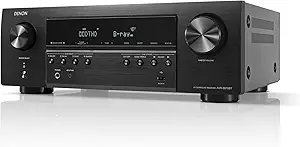 | Best Value for 8K Support & Easy Setup | Channels: 5.2 | HDMI Inputs: 4 | HDMI Output: 1 | VIEW ON AMAZON | See Our Full Breakdown |
| hdmi 21 av receiver | Power | Channels | Bluetooth |
|---|---|---|---|
| Onkyo TX-NR7100 9.2-Channel AV | — | 9.2 | Yes, SBC, AAC, aptX, aptX HD |
| Sony STR-AN1000 7.2ch 8K A/V R | 165 W per channel | 7.2 | — |
| Yamaha RX-V4A 5.2-Channel AV R | 80 Watts per channel | — | — |
| Sony STRDH590 5.2 Channel Surr | 725W total | — | — |
| Pyle 9.1 Channel AV Receiver w | High | 9.1 | Yes |
| Yamaha RX300A 5.2-Channel Home | 70W per channel | 5.2 | Multipoint |
| Denon AVR-S570BT AV Receiver 5 | 70W x 5 | 5.2 | Yes |
More Details on Our Top Picks
Onkyo TX-NR7100 9.2-Channel AV Receiver
The Onkyo TX-NR7100 stands out for its impressive 9.2-channel setup, Dolby Atmos, DTS:X, and HDMI 2.1 support with 8K pass-through. Compared to the Sony STR-AN1000, it offers more channels and advanced room calibration with Dirac Live, making it ideal for those seeking immersive audio with precise tuning. However, this added complexity comes with a higher price and a more involved setup process, especially since the Dirac microphone isn’t included. It’s perfect for dedicated home theater fans willing to invest time and money, but less suitable for beginners or those on a tight budget. Its strengths include advanced room correction, latest HDMI features, and multi-room integration. The trade-offs are a complex setup and a higher cost.
Pros:- Advanced room correction with Dirac Live for precise sound calibration
- Supports HDMI 2.1 with 8K and gaming features like VRR and ALLM
- Seamless integration with Sonos for multi-room audio
Cons:- Requires an additional microphone for Dirac Live calibration
- Setup can be challenging for users unfamiliar with AV systems
Best for: Home theater aficionados who want the most immersive sound and advanced features, and are comfortable with complex calibration.
Not ideal for: Casual users or those new to AV receivers, due to its setup complexity and higher price point.
- Channels:9.2
- Power per Channel:100 Watts
- HDMI:3 HDMI-out, HDMI 2.1 with 8K support
- Room Correction:Dirac Live
- Streaming Services:Spotify, TIDAL, Deezer, TuneIn, Pandora
- Bluetooth:Yes, SBC, AAC, aptX, aptX HD
Our verdict“This receiver is best suited for serious home theater enthusiasts seeking top-tier sound and future-proof HDMI support.”
Sony STR-AN1000 7.2ch 8K A/V Receiver with Dolby Atmos & DTS:X
The Sony STR-AN1000 offers a compelling balance of power and simplicity, supporting 8K and 4K/120Hz HDMI 2.1 for high-quality video and immersive Dolby Atmos and DTS:X surround sound. Compared to the Pyle 9.1 Channel AV Receiver, it provides a more streamlined user experience with a graphical setup interface and multi-zone support. While its 7.2 channels might seem limiting next to the 9.2 of Onkyo, it still covers most home theater needs with robust power and features. Its straightforward setup makes it attractive for users who want modern HDMI capabilities without the complexity of advanced calibration. The main tradeoff is slightly fewer channels and a higher power draw, but overall, it’s a versatile choice for those seeking a user-friendly experience with latest standards.
Pros:- Supports latest HDMI 2.1 with 8K and 4K/120Hz pass-through
- Impressive Dolby Atmos and DTS:X support for immersive sound
- Easy-to-navigate setup with graphical interface and multi-zone support
Cons:- High power consumption may be a concern
- Less detailed calibration options compared to Onkyo with Dirac Live
Best for: Users who want a future-ready receiver with straightforward setup and high-quality video support, without needing extensive calibration features.
Not ideal for: Audiophiles or advanced users seeking multi-zone audio or extensive room tuning options.
- Channels:7.2
- Power:165 W per channel
- HDMI Support:8K & 4K/120 with HDMI 2.1
- Supports:Dolby Atmos, DTS:X, Dolby Vision, HDR10
- Connectivity:Bluetooth, Wi-Fi, Chromecast, AirPlay
- Additional Features:Digital Cinema Auto Calibration IX
Our verdict“This model is ideal for those wanting a modern, easy-to-set-up receiver that supports high-resolution video and immersive audio.”
Yamaha RX-V4A 5.2-Channel AV Receiver with MusicCast
The Yamaha RX-V4A caters well to those new to home theater, offering 5.2 channels with 80W per channel, along with HDMI 2.1 support for 4K and 8K video. It’s a strong choice for users who value smart features like voice control via Alexa, Google Assistant, and Siri, along with built-in Wi-Fi, Bluetooth, and AirPlay 2 for streaming. Compared with the Sony STR-AN1000, it provides fewer channels but adds smart home integration and multi-room capabilities in a more straightforward package. Its main limitation is the lack of a dedicated room calibration microphone, which might hinder precise tuning for audiophiles or those with challenging rooms. Still, for beginners or average users, the RX-V4A offers a solid entry point with good future-proofing at a reasonable price.
Pros:- Supports 4K and 8K HDMI 2.1 for high-quality video
- Built-in Wi-Fi, Bluetooth, and AirPlay 2 for easy streaming
- Voice control compatibility with Alexa, Google, and Siri
Cons:- No built-in room calibration microphone
- Limited to 5.2 channels, less immersive for large setups
Best for: Entry-level home theater users who want streaming, voice control, and HDMI 2.1 support without complex setup.
Not ideal for: Audiophiles or users seeking extensive multi-zone audio or advanced calibration features.
- Connectivity Technology:Wi-Fi, Bluetooth, Airplay2
- Total Number of HDMI Ports:5
- Power:80 Watts per channel
- Supports:DTS, Dolby Vision, HDR10
- Control Method:Voice
- Additional Features:Multi-room support
Our verdict“Best suited for beginners or casual users seeking modern streaming and voice features with basic surround sound.”
Sony STRDH590 5.2 Channel Surround Sound Home Theater Receiver with 4K HDR and Bluetooth
The Sony STRDH590 provides a straightforward 5.2 channel setup suitable for smaller home theater configurations. It supports 4K HDR passthrough with HDCP 2.2, making it a good choice for budget-conscious users who want reliable 4K video support. While it features virtual surround with Sony’s S Force PRO technology, it lacks HDMI 2.1 and higher channel counts, making it less future-proof compared to Pyle’s 9.1 model. Its simplicity and lower price make it appealing for entry-level setups, but it falls short for more immersive, high-channel systems. Its limited connectivity and absence of Wi-Fi mean it’s best for basic setups with wired streaming sources.
Pros:- Supports 4K HDR with HDCP 2.2 for high-quality video
- Affordable price point for entry-level setups
- Bluetooth streaming for wireless audio
Cons:- Limited to 5.2 channels, less immersive for larger rooms
- No Wi-Fi or advanced streaming integrations
Best for: Budget-focused users with smaller rooms who want reliable 4K HDR support and Bluetooth streaming.
Not ideal for: Serious home theater enthusiasts or those seeking the latest HDMI 2.1 features and higher channel counts.
- Channel:5.2
- Power:725W total
- HDMI Inputs:4 in/1 out
- Supported Video:4K HDR with HDCP 2.2
- Connectivity:Bluetooth, Optical, Coaxial
- Power Requirements:AC 120V 60Hz
Our verdict“A solid choice for basic home theater needs on a budget, but not suitable for future-proofing or high-end setups.”
Pyle 9.1 Channel AV Receiver with HDMI 2.1, Bluetooth, and Surround Sound
The Pyle 9.1 Channel AV Receiver offers a high channel count with 9.1 channels, supporting HDMI 2.1 with 8K pass-through, making it suitable for large, immersive setups. Compared with the Onkyo TX-NR7100, it provides similar HDMI capabilities but often at a more accessible price point. Its 9.1 configuration promises full-range sound with deep bass, appealing to those prioritizing surround sound quality. However, its large size and complex setup might be challenging for smaller spaces or less tech-savvy users. While Bluetooth streaming is included, the receiver’s build quality and user interface can vary, and high power consumption could be a concern. This pick makes sense for users who want a high-channel count and 8K support without breaking the bank.
Pros:- Powerful 9.1 surround sound configuration
- Supports HDMI 2.1 with 8K pass-through
- Built-in Bluetooth for streaming
Cons:- Large physical size requiring significant space
- Setup complexity can be daunting for some users
Best for: Enthusiasts seeking a high-channel surround system with 8K HDMI support and versatile device connectivity.
Not ideal for: Users with limited space or those preferring a simpler setup with fewer channels.
- Channels:9.1
- HDMI:HDMI 2.1
- Video Support:8K/4K pass-through
- Bluetooth:Yes
- Inputs:HDMI, optical, coaxial, USB, analog
- Power:High
Our verdict“Ideal for home theater lovers wanting a high-channel system with the latest HDMI support, provided space and setup complexity are manageable.”
Yamaha RX300A 5.2-Channel Home Theater AV Receiver with Dolby Atmos, 4K120/8K HDMI, Bluetooth Multipoint
The Yamaha RX300A stands out for delivering immersive Dolby Atmos and DTS Virtual:X sound, making it ideal for those who want a true cinematic experience. Compared to the Denon AVR-S570BT, it offers more advanced HDMI features like 4K120/8K60 support and room correction, which enhance gaming and streaming quality. While it excels in sound immersion and has wireless Bluetooth Multipoint, it might be less straightforward for users unfamiliar with home theater setups due to its richer feature set. Its 70W per channel power limits its suitability for very large rooms, and it lacks built-in voice control, which could be a drawback for some smart home enthusiasts. Overall, this model makes the most sense for buyers seeking high-quality audio combined with flexible HDMI support, especially for gaming and immersive movies.
Pros:- Immersive Dolby Atmos and DTS Virtual:X sound for a cinematic experience
- Supports high-resolution 4K120 and 8K video for future-proofing
- Easy setup with on-screen menu and room correction technology
- Wireless streaming with Bluetooth Multipoint for multiple devices
Cons:- May be complex for users unfamiliar with home theater systems
- Limited to 70W power per channel, potentially insufficient for large rooms
- No built-in voice control features
Best for: Home theater enthusiasts and gamers who prioritize immersive sound and advanced HDMI features.
Not ideal for: Casual users or small room setups, as the setup complexity and power limit may be less suitable.
- Channels:5.2
- Power:70W per channel
- HDMI Support:4K120/8K60, HDMI eARC/ARC
- Dolby Atmos:Yes
- DTS Virtual:X:Yes
- Bluetooth:Multipoint
- Room Correction:Yes
- Video Support:HDR10+, Dolby Vision
Our verdict“This receiver is ideal for users seeking a feature-rich, immersive home theater experience with gaming support.”
Denon AVR-S570BT AV Receiver 5.2 Channel 8K Ultra HD Audio & Video, Bluetooth Streaming, 4 HDMI 8K Inputs
The Denon AVR-S570BT is an excellent choice for those prioritizing 8K video support and straightforward operation. Compared to the Yamaha RX300A, it offers four HDMI 8K inputs, making it better suited for multi-device setups without needing splitters. While it supports all major HDR formats like Dolby Vision and HDR10+ and includes Bluetooth streaming, its 70W per channel may not deliver enough power for large, open spaces. The lack of built-in Wi-Fi means streaming depends on Bluetooth, which can limit convenience, especially if you prefer app-based control. Nevertheless, it offers a clean, simple interface and reliable high-quality video, making it a strong choice for budget-conscious buyers who want future-proofing without complexity.
Pros:- Supports 8K Ultra HD and HDR formats for future-proof video quality
- Four HDMI 8K inputs for multiple device connections
- Built-in Bluetooth for wireless music streaming
- Easy on-screen setup with clear instructions
Cons:- Limited to 70W per channel, which may be insufficient for large spaces
- No built-in Wi-Fi, relying solely on Bluetooth for streaming
- Requires compatible remote or app for full control
Best for: Buyers seeking high-quality 8K video and simple setup for standard-sized rooms.
Not ideal for: Large rooms or users wanting integrated Wi-Fi and more advanced smart home features.
- Channels:5.2
- HDMI Inputs:4
- HDMI Output:1
- Supports:8K Ultra HD, HDR, Dolby Vision, HDR10+, Dynamic HDR
- Bluetooth:Yes
- Power:70W x 5
- Standby Power:0.1 W
- eARC:Yes
Our verdict“This receiver is well-suited for users who want high-quality 8K video support with simple, budget-friendly operation.”

How We Picked
In evaluating these HDMI 2.1 AV receivers, I prioritized performance, build quality, and feature set. Compatibility with the latest HDMI standards, especially 8K and high refresh rates, was a must-have for future-proofing. I also considered usability factors such as setup complexity, user interface, and remote control quality. Value was assessed by comparing features against price, ensuring each pick offers a meaningful advantage for its price point. This led to a ranking that balances advanced capabilities with practical considerations, helping buyers find the best fit for their needs and budget.| hdmi 21 av receiver | Bluetooth |
|---|---|
| Onkyo TX-NR7100 9.2-Channel AV | Yes, SBC, AAC, aptX, aptX HD |
| Sony STR-AN1000 7.2ch 8K A/V R | — |
| Yamaha RX-V4A 5.2-Channel AV R | — |
| Sony STRDH590 5.2 Channel Surr | — |
| Pyle 9.1 Channel AV Receiver w | Yes |
| Yamaha RX300A 5.2-Channel Home | Multipoint |
| Denon AVR-S570BT AV Receiver 5 | Yes |
Factors to Consider When Choosing Hdmi 21 Av Receivers
Selecting the right HDMI 2.1 AV receiver involves more than just checking specifications. It’s important to consider your current setup, future needs, and how the receiver integrates with your existing devices. Key factors include power output, connectivity options, ease of use, and build quality. Understanding these elements helps avoid common pitfalls, such as overpaying for features you don’t need or choosing an underpowered model that can’t handle your setup. The following sections highlight critical considerations to keep in mind when making your decision.Power and Channel Support
Power output and channel support determine how well your receiver can handle your speaker setup. A 5.2-channel system might suffice for most, but if you want immersive surround sound or plan to expand, a 7.2 or 9.2-channel receiver will deliver richer audio. Additionally, higher wattage per channel ensures clearer sound at higher volumes without distortion. Choosing a receiver with more channels than your current setup can provide room for future upgrades without needing a new unit.
HDMI 2.1 Features and Compatibility
HDMI 2.1 support unlocks features like 8K video, 4K120Hz refresh rates, and Variable Refresh Rate (VRR), which are essential for gaming and future-proofing. Not all HDMI 2.1 ports are equal, so look for models with multiple HDMI 2.1 inputs and outputs to connect your latest consoles, PCs, and streaming devices. Be aware that some receivers may advertise HDMI 2.1 but lack full support for all features, so verify specifications carefully.
Ease of Use and Setup
Intuitive interfaces and straightforward setup processes can save significant time and frustration. Features like automatic calibration, user-friendly remote controls, and mobile app integration make daily use easier. For less tech-savvy users, a receiver with guided setup and clear menus is worth paying for. Keep in mind that complex systems may require additional effort to optimize, especially if you’re integrating multiple devices and speakers.
Build Quality and Reliability
Durability and reliable performance are often overlooked but critical for long-term satisfaction. Look for well-constructed units with solid heatsinks, quality connectors, and good reviews on longevity. Cheaper models might save money upfront but could suffer from overheating or connection issues over time. Investing in a solid build ensures stable operation, especially during extended viewing or gaming sessions.
Budget and Value
While high-end models offer advanced features, they can carry a hefty price tag. Conversely, budget options with HDMI 2.1 support exist but might lack some advanced features or power. Focus on core needs first—if you’re into immersive audio and future-proof video, spending more can be justified. For casual users or smaller setups, a more affordable model can provide excellent value without unnecessary extras.
Frequently Asked Questions
Will my older speakers work with an HDMI 2.1 AV receiver?
Most older speakers can work with HDMI 2.1 AV receivers, but compatibility depends on the receiver’s supported audio formats and connection types. HDMI 2.1 mainly affects video transmission and high-bandwidth features; audio compatibility depends on the receiver’s internal processing and supported codecs. If your speakers are passive, you’ll need an appropriate amplifier or powered speakers connected to the receiver’s outputs. Upgrading your receiver typically enhances overall sound quality and adds new features, but your existing speakers might limit the perceived improvement if they are older or lower quality.
Is 8K support necessary for my home theater right now?
While 8K support is a key feature of HDMI 2.1, it may not be necessary for most home theater setups today. Content in 8K is still rare and requires compatible devices and sources to fully utilize the capability. If you primarily watch 4K content or gaming at 4K120Hz, an HDMI 2.1 receiver with 8K support provides future-proofing without immediate benefit. However, if you’re on a tight budget or don’t plan to upgrade your display soon, a 4K-focused receiver might be more cost-effective.
How important is the number of HDMI inputs on an AV receiver?
The number of HDMI inputs determines how many devices you can connect simultaneously—such as gaming consoles, streaming boxes, and Blu-ray players. For most users, at least three to four HDMI inputs are recommended to avoid constantly swapping cables. If you have a larger setup with multiple devices, opting for a receiver with more HDMI 2.1 ports ensures flexibility. Remember that not all inputs are equal; check if they support full HDMI 2.1 features like 8K, 4K120Hz, and VRR for compatibility with your devices.
Should I prioritize a receiver with built-in voice control?
Built-in voice control can add convenience, especially if you already use smart home systems like Alexa or Google Assistant. It allows for hands-free operation, such as changing volume, switching inputs, or turning on the system with voice commands. However, this feature is often a luxury rather than a necessity, and its usefulness depends on your existing setup and preferences. If voice control is a priority, ensure the receiver supports your preferred ecosystem and that setup is straightforward. For most users, a remote or mobile app can suffice without adding complexity or cost.
Can I upgrade my existing speakers to a new HDMI 2.1 receiver?
Upgrading your receiver doesn’t automatically mean you need new speakers, but it’s worth considering compatibility and power requirements. Most passive speakers are compatible with new receivers as long as the impedance and power handling match. To get the most out of a high-end HDMI 2.1 receiver, investing in quality speakers can significantly improve sound clarity and immersion. If your current speakers are older or underpowered, upgrading them alongside the receiver can provide noticeable gains, but that also increases the overall cost of your setup.
Conclusion
For buyers seeking an all-around performer with robust features and future-proofing, the Onkyo TX-NR7100 makes the best overall choice. Those on a tighter budget or with simpler needs might prefer the Sony STRDH590 for its balance of features and affordability. If you prioritize high-end audio and video quality, the Yamaha RX300A offers excellent value with Dolby Atmos and 4K120 support. Beginners or casual users will find the Yamaha RX-V4A straightforward to set up, while gamers aiming for 8K and high refresh rates should consider the Pyle 9.1 Channel AV Receiver. Ultimately, the right pick depends on your current setup, future plans, and budget, but understanding these options will help you make an informed decision.
Fall Picks
fall essentials
As an affiliate, we earn on qualifying purchases.