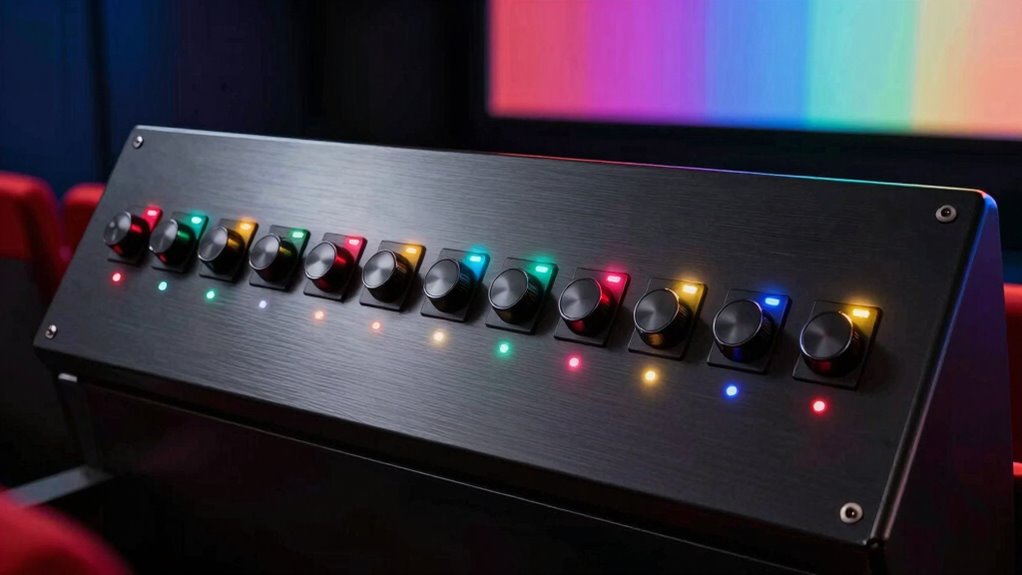

For theater lighting, I’d choose a dimmer that matches the fixture load, works smoothly with the bulbs, and gives operators reliable control in a dark room. The Lutron Diva LED+ is my best overall pick for its familiar paddle-and-slider format, while the ELEGRP Digital Dimmer stands out for multi-switch projects and the GE rotary dimmer for straightforward, tactile control. The main tradeoffs are control feel, LED compatibility, load capacity, and whether you need a single switch or several matching units. A wall dimmer can suit house or rehearsal lighting, but it is not a substitute for a theatrical lighting console when you need cues, zones, or programmed fades. Read on for the full breakdown and help matching each option to your setup.

Get movie nights delivered free with Prime
- Fast, free delivery on millions of items
- Prime Video, Amazon Music and more included
- Member-only deals all year
Key Takeaways
- Lutron Diva LED+ ranks first for a practical mix of paddle on/off control and a separate slider, which can be easier to operate than a small dial when the room is dark.
- The ELEGRP six-pack is the lineup’s clearest choice for outfitting several compatible wall locations at once; the single ELEGRP version offers the same stated load limits without a multipack.
- The GE rotary dimmer and Lutron Ariadni/Toggler favor tactile, compact controls, but their distinct knob and toggle formats will suit different operator habits.
- The Specialty Lighting three-stage touch dimmer is the most specialized option here; staged brightness is not the same as continuous fading or cue control.
- The listed LED capacities vary from 150W on the Leviton SureSlide to 300W on the ELEGRP models, so fixture type, total load, and manufacturer compatibility can matter more than the switch’s control style.


| dimmer switches for theater lighting | Bulb compatibility | Neutral wire |
|---|---|---|
| ELEGRP Digital Dimmer Light Sw | Dimmable LED, CFL, incandescent, and halogen | Not required |
| GE Single Pole Rotating Dimmer | Dimmable LED, CFL, and incandescent | — |
| Lutron Diva LED+ Dimmer Switch | — | Not required |
| Specialty Lighting Three Stage | — | — |
| Leviton SureSlide LED Advanced | Dimmable LED, halogen, and incandescent | Not required |
| ELEGRP Digital Dimmer Light Sw | Dimmable LED, CFL, incandescent, and halogen | — |
| Lutron Ariadni/Toggler LED+ Di | LED, CFL, incandescent, and halogen | Not required |
| Lutron Skylark LED+ Dimmer Swi | LED, CFL, incandescent, and halogen | Not required |
More Details on Our Top Picks
ELEGRP Digital Dimmer Light Switch for 300W Dimmable LED/CFL Lights and 600W Incandescent/Halogen, Single Pole/3-Way, Wall Plate Included, UL Listed, 6 Pack, Matte White
For a theater room with several lighting zones, this six-pack makes it easier to put matching dimmers at each control point without mixing styles. Its fade-on digital dimming can soften the jump from work light to show lighting, while support for single-pole and 3-way wiring suits rooms controlled from more than one entrance. It handles more LED/CFL load than the Lutron Diva LED+, though the Diva has a longer stated warranty and a paddle control some crews may find easier to operate quickly. The ELEGRP also works without a neutral wire, but 3-way wiring calls for care and the 300W LED/CFL ceiling may not fit a large fixture group. I’d choose it for repeated installations, not as a substitute for a theatrical dimming console.
Pros:- Six matching switches support consistent control across multiple lighting zones.
- Fade-on digital dimming helps avoid abrupt changes between room-lighting levels.
- Works with dimmable LED, CFL, incandescent, and halogen bulbs.
- Supports single-pole and 3-way setups without a neutral wire.
Cons:- LED/CFL capacity is limited to 300W, which can restrict larger fixture groups.
- 3-way wiring requires careful identification and connection of conductors.
- A locator light may be distracting in a dark theater room.
Best for: Theater-room owners or installers fitting several wall-control locations with compatible household dimmable fixtures.
Not ideal for: Venues running high-load LED circuits or requiring console-based, DMX, or other professional theatrical control; its wall dimmer is intended for compatible residential loads.
- LED/CFL capacity:Up to 300W
- Incandescent/halogen capacity:Up to 600W
- Operating voltage:125V
- Circuit types:Single-pole and 3-way
- Control:Digital slide dimmer
- Bulb compatibility:Dimmable LED, CFL, incandescent, and halogen
- Neutral wire:Not required
- Finish and included plate:Matte white; wall plate included
Our verdict“Choose this six-pack when you need matching, no-neutral wall dimmers across several theater-room zones and your connected load stays within its ratings.”
GE Single Pole Rotating Dimmer Switch, Compatible with Dimmable LED, CFL, and Incandescent Bulbs, Includes Two Knob Colors, UL Listed, White/Light Almond
The GE rotary dimmer is the straightforward pick when one wall location needs manual control and the room does not need multi-way switching. Its rotating knob allows gradual adjustment, which is useful for setting a repeatable level before a screening, and the included white and light-almond knobs help it blend with different wall finishes. Against the ELEGRP Digital Dimmer, it gives up 3-way support and fade-on behavior, but its stated 600W capacity is higher than ELEGRP’s LED/CFL limit. That figure should not be read as a 600W rating for every bulb type: the supplied product data does not break down the load by lamp category. This is a basic wall dimmer, not theatrical cue control, and the single-pole-only design rules it out when a second switch location is needed.
Pros:- Rotary adjustment offers direct, gradual manual control.
- Works with dimmable LED, CFL, and incandescent bulbs.
- Includes white and light-almond knob options.
- Stated maximum capacity is 600W.
Cons:- Single-pole only, unlike the 3-way-capable ELEGRP and Lutron Diva.
- Product data does not specify separate maximum loads for LED/CFL and incandescent bulbs.
- Does not provide theatrical console or scene-control functions.
Best for: Theater-room owners who want a simple rotary control at one entrance for a compatible, single-location lighting circuit.
Not ideal for: Rooms needing control from multiple entrances, preset scene changes, or a documented LED-specific load limit.
- Maximum wattage:600W
- Operating voltage:120V
- Maximum current:12A
- Circuit type:Single-pole (1-way)
- Control:Rotary
- Bulb compatibility:Dimmable LED, CFL, and incandescent
- Mounting:Wall mount
- Included knob colors:White and light almond
Our verdict“Pick the GE when a single-location rotary dimmer is all your theater room needs and its unspecified lamp-specific load limits suit the circuit.”
Lutron Diva LED+ Dimmer Switch, Paddle, Single Pole/3-way
For a theater room where people enter from more than one side, the Diva pairs a familiar paddle switch with a separate slide dimmer, making on/off operation distinct from level adjustment. Its stated flicker-free LED+ dimming and no-neutral installation suit compatible household circuits, while single-pole and 3-way support gives it more placement flexibility than the GE rotary dimmer. The tradeoff is its 150W LED/CFL limit, half the ELEGRP’s 300W rating for those lamp types, so it may be a poor fit for a larger LED load. Incandescent and halogen capacity is listed at 600W. I’d favor the Diva when easy wall operation and multi-location control matter more than maximizing LED load; it does not replace a lighting desk for cue-by-cue theatrical control.
Pros:- Paddle on/off control is separate from the dimming slider.
- Supports single-pole and 3-way installations.
- No neutral wire is required, according to the product data.
- Stated 10-year warranty and flicker-free dimming for compatible bulbs.
Cons:- 150W LED/CFL limit is lower than the ELEGRP Digital Dimmer’s 300W rating.
- Wall plate is sold separately.
- Basic wall control does not provide theatrical cue programming.
Best for: Home theater owners who want a familiar paddle on/off control and a separate dimming slider at one or two wall locations.
Not ideal for: Buyers with LED/CFL loads above 150W, or venues seeking programmable scenes and professional theatrical control.
- LED/CFL capacity:150W
- Incandescent/halogen capacity:600W
- Dimming technology:LED+
- Control:Paddle switch with slide dimmer
- Circuit types:Single-pole and 3-way
- Neutral wire:Not required
- Warranty:10 years
- Wall plate:Sold separately
Our verdict“Choose the Diva for intuitive multi-location wall control on a modest LED load, but look elsewhere if the circuit exceeds 150W LED/CFL.”
Specialty Lighting Three Stage Touch Dimmer Switch
This Specialty Lighting model takes a different approach from the wall-mounted sliders: it offers three touch-selected brightness levels and includes a 10-foot power cord plus a 24-inch female extension. That makes it a candidate for a small, self-contained theater-lighting setup where a few fixed levels are enough and the supplied leads fit the installation. Compared with the GE rotary dimmer, it is quicker to tap between levels but offers less fine adjustment; compared with the Lutron Diva, it lacks the familiar wall-switch format and stated bulb compatibility detail. The 300W rating is useful, but the product information does not identify supported lamp types or smart-home integration. I would verify the load and wiring requirements before buying, especially for LED fixtures.
Pros:- Touch operation switches among three brightness levels.
- Rated for loads up to 300W.
- Includes a 10-foot power cord and 24-inch female extension.
- Surface-mount format can suit setups where a standard wall box is not preferred.
Cons:- Three fixed levels offer less precise control than the GE rotary or Lutron slider.
- Product data does not specify supported bulb types.
- Installation and wiring requirements may need qualified assessment.
Best for: Buyers setting up a compact theater-lighting arrangement who prefer three touch-selected levels and can confirm their fixtures are compatible.
Not ideal for: Installers who need fine-grained dimming, documented LED compatibility, conventional wall-switch installation, or smart-home control.
- Maximum wattage:300W
- Control method:Touch
- Brightness positions:Three
- Mounting:Surface mount
- Connector type:2-pin
- Power cord:10 feet
- Extension:24-inch female extension
- Color:Black
Our verdict“Consider this touch dimmer only when three preset levels suit the room and you have confirmed compatibility with the connected lighting.”
Leviton SureSlide LED Advanced Dimmer Switch for 150W Dimmable LED, Halogen, and Incandescent Bulbs, 66741-W, White
The SureSlide is aimed at buyers who want to tailor the dimming behavior of a modest LED circuit rather than simply accept a fixed control profile. Its listed features include customizable brightness and fade settings, plus multi-location wiring support, which can help match room lighting to a preferred starting level and switch arrangement. Like the Lutron Diva LED+, it is rated for 150W LED and does not need a neutral wire; unlike the Diva, the supplied data does not give a separate incandescent wattage or warranty term. Its stated compatibility covers dimmable LED, halogen, and incandescent bulbs, but not CFL. I’d choose it when the configuration options matter and the load is within its limit, while checking multi-location wiring compatibility before installation.
Pros:- Customizable brightness and fade settings can suit a preferred room-lighting routine.
- Supports multi-location wiring.
- Does not require a neutral wire.
- Lists compatibility with dimmable LED, halogen, and incandescent bulbs.
Cons:- LED capacity is limited to 150W, matching the Diva but below the ELEGRP’s 300W LED/CFL rating.
- Product data gives no separate halogen or incandescent wattage limit.
- Multi-location use depends on a compatible wiring setup.
Best for: Theater-room owners with a compatible LED load up to 150W who want adjustable brightness and fade settings with multi-location wiring.
Not ideal for: Buyers with LED loads above 150W, CFL fixtures, or a need for clearly stated incandescent capacity and warranty terms.
- LED capacity:150W
- Bulb compatibility:Dimmable LED, halogen, and incandescent
- Model:66741-W
- Color:White
- Neutral wire:Not required
- Multi-location support:Supported with compatible wiring
- Dimming features:Flicker-free dimming; customizable brightness and fade settings
Our verdict“Choose the SureSlide for adjustable fade and brightness behavior on a modest compatible load, after confirming the circuit’s lamp type and wiring.”
ELEGRP Digital Dimmer Light Switch for 300W Dimmable LED/CFL and 600W Incandescent/Halogen, Single Pole/3-Way, Wall Plate Included, UL Listed
For a theater room in an older home, the ELEGRP Digital Dimmer stands out because it works without a neutral wire and supports both single-pole and 3-way circuits. Its fade-on dimming can make light changes feel less abrupt than a basic on/off switch, while the included wall plate saves a separate purchase. Compared with the Lutron Ariadni LED+, ELEGRP allows up to 300W of LED/CFL load rather than 150W, which may suit a larger group of compatible fixtures. The tradeoff is that wattage capacity alone does not establish suitability for theatrical fixtures: the connected bulbs must be dimmable and compatible, and the switch is not presented as a DMX or stage-console control. The adjustable locator light may help find the switch in a dark room, though some buyers may prefer no indicator glow.
Pros:- Does not require a neutral wire, useful in some older switch boxes
- Supports single-pole and 3-way wiring
- Higher stated LED/CFL load limit than the Lutron Ariadni LED+
- Includes a wall plate and adjustable locator light
Cons:- 300W LED/CFL limit may not suit a larger connected lighting load
- Performance depends on compatible dimmable bulbs
- A locator light may be distracting in a fully dark theater room
Best for: Home theater owners replacing a wall switch in a no-neutral-wire box who need a 3-way option and compatible residential dimmable lighting.
Not ideal for: Theater operators seeking DMX, console-based control, or a documented fixture-specific dimmer; this is a wall switch for compatible household bulbs.
- LED/CFL load:300W
- Incandescent/halogen load:600W
- Bulb compatibility:Dimmable LED, CFL, incandescent, and halogen
- Wiring:No neutral wire required
- Configurations:Single-pole and 3-way
- Locator light:Adjustable
- Material:Thermoplastic
- Certification:UL Listed
- Warranty:2 years
Our verdict“Choose ELEGRP for a compatible residential theater room that needs no-neutral installation, 3-way control, and a higher stated LED/CFL capacity than the Ariadni.”
Lutron Ariadni/Toggler LED+ Dimmer Switch, Toggle Dimmer, Single Pole/3-way
The Lutron Ariadni LED+ is the strongest fit here for buyers who want to tune a compatible LED setup rather than accept a preset dimming range. Its adjustable range with more than 250 lighting levels is useful when a theater room’s LED lamps flicker or buzz near the low end: trimming the range can help match the control to the bulbs. It also supports single-pole or 3-way use without a neutral wire. Against the ELEGRP Digital Dimmer, the Ariadni has a lower stated LED/CFL limit—150W versus 300W—so it is less suited to a larger load. It also lacks an included wall plate. This is still a residential wall dimmer, not a lighting-console control, and its results depend on compatible bulbs.
Pros:- More than 250 stated lighting levels for fine dimming adjustments
- Adjustable dimming range can help address flicker or buzzing with compatible bulbs
- Works in single-pole and 3-way configurations
- No neutral wire required
Cons:- 150W LED/CFL maximum is lower than the ELEGRP Digital Dimmer’s stated limit
- Wall plate is sold separately
- Requires compatible bulbs for suitable dimming performance
Best for: Home theater owners with a modest LED/CFL load who want to adjust the dimming range to suit their specific lamps and wiring.
Not ideal for: Buyers with higher LED/CFL loads, a need for an included wall plate, or theatrical fixtures that require console or DMX control.
- LED/CFL load:150W
- Incandescent/halogen load:600W
- Dimming levels:Over 250
- Bulb compatibility:LED, CFL, incandescent, and halogen
- Configurations:Single-pole and 3-way
- Neutral wire:Not required
- Installation time:As little as 15 minutes
- Wall plate:Sold separately
Our verdict“Pick the Ariadni when adjustable low-end LED behavior matters more than a higher load limit or an included wall plate.”
Lutron Skylark LED+ Dimmer Switch, Slide Dimmer, Single Pole/3-way
The Lutron Skylark LED+ suits a theater room where occupants want an obvious physical control: the rocker switches the light on or off, and the separate slide control sets the dim level. That split can be easier for guests to understand than the Ariadni’s toggle-style control, while its stated 150-plus lighting levels offer plenty of adjustment for compatible bulbs. It supports single-pole and 3-way use without a neutral wire. Compared with the ELEGRP Digital Dimmer, however, its LED/CFL capacity is lower at 150W, and the coordinating wall plate is sold separately. The slide may also feel less exact than a rotary control when setting a very specific level. Like the other picks, it is a residential dimmer rather than a theatrical control-system component.
Pros:- Separate rocker on/off and slide dimming controls are easy to distinguish
- More than 150 stated lighting levels
- Supports single-pole and 3-way configurations
- Does not require a neutral wire
Cons:- 150W LED/CFL maximum is below the ELEGRP Digital Dimmer’s stated capacity
- Coordinating wall plate must be purchased separately
- Slide control may be less precise for setting an exact dim level
Best for: Home theater households that want a straightforward wall control with separate on/off and dimming actions for compatible residential lighting.
Not ideal for: Buyers who need a higher LED/CFL load limit, an included wall plate, or precise console-style control of theatrical fixtures.
- Dimming levels:Over 150
- LED/CFL load:150W
- Bulb compatibility:LED, CFL, incandescent, and halogen
- Operation mode:ON-DIM-OFF
- Operating voltage:120 volts
- Switch type:Slide
- Configurations:Single-pole and 3-way
- Neutral wire:Not required
- Wall plate:Sold separately
Our verdict“Choose the Skylark for an accessible, tactile wall control in a residential theater room when its 150W LED/CFL limit fits the load.”

How We Picked
I ranked these switches by how well their control formats and stated capabilities suit theater-adjacent lighting tasks: house lights, rehearsal rooms, small studios, and simple stage or display areas. I weighed control access in low light, single-pole and 3-way support, stated load limits, compatibility claims for LED and other bulb types, and the practical value of included plates or multipacks. I also separated ordinary wall dimmers from products that offer a more specialized control approach, since not every theater needs the same kind of adjustment.
The ranking favors versatile options with clear everyday use, then options that serve a narrower control preference or installation need. The product details provided do not establish compatibility with every LED driver, fixture, or theatrical system, nor do they specify advanced fade behavior, remote control, or console integration. I treat those as items to verify rather than assumed benefits; a wall dimmer should not be mistaken for a stage-lighting control system.
| dimmer switches for theater lighting | Bulb compatibility |
|---|---|
| ELEGRP Digital Dimmer Light Sw | Dimmable LED, CFL, incandescent, and halogen |
| GE Single Pole Rotating Dimmer | Dimmable LED, CFL, and incandescent |
| Lutron Diva LED+ Dimmer Switch | — |
| Specialty Lighting Three Stage | — |
| Leviton SureSlide LED Advanced | Dimmable LED, halogen, and incandescent |
| ELEGRP Digital Dimmer Light Sw | Dimmable LED, CFL, incandescent, and halogen |
| Lutron Ariadni/Toggler LED+ Di | LED, CFL, incandescent, and halogen |
| Lutron Skylark LED+ Dimmer Swi | LED, CFL, incandescent, and halogen |
Factors to Consider When Choosing Dimmer Switches For Theater Lighting
Before choosing a wall dimmer for a performance space, I’d start with the lighting job, then check the electrical and control limits. A switch that works well for audience-area lights may be the wrong choice for stage fixtures that need repeatable cues or coordinated fades.
Match the Dimmer to the Lighting Job
Decide whether you are dimming house lights, rehearsal-room fixtures, a small display area, or actual performance lights. A wall dimmer is generally a local control, so it may work for simple room brightness but will not provide the cue playback and multi-channel coordination associated with a lighting console. Avoid buying by the word “theater” alone: check whether your fixtures are designed for wall-dimmer control. For staged performances, think about who needs access to the switch and whether changing room brightness could affect a scene. If you need coordinated fades, saved looks, or separate fixture groups, plan for a control system built for those tasks instead of expecting a residential dimmer to do them.
Check Bulb, Driver, and Load Compatibility
“Dimmable LED” on a package does not guarantee smooth operation with every dimmer. Check the bulb or fixture maker’s compatibility information, then compare the total connected load with the switch’s stated limit for that specific lamp type. LED loads can behave differently from incandescent loads, so do not use the higher incandescent rating as the allowable LED capacity. Mixed fixture types can add another compatibility wrinkle; a setup that dims evenly in one room may flicker or drop out in another. If the load or driver information is unclear, ask a qualified electrician or the fixture manufacturer before installation.
Choose a Control You Can Find in the Dark
Operator access matters when a switch is used during a rehearsal or before an audience enters. A paddle paired with a slider separates on/off from brightness adjustment, while a rotary knob makes adjustment feel direct and a toggle-style control offers a compact format. A touch control uses a different interaction again and may not suit someone who wants a continuously adjustable physical slider. Consider whether the person at the wall needs quick, repeatable changes or only a few preset levels. If several people operate the room, a familiar interface can reduce confusion more than extra features.
Plan for Single-Pole and 3-Way Wiring
Confirm whether the light is controlled from one location or from two or more locations before selecting a switch. Several products in this roundup list single-pole and 3-way support, but that label does not mean every existing wiring arrangement is interchangeable or suitable without checking the instructions. A multipack can be useful for multiple rooms, yet it is not automatically the right answer for a multi-location circuit. Take note of the existing switch arrangement and fixture wiring before purchasing. For unfamiliar wiring or a theater space with complex circuits, have a qualified electrician verify the setup.
Decide Whether You Need Continuous Fading or Preset Steps
A dimmer’s control range affects how precisely you can set a room, but product names and broad compatibility claims do not establish how smooth the fade will be. The three-stage touch model is aimed at stepped brightness changes, which may be enough for a simple scene or display but is not equivalent to continuous adjustment. For repeatable theater cues, verify the transition behavior and control method against the fixture documentation. A wall dimmer may also lack scene memory or remote operation, features that matter when a lighting position is inconvenient. Choose stepped control for simplicity only when its limited range matches the job.
Know When to Spend More on the Control System
For a single room or uncomplicated house lights, a basic wall dimmer may meet the need without the complexity of a larger system. Pay for more capable controls when you need repeatable cues, several independently controlled zones, remote operation, or predictable coordination across fixtures. Those requirements are different from choosing between a slider and a knob, and none of the listed product details confirms console integration. Also account for installation, compatible fixtures, and any required electrical work rather than focusing only on the switch itself. A clear requirements list can prevent buying a capable-looking wall dimmer that still cannot run the show you have in mind.
Frequently Asked Questions
Can I use a wall dimmer as a theater lighting console?
No. These products are wall dimmers, not described as cue-programming consoles, and their listed features do not establish multi-channel control, saved scenes, or console integration. They can suit straightforward local control of compatible room lights, such as house or rehearsal lighting. If your production needs timed fades, separate fixture groups, or repeatable cues, choose a theatrical control system designed for that work. Check fixture and control-system compatibility before connecting performance lighting.
Which option makes the most sense if I need to outfit several rooms?
The ELEGRP six-pack is the only listed multipack, making it the most direct fit when you need matching switches in several locations. Its stated limits are 300W for dimmable LED/CFL and 600W for incandescent/halogen, but those figures do not confirm compatibility with every fixture. Compare the lighting loads and wiring in each room before treating a pack as a universal solution. If the rooms have different bulb types or control needs, buying identical switches may be less useful than selecting for each circuit.
Is the three-stage touch dimmer suitable for smooth fades between theater looks?
Its name identifies three brightness stages, not a continuous fade range or programmed cue feature. That may work when a few distinct brightness levels are enough, such as a simple room or display setup. For gradual, repeatable changes between theatrical looks, confirm the product’s behavior with its documentation and the fixture maker before buying. A dedicated theatrical controller is usually the better direction when fade timing and cue consistency matter. Do not assume that touch operation alone means advanced scene control.
How should I choose between the Diva, Skylark, Ariadni/Toggler, and GE rotary controls?
Start with the action you want an operator to use in a low-light room. The Diva LED+ pairs a paddle with a separate slider, while the Skylark LED+ uses a slide control and the Ariadni/Toggler LED+ combines a toggle format with dimming. The GE model uses a rotary control and includes two knob colors, which may help it fit the room’s existing look. Compare the physical layout and installation instructions rather than assuming one format dims better; the supplied details do not establish fade smoothness across all fixtures.
Does the Leviton SureSlide’s 150W LED rating make it a poor choice for theater use?
Not by itself. Its stated 150W dimmable LED capacity may be enough for a modest compatible load, while the ELEGRP models list a higher 300W LED/CFL capacity. The right choice depends on the connected fixture load and whether the specific LEDs or drivers work with the dimmer. A higher rating does not guarantee better dimming quality or suitability for performance cues. Check the total load, product instructions, and fixture compatibility before deciding.
Conclusion
For the broadest mix of straightforward operation and theater-room usefulness, I’d choose the Lutron Diva LED+ as the best overall option. The ELEGRP six-pack is my best value for several compatible rooms, while the single ELEGRP model suits buyers who want its stated higher LED capacity without a multipack. For beginners, the GE rotary dimmer offers a simple, tactile control format; the Lutron Ariadni/Toggler is a better fit for buyers who prefer a toggle-style interface. Choose the Specialty Lighting three-stage touch dimmer for stepped brightness needs, or the Leviton SureSlide when its 150W LED limit fits the load. For a more polished slide-control preference, compare the Lutron Skylark LED+ with the Diva before buying. If you need programmed cues, coordinated fixtures, or precise performance fades, skip these wall dimmers and select a theatrical lighting control system.