
The best 4K laser projectors in 2026 span an unusually wide range of prices and use cases, and the right pick depends heavily on your room. The JMGO N1S Ultimate earns my top spot for combining triple-laser color with a built-in gimbal and Google TV in one polished package, while the Dangbei DBOX02 delivers the best value for streamers who want Netflix licensed out of the box. The main tradeoffs in this category come down to brightness versus portability, throw distance versus placement flexibility, and whether you need a smart platform built in or already own a streaming stick. Gamers will lean toward the BenQ TK710 for its low input lag, while home theater builders should look at the AWOL Aetherion Max bundle. Read on for the full breakdown of all twelve models.

Get movie nights delivered free — and shop member deals
- Fast, free delivery on millions of items
- Access to Prime Big Deal Days deals on October 6–7
- Prime Video, Amazon Music and more included
Key Takeaways
- Triple-laser models (the Dangbei MP1 Max, JMGO N1S family, and Hisense M2 Pro) consistently produced richer color than single-laser units, but at the cost of higher prices and, in some cases, lower rated brightness.
- The BenQ pair (TK710 and TK710STi) stands out for gaming and sports thanks to low input lag and high brightness, but neither includes a smart TV platform, so you will need an external streaming device.
- Ultra short throw placement (AWOL Aetherion Max) eliminates ceiling mounting entirely but demands an exceptionally flat wall or an included screen bundle to avoid image distortion.
- Rated lumens proved misleading across the lineup: the 5000-lumen ViewSonic LS740-4K is built for bright living rooms, while lower-lumen triple-laser models looked better in dark rooms despite smaller numbers.
- Google TV integration (JMGO N1S models, Dangbei DBOX02) removes a setup step, but Netflix licensing still varies by model — a real frustration if you subscribe and the app is missing.
| ViewSonic LS901-4K 4K UHD Laser Projector |  | Best for Bright Rooms and Golf Simulation | Resolution: 4K UHD (3840 × 2160) | Brightness: 5,500 ANSI lumens | Light source: Laser | VIEW LATEST PRICE | See Our Full Breakdown |
| Dangbei MP1 Max 4K Triple Laser Projector |  | Best All-in-One Smart Projector | Resolution: 3840 × 2160 | Brightness: 3,100 ISO lumens | Light source: Triple laser + LED | VIEW LATEST PRICE | See Our Full Breakdown |
| JMGO N1S 4K Triple Laser Projector with Google TV |  | Best Portable Pick | Resolution: 4K UHD with HDR10 | Brightness: 1,700 ISO lumens | Light source: Pure RGB triple laser (MALC 3.0) | VIEW LATEST PRICE | See Our Full Breakdown |
| BenQ TK710 4K HDR Laser Home Entertainment and Gaming Projector |  | Best for Serious Gaming | Native resolution: 3840 × 2160 | Brightness: 3,200 ANSI lumens | Contrast ratio: 600,000:1 | VIEW LATEST PRICE | See Our Full Breakdown |
| Dangbei DBOX02 4K Laser Projector with Google TV, 2450 ISO Lumens, Netflix Licensed, HDR10+, Blu-ray 3D |  | Best Value for a Complete Home Theater | Native resolution: 3840 × 2160 | Brightness: 2,450 ISO lumens | Light source: ALPD laser, 30,000 hours | VIEW LATEST PRICE | See Our Full Breakdown |
| BenQ TK710STi 3200 Lumens 4K HDR Short Throw Home Entertainment Projector |  | Best for Gamers | Brightness: 3200 ANSI lumens | Resolution: 4K HDR | Light Source: Laser | VIEW LATEST PRICE | See Our Full Breakdown |
| ViewSonic LS740-4K 4K UHD Laser Projector, 5000 Lumens |  | Best for Bright Rooms | Resolution: 3840 × 2160 (4K UHD) | Brightness: 5000 ANSI lumens | Light Source: Laser | VIEW LATEST PRICE | See Our Full Breakdown |
| JMGO N1S Ultimate Triple Laser 4K Projector |  | Best Portable Pick | Native Resolution: 3840 x 2160 | Brightness: 3300 ISO lumens | Light Source: Triple RGB laser | VIEW LATEST PRICE | See Our Full Breakdown |
| AWOL Aetherion Max 4K 3D Ultra Short Throw Projector with 132-Inch Cinematic Screen Bundle |  | Best Premium Home Theater | Native Resolution: 3840 x 2160 | Brightness: 3000 ANSI lumens | Throw Ratio: 0.2:1 (ultra short throw) | VIEW LATEST PRICE | See Our Full Breakdown |
| JMGO N1S Ultra 4K Triple Laser Projector with Google TV | 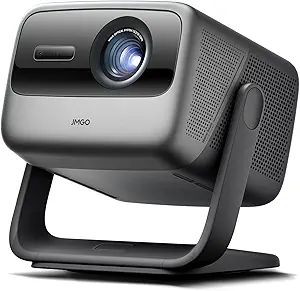 | Best Color Accuracy Value | Resolution: 4K | Light Source: Triple RGB laser | Brightness: 2800 ISO lumens | VIEW LATEST PRICE | See Our Full Breakdown |
| Optoma UHZ36 4K UHD Laser HDR Home Theater Projector |  | Best for Movie Purists | Resolution: 4K UHD | Light source: Laser | HDR: Supported | VIEW LATEST PRICE | See Our Full Breakdown |
| Hisense M2 Pro Triple Laser Smart Portable Projector, 4K UHD |  | Best Portable All-in-One | Resolution: 4K UHD with upscaling | Brightness: 1,300 ANSI lumens | Projection size: 65–200 inches | VIEW LATEST PRICE | See Our Full Breakdown |
| 4K laser projector | Brightness | Light source | Resolution |
|---|---|---|---|
| ViewSonic LS901-4K 4K UHD Lase | 5,500 ANSI lumens | Laser | 4K UHD (3840 × 2160) |
| Dangbei MP1 Max 4K Triple Lase | 3,100 ISO lumens | Triple laser + LED | 3840 × 2160 |
| JMGO N1S 4K Triple Laser Proje | 1,700 ISO lumens | Pure RGB triple laser (MALC 3.0) | 4K UHD with HDR10 |
| BenQ TK710 4K HDR Laser Home E | 3,200 ANSI lumens | — | — |
| Dangbei DBOX02 4K Laser Projec | 2,450 ISO lumens | ALPD laser, 30,000 hours | — |
| BenQ TK710STi 3200 Lumens 4K H | 3200 ANSI lumens | Laser | 4K HDR |
| ViewSonic LS740-4K 4K UHD Lase | 5000 ANSI lumens | Laser | 3840 × 2160 (4K UHD) |
| JMGO N1S Ultimate Triple Laser | 3300 ISO lumens | Triple RGB laser | — |
| AWOL Aetherion Max 4K 3D Ultra | 3000 ANSI lumens | — | — |
| JMGO N1S Ultra 4K Triple Laser | 2800 ISO lumens | Triple RGB laser | 4K |
| Optoma UHZ36 4K UHD Laser HDR | — | Laser | 4K UHD |
| Hisense M2 Pro Triple Laser Sm | 1,300 ANSI lumens | — | 4K UHD with upscaling |
More Details on Our Top Picks
ViewSonic LS901-4K 4K UHD Laser Projector
At 5,500 ANSI lumens, the LS901-4K outshines everything else in this lineup — the BenQ TK710 manages 3,200 ANSI and the Dangbei DBOX02 just 2,450 ISO — which means this is the option that keeps a watchable picture with lights on or blinds open. The 240 Hz refresh rate and 4.2 ms input lag are competitive gaming numbers, but the real differentiator is the dedicated Golf Mode and 21:9 ultrawide support, making it a natural fit for simulator setups where the ViewSonic LS740-4K lacks those features. The tradeoff is raw image smarts: there’s no built-in streaming platform or auto-setup here, so expect an external source and manual calibration work compared to the Dangbei MP1 Max.
Pros:- 5,500 ANSI lumens handle ambient light better than any projector in this roundup
- 240 Hz refresh and 4.2 ms input lag suit fast-paced gaming and simulation
- 1.7× optical zoom plus keystone and curved-screen projection simplify tricky installations
- HDR/HLG and 21:9 support for ultrawide simulator and cinema setups
Cons:- No smart platform or streaming apps built in, unlike the Dangbei and JMGO options
- Large-screen installations demand substantial throw distance and space
- Ceiling mount compatibility is stated but a mount is not included
Best for: Home theater and golf simulator owners with bright, hard-to-darken rooms who prioritize maximum light output
Not ideal for: Buyers wanting an all-in-one smart projector — there’s no streaming OS, auto focus, or built-in audio ecosystem here
- Resolution:4K UHD (3840 × 2160)
- Brightness:5,500 ANSI lumens
- Light source:Laser
- Refresh rate:240 Hz
- Input lag:4.2 ms
- Optical zoom:1.7×
- Maximum screen size:150 inches
- HDR support:HDR/HLG
Our verdict“This pick makes the most sense for bright-room home theaters and golf simulators where light output matters more than smart features.”
Dangbei MP1 Max 4K Triple Laser Projector
The MP1 Max is the closest thing here to a projector that needs nothing else: Google TV with licensed Netflix is built in, the dual 12W Dolby Audio and DTS:X speakers replace a soundbar for casual viewing, and the AI-assisted setup — autofocus, keystone, obstacle avoidance — means you can point it and start watching. Its 3,100 ISO lumens put it between the BenQ TK710 and the portables, while the 110% BT.2020 triple-laser color coverage beats the TK710’s 95% Rec.709 for saturation and punch. The built-in stand with 360° rotation gives it JMGO N1S-style aiming flexibility in a brighter, room-filling package. The catch: hitting that 300-inch maximum needs a genuine 4.5-meter throw, so apartment dwellers won’t exploit its full scale.
Pros:- Google TV with licensed Netflix eliminates external streaming devices
- Triple laser delivers 110% BT.2020 color coverage well beyond standard Rec.709 projectors
- AI autofocus, keystone correction, and obstacle avoidance make setup nearly hands-free
- Built-in rotating stand and Dolby Audio/DTS:X speakers complete a standalone package
Cons:- Reaching the 300-inch maximum image requires a long throw distance few rooms can accommodate
- Fixed stand-based design offers less installation flexibility than ceiling-mount projectors like the ViewSonic LS901-4K
Best for: Stream-first buyers who want Netflix, apps, and decent audio built in without adding a soundbar or streaming stick
Not ideal for: Small rooms or apartments — the 2 to 4.5 meter throw distance rules out huge images in tight spaces
- Resolution:3840 × 2160
- Brightness:3,100 ISO lumens
- Light source:Triple laser + LED
- Color gamut:110% BT.2020
- Image size:40–300 inches
- Audio:Dual 12W speakers, Dolby Audio and DTS:X
- Connectivity:HDMI 2.1 (eARC), USB, Bluetooth 5.2, Wi-Fi 6
Our verdict“The best choice if you want one box that streams, sounds good, and self-calibrates — as long as your room is deep enough for it.”
JMGO N1S 4K Triple Laser Projector with Google TV
Weighing 4.4 lbs with a carrying case included, the N1S 4K is the take-it-anywhere entry in this lineup — none of the others are genuinely portable. Its 127° rotating gimbal lets you aim at a wall, ceiling, or backyard sheet one-handed, something the Dangbei MP1 Max only partially matches with its stand. The pure RGB triple laser eliminates the rainbow artifact single-laser units like the BenQ TK710 can produce, and 17 ms latency keeps gaming playable. But portability costs brightness: at 1,700 ISO lumens, it’s roughly half the MP1 Max’s output, so this is a dusk-and-darkness machine. Some units also show color tint drift needing manual recalibration, which tempers the otherwise polished experience.
Pros:- 4.4 lb weight plus included EPP case makes it the only truly portable option in this group
- 127° gimbal enables one-handed aiming at any surface without mounts
- Pure RGB triple laser avoids the rainbow effect and covers 110% BT.2020
- Built-in Google TV with licensed Netflix and 17 ms low-latency gaming mode
Cons:- Brightness of 1,700 ISO lumens is the lowest in this lineup and demands dark conditions
- Reported color tint issues may require manual recalibration out of the box
- Active 3D glasses for Blu-ray 3D are sold separately
Best for: Movie nights that move between rooms, patios, and ceilings — buyers who value grab-and-go flexibility over raw brightness
Not ideal for: Daytime or living-room-with-windows viewers — 1,700 ISO lumens can’t compete with ambient light the way the ViewSonic LS901-4K can
- Resolution:4K UHD with HDR10
- Brightness:1,700 ISO lumens
- Light source:Pure RGB triple laser (MALC 3.0)
- Color coverage:110% BT.2020, 151% DCI-P3
- Max screen size:200 inches
- Latency:17 ms
- Weight:4.4 lbs
- OS:Google TV with licensed Netflix
Our verdict“Buy it if your projector travels; skip it if it lives in a bright living room.”
BenQ TK710 4K HDR Laser Home Entertainment and Gaming Projector
The TK710 splits the difference between the bright ViewSonic LS901-4K and the smart-laden Dangbei units, and for dedicated gamers it’s the most disciplined choice. Its 4 ms response at 1080p/240 Hz pairs with a 600,000:1 contrast ratio — dramatically deeper blacks than the Dangbei DBOX02’s 5,000:1 — so dark scenes in games and films hold detail instead of washing out. BenQ’s color accuracy reputation shows in its 95% Rec.709 coverage, which favors natural, calibrated color over the punchier but less accurate wide-gamut look of triple-laser rivals. The compromises are real: 144 inches is the ceiling where others reach 200–300, there’s no built-in Wi-Fi or streaming platform, and you’ll want to budget for external audio.
Pros:- 600,000:1 contrast ratio delivers far deeper blacks than the Dangbei DBOX02
- 4 ms at 1080p/240 Hz makes it one of the fastest projectors here for gaming
- Calibrated 95% Rec.709 color for accurate, natural picture quality
- 20,000-hour laser light source with 3,200 ANSI lumens for versatile placement
Cons:- 144-inch maximum image is smaller than every competitor in this lineup
- No built-in Wi-Fi or smart platform means external devices are mandatory
- 1.3× zoom is less flexible than the ViewSonic LS901-4K’s 1.7× for awkward rooms
Best for: Console and PC gamers who prioritize contrast, low lag, and accurate color over smart features
Not ideal for: Cord-cutters wanting built-in streaming — no Wi-Fi is specified, so you’ll need an external source for everything
- Native resolution:3840 × 2160
- Brightness:3,200 ANSI lumens
- Contrast ratio:600,000:1
- Gaming response:4 ms at 1080p/240 Hz
- HDR support:HDR10, HLG
- Max image size:144 inches
- Light source life:20,000 hours
- Color coverage:95% Rec.709
Our verdict“The pick for image-quality purists and gamers who will add their own streaming and sound gear anyway.”
Dangbei DBOX02 4K Laser Projector with Google TV, 2450 ISO Lumens, Netflix Licensed, HDR10+, Blu-ray 3D
The DBOX02 lands in a sweet spot between the portable JMGO N1S and the more expensive triple-laser units: it delivers 2,450 ISO lumens — bright enough for daytime viewing, unlike the N1S — while keeping the full smart package of Google TV with licensed Netflix and automatic setup. Its ALPD laser produces speckle-free images, sidestepping the sparkle artifact some triple-laser projectors exhibit, and the dual 12W Dolby Audio/DTS:X speakers genuinely stand in for a soundbar. Compared to the BenQ TK710, you get streaming, Wi-Fi, and HDR10+ support the BenQ lacks — but you give up contrast badly, with a 5,000:1 ratio that means dark movie scenes look flatter than on the TK710. The 30,000-hour light source is the longest-lived in this batch.
Pros:- 2,450 ISO lumens stay watchable in daylight, unlike the portable JMGO N1S
- Google TV with licensed Netflix plus HDR10+ support built in
- Dual 12W Dolby Audio and DTS:X speakers make a soundbar optional
- 30,000-hour ALPD laser light source outlasts every projector in this roundup
Cons:- 5,000:1 contrast ratio is the weakest here and hurts dark-scene depth
- Reaching the 200-inch maximum demands a large room within the 1.7–5 m throw range
- No gimbal or stand flexibility — placement options trail the Dangbei MP1 Max
Best for: First-time projector buyers building a home theater who want streaming, sound, and setup automation without buying extras
Not ideal for: Dark-room cinephiles — the 5,000:1 contrast ratio flattens shadows compared to the BenQ TK710
- Native resolution:3840 × 2160
- Brightness:2,450 ISO lumens
- Light source:ALPD laser, 30,000 hours
- HDR support:HDR10+ (HLG)
- Max image size:200 inches
- Contrast ratio:5,000:1
- Speakers:2 × 12W, Dolby Audio and DTS:X
- Smart platform:Google TV (Netflix licensed)
Our verdict“The smart buy for a complete, self-contained home theater if deep black levels aren’t your top priority.”
BenQ TK710STi 3200 Lumens 4K HDR Short Throw Home Entertainment Projector
BenQ’s TK710STi is the clear pick if gaming sits at the center of your setup. Its 4ms response at 1080p@240Hz outpaces everything else in this lineup for fast-paced play, including the AWOL Aetherion Max, whose 1ms latency figure applies only at lower refresh scenarios. The short throw design means you can place it just a few feet from the wall — a real benefit in smaller rooms compared with the long-throw ViewSonic LS740-4K, which wants distance to hit big screen sizes.
Tradeoffs are real, though. 3200 ANSI lumens is bright but short of the LS740-4K’s 5000, so it’s less forgiving of a sun-drenched living room. And while Android TV with licensed Netflix is convenient, the color coverage stops at 95% Rec.709, falling well behind the wide-gamut triple-laser units from JMGO.
Pros:- 4ms input lag at 1080p@240Hz is ideal for competitive gaming
- 3200 ANSI laser lumens hold up in rooms with ambient light
- Google-certified Android TV streams Netflix and Prime Video natively
- Short throw design works close to the wall in tight rooms
Cons:- Short throw placement may not suit rooms where the projector must sit far back
- 95% Rec.709 color coverage is narrower than triple-laser competitors
Best for: Console and PC gamers who want low latency, 4K HDR movie nights, and streaming built in without an external box
Not ideal for: Buyers chasing maximum color gamut — the Rec.709 coverage trails triple-laser rivals like the JMGO N1S Ultimate
- Brightness:3200 ANSI lumens
- Resolution:4K HDR
- Light Source:Laser
- Color Coverage:95% Rec.709
- Response Time:4ms at 1080p@240Hz
- Smart Platform:Google-Certified Android TV
- Throw Type:Short throw
Our verdict“Gamers who also stream movies should put the TK710STi near the top of their shortlist for its lag-free performance and short throw flexibility.”
ViewSonic LS740-4K 4K UHD Laser Projector, 5000 Lumens
When ambient light is your enemy, the ViewSonic LS740-4K is the heavyweight here. At 5000 ANSI lumens, it outshines the BenQ TK710STi by over 50%, and it doubles as a credible daytime TV replacement in a way the portable JMGO models can’t match. The 1.6× optical zoom and full keystone plus four-corner adjustment give installers unusual freedom, and 360-degree mounting with portrait mode opens up signage and simulation uses most home projectors ignore.
The catch: it’s a no-frills image machine. Unlike the JMGO N1S Ultra, there’s no smart platform, so you’ll need an external streaming stick. And with a 1.4–2.24 throw ratio, it needs genuine distance — this is not a projector for cramped apartments, in contrast to the ultra-short-throw AWOL Aetherion Max.
Pros:- 5000 ANSI lumens is the brightest output in this group
- Native 4K UHD resolution with a 30–300 inch screen range
- Optical zoom, four-corner adjustment, and portrait/360-degree mounting
- Golf simulation mode and LAN control for commercial integration
Cons:- No built-in streaming apps or smart platform
- Long throw ratio demands a deep room or ceiling mount planning
Best for: Owners of bright living rooms, golf simulators, or commercial spaces who need maximum light output and installation flexibility
Not ideal for: Cord-cutters wanting built-in streaming — there’s no smart TV platform, so an external device is required
- Resolution:3840 × 2160 (4K UHD)
- Brightness:5000 ANSI lumens
- Light Source:Laser
- Throw Ratio:1.4–2.24
- Screen Size:30–300 inches
- Optical Zoom:1.6×
- Mounting:360-degree and portrait mode support
Our verdict“If daylight viewing or simulation setups are the priority, the LS740-4K’s raw brightness and installation flexibility beat every lifestyle-focused rival here.”
JMGO N1S Ultimate Triple Laser 4K Projector
The JMGO N1S Ultimate is the most flexible projector in this roundup to physically live with. Its rotating gimbal — 360° horizontal, 135° vertical — lets you swing the image from ceiling to wall in seconds, something neither the fixed-install ViewSonic LS740-4K nor the ultra-short-throw AWOL can do. At 3300 ISO lumens with a triple RGB laser and 110% BT.2020 coverage, it delivers noticeably richer color than the Rec.709-bound BenQ TK710STi.
Google TV with licensed Netflix plus autofocus and auto keystone makes setup nearly foolproof. The compromises: contrast is a modest 1600:1, so dark-room movie purists may prefer the AWOL’s dynamic range, and the 3000 ISO-lumen brightness figure still trails the LS740-4K for true daytime viewing. The listing’s conflicting audio specs (10W vs a claimed 20W subwoofer) are another reason to plan on external sound.
Pros:- Rotating gimbal projects onto walls, ceilings, and floors at any angle
- 110% BT.2020 triple-laser color gamut beats Rec.709-only rivals
- Google TV with licensed Netflix and wireless casting built in
- Automatic focus and keystone correction simplify every setup
Cons:- 1600:1 contrast is modest for dark-room cinematic viewing
- Audio specs are inconsistent in the listing, so external speakers may be needed
Best for: Apartment dwellers and renters who want to move the projector between rooms, project at odd angles, and stream Netflix without wires
Not ideal for: Dedicated home theater builders — the 1600:1 contrast and uncertain built-in audio limit black-level drama and sound quality
- Native Resolution:3840 x 2160
- Brightness:3300 ISO lumens
- Light Source:Triple RGB laser
- Color Gamut:110% BT.2020
- Contrast Ratio:1600:1
- Image Size:60–300 inches
- Rotation:360° horizontal, 135° vertical
- Light Source Life:30,000 hours
Our verdict“For buyers who value portability and angle-shooting flexibility over pitch-black contrast, the N1S Ultimate’s gimbal design is unmatched in this lineup.”
AWOL Aetherion Max 4K 3D Ultra Short Throw Projector with 132-Inch Cinematic Screen Bundle
This bundle is the closest thing here to a turnkey cinema: a 4K laser ultra-short-throw projector paired with a 132-inch screen, so you’re not piecing together a system. Its 0.2:1 throw ratio means the unit sits inches from the wall — no ceiling mount, no long cabling runs like the ViewSonic LS740-4K requires. With contrast up to 3,000,000:1 and Dolby Vision, HDR10+, and HLG support, it’s the strongest dark-room performer in this batch, and 1ms latency with VRR and ALLM makes it a genuine rival to the gaming-first BenQ TK710STi.
It isn’t effortless to own. The 80-inch minimum image size rules out small walls, 300 watts of consumption runs hot and costly, and the projector-plus-screen package demands a dedicated wall. This is for a media room, not a spare bedroom.
Pros:- Bundle includes a 132-inch screen matched to the projector
- Up to 3,000,000:1 contrast with Dolby Vision and HDR10+
- 1ms latency, VRR, and ALLM support serious gaming
- Ultra-short 0.2:1 throw eliminates mounting and cable runs
Cons:- 300-watt power consumption is high for everyday use
- 80-inch minimum image size requires a large dedicated wall
Best for: Home theater enthusiasts who want a massive 132-inch Dolby Vision image without ceiling mounts or separate screen shopping
Not ideal for: Small rooms or casual viewers — the 80-inch minimum image and 300-watt draw make it overkill for occasional use
- Native Resolution:3840 x 2160
- Brightness:3000 ANSI lumens
- Throw Ratio:0.2:1 (ultra short throw)
- Contrast Ratio:Up to 3,000,000:1
- HDR Formats:Dolby Vision, HDR10+, HDR10, HLG
- Gaming Features:1 ms latency, VRR, ALLM
- Image Size:80–150 inches
- Light Source Life:25,000 hours
Our verdict“Buyers building a serious media room who want projector and screen solved in one purchase get the most complete cinematic package here.”
JMGO N1S Ultra 4K Triple Laser Projector with Google TV
Compared with its sibling, the JMGO N1S Ultimate, the N1S Ultra trades some brightness (2800 vs 3300 ISO lumens) and the rotating gimbal for something cinephiles may value more: factory-calibrated color with ΔE<1 accuracy. That level of measured precision means out-of-the-box colors look correct rather than oversaturated — a different philosophy than the ViewSonic LS740-4K, which is built for raw light output and leaves calibration to you.
The feature set is impressively complete: Google TV with Chromecast, HDMI 2.1 with eARC, Blu-ray 3D support, and 20W Dolby Digital Plus speakers reaching down to 45Hz — better sound than most portables here. Object avoidance and auto screen fitting help with bookshelf placement. The honest caveat: with limited independent performance data available, buyers are leaning on JMGO’s own claims, and the 1600:1 contrast again trails dedicated home theater units like the AWOL Aetherion Max.
Pros:- ΔE<1 color accuracy delivers true-to-reference color out of the box
- 20W Dolby Digital Plus speakers with 45Hz bass reduce the need for a soundbar
- HDMI 2.1 with eARC and Blu-ray 3D support home theater sources
- Auto screen fitting and object avoidance ease tricky placement
Cons:- 1600:1 contrast limits black levels versus premium home theater models
- Few independent reviews or verified performance data are available
Best for: Movie lovers who prioritize accurate, calibrated color and strong built-in sound over sheer brightness
Not ideal for: Bright, sun-filled rooms — 2800 ISO lumens trails the BenQ and ViewSonic options for daytime viewing
- Resolution:4K
- Light Source:Triple RGB laser
- Brightness:2800 ISO lumens
- Contrast Ratio:1600:1 FOFO
- Color Accuracy:ΔE<1
- Operating System:Google TV with Chromecast
- Connectivity:HDMI 2.1 (eARC), USB 2.0
- Audio:20W dual speakers with Dolby Digital Plus
Our verdict“If accurate color and self-contained sound matter more than maximum brightness, the N1S Ultra is the most balanced all-rounder of the JMGO trio.”
Optoma UHZ36 4K UHD Laser HDR Home Theater Projector
Where most projectors in this roundup chase brightness or smart features, the UHZ36 takes a different route: it puts Filmmaker Mode front and center, rendering colors and motion the way directors intended. Compared with the ViewSonic LS740-4K, which prioritizes raw 5,000-lumen output for bright rooms, this Optoma model makes more sense for a dedicated dark home theater where accuracy beats volume. The laser light source also means no lamp replacements, which keeps long-term ownership simpler than lamp-based alternatives. The tradeoff is real, though — there is no bundled smart platform here, so buyers will need an external streaming device, unlike the Hisense M2 Pro or the Dangbei DBOX02, which arrive with full app ecosystems built in. This option stands out for viewers who already own a source setup and simply want a clean, faithful image.
Pros:- Filmmaker Mode preserves the director’s original color and motion intent
- Laser light source eliminates lamp replacement costs
- 4K UHD resolution delivers sharp detail on large screens
- HDR support adds depth to compatible movie content
Cons:- No built-in smart OS or streaming apps, unlike several rivals in this lineup
- Not specified as particularly bright, so it is better suited to dark rooms than daylight viewing
Best for: Home theater enthusiasts with a light-controlled room who prioritize color accuracy and director-intended picture over smart features
Not ideal for: Cord-cutters who want built-in Netflix and streaming apps — this projector has no smart platform, so an external streaming stick is required
- Resolution:4K UHD
- Light source:Laser
- HDR:Supported
- Picture mode:Filmmaker Mode
- Best use:Dedicated home theater
- Smart platform:None — external source required
Our verdict“A straightforward, accuracy-first 4K laser projector for movie lovers who already have their streaming hardware sorted and watch in a controlled, dark environment.”
Hisense M2 Pro Triple Laser Smart Portable Projector, 4K UHD
The M2 Pro is the most flexible projector in this batch, thanks to a built-in 360° gimbal that lets buyers point the image at a wall, ceiling, or anywhere in between without repositioning the whole unit. Setup is nearly hands-off: autofocus, keystone correction, obstacle avoidance, and screen adaptation handle alignment automatically, which makes it far more forgiving than fixed-install models like the Optoma UHZ36, which assumes a permanent, manually calibrated position. The VIDAA smart OS with Netflix, YouTube, and Disney+ built in means it works out of the box with no external stick. The compromise is brightness — at 1,300 ANSI lumens, it falls well short of the BenQ TK710 and belongs in dim rooms or evening use. The 65–200 inch range and 4K upscaling make this pick better suited to casual, mobile viewing than a serious theater build.
Pros:- Built-in gimbal enables ceiling, wall, and angled projection with a quick twist
- Automatic focus, keystone, obstacle avoidance, and screen adaptation make setup nearly instant
- VIDAA smart OS includes Netflix, YouTube, and Disney+ with no external device needed
- Flexible 65–200 inch image size suits everything from bedrooms to backyard movie nights
Cons:- 1,300 ANSI lumens limits daytime use to heavily shaded rooms
- Image relies on 4K upscaling rather than native 4K rendering
Best for: Renters, campers, and casual viewers who want a grab-and-go projector that streams Netflix and Disney+ without any external gear
Not ideal for: Daytime living-room viewers or dedicated theater builders — 1,300 ANSI lumens is too dim for bright rooms, and upscaling is not native 4K
- Resolution:4K UHD with upscaling
- Brightness:1,300 ANSI lumens
- Projection size:65–200 inches
- Gimbal adjustment:360° horizontal, 135° vertical
- Automatic features:Autofocus, keystone correction, obstacle avoidance, eye protection, screen adaptation
- Operating system:VIDAA OS
- Streaming apps:Netflix, YouTube, Disney+
- Form factor:Portable with built-in gimbal
Our verdict“The most convenient pick here for people who value portability and instant streaming over maximum brightness and native 4K detail.”

How We Picked
I ranked these twelve projectors around four questions a buyer actually asks: where will it live, what will it play, how bright is the room, and how much setup effort is acceptable. Image quality came first, which meant weighing true 4K resolution, laser type (single versus triple), HDR support, and contrast — but always alongside rated brightness and real-world room fit. A 2450-lumen unit in a dark basement tells a very different story than a 5000-lumen unit fighting afternoon sunlight, so I treated brightness as a placement question rather than a raw score.
From there, I scored usability (smart platform, auto-focus, auto-keystone, included streaming apps), gaming performance (input lag, refresh support), and installation flexibility (throw ratio, lens shift, portability). Models with well-documented drawbacks — missing Netflix licensing, limited zoom, noisy fans in eco modes — lost placement to rivals that solved those problems. The final order reflects a simple principle: the best projector is the one that fits your room and habits, not the one with the longest spec sheet.
| 4K laser projector | Light source |
|---|---|
| ViewSonic LS901-4K 4K UHD Lase | Laser |
| Dangbei MP1 Max 4K Triple Lase | Triple laser + LED |
| JMGO N1S 4K Triple Laser Proje | Pure RGB triple laser (MALC 3.0) |
| BenQ TK710 4K HDR Laser Home E | — |
| Dangbei DBOX02 4K Laser Projec | ALPD laser, 30,000 hours |
| BenQ TK710STi 3200 Lumens 4K H | Laser |
| ViewSonic LS740-4K 4K UHD Lase | Laser |
| JMGO N1S Ultimate Triple Laser | Triple RGB laser |
| AWOL Aetherion Max 4K 3D Ultra | — |
| JMGO N1S Ultra 4K Triple Laser | Triple RGB laser |
| Optoma UHZ36 4K UHD Laser HDR | Laser |
| Hisense M2 Pro Triple Laser Sm | — |
Factors to Consider When Choosing Best 4K Laser Projectors
Before matching a model to your living room, it helps to understand the decisions that shape every 4K laser projector purchase. These six factors are where buyers most often go wrong.Brightness Means Placement, Not Just Punch
Manufacturer lumen ratings are not standardized, and comparing them across brands is one of the most common mistakes in this category. A triple-laser projector rated at 2000 lumens can look more vivid in a dark room than a 5000-lumen single-laser unit because of superior color volume and contrast. What the number actually tells you is how much ambient light the image can survive. If you watch mostly at night or in a basement, brightness matters far less than color quality. If your theater is a living room with windows, prioritize high-lumen models like the ViewSonic LS740-4K and accept slightly flatter colors as the tradeoff.
Throw Distance Determines Your Room
Throw ratio decides where the projector physically sits, and buyers frequently discover this after purchase. A standard throw model needs ten or more feet of clearance to fill a 120-inch screen, which rules out smaller rooms. A short throw unit like the BenQ TK710STi sits much closer, reducing shadow-casting when people walk past. An ultra short throw like the AWOL Aetherion Max sits inches from the wall and eliminates mounting entirely, but it punishes imperfect walls — every bump and texture shows in the image, which is why screen bundles exist. Measure your room before choosing a throw type, not after.
Single Laser Versus Triple Laser
The laser configuration affects color more than any other single spec. A single blue laser with a phosphor wheel (typical of the BenQ and ViewSonic models here) produces accurate but slightly less saturated color and usually higher brightness for the money. A triple-laser design (JMGO, Dangbei MP1 Max, Hisense M2 Pro) uses separate red, green, and blue lasers for a dramatically wider color gamut — the difference is immediately visible in animated films and HDR content. The tradeoff is cost, and occasionally visible speckle on certain screens. If color fidelity is your priority, triple laser is worth paying for; if you watch mostly sports in daylight, brightness per dollar matters more.
Smart Platforms and the Netflix Problem
Most buyers assume a smart projector includes every streaming app, and most buyers are wrong. Netflix licensing is not automatic — even projectors with certified Google TV or Android TV sometimes ship without official Netflix support, forcing awkward workarounds with phones or Fire Sticks. Models like the Dangbei DBOX02 advertise Netflix licensing specifically because it is rare enough to be a selling point. Before buying any smart projector, check the current app list for the services you actually pay for. If a model you like lacks them, budget for an external streaming device and treat the built-in platform as a bonus rather than a feature.
Gaming Specs That Actually Matter
Projector marketing loves to mention 4K input, but gamers need different numbers: input lag in milliseconds and support for high refresh rates at lower resolutions. A projector can accept a 4K120 signal and still feel sluggish if its processing pipeline is slow. Dedicated gaming models like the BenQ TK710 are tuned for low latency, which shows up as tighter aiming and more responsive platforming. Casual single-player gamers can tolerate more lag than competitive players. Also check HDMI 2.1 bandwidth if you own a current-generation console, because older HDMI chipsets cap refresh rates regardless of what the marketing claims.
Lamp-Free Does Not Mean Maintenance-Free
Laser light sources last 20,000 hours or more, which genuinely eliminates the lamp-replacement cycle that plagued older projectors — roughly a decade of typical viewing. But other maintenance remains: dust accumulation on lenses and internal optics, fan noise as filters clog, and eventual laser dimming. Sealed optical engines resist dust better, which matters if your projector lives near a kitchen or in a room with pets. Fan noise is also worth checking, since some models become audible during quiet dialogue scenes. Read the fine print on warranty coverage for the light source specifically, because that is the component whose failure ends the projector’s useful life.
Frequently Asked Questions
Is a triple-laser projector worth the extra money over a single-laser model?
It depends almost entirely on your viewing conditions. Triple-laser projectors like the JMGO N1S line produce a noticeably wider color gamut, which is immediately obvious in HDR films, animation, and nature documentaries — colors look richer rather than merely brighter. In a dedicated dark room, that advantage justifies the premium for anyone who cares about image quality. In a bright living room, ambient light washes out much of that color advantage, and a brighter single-laser model like the ViewSonic LS740-4K often delivers a better overall picture for less money. Casual viewers who mostly watch broadcast sports or sitcoms may never notice the difference.
Can a 4K laser projector replace my TV for everyday viewing?
For many households, yes, but with conditions. A high-brightness model such as the BenQ TK710 or ViewSonic LS740-4K handles daytime news and casual viewing acceptably, provided you can control direct sunlight with curtains. The bigger obstacles are convenience factors: projectors take longer to start, smart platforms are sometimes incomplete, and audio from built-in speakers rarely matches a soundbar. Ultra short throw models like the AWOL Aetherion Max come closest to TV-like convenience since they sit where a TV console would and turn on quickly. If you watch several hours daily in an uncontrollable room, a large TV still serves better; for movie nights, sports events, and evening viewing, a projector wins decisively.
Do I need a screen, or can I project onto a wall?
A smooth, flat, neutral-colored wall works surprisingly well for standard-throw projectors, and many buyers happily skip the screen. The stakes rise sharply with ultra short throw models: because the light hits the wall at a shallow angle, every texture, bump, and paint inconsistency becomes visible in the image, which is why the AWOL Aetherion Max ships as a bundle with a dedicated screen. For triple-laser projectors, a screen with an anti-speckle coating can also reduce the laser speckle some viewers notice on plain surfaces. A modest ambient-light-rejecting screen is the single best upgrade for bright-room viewing, often improving perceived image more than spending more on the projector itself.
How much brightness do I actually need?
Use your room, not the spec sheet, as the starting point. A fully light-controlled basement or dedicated theater room is well served by anything above roughly 1800 lumens, and color quality should guide your choice instead. A living room with windows needs 3000 lumens or more for daytime viewing that does not look washed out, which points toward the ViewSonic LS740-4K or BenQ models. Between those extremes, a dimmable family room at 2400–2800 lumens — the Dangbei DBOX02 territory — hits a comfortable middle ground. Remember that rated lumens measure white output and do not capture color brightness, which differs between single- and triple-laser designs and often explains why two similarly rated projectors look nothing alike in person.
Are portable projectors like the Hisense M2 Pro good enough for a main theater?
Portable triple-laser units have improved enormously, and the Hisense M2 Pro produces genuinely rich 4K color in a form factor you can carry to a friend’s house. As a primary theater, though, portability imposes tradeoffs: smaller speakers, less powerful cooling that can mean audible fan noise, fewer lens adjustments, and typically lower brightness than full-size chassis like the JMGO N1S Ultimate. The right framing is that portables excel as flexible second setups — bedroom, backyard, vacation rental — while a fixed installation deserves a full-size model. If you truly can only own one projector and move it often, the M2 Pro is a defensible compromise, but expect to sacrifice some polish at the altar of convenience.
Conclusion
Matching these twelve models to buyer types is simpler than it looks once you sort by room and habit. For the best overall, the JMGO N1S Ultimate balances triple-laser color, Google TV, and a clever gimbal design that solves placement headaches most projectors ignore. The Dangbei DBOX02 takes best value, bundling licensed Netflix, HDR10+, and even 3D support at a mid-tier price. Best premium goes to the AWOL Aetherion Max, whose ultra short throw design and included 132-inch screen create a genuine theater with zero mounting work — if you have the wall and the budget. Gamers should choose the BenQ TK710, or the TK710STi if their room demands short throw, accepting the need for an external streaming stick. For beginners, the JMGO N1S 4K with Google TV offers the easiest path from box to movie night, while the Hisense M2 Pro serves anyone who wants to carry the experience from room to room. Whatever you pick, decide your throw distance and room brightness first — those two answers eliminate most of this list on their own.
Fall Picks
fall essentials
As an affiliate, we earn on qualifying purchases.