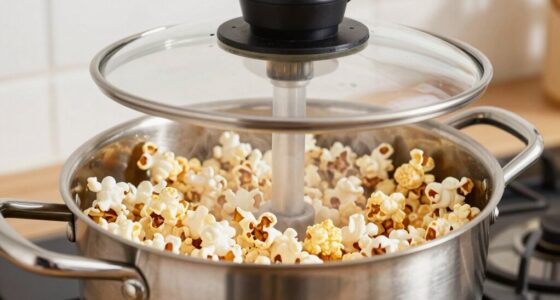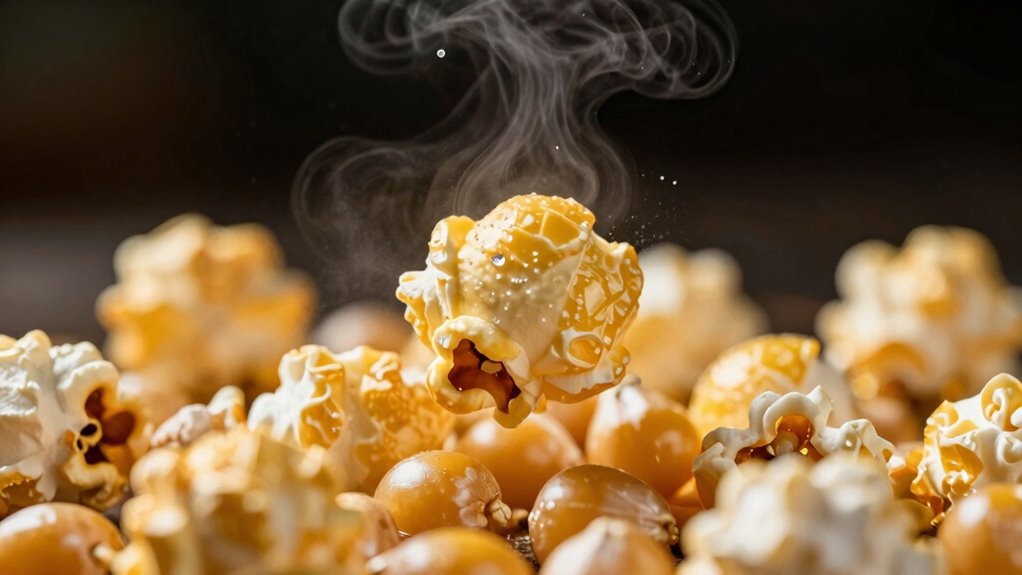

Popcorn pops loud due to its moisture content and the rapid heat it experiences. When the kernel heats up, steam builds inside until it bursts, creating that satisfying sound. The loudness can also signal the right timing for cooking; when pops slow to about two seconds apart, it’s time to remove it from the heat to avoid burning. Discover how to perfect your popcorn popping technique and guarantee a delightful crunch with each batch.
Open a free Amazon Business account
Business pricing, bulk buying and tax-exempt orders.
As an affiliate, we earn on qualifying purchases.
Key Takeaways
- The loudness of popcorn popping is influenced by kernel moisture content, which affects the pressure buildup before bursting.
- Rapid heating creates louder pops as kernels reach popping temperature quickly, leading to a quick steam release.
- Different popcorn varieties have varying loudness levels, impacting the overall popping experience.
- Listening for pops slowing to about 2 seconds apart is crucial for timing the removal from heat to avoid burning.
- Using proper heat distribution prevents uneven popping, ensuring a consistent sound and texture when the popcorn is ready.
Your Guide to Perfectly Popped Popcorn

When you want to make perfectly popped popcorn, it’s vital to start with the right technique. First, choose high-quality kernels, as they’ll yield the best results. Use a heavy-bottomed pot or an air popper for even heat distribution. Preheat your oil to the right temperature, then add the kernels and cover the pot. Shake it gently to guarantee even popping, preventing any from burning. Experiment with various popcorn flavors by adding seasonings like salt, cheese, or even caramel after popping. Always taste as you go; you can adjust the flavors to your liking. By mastering these popping techniques, you’ll create a delicious, fluffy snack that’s sure to impress family and friends every time.
The Science Behind How Popcorn Pops

When you pop popcorn, it’s all about the structure of the kernel and the heat it experiences. As the temperature rises, pressure builds up until it finally bursts, creating that satisfying pop. Let’s explore how these factors come together to create the loud sound we love.
Kernel Structure Explained
Popcorn kernels are fascinating little packages of potential. Each kernel’s unique kernel composition plays a significant role in its ability to pop. The outer hull, or pericarp, is specifically designed to maintain hull integrity, ensuring that pressure builds up inside as the kernel heats. This hull is both strong and moisture-resistant, which keeps the steam contained until the right moment. Inside, the starchy endosperm becomes pliable when heated, ready to expand. Once the internal temperature reaches around 180°C (356°F), the pressure from the steam becomes too much for the hull to hold. That’s when the kernel bursts open, transforming into the fluffy snack we love. Understanding this structure helps you appreciate the science behind that satisfying pop.
Heat and Pressure Dynamics
Understanding the kernel’s structure sets the stage for exploring the heat and pressure dynamics that make popcorn pop. When heated, moisture inside the kernel turns to steam, causing thermal expansion. As the temperature rises, pressure buildup occurs until the outer shell can no longer contain it.
| Stage | Description |
|---|---|
| Heating | Moisture turns to steam |
| Expansion | Steam creates pressure inside |
| Popping | Kernel bursts, releasing the steam |
This rapid release transforms the kernel into fluffy popcorn. The combination of heat and pressure is essential, as it determines how quickly and explosively the popcorn pops. Understanding these dynamics helps you achieve the perfect pop every time!
Sound Generation Factors
As the pressure inside the popcorn kernel builds, it not only forces the kernel to explode but also generates a distinctive sound. This loud pop is a result of rapid expansion that creates shockwaves, which travel through the air. The sound frequency of this explosion falls within a specific range that our ears perceive as a crisp, sharp noise. The acoustic properties of the popcorn—like its moisture content and shell thickness—also play an essential role in shaping the sound. When the kernel bursts, these properties influence how the sound waves resonate, leading to that satisfying pop you love. So, the next time you enjoy popcorn, remember that each pop is a symphony of science at work!
How Moisture Levels Impact Popcorn Popping
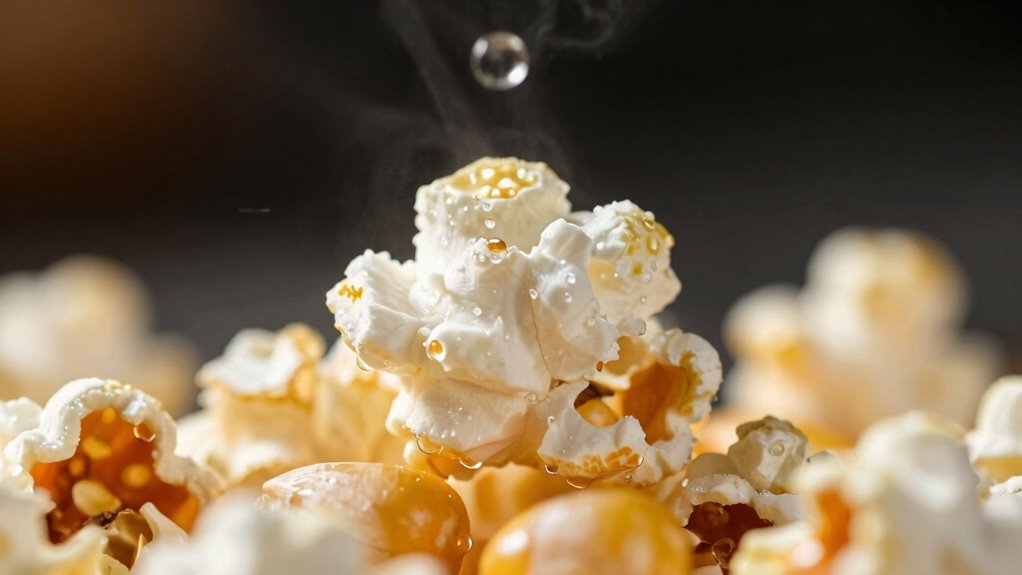
When it comes to popping popcorn, moisture levels play an essential role in the process. The ideal hydration of popcorn kernels is significant for achieving that perfect pop. If the moisture balance is off, you may end up with unpopped kernels or chewy popcorn.
| Moisture Level | Result |
|---|---|
| Low | Hard, unpopped kernels |
| Ideal | Light, fluffy popcorn |
| High | Chewy, soggy popcorn |
| Too High | Burnt or mushy popcorn |
| Just Right | Perfectly popped kernels |
Maintaining the right moisture content guarantees that steam builds up effectively inside the kernel, allowing it to burst open beautifully. So, pay attention to your popcorn’s hydration for the best results!
How Heat Influences Popping Sound
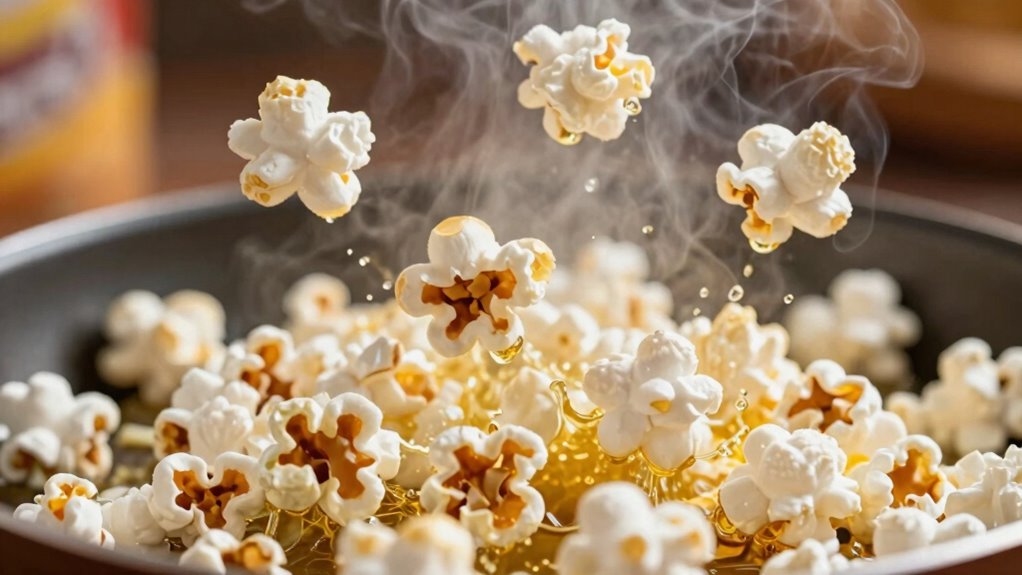
The heat applied to popcorn kernels is essential not just for the popping action but also for the loudness of the pop itself. Proper heat distribution is vital; it guarantees that each kernel reaches its popping temperature uniformly. When you heat popcorn, the moisture inside turns to steam, building pressure until the kernel bursts. If the heat is uneven, some kernels may not pop at all, while others might explode with a louder sound. This variance can affect your overall popping experience. To maximize the sound and enjoyment, aim for a consistent heat source that allows all kernels to achieve that critical popping temperature together. This way, you’ll get a satisfying, loud pop every time!
What Affects the Loudness of Popcorn?
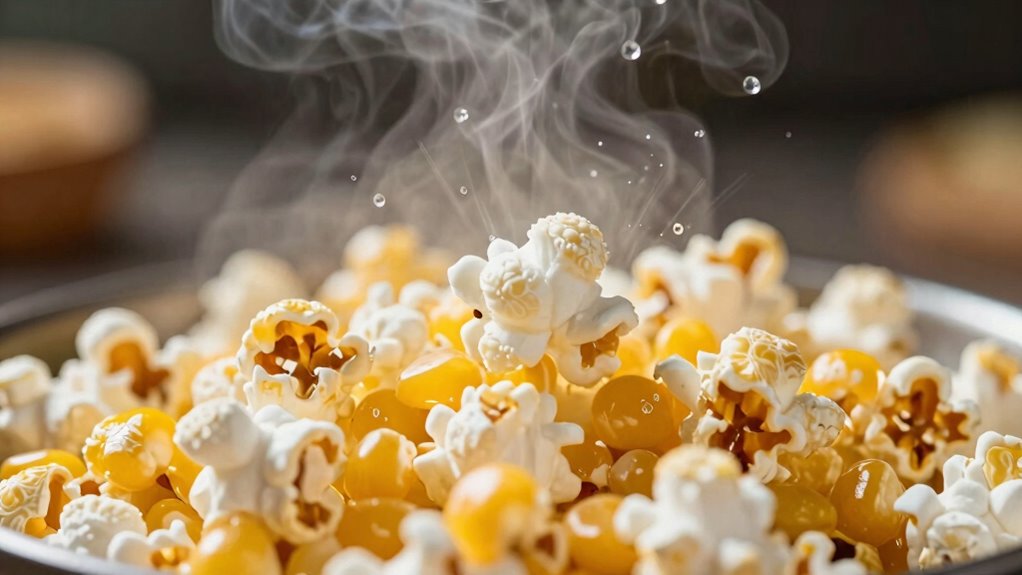
When you pop popcorn, several factors can influence how loud it gets. The moisture content inside the kernel, the rate at which you heat it, and the type of popcorn you use all play a role in the sound produced. Understanding these elements can help you achieve that perfect popping experience.
Kernel Moisture Content
Popcorn’s loud pop is closely linked to the moisture content inside each kernel. When the kernel’s moisture balance is just right, it creates the perfect environment for popping. If the kernel hydration is too low, you won’t get that satisfying explosion. Conversely, if it’s too high, the kernel might burst prematurely or become chewy.
Factors influencing kernel moisture content include:
- Storage conditions: Humidity and temperature can alter moisture levels.
- Kernel age: Older kernels tend to lose moisture over time.
- Variety of popcorn: Different types have varying moisture contents.
- Processing methods: How kernels are dried and stored affects hydration.
Understanding these factors helps you achieve that ideal loud pop and perfect popcorn texture!
Heating Rate Variations
Although various factors contribute to the loudness of popcorn, the rate at which the kernels heat up plays an essential role. Different heating methods can greatly impact how quickly the kernels reach their popping temperature. For instance, using a microwave typically heats them faster than stovetop popping techniques. When kernels heat up rapidly, the pressure inside builds quickly, leading to a louder pop. Conversely, slower heating can result in a quieter, less explosive reaction. Experimenting with various heating methods and popping techniques can help you find the perfect balance for maximum volume. So, whether you’re using an air popper or a traditional pot, pay close attention to how you heat those kernels to achieve that satisfying pop!
Popcorn Type Differences
Some might be surprised to learn that not all popcorn kernels are created equal when it comes to loudness. The type of popcorn you choose can greatly influence how loud the pops get. Here are some factors that affect loudness:
- Kernel moisture content: Higher moisture often leads to louder pops.
- Popcorn varieties: Certain types, like mushroom popcorn, tend to pop quieter than butterfly varieties.
- Butter flavoring: Adding butter flavoring can slightly dampen the sound as it coats the kernels.
- Kernel size: Larger kernels may generate a more robust pop, while smaller ones might not.
Understanding these differences can help you pick the perfect popcorn for your next movie night, ensuring you enjoy both the sound and flavor.
Common Popcorn Mistakes That Lead to Burning
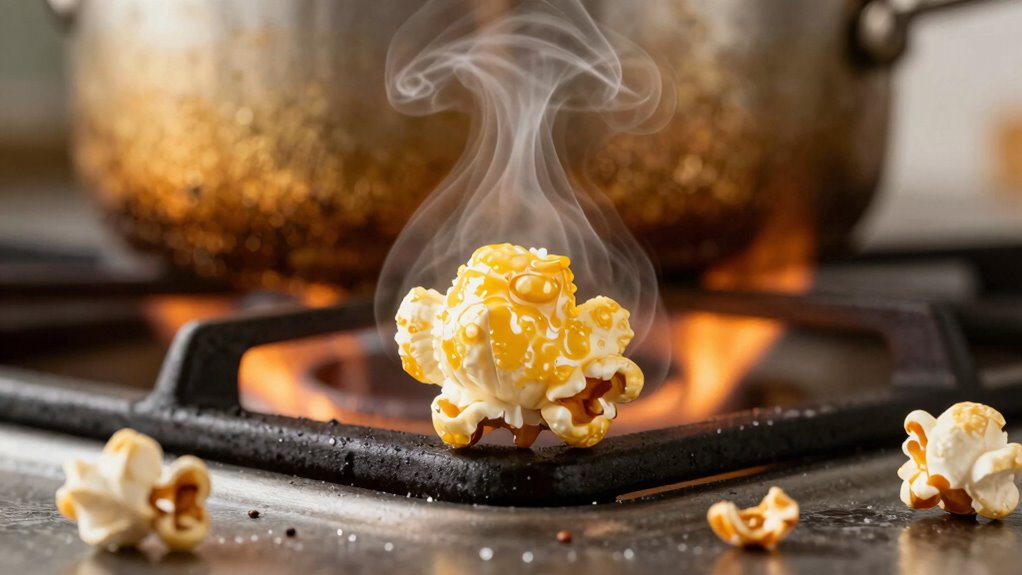
When you’re making popcorn, it’s easy to overlook a few essential steps that can lead to burnt kernels and a disappointing snack. One common mistake is using too high of a heat setting. If you crank up the temperature, you risk overcooked popcorn that burns before all the kernels have popped. Instead, start with medium heat and adjust as needed. Another mistake is not paying attention to the popping sounds. If the pops slow down considerably, it’s time to remove the pot from the heat; otherwise, you’ll end up with burnt kernels. Finally, avoid leaving the popcorn unattended—just a few moments can turn your treat from delicious to disastrous. Keep these tips in mind for perfectly popped popcorn every time!
Timing Your Popping for the Best Crunch
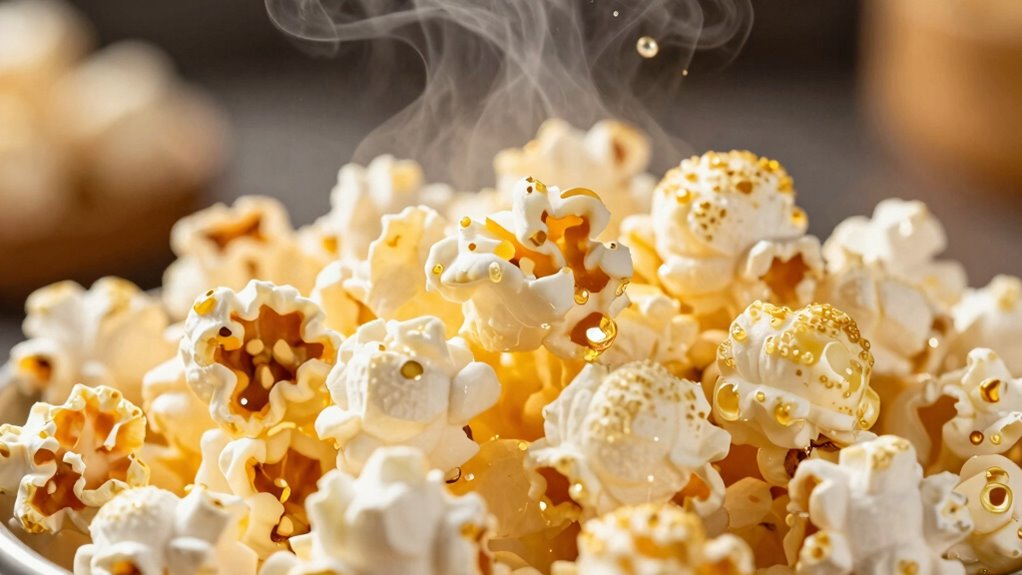
To achieve the best crunch with your popcorn, timing is everything. Mastering your popping techniques can elevate the texture and flavor, making each kernel a delight. Here are some tips to perfect your crunch timing:
- Listen for the pops: When the popping slows to about 2 seconds between pops, it’s time to remove the pot from heat.
- Use a lid: This traps steam, allowing the popcorn to expand fully.
- Test a few kernels: Check for doneness by popping a few kernels before your batch.
- Cool briefly: Letting the popcorn sit for a minute after popping guarantees it retains that desired crunch.
Why Freshness Matters for Your Popcorn
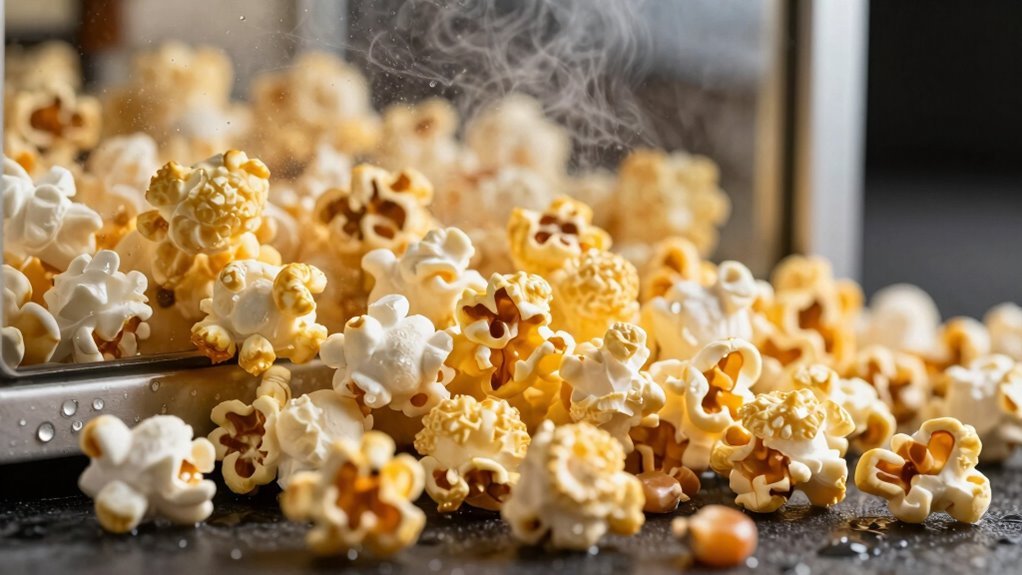
Freshness plays an essential role in the quality of your popcorn, as stale kernels can lead to disappointing results. The freshness impact is significant; fresh popcorn pops better, resulting in a delightful crunch and flavor. To guarantee your popcorn stays fresh, follow some simple storage tips. Keep your kernels in an airtight container away from light, heat, and moisture. A cool, dark pantry is ideal. If you’ve popped popcorn, store it in a sealed bag but consume it within a few days for the best taste. Remember, freshness makes all the difference, turning a simple snack into a satisfying treat. So, prioritize keeping your kernels fresh, and you’ll enjoy perfect popcorn every time!
Frequently Asked Questions
Can Different Popcorn Kernels Affect Popping Sound?
Yes, different popcorn kernel varieties can definitely affect popping sound. Each kernel has unique popping dynamics based on its moisture content and structure. When you heat them, some might burst louder than others due to these differences. For instance, hull thickness and shape can influence how the steam builds up and escapes, resulting in varied popping sounds. So, experimenting with various kernels can lead to an interesting auditory experience while enjoying your popcorn!
Does Popcorn Popping Sound Change With Altitude?
Yes, popcorn popping sound does change with altitude. As you rise in elevation, the air pressure decreases, which affects sound frequency. Have you ever noticed how sounds travel differently in the mountains? At higher altitudes, the popping may sound sharper or higher-pitched due to this pressure change. So, if you’re popping corn in the Rockies, you might notice a distinctive difference compared to your kitchen at sea level.
Is There a Way to Reduce Popcorn Noise?
Yes, you can reduce popcorn noise by using specific popping techniques. Try popping your kernels in an air popper, which typically causes less noise than stovetop methods. You could also cover the pot with a lid, allowing some steam to escape while muffling the sound. Additionally, choosing a quieter popping method like microwave popcorn can help minimize noise. Experiment with these strategies, and you’ll enjoy your snacks with less disruptive popping!
Why Do Some Kernels Not Pop at All?
Ever feel like you’re watching a movie and half your popcorn hasn’t popped? Some kernels don’t pop because they lack the right moisture content. Each kernel needs about 13.5-14% moisture to explode. If a kernel’s moisture is too low or heat distribution is uneven, it won’t reach the necessary pressure to pop. So, make sure you’re using fresh popcorn and heating it evenly for the best movie snack experience!
Can the Type of Oil Impact Popping Loudness?
Yes, the type of oil you use can impact popping loudness. Oils with higher viscosity can absorb more sound, leading to a quieter pop. Conversely, lighter oils may allow more sound to escape, resulting in a louder pop. Experimenting with different oil types can help you discover which one produces the best popping sound for your popcorn. So, next time you pop corn, consider how your choice of oil could affect the auditory experience!
Conclusion
In the world of popcorn, timing is key—like a well-timed dance, each kernel needs the right conditions to shine. By understanding how moisture and heat influence that satisfying pop, you can avoid common mistakes that lead to burnt bites. Freshness plays an essential role too, ensuring every pop is a delightful crunch. So, next time you prepare your popcorn, remember: it’s all about the right timing for a perfect performance!
Flea & tick season Picks
flea and tick prevention
As an affiliate, we earn on qualifying purchases.