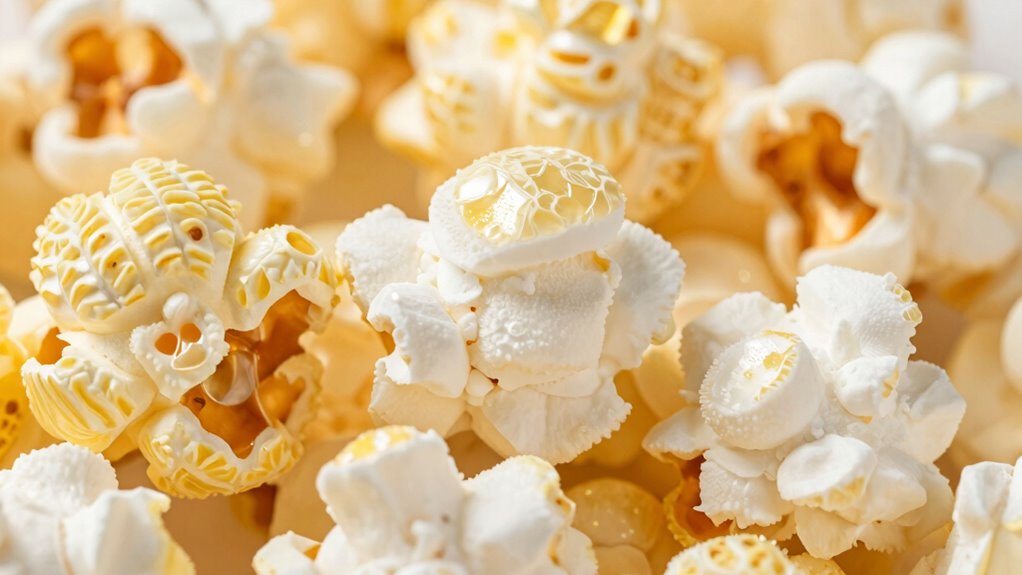

The fluffiness of your popcorn depends on factors like kernel moisture, shell strength, and starch quality. When you heat the kernels, moisture turns to steam, building pressure until the shell bursts, causing the kernel to expand. If the moisture is just right and the shell is strong enough, you’ll get larger, fluffier pops. Differences in these factors explain why some kernels pop bigger—discover more about the science behind perfect popcorn.
Key Takeaways
- Kernel moisture content around 13-14% is optimal for maximum expansion and fluffiness.
- Thicker, stronger shells trap steam effectively, leading to larger, fluffier pops.
- High-quality kernels with balanced starch and shell structure produce more uniform, bigger popcorn.
- Genetic factors influence shell resilience and starch composition, affecting popping size.
- Proper storage and pre-heating practices maintain moisture levels and improve pop size and fluffiness.

VEVOR Commercial Popcorn Machine, 8 Oz Kettle, 850 W Countertop Popcorn Maker for 48 Cups per Batch, Theater Style Popper with 3-Switch Control Steel Frame Tempered Glass Doors 2 Scoops 2 Spoons, Red
Powerful Heating, High Yield: This commercial popcorn machine boasts 850W of power and an 8 oz kettle, popping...
As an affiliate, we earn on qualifying purchases.
What Causes Popcorn to Pop and How Size Varies
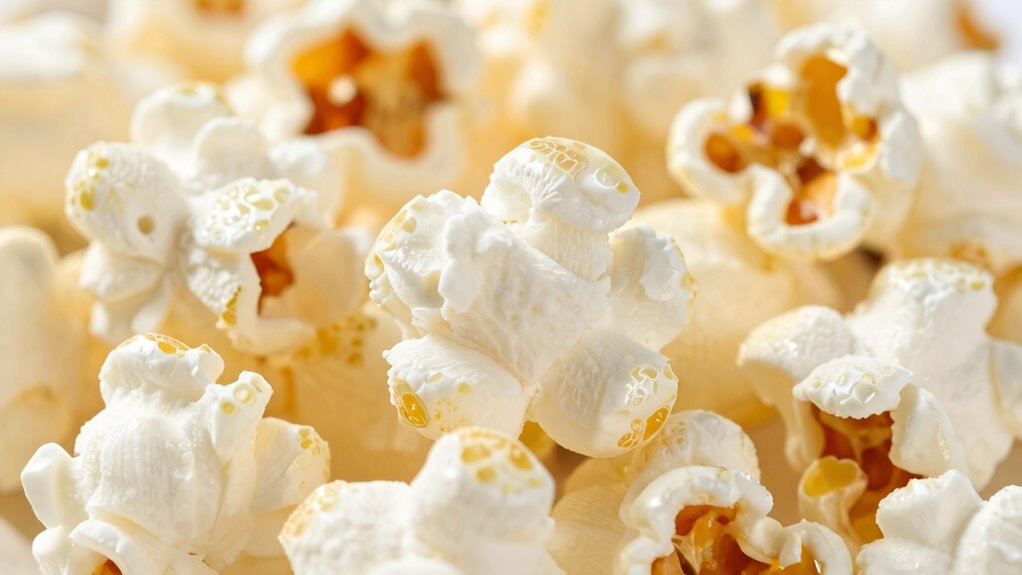
You might wonder why popcorn pops and how its size varies, and the answer lies in its unique structure. Popcorn genetics play a vital role, as certain strains have thicker shells and more ideal starch content, making some kernels pop bigger. Kernel aging also influences popping size; older kernels may lose moisture or develop cracks, reducing their ability to expand fully. When heated, moisture inside the kernel turns to steam, creating pressure until the shell bursts. The genetic makeup determines how well a kernel holds that moisture and withstands pressure. Younger, well-preserved kernels with the right genetics produce larger, fluffier popcorn. Additionally, kernel moisture content is crucial, as optimal moisture levels ensure maximum expansion. Factors like moisture retention are essential for achieving consistent popping results. Understanding these factors helps explain why some kernels pop bigger and why popcorn quality can vary from batch to batch. Moreover, genetic factors can be selectively bred to enhance popping performance and size. Proper storage conditions that maintain moisture levels further contribute to achieving the best popping outcomes. Maintaining optimal storage conditions also helps preserve kernel quality over time.
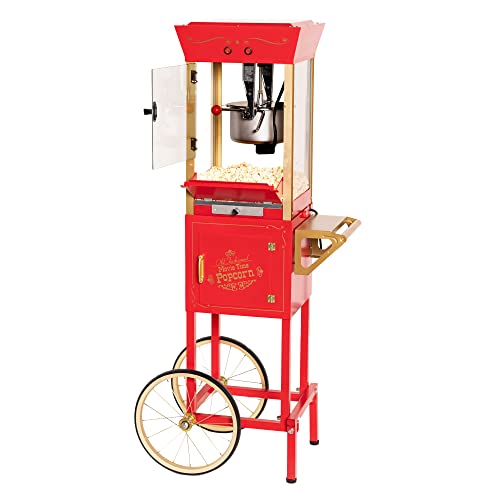
Nostalgia Popcorn Maker Machine - Professional Cart With 8 Oz Kettle Makes Up to 32 Cups - Vintage Popcorn Machine Movie Theater Style - Red
POPCORN CAPACITY: Whether movie time or snack time, this vintage popcorn machine stand pops up to 32 cups...
As an affiliate, we earn on qualifying purchases.
How Moisture and Kernel Structure Influence Popcorn Size

Have you ever wondered how moisture and kernel structure dictate the size of popped popcorn? Your kernel’s moisture content directly impacts how much steam builds up inside during heating. Too little moisture, and the kernel won’t generate enough pressure to pop fully; too much, and the popcorn may become dense or chewy. The ideal kernel moisture—around 13-14%—creates enough pressure for a large, fluffy pop. Additionally, the kernel’s structure influences popcorn density. A well-structured kernel with a strong outer shell traps steam more effectively, resulting in a bigger expansion. When moisture and structure are optimized, you get popcorn with lower density and larger volume. Proper kernel quality also plays a crucial role in achieving optimal popping results, as high-quality kernels tend to have more consistent size and structure. Understanding popcorn expansion can help you select the best kernels for fluffy popcorn. Recognizing the kernel’s moisture content is essential because it directly affects how much steam can accumulate before popping. Furthermore, the kernel’s structural integrity determines how well the kernel can withstand the pressure buildup without rupturing prematurely. A good moisture distribution within each kernel ensures uniform popping and fluffiness. In essence, controlling these factors determines whether your popcorn turns out light and airy or dense and compact.

Movie Theater Style 12-Count Popcorn Packs - Pre-Measured 8-Ounce All-in-One Kernel, Salt, Oil Packets for Popping Machines by Great Northern Popcorn
12 PACKS FOR POPCORN MACHINES - Make popping gourmet popcorn quick and hassle-free with these popcorn machine popcorn...
As an affiliate, we earn on qualifying purchases.
The Impact of Shell Strength and Starch Content on Fluffiness
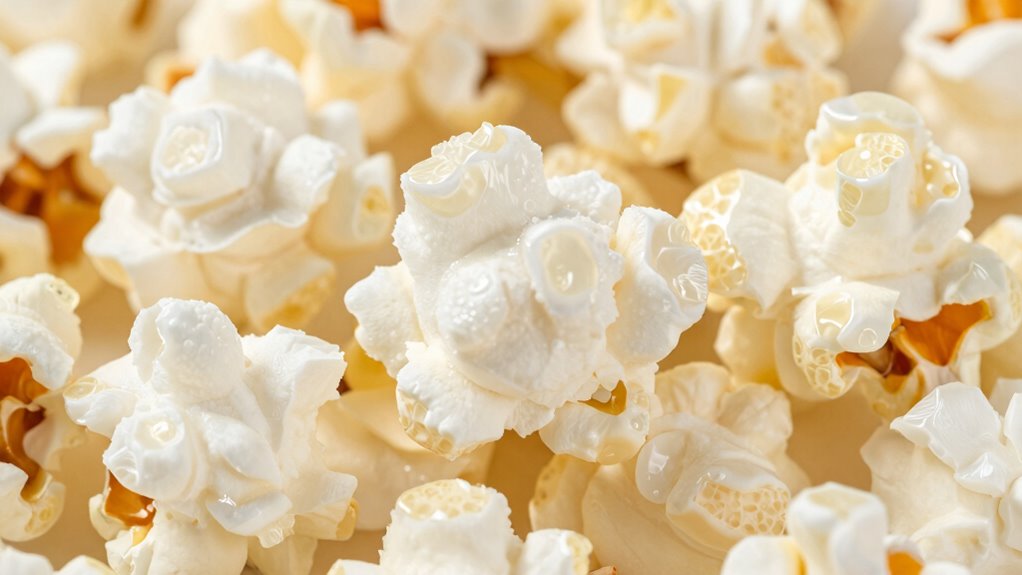
The strength of the kernel’s outer shell and its starch composition play significant roles in determining popcorn’s fluffiness. A shell that’s too thick or tough can trap steam, preventing the kernel from expanding fully and producing light, airy popcorn. Meanwhile, the starch composition inside affects how well the popcorn puffs. Ideal starch transforms into a gel that expands smoothly, creating fluffy textures. Additionally, sound vibrations from certain frequencies have been studied for their potential to influence cellular behaviors, which could someday be related to popcorn expansion processes. Understanding the resilience of the shell can further improve popcorn quality by optimizing popping conditions.

VEVOR Commercial Popcorn Machine, 12 Oz Kettle, 1440 W Countertop Popcorn Maker for 80 Cups per Batch, Theater Style Popper with 3-Switch Control Steel Frame Tempered Glass Doors 1 Scoop 2 Spoons, Red
Powerful Heating, High Yield: This commercial popcorn machine boasts 1440W of power and an 12 oz kettle, popping...
As an affiliate, we earn on qualifying purchases.
Why Do Some Kernels Pop Larger Than Others?

Ever wonder why some popcorn kernels burst into larger, more impressive puffs than others? The answer lies in differences in popping temperature and kernel genetics. Certain kernels reach their ideal popping temperature more efficiently, allowing the moisture inside to turn to steam quickly and build pressure. Kernel genetics also play a key role; some varieties naturally have thicker shells or more ideal starch composition, enabling them to expand more fully. These genetic traits influence how much the kernel can stretch before bursting, resulting in larger pops. Additionally, variations in moisture content and shell strength, tied to genetics, affect how much pressure builds up. Understanding the role of essential oils can also help in managing moisture levels and overall kernel health, indirectly influencing popping performance. Proper kernel storage is crucial to maintaining optimal moisture content and ensuring consistent popping results. Maintaining the correct moisture balance helps ensure kernels pop to their fullest potential. Interestingly, popping temperature can be affected by environmental factors and storage conditions, which further impacts popping size and quality. So, the combination of superlative popping temperature and favorable genetics determines why some kernels pop bigger and fluffier than others.
Tips for Choosing and Preparing Kernels for Maximum Fluffiness
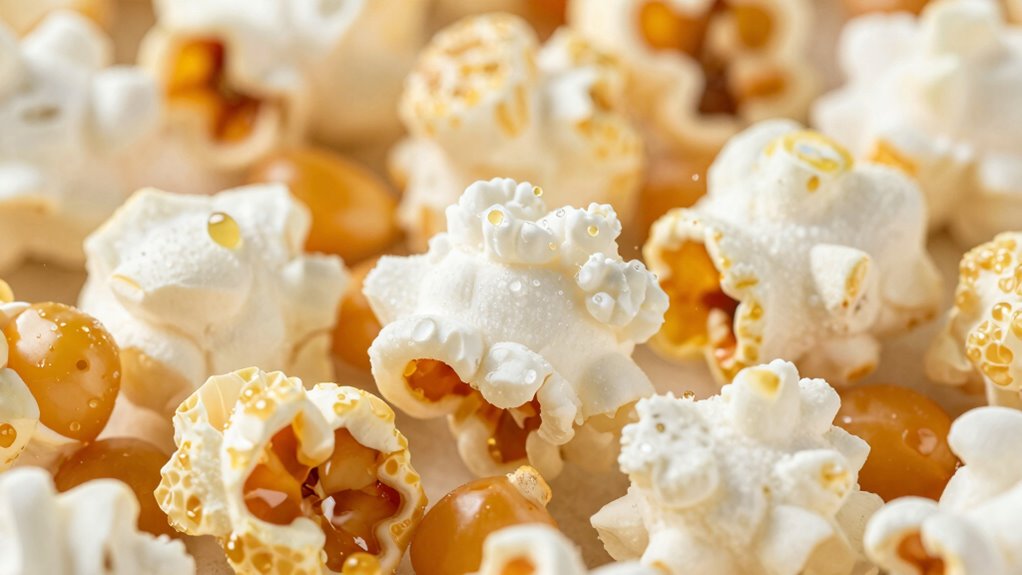
Choosing the right popcorn kernels and preparing them properly can make a noticeable difference in the fluffiness and size of your pops. Start with fresh kernels, as older ones tend to be less efficient and produce smaller popcorn. Proper storage conditions are essential—keep kernels in an airtight container in a cool, dry place to maintain freshness and prevent moisture absorption. Before popping, ensure kernels are at room temperature to avoid uneven heating. Additionally, consider soaking kernels briefly in water to slightly hydrate them, which can help create larger, fluffier popcorn. Understanding the moisture content of your kernels can further optimize popping results. To improve consistency, consider measuring and controlling the popping temperature, which directly influences the size and fluffiness of your popcorn. Monitoring kernel moisture levels can also lead to more predictable and fluffy popcorn outcomes. Moreover, paying attention to popping methods can impact the overall fluffiness and texture of the popcorn. Using the right popcorn equipment can also enhance heat distribution for more uniform popping.
Frequently Asked Questions
Can Processed or Flavored Popcorn Affect the Size of the Popped Kernels?
Processed or flavored popcorn can definitely affect the size of popped kernels. Corn flavoring and seasoning effects add moisture or alter the kernel’s structure, which can impact how it pops. Some flavorings might make the popcorn denser or cause uneven heating, leading to smaller or less fluffy popcorn. To keep your popcorn fluffy, stick to minimal seasoning or add flavor after popping to avoid moisture buildup that hampers expansion.
How Does Altitude Influence Popcorn Popping and Fluffiness?
Did you know that at higher altitudes, popcorn tends to be less fluffy? Altitude effects, caused by decreased air pressure, make it harder for kernels to reach the necessary internal pressure to pop fully. This means you might end up with smaller, less airy popcorn. To improve fluffiness, try increasing the popping temperature or using a different method, like stovetop popping, to compensate for lower air pressure.
Are There Specific Popcorn Varieties Known for Larger Pop Size?
You’ll find that certain popcorn cultivars are known for producing larger pop sizes. These varieties often have specific kernel characteristics, like thicker hulls and higher moisture content, which help them expand more during popping. By choosing cultivars bred for bigger pops, you can enjoy fluffier, more voluminous popcorn. Look for labels or descriptions that mention large kernel size or specific cultivars designed for bigger, fluffier popcorn.
Does Microwave Versus Stovetop Popping Impact Kernel Size?
You might wonder if microwave or stovetop popping affects kernel size, and research suggests it does. Microwave heating often results in more uniform and rapid heat transfer, influencing kernel moisture and reaching popping temperature faster, which can lead to larger popcorn. Stovetop methods offer more control but may cause uneven heating, potentially shrinking kernels. So, your choice impacts the size, mainly through how evenly heat and moisture are managed during popping.
Can Additives or Coatings Alter the Popcorn’s Expansion During Popping?
Yes, popcorn additives and coating effects can alter how much your popcorn expands during popping. When you add ingredients like oil, butter, or flavorings, they can influence moisture levels and heat transfer, affecting kernel expansion. Coatings might also create a barrier that reduces pressure buildup inside the kernel, resulting in smaller or less fluffy popcorn. So, your choice of additives and coatings definitely impacts the final puffiness of your popcorn.
Conclusion
Now that you know what makes popcorn pop big and fluffy, you might wonder if you can control every kernel’s size. While factors like moisture and shell strength play a role, some kernels will always surprise you with their size. So, next time you make popcorn, will you choose the perfect kernels for maximum fluffiness? With the right tips and a little knowledge, you can enjoy the most delightful, airy popcorn every time.