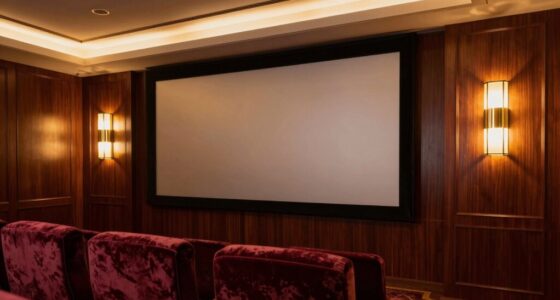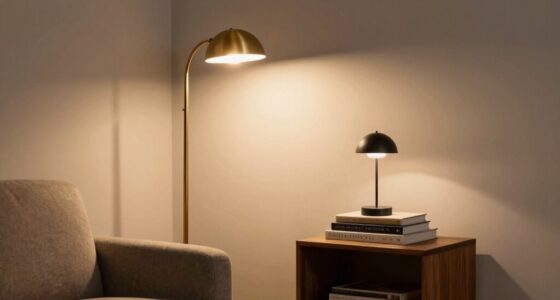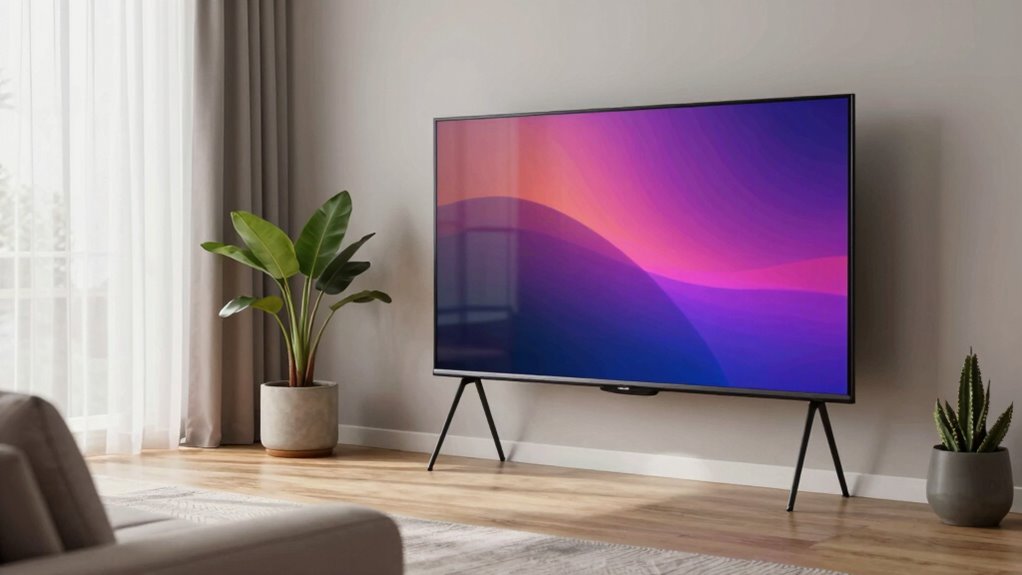

To reduce reflections on your TV screen, place your TV away from windows and bright lights. Adjust the seating position for direct viewing, ideally at eye level. Use anti-glare screen protectors and select the right TV technology, like OLED for brighter rooms. Control ambient light with soft lighting and dark curtains. Regularly clean your screen and optimize TV settings. If glare issues persist, there are additional solutions you might find helpful.
Key Takeaways
- Position the TV away from windows and bright light sources to minimize direct reflections on the screen.
- Use anti-glare screen protectors or matte screens to diffuse light and reduce glare effectively.
- Opt for soft, diffused lighting in the room, avoiding harsh overhead fixtures that can create reflections.
- Incorporate thick, opaque curtains or blinds to block outside light and control the viewing environment.
- Regularly clean the screen with a microfiber cloth to maintain clarity and prevent buildup that can enhance reflections.

Outset Media Pop Culture Trivia Game - Party Game - Family Game - Travel Game - Fun and Easy to Play - 1200 Trivia Questions - For 2 or More Players - Ages 12+
- POP CULTURE TRIVIA GAME: This game is for the...
- GAME CONTENTS: For 2 or more players...
- INCLUDE EVERYONE: Besides having the benefits of...
As an affiliate, we earn on qualifying purchases.
Understanding TV Screen Reflections: Causes and Solutions
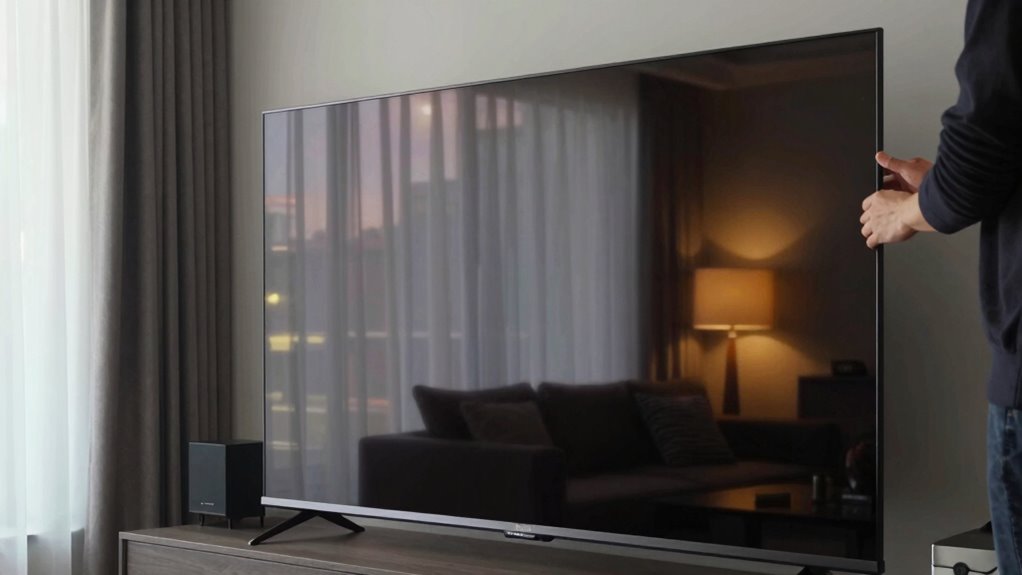
Have you ever wondered why your TV screen reflects light so much? This reflection happens due to the angles at which ambient light hits the screen. When light strikes your TV at certain reflection angles, it bounces back, creating those annoying glare spots. This is especially noticeable in bright rooms or when sunlight streams in through windows. To minimize these reflections, consider adjusting your seating position or using curtains to control the ambient light. You might also want to invest in an anti-reflective screen protector, which can greatly reduce glare. Understanding these factors helps you enjoy a clearer, more enjoyable viewing experience, free from distracting reflections. So, take a moment to assess your environment and make simple changes!

FAFO GAMES The Gen-X Challenge - 80s and 90s Trivia Card Game with 600 Trivia Cards - Pop Culture Trivia Game with Movies, Music, TV Shows - Ideal for Game Night, Christmas, Birthday, or Gift
- Paying homage to the days of couch cushion...
- Celebrate 80s & 90s nostalgia: Dive into 600 trivia cards...
- Perfect gift for adults: Whether it's for birthdays, Christmas,...
As an affiliate, we earn on qualifying purchases.
Optimal Room Placement for Your TV
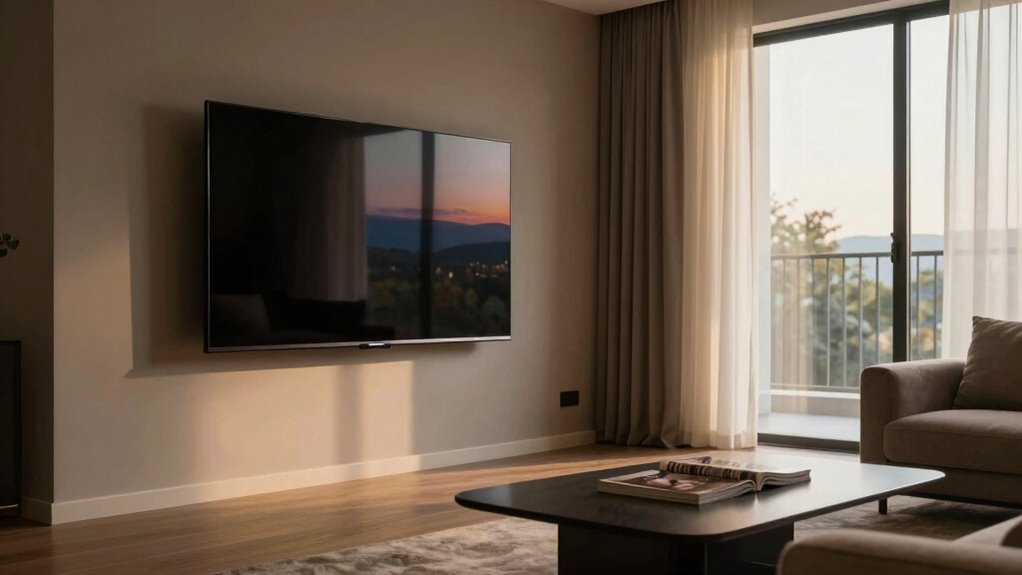
To truly minimize reflections on your TV screen, ideal room placement plays a significant role. Start by positioning your TV away from windows and other bright light sources. This reduces glare and enhances your viewing experience. Consider the height of your TV placement, ensuring it’s at eye level when you’re seated. The right viewing angles also matter; you should be able to see the screen comfortably without straining your neck. Try to create a layout where your seating faces the TV directly, avoiding side angles that can increase reflections. Additionally, incorporating anti-reflective coatings on your screen or using matte screen options can further diminish glare. Finally, using dark-colored walls or curtains can help absorb light, further improving your setup. With thoughtful TV placement, you’ll enjoy a more immersive and enjoyable viewing experience.

Hasbro Games Trivial Pursuit Mini Packs Multipack, Fun Trivia Questions for Adults and Teens Ages 16+, Includes 4 Game Featuring 4 Decades
- TRIVIA THROUGH THE DECADES: This Trivial Pursuit Game Mini...
- TAKE IT TO GO: Because each pack includes cards...
- QUICK AND EASY GAMES: With each of these fun...
As an affiliate, we earn on qualifying purchases.
Choosing the Right TV Screen Technology
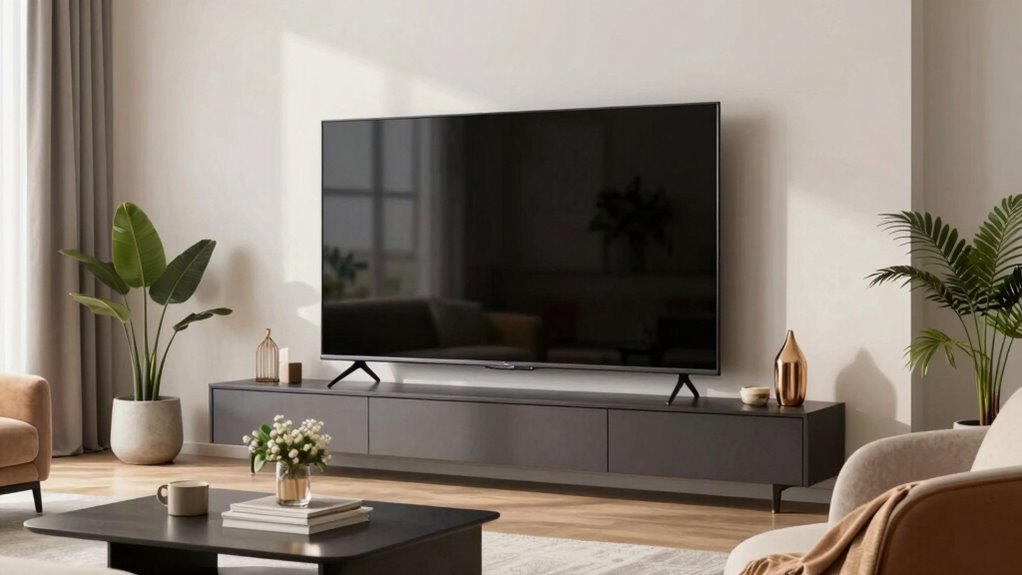
When you’re picking a TV, the technology you choose can make a big difference in reducing reflections. OLED screens offer vibrant colors and deeper blacks, while LCDs are often more budget-friendly and come with options for anti-glare coatings. Understanding these differences will help you make a choice that suits your viewing environment.
OLED vs. LCD Selection
Choosing the right TV screen technology can greatly impact your viewing experience, especially when it comes to reducing reflections. OLED TVs offer significant advantages, such as deeper blacks and better contrast, which help minimize glare in bright rooms. Their self-emissive pixels create vibrant colors and stunning detail, making them a popular choice for movie lovers. On the other hand, LCD screens have some drawbacks. They often struggle with glare due to their backlighting and less effective black levels, which can lead to washed-out images in well-lit environments. If you’re looking to enhance your viewing experience while reducing reflections, consider opting for an OLED TV, as it typically provides a clearer, more immersive picture even in challenging lighting conditions. Additionally, understanding the broader impact of AI on display technology can help you stay informed about emerging innovations that might improve reflection management in future screens. As AI continues to advance, we may see adaptive display technologies that automatically adjust screen settings to reduce glare based on ambient lighting.
Anti-Glare Coating Benefits
While OLED TVs provide excellent contrast and color depth, not everyone can invest in this technology. If you’re looking for a more budget-friendly option, consider TVs with anti-glare coatings. These coatings offer significant anti-glare benefits, reducing reflections and enhancing your viewing experience, especially in bright rooms. By minimizing distracting glare, you’ll enjoy improved screen clarity and vibrant colors, even with ambient light. Not only do these coatings make it easier to see details on-screen, but they also help reduce eye strain during long viewing sessions. When choosing a TV, look for models that emphasize anti-glare features, ensuring you get the best possible experience without overspending on high-end technologies. Enjoy your favorite shows without the frustration of reflections!

21st Century Trivia Game - Party Game - Family Game - Travel Game - Fun and Easy to Play - 1200 Trivia Questions - for 2 or More Players - Ages 12+
- 21st CENTURY TRIVIA GAME: This game is for those...
- 21ST CENTURY TRIVIA CONTENTS: For 2 or more players...
- INCLUDE EVERYONE: Besides having the benefits of...
As an affiliate, we earn on qualifying purchases.
Using Anti-Glare Screen Protectors for Better Viewing
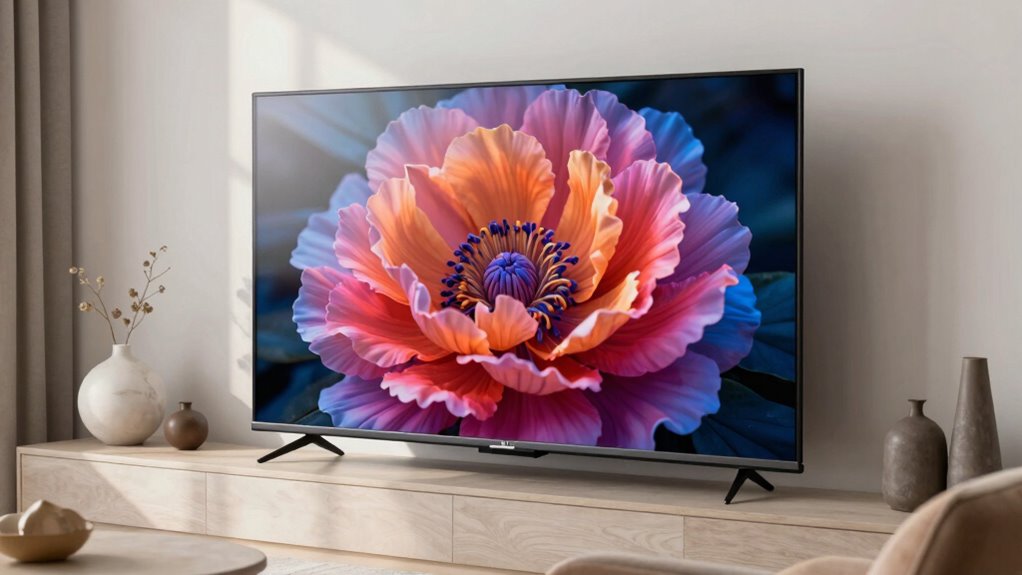
If you’re looking to enhance your TV viewing experience, anti-glare screen protectors can make a big difference. You’ll find various types available, each designed to reduce reflections and improve clarity. Let’s explore how to choose the right one and some handy installation tips to get the best results.
Types Of Anti-Glare Protectors
Anti-glare screen protectors can greatly enhance your viewing experience by minimizing reflections on your TV screen. There are two primary types to evaluate: matte screens and polarized filters.
Matte screens work by diffusing light, reducing glare while maintaining image clarity. They’re perfect if you watch TV in well-lit rooms, as they help prevent distracting reflections. On the other hand, polarized filters can considerably cut down on glare caused by overhead lights or windows. They do this by blocking certain light waves, allowing you to enjoy your shows without interference.
Choosing the right type depends on your viewing environment and personal preference. With the right anti-glare protector, you can transform your TV experience into something truly enjoyable.
Installation Tips And Tricks
Installing an anti-glare screen protector can be be a straightforward process when you follow a few key steps. First, verify your TV is clean and dust-free. Next, align the protector carefully, using proper mounting techniques to avoid misalignment. After applying the protector, manage your cables neatly behind the TV to minimize distractions from reflections. Additionally, consider safety precautions when handling tools or adhesives during installation to prevent damage or injury.
Adjusting Lighting to Reduce TV Glare
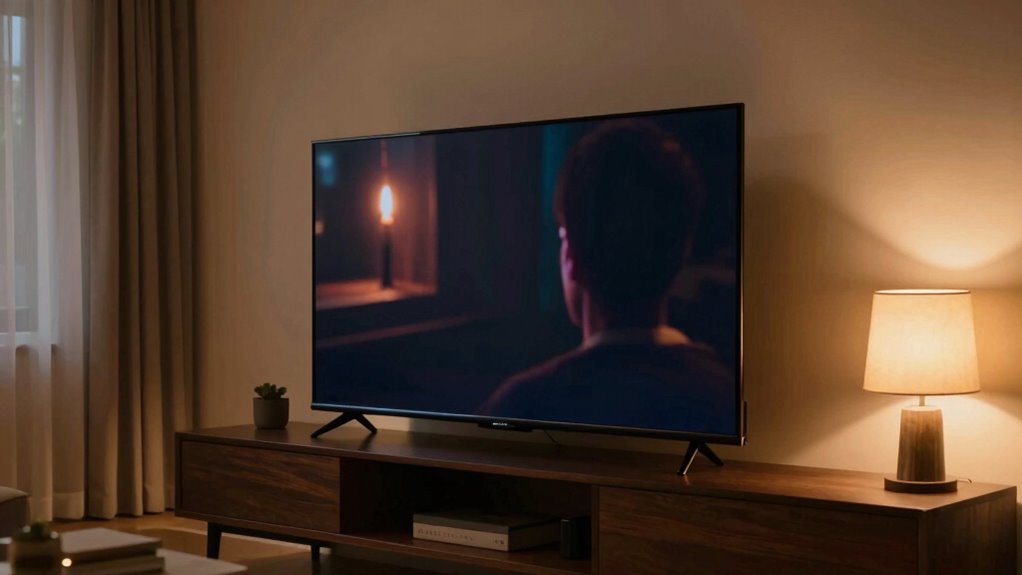
How can you create the perfect viewing environment to minimize glare on your TV screen? Start by adjusting your light sources. Use soft, diffused lighting rather than harsh overhead fixtures, which can create unwanted reflections. Position lamps strategically to avoid shining directly onto the screen. Consider wall colors, too; darker shades can absorb light and reduce glare, while lighter colors may reflect it. If your walls are painted in brighter hues, try to balance the light levels in the room. Dimmer switches can help control brightness, allowing you to fine-tune the atmosphere for your viewing experience. By thoughtfully managing both light sources and wall colors, you can greatly enhance your TV viewing pleasure while minimizing distracting glare.
Using Curtains and Blinds to Block Glare
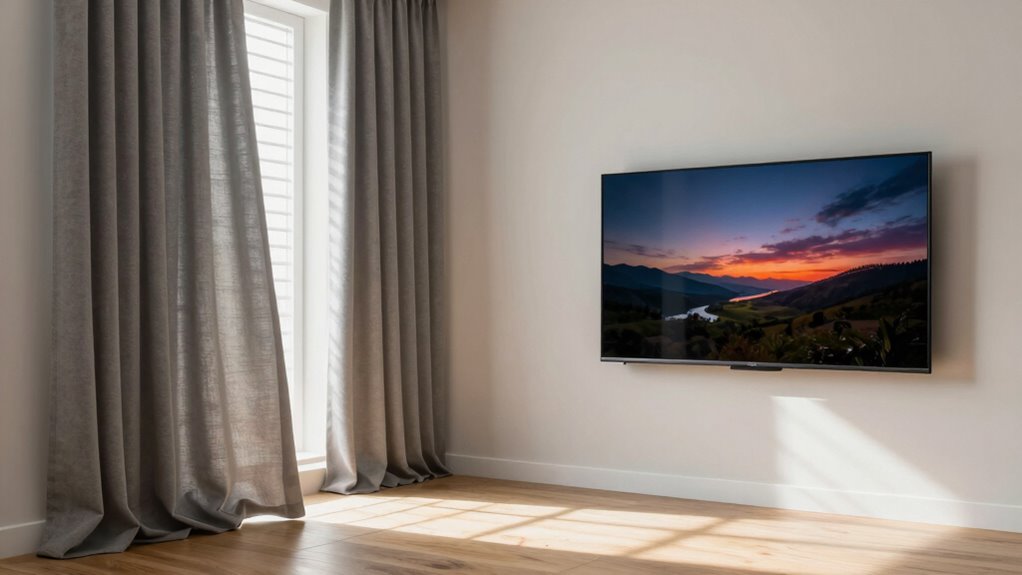
When you’re trying to enjoy a movie or your favorite show, the last thing you want is distracting glare from outside light sources. To combat this, consider using curtains and blinds. Choose curtain materials that are thick and opaque, like blackout fabric, which can effectively block out sunlight. If you prefer blinds, opt for styles like roller or Roman blinds, which can be easily adjusted to control light levels. Both options can enhance your viewing experience by minimizing reflections on your TV screen. Additionally, selecting darker colors for your curtains or blinds can further absorb light rather than reflecting it. Proper window treatment selection can significantly improve your viewing comfort by reducing glare and reflections. Using light-absorbing materials can help further diminish glare and enhance your overall viewing environment. Incorporating smart window coverings can also provide automated control over light levels, making it easier to create the optimal viewing conditions. Opting for dark-colored window treatments can further improve glare reduction by absorbing more light rather than reflecting it. Employing soundproofing techniques, like acoustic panels or foam, can also help reduce ambient noise that might distract from your viewing experience. With the right window treatments, you’ll create a more comfortable and enjoyable movie-watching environment.
Optimize Your TV Settings for Better Picture
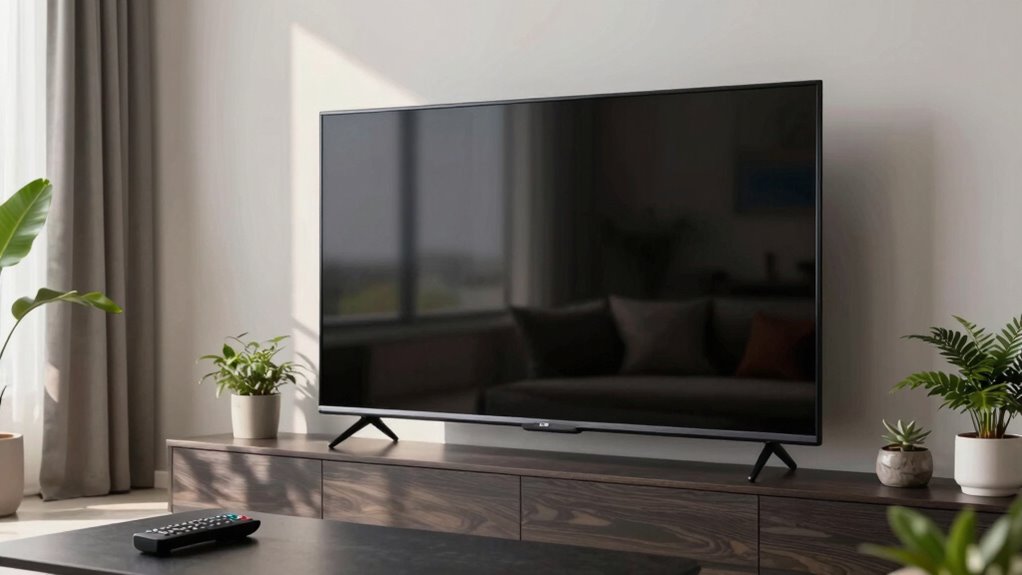
To enjoy the best picture quality on your TV, optimizing its settings is essential. Start by selecting the appropriate picture mode for your viewing environment. If you’re watching in a brightly lit room, switch to a mode designed for brightness. Next, focus on color calibration. Adjust the contrast, brightness, and saturation levels to achieve more natural colors. This step can make a significant difference in your viewing experience. You can also use built-in calibration tools or online guides to help with this process. Remember to regularly revisit your settings as lighting conditions change. By taking these steps, you’ll not only reduce reflections but also elevate your overall viewing pleasure, making your TV time more enjoyable.
Regular TV Maintenance Tips for Glare Reduction
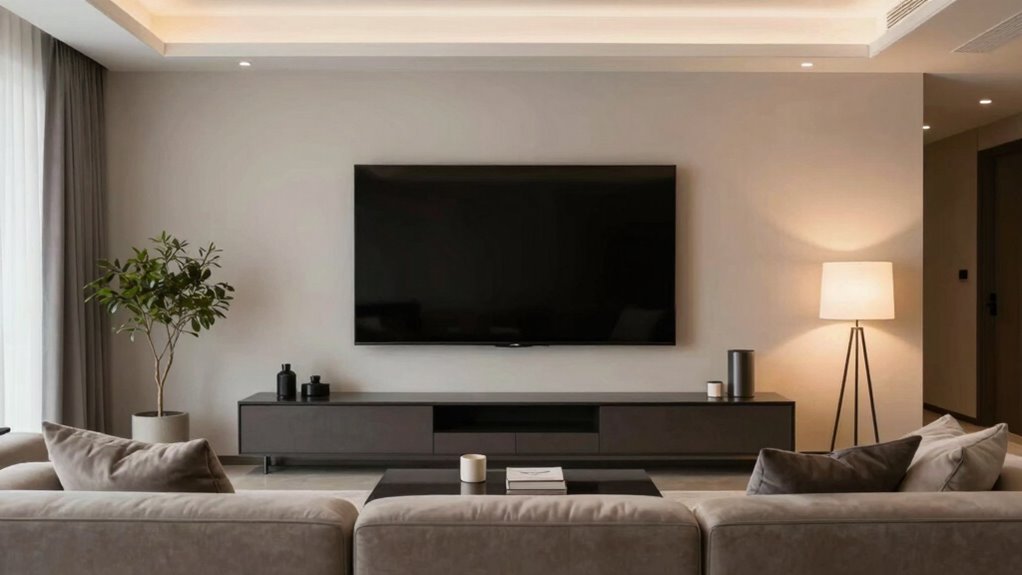
Keeping your TV in prime condition can greatly help reduce glare and reflections. Regular maintenance, like screen cleaning and calibration, guarantees peak performance. Here are some essential tips:
| Maintenance Task | Frequency |
|---|---|
| Screen Cleaning | Every 1-2 weeks |
| Calibration | Every 6-12 months |
| Check for Dust Accumulation | Monthly |
For screen cleaning, use a microfiber cloth and a gentle cleaner to avoid damage. Calibrate your TV settings regularly to enhance picture quality and minimize glare. Don’t forget to keep the area around your TV clear of dust and clutter. Following these tips will keep your viewing experience enjoyable and glare-free!
When to Call in the Pros for Reflection Issues?
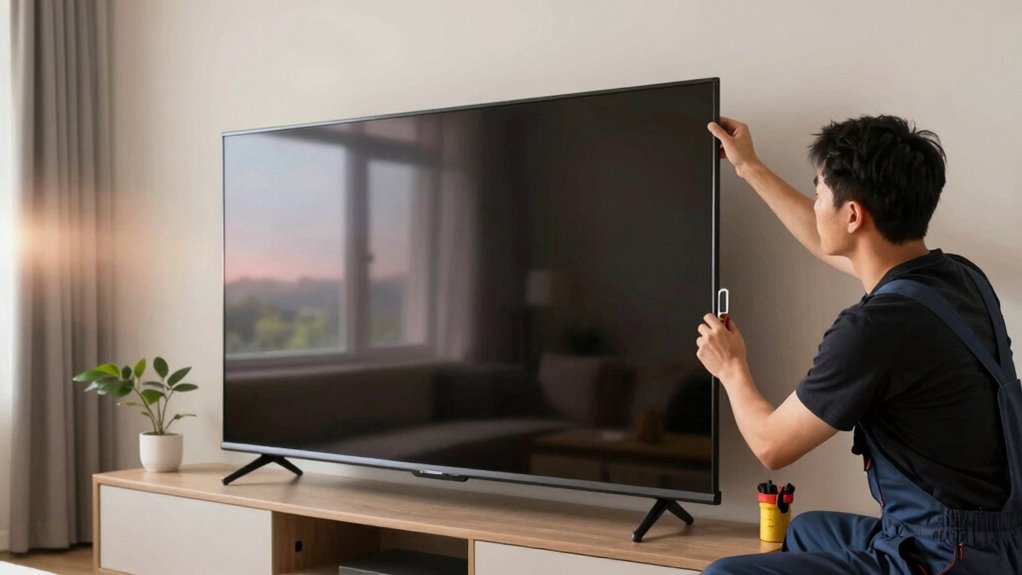
If reflections on your TV screen persist despite your best efforts, it may be time to call in the professionals. A thorough reflection assessment can identify underlying issues that you might not see. Professionals can evaluate your room’s layout, lighting, and TV positioning to determine the most effective solutions. They might recommend specialized anti-glare screens or suggest moving your TV to a different location for ideal viewing. Additionally, if you’re considering a new TV, professional installation guarantees it’s set up correctly to minimize reflections from the get-go. Don’t let reflection issues ruin your viewing experience; reaching out to experts can save you time and frustration while providing you with the best possible setup.
Frequently Asked Questions
Can I Use a Projector Instead of a TV to Reduce Reflections?
Yes, you can use a projector instead of a TV to reduce reflections. Projectors often have advantages like larger screen sizes and flexible placement, which can help minimize glare from windows and lights. When you adjust your projection settings, like brightness and contrast, you can further enhance the viewing experience. Just make sure you choose a suitable screen and set up your projector in a way that maximizes image quality while reducing distracting reflections.
How Do Different Wall Colors Affect TV Screen Reflections?
Imagine watching your favorite movie in a cozy, dimly lit room. Different wall colors can greatly affect TV screen reflections. Light colors, like white or pastel shades, amplify ambient lighting, intensifying reflections. Darker hues, on the other hand, absorb light and reduce glare, enhancing your viewing experience. Understanding wall color psychology can help you create a space that minimizes distractions, allowing you to immerse yourself fully in your cinematic adventures without annoying reflections.
Is a Matte Screen Better Than a Glossy Screen for Glare Reduction?
Yes, a matte screen is generally better than a glossy screen for glare reduction. Matte finishes diffuse light, which helps minimize reflections and distractions while you watch TV. On the other hand, glossy coatings can enhance color vibrancy but often create more glare, especially in bright rooms. If you’re dealing with lots of ambient light, opting for a matte finish can greatly improve your viewing experience by reducing distracting reflections.
Will Changing My TV Screen Size Help With Reflections?
Changing your TV screen size can help with reflections, but it depends on the reflection angle. Studies show that a larger screen can reduce glare by up to 25% when positioned correctly. If you opt for a bigger screen, just be mindful of your viewing distance and angle to optimize your experience. So, if you want to minimize reflections, consider both the screen size and your room’s layout for the best results.
Are There Specific Brands Known for Reducing Screen Reflections?
Yes, certain brands are known for their effective anti-reflective technology. Look into models from LG and Samsung, as they often incorporate advanced screen coating options that minimize glare. Sony also offers TVs with specialized coatings designed to reduce reflections. When you’re shopping, check the product specifications to guarantee it highlights these features. You’ll find that investing in a TV with these technologies greatly enhances your viewing experience in bright environments.
Conclusion
By taking these steps, you can transform your viewing experience, making it a cinematic delight rather than a battle against reflections. Imagine settling in for movie night, the perfect image glowing brightly, free from distractions. Every scene comes to life, and you’re completely immersed in the story. But what happens if those pesky reflections return? Stay proactive with your setup and maintenance, and you’ll always enjoy crystal-clear entertainment, no matter what. The ultimate viewing experience is just a few adjustments away!