
TL;DR

Get movie nights delivered free with Prime
- Fast, free delivery on millions of items
- Prime Video, Amazon Music and more included
- Member-only deals all year
Walt Disney Animation Studios describes filmmaking as a collaborative process that spans story development, visual design, production technology, shot creation and final delivery. Its account explains the studio’s workflow, but does not give a production schedule, budget or project-specific details.
Walt Disney Animation Studios has outlined how an animated film moves from an evolving story idea to finished picture and sound, describing a process that combines storytelling, art, technology and production management. The studio’s account shows that animation is not a single task: teams develop characters and worlds, build digital assets, create scenes shot by shot, and prepare the completed film for delivery.
The process begins in development. Storytellers shape the narrative while artists explore the appearance of the characters and settings. Editorial and sound teams work with changing story ideas as production takes shape, and casting teams seek actors to provide character voices. Disney also says its Production Training and Development team offers classes, workshops, lectures, screenings and other learning experiences before and during production.
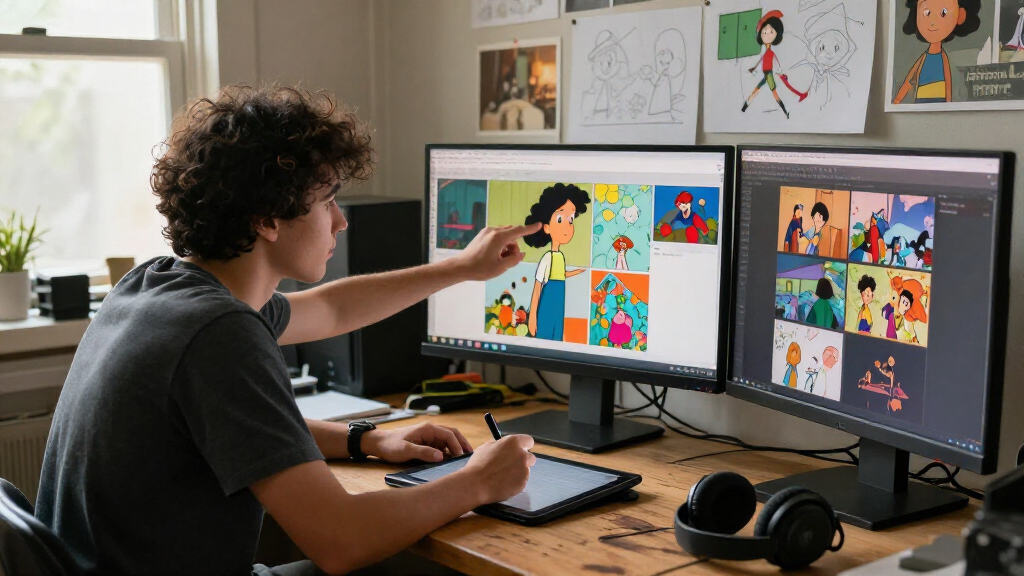
When the project is ready to move beyond drawings and concepts, artists create three-dimensional characters and environments. This work includes models, rigs and textures: the digital structures and surfaces that define how a character or setting looks and can be used in a scene. Production managers track schedules as plans change, while technical directors address production problems through tools, support and software development.
In shot production, animators and technicians assemble the scenes that make up the film. Their work can include character performance as well as details in hair, clothing and the surrounding world. Disney says its technology teams develop tools intended to support collaboration, visualization and faster revisions to rendered shots. After the scenes are assembled, post-production teams shape the final picture and sound. The studio says production artwork and assets are then organized and archived for reference and inspiration across the company.
How Many Teams Shape Each Frame
The studio’s outline illustrates why animated films require coordination across creative and technical departments. A character’s performance depends on more than animation: the story and design must be established, a usable digital model must be built, and teams must connect that asset to scenes, lighting, rendering and sound. Production management and technical support help keep those tasks moving as creative decisions and schedules evolve.
This matters to audiences because the finished film can make a complex production appear seamless. Disney’s description points to the work behind that result, including repeated revisions and collaboration across departments. It also shows that technology is part of the production process, not a separate final step: tools and workflows affect how artists build, review and refine shots.
Products Worth Considering

Philips Hue Secure Wired Video Doorbell, 2K, Black

Ring Battery Doorbell and Chime (3rd Gen), Satin Nickel

Blueair Blue Pure 211i Max Air Purifier
As an affiliate, we earn on qualifying purchases.
From Development to Final Delivery
Disney presents the process as a sequence of connected stages rather than a rigid checklist. Development and pre-production establish the narrative, visual direction and production foundations. Asset creation turns designs into digital characters and environments. Shot production uses those assets to create the film’s scenes, while post-production brings picture and sound to final delivery.
The studio also identifies research and institutional memory as resources for filmmakers. Its Walt Disney Animation Research Library, according to the company, holds more than 65 million assets from nearly a century of Disney Animation history. The studio describes the collection as a reference available to artists and filmmakers during production. That figure and description come from Disney’s own process page.
““Once our characters have been crafted and our environments realized, we begin the process of creating the scenes that will comprise our movie.””
— Walt Disney Animation Studios
What the Studio Overview Leaves Out
The overview describes Disney Animation’s process in broad terms, but it does not identify the staffing levels, costs or length of time for each stage. It also does not provide a project-by-project schedule or explain how the workflow differs among films. The page is a description from the studio, not an independent assessment of its production practices or outcomes.
Disney’s statements about improved visualization and faster iteration describe the purpose of its technology work; the page does not provide measurements or comparisons for those effects. It is also not clear from the overview how often every listed team or activity is used on a particular production.
How a Film Reaches Audiences
For any individual film, the next steps after production depend on its schedule: teams complete and review shots, finish picture and sound, and prepare the film for release. Disney’s overview does not set out a specific upcoming production milestone. It says that, after a production wraps, created art and assets are organized and archived for later company reference. The studio’s page also promotes Zootopia 2 as playing in theaters, but does not connect that release notice to a detailed account of the film’s production timeline.
Key Questions
What is the first stage in Disney Animation’s process?
The studio says work begins in development, where storytellers shape the narrative and artists define the look of characters and worlds.
How do drawings become animated film scenes?
Artists create three-dimensional characters and environments using models, rigs and textures. Animators and technicians then use those assets to make scenes during shot production.
What happens after the shots are made?
Disney says teams shape the film through post-production, including final delivery of picture and sound. The studio then organizes and archives the production’s art and assets.
How long does it take to make an animated film?
The studio overview does not provide a standard production length or a schedule for any specific film. Timing can’t be determined from this source.
Does Disney provide evidence that its tools make production faster?
Disney says its technologies are intended to enable faster iteration and higher-quality visualization, but the overview gives no measurements or comparison data.
Source: disneyanimation.com