TL;DR

Get movie nights delivered free — and shop member deals
- Fast, free delivery on millions of items
- Access to Prime Big Deal Days deals on October 6–7
- Prime Video, Amazon Music and more included
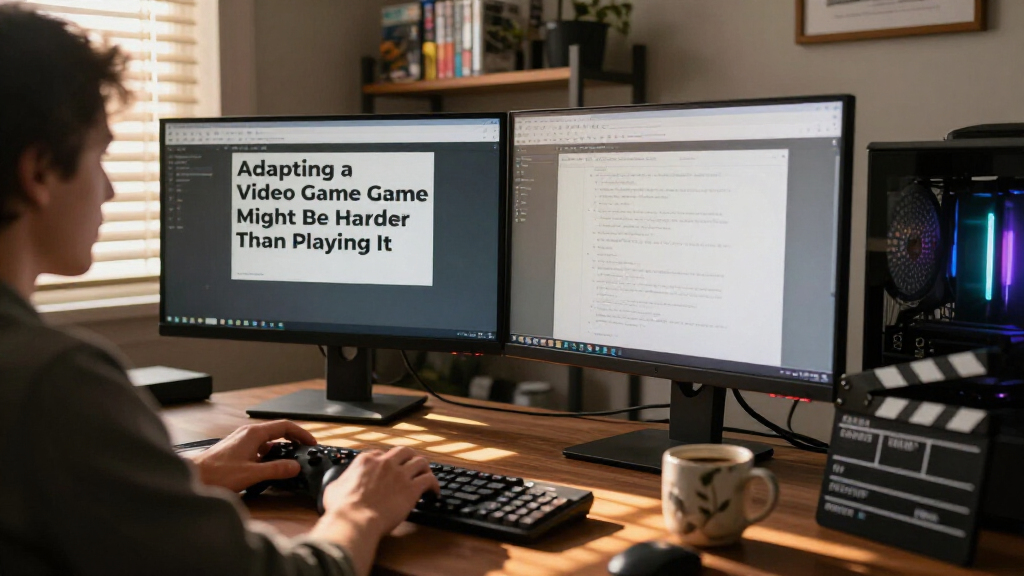
The Atlantic published an interview with Zach Cregger, director of the upcoming Resident Evil movie, under the headline “Adapting a Video Game Might Be Harder Than Playing It.” The piece adds to a running debate over why games resist film adaptation and what the current wave of adaptations reveals about the gap between the two mediums.
The Atlantic has published an interview with Zach Cregger, the writer-director behind the upcoming film adaptation of Resident Evil, built around a premise that has dogged Hollywood for three decades: adapting a video game might be harder than playing one. The conversation, published in September 2026 as Cregger’s film approaches its release, joins a broader industry reckoning with why games — one of the world’s most profitable entertainment forms — have so often stumbled on their way to the big screen.
The article’s central framing, stated in its headline, is that the challenge of adaptation may exceed the challenge of the gameplay itself. According to The Atlantic, Cregger’s interview addresses the creative problems inherent in taking a survival-horror franchise built around player agency, atmosphere, and repetition-based tension and converting it into a passive, fixed-length narrative experienced in a theater.
What is confirmed at this point: Cregger is attached as writer and director of a new Resident Evil film, and The Atlantic conducted and published the interview in September 2026. The franchise itself is one of the most adapted properties in gaming, with a long history of live-action and animated film and television versions spanning more than two decades, most of them poorly received by critics even when they performed commercially.
What the interview argues, according to The Atlantic’s framing, is that the difficulty is structural rather than incidental. Games communicate through mechanics — what the player does, fears, and retries — while films communicate through story and character. The tension between those two grammars is the recurring subject of the piece, and of the wider adaptation debate it feeds into.
Adapting a Video Game Might Be Harder Than Playing It
Zach Cregger, writer-director of the upcoming Resident Evil film, sits down with The Atlantic to confront a premise that has dogged Hollywood for three decades: translating an interactive medium into a passive, fixed-length narrative.
Two Grammars, One Franchise
Games communicate through mechanics — what the player does, fears, and retries. Films communicate through story and character. The Atlantic frames this collision of grammars as the recurring subject of the adaptation debate.
The Player’s Medium
- Agency — the player acts, chooses, and survives
- Repetition-based tension — fear built through retries
- Exploration — dread of what waits behind each door
- Resource scarcity — every bullet and herb counts
- Unfixed length — pacing governed by the player
The Viewer’s Medium
- Passivity — the audience watches, not acts
- Linear narrative — fixed story beats and arcs
- Fixed length — a set two-hour experience
- Character-driven — meaning delivered through story
- Single pass — no retry loop to build dread
Resident Evil’s Long, Bumpy Screen Record
One of the most adapted properties in gaming — commercially profitable, critically panned. Most versions performed at the box office even while reviewers dismissed them.
| Era | Format | Outcome | Critical Reception |
|---|---|---|---|
| 2000s | Live-action film series | Heavy worldwide grosses across multiple entries | ✗ Consistently negative reviews |
| Ongoing | Animated films | Parallel stream sustaining the property | ~ Mixed reception |
| 2021 | Live-action reboot | Attempt to relaunch the franchise | ~ Uneven results |
| Netflix era | Television series | td>Cancelled after one season | ✗ Short-lived |
| Upcoming | Cregger’s film | Auteur-led, craft-first approach — the test case | ✓ Pending release |
From Journeyman Filmmakers to Auteur Horror Directors
Cregger represents a newer pattern: studios handing game adaptations to auteur-leaning horror directors rather than journeymen — asking what the source material actually is, mechanically and emotionally, before filming it.
“Adapting a Video Game Might Be Harder Than Playing It.”
The Atlantic · Headline & Framing- Cregger’s specific statements on casting, tone, and fidelity remain unverified in this report — read the original interview.
- Unclear whether the film draws on the 1996 original or later entries in the series.
- “Harder than playing” is an argument, not a settled fact.
- Success or failure will only be determined by release and reception.
What Remains Unsettled
From Controller to Screen
The industry’s game-adaptation pipeline keeps expanding — each new release adds evidence to the debate over whether the medium’s core appeal can survive the translation.
🎮 Game Origins
Capcom’s 1996 Resident Evil defines survival-horror through player mechanics.
🎬 Hollywood IP Rush
Studios, hungry for franchises, greenlight adaptations across horror, action, and RPG properties.
🎥 Auteur Attachment
Cregger — of Barbarian acclaim — takes on Resident Evil with a craft-first approach.
⏳ The Test
Release and reception decide whether directorial vision can beat the adaptation curse.
The Debate, Answered
Q1Who is Zach Cregger?
A writer-director best known for the acclaimed 2022 horror film Barbarian. His attachment to Resident Evil reflects the broader trend of handing game properties to horror-focused directors.
Q2Why are game adaptations difficult?
Games build tension through player action and repetition; films are passive, fixed narratives. Translating gameplay-driven fear and agency into storytelling is the core structural problem.
Q3Has Resident Evil been adapted before?
Repeatedly — a live-action series from the 2000s, a 2021 reboot, a cancelled Netflix series, and multiple animated films, with mixed commercial results and largely negative critical reception.
Q4When does the film come out?
An exact release date was not confirmed. The film is upcoming as of the interview’s publication in September 2026.
Q5Is “harder than playing” proven?
No. It is The Atlantic’s framing of the adaptation challenge. Whether the approach works will only be known after release and reception.
Why Game Adaptations Keep Falling Short
The piece matters because it arrives amid the most sustained push Hollywood has ever made into game IP. Studios, hungry for recognizable franchises after years of relying on comic-book and literary source material, have greenlit adaptations across horror, action, and role-playing franchises. The track record remains uneven: for every widely praised television or film version, several more have been dismissed as incoherent to outsiders and unfaithful to fans.
Cregger’s Resident Evil is a high-stakes test case. The franchise’s horror roots make it attractive to filmmakers, but its gameplay — exploration, resource scarcity, and the dread of what waits behind each door — is precisely the element that does not survive translation into a fixed two-hour narrative. A director publicly wrestling with that problem, as The Atlantic reports, is a small but real signal of how the industry’s thinking about adaptations is maturing: from cashing in on name recognition toward asking what the source material actually is, mechanically and emotionally, before filming it.
Resident Evil’s Long Screen History
Resident Evil debuted as a Capcom video game in 1996 and helped define the survival-horror genre. Its screen history began with a live-action film series in the 2000s that grossed heavily worldwide while drawing consistently negative reviews, followed by a reboot attempt and a Netflix television series that was cancelled after one season. The property has also sustained a parallel stream of animated films.
Cregger, whose horror credentials were established with the acclaimed 2022 film Barbarian, represents a newer pattern: studios handing game adaptations to auteur-leaning horror directors rather than journeyman filmmakers. The Atlantic interview sits within that shift, examining whether directorial vision can solve an adaptation problem that has defeated both budget scale and franchise familiarity in the past.
“Adapting a Video Game Might Be Harder Than Playing It”
— The Atlantic (headline and framing)
What the Interview Doesn’t Settle
The full text of The Atlantic’s interview was not available for extraction at the time of this report, so Cregger’s specific statements about his approach — casting, story direction, tone, or fidelity to the games — could not be independently verified here and should be read in the original piece. It is also not yet clear whether Cregger’s film will deviate from prior Resident Evil adaptations in structure or story, or whether it will draw primarily on the original 1996 game or later entries in the series.
The broader claim embedded in the headline — that adaptation is harder than playing — is an argument, not a settled fact. Whether Cregger’s film succeeds or fails will be determined only by its release and reception, which remain in the future.
The Release That Will Test the Thesis
Cregger’s Resident Evil film is expected to reach theaters following its production cycle, and its critical and commercial reception will be the clearest test of whether a director-led, craft-first approach can overcome the adaptation problems the interview describes. Readers seeking Cregger’s exact remarks should consult The Atlantic’s published interview directly. Beyond this film, the industry’s game-adaptation pipeline continues to expand, and each release adds evidence to the debate over whether the medium’s core appeal can move from controller to screen.
Source: The Atlantic
Key Questions
Who is Zach Cregger and why is he directing Resident Evil?
Zach Cregger is a writer-director best known for the 2022 horror film Barbarian. His attachment to a Resident Evil adaptation reflects a broader studio trend of handing game properties to horror-focused directors.
Why are video game adaptations considered difficult?
Games build tension and meaning through player action and repetition. Films are passive, fixed narratives. Translating gameplay-driven fear and agency into storytelling is the core structural problem discussed in The Atlantic’s piece.
Has Resident Evil been adapted before?
Yes, repeatedly. The franchise has produced a live-action film series beginning in the 2000s, a 2021 reboot, a cancelled Netflix series, and multiple animated films, with mixed commercial results and largely negative critical reception.
When does Cregger’s Resident Evil film come out?
An exact release date was not confirmed in the available material. The film is upcoming as of the interview’s publication in September 2026.
Is ‘adapting is harder than playing’ a proven claim?
No. It is The Atlantic’s framing of the adaptation challenge, illustrated through Cregger’s experience. Whether the approach works will only be known after the film’s release and reception.
Source: The Atlantic
Fall Picks
fall essentials
As an affiliate, we earn on qualifying purchases.