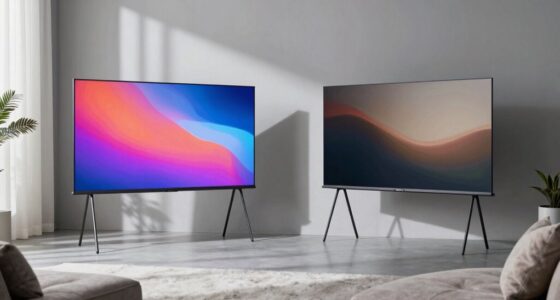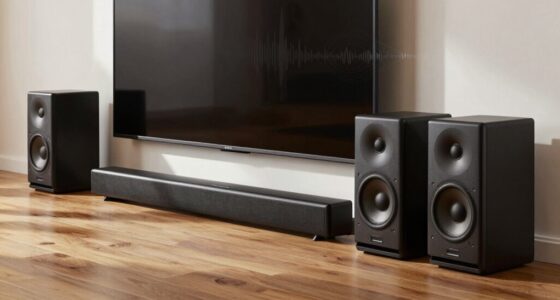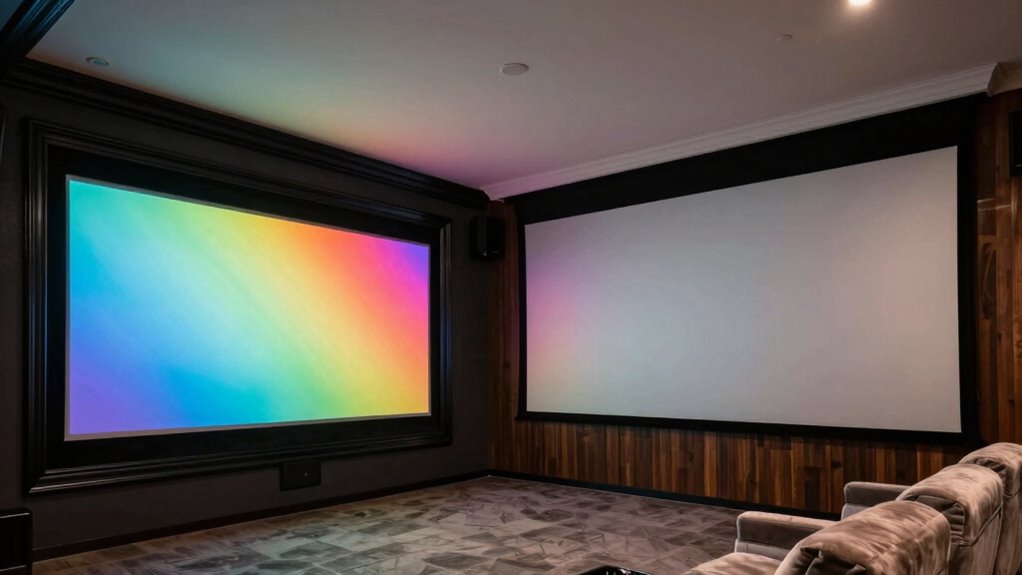
When choosing between fixed frame and motorized screens, you trade off simplicity and image quality for convenience and tech integration. Fixed frame screens offer better image quality with a stable surface and more durable materials, while motorized screens bring effortless adjustments with remote control integration. If you plan to use your screen frequently, motorized options may suit you better. However, for a dedicated home theater experience, fixed frames might be the way to go. Learn more about what fits your needs.
Key Takeaways
- Fixed frame screens provide enhanced image quality and color accuracy, while motorized screens offer convenience and remote operation for larger spaces.
- Installation of fixed frames is typically simpler, whereas motorized screens may require more complex installation and higher costs.
- Fixed frame screens maintain consistent brightness and uniform light reflection, while motorized screens might exhibit variable clarity and uneven brightness.
- Durability is generally higher in fixed frame screens due to robust materials, while motorized screens may face mechanical issues over time.
- Frequent users may prefer the ease of motorized screens, but fixed frames are more cost-effective for occasional viewing experiences.

Mangodan 50" Storage Ottoman Bench, Tufted Ottoman with Storage for Living Room, Large End of Bed Ottomans, Modern Entryway Benchs, Window & Bedroom Benches for Foot of Bed (Beige)
Versatile Use Scenarios: Ideal for entryways, bedrooms, dressing rooms, or living rooms. This bedroom ottoman with storage bench...
As an affiliate, we earn on qualifying purchases.
Choosing Between Fixed Frame and Motorized Screens: Key Considerations

When deciding between fixed frame and motorized screens, what factors should you consider? First, think about your screen dimensions. Fixed frame screens often provide a larger viewing area without the potential obstruction of a motorized mechanism. If you have specific size requirements, verify the fixed frame can accommodate those dimensions.
Next, consider frame materials. Fixed frames typically use sturdy materials like aluminum or wood, offering durability and aesthetic appeal. Motorized screens, while convenient, may compromise on frame quality due to their retractable design.
Also, evaluate your space and usage. If you’re frequently changing the screen’s position, a motorized option might be beneficial. However, for a dedicated home theater, a fixed frame could enhance your viewing experience. Additionally, consider how calibration techniques can optimize your screen’s performance for the best visual quality.
SONGMICS MAZIE Collection - 43 Inches Folding Storage Ottoman Bench, Ottoman Foot Rest, End of Bed Bench, Storage Chest, Load 660 lb, for Living Room, Bedroom, Entryway, Dark Gray ULSF77K
【QUICK ASSEMBLY, EASY FOLDAWAY】This storage ottoman from the SONGMICS MAZIE Collection has a foldable design that allows quick...
As an affiliate, we earn on qualifying purchases.
Understanding Fixed Frame Screens: Key Features and Benefits
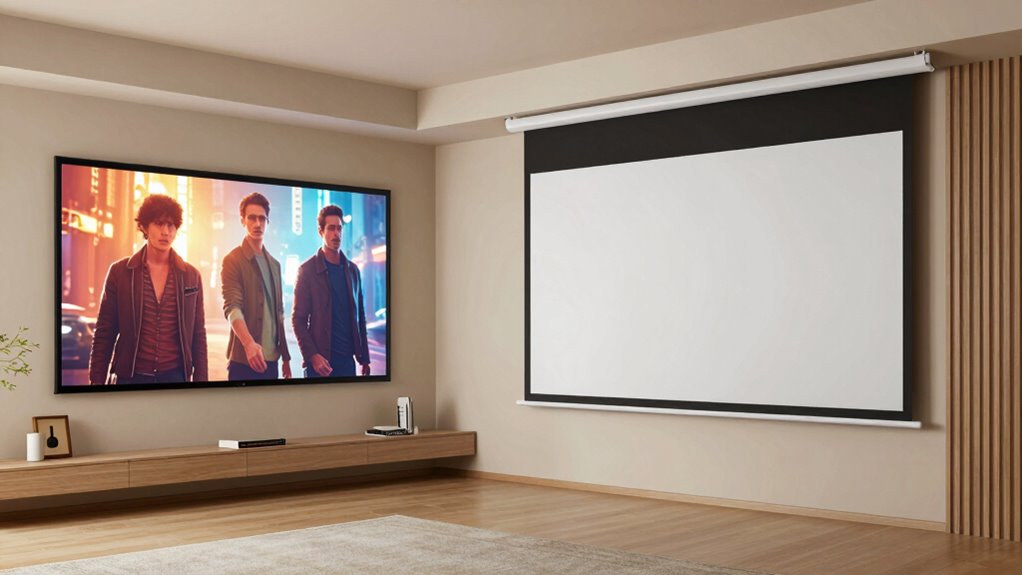
When you choose a fixed frame screen, you’re opting for enhanced image quality that really elevates your viewing experience. Plus, you’ll appreciate the simple installation process that makes setting it up a breeze. With durable construction materials, these screens are built to last, ensuring you get the most out of your investment. Additionally, color accuracy is crucial for achieving the best visuals, making a fixed frame screen an excellent choice for home cinema setups. Fixed frame screens also benefit from proper ambient light control, which enhances contrast and makes your viewing experience even more immersive.
Enhanced Image Quality
Fixed frame screens deliver enhanced image quality that greatly elevates your viewing experience. With a taut, flat surface, these screens minimize wrinkles and distortions, maintaining ideal image contrast. You’ll notice deeper blacks and brighter whites, creating a striking visual impact that captivates viewers. The dedicated screen material also boosts color accuracy, ensuring that every hue pops vibrantly, just as the creator intended. Whether you’re watching movies, sports, or playing video games, the sharpness and detail provided by a fixed frame screen can’t be matched. You’ll find that the immersive experience you gain from improved image quality transforms how you enjoy media, making every moment more engaging and memorable. Investing in a fixed frame screen is a smart choice for any serious viewer.
Simple Installation Process
Installing a fixed frame screen is a straightforward process that can typically be completed in just a few simple steps. You can choose a DIY installation, which allows you to customize the setup based on your space and preferences. Most kits come with clear instructions, making it easy to mount the frame securely on your wall. If you’re unsure about handling tools or want a perfect finish, seeking professional assistance can save you time and guarantee a flawless installation. Either way, you’ll find that fixed frame screens are designed for user-friendly assembly, allowing you to enjoy your viewing experience without much hassle. With a little effort, you’ll have your screen up and ready in no time. Additionally, understanding home gym setups can enhance your overall viewing and training experience by optimizing your space for both activities. A fixed frame screen is often complemented by high-quality projectors, which can significantly improve your image clarity and brightness for a truly immersive experience. Furthermore, investing in kitchen appliances can elevate your cooking experience, ensuring that you have the right tools to prepare meals efficiently and effectively. Regular maintenance of HEPA filters can help improve air quality in your home theater, making your viewing environment more enjoyable. A well-optimized home theater setup can further enhance your overall cinematic experience, providing the right balance of sound and visuals for movie nights.
Durable Construction Materials
Durable construction materials play an essential role in the longevity and performance of fixed frame screens. When you choose a screen, consider the material types involved, as they directly impact screen longevity. Here’s a quick look at common materials used:
| Material Type | Advantages | Disadvantages |
|---|---|---|
| Aluminum Frame | Lightweight, rust-resistant | Can bend under pressure |
| PVC Screen | Smooth image, easy to clean | Prone to tears over time |
| Steel Frame | Sturdy, long-lasting | Heavier, more complex setup |

Tubicen Wall Sconce Indoor Home Theater Lighting Hardwired Bright LED Up and Down Dimmable Wall Sconces Black Modern Hallway Stairway Wall Lights for Living Room 10W 3000K Square
【Bright Wall Sconces with Wide Area Illumination】Tubicen Square Wall Sconce (4.5"L x 4.5"W x 4.7"H) features a precision-engineered...
As an affiliate, we earn on qualifying purchases.
What Are the Benefits of Motorized Screens?
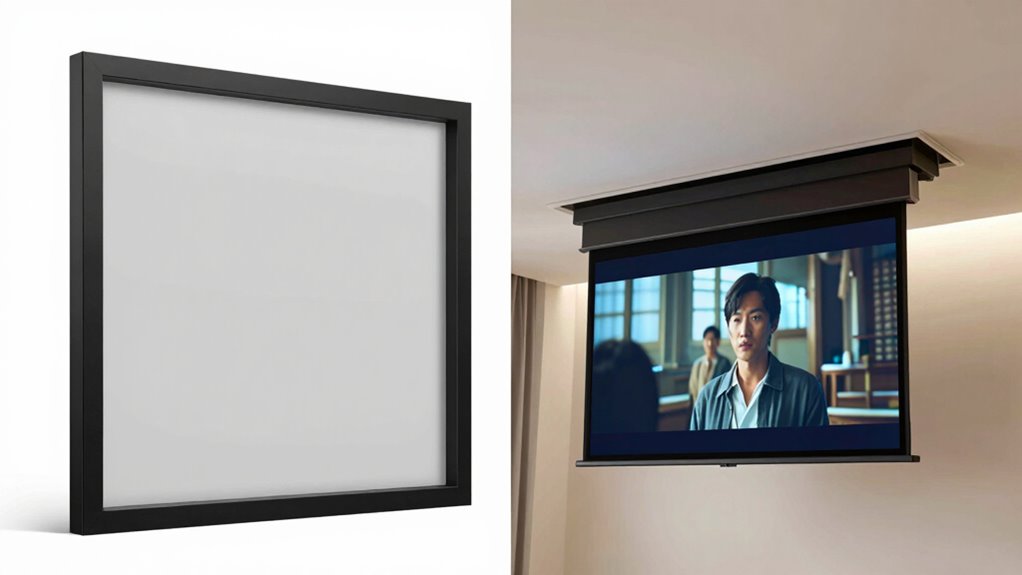
When you choose motorized screens, you’re not just opting for convenience; you’re enhancing your viewing experience with a host of benefits. One of the biggest perks is motorized convenience, allowing you to effortlessly adjust your screen with just a touch of a button. Imagine sitting comfortably on your couch, controlling your screen’s position using remote functionality without having to get up. This feature is especially handy for large spaces or home theaters where manual adjustments can be cumbersome. Additionally, motorized screens can be integrated with smart home systems, giving you seamless control over your entertainment environment. This integration can also enhance your air quality benefits, making movie nights and presentations more enjoyable and stress-free. Moreover, investing in reliable guidance can help you select the right motorized screen for your needs.

Aipsun Black Modern LED Wall Sconces 4 Packs Indoor Wall Lights Hardwired Up and Down Wall Mount Light for Living Room Bedroom Hallway Corridor Conservatory Warm White 3000K(with G9 Bulbs)
【Soft and Homely】The black wall sconce supplied with four Energy-saving and Non-flickering 9W LED G9 bulbs (3000K warm...
As an affiliate, we earn on qualifying purchases.
Picture Quality: Fixed Frame vs. Motorized Screens
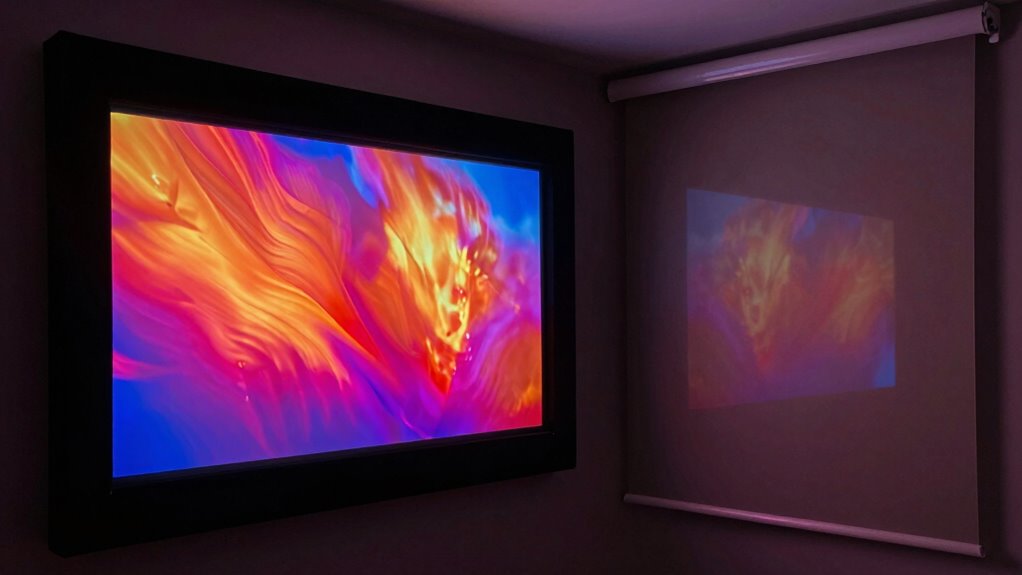
When it comes to picture quality, fixed frame and motorized screens offer distinct advantages. You’ll notice differences in image clarity and how light reflects off the screen material, which can impact your viewing experience. Understanding these factors will help you choose the right screen for your setup.
Image Clarity Comparison
Choosing between fixed frame and motorized screens can greatly impact your viewing experience, especially regarding image clarity. Fixed frame screens often provide superior image resolution, maintaining sharpness and detail in every scene. In contrast, motorized screens might suffer from slight distortions due to their retractable nature. Screen brightness also plays a significant role; fixed frames typically offer more consistent brightness across the surface, while motorized screens can have uneven brightness, especially when not fully extended. Additionally, inspiring leadership can influence decision-making in selecting the right screen for your needs.
| Aspect | Fixed Frame | Motorized |
|---|---|---|
| Image Resolution | High | Variable |
| Screen Brightness | Consistent | Uneven |
| Installation Ease | More involved | Quick and easy |
| Price | Generally higher | Generally lower |
| Maintenance | Minimal | Moderate |
Light Reflection Factors
Image clarity is just one aspect to contemplate; light reflection factors also greatly influence picture quality. When choosing between fixed frame and motorized screens, consider how different screen material types affect light absorption effects. Fixed frame screens typically use specialized materials that enhance brightness and contrast, reflecting light more efficiently. In contrast, motorized screens may vary in quality, with some materials absorbing light more than others, potentially dulling your image. If you watch in bright rooms, screen material becomes even more essential, as proper reflection can help maintain vivid colors and sharp details. Ultimately, selecting the right screen can make a significant difference in your viewing experience, ensuring you get the most out of your investment. Additionally, understanding the impact of light reflection factors on screen performance can help you choose the best option for your setup.
Installation Tips: Setting Up Your Home Theater Screen
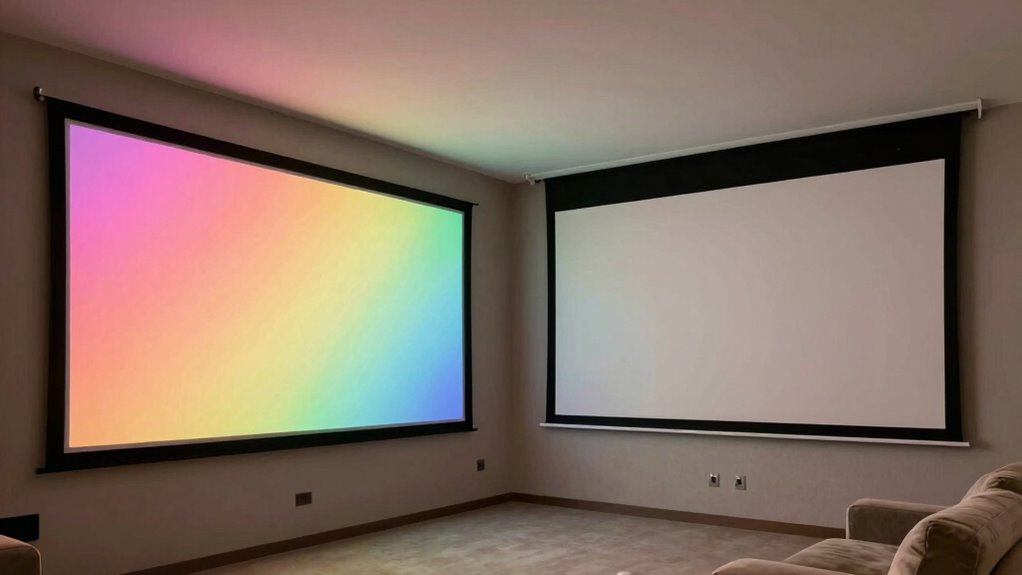
Although setting up your home theater screen might seem challenging, following a few straightforward tips can make the process smooth and rewarding. Proper screen positioning is essential to avoid common installation challenges.
Setting up your home theater screen can be easy and rewarding with the right tips for proper positioning.
- Measure your viewing distance to determine the ideal screen size.
- Mount the screen at eye level for the best viewing experience.
- Confirm the screen is centered with your seating arrangement.
- Use a level to avoid any tilting. Additionally, ensure that you have essential DIY tools on hand to facilitate the installation process. Regular checks can help you avoid issues similar to those found in appliance maintenance plans that ensure longevity and optimal performance. Investing in a best DIY home security system can also enhance your setup by providing peace of mind while enjoying your movies. Furthermore, a quality carry-on with compression can be handy when transporting your gear to new locations and setting up an impressive viewing experience.
Additionally, consider investing in workspace accessories that can enhance your setup and provide added functionality.
How Screens Impact Your Home Theater Design
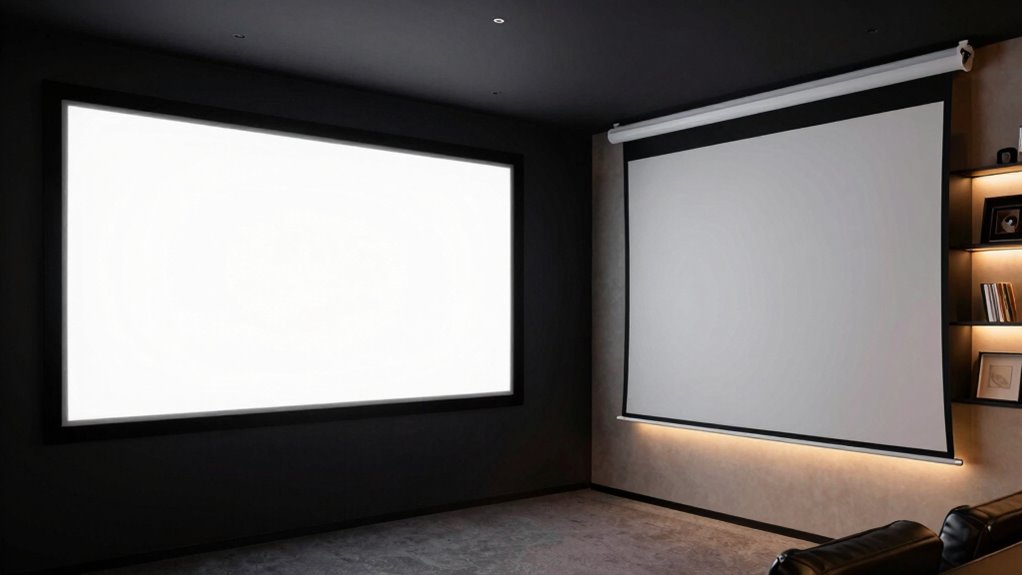
Once you’ve successfully installed your home theater screen, the next step is to reflect on how it impacts the overall design of your space. Screen placement is essential; it affects not only the viewing angle but also how the screen interacts with your room’s acoustics. For instance, placing the screen too close to walls can create sound reflections that muddy audio quality.
You’ll want to take into account the height and distance from seating for ideal enjoyment. Additionally, think about the color and texture of the walls surrounding the screen, as these elements can enhance or detract from your viewing experience. A well-placed screen harmonizes with your room’s design and elevates the entire home theater experience, making it a focal point of entertainment.
Comparing Costs: What to Expect From Fixed Frame and Motorized Screens
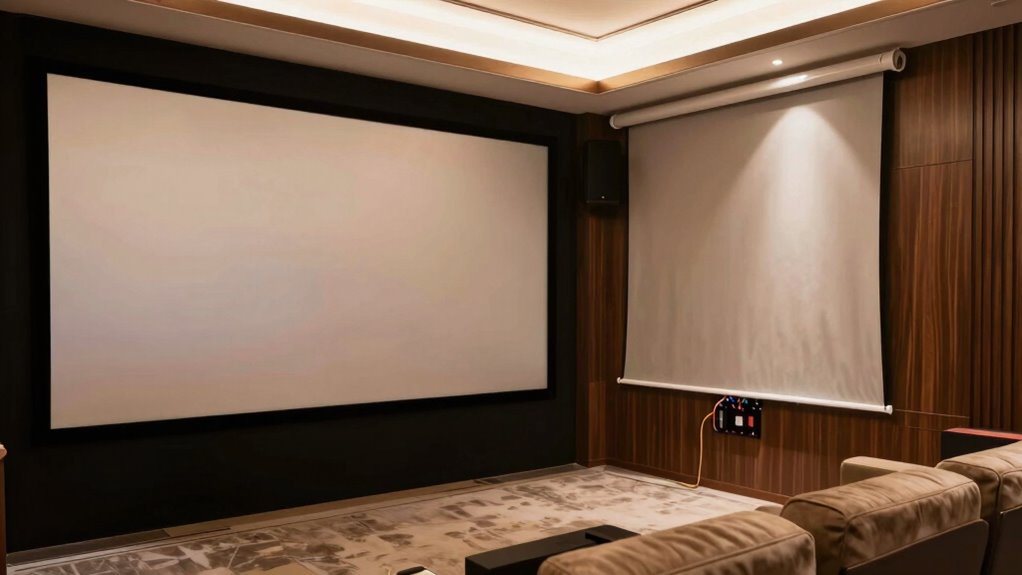
When considering your options for home theater screens, how do fixed frame models stack up against motorized ones regarding cost? The price factors can vary considerably, and you’ll want to weigh your options carefully. Here’s what to keep in mind during your cost comparisons:
When weighing home theater screen options, consider the cost differences between fixed frame and motorized models carefully.
- Initial Purchase Price: Fixed frames are often less expensive upfront.
- Installation Costs: Motorized screens may incur higher installation fees due to complexity.
- Maintenance and Repairs: Consider potential repair costs for motorized mechanisms, especially if you opt for higher maintenance items that might add to the overall expense. Additionally, consider how automation technology can influence the longevity and efficiency of your home theater setup.
- Long-Term Value: Evaluate how both options hold their value over time.
Additionally, motorized curtain rods can also enhance the functionality and aesthetics of your home theater setup. Ultimately, understanding these aspects can help you make an informed decision that fits your budget and needs. Be sure to assess both the short-term and long-term financial implications!
Durability: Which Screen Lasts Longer?
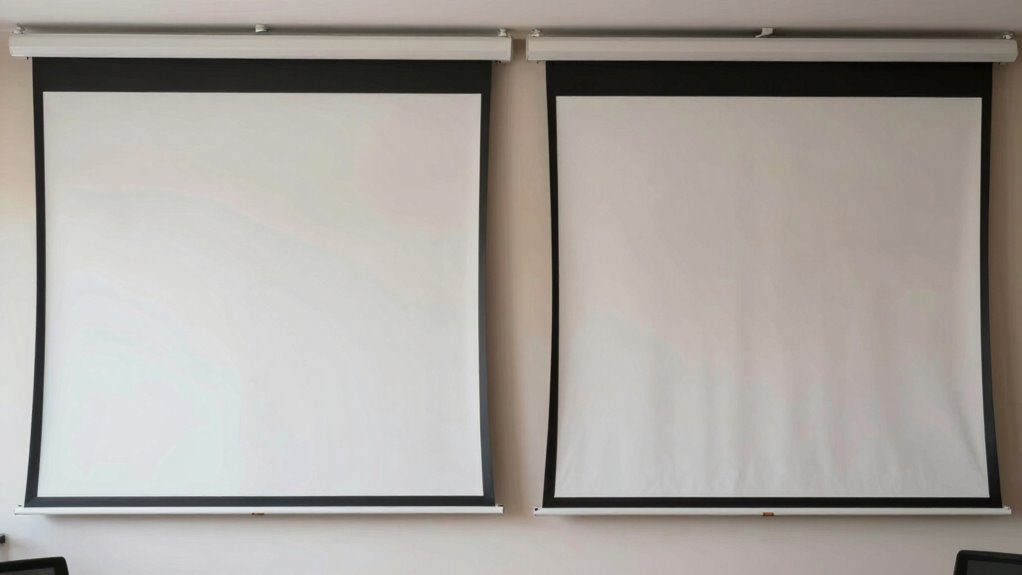
While both fixed frame and motorized screens can enhance your viewing experience, their durability varies considerably. Fixed frame screens typically boast superior screen longevity due to their sturdy construction and use of high-quality materials. They’re designed to remain in place, minimizing wear and tear over time. On the other hand, motorized screens, while convenient, can face more mechanical issues, potentially leading to a shorter lifespan. The material comparison also plays a significant role; fixed screens often use robust fabrics that resist fading and damage, whereas motorized screens may use lighter materials that are easier to deploy but less durable. Ultimately, if you prioritize long-lasting performance, a fixed frame screen might be your best bet.
Space-Saving Benefits of Motorized Screens
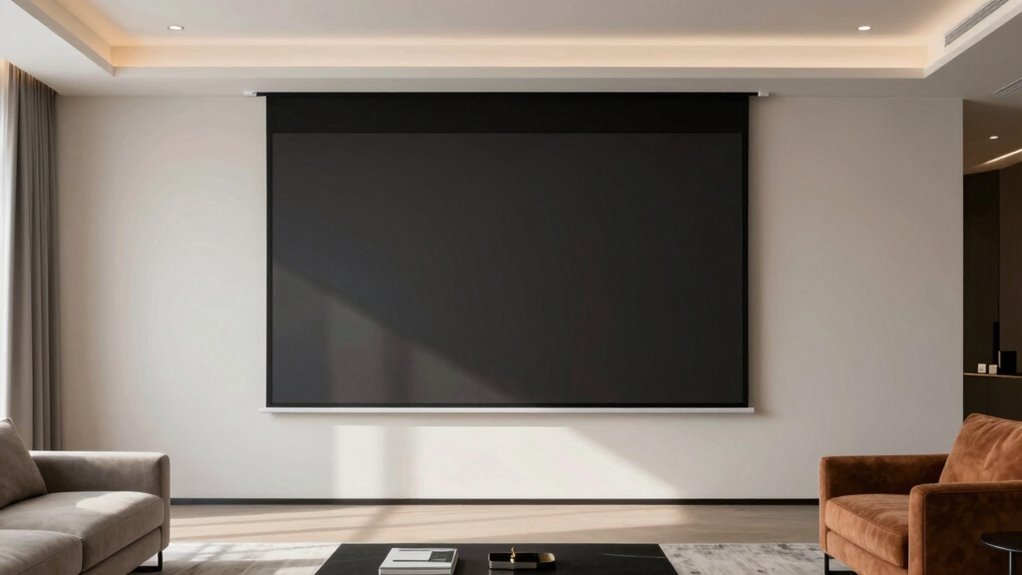
If you’re looking to maximize your space without sacrificing your home theater experience, motorized screens are an excellent choice. They offer remarkable space efficiency and design flexibility that fixed frame screens simply can’t match. Here are some benefits to take into account:
- Retractable Design: Hide the screen when not in use, freeing up valuable wall space.
- Customizable Mounting Options: Install the screen in various locations, adapting to your room layout.
- Seamless Integration: Blend the screen with your decor, enhancing the overall aesthetic.
- Easy Operation: Control the screen with a remote or smart device, simplifying your setup.
With motorized screens, you can enjoy a stunning viewing experience while maintaining an organized and spacious environment.
Which Screen Is Right for You?

Choosing the right screen depends on your specific needs and preferences. Consider how easy the installation and setup will be, the quality of your viewing experience, and how much you’re willing to spend. Each option has its pros and cons, so let’s weigh them together.
Installation and Setup Ease
When deciding between fixed frame and motorized screens, installation and setup ease can greatly influence your choice. You’ll want to reflect on how each option fits into your space and your skill level.
- Fixed frame screens typically require wall mounting and may present installation challenges if you’re not handy.
- Motorized screens offer setup simplicity, often allowing for more flexible placement and easy installation.
- Think about the tools you have available; motorized screens might need electrical connections.
- Contemplate whether you’ll need extra help; some setups can be complicated and may require a second set of hands.
Ultimately, weigh these factors to choose the screen that best matches your convenience and project goals.
Viewing Experience Quality
After considering installation and setup ease, the next important factor is the viewing experience quality of your screen. Fixed frame screens generally offer superior image contrast and stability, enhancing your viewing experience, especially in well-lit rooms. On the other hand, motorized screens can provide flexibility and convenience, but they might not deliver the same level of image quality. You may notice slight differences in color and contrast depending on the screen’s material. Additionally, fixed frame screens typically provide better viewing angles, allowing everyone in the room to enjoy the picture without distortion. Ultimately, if exceptional image quality is your priority, a fixed frame screen may be the better choice for you. Choose wisely, and enjoy your viewing!
Budget Considerations and Value
Budget considerations play an essential role in deciding between fixed frame and motorized screens. You’ll want to conduct a value analysis to guarantee you’re making the right choice within your budget constraints. Here are some factors to weigh:
- Initial Cost: Fixed frames often have lower upfront costs than motorized screens.
- Installation Expenses: Motorized screens may require professional installation, adding to your budget.
- Long-term Value: Consider the durability and longevity of each option.
- Usage Frequency: If you use your screen frequently, investing in a motorized option might offer better convenience.
Ultimately, aligning your choice with your budget constraints and desired value will lead you to the right screen for your needs.
Frequently Asked Questions
Can I Use a Fixed Frame Screen Outdoors?
You can use a fixed frame screen outdoors, but it’s vital to take into account outdoor durability. These screens aren’t typically designed for harsh weather conditions, so you’ll need to find a model that’s specifically made for outdoor use. Installation options may vary, so make sure you secure it properly to withstand wind and moisture. If you want a reliable outdoor setup, look for a screen that offers both durability and easy installation features.
How Do I Clean My Home Theater Screen?
To clean your home theater screen, start by using a microfiber cloth to gently wipe away dust and fingerprints. For tougher stains, use a solution of mild soap and water, applying it with a soft cloth. Avoid harsh chemicals that could damage the screen. Regular screen maintenance includes dusting it weekly and checking for scratches. By following these cleaning techniques, you’ll keep your screen looking sharp and enhance your viewing experience.
Are There Size Limitations for Motorized Screens?
Yes, there are size limitations for motorized screens. The size options typically depend on the manufacturer and the model you choose. Installation factors, like your room dimensions and ceiling height, also play an essential role. You’ll want to make sure the screen fits your space properly while still allowing for ideal viewing angles. Always check the specifications for your preferred model to find the best fit for your home theater setup.
What Materials Are Used for Screen Fabric?
You’ll find various screen materials used for projection screens, each offering unique benefits. Common fabric types include PVC, which provides durability and excellent image quality, and woven materials, known for their ability to enhance sound transparency. Some screens also use matte finish fabrics to reduce glare while others feature reflective surfaces for brighter images. Choosing the right screen material is essential, as it can greatly impact your viewing experience and overall picture quality.
Can I Install a Motorized Screen Myself?
Yes, you can install a motorized screen yourself! In fact, about 60% of DIYers successfully tackle such projects, enjoying the advantages of motorized screens like convenience and sleek design. With some basic tools and a little patience, you’ll find that most kits come with clear instructions. Just make certain you measure your space accurately to guarantee a perfect fit. Once it’s up, you’ll love controlling it with just a push of a button!
Conclusion
In the end, choosing between fixed frame and motorized screens boils down to your needs and preferences. If you crave a stunning, always-visible display, a fixed frame might be your best bet. But if you value convenience and space-saving features, a motorized screen could be perfect. Weigh your options, consider your setup, and remember: whether you go fixed or motorized, what matters most is creating the ultimate viewing experience that suits your lifestyle.