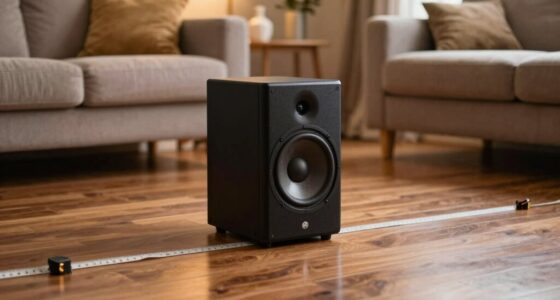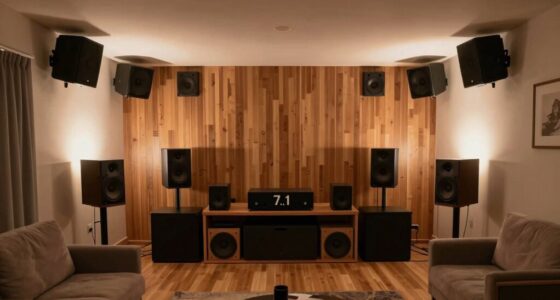
Stereo audio uses two channels to create a sense of space, with sounds balanced between left and right speakers, ideal for simple setups. 5.1 surround adds five speakers plus a subwoofer, delivering more precise directionality and immersion, especially in movies and games. Spatial audio simulates a 3D environment, tracking head movements for lifelike sound placement, mostly through headphones. To understand which setup best fits your needs and how each enhances your experience, keep exploring these audio options.
Key Takeaways
- Stereo audio uses two channels for left and right sound, providing basic spatial cues.
- 5.1 surround sound adds five speakers and a subwoofer for more precise directionality and immersive experience.
- Spatial audio simulates a 3D sound field, allowing sounds to come from all around, often via headphones with advanced algorithms.
- Each format offers increasing realism and depth, with spatial audio providing the most lifelike, immersive experience.
- Proper setup and calibration are essential to maximize the benefits of each audio format.
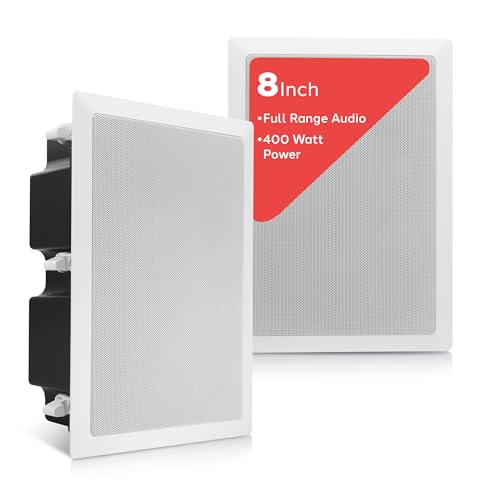
Pyle Ceiling Wall Mount Enclosed Speaker - 400 Watt Stereo In-wall / In-ceiling 8" Enclosed Full Range Deep Bass Speaker System - 50Hz-20kHz Frequency Response, 4-8 Ohm, Flush Mount - PDIW87 White
4-8 OHM IMPEDANCE: The home sound system in-ceiling speakers has 1" inch high-temperature voice coil & 4-8 ohm...
As an affiliate, we earn on qualifying purchases.
What Are Stereo, 5.1, and Spatial Audio? An Overview
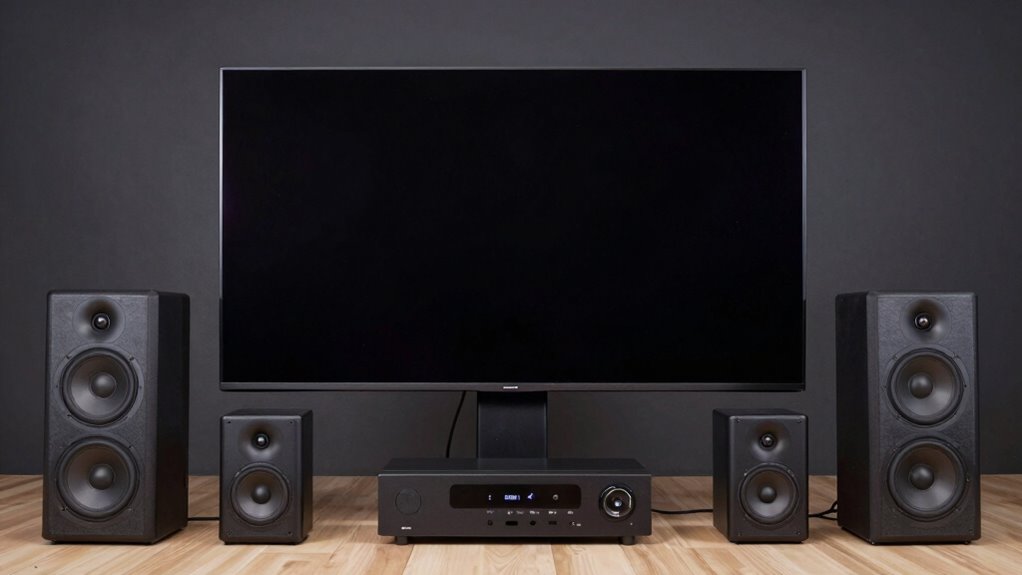
Have you ever wondered how different audio formats create immersive sound experiences? It all starts with audio calibration, which fine-tunes your equipment to deliver ideal sound. Stereo audio uses two channels to produce a sense of space, but it’s limited in creating depth. Moving to 5.1 surround sound adds five speakers and a subwoofer, enhancing the sense of direction and immersion. Spatial audio takes it further by simulating three-dimensional sound fields, making you feel as if sounds are coming from all around you. Sound compression plays a vital role in making these formats practical by reducing file sizes without sacrificing quality. Each format builds on the previous, offering more detailed and realistic audio experiences, transforming how you enjoy movies, music, and games. Additionally, advancements in digital audio technology continue to push the boundaries of how immersive sound can be achieved. Improving audio calibration ensures that your setup delivers the best possible sound quality for each format. Proper speaker placement is essential to fully experience the advantages of these audio formats and achieve optimal immersion.
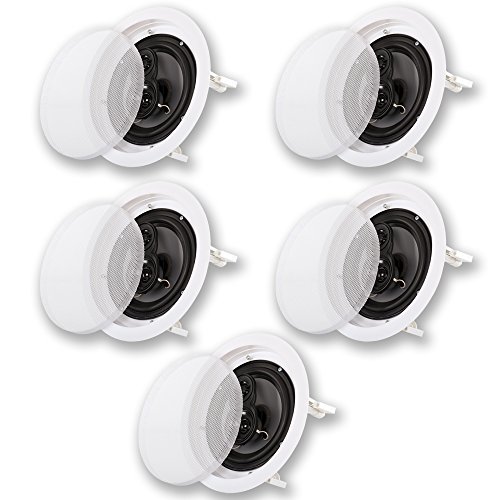
Acoustic Audio by Goldwood CS-IC83 8” 3-Way In Ceiling Home Theater Speaker System (White, 5 Speakers)
FLUSH MOUNT IN CEILING SPEAKERS - Wide sound dispersion designed speakers easily integrate with new and existing audio...
As an affiliate, we earn on qualifying purchases.
How Do Stereo and Surround Sound Technologies Work?
Understanding how stereo and surround sound work starts with sound channeling techniques and speaker arrangement. These elements determine how audio is directed and perceived from different directions. These techniques influence the sound distribution, shaping how immersive environments are created. By mastering these, you can better appreciate how immersive audio experiences are created. Additionally, the best vacuums for dust removal in 2024 utilize advanced filtration systems that enhance the overall sound quality and clarity of audio systems. Recognizing the importance of auditory processing techniques can further improve your listening experience by emphasizing how sound is processed and perceived. Developing an awareness of spatial audio cues can also help in understanding how our brains interpret complex sound environments for a more immersive experience. Moreover, understanding Glycolic Acid benefits can shed light on how skin and hair health are affected by certain exfoliating agents, paralleling how precise sound tuning enhances audio clarity.
Sound Channeling Techniques
Stereo and surround sound technologies create immersive audio experiences by using different channeling techniques to direct sound to specific speakers or headphones. In stereo setups, audio mixing involves balancing sounds between the left and right channels, which enhances sound localization and creates a sense of space. Surround sound systems extend this concept by assigning distinct audio signals to multiple speakers, allowing you to perceive the direction and distance of sounds more accurately. These techniques rely on precise audio mixing to make certain each channel delivers specific sound cues, helping your brain determine the origin of different audio sources. By carefully controlling how sound is channeled, these technologies create a more realistic and engaging listening experience, giving you a sense of being inside the environment.
Speaker Arrangement Dynamics
Speaker arrangement plays a crucial role in how stereo and surround sound systems deliver immersive audio experiences. Proper speaker placement ensures sound waves reach your ears at the right time and intensity, creating a realistic soundscape. In stereo setups, speakers are typically placed at ear level, equidistant from your listening position, maximizing stereo separation. Surround sound systems, like 5.1, require strategic placement of front, rear, and center speakers to envelop you in sound. Room acoustics also influence how sound reflects and absorbs, affecting clarity and positioning. Adjusting speaker placement to minimize echoes and dead spots enhances the overall experience. By understanding speaker arrangement dynamics, you can optimize your setup for the most immersive, balanced audio, regardless of your system’s complexity.

Polk Audio 265-RT 3-Way in-Wall Speaker - Vanishing Series | Fits Ceiling/Wall | High-Performance Home Stereo Speakers | Power Port & Paintable Grille - Black
CRYSTAL CLEAR SOUND WITH DEEPER BASS, Polk audio speakers are powered by Dynamic Balance, Distance Toggle & Polk's...
As an affiliate, we earn on qualifying purchases.
What’s Unique About Spatial Audio Compared to Traditional Surround Sound?
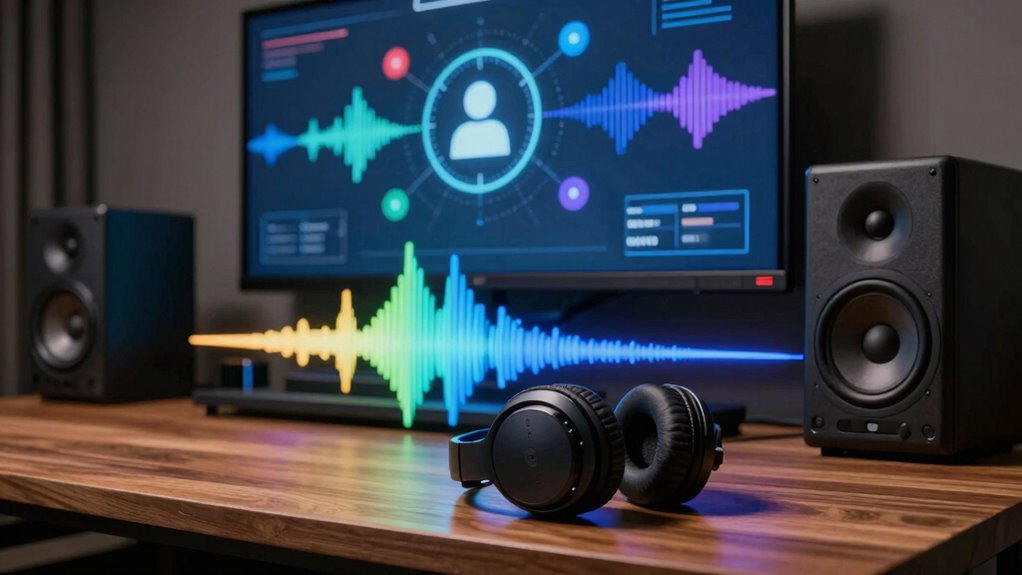
Spatial audio offers a remarkable sense of immersion by simulating sounds coming from all around you, unlike traditional surround sound systems that rely on fixed speaker placements. This technology adapts to your headphone calibration, creating a more natural and accurate listening experience. You’ll notice an enhanced soundstage depth, making it feel like sounds are moving through space, not just bouncing off speakers. Unlike traditional setups, spatial audio uses advanced algorithms to track your head movements, maintaining the sound’s position relative to you. This dynamic positioning heightens realism and presence, making you feel truly inside the audio environment. The result is a more immersive and precise experience, where every sound seems to originate from a specific point, providing a richer, more lifelike listening experience. Additionally, emerging trends in digital publishing are increasingly incorporating spatial audio to enhance multimedia content across platforms. This technology further pushes the boundaries of audio realism, offering new possibilities for entertainment and communication. Moreover, the ability of spatial audio to adapt dynamically enhances listener engagement, making experiences more compelling and authentic. Incorporating personalized sound experiences can further elevate the sense of immersion in spatial audio environments. As the technology advances, spatial audio’s integration into various media will continue to expand, providing even more engaging and realistic auditory experiences.

Klipsch R-5502-W II in-Wall Left, Center or Right (LCR) in-Wall or in-Ceiling Speaker Three-Pack
Includes: (3) R-5502-W II in-wall speakers
As an affiliate, we earn on qualifying purchases.
How Can You Set Up and Use Stereo, 5.1, and Spatial Audio? Practical Tips
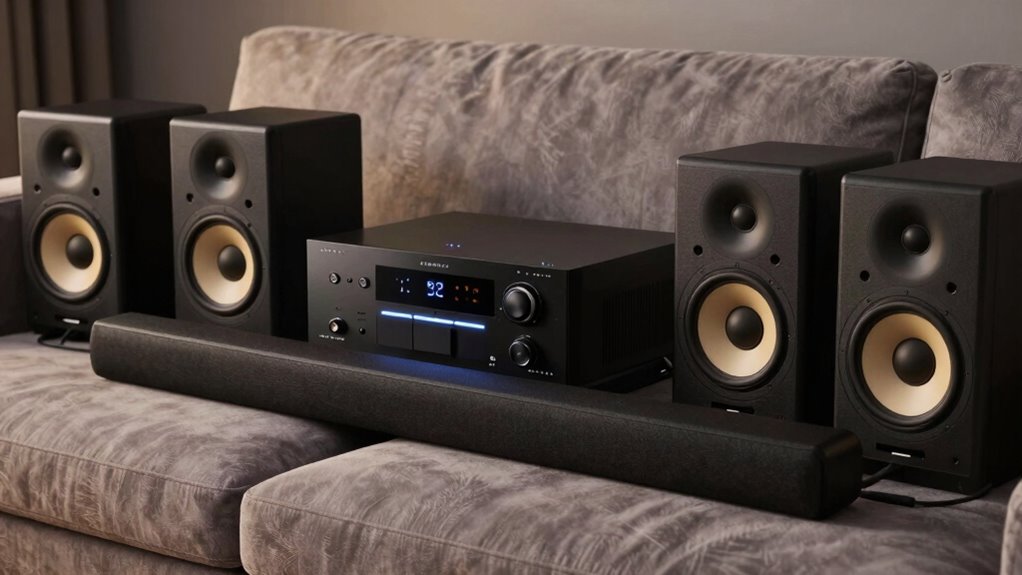
To get the most out of your audio setup, it’s important to understand how to properly configure and use different sound formats like stereo, 5.1, and spatial audio. Start with audio calibration to ensure your system delivers accurate sound. For stereo, position your speakers at ear level on either side of your listening area. For 5.1 setups, place the front left and right speakers in front, the center speaker directly above or below your screen, and the rear speakers slightly behind and to the sides. Spatial audio benefits from precise speaker positioning to create a more immersive experience. Regularly calibrate your system using calibration tools or software to balance sound levels. Proper setup and calibration are key to maximizing the clarity, depth, and realism of each audio format.
Which Audio Format Is Best for Headphones and Personal Use?
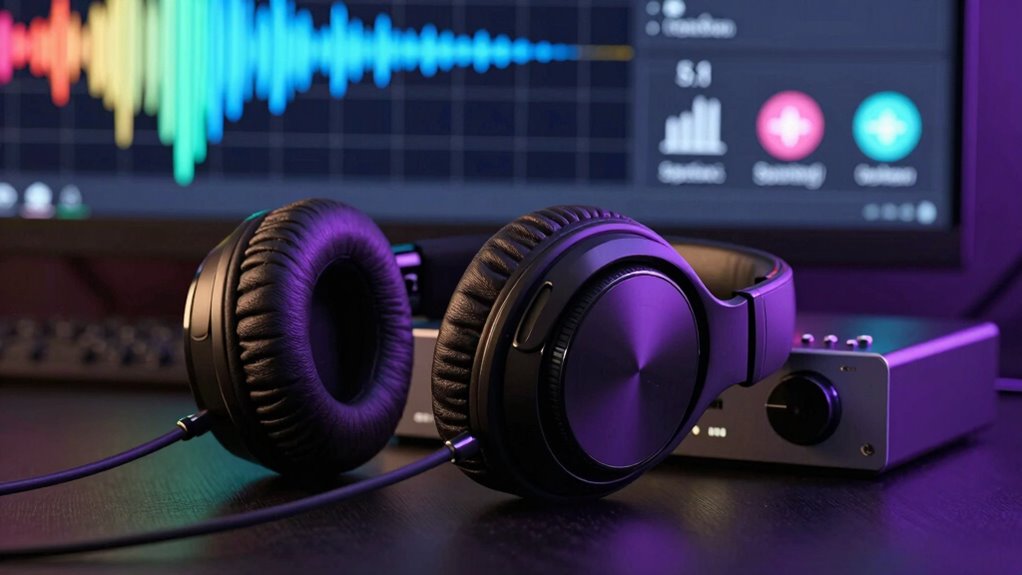
What’s the best audio format for headphones and personal use? It depends on your preferences for sound quality and comfort. For everyday listening, high-quality stereo audio often offers a good balance of clarity and simplicity. If you prefer immersive sound, spatial audio provides a more natural experience, especially with compatible headphones. Keep in mind that audio compression can affect sound quality—less compression means better audio fidelity but larger file sizes. Headphone comfort is also key, as certain formats may require more processing power or specific hardware. To choose the best, consider these factors: Free Floating The type of content you listen to can also influence your choice, as some formats are better suited for music, movies, or gaming. Additionally, understanding the audio formats available can help you make an informed decision based on your listening habits. Being aware of Vetted options like flat iron bike accessories can also remind you to select quality audio gear for the best experience. Exploring audio codec compatibility can further enhance your listening experience by ensuring your devices support the latest formats. Moreover, considering lossless audio options can provide higher fidelity for audiophiles seeking superior sound quality.
When Should You Choose Stereo, 5.1, or Spatial Audio? Ideal Scenarios
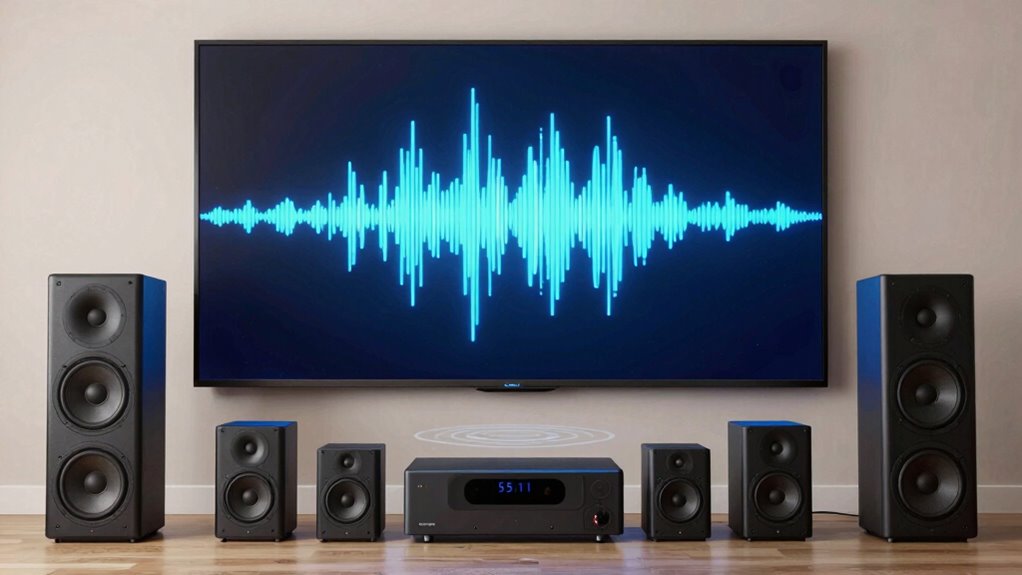
Choosing between stereo, 5.1, and spatial audio depends on your specific listening situation and goals. If you’re working on music production or editing, stereo often suffices for clarity and detail. For home theater setups, 5.1 surround sound enhances immersion, especially when calibrated properly with your setup. Spatial audio is ideal when you want a more immersive experience, such as virtual reality or advanced gaming, where directional sound is essential. Consider your environment and what you aim to achieve: casual listening, professional work, or entertainment. Proper home theater calibration guarantees you get the best from 5.1 systems, and selecting the right format depends on whether you prioritize simplicity, surround experience, or true spatial immersion.
What Are the Pros and Cons of Each Audio Format?
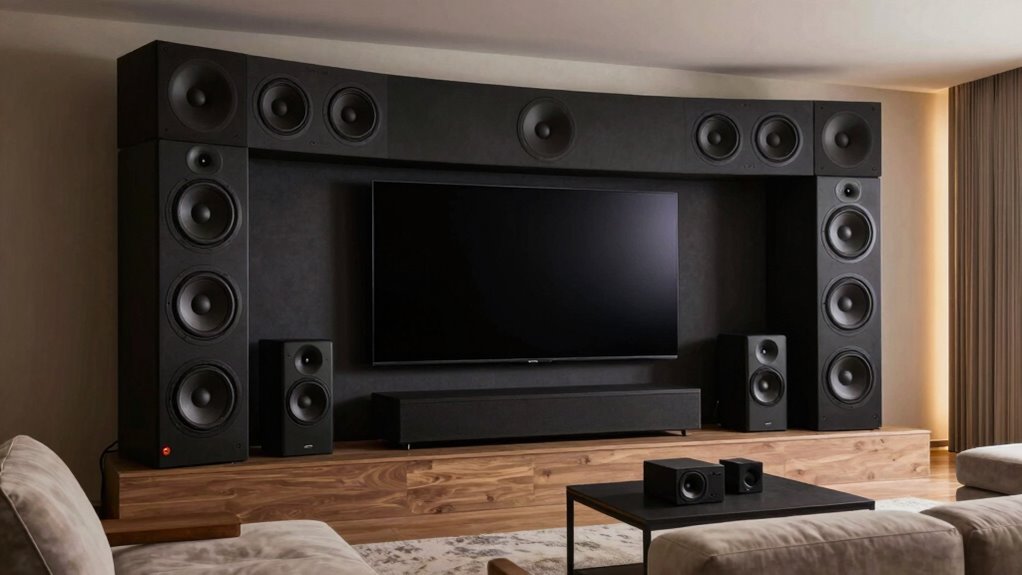
Each audio format offers distinct advantages and drawbacks that can influence your listening experience. Stereo provides good audio quality and simplicity, making it convenient for everyday use, but it lacks immersive depth. 5.1 surround sound enhances realism and spatial awareness, creating a more engaging experience, though it can be complex to set up and demands more equipment. Spatial audio offers the most immersive experience with precise positioning of sounds, perfect for gaming and VR, but may require high-end devices and can sometimes compromise user convenience. Additionally, understanding the audio technology behind each format can help you make a more informed choice. Recognizing how audio processing works can further enhance your appreciation of the differences among these formats.
- Stereo is easy to set up but less immersive.
- 5.1 offers richer sound but needs more speakers.
- Spatial audio delivers a lifelike experience but may need advanced hardware.
- Consider your priorities of audio quality and user convenience when choosing.
How Do These Formats Enhance Your Entertainment Experience?
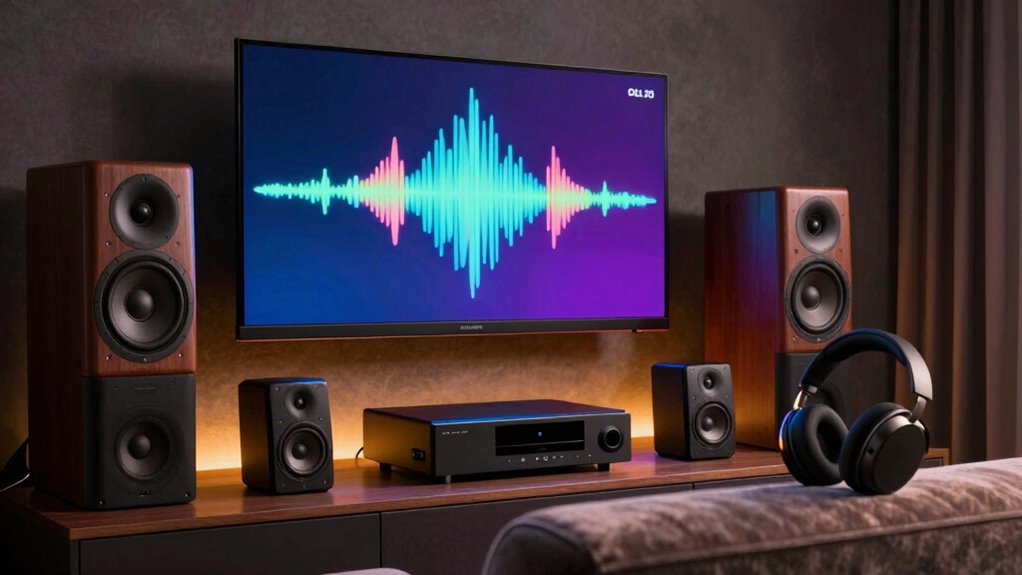
These audio formats make your entertainment more immersive by creating a richer soundscape. They improve directionality, so you can better pinpoint where sounds are coming from. As a result, your movies, games, and music feel more real and engaging. Additionally, Victorian Steampunk Roleplay emphasizes attention to detail, and high-quality audio can significantly enhance the authenticity of your experience. When it comes to audio technology, spatial audio leverages advanced sound placement techniques to further elevate immersion.
Immersive Sound Experience
Immersive sound formats like 5.1 and spatial audio transport you into the heart of the action by creating a sense of depth and direction that stereo simply can’t match. They markedly boost audio fidelity, making every sound feel realistic and precise. This enhances listener immersion, so you feel like you’re part of the scene rather than just watching or listening from the outside. These formats deliver a richer, more dynamic experience by accurately placing sounds in a three-dimensional space. You’ll notice details in the environment, like footsteps behind you or a distant thunderclap, that make entertainment more engaging.
- Experience realistic sound placement
- Feel more engaged with the scene
- Notice subtle environmental cues
- Enjoy a heightened sense of presence
Enhanced Directionality
Enhanced directionality in audio formats like 5.1 and spatial audio allows sounds to be precisely placed in a three-dimensional space, making your experience more realistic and engaging. Binaural cues, such as interaural time differences and level differences, help your brain accurately localize sounds. This process, known as acoustic localization, creates an immersive environment where you can pinpoint the origin of noises easily. For example, you might hear a helicopter overhead or footsteps behind you, thanks to these cues. The table below highlights how different formats improve this aspect:
| Format | Binaural Cues | Acoustic Localization | Effect on Experience |
|---|---|---|---|
| Stereo | Limited | Basic | Less precise |
| 5.1 Surround | Enhanced | Improved | More realistic |
| Spatial Audio | Full | Precise | Fully immersive |
This enhanced directionality heightens realism, pulling you deeper into your entertainment.
How to Pick the Right Audio Setup for Your Devices and Budget

Choosing the right audio setup depends on your devices, budget, and how you plan to use sound. First, consider your device compatibility and whether you need stereo, surround, or spatial audio. Budget plays a big role—more advanced setups like 5.1 or spatial audio require investment in speakers or headsets. When setting up, pay attention to audio compression, which affects sound quality, and perform proper speaker calibration for excellent audio performance. To decide, think about these factors:
- Compatibility with your device and content
- Budget constraints and long-term value
- Desired audio quality and immersion
- Ease of setup and maintenance
Balancing these elements ensures you get the best sound experience without overspending or compromising quality.
Frequently Asked Questions
Can All Devices Support Spatial Audio Technology Seamlessly?
Not all devices support spatial audio seamlessly due to device compatibility and technological limitations. Many newer smartphones, tablets, and high-end headphones do, but older models or budget devices might not. You’ll need compatible hardware and updated software to experience spatial audio fully. Check your device specifications and verify it supports the necessary features; otherwise, you may not get the immersive sound experience intended by spatial audio technology.
How Does Spatial Audio Impact Audio Latency and Synchronization?
Spatial audio dramatically transforms your listening experience, but it can introduce serious audio latency and synchronization challenges. You might notice sounds lagging or not aligning perfectly with visuals, making it feel like you’re in a dream where time slows down or speeds up. This impact depends on your device’s processing power and connection quality. To enjoy seamless spatial audio, you’ll want to minimize latency and make certain your system handles synchronization effortlessly.
Are There Specific Genres or Content Types Best Suited for Each Format?
You’ll find stereo best for music genres like pop or rock, where clarity and simple soundstage matter. For gaming content, 5.1 surround works great, immersing you in action with directional audio. Spatial audio shines with virtual reality or cinematic experiences, creating a realistic, three-dimensional sound environment. Choose your format based on your content type to enhance your listening or gaming experience effectively.
What Are the Common Misconceptions About Surround Sound Systems?
Many believe surround sound systems always deliver perfect immersion, but that’s a common misconception. Surround sound myths include the idea that more speakers automatically mean better sound quality or that you need a dedicated room. In reality, misconception clarifications show that proper speaker placement and room acoustics matter more. You don’t need a huge setup to enjoy immersive audio; understanding these details helps you get the best experience within your space.
How Does Room Acoustics Influence the Effectiveness of These Audio Formats?
Think of your room as a concert hall. Room reflections bounce sound, creating echoes that can muddle clarity, while sound absorption soaks up excess, enhancing audio precision. These factors directly impact how well your stereo, 5.1, or spatial audio performs. When reflections are controlled and absorption is balanced, your sound becomes immersive and accurate. So, optimizing room acoustics guarantees your audio formats deliver their full, intended richness.
Conclusion
Wondering if spatial audio really immerses you more? The truth is, it does—but only if your setup matches the content and your devices support it. While stereo might be enough for casual listening, 5.1 and spatial audio can transform movies and games into lifelike experiences. So, the next time you choose your audio format, consider whether your environment and budget can access that full immersive potential—because sometimes, the best sound is worth the upgrade.