

Rugs and curtains can change the sound in your home more than you might realize. Rugs absorb sound waves, reducing echo and creating a calmer vibe. Meanwhile, heavy curtains act as barriers that keep unwanted noise out. The materials you choose, like wool for rugs or dense fabrics for curtains, enhance sound absorption. Think about how you place these items too; it all makes a difference. Discover more ways to create a serene environment in your space.
Key Takeaways
- Rugs made from natural fibers like wool significantly absorb sound, reducing echo and enhancing acoustics in living spaces.
- Heavy curtains block sound effectively when hung from ceiling to floor, preventing noise from entering through gaps.
- Layering rugs and curtains improves sound absorption and creates a more serene environment by diffusing sound waves.
- The choice of fabric and material directly influences sound absorption capabilities, with denser materials providing better noise reduction.
- Proper placement of rugs and curtains can transform a room’s acoustics, promoting relaxation and focus while minimizing distractions.

1 by ONE High Fidelity Belt Drive Turntable with Built-in Speakers, Vinyl Record Player with Magnetic Cartridge, Wireless Playback and Aux-in Functionality, Auto Off
Exquisite Appearance, Built from wood and metal materials with a unique sense of layering, The streamlined corner design...
As an affiliate, we earn on qualifying purchases.
Why Sound Matters in Home Design
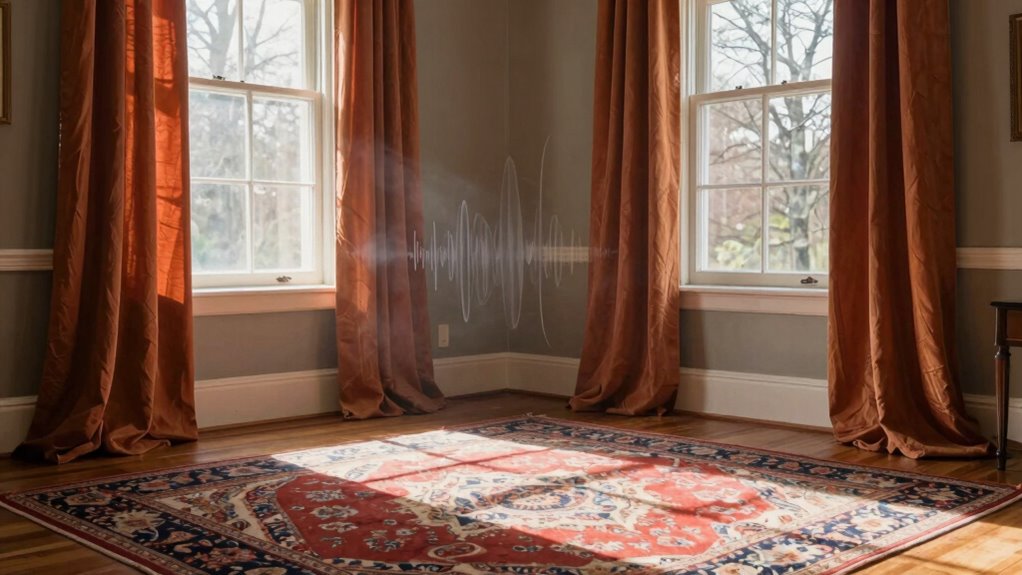
While you might focus on colors and furniture when designing your home, sound plays a crucial role in creating a comfortable environment. The importance of sound can’t be overstated; it influences your mood, productivity, and overall well-being. Poor sound design can lead to distractions and stress, while thoughtful acoustic elements promote relaxation and focus. By considering how sound travels and interacts with your space, you can enhance your living experience. Incorporating materials that absorb or diffuse sound, like rugs and curtains, can make a significant difference. Understanding sound absorption techniques can help you optimize your space for better acoustics. Additionally, choosing the right interior materials can help reduce indoor noise levels and improve overall comfort. Exploring acoustic design principles can further elevate your home’s sound environment, making it more harmonious and inviting. Being mindful of soundproofing methods can also contribute to a quieter and more peaceful home setting. Using advanced soundproofing techniques like wall insulations and door seals can further enhance these efforts. You’ll find that a well-designed auditory environment complements your aesthetic choices, leading to a harmonious home where you feel at ease. Embrace the power of sound in your design process for lasting comfort.

Bluetooth Turntable HiFi System with 36 Watt Bookshelf Speakers, Patend Designed Vinyl Record Player with Magnetic Cartridge, Bluetooth Playback and Auto Off
[Bluetooth Record Player] This Bluetooth record player supports wireless playback from iPhones, Android smartphones, and tablets, letting you...
As an affiliate, we earn on qualifying purchases.
How Rugs Absorb Sound and Reduce Echo
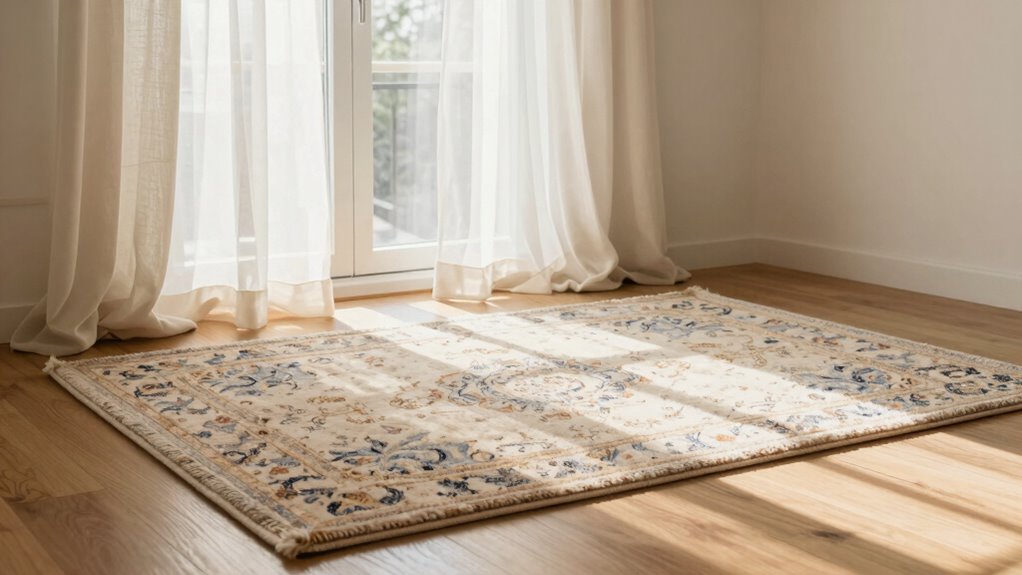
Rugs are more than just decorative elements; they play a significant role in enhancing your home’s acoustics. By absorbing sound waves, rugs help reduce echo, making your space feel cozier and more inviting. Different materials and thicknesses can affect how well rugs absorb various sound frequencies.
| Material | Sound Absorption | Best For |
|---|---|---|
| Wool | High | Living rooms, studios |
| Nylon | Moderate | Bedrooms, offices |
| Cotton | Low | Hallways, kitchens |
Choosing the right rug can greatly improve your home’s sound quality. So, if you want to minimize echo and create a more pleasant auditory environment, investing in a quality rug is essential.

WOCKODER Vinyl Record Players Vintage Turntable with Speakers Belt-Driven Turn Tables Support 3-Speed, Bluetooth Wireless Playback, Headphone, AUX-in, RCA Line LP Phonograph Auto Stop Retro Black
VINTAGE LOOKING RECORD PLAYER - As a music player combined age and modern sense, A vintage and fashion...
As an affiliate, we earn on qualifying purchases.
How Curtains Help Keep Noise Down
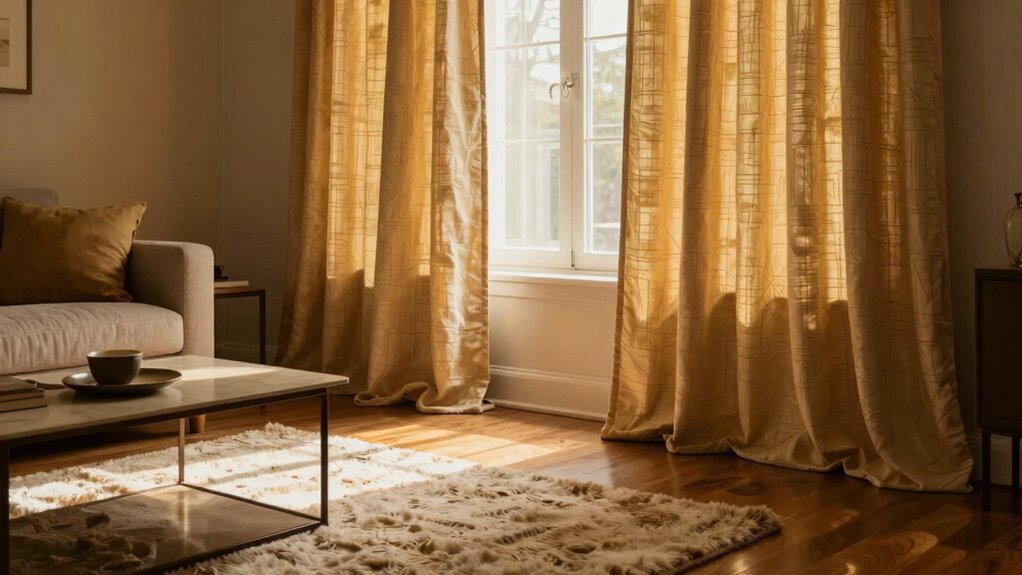
When you want to create a quieter home environment, curtains can be your best ally in reducing noise. Thick, heavy curtains with high curtain density act as effective sound barriers, absorbing and dampening sound waves. By implementing soundproofing techniques, like layering or using acoustic curtains, you can greatly minimize outside noise and echoes within your space. Additionally, ergonomic design principles can help you choose window treatments that optimize both comfort and sound absorption. Hanging curtains close to windows and extending them beyond the frame also helps block sound. The denser the fabric, the better it’ll absorb sound, making your home feel more serene. Incorporating studio dividers or acoustic panels can further enhance soundproofing efforts by creating additional sound barriers within your space. Proper maintenance routines for curtains also ensure they retain their soundproofing qualities over time. Regularly cleaning and inspecting your curtains keeps the fabric in optimal condition for sound absorption. Moreover, selecting curtains made from sound-absorbing materials can significantly improve your space’s acoustic environment. So, when you’re looking to enhance your comfort, consider investing in quality curtains that not only beautify your space but also contribute to a more peaceful atmosphere. You’ll notice the difference!

Victrola Century 6-in-1 Vinyl Record Player & Music Center – 3-Speed Turntable, CD & Cassette Player, VINYLSTREAM, Bluetooth & 3.5mm Aux, Record Player with Speakers, Mid Century Design (Walnut)
6-IN-1 MUSIC CENTER – The Victrola Century pairs mid-century modern design with a 3-speed turntable, Bluetooth, VINYLSTREAM output,...
As an affiliate, we earn on qualifying purchases.
Best Materials for Sound Absorption in Rugs and Curtains
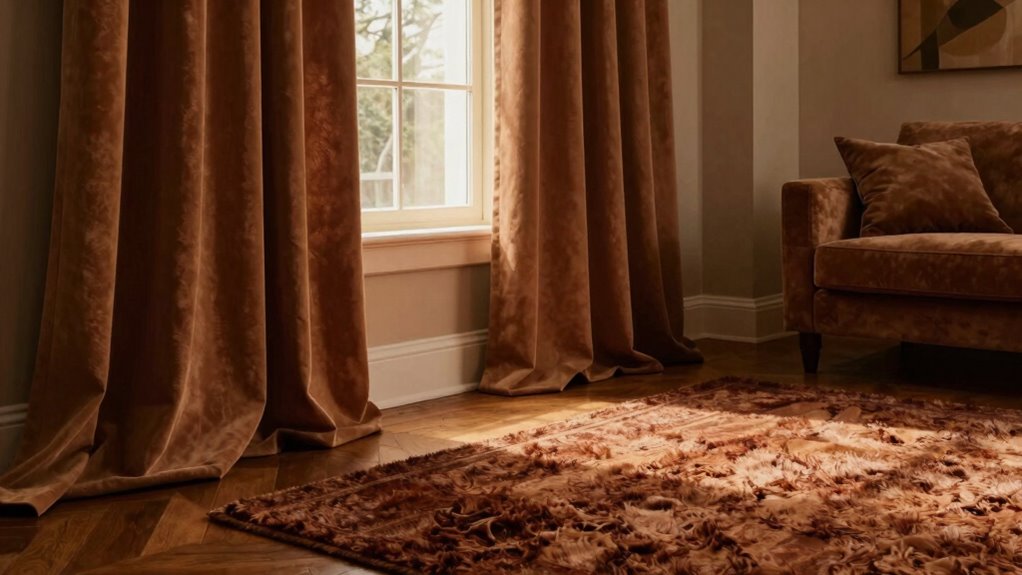
When choosing rugs and curtains for sound absorption, you’ll want to weigh the material carefully. Natural fibers like wool and cotton offer excellent benefits in reducing noise, while synthetic materials can also play a role in sound dampening. Let’s explore how these options stack up against each other.
Natural Fibers Benefits
Natural fibers offer a unique advantage when it comes to sound absorption in rugs and curtains. These eco-friendly materials, like wool, cotton, and jute, are excellent at dampening sound and reducing echo in your space. By choosing natural fibers, you not only enhance your room’s acoustics but also create a healthier environment. These materials are breathable and less likely to trap allergens, making your home more comfortable. Plus, their durability means they’ll withstand the test of time, providing long-lasting benefits. When you’re looking to improve sound quality, consider the natural fiber advantages that contribute to a cozy atmosphere while being kind to the planet. Additionally, natural fibers are often sustainable materials that support eco-friendly living. Incorporating natural fibers can also contribute to soundproofing efforts, making your home even more quiet and comfortable. You’ll enjoy a beautiful, functional space that sounds as good as it looks. Using adaptive acoustic solutions like natural fiber rugs and curtains can further optimize your space’s sound environment. For optimal results, selecting appropriate thickness and density of these materials can significantly improve sound absorption.
Synthetic Materials Overview
Synthetic materials play an essential role in sound absorption for rugs and curtains. These soundproof materials can effectively reduce noise levels in your space, making it feel more serene. When selecting synthetic fibers, consider the following options:
- Polyester: Known for its durability and resistance to wrinkles, polyester offers excellent sound absorption while being easy to clean.
- Nylon: This fiber is tough and resilient, providing great noise reduction while maintaining its shape over time.
- Acrylic: Lightweight and versatile, acrylic mimics wool’s texture and effectively absorbs sound, enhancing your room’s acoustics. Additionally, synthetic materials are often engineered with soundproofing properties to maximize noise reduction, which can be further optimized by understanding acoustic treatment techniques, including the use of sound-absorbing textiles for better results. Incorporating soundproofing techniques can significantly improve the overall acoustic environment of your space, ensuring a quieter and more comfortable setting.
Rug and Curtain Placement for Better Acoustics
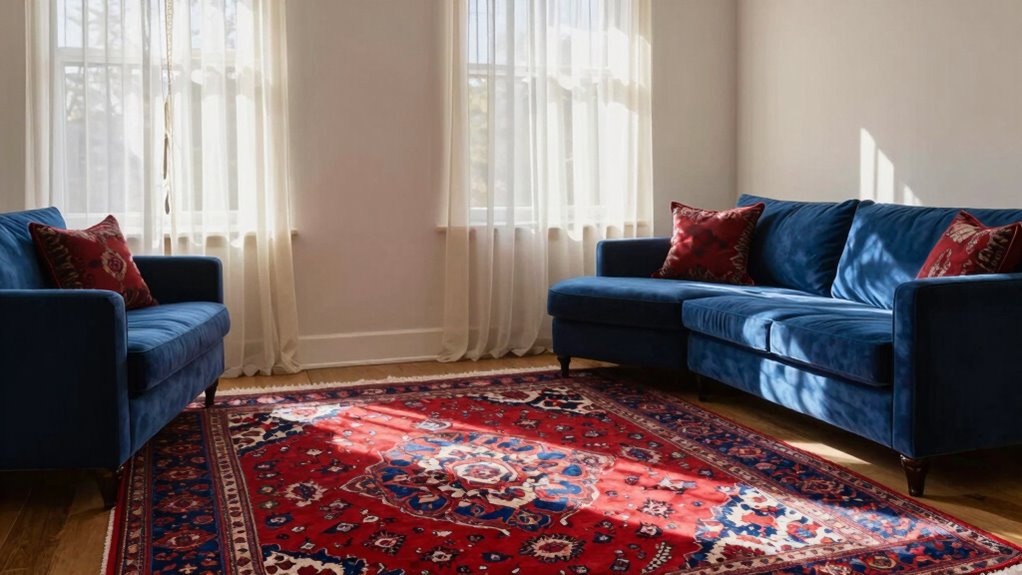
Although many people focus on aesthetics, the placement of rugs and curtains plays an essential role in enhancing a room’s acoustics. Proper rug layout and curtain height can greatly reduce echo and improve sound quality. To make the most of your space, consider the following tips:
| Rug Layout | Curtain Height |
|---|---|
| Place rugs in high-traffic areas | Hang curtains from ceiling to floor |
| Use multiple layers of rugs | Make sure curtains are thick and dense |
| Position rugs under furniture | Avoid short curtains that leave gaps |
| Choose large rugs for expansive spaces | Opt for floor-length curtains for coverage |
Additionally, understanding sound absorption principles can help you select the right materials and placement for optimal acoustics in your space.
Balancing Aesthetics and Sound Control
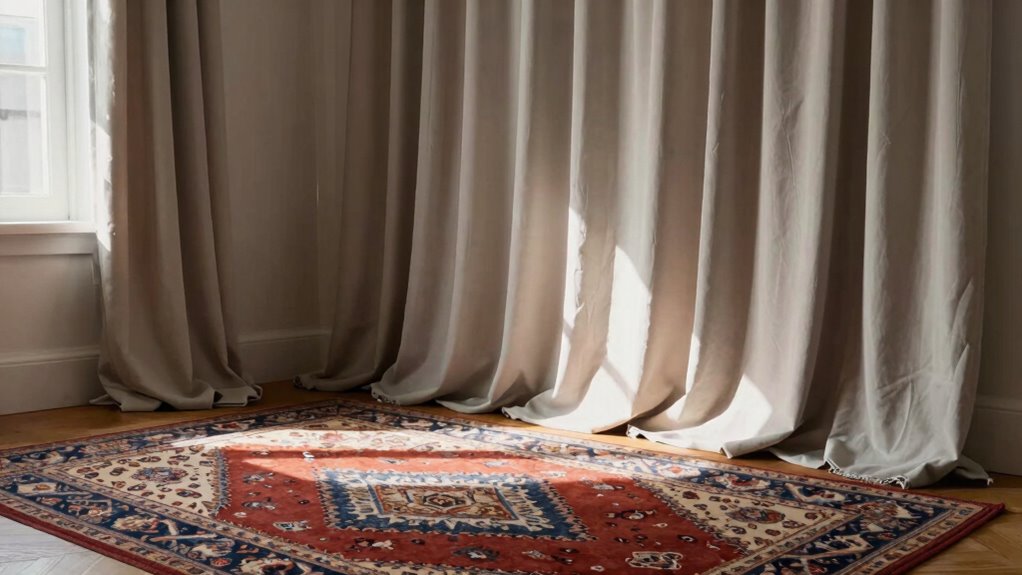
When choosing rugs and curtains, you need to take into account how they affect both your room’s look and its sound quality. The right materials can enhance acoustics while also fitting your design vision. Balancing these aspects guarantees your space looks great and feels comfortable.
Acoustic Benefits of Rugs
Rugs not only add warmth and style to your space but also play an essential role in enhancing acoustics. By choosing the right rug textures, you can effectively manage sound frequencies within your room. Here are three key benefits of incorporating rugs:
- Sound Absorption: Rugs absorb sound, reducing echoes and creating a more pleasant auditory environment. This sound absorption helps to minimize noise pollution and improve overall clarity.
- Sound Diffusion: The varied textures of rugs help diffuse sound, preventing it from bouncing off hard surfaces.
- Comfort and Warmth: Beyond acoustics, rugs provide a cozy atmosphere, making your space inviting while improving sound quality. Sound management is crucial for creating a peaceful and restful environment, especially in spaces dedicated to sleep.
Curtain Material Impact
Choosing the right curtains can greatly impact your room’s acoustics, just like rugs do. When you’re selecting curtains, consider curtain thickness and fabric weave. Thicker curtains absorb sound more effectively, reducing echoes and creating a quieter space. Opting for a heavy, densely woven fabric can further enhance sound control, making it ideal for rooms where noise levels matter, like home theaters or bedrooms.
On the other hand, lighter fabrics may look beautiful but can allow sound to bounce around, which might not be what you want. Incorporating sound-absorbing materials into your curtain choice can optimize acoustic performance. Additionally, selecting curtains with thermal insulation properties can help regulate room temperature while improving sound dampening. Balancing aesthetics with sound control is essential. By choosing the right materials, you can improve your room’s acoustics while still achieving the look you desire. Your curtains can be both stylish and functional! Sound absorption is a key factor in creating a comfortable living environment.
Design Versus Functionality
How can you strike the perfect balance between style and sound control in your space? Achieving functional harmony doesn’t mean sacrificing design aesthetics. Here are three tips to help you blend both:
- Choose Textiles Wisely: Opt for rugs and curtains that absorb sound while complementing your décor. Thick, plush materials work wonders.
- Layer Your Elements: Combine different textures and patterns, creating visual interest. This layering helps diffuse sound while enhancing your room’s style.
- Consider Color and Patterns: Use colors and designs that harmonize with your existing palette, ensuring your sound-absorbing elements don’t clash with your overall aesthetic.
Enhancing Comfort and Privacy With Soft Furnishings
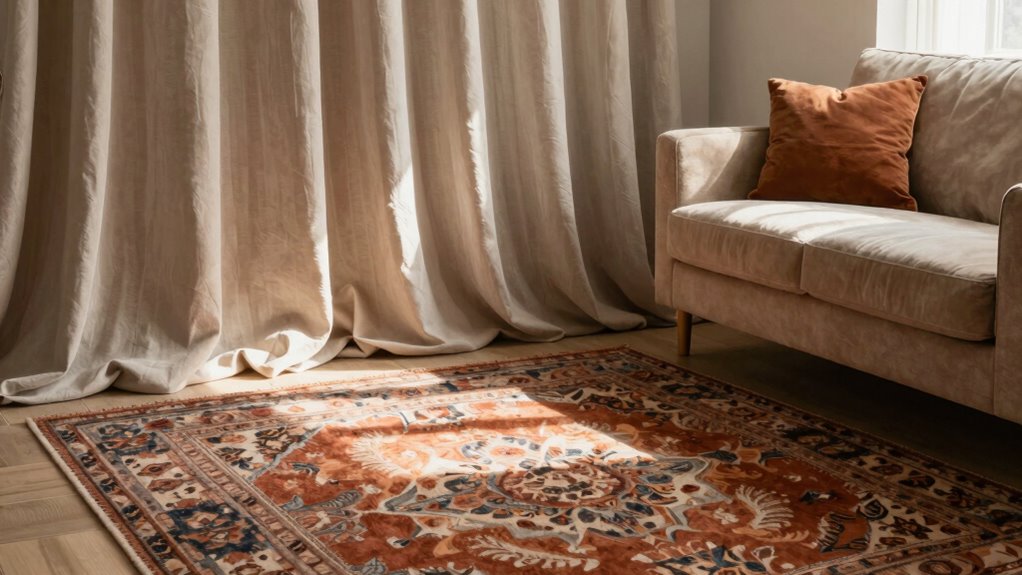
While you may not realize it, soft furnishings like rugs and curtains play an essential role in enhancing your home’s comfort and privacy. When you add plush rugs, they not only feel great underfoot but also help absorb sound, making your space cozier. Thick curtains can block outside noise and prying eyes, providing a significant privacy enhancement. Together, these elements create an inviting atmosphere that encourages relaxation. You’ll find that your comfort levels increase as you surround yourself with soft textures and calming colors. Whether you’re curling up with a book or entertaining friends, these furnishings can transform your environment, making it a serene retreat where you can truly unwind.
Tips for Creating an Acoustically Friendly Space
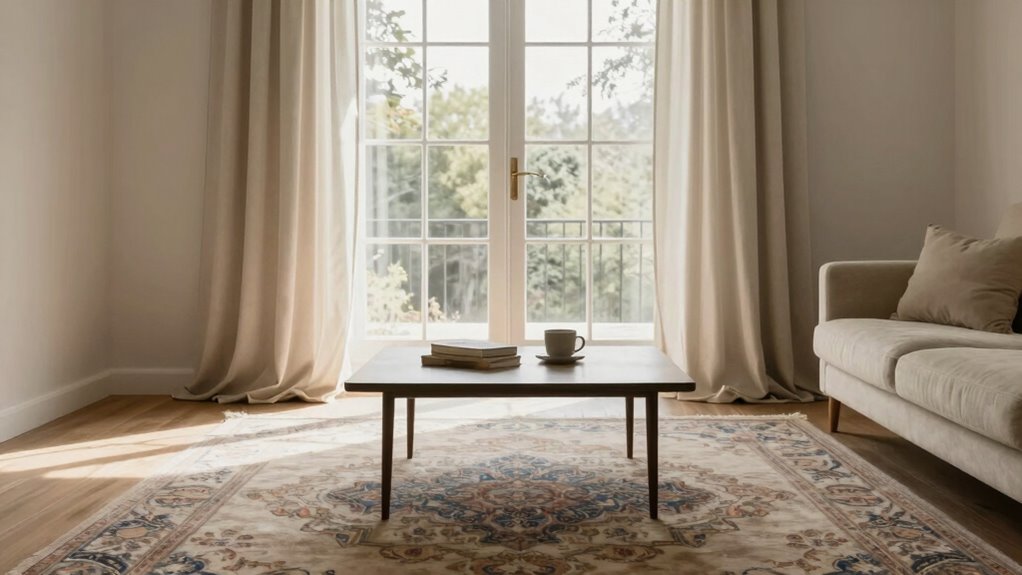
Creating an acoustically friendly space starts with understanding how sound interacts with your surroundings. You can greatly improve your home’s acoustics by incorporating a few effective strategies. Here are three tips to get you started:
- Use Rugs and Curtains: Thick rugs and heavy curtains act as excellent acoustic treatments, absorbing sound and reducing echo in your space.
- Add Soft Furnishings: Incorporate sofas and cushions to help diffuse sound waves, making your environment more comfortable and quieter.
- Consider Soundproofing Options: If noise is a major concern, explore options like acoustic panels or soundproof doors to minimize sound transmission between rooms.
Frequently Asked Questions
Can Sound Absorption Improve My Home’s Energy Efficiency?
Yes, sound absorption can improve your home’s energy efficiency. By reducing noise, materials like rugs and curtains enhance sound quality in your space, creating a more comfortable environment. When sound is absorbed, you’re likely to notice fewer drafts and improved temperature regulation, leading to energy savings. This means your heating and cooling systems won’t have to work as hard, ultimately lowering your energy bills while providing a cozier atmosphere.
How Do Different Colors Affect Sound Absorption in Fabrics?
Different colors can subtly affect sound absorption in fabrics. Darker hues often absorb more sound due to their density, while lighter colors may reflect sound waves. You’ll find that fabric texture plays a role too; plush materials enhance absorption, while smooth surfaces reflect. Color psychology suggests that deeper colors can create a calming environment, which might also influence how sound feels in a space. So, choosing wisely can enhance both aesthetics and acoustics.
Does Carpet Thickness Influence Sound Reduction?
Yes, carpet thickness definitely influences sound reduction. For instance, a study showed that thicker carpets can reduce sound transmission by up to 30%. When you choose a carpet with higher density, it absorbs more sound frequencies, minimizing echoes and noise. This means if you want a quieter space, opting for thicker, denser carpets can make a significant difference. You’ll notice a more peaceful environment, enhancing your comfort at home.
Are There Specific Patterns That Enhance Acoustics?
Yes, specific patterns can enhance acoustics in your space. Acoustic patterns, like irregular designs or asymmetrical shapes, break up sound waves effectively, reducing echoes. When combined with various textile textures, these patterns can absorb sound, making your environment quieter. Choose fabrics with different weaves or textures, as they interact with sound in unique ways. By being mindful of these elements, you can greatly improve the acoustics in your home or office.
How Often Should I Replace Rugs and Curtains for Optimal Sound Control?
You should replace rugs and curtains every 5 to 10 years, like revitalizing the paint on your walls to keep your space vibrant. Rugs have a lifespan that varies by material, while curtains require regular maintenance to stay effective. Dust and wear can diminish their sound-absorbing qualities, so keep an eye on their condition. By staying proactive, you’ll guarantee your home sounds as good as it looks, creating a harmonious atmosphere.
Conclusion
Think of your home as a musical instrument, where every rug and curtain acts like a string or a note. When you carefully choose and place these soft furnishings, you’re tuning your space to create harmony, absorbing discordant echoes and amplifying comfort. Just as a well-composed melody brings peace to the ears, a thoughtfully designed room brings tranquility to the soul. By embracing these elements, you’re not just decorating; you’re crafting an orchestra of sound that resonates with your life’s rhythm.