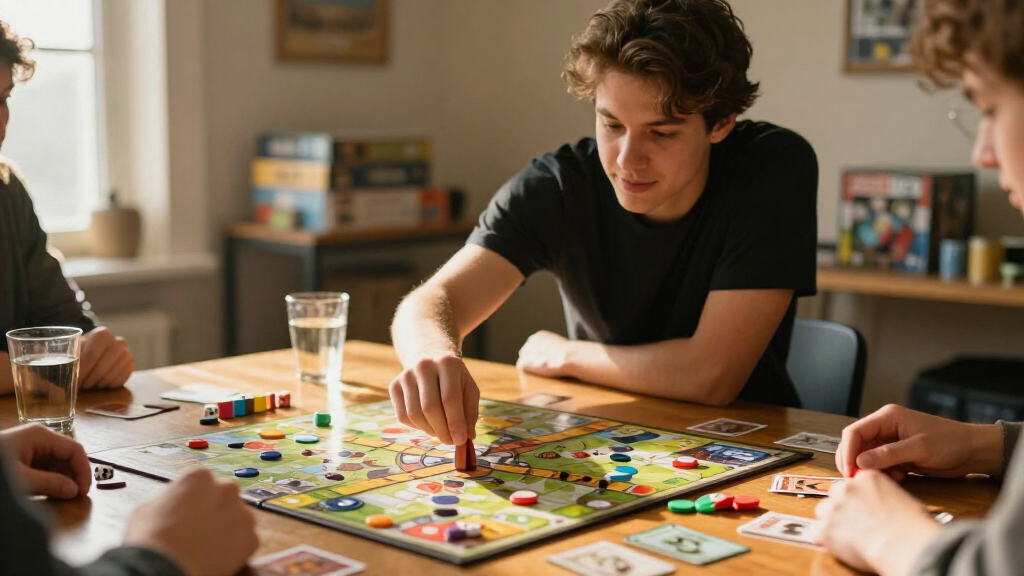

When gamers ask for the best board games, they usually want titles with real strategic depth, not filler you play once and shelve. My top overall pick is Azul, because it packs genuine tactical tension into 30–40 minutes and looks beautiful doing it. If your group prefers social chaos, Secret Hitler delivers the best hidden-role experience on this list, while Splendor is the easiest deep strategy game to teach newcomers. The main tradeoff you’ll face is between weight and accessibility: heavier games like CATAN reward long-term planning but demand more table time and patience. Keep reading for the full breakdown, including who each game is for and who should skip it.

Get movie nights delivered free — and shop member deals
- Fast, free delivery on millions of items
- Access to Prime Big Deal Days deals on October 6–7
- Prime Video, Amazon Music and more included
Key Takeaways
- Azul won best overall because it is the only game here that combines tournament-level strategic depth with a 10-minute teach and near-universal appeal across gamer skill levels.
- Social deduction titles (Secret Hitler, The Chameleon, Wavelength) dominated for large groups, but every one of them falls apart below five players — a hard dealbreaker for game nights of three or four.
- Splendor and Codenames emerged as the strongest value picks: minimal components, huge replay value, and rules that survive being taught to complete strangers in minutes.
- The 2025 Ticket to Ride refresh and CATAN 6th Edition both modernized their components, but neither fixed their core luck factors — serious gamers should know the dice and draw piles still decide close games.
- Bomb Busters and Harmonies proved the best picks for two-player sessions, filling the gap left by party games that demand bigger crowds.
- Classic mass-market options like Battleship and TAPPLE ranked lowest for experienced gamers because their decisions become repetitive after a handful of plays.
| Azul Tile-Placement Strategy Board Game |  | Best Overall | Players: 2–4 | Age: 8+ | Play time: 30–45 minutes | VIEW LATEST PRICE | See Our Full Breakdown |
| Secret Hitler | 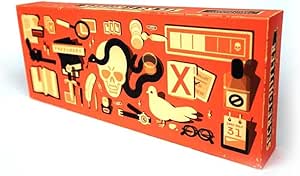 | Best for Large Groups | Players: 5–10 | Recommended age: 17+ | Play time: 45–60 minutes | VIEW LATEST PRICE | See Our Full Breakdown |
| Asmodee Harmonies Board Game |  | Best for Solo and Couples Play | Players: 1–4 | Recommended age: 10+ | Playtime: 30 minutes | VIEW LATEST PRICE | See Our Full Breakdown |
| Hasbro Gaming Battleship with Planes Strategy Board Game |  | Best Travel Pick | Players: 2 | Recommended age: 7 and up | Game type: Deduction and strategy board game | VIEW LATEST PRICE | See Our Full Breakdown |
| Codenames Board Game, Second Edition |  | Best Party Game for Teams | Players: 4 or more | Recommended age: 14 years and up | Edition: Second Edition (2025) | VIEW LATEST PRICE | See Our Full Breakdown |
| Magical Athlete Board Game |  | Best for Mixed-Age Game Nights | Brand: CMYK | Players: 2–6 | Recommended Age: 6 years and up | VIEW LATEST PRICE | See Our Full Breakdown |
| The Chameleon Social Deduction Board Game |  | Best Bluffing Party Game | Brand: Big Potato | Genre: Word / Social Deduction | Players: 3–8 | VIEW LATEST PRICE | See Our Full Breakdown |
| USAOPOLY The Original TAPPLE Family Word Game |  | Best Travel-Friendly Word Game | Brand: USAOPOLY | Age Range: 8+ | Components: Portable Tapple wheel with built-in timer, 36 cards (144 categories), instructions | VIEW LATEST PRICE | See Our Full Breakdown |
| Splendor Gem Trading Strategy Board Game |  | Best Gateway Strategy Game | Players: 2–4 | Recommended Age: 10 years and up | Play Time: About 30 minutes | VIEW LATEST PRICE | See Our Full Breakdown |
| Wavelength: A Mind-Reading Party Game |  | Best Cooperative Party Game | Players: 2 or more | Setup Time: 5 seconds | Learning Time: 1 minute | VIEW LATEST PRICE | See Our Full Breakdown |
| CATAN Board Game (6th Edition) |  | Best Gateway Strategy Game | Edition: 6th Edition | Players: 3–4 | Recommended age: 10+ | VIEW LATEST PRICE | See Our Full Breakdown |
| Ticket to Ride Board Game (2025 Refresh) |  | Best Family Game Night Pick | Players: 2–5 | Recommended age: 8+ | Playtime: 30–60 minutes | VIEW LATEST PRICE | See Our Full Breakdown |
| Carcassonne Tile Placement Strategy Board Game |  | Best Quick-Fill Strategy Game | Players: 2–5 | Recommended age: 7+ | Playing time: About 35 minutes | VIEW LATEST PRICE | See Our Full Breakdown |
| Bomb Busters Board Game |  | Best Cooperative Campaign Game | Players: 2 to 5 | Missions: 66 | Game type: Cooperative deduction | VIEW LATEST PRICE | See Our Full Breakdown |
| Spin Master Games Tetris: The Board Game |  | Best Nostalgia Party Pick | Players: 2–4 | Recommended age: 8 years and up | Game type: Competitive spatial strategy | VIEW LATEST PRICE | See Our Full Breakdown |
| board games for gamer | Players | Recommended age |
|---|---|---|
| Azul Tile-Placement Strategy B | 2–4 | — |
| Secret Hitler | 5–10 | 17+ |
| Asmodee Harmonies Board Game | 1–4 | 10+ |
| Hasbro Gaming Battleship with | 2 | 7 and up |
| Codenames Board Game | 4 or more | 14 years and up |
| Magical Athlete Board Game | 2–6 | 6 years and up |
| The Chameleon Social Deduction | 3–8 | 12 years and up |
| USAOPOLY The Original TAPPLE F | — | — |
| Splendor Gem Trading Strategy | 2–4 | 10 years and up |
| Wavelength: A Mind-Reading Par | 2 or more | — |
| CATAN Board Game | 3–4 | 10+ |
| Ticket to Ride Board Game | 2–5 | 8+ |
| Carcassonne Tile Placement Str | 2–5 | 7+ |
| Bomb Busters Board Game | 2 to 5 | — |
| Spin Master Games Tetris: The | 2–4 | 8 years and up |
More Details on Our Top Picks
Azul Tile-Placement Strategy Board Game
Azul earns the top spot because it nails the balance that most hobby gamers actually want: rules you can teach in five minutes with decisions that stay tense for the full 45 minutes. Unlike CATAN, which leans on dice luck and trading negotiation, Azul puts every outcome in your hands — you draft tiles from shared displays, and one greedy pick can hand your opponent exactly what they need. The tactile bakelite tiles are a genuine draw compared with card-only games like Splendor; handling the pieces is half the pleasure. The tradeoff is a ceiling on complexity — after dozens of plays, experienced groups may find the strategy space familiar, and the theme is thin. But for a game that works equally well as a couples duel or a four-player filler, nothing else in this lineup matches its polish.
Pros:- Teaches in minutes but rewards careful planning and reading opponents
- Excellent two-player mode that scales cleanly to four
- Premium tactile tiles that feel great and hold up to frequent play
- Spiel des Jahres winner with strong replay value from varied tile drafts
Cons:- Strategic depth plateaus for experienced players after many sessions
- Take-that drafting can feel punishing in groups with skill gaps
Best for: Gamer couples and small groups who want a beautiful, quick-teaching strategy game with real decisions
Not ideal for: Heavy strategy enthusiasts seeking deep engine-building or long-form campaigns — Azul wraps up in under an hour and stays light
- Players:2–4
- Age:8+
- Play time:30–45 minutes
- Award:2018 Spiel des Jahres
- Mechanic:Tile drafting and pattern building
- Setup:Quick, minimal table space
Our verdict“If you buy one game on this list for a mixed group of casual and serious players, Azul is the safest and most satisfying pick.”
Secret Hitler
When your game night hits six or more people, most titles in this roundup simply break — Azul caps at four and Battleship at two. Secret Hitler fills that gap brilliantly: up to ten players split into liberals and hidden fascists, and the game becomes a shouting match of accusations and body-language reads. Compared with The Chameleon, another social deduction title here, Secret Hitler supports far bigger groups and adds a legislative voting layer that gives the deception structural weight. The wooden components and foil-inlay boards feel a step above typical party-game card stock. The tradeoffs are real, though: it is strictly adults-only in theme, unplayable below five people, and groups that dislike lying to friends’ faces will bounce off it hard.
Pros:- Scales to ten players, covering groups most board games can’t
- Wooden components and foil-inlay boards feel genuinely premium
- Hidden roles and secret envelopes create dramatic, memorable moments
- Fast rounds keep the whole table engaged between turns
Cons:- Requires a minimum of five players to function at all
- Mature theme and deception mechanics limit the audience to adults
Best for: Adult game nights of 6–10 people who love arguing, bluffing, and reading their friends
Not ideal for: Family gatherings with kids or couples’ nights — it needs at least five adult players and a tolerance for betrayal
- Players:5–10
- Recommended age:17+
- Play time:45–60 minutes
- Mechanic:Social deduction with hidden roles
- Components:Wooden pieces, cards, secret envelopes
- Player count floor:5 players minimum
Our verdict“The clear choice when headcount is your problem — just leave the kids in the other room.”
Asmodee Harmonies Board Game
Harmonies stands out in this lineup for one thing nobody else here offers properly: a genuine solo mode. Where Azul demands an opponent and Battleship is locked at exactly two, Harmonies lets you build dreamlike landscapes alone or compete with up to three others. The 120 wooden tokens give it a tactile warmth closer to Splendor’s chips than a card-only affair, and the core loop — combining terrain and animal tokens for victory points — delivers surprising tactical bite under easy rules. Compared with Carcassonne, another tile-laying game in this roundup, Harmonies is faster to set up and less confrontational, which suits quieter tables. The drawback is capacity: four players max, and the gentle pace may under-stimulate groups that crave direct conflict.
Pros:- True solo mode alongside competitive play for 1–4 players
- 120 wooden tokens and 42 illustrated cards give it a premium, warm feel
- Simple ruleset with meaningful tactical decisions each turn
- Relaxing theme that works as a wind-down game
Cons:- Hard cap of four players excludes bigger gatherings
- Low direct interaction can feel passive for aggressive players
Best for: Solo gamers and calm two-to-four player groups who prefer building over attacking
Not ideal for: Large or rowdy game nights — the four-player cap and low-conflict design will leave competitive groups wanting
- Players:1–4
- Recommended age:10+
- Playtime:30 minutes
- Cards:42 illustrated cards
- Tokens:120 wooden tokens
- Modes:Solo or competitive
- Edition:Multilingual
Our verdict“The pick for anyone whose game night is often just themselves or one partner.”
Hasbro Gaming Battleship with Planes Strategy Board Game
Most games in this roundup demand a table, a shelf, and a commitment — Battleship with Planes folds into two portable cases with built-in storage, which makes it the only true travel option among these fifteen. The added airplane pieces give the classic guessing game a fresh strategic wrinkle without complicating the rules, so it works as a gateway for kids or a nostalgic two-player duel. It cannot compete with Azul or Harmonies for depth — this is deduction and luck, not tactical planning — but that simplicity is the point: a seven-year-old and a grandparent can play together with zero teaching time. The tradeoff is a hard two-player limit and thin replay value once the novelty of the planes fades for seasoned gamers.
Pros:- Self-contained folding cases with storage make it genuinely portable
- Airplane pieces add a fresh layer to familiar Battleship rules
- Accessible to ages 7 and up with essentially no learning curve
- Durable plastic construction handles travel and kids
Cons:- Strictly a two-player game with no scaling
- Limited strategic depth compared with modern hobby titles
Best for: Travelers, cabin trips, and families needing a two-player game kids and adults can share anywhere
Not ideal for: Hobby gamers seeking strategic depth or groups larger than two — it will feel shallow and exclusionary
- Players:2
- Recommended age:7 and up
- Game type:Deduction and strategy board game
- Includes:2 portable battle cases, ships, planes, and pegs
- Portability:Folding cases with built-in storage
- Twist:Airplane units added to classic ship combat
Our verdict“Buy it for the road, not the shelf — it is the portability champion of this lineup and little else.”
Codenames Board Game, Second Edition
Codenames occupies the middle ground this roundup needs: bigger than a two-player duel like Battleship, more word-driven and less cutthroat than Secret Hitler. Two teams race to decode one-word clues from their spymasters, and the magic is hearing a clue like “ocean: 3” and watching your teammates spiral into wrong guesses. The second edition justifies a purchase over the original with updated words, refreshed artwork, a better insert, and a streamlined rulebook — quality-of-life fixes that matter when a game hits the table weekly. The signature tradeoff is the assassin tile: one bad guess ends the game instantly, which feels exhilarating or unfair depending on your group, and it needs at least four players split into teams to work.
Pros:- Team-based clue-giving creates laughter and genuine collaborative tension
- Second edition upgrades: refreshed words, artwork, insert, and rulebook
- 400 codenames on 200 cards give enormous replay variety
- Scales flexibly from four players up to large party groups
Cons:- Assassin tile can end the game instantly on a single wrong pick
- Unplayable with fewer than four players
Best for: Groups of 4–8 who like wordplay, teamwork, and cheering across a shared table
Not ideal for: Two-player households or players who hate sudden losses — the assassin mechanic can end games in one flip
- Players:4 or more
- Recommended age:14 years and up
- Edition:Second Edition (2025)
- Cards:200 cards with 400 codenames
- Components:16 agent tiles, 1 double agent, 7 bystanders, 1 assassin, 40 key cards, card stand, rulebook
- Mechanic:Word association and team deduction
- Brand:Czech Games Edition
Our verdict“The best team-versus-team word game in this lineup for mixed-age groups of four or more.”
Magical Athlete Board Game
Most picks in this lineup reward deep strategy, but Magical Athlete earns its slot by doing something different: it makes luck feel fun. With 36 racers sporting quirky special powers, every race becomes a comedy of sabotage, and the double-sided board gives you two tracks to keep sessions fresh. Compared with a weightier strategy game like Splendor, this one trades long-term planning for pure chaotic entertainment — a six-year-old and a seasoned gamer can play at the same table without anyone feeling left out. The tradeoff is real, though: dice decide outcomes, so competitive players who hate randomness will bristle. The listed playing time is also inconsistent between 20 and 30 minutes, so plan for some wiggle room.
Pros:- 36 unique racers with humorous special powers create varied, funny races
- Double-sided board offers two tracks out of the box
- Scales comfortably from 2 to 6 players
- Simple enough for ages 6 and up to join in
- Includes 36 wooden racers for a tactile table presence
Cons:- Dice rolls dominate outcomes, limiting strategic control
- Playing time is inconsistently listed (20 vs. 30 minutes)
Best for: Families and casual groups with kids who want a light, laugh-filled filler game between heavier sessions
Not ideal for: Competitive gamers who dislike dice-driven outcomes and want skill to determine the winner
- Brand:CMYK
- Players:2–6
- Recommended Age:6 years and up
- Playing Time:20–30 minutes
- Edition:Updated Edition
- Included Components:Double-sided race track, 36 racer cards, 36 wooden racers, 6 dice, point tokens
- Model Number:7308
- UPC:850056808132
Our verdict“A great pick for families wanting an accessible, silly racing game — skip it if you need skill-based competition.”
The Chameleon Social Deduction Board Game
Where Codenames asks your group to think as a team, The Chameleon asks everyone to lie convincingly. One player doesn’t know the secret word and must bluff their way through a round of one-word clues while everyone else hunts them down — a hook that produces genuine table-talk drama in under 15 minutes. Compared with Secret Hitler, another social deduction staple in this roundup, The Chameleon is far lighter and faster to teach, making it the better gateway into the genre for people who don’t want hidden roles with elaborate rules. The catch: the entire experience depends on group energy and bluffing appetite. A quiet or literal-minded table will flatten it fast, and you need at least three players to make it work at all.
Pros:- Quick to learn with rounds finishing in about 15 minutes
- Bluffing and deduction create genuine social tension
- Scales from 3 to 8 players
- Multiple game awards back up its design pedigree
Cons:- Unplayable with fewer than 3 players
- Heavily dependent on group personality and willingness to bluff
Best for: Outgoing groups of 3–8 who love bluffing, debating, and reading their friends
Not ideal for: Quiet or conflict-averse players, since the game collapses without enthusiastic bluffing and table talk
- Brand:Big Potato
- Genre:Word / Social Deduction
- Players:3–8
- Playing Time:15 minutes
- Recommended Age:12 years and up
- Language:English
- Edition:Standard Edition
- Included Components:Cards
Our verdict“The go-to pick for groups that love to lie to each other — quieter tables should stick with Codenames.”
USAOPOLY The Original TAPPLE Family Word Game
Tapple wins on portability where bigger boxes in this roundup simply can’t compete. The entire game lives inside a self-contained wheel with a built-in timer, with 36 category cards storing neatly inside — toss it in a bag and it’s ready anywhere, unlike CATAN or Ticket to Ride, which demand table space and setup time. Its real-time pressure also makes it a different beast from Codenames: instead of deliberate team deduction, you’re racing a ticking clock to name words under pressure, which favors quick thinkers over clever strategists. That pressure cuts both ways — players who freeze under timers will find it stressful rather than fun — and the lack of any manufacturer warranty is a mark against a game built around physical moving parts.
Pros:- Real-time timer creates fast, competitive rounds
- Portable wheel stores all 36 category cards inside itself
- 144 categories across the cards provide strong replayability
- Accessible for ages 8 and up
Cons:- Timer pressure punishes slow or anxious thinkers
- No manufacturer warranty on a game with mechanical parts
Best for: Families and travelers who want a compact, fast word game for trips, vacations, and spontaneous play
Not ideal for: Players who crumble under timed pressure, or anyone wanting deep strategy
- Brand:USAOPOLY
- Age Range:8+
- Components:Portable Tapple wheel with built-in timer, 36 cards (144 categories), instructions
- Model Year:2022
- Edition:Standard Edition
- Warranty:No warranty
Our verdict“The best grab-and-go word game here — ideal for travel and families, but skip it if ticking clocks stress you out.”
Splendor Gem Trading Strategy Board Game
Splendor sits at the sweet spot between accessibility and depth, which is exactly why it earns the gateway-strategy slot. You can teach the gem-collecting engine in ten minutes, yet the race to 15 prestige points rewards real long-term planning — every token taken and card bought shapes your economy. Compared with CATAN, Splendor plays faster, has zero negotiation, and removes the dice luck that frustrates purists; compared with Azul, it offers a similar weight but with a smoother engine-building arc rather than spatial puzzle pressure. The main tradeoff is replay range: after dozens of plays, experienced gamers may find the decision space flattens, and the two-player上限 of four keeps larger game nights locked out. For a first step into hobby board games, though, few titles teach this cleanly.
Pros:- Rules teach in minutes while decisions stay meaningful
- Engine-building arc rewards long-term planning
- Rounds finish in about 30 minutes
- Works equally well for family and adult game nights
Cons:- Decision space can feel shallow after many plays
- Caps out at 4 players, excluding bigger groups
Best for: Newcomers to hobby gaming and couples who want a quick strategy game with meaningful decisions
Not ideal for: Veteran gamers who have exhausted lighter titles and want deeper decision trees, or groups larger than four
- Players:2–4
- Recommended Age:10 years and up
- Play Time:About 30 minutes
- Material:Cardboard
- Origin:Made in the USA or imported
Our verdict“The smartest first strategy game a gamer can buy — but long-term hobbyists may outgrow it.”
Wavelength: A Mind-Reading Party Game
Wavelength is the rare party game with no elimination and no lying — a deliberate contrast to The Chameleon, which runs on deception. Instead, one player gives a clue along a hidden spectrum (hot to cold, underrated to overrated) and the team debates where it lands, producing the kind of hilarious arguments that define great game nights. With a 5-second setup and 1-minute rules explanation, it’s the easiest game in this roundup to get moving, and unlike Codenames, it flexes to genuinely huge groups without splitting into teams that exclude people. The flip side: because scoring is cooperative and loose, competitive players may find it weightless — this is a conversation engine, not a contest, and tables that need a clear winner will finish unsatisfied.
Pros:- Learns in about 1 minute and sets up in 5 seconds
- Scales to groups of any size, 2 or more
- Cooperative debate format includes everyone at the table
- Spectrum-based clues generate endless discussion and laughs
Cons:- Loose cooperative scoring offers little for competitive players
- Debate-heavy format can drag with indecisive groups
Best for: Large groups, parties, and workplace offsites that want a cooperative, laugh-generating social game
Not ideal for: Score-driven players who need a winner and competitive structure to stay engaged
- Players:2 or more
- Setup Time:5 seconds
- Learning Time:1 minute
- Play Time:30 minutes
- Game Type:Cooperative party game
Our verdict“The best pick for big groups that want laughs over leaderboards — competitive tables should look elsewhere.”
CATAN Board Game (6th Edition)
CATAN remains the game that turns casual players into hobbyists, and the 6th Edition sharpens that role with refreshed components. Its modular hexagonal board means no two sessions play alike — a replayability advantage that fixed-map games like Ticket to Ride can’t match. Where Splendor offers quiet engine-building, CATAN forces live negotiation: every trade is a social chess move, which makes it the rare strategy game that thrives on table talk.
The tradeoffs are real, though. It requires at least three players, so couples should look elsewhere, and the robber mechanic introduces direct confrontation that some family groups find sour. The 60–90 minute playtime also asks more commitment than lighter picks in this roundup.
Pros:- Modular board creates a genuinely different island every game
- Blends trading, resource management, and spatial strategy in one package
- Wide 10+ age range pulls mixed groups into real strategic decisions
- 6th Edition refresh improves component quality
Cons:- Unplayable with two players, and mediocre unless you have exactly 3–4
- Robber mechanic creates take-that moments that can sour casual tables
- 60–90 minute runtime is long for a gateway-weight game
Best for: Groups of 3–4 who love negotiation and want a strategy game that non-hobbyists already recognize
Not ideal for: Two-player households or players who avoid direct confrontation — the robber and trading both demand a full, thick-skinned table
- Edition:6th Edition
- Players:3–4
- Recommended age:10+
- Playtime:60–90 minutes
- Victory condition:Reach 10 victory points
- Resources:Brick, wood, wheat, ore, and sheep
- Board:Modular hexagonal tiles
Our verdict“If you want one game that reliably converts friends into strategy gamers through deal-making and rivalry, this is the anchor of the shelf.”
Ticket to Ride Board Game (2025 Refresh)
Ticket to Ride earns its slot as the game that satisfies gamers and grandparents at the same table. Rules can be taught in under ten minutes — a contrast with CATAN’s heavier setup and negotiation — yet the route-claiming decisions carry genuine tension when someone blocks your coast-to-coast line. The 2025 Refresh adds miniature trains that make the board feel like a finished model rather than a card-covered map.
Compared with Carcassonne, it scales better for five players and runs comfortably for mixed-age groups, though Carcassonne still wins on raw speed. The main compromise is pacing: turns involve card collection and ticket management, so players who want constant action, as in Tetris: The Board Game, may find the midgame deliberate.
Pros:- Rules are learnable in one sitting, even by younger or first-time players
- Route-blocking creates real strategic conflict without direct attack mechanics
- Scales well across 2–5 players
- Miniature trains in the refresh add tactile appeal
Cons:- Card-collecting phases slow the pace for action-oriented groups
- Once familiar, experienced gamers may find the decision space shallow
- Relies heavily on drawn destination tickets for late-game swings
Best for: Families and mixed groups of 2–5 who want a strategic game that’s teachable in minutes and finishes within an hour
Not ideal for: Players who crave fast, constant interaction — the set-collection rhythm has quiet stretches between route claims
- Players:2–5
- Recommended age:8+
- Playtime:30–60 minutes
- Setting:Early 20th-century North America
- Components:North American map and miniature trains
- Gameplay:Route-building and set collection
- Edition:2025 Refresh
Our verdict“This pick makes the most sense for households that need one game everyone will actually agree to play on a Friday night.”
Carcassonne Tile Placement Strategy Board Game
When the group has only 35 minutes, Carcassonne delivers a complete strategic arc that neither CATAN nor Ticket to Ride can match at that speed. Each turn is one tile and one decision — place it, claim a feature, or hold back — which makes it easy to teach yet hard to master. The included Abbot and River mini-expansions add variety right out of the box, something most base games in this roundup don’t attempt.
Its honest weakness is randomness: a lucky tile draw can decide a close game, which will frustrate fans of Azul’s deterministic drafting. The 2–5 player cap also rules out bigger game nights where Codenames would shine. Still, for couples and small groups wanting depth without a rulebook marathon, nothing here beats its pace.
Pros:- Teaches in minutes while supporting genuinely deep placement decisions
- Random draws build a new landscape every game
- Two included mini-expansions extend variety immediately
- Works well at two players, unlike CATAN
Cons:- Tile-luck can swing close games regardless of skill
- Capped at five players, excluding larger gatherings
- Scoring farms and final bonuses confuses first-timers
Best for: Couples and small groups who want a full strategy game that fits inside 40 minutes
Not ideal for: Players who dislike luck influencing outcomes, or groups larger than five — the tile draws and player cap both bite
- Players:2–5
- Recommended age:7+
- Playing time:About 35 minutes
- Game type:Tile placement strategy
- Included expansions:The Abbot and The River
- Core mechanic:Tile placement and meeple deployment
Our verdict“The best choice when time is short but you still want real decisions rather than a filler party game.”
Bomb Busters Board Game
Every other game on this list pits players against each other; Bomb Busters flips the table by making the whole group one team. Its 66 escalating missions function like a campaign — each one layers on a new twist — which gives it long-term shelf life that single-session games like Ticket to Ride lack. This structure suits couples and friends who burned through The Chameleon or Wavelength and want deduction with a persistent arc.
The flip side of that campaign design is commitment: difficulty ramps steadily, so a casual group dropping in for one mission may hit a wall, and there’s no competitive mode for nights when the table wants rivalry. Compared with Secret Hitler’s social deduction, the puzzle-solving here is quieter and more methodical rather than loud and accusatory.
Pros:- 66 missions provide a genuine campaign arc with lasting replay value
- Each mission introduces a new rule twist, keeping gameplay fresh
- Cooperative structure avoids the table-conflict problems of CATAN
- Scales across 2 to 5 players
Cons:- Rising difficulty can block casual or rotating groups from progressing
- No competitive mode limits its flexibility on mixed game nights
- Limited replay once the mission deck is completed
Best for: Couples and regular groups who want a cooperative deduction challenge they can progress through over many sessions
Not ideal for: Competitive-first groups or occasional players — the escalating missions reward consistency, and there’s no versus mode
- Players:2 to 5
- Missions:66
- Game type:Cooperative deduction
- Structure:Escalating campaign with new twists per mission
- Components:Five boxes of surprises to unlock
- Mode:Cooperative only
Our verdict“The right pick for a stable group that wants to solve puzzles together over weeks rather than compete for a single night’s win.”
Spin Master Games Tetris: The Board Game
Tetris: The Board Game trades the serene solo video game for head-to-head grid warfare, and that shift is its whole appeal. The Garbage Drop mechanic lets you dump pieces onto opponents’ boards, creating direct sabotage that recalls the competitive chaos of Battleship with Planes more than the meditative drafting of Azul. With four complete grids included, it supports a full table of four without extra purchases.
The honest tradeoff: this is a lighter, more luck-tinged experience than every strategy title around it. Rotating physical pieces and drawing cards can’t match the precision of the digital original, and players wanting deep decisions will exhaust it faster than Splendor. But for a quick, familiar, noisy filler between heavier games, it earns its spot.
Pros:- Instantly familiar premise requires almost no teaching time
- Garbage Drop sabotage creates lively player interaction
- Components for four players included in the box
- Encourages spatial thinking and problem solving
Cons:- Requires at least two players — no solo mode despite the source material
- Shallower decision space than dedicated strategy games
- Physical piece placement is slower and clunkier than the video game
Best for: Groups who want a fast, nostalgic competitive filler that anyone who’s touched a Game Boy can instantly grasp
Not ideal for: Strategy-first gamers — the card draws and physical piece handling make it lighter and less precise than the digital classic
- Players:2–4
- Recommended age:8 years and up
- Game type:Competitive spatial strategy
- Key mechanic:Rotate and drop pieces to complete lines
- Attack mechanic:Garbage Drop icons add pieces to opponents’ grids
- Components:4 Tetris grids, 4 grid bases, 4 player cards, 1 gameboard, 24 Tetrimino cards, 128 Tetriminos, 8 Minos, instructions
Our verdict“A fun, recognizable icebreaker best used between heavier games rather than as the night’s main event.”
How We Picked
I ranked these games on four factors that matter most to gamers: strategic depth (whether meaningful decisions persist after 20+ plays), group-fit flexibility (how well each handles different player counts and experience levels), teachability (time from opening the box to actually playing), and replayability (variety between sessions, not just component quality). Games that reward skill over luck scored higher, because experienced gamers notice quickly when a win was handed to them by a card draw.
The ranking logic favors games that succeed across multiple criteria rather than excelling at just one. That’s why Azul sits at the top — it’s strong in every category — while brilliant-but-narrow titles like Secret Hitler rank high but can’t claim the top spot because they’re unplayable at two or three players. Mass-market classics placed lower not because they’re bad games, but because their decision space flattens out quickly for the experienced gamers this roundup is written for.
Factors to Consider When Choosing Best Board Games For Gamers
Choosing a board game for gamers is less about finding a “good game” and more about matching a game to your actual table: who shows up, how long they’ll sit still, and how much complexity they tolerate. Before buying, work through these factors.Match the Game to Your Real Player Count
The most common buying mistake is purchasing for an imaginary group. If your regular night is three people, half the party games on the market — including every social deduction title in this roundup — are dead weight on your shelf. Check the minimum player count first, not the maximum, because a game’s best experience usually sits in the middle of its range. A title playable at two gives you insurance when attendance drops, which is why flexible games rank higher in my lineup. Games locked to 4+ players should only enter your collection if your group reliably fills seats. Buying for the group you have, not the one you wish you had, prevents the most common form of board game regret: a beautiful box that never opens.
Weigh Complexity Against Your Group’s Patience
Complexity mismatches kill more game nights than bad games do. A heavy euro game taught to casual players produces glazed eyes by minute twenty; a light filler served to dedicated hobbyists feels like an appetizer with no main course. Look at the rulebook length and setup time as honest signals of what you’re signing up for, and be realistic about who will actually read those rules. Games with elegant rules and deep strategy — the tile-layers and engine-builders in this list — hit the sweet spot for mixed groups. If your table includes both veterans and newcomers, favor games where the rules are simple but the decisions are hard. That gap between easy-to-learn and hard-to-master is where most long-term favorites live.
Understand Luck Versus Skill
Experienced gamers should decide deliberately how much randomness they want. Luck-driven games keep outcomes uncertain and let weaker players win, which protects fragile friendships but can frustrate skilled players who feel their decisions didn’t matter. Skill-driven games reward mastery and improve with repeat plays, but they can create a winner-takes-always dynamic that demoralizes a regular group. Trading games and dice-driven classics sit in the middle, where negotiation softens randomness. My advice: own at least one game from each end of the spectrum. Reach for the skill-heavy title when the table is competitive, and the luckier one when the group wants a laugh rather than a duel.
Play Time Is a Commitment, Not a Footnote
Published play times are optimistic, usually measured with players who know the rules. A box that says 60 minutes often runs 90 with a first-time group, and a game that runs long past bedtime gets abandoned mid-play — the worst outcome in this hobby. Match session length to your evening: short games fit weeknights and let you play multiple titles, while long epics deserve a scheduled afternoon. Also consider downtime between turns, which matters more than total runtime. A 90-minute game where you act every few minutes feels shorter than a 45-minute game where you wait half of it. Games with simultaneous play or fast turns keep everyone engaged regardless of the clock.
Cooperative Versus Competitive Dynamics
Some groups contain a player who hates losing more than they love playing, and some contain friends who’d rather solve a puzzle together than beat each other. Cooperative games like the two-player deduction titles in this roundup sidestep table conflict entirely, which makes them strong picks for couples and families with sore losers. Competitive games generate the stories and rivalries that bring people back next week. The tradeoff: co-ops can be dominated by one assertive player who effectively plays everyone’s turn, a failure mode worth watching for. If rivalry causes tension in your group, lean cooperative; if your group thrives on trash talk, competition is half the fun.
Component Quality and Table Footprint
Physical production affects how often a game actually hits the table. A game with a giant board and 200 pieces needs a cleared dining table and a storage plan, and fiddly setup becomes a real barrier on weeknights. Small-box games travel to cafes and friend’s houses, which quietly multiplies their play count. Component quality also signals whether a publisher expects the game to survive hundreds of plays — cardboard vs. linen-finished cards, plastic vs. wooden tokens. Don’t overpay for miniatures you’ll admire once, but don’t buy flimsy components for a game you plan to play weekly either. The best purchase is a game whose physical footprint matches where you’ll actually play it.
Frequently Asked Questions
Which game on this list should I buy first if I’m building a collection from scratch?
Start with Azul if you want one game that works for nearly everyone, or Splendor if budget and shelf space are tight. Both teach in minutes, play quickly, and stay interesting after dozens of sessions, which makes them reliable anchors. A common mistake is starting with a long game like CATAN because it’s famous — it’s a great game, but it demands more time, more players, and more patience from a first-time group. Your first purchase should maximize the odds that game night succeeds, and simple-but-deep games do that better than ambitious ones. Add heavier titles once your group has proven it will actually return to the table.
Are social deduction games worth it if my group is only 4 or 5 people?
Mostly no, with one exception. Secret Hitler and The Chameleon need at least five players and really shine at six to eight, because the genre depends on enough hidden roles to create genuine uncertainty. Wavelength is the exception — it works acceptably at five because it’s about interpreting a spectrum rather than catching a liar. If your regular group sits at four, you’ll get far more value from a strategy game like Harmonies or a two-player title like Bomb Busters. The honest answer is to buy party games for the parties you actually host, not the ones you imagine hosting.
Is the 2025 Ticket to Ride refresh or CATAN 6th Edition worth it if I own an older copy?
Only if your old copy is worn out or you’re buying for someone new. These refreshes improve component quality, graphic design, and accessibility, but the underlying games are functionally the same experiences you already know. If your current edition plays fine, that money is better spent on a new title that fills a gap in your collection — most gamers own too many games that overlap, not too few. The refreshes are genuinely better as gifts and first purchases, with clearer boards and updated rules references. For existing owners, the value is in replacing a battered box, not in getting a new game. Decide whether you’re buying components or buying an experience, because that’s what the choice actually comes down to.
What’s the best pick if I mostly play with just one other person?
Bomb Busters is the clear winner here — it’s built specifically as a two-player cooperative experience with a campaign structure that gives you dozens of escalating scenarios. Harmonies is the best competitive two-player option, since its tile-placement puzzle works beautifully head-to-head. Be aware that many famous games on this list, including Ticket to Ride and Carcassonne, technically support two players but were designed with larger tables in mind and feel thinner at that count. Dedicated two-player games almost always deliver a better couples experience than a big group game played short-handed. If two-player is your main mode, prioritize games designed for it rather than tolerating it.
How do I keep lighter games like TAPPLE or Battleship from getting boring for a gamer-heavy group?
The honest answer is that you can’t fully — these games have a shallow decision space by design, and experienced players will exhaust it within a handful of sessions. What you can do is change the social frame: play them as quick openers before a main event, as tiebreakers at the end of the night, or in tournament brackets where the meta-fun comes from the competition rather than the mechanics. Their real strength is filling ten-minute gaps and involving non-gamers who drift into the room. For a dedicated gamer group, treat them as palate cleansers, not main courses. If your table is mostly experienced players seeking substance, spend your budget on deeper titles and let the light games be inexpensive supplements.
Conclusion
The right pick depends entirely on your table. For best overall, Azul is the safest and most rewarding purchase on this list — deep, quick, gorgeous, and playable by nearly anyone. For best value, Splendor and Codenames deliver more replay per dollar than anything else here, with tiny boxes and huge session counts. For beginners, Ticket to Ride (2025 Refresh) is the gentlest on-ramp into modern board gaming, with clear rules and a friendly pace. For premium experiences, CATAN 6th Edition offers the most ambitious, longest-running game night, provided your group commits the time. For specific needs: choose Secret Hitler or Wavelength for big parties, Bomb Busters for two players, and Harmonies for gamers who want the freshest strategic design in the lineup. Whatever you choose, buy for the group you actually have — that single rule predicts game-night success better than any review.
Fall Picks
fall essentials
As an affiliate, we earn on qualifying purchases.