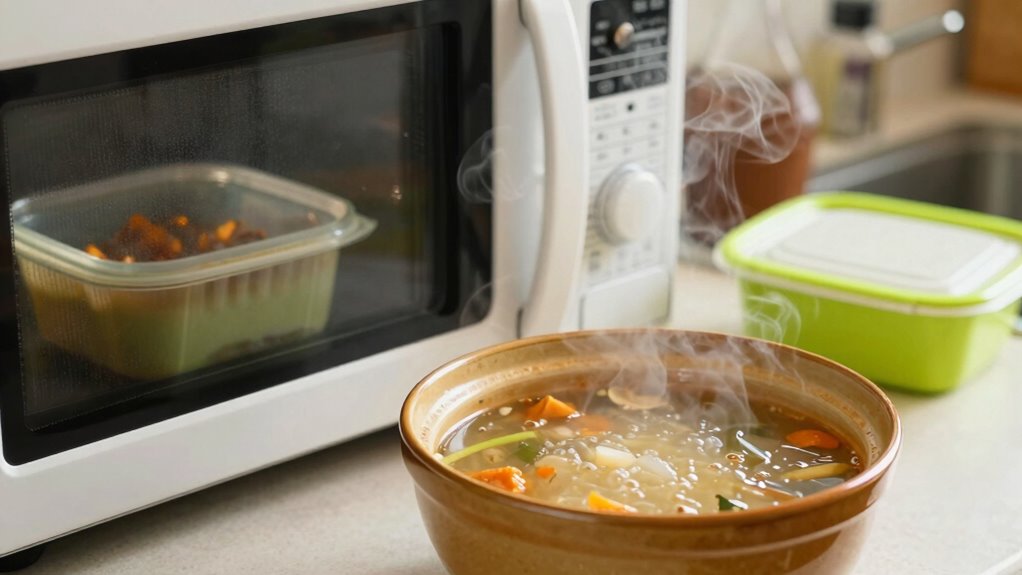

To stay safe while handling hot snacks and bowls from your microwave, always use oven mitts or heat-resistant gloves to avoid burns on contact with hot surfaces or splattering food. Be careful when removing containers to prevent spills, and check food temperatures before handling or eating. Stir and cool hot foods properly, and follow safety tips like avoiding overfilling and using microwave-safe containers. Keep watching to learn how to prevent and treat microwave burns effectively.
Key Takeaways
- Always use oven mitts or heat-resistant gloves when handling hot containers to prevent burns.
- Stir and check food temperature thoroughly before serving to avoid hot spots and splattering.
- Cool burns immediately with cold water and keep the area clean and dry; seek medical attention if severe.
- Follow microwave safety guidelines, such as using microwave-safe containers and avoiding overfilling.
- Handle hot food with secure trays or potholders to prevent spills and splatters that can cause injuries.

VEVOR Commercial Popcorn Machine, 8 Oz Kettle, 850 W Countertop Popcorn Maker for 48 Cups per Batch, Theater Style Popper with 3-Switch Control Steel Frame Tempered Glass Doors 2 Scoops 2 Spoons, Red
- Powerful Heating, High Yield: This commercial popcorn machine boasts...
- Simple Operation, Lasting Warm: 3 fantastic switches control the...
- Durable Structure, Effortless Cleaning: This countertop popcorn machine comprises...
As an affiliate, we earn on qualifying purchases.
What Causes Microwave Burns and How to Avoid Them
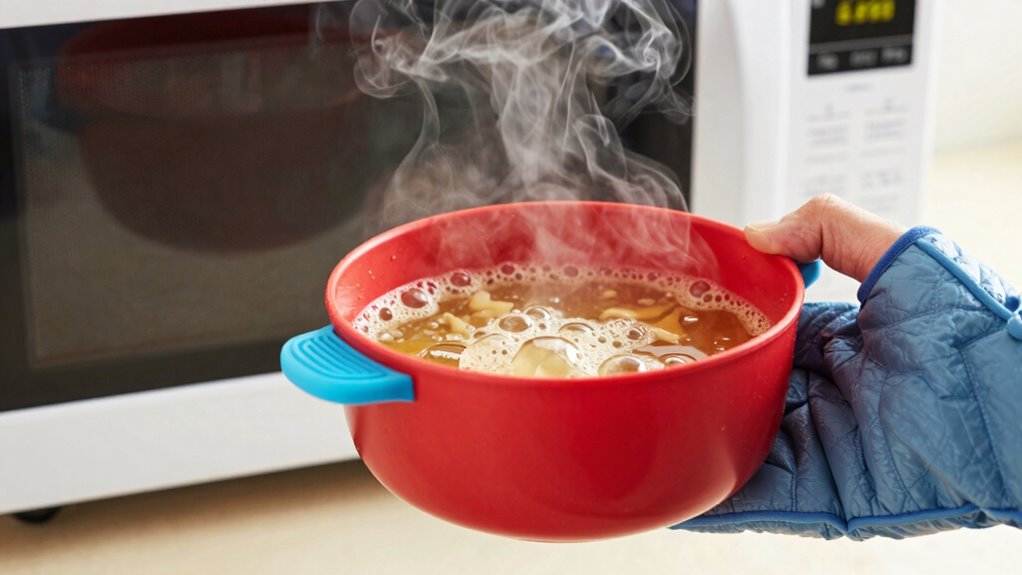
Microwave burns happen when you come into contact with hot surfaces or liquids that have been heated unevenly or excessively. These burns often occur because microwave safety isn’t carefully followed, leading to unexpected hot spots. When you microwave food or liquids, uneven heating can cause certain areas to become dangerously hot while others remain cool. Handling these items without caution increases your risk of burns. To prevent this, always use oven mitts or heat-resistant gloves when removing hot containers. Stir or let your food sit briefly after microwaving to distribute heat evenly. Avoid rushing and check the temperature before touching or drinking. Practicing burn prevention through proper microwave safety helps protect you from painful injuries. Understanding thermal conductivity of different materials can also help you select safer containers that heat more evenly. Additionally, being aware of microwave power settings can help you control heating times and prevent overheating. Being attentive to microwave safety tips can further reduce the risk of accidental burns. Recognizing the importance of proper container materials can also make a significant difference in preventing burns. Being mindful of material heat transfer can guide you in choosing cookware that heats uniformly and safely.
How to Prevent Burns When Removing Hot Food and Drinks
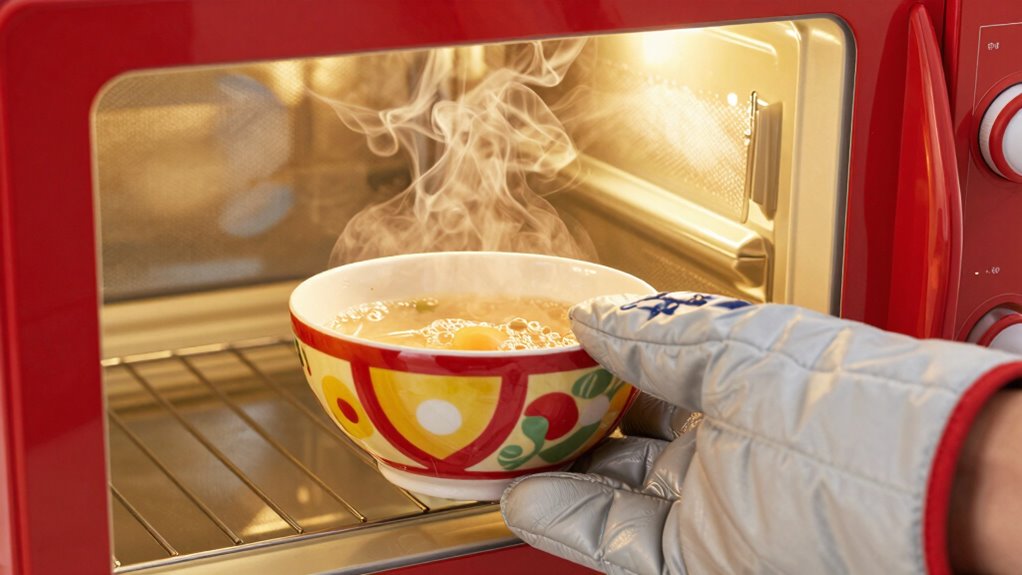
To prevent burns when removing hot food and drinks, always handle containers with care and the right protective gear. Use oven mitts or heat-resistant gloves, especially when dealing with plastic containers that can soften or warp. Be cautious with leafy greens, as they can hide hot spots or steam. When lifting lids, tilt them away from you to avoid steam burns. Use a sturdy tray or potholder for stability. Keep a table handy to assess risks:
| Item | Precaution |
|---|---|
| Leafy greens | Allow to cool slightly before serving |
| Plastic containers | Check for warping before handling |
| Hot drinks | Wrap with a towel when pouring |
| Hot bowls | Use grip pads for secure handling |
Being aware of the contrast ratio of your microwave-safe containers can help you gauge how quickly they heat up and prevent accidental burns. Additionally, understanding the thermal conductivity of different materials can assist in choosing safer containers. Recognizing the heat transfer properties of containers can further reduce the risk of burns. Using containers with appropriate material properties can significantly improve safety during handling. Following these tips minimizes the risk of burns during removal.
Safe Ways to Handle and Serve Hot Foods From the Microwave
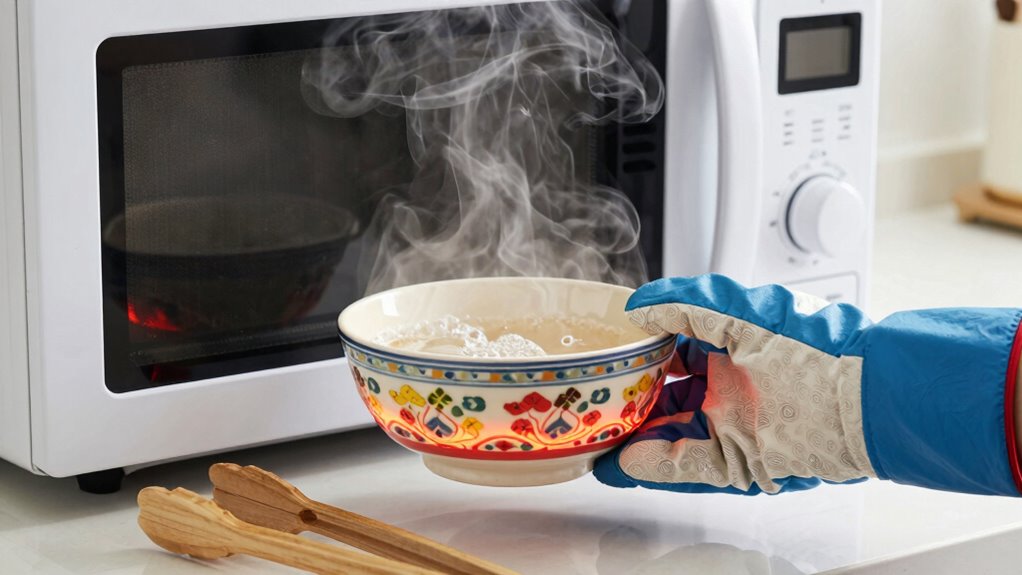
Always use oven mitts when handling hot foods from the microwave to protect your hands from burns. Before serving, stir the food to distribute heat evenly and prevent hot spots. These simple steps keep you safe and make sure your meal is comfortable to enjoy. Additionally, be mindful of food safety guidelines to prevent accidents and ensure your food remains safe to eat. Remember to check appropriate tools to handle hot dishes safely. Proper wiring practices also help prevent electrical hazards when using microwave or kitchen appliances. Maintaining your kitchen safety habits is essential for avoiding accidents and ensuring a secure cooking environment. Being aware of environmental impact of tissue paper can help you choose more sustainable options for your kitchen and craft projects.
Use Oven Mitts Always
Have you ever tried to grab hot food straight from the microwave without protection? Don’t risk burns—always use oven mitts or heat resistant gloves. These tools are designed to shield your hands from high temperatures and prevent accidents. When removing dishes, assure your oven mitts fit well and cover your wrists completely. Never use dish towels or cloths, as they can slip or catch fire. Keep a pair of heat resistant gloves nearby for handling especially hot or awkwardly shaped items. Remember, even if the food looks cool on top, heat can linger inside or on the sides. Understanding heat transfer in food safety is crucial to prevent burns and ensure proper handling. Using proper protection not only keeps you safe but also helps you handle hot foods confidently and efficiently. Always prioritize safety with oven mitts or heat resistant gloves. Proper handling techniques are essential for preventing burns and ensuring safe serving practices. Additionally, choosing quality heat resistant gloves can make a significant difference in safety and comfort during food handling.
Stir Before Serving
Since hot spots can develop in microwave-cooked foods, it’s important to stir your dish thoroughly before serving. Stirring helps distribute heat evenly, preventing cold spots and reducing the risk of splattering when you remove the dish. Always give your food a good stir to ensure safe, uniform warmth. Use a spoon or heat-safe utensil to mix the contents gently. Here’s a quick guide:
| Step | Tip | Why it matters |
|---|---|---|
| Stir | Use a spoon or spatula | Prevent splattering and hot spots |
| Check | Test temperature in multiple spots | Avoid burns and uneven heating |
| Rest | Let it sit briefly after stirring | Even heat distribution |
Proper stirring also helps in heat distribution to achieve consistent results when reheating or cooking foods in the microwave. Stir before serving to keep your hot foods safe and enjoyable.

West Bend Stir Crazy Hot Oil Popcorn Popper, Popcorn Maker Machine with Large Serving Bowl Lid and Stirring Rod Perfect for Movie Night Snack Time or Parties, 6-Quart, Red
- Popcorn Popper Machine: Make enough popcorn to treat...
- Convenient Features: This countertop popcorn machine features...
- Premium Performance: This tabletop popcorn machine comes...
As an affiliate, we earn on qualifying purchases.
How to Test and Cool Hot Foods Safely Before Eating
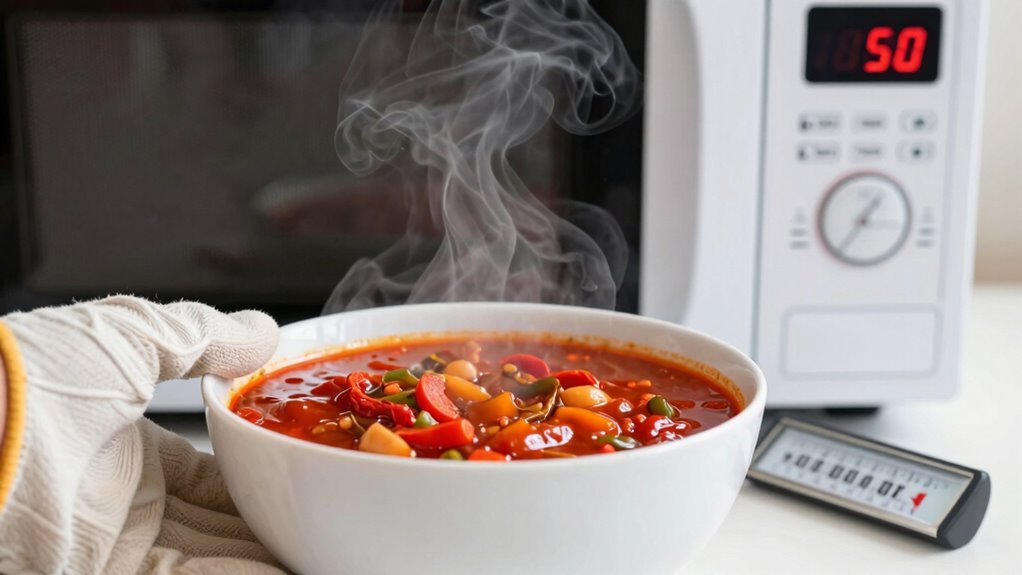
Testing and cooling hot foods properly is essential to prevent burns and foodborne illnesses. First, use a food thermometer to check the internal temperature of your dish, ensuring it’s cooled enough to eat safely. Hot foods should reach a safe temperature or be cooled down quickly to prevent bacteria growth. To do this, employ effective cooling techniques, such as dividing large portions into smaller containers or using an ice bath. Always stir hot foods gently to distribute heat evenly, avoiding hot spots that can cause burns. Before eating, test the temperature by carefully touching a small amount or using your thermometer again. Proper cooling methods are an important aspect of food safety and can be influenced by the cooling process. Taking these steps helps you enjoy your meal safely and reduces the risk of burns from overly hot foods.
First Aid Tips: What to Do If You Get a Microwave Burn
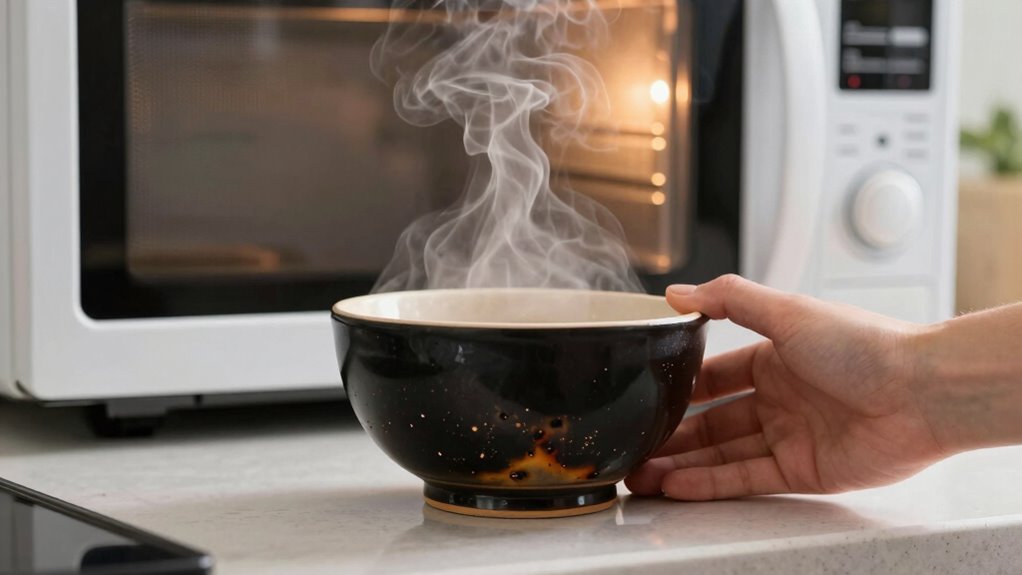
Microwave burns can happen quickly and often feel intense, so knowing how to respond immediately is essential. If you get burned, cool the area immediately with cold water for at least 10 minutes to reduce damage and pain. Do not apply ice or greasy skincare remedies, as they can worsen the injury. Cover the burn with a clean, non-stick bandage or cloth. Consider using burn prevention accessories like silicone mitts or heat-resistant gloves to avoid future accidents. Remember, timely action minimizes damage and promotes healing. Here’s a quick comparison of skincare remedies and burn prevention tips:
| Skincare Remedies | Burn Prevention Accessories |
|---|---|
| Keep it cool | Use heat-resistant gloves |
| Avoid greasy remedies | Use silicone mitts |
| Moisturize after healing | Secure hot containers properly |
Common Mistakes That Can Lead to Microwave Burns and How to Avoid Them
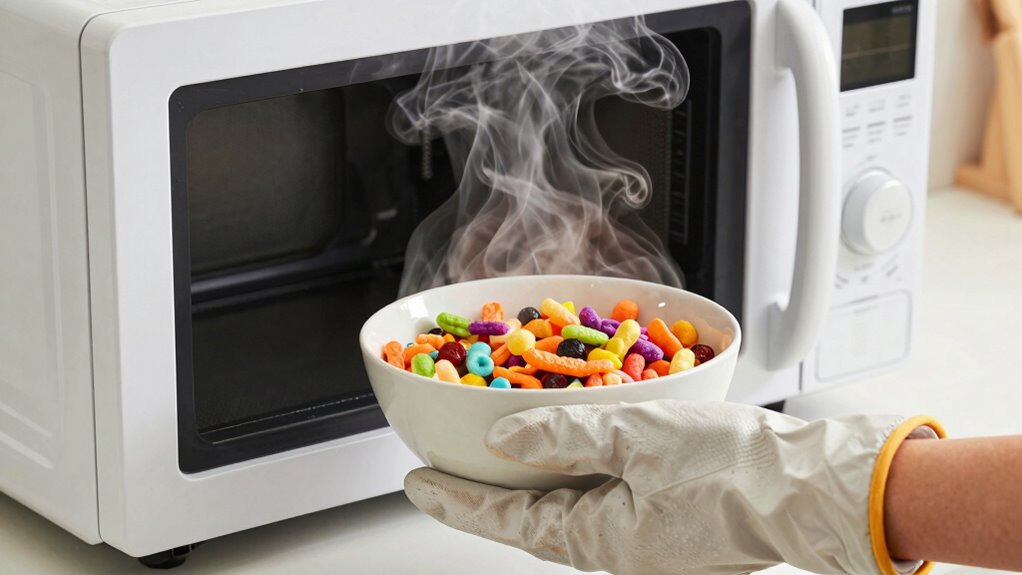
Many common mistakes during microwave use can lead to burns if you’re not careful. Ignoring proper microwave etiquette, like opening the door too quickly or misjudging hot spots, increases your risk. Overfilling containers or using inappropriate cookware can cause splatters or sudden explosions of hot liquid. Failing to check food temperature before handling can result in painful burns. Maintaining poor kitchen safety awareness, such as not using oven mitts or rushing, also contributes to accidents. Always wait for food to cool slightly, stir or rotate it for even heating, and use microwave-safe containers. Being mindful of these habits helps prevent injuries. Staying attentive and following safety guidelines guarantees your microwave experience stays safe and burn-free.
Frequently Asked Questions
How Can I Tell if My Microwave Snack Is Dangerously Hot?
You can tell if your microwave snack is dangerously hot by carefully checking its temperature before handling. Use an oven mitt or a thick cloth to avoid burns, and test the snack with a food thermometer if possible. If you notice steam or bubbling, it’s likely very hot. Always exercise caution to prevent burn risk, especially with foods heated unevenly, which can hide dangerously high microwave temperatures.
Are Silicone or Plastic Bowls Safer for Microwave Heating?
If you’re choosing between silicone and plastic bowls for microwave heating, silicone is generally safer because it’s more heat-resistant and durable. For example, a friend used a plastic bowl that melted, causing a mess and safety concerns. Always check material safety and microwave compatibility before use to prevent accidents. Silicone bowls can handle high temperatures and won’t warp or release harmful chemicals, making them a safer choice for hot snacks.
What Are Signs of a Minor Microwave Burn?
You’ll notice a minor microwave burn if your skin becomes red or inflamed, indicating redness. Blister formation is another clear sign that the burn is minor but still requires care. If you see blisters, avoid popping them and keep the area clean. Applying a cool, damp cloth can help soothe the burn. Watch for any increased redness or swelling, and if symptoms worsen, seek medical advice.
How Long Should I Wait Before Eating Microwave-Heated Liquids?
You should wait at least 1 to 3 minutes before eating microwave-heated liquids. This cooling period allows the temperature to stabilize, reducing the risk of burns. Follow safety guidelines by stirring the liquid carefully before testing its temperature. Always be cautious, especially with liquids that look cool on the surface but may still be very hot inside. Patience guarantees you avoid unnecessary burns and enjoy your food safely.
Can Microwave Burns Occur Without Direct Contact With Hot Food?
Like a magician’s trick, microwave radiation can cause burns without direct contact. You might not see or feel the heat, but indirect burns are possible if hot steam or splatters escape, landing on your skin. Always use oven mitts and let food sit for a few moments after microwaving. This way, you avoid unexpected burns caused by residual heat or steam that can cause injury even without touching hot food directly.
Conclusion
By staying alert and following safe microwave practices, you can avoid burns and keep yourself out of hot water. Always handle hot foods carefully and test them before diving in. Remember, a stitch in time saves nine—taking a moment now can prevent a painful burn later. Stay cautious, use oven mitts, and don’t rush the process. With a little care, you’ll enjoy your snacks safely without any unnecessary setbacks.