Theaters have dramatically changed sound over the decades, evolving from silent films that emphasized visual storytelling to synchronized sound that introduced dialogue and dynamic music. As sound technology advanced from mono to immersive surround sound, audiences began to experience a richer, more engaging environment. New innovations, like spatial audio and AI-driven sound design, are reshaping performances, making them more immersive than ever. If you explore further, you’ll discover how these trends continue to transform theatrical experiences.

Get movie nights delivered free with Prime
- Fast, free delivery on millions of items
- Prime Video, Amazon Music and more included
- Member-only deals all year
Key Takeaways
- The transition from silent films to synchronized sound introduced dialogue and sound effects, enhancing storytelling depth and audience immersion.
- Advancements from mono to stereo sound improved auditory experiences, creating richer and more dynamic soundscapes for theater audiences.
- The development of surround sound technology allowed for multi-dimensional audio, enveloping audiences in an immersive auditory environment.
- Immersive sound environments utilize spatial audio techniques, transforming theater experiences by accurately positioning sounds in three-dimensional space.
- Future trends in theater sound design focus on customizable, real-time sound adjustments and AI-driven tools to enhance audience engagement and accessibility.
The Birth of Sound in Theaters: Silent Film Era

The silent film era marked a transformative time in theaters, where visuals told stories without spoken words. You experienced the magic of emotion conveyed through expressive acting and enthralling cinematography. Yet, this period wasn’t without its acoustic challenges. The absence of dialogue meant sound design relied heavily on live music, creating a unique atmosphere that heightened tension or evoked laughter. You’d find pianists or orchestras performing alongside the film, enhancing your viewing experience. While some theaters experimented with sound effects, the true focus remained on the visual narrative. This reliance on music and visuals made silent films an art form, inviting you to interpret the story in your own way, paving the path for future innovations in cinema. Additionally, theaters employed sound amplification techniques to improve the acoustic experience for audiences.
From Silent Films to Synchronized Sound: The Journey Begins

As filmmakers sought to enhance storytelling, the shift from silent films to synchronized sound revolutionized the cinematic experience. Gone were the days of silent storytelling, where expressive gestures and intertitles carried the narrative. Instead, you began to hear dialogue, music, and sound effects that added depth and emotion to the scenes. This transformation marked a pivotal moment in cinematic changes, drawing audiences deeper into the story. You could feel the tension in a suspenseful moment or the joy in a romantic scene, all thanks to synchronized sound. The ability to convey complex emotions through sound opened new doors for creativity, allowing filmmakers to craft richer, more immersive experiences that forever changed how you engage with film.
Advancements in Sound Technology: From Mono to Stereo

While audiences reveled in the newfound clarity of sound, advancements quickly shifted the cinematic landscape from mono to stereo. Mono sound, with its single audio channel, provided a basic auditory experience. However, stereo sound revolutionized how you perceive films, immersing you in a richer, more dynamic audio environment.
Here’s a quick comparison of mono and stereo sound:
| Feature | Mono Sound | Stereo Sound |
|---|---|---|
| Audio Channels | 1 | 2 |
| Sound Quality | Basic | Enhanced |
| Experience | Less immersive | Highly immersive |
As you watch a film today, the shift from mono to stereo enables you to feel the action and emotion in a way that mono sound simply couldn’t achieve.
How Surround Sound Immerses Audiences?
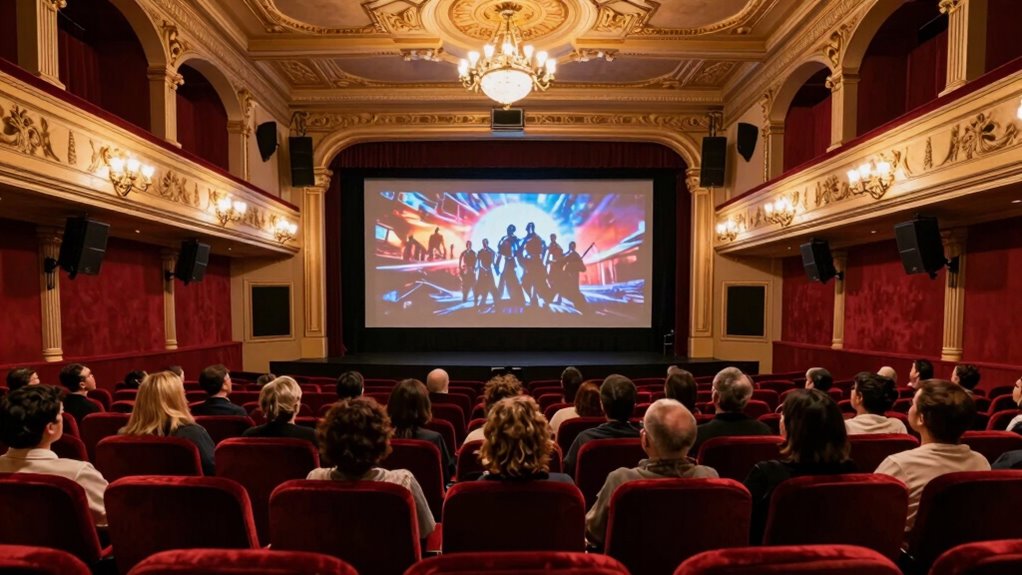
Surround sound transforms your movie-watching experience by enveloping you in a multi-dimensional audio landscape. This technology creates immersive experiences that draw you deeper into the story, enhancing audience engagement like never before. You hear sounds coming from all directions, making you feel like you’re part of the action. Dynamic audio changes heighten emotional responses, connecting you to the characters. Subtle background noises enrich scenes, adding layers of realism. The precise placement of sound effects helps to build tension and excitement. Overall, surround sound creates a fascinating atmosphere that keeps you on the edge of your seat. Additionally, the evolution of audio & video connection standards ensures high-quality sound transmission, further immersing viewers in the cinematic experience. With these elements, you’re not just watching a film; you’re experiencing it in a whole new way.
Key Innovations in Theater Sound Technology

The evolution of theater sound technology has introduced groundbreaking innovations that elevate your cinematic experience. From the early days of monaural sound to today’s immersive audio landscapes, these advancements in sound design have transformed how you perceive films. Dolby Atmos, for instance, allows sound to move freely around you, creating a three-dimensional auditory environment. This audio innovation enhances not just the action on screen but also the emotional resonance of the story. Additionally, the integration of digital sound mixing tools gives sound designers greater control, allowing for precise adjustments that heighten clarity and depth. Modern sound processing techniques further refine audio quality, ensuring that every detail is heard with clarity. As you settle into your seat, these innovations guarantee that every whisper, explosion, and note resonates, pulling you deeper into the world unfolding before your eyes.
How Sound Enhances Storytelling

Sound plays a pivotal role in storytelling, shaping your emotional response and guiding your interpretation of a narrative. Through sound symbolism and auditory cues, you’re able to connect more deeply with the characters and their journeys.
Sound is essential in storytelling, influencing emotions and enhancing our connection to characters and their experiences.
- Music enhances mood: It sets the tone, whether joyful or somber.
- Sound effects create realism: You feel immersed in the scene, experiencing every moment.
- Silence amplifies tension: It builds suspense and heightens emotions.
- Voice modulation conveys character: Different tones reveal personality and intent.
- Foreshadowing through sound: Subtle auditory cues hint at future events, engaging your curiosity.
The Evolution of Audio Equipment in Live Performances

As live performances evolved, so did the audio equipment that enhances them. You’ve likely noticed the shift from basic microphones to sophisticated sound reinforcement systems. Today, audio mixing consoles allow for precise control over every sound element, ensuring the audience experiences each performance at its best.
| Year | Equipment Type | Key Features |
|---|---|---|
| 1960s | Analog Mixers | Simple controls, limited inputs |
| 1980s | Digital Mixers | Enhanced sound processing |
| 2000s | Wireless Systems | Freedom of movement, reduced clutter |
| 2020s | Immersive Sound Systems | 3D audio experience, advanced tech |
These advancements reflect your desire for richer, more immersive experiences in live theater, showcasing the importance of technology in enhancing performance quality.
Trends to Watch: The Future of Theater Sound Design

As you explore the future of theater sound design, you’ll notice a shift towards immersive soundscapes that draw audiences deeper into the story. Advances in technology are making it easier to create these rich auditory experiences, enhancing every performance. Keep an eye on how these trends will transform the way you experience live theater.
Immersive Soundscapes
While you might expect traditional sound design to dominate theater, immersive soundscapes are redefining the auditory experience. By utilizing spatial audio and experiential design, theaters create environments that envelop you in sound, making you feel part of the story. This innovative approach enhances emotional engagement and pulls you deeper into the narrative. Consider these key elements of immersive soundscapes:
- 360-degree sound placement for realism
- Dynamic audio shifts that react to performance
- Layered sound textures to create depth
- Audience positioning influences auditory perception
- Integration of environmental sounds for authenticity
Additionally, advancements in AI-driven audio technology are enabling more precise and adaptive sound environments, further revolutionizing theater sound design. The integration of spatial audio techniques allows for even more immersive and realistic experiences by accurately positioning sounds in three-dimensional space.
As you explore these developments, you’ll discover how immersive soundscapes transform your theater experience, inviting you to connect with the performance like never before.
Advances In Technology
With technology evolving at a rapid pace, the future of theater sound design is set to undergo remarkable changes that will enhance your viewing experience. Digital audio advancements are leading the way in sound engineering, allowing for more immersive and precise soundscapes. You can expect innovations like spatial audio systems, which create a three-dimensional sound field, and AI-driven sound design tools that tailor audio to specific venues. Advanced sound engineering techniques are also emerging, promising even greater fidelity and realism. Additionally, the integration of digital signal processing is expected to further refine audio clarity and spatial accuracy. These technological innovations are supported by ongoing research and development in sound technology, ensuring continuous improvement and new possibilities for live performance experiences.
| Technology | Benefits | Trends to Watch |
|---|---|---|
| Spatial Audio | Enhanced immersion | Increased adoption |
| AI Sound Design | Customizable experiences | Real-time adjustments |
| 3D Sound Systems | Dynamic sound placement | Greater accessibility |
These trends promise to elevate your enjoyment of live performances like never before.
Frequently Asked Questions
How Do Different Cultures Influence Theater Sound Design?
Different cultures influence theater sound design by incorporating unique cultural rhythms and sound symbolism that resonate with their traditions. You’ll notice how African drumming creates a vibrant atmosphere, while Asian theater often uses subtle soundscapes to convey emotions. By blending these elements, sound designers can evoke specific feelings and enhance storytelling. Embracing diverse sounds not only enriches the experience but also fosters a deeper connection between the audience and the performance.
What Role Does Music Play in Enhancing Theater Sound?
Music weaves a vibrant tapestry that enhances theater sound, immersing you in emotional landscapes. Picture a haunting melody echoing through the air, creating tension, or a lively tune that lifts spirits. Musical motifs act as emotional anchors, guiding your feelings throughout the performance. Meanwhile, the intricate soundscapes blend dialogue and effects, crafting a rich auditory experience. Together, they transform the stage, making every moment resonate deeply within your heart and mind.
How Do Acoustics Affect Audience Experience in Theaters?
Acoustics greatly impact your experience in theaters by shaping audience perception and sound clarity. When the design optimizes sound waves, you hear dialogue and music clearly, enhancing emotional engagement with the performance. Poor acoustics can muffle or distort sound, making it hard to follow the story. A well-designed space guarantees that every note and line resonates, allowing you to fully immerse yourself in the production without struggling to catch the nuances of the sound.
What Are the Challenges of Sound Design in Outdoor Performances?
The challenges of sound design in outdoor performances mainly revolve around microphone placement and environmental noise. You’ll find that wind and traffic can easily drown out the audio, making it hard for the audience to hear. Properly positioning microphones is essential to capture clear sound, but it’s a balancing act against unpredictable elements. You’ll need to test and adjust frequently to guarantee the performance remains engaging despite these hurdles.
How Can Sound Design Impact Actor Performances on Stage?
Sound design greatly impacts your performance as an actor by enhancing immersion and shaping audience sound perception. When sound complements your emotions and movements, it creates a richer experience, allowing you to connect deeper with your character. You’ll notice how well-timed effects or music can elevate your delivery, making every line resonate more powerfully. Ultimately, effective sound design helps you fully inhabit your role, engaging both yourself and the audience in the process.
Conclusion
As you can see, the evolution of sound in theaters is nothing short of remarkable. Did you know that by 2020, over 90% of theaters worldwide had changed to digital sound systems? This shift not only enhances the audience’s experience but also elevates storytelling to new heights. With ongoing innovations and the rise of immersive audio, it’s clear that the future of theater sound design will continue to captivate and engage audiences like never before.
Fall Picks
fall essentials
As an affiliate, we earn on qualifying purchases.