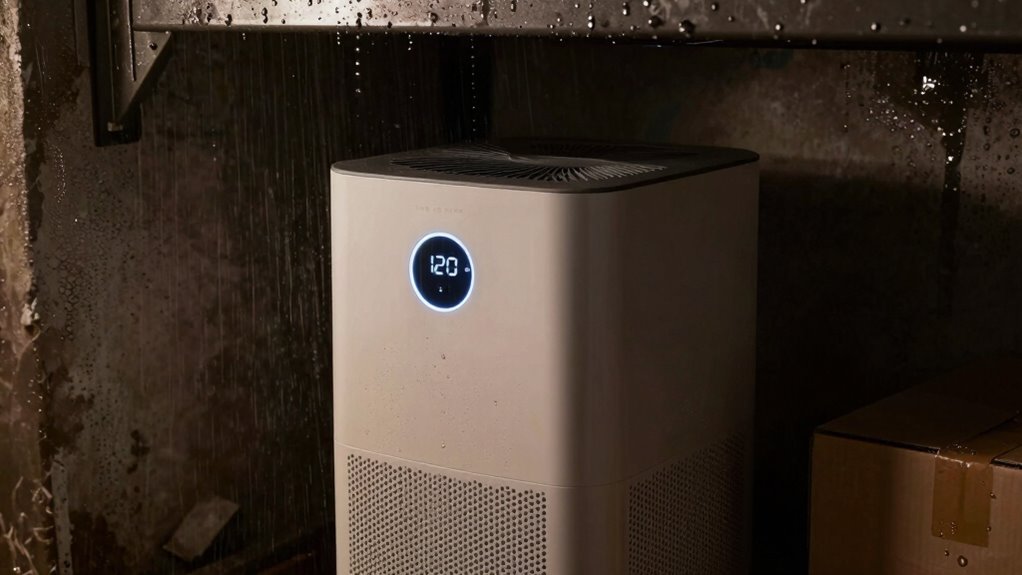

Dehumidifier capacity refers to how much moisture it can remove from the air, measured in pints per day. Choosing the right capacity for your basement is essential. A unit that’s too small won’t manage humidity effectively, while one that’s too large can waste energy and create dryness. To find the perfect match, you should assess your basement size and humidity levels. Keep exploring to learn more about selecting the ideal dehumidifier for your needs.

Get movie nights delivered free with Prime
- Fast, free delivery on millions of items
- Prime Video, Amazon Music and more included
- Member-only deals all year
Key Takeaways
- Dehumidifier capacity is measured in pints per day, indicating how much moisture it can remove from the air.
- Proper capacity selection is crucial; too small may underperform, while too large can waste energy and create overly dry conditions.
- Calculate basement cubic footage and assess humidity levels to determine the appropriate dehumidifier size for effective moisture control.
- ENERGY STAR models offer better energy efficiency, reducing long-term electricity costs while maintaining optimal performance.
- Regular maintenance, including filter cleaning and drainage options, is essential for the longevity and efficiency of a dehumidifier.
Products Worth Considering

Philips Hue Festavia 130-Foot Indoor/Outdoor Smart String Lights, 500 LEDs

Philips Hue Festavia Globe Outdoor String Lights, 32 Bulbs, 91 ft

Shark Rotator Lift-Away Vacuum with DuoClean PowerFins (LA555) – Dark Grey
As an affiliate, we earn on qualifying purchases.
What Is Dehumidifier Capacity and Why Should You Care?
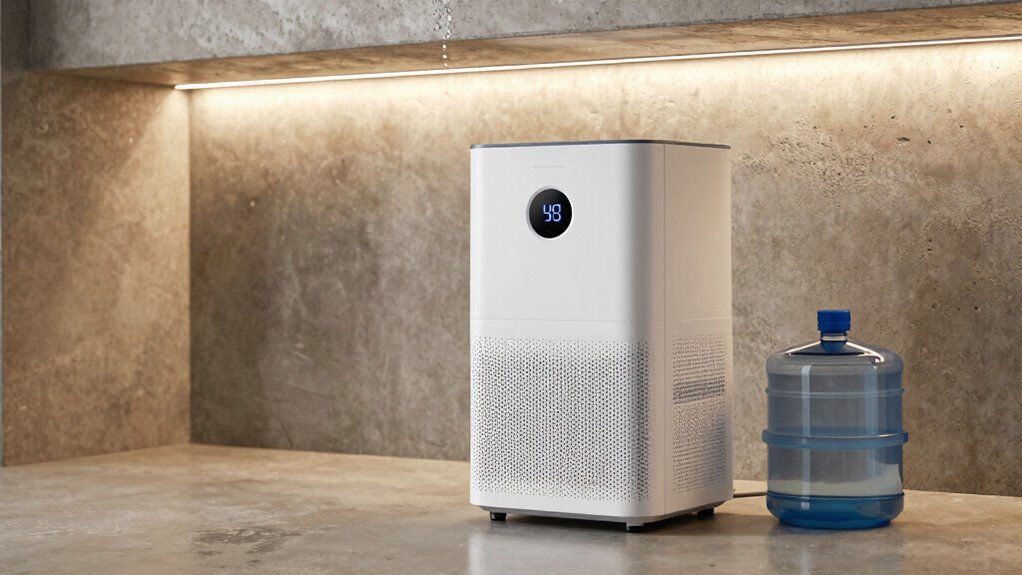
When it comes to dehumidifiers, understanding capacity is vital. The capacity of a dehumidifier refers to how much moisture it can remove from the air in a specific time frame, usually measured in pints per day. Different dehumidifier types offer varying capacities, making it important to choose one that fits your space. If humidity control is your goal, selecting the right capacity will guarantee efficiency and effectiveness. A unit that’s too small won’t adequately manage moisture, while one that’s too large can waste energy and lead to overly dry conditions. Knowing the capacity helps you maintain a comfortable environment in your basement, mitigating mold growth and improving air quality. So, pay attention to capacity when selecting your dehumidifier!
How to Determine the Right Size for Your Basement
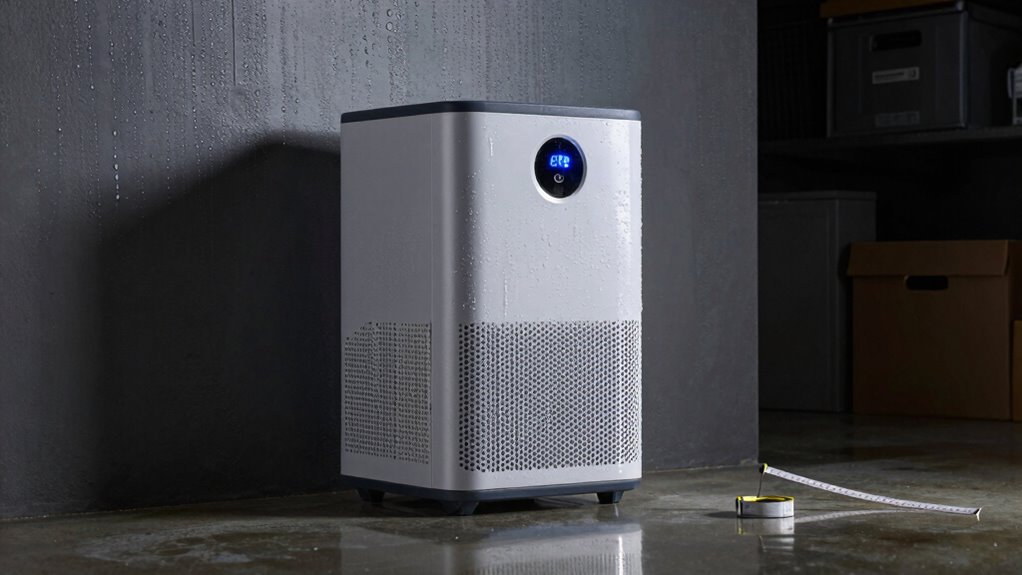
To find the right size dehumidifier for your basement, start by measuring the space accurately. Next, consider the humidity levels in your area and how often you use the basement. These factors will help you choose a unit that effectively controls moisture.
Measure Basement Size
Determining the right size dehumidifier for your basement starts with accurately measuring the space. Begin by noting your basement dimensions—length, width, and height. Multiply these measurements to get the total cubic footage. This figure is essential for selecting an appropriate dehumidifier capacity. Next, conduct a moisture assessment to understand how much humidity your basement typically holds. Check for water stains, condensation, or damp odors, as these can indicate high moisture levels. Additionally, consider the importance of HEPA filters in maintaining air quality while using a dehumidifier. Combine your cubic footage with the results of your moisture assessment to find the dehumidifier that best fits your needs. Remember, choosing the right size will guarantee ideal moisture control, making your basement a healthier, more comfortable environment. Additionally, understanding filtration/suction basics can help you maintain optimal performance of your dehumidifier over time.
Consider Humidity Levels
After measuring your basement size, evaluating the humidity levels becomes the next essential step in choosing the right dehumidifier. Understanding moisture levels is vital for effective humidity control. Here’s how to assess your basement’s humidity:
- Use a Hygrometer: This device measures humidity levels accurately.
- Check for Signs of Moisture: Look for mold, mildew, or water stains.
- Consider Seasonal Changes: Humidity can fluctuate with the weather, so monitor it throughout the year.
- Evaluate Ventilation: Poor airflow can lead to higher moisture levels, making dehumidification more necessary.
Once you identify your basement’s humidity levels, you can select a dehumidifier that meets your specific needs for ideal moisture control.
Assess Usage Frequency
How often do you use your basement? Your answer plays a significant role in determining the right size dehumidifier. Start with a frequency assessment of your usage patterns. If you frequently host gatherings or use it as a living space, you’ll need a more powerful unit to handle the increased moisture. On the other hand, if it’s mainly for storage or occasional use, a smaller dehumidifier might suffice. Think about how long you typically spend down there each week. Regular visits mean higher humidity levels, requiring greater capacity. By understanding your usage frequency, you can select a dehumidifier that’s efficient, ensuring your basement remains comfortable and dry. This tailored approach maximizes effectiveness and minimizes energy costs.
Key Factors Impacting Your Dehumidifier’s Capacity Requirements
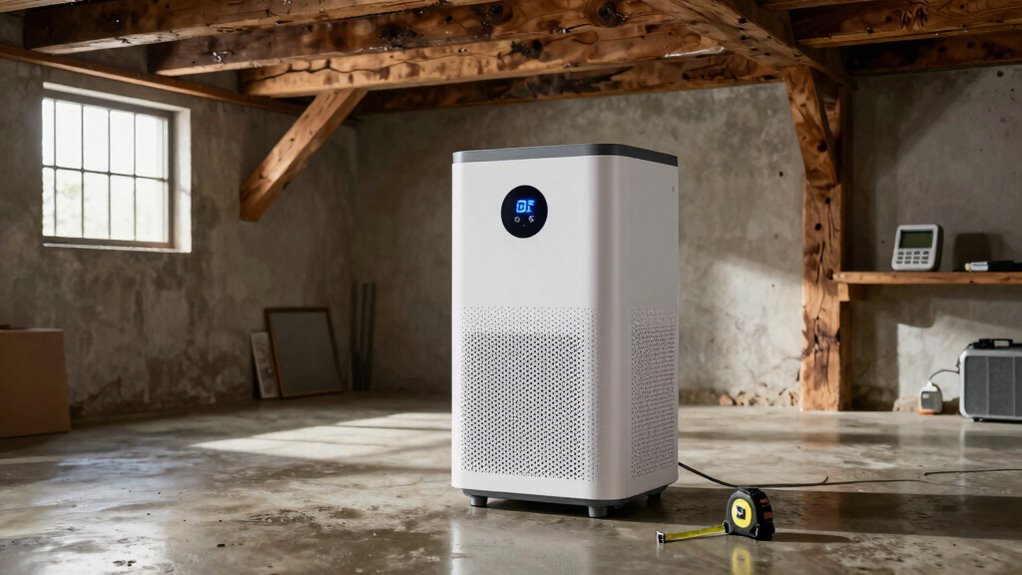
When you’re choosing a dehumidifier for your basement, several key factors can greatly impact its capacity requirements. Understanding these elements will help you achieve effective humidity control while maximizing energy efficiency. Here are four important factors to take into account:
- Basement Size: The larger the space, the more capacity you’ll need.
- Humidity Levels: Higher moisture levels require a more powerful unit to effectively reduce humidity.
- Ventilation: Poorly ventilated areas may need additional capacity to combat excess moisture.
- Temperature: Colder basements can affect a dehumidifier’s performance, impacting how much moisture it can remove. Additionally, maintaining a good indoor air quality is crucial to minimize issues like microplastics in dust, which can be exacerbated by excessive humidity.
Pint vs. Liter Capacity Ratings: Which Should You Choose?
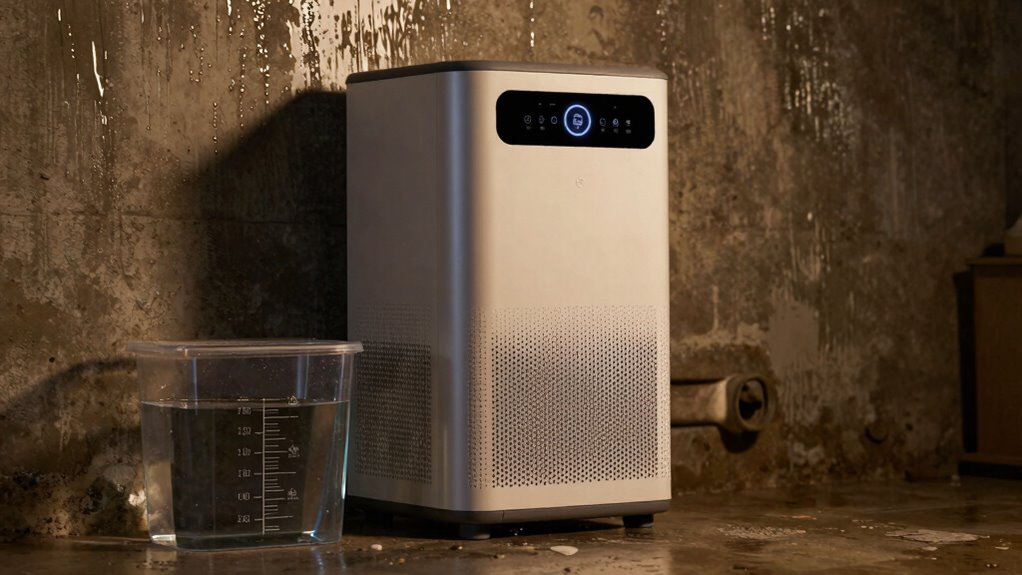
Which capacity rating should you choose for your basement dehumidifier: pints or liters? The decision often boils down to your preference and understanding of each measurement. Pint capacity is commonly used in the U.S., making it familiar for many homeowners. If you’re more comfortable with the metric system, you might lean toward liter capacity, which is widely used in other countries.
Both ratings indicate how much moisture the dehumidifier can remove in a day, so it’s essential to find one that meets your basement’s needs. When comparing models, remember that a dehumidifier with a higher pint capacity usually handles larger spaces or more humidity. Ultimately, choose the rating that aligns with your comfort level and the size of your basement.
Why Dehumidifier Capacity and Moisture Removal Rate Matter?
Understanding dehumidifier capacity and moisture removal rate is essential for selecting the right unit for your basement. The right capacity guarantees effective moisture control, preventing mold and dampness. Here are four reasons why these factors matter:
- Optimal Performance: A unit with the right capacity effectively removes excess moisture, keeping your basement dry.
- Energy Efficiency: Choosing the correct moisture removal rate helps reduce energy consumption, saving you money on utility bills.
- Longevity: Proper capacity prevents overworking the unit, extending its lifespan.
- Comfort: Maintaining balanced humidity levels enhances the overall comfort of your home.
Common Myths About Dehumidifier Capacity
When it comes to dehumidifiers, many people think that a higher capacity means better performance. However, that’s not always the case, as size alone doesn’t determine effectiveness. It’s important to understand what really matters in choosing the right unit for your basement.
Higher Capacity Equals Better
While many believe that a higher capacity dehumidifier is always the best choice for a basement, that’s not necessarily true. In fact, larger units can sometimes lead to inefficiencies. Here are a few reasons why bigger isn’t always better:
- Dehumidifier Efficiency: A smaller unit can sometimes do a better job at moisture control without overworking.
- Temperature Sensitivity: High-capacity models might struggle in cooler basements, reducing their effectiveness.
- Energy Costs: A larger unit may consume more energy, leading to higher utility bills.
- Humidity Levels: If your basement isn’t too damp, a high-capacity dehumidifier could create an overly dry environment, impacting air quality.
Always consider your specific needs before choosing a model!
Size Doesn’t Matter Always
Many people mistakenly believe that bigger dehumidifiers are always better for their basements, but this isn’t the case. Size misconceptions can lead you to choose a unit that’s too large for your needs. A bigger dehumidifier doesn’t necessarily mean better performance—efficiency factors play a vital role. For example, a smaller unit might work more effectively in a compact space, cycling on and off to maintain ideal humidity levels without excessive energy use. Conversely, an oversized model can result in short cycling, leading to inefficient moisture removal and higher energy costs. It’s important to take into account your basement’s specific conditions, including size and humidity levels, to select a dehumidifier that balances capacity with efficiency for the best results. Additionally, understanding energy use efficiency can help you make a more informed decision.
How to Choose the Right Dehumidifier for Your Basement Needs?
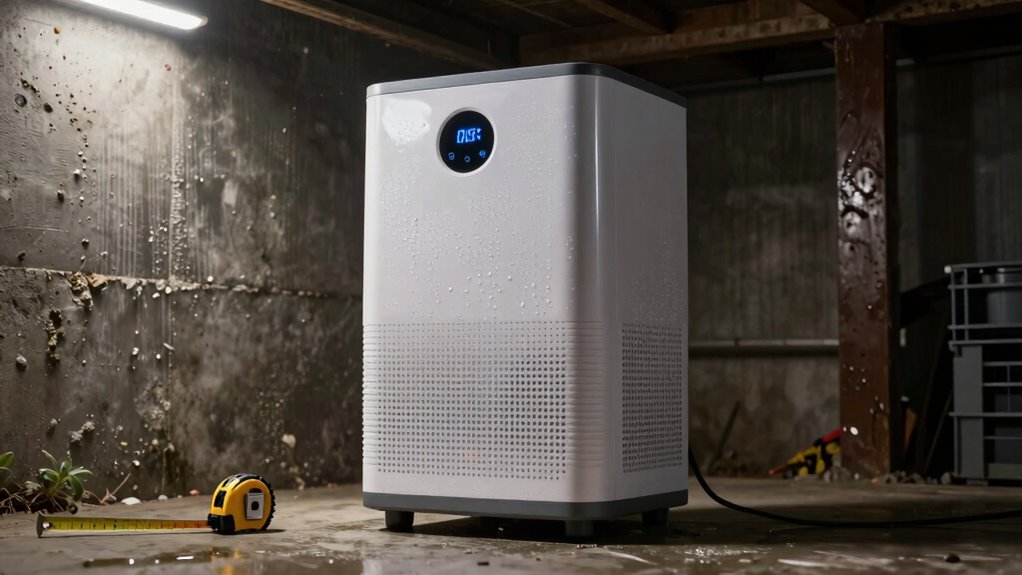
How do you determine the best dehumidifier for your basement? Start by considering these key factors:
- Size: Measure your basement’s square footage to find a unit with the right capacity.
- Energy Efficiency: Look for models with the ENERGY STAR label to save on electricity costs.
- Noise Level: Choose a quieter model for a more comfortable environment.
- Maintenance Tips: Opt for a dehumidifier with a washable filter and a continuous drain option to simplify upkeep.
Frequently Asked Questions
How Often Should I Empty My Dehumidifier’s Water Tank?
You should empty your dehumidifier’s water tank every day or every few days, depending on the humidity levels in your space. If the humidity is high, you might need to check the tank more frequently. Keeping an eye on the water tank frequency guarantees your dehumidifier runs effectively and prevents overflow. Regularly emptying the tank helps maintain peak performance and keeps your environment dry and comfortable.
Do Dehumidifiers Use a Lot of Electricity?
Dehumidifiers can vary in energy consumption, but many models are designed to be cost-efficient. While they do use electricity, the amount depends on their size and usage. If you choose an Energy Star-rated unit, you’ll likely see lower energy bills. Keeping your dehumidifier running only when needed can also help manage costs. Overall, with smart usage, you can enjoy a comfortable environment without breaking the bank on electricity.
Can I Use a Dehumidifier in Other Areas of My Home?
Absolutely, you can use a dehumidifier in other areas of your home! Think of it as a refreshing change for every room. Proper dehumidifier placement enhances air quality in bedrooms, living rooms, or even laundry areas. You’ll notice a difference, especially in spaces prone to moisture. Just make certain it’s sized appropriately for the room, and you’ll enjoy a more comfortable atmosphere throughout your home. It’s like inviting a cool breeze indoors!
How Long Does a Dehumidifier Last on Average?
On average, a dehumidifier lasts about 5 to 10 years. The dehumidifier lifespan can vary based on several longevity factors, like the brand, usage frequency, and maintenance practices. If you keep your unit clean and operate it within its recommended settings, you’re likely to extend its life. Regularly changing filters and checking for dust buildup can also help maintain performance, ensuring you get the most out of your investment.
What Maintenance Is Required for a Dehumidifier?
To keep your dehumidifier running smoothly, you’ll need to perform regular maintenance. Imagine a clean air breeze flowing through your space! Start with filter cleaning every few weeks; a clogged filter can hinder performance. Don’t forget about coil maintenance, either—dust and debris can accumulate, so wipe them down gently. By staying on top of these tasks, you’ll guarantee your dehumidifier works efficiently and keeps your space comfortable all year round.
Conclusion
In the grand dance of moisture control, choosing the right dehumidifier for your basement is essential. By understanding capacity and the factors that influence it, you can guarantee your space remains a dry haven, free from the damp whispers of humidity. So, before you invite musty odors in for a visit, select a dehumidifier that fits your needs, and reclaim the comfort and freshness that your basement deserves. Embrace the tranquility of a moisture-free sanctuary!