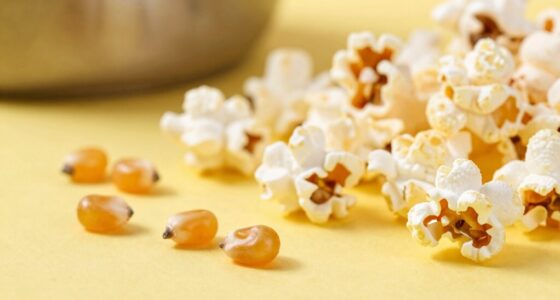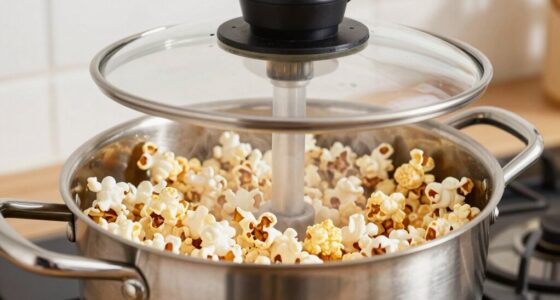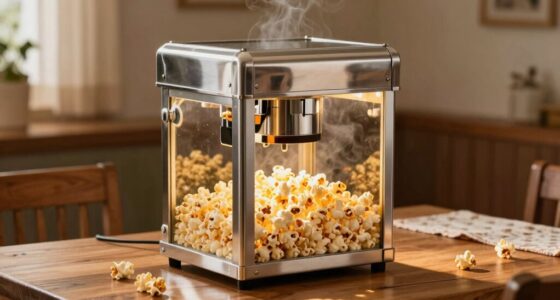

Popcorn goes stale fast mainly because moisture, air exposure, and improper storage break down its crispness and flavor. When your popcorn encounters humidity or is left exposed to air, it absorbs moisture or loses its crunch, leading to quick staling. The key to keeping it fresh longer is sealing it tightly in airtight containers and storing in a cool, dark place. If you want simple tricks to extend freshness and keep that crunch, keep exploring.

Get movie nights delivered free with Prime
- Fast, free delivery on millions of items
- Prime Video, Amazon Music and more included
- Member-only deals all year
Key Takeaways
- Moisture absorption from humidity causes popcorn to soften and lose crunch quickly.
- Exposure to airflow accelerates moisture loss, leading to faster staling.
- Poor packaging allows air and moisture to enter, reducing popcorn’s freshness.
- Stale popcorn shows signs like sogginess, dull flavor, and off smells.
- The one thing that prevents staling is sealing popcorn in airtight, moisture-proof containers.
Why Does Popcorn Go Stale So Fast?

Why Does Popcorn Go Stale So Fast?
Have you ever wondered why popcorn loses its crunch so quickly? The main reason is the way popcorn is packaged. Many store-bought options use packaging that doesn’t effectively seal in freshness, allowing moisture and air to seep in. This exposure causes the popcorn to absorb humidity, making it stale faster. Additionally, poor flavor preservation in packaging can lead to the loss of that irresistible popcorn taste. When popcorn isn’t stored properly, the moisture inside the kernels evaporates, and the flavor oils degrade. As a result, your popcorn becomes soft and flavorless in a short time. To keep popcorn fresh longer, look for packaging with airtight seals and moisture barriers that protect the flavor and crunch you crave. Proper packaging plays a crucial role in maintaining popcorn’s texture and taste, and understanding airtight seals can help you choose better storage options. Protecting the popcorn from exposure to moisture is essential for preserving its freshness. Using storage techniques that control humidity levels can further extend its crispness and flavor.
How Moisture and Air Speed Up Popcorn Staling

When humidity rises, moisture seeps into your popcorn, making it lose its crispness faster. Increased airflow speeds up this drying process, pulling moisture away and accelerating staleness. As moisture escapes, your popcorn becomes less fresh and more likely to go stale quickly. Additionally, exposure to regional flavors and additives can also influence how quickly popcorn loses its texture. Proper storage techniques, such as using airtight containers and avoiding high humidity areas, can help preserve popcorn freshness longer. Understanding environmental factors that impact popcorn’s texture can further assist in maintaining its crunch, especially considering how market trends influence packaging innovations aimed at extending freshness. Recognizing how packaging design impacts moisture retention is crucial for prolonging popcorn’s quality over time.
Humidity Causes Moisture Absorption
Humidity plays a significant role in how quickly popcorn goes stale by enabling moisture to seep into the kernels. When humidity levels are high, moisture absorption occurs more rapidly, causing the popcorn to lose its crispness. This process is driven by moisture migration, where water molecules move from the humid air into the dry popcorn surface. As moisture penetrates the kernels, the texture softens and the popcorn becomes stale faster. Keeping popcorn in an environment with fluctuating humidity accelerates this process, as the constant exchange of moisture speeds up staling. To prevent this, airtight storage helps control humidity absorption, reducing moisture migration and preserving the popcorn’s crunch for longer. Managing humidity levels is key to maintaining popcorn’s freshness and preventing early staling. Additionally, understanding popcorn storage techniques can further help in extending its freshness, especially by utilizing humidity control methods. Proper storage conditions, such as using moisture-proof containers, are essential in moisture migration prevention.
Increased Airflow Accelerates Drying
Does increased airflow speed up the drying process of popcorn? Yes, it does. Faster airflow patterns remove moisture more quickly, leading to quicker staling. To understand this better, consider these key points:
- Airflow directs moisture away from popcorn’s surface, speeding up drying.
- Strong air currents can bypass moisture barriers, making moisture escape easier.
- Uneven airflow creates dry spots, increasing staling risk.
- Proper packaging minimizes airflow effects, slowing moisture loss.
- The contrast ratio of storage environments influences how quickly moisture is drawn out of popcorn.
When there’s lots of air movement, moisture evaporates faster, especially if the popcorn isn’t protected by effective moisture barriers. This rapid drying causes popcorn to lose its freshness quickly. Managing airflow through packaging and storage helps control the staling process and keeps popcorn crisp longer.
Moisture Loss Leads to Staleness
Moisture loss is the primary factor that causes popcorn to become stale. As the moisture evaporates, the popcorn’s crispness diminishes, and the snack flavor fades. When exposed to air, especially if the snack packaging isn’t airtight, moisture escapes quickly, leaving the popcorn dry and tough. This drying process accelerates staleness, making your snack less enjoyable. To keep your popcorn fresh longer, proper packaging is essential—sealed, moisture-resistant containers help retain the necessary moisture and preserve flavor. Without it, the popcorn becomes stale faster, losing its crunch and taste. Air circulation can also influence how quickly popcorn becomes stale by speeding up moisture loss. So, always store popcorn in airtight packaging to slow moisture loss and enjoy that fresh, flavorful crunch longer. Additionally, proper storage techniques can significantly extend the freshness of your popcorn, especially when combined with understanding the role of moisture retention. Using innovative packaging designs can further enhance moisture preservation, helping you enjoy your snack at its best for longer periods.
How Storage Conditions Affect Your Popcorn’s Freshness
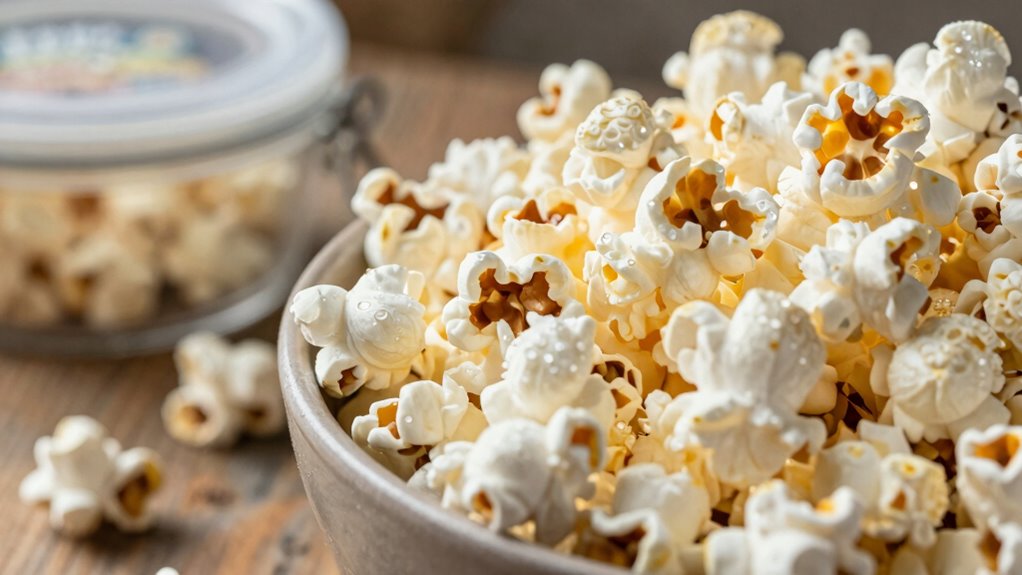
Proper storage conditions are essential to keeping your popcorn fresh and crunchy. When stored properly, your popcorn maintains its popcorn flavor and remains perfect for microwave cooking later. To maximize freshness, pay attention to these key factors:
- Keep it in an airtight container to prevent moisture loss and staleness.
- Store in a cool, dark place away from heat and sunlight.
- Avoid humid areas, which can cause moisture buildup and sogginess.
- Use resealable bags or containers designed for food storage to maintain crispness.
How to Tell If Your Popcorn Has Gone Stale
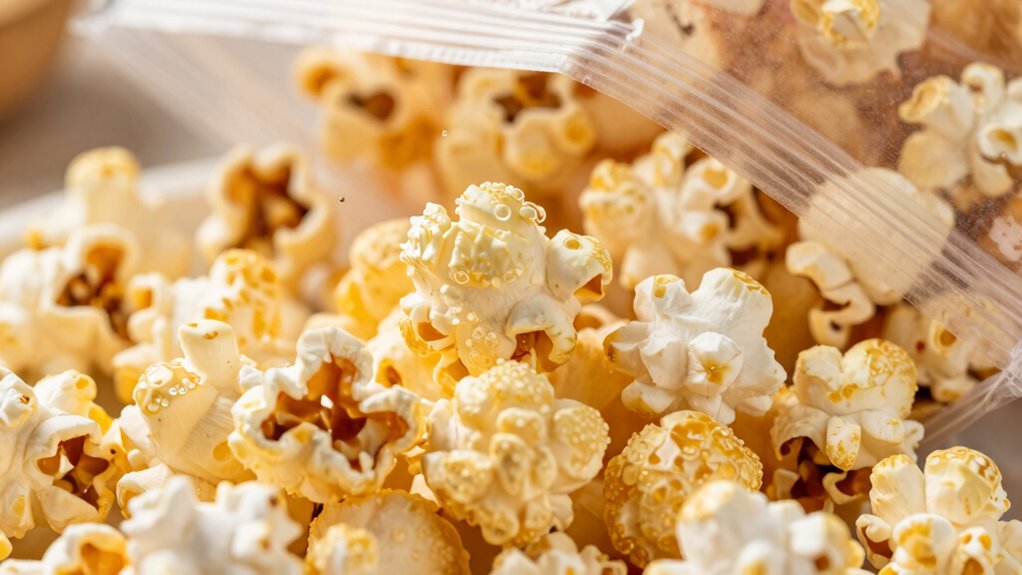
Ever wonder how to tell if your popcorn has lost its crunch? The first sign is a change in popcorn texture—you’ll notice it feels soft or chewy instead of light and crispy. If the popcorn flavor seems dull or stale, that’s another clue it’s past its prime. You might also detect a musty or off smell, indicating moisture has seeped in. Moisture exposure can accelerate staling and compromise popcorn’s quality. The presence of humidity or improper storage can lead to popcorn deterioration, making it less enjoyable to eat. Proper storage techniques, such as keeping popcorn in an airtight container, greatly help in preserving freshness. Additionally, air circulation around stored popcorn can influence its freshness and help prevent stale texture. Popcorn that’s gone stale often clings together more than it should, making it less enjoyable to eat. Keep an eye on these signs: a soggy texture, diminished flavor, or unusual odors. When these occur, your popcorn has likely gone stale and is no longer at its best. Fresh popcorn should be crisp, with vibrant flavor and a dry, airy texture.
The One Simple Trick to Keep Popcorn Fresh Longer
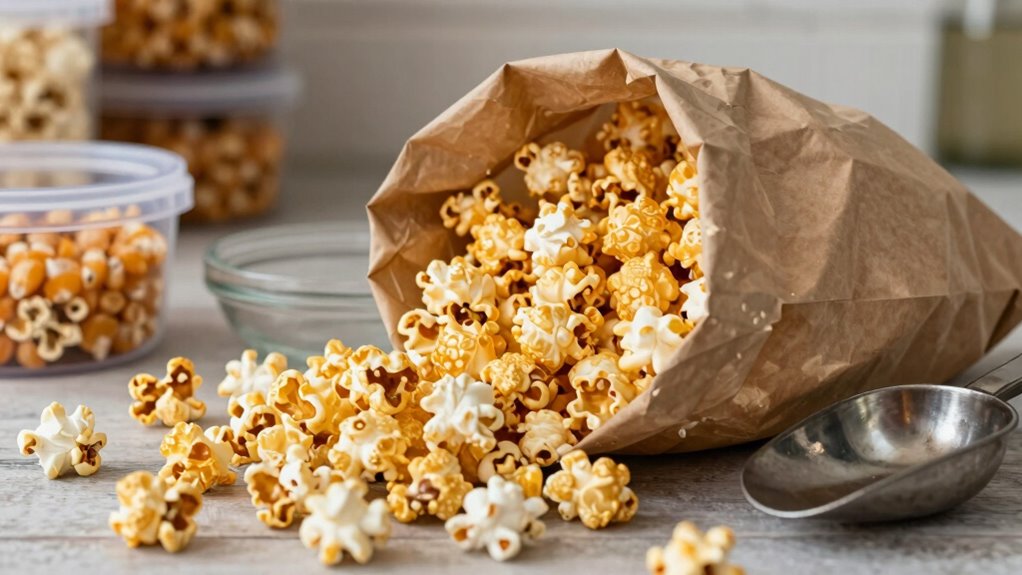
The best way to keep your popcorn fresh is to store it properly. Using an airtight container prevents moisture and air from getting in, which can make it go stale faster. Just seal it tightly, and your popcorn stays crunchier longer. For extra durability, consider adding proper packaging, such as vacuum-sealed bags, to extend freshness even further.
Proper Storage Techniques
To keep popcorn fresh longer, storing it in an airtight container is essential. Proper storage preserves its popcorn flavor and prevents moisture from making it stale. Focus on these key tips:
- Use high-quality popcorn packaging or airtight containers to lock in freshness.
- Keep popcorn in a cool, dark place away from sunlight and humidity.
- Avoid refrigerating, as moisture can damage the popcorn’s texture.
- Seal the container tightly after each use to prevent air exposure.
Airtight Container Benefits
Using an airtight container is the simplest way to keep your popcorn fresh longer. It locks in moisture and prevents air from degrading the popcorn flavor. Think of it as a shield against stale popcorn. When you use proper popcorn packaging, you preserve the crispness and prevent the popcorn from becoming chewy or bland. Imagine this container as a mini fortress, safeguarding your snack. Here’s a visual to imagine:
| Popcorn Type | Packaging Benefits | Freshness Duration |
|---|---|---|
| Butter-flavored | Keeps flavor intense | 1-2 weeks |
| Caramel-coated | Prevents sticky clumping | 2-3 weeks |
| Plain popcorn | Maintains crunch and aroma | 2 weeks |
| Flavored varieties | Locks in added flavors | 1-2 weeks |
| Store-bought | Extends shelf life naturally | Up to a month |
Best Ways to Store Popcorn at Home

Keeping your popcorn fresh starts with choosing the right storage method. To prevent it from going stale, consider these options:
- Use an airtight container to lock in moisture and flavor.
- Store popcorn in a cool, dark place away from sunlight.
- Keep popcorn away from strong-smelling foods, which can transfer odors.
- For seasoned popcorn, add popcorn seasoning after popping to maintain crunch and flavor.
When using microwave methods, store popcorn in a microwave-safe container with a lid to keep it fresh between uses. Avoid plastic bags that aren’t sealed tightly. Proper storage not only preserves freshness but also keeps popcorn tasting its best, whether you enjoy it plain or with your favorite popcorn seasoning.
Tips to Keep Your Popcorn Crunchy and Delicious
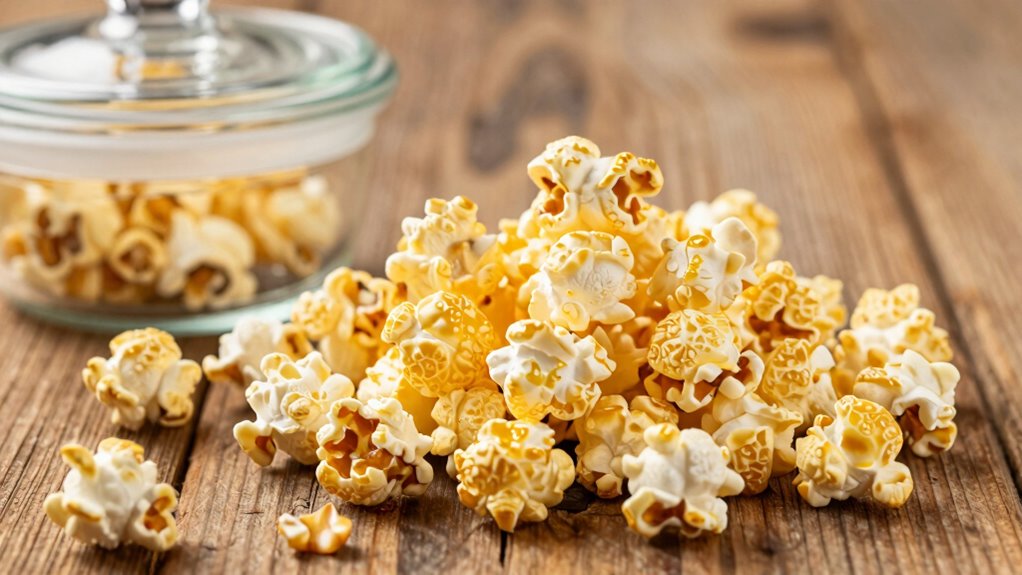
Once you’ve stored your popcorn properly, the next step is ensuring it stays crisp and tasty. To maintain your popcorn’s flavor and popcorn texture, keep it in an airtight container away from moisture. Avoid adding salt or seasoning until you’re ready to eat, as excess moisture can make it soggy. For added crunch, you can lightly reheat popcorn in the oven at a low temperature for a few minutes—this restores its popcorn texture without sacrificing flavor. Consider storing popcorn in a cool, dark place to prevent exposure to humidity and light, which accelerate staleness. Keeping your popcorn dry and sealed helps preserve its original popcorn flavor and crispness, ensuring every bite remains fresh and delicious.
Frequently Asked Questions
Can Microwave Popcorn Stay Fresh Longer Than Bagged Popcorn?
Microwave popcorn can stay fresher longer than bagged popcorn if you follow proper storage techniques. Keep it in an airtight container away from heat and moisture to maintain popcorn freshness. Unlike pre-packaged bags, which may lose crunch over time, storing microwave popcorn properly prevents it from going stale quickly. Always seal it tightly and store in a cool, dry place to extend its shelf life and enjoy fresh popcorn longer.
Does Adding Salt or Butter Affect Popcorn’s Shelf Life?
Adding salt or butter can affect popcorn’s shelf life because seasoning effects influence moisture absorption. Salt can draw out moisture, making popcorn staler faster, while butter introduces fats that may spoil or become rancid over time. If you want your popcorn to stay fresh longer, it’s best to add seasonings only when you’re ready to eat. Keeping popcorn in an airtight container also helps prevent moisture from affecting its crispness.
How Does Microwave Heating Influence Popcorn Staleness?
Imagine microwave energy as a gentle river that guides moisture migration within your popcorn. When you microwave, heat causes moisture inside to move, making popcorn stale faster if not careful. You can prevent this by using short intervals and lower power, reducing moisture loss. Proper microwaving preserves freshness, keeping your popcorn crispy and tasty longer by controlling how moisture migrates and how heat influences it.
Are There Specific Packaging Materials That Better Preserve Popcorn?
You should look for popcorn stored in airtight containers or packaging with moisture barriers, as these prevent exposure to air and humidity. These materials help keep the popcorn fresh longer by reducing moisture infiltration that causes staleness. When you seal popcorn properly in such packaging, you’ll notice it stays crispy and tasty much longer, avoiding that stale, chewy texture. Always guarantee your storage containers are sealed tightly for the best preservation.
Can Freezing Popcorn Extend Its Freshness?
Freezing popcorn can help extend its freshness if you use proper storage techniques and moisture control. To do this, place the popcorn in an airtight container or resealable bag, removing as much air as possible. Seal it tightly and store it in the freezer. This prevents moisture from entering, keeping the popcorn crisp longer. When you’re ready to enjoy it, let it thaw at room temperature for best results.
Conclusion
To keep your popcorn as fresh as a treasure chest of gold, remember that proper storage is key. Think of your popcorn as a delicate secret, easily spoiled by the slightest breeze or whisper of moisture. With just a simple trick—airtight containers—you safeguard its crunch and flavor. Like a guardian of flavor, you can enjoy every fluffy, buttery bite, turning your snack into a timeless delight that’s as irresistible as a hidden treasure waiting to be discovered.
Halloween Picks
halloween
As an affiliate, we earn on qualifying purchases.